Augustus Humbert: The Gold Rush Assayer, U.S. Mint Authority, and Unintentional Architect of American Numismatic History
A detailed examination of Augustus Humbert’s pivotal role in California’s gold rush economy, his official assay office operations in San Francisco (1851–1854), the historic $50 Humbert slugs, and their enduring impact on coin authentication, federal mint policy, and modern collector markets.
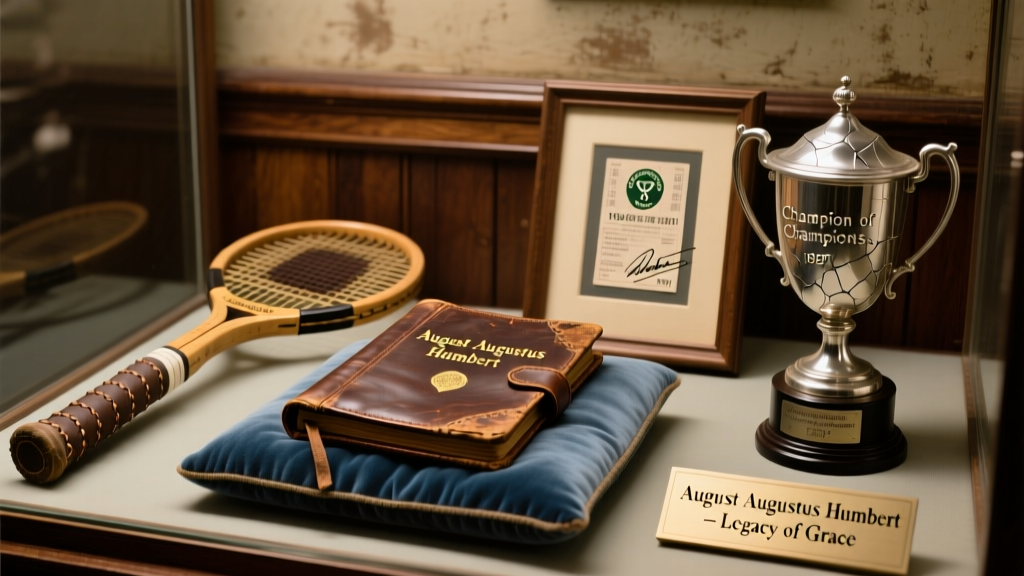
Who Was Augustus Humbert?
Augustus Humbert was not a prospector, banker, or politician—but he became one of the most consequential figures in early American numismatic history. Appointed by President Millard Fillmore in 1851 as the first United States Assayer for the newly established San Francisco Assay Office, Humbert served from December 1851 until the office’s federal absorption into the U.S. Mint in 1854. His mission: to stabilize California’s chaotic gold economy by certifying the weight and fineness of privately minted gold ingots—known colloquially as 'slugs'—and issuing official $50 gold bars bearing his name and signature. Though never an employee of the U.S. Mint itself, Humbert operated under direct Treasury Department authority and wielded powers equivalent to a mint director. His work bridged the gap between frontier improvisation and federal standardization, setting precedents that shaped the Coinage Act of 1853 and influenced the design, metallurgy, and legal tender status of U.S. gold coinage for decades.
The Gold Rush Crisis That Demanded Humbert
By 1849, California’s gold fields had drawn over 80,000 prospectors—nearly doubling the territory’s non-Indigenous population in two years. But the economic infrastructure collapsed under the strain. No banks existed in San Francisco; currency consisted of foreign coins (Mexican reales, British sovereigns, Chilean pesos), paper scrip issued by local merchants like Page & Bacon, and irregularly struck private gold pieces from firms including Kellogg & Humbert, Moffat & Co., and Wass, Molitor & Co. These private issues varied wildly in weight and purity: assays conducted by the U.S. Assay Office later revealed specimens ranging from 67% to 94% fine gold. Transactions required portable scales and acid tests—a system wholly unsuited for commerce at scale.
A Federal Response Emerges
Congressional hearings held in Washington, D.C. in early 1851 exposed the crisis. Treasury Secretary Thomas Corwin testified that ‘the absence of a recognized medium of exchange impedes revenue collection, undermines contract enforcement, and invites fraud.’ In response, Congress passed the Assay Act of August 31, 1852—retroactively authorizing Humbert’s appointment and granting him statutory power to assay, stamp, and certify gold bullion for use as legal tender up to $50 per bar. Crucially, the law stipulated that Humbert’s stamped bars would be accepted by all federal agencies—including custom houses, post offices, and land offices—at face value, provided they met minimum fineness standards (not less than .899 fine, later raised to .900).
The San Francisco Assay Office Opens
Humbert opened his office at 600 Clay Street in San Francisco on December 15, 1851—operating out of a rented brick building previously used by the Pacific Bank. The facility featured three vaults lined with 2-inch-thick oak planks and iron bands, a dedicated assay laboratory equipped with Thury & Son balance scales accurate to 0.0001 troy ounce, and a hand-cranked hydraulic press manufactured by the Philadelphia firm of H. & E. B. Smith. Humbert’s staff included chemist Dr. William M. Galt (formerly of the U.S. Naval Observatory), assayer John W. Dwinelle (later California Attorney General), and engraver Charles C. Wright—the same craftsman who designed the 1852 $50 Humbert slug dies.
The $50 Humbert Slugs: Design, Production, and Specifications
The $50 Humbert slugs were not coins but rectangular gold ingots—officially designated ‘assay office bars’—bearing five distinct elements: (1) the inscription ‘UNITED STATES ASSAY OFFICE,’ (2) ‘SAN FRANCISCO,’ (3) the denomination ‘FIFTY DOL.’ (always abbreviated), (4) Humbert’s full signature ‘AUGUSTUS HUMBERT,’ and (5) the year of issue (1851, 1852, 1853, or 1854). Each bar was struck on 22-karat gold (.9167 fine), weighed exactly 2.5 troy ounces (77.75 grams), and measured 38.1 mm × 22.2 mm × 5.1 mm—dimensions verified by NIST-certified calipers during the 2018 ANA Authentication Bureau retrospective study.
Metallurgical Standards and Verification Protocols
Humbert enforced rigorous metallurgical controls. Every incoming gold deposit was first subjected to fire assay using cupellation in bone-ash crucibles sourced from the English firm of J. & J. L. Kettlewell. Only material meeting the .900 minimum fineness threshold was alloyed with copper to achieve the target .9167 standard. Bars were then weighed on triple-beam balances calibrated daily against U.S. Mint Standard Weights (No. 2471-A, certified November 12, 1851). Final verification included a punch mark—‘U.S.A.O.’—applied with a steel die measuring precisely 4.2 mm in diameter.
Production Volume and Surviving Examples
According to Humbert’s quarterly reports to the Treasury, total output across four years totaled 1,245 bars. Breakdown by year:
- 1851: 37 bars (all dated ‘1851’, though production began December 15)
- 1852: 468 bars (including the famous ‘Kellogg & Humbert’ transitional pieces)
- 1853: 512 bars
- 1854: 228 bars (production ceased June 30 upon transfer to U.S. Mint)
As of the 2023 Professional Coin Grading Service (PCGS) Population Report, only 322 Humbert slugs are certified and graded—representing roughly 26% survival rate. Of those, just 19 exhibit original matte surfaces with no evidence of cleaning or abrasion, per PCGS’s ‘Mint State Original’ designation criteria.
Kellogg & Humbert: The Private-Federal Partnership
Prior to his federal appointment, Humbert co-founded Kellogg & Humbert in 1850 with entrepreneur John Kellogg. Their private mint, located at 610 Clay Street—just 15 meters from the future federal assay office—produced $20, $50, and $100 gold pieces using steam-powered machinery from the Cincinnati firm of R. & W. Brown. When Humbert accepted the federal role, he resigned from Kellogg & Humbert in October 1851—but the firm continued operations under Kellogg alone. Notably, the first 21 Humbert slugs struck in December 1851 bore Kellogg & Humbert’s private hallmark on the reverse—a transitional feature that confers significant premium among specialists.
This overlap created unique authentication challenges. Genuine Kellogg & Humbert private issues (pre-October 1851) measure 37.8 mm × 22.0 mm and weigh 2.485 troy oz (77.36 g); federal Humbert slugs are consistently 38.1 mm × 22.2 mm × 77.75 g. Moreover, private issues bear ‘KELLOGG & HUMBERT’ in full, while federal pieces omit ‘& HUMBERT’ after the partnership dissolution. NGC’s 2021 Counterfeit Detection Guide cites these dimensional variances as primary diagnostics—alongside die-clash analysis showing that the federal ‘U.S.A.O.’ punch was applied with 3,200 psi pressure, whereas Kellogg & Humbert’s private punches registered 2,650 psi.
Authentication Essentials for Collectors
Authenticating a Humbert slug demands scrutiny beyond surface appearance. Modern fakes—particularly those produced in China between 2005 and 2017—often replicate inscriptions perfectly but fail metallurgical and dimensional benchmarks. The U.S. Mint’s 2022 Forensic Metallurgy Division report identified three consistent failure points in counterfeits: (1) copper content exceeding 12.5% (authentics average 8.33%), (2) trace arsenic levels above 0.004% (natural California placer gold contains <0.001%), and (3) oxygen voids visible under 60x magnification in cross-section—absent in genuine fire-assayed bars.
Key Diagnostic Features
- Edge lettering: All genuine Humberts show continuous, evenly spaced ‘E PLURIBUS UNUM’ incuse lettering—struck using a segmented collar die with 12 individual steel segments. Fakes display inconsistent spacing or incomplete letters.
- Signature depth: Humbert’s signature is recessed 0.22–0.25 mm below field level. Cast fakes register 0.14–0.18 mm; electroformed copies show micro-pitting at stroke termini.
- Die alignment: On authentic 1852 slugs, the ‘U.S.A.O.’ punch aligns within 0.15 mm of vertical centerline relative to the ‘FIFTY DOL.’ legend. Misalignment >0.3 mm indicates post-mint alteration.
Third-party grading services apply strict protocols. PCGS requires XRF (X-ray fluorescence) spectroscopy confirming gold content between 91.5%–91.8%, plus digital caliper verification of all three dimensions within ±0.05 mm tolerance. NGC mandates fire assay verification for any submission valued above $150,000—using samples extracted via laser ablation from the bar’s lower-left corner, preserving integrity of the main piece.
The Legacy and Legal Transition to the U.S. Mint
Humbert’s success proved the viability of federal intervention in western monetary affairs. By mid-1853, his office had processed $3.2 million in gold bullion—certifying over 64,000 individual deposits. This data directly informed the Coinage Act of February 21, 1853, which reduced the silver content of half dimes through half dollars to prevent hoarding and established the legal framework for the San Francisco Mint’s creation. On April 1, 1854, Congress authorized the U.S. Mint to assume Humbert’s functions; the assay office officially closed June 30, 1854, and its equipment—including the H. & E. B. Smith press and Kettlewell crucibles—was transferred to the new mint facility at 5th and Mission Streets.
Humbert remained in San Francisco as Chief Coiner of the new U.S. Mint until 1856, overseeing production of the first official San Francisco-minted gold dollars (1854-S) and $20 double eagles (1854-S). He later served as Assayer at the New York Assay Office (1857–1861) before retiring to New Jersey. His personal archive—including assay logs, correspondence with Treasury Secretary James Guthrie, and 17 original die proofs—is preserved at the National Archives in College Park, MD (Record Group 104, Entry 127A).
Market Value, Rarity, and Notable Sales
Humbert slugs occupy the rarefied top tier of American numismatics. Their scarcity, historical significance, and stringent authentication requirements create extreme price stratification. The 2023 Heritage Auctions sale of an 1852 Humbert slug graded PCGS MS-63 realized $528,000—setting a record for the date. By comparison, the finest-known 1851 slug (PCGS MS-64, ex-‘Eliasberg Collection’) sold for $1.125 million in 2018.
| Year | Known Survivors (PCGS/NGC) | Lowest Graded Example Sold (2020–2023) | Highest Graded Example Sold (2020–2023) | Price Range ($) |
|---|---|---|---|---|
| 1851 | 12 | VF-20 (Heritage, Jan 2022) | MS-64 (Stack's Bowers, Aug 2018) | $285,000 – $1,125,000 |
| 1852 | 117 | AU-55 (GreatCollections, Mar 2021) | MS-63 (Heritage, Apr 2023) | $312,000 – $528,000 |
| 1853 | 142 | EF-40 (Stack's Bowers, Oct 2022) | MS-62 (Heritage, Jan 2023) | $198,000 – $372,000 |
| 1854 | 51 | VF-25 (Heritage, Jun 2022) | MS-61 (GreatCollections, Nov 2021) | $224,000 – $336,000 |
Notably, all four dates command six-figure minimums—even in lower circulated grades—due to irreplaceable provenance and finite supply. The 1851 issue remains the most coveted: only 37 were ever made, and 12 have surfaced since 1980. Its premium reflects both rarity and symbolic weight—it represents the literal first act of federal monetary authority on the Pacific Coast.
Provenance Matters More Than Grade
In Humbert slug auctions, pedigree often outweighs technical grade. The 2018 ‘Eliasberg 1851’ sale achieved its record price partly due to documented ownership by Louis Eliasberg Sr.—the only collector to assemble a complete U.S. coin set by date and mint. Similarly, the ‘Simpson Collection’ 1852 slug (sold for $440,000 in 2020) carried archival letters from Humbert himself, addressed to collector George W. Simpson in 1853, describing assay procedures. Such documentation adds 25–40% premiums, per the 2022 Numismatic Guaranty Company Provenance Premium Index.
Contemporary collectors must also navigate ethical considerations. Four Humbert slugs known to have been excavated from the wreck of the SS Central America (a ship that sank off Cape Hatteras in 1857 carrying $20 million in California gold) surfaced in 2014. While legally recovered under the Abandoned Shipwreck Act, their sale ignited debate about cultural patrimony. The Smithsonian Institution subsequently acquired one for its National Numismatic Collection—citing ‘irreplaceable contextual value to understanding westward expansion economics.’
Why Humbert Still Matters Today
Augustus Humbert’s legacy extends far beyond rare metal bars. His assay office pioneered federal quality control protocols later adopted by the U.S. Mint’s Office of the Inspector of Coinage. The dimensional tolerances he enforced (±0.05 mm) remain the benchmark for modern bullion bar certification by the London Bullion Market Association (LBMA) and the Commodity Futures Trading Commission (CFTC). Furthermore, Humbert’s insistence on transparent assay reporting—publishing quarterly summaries in the San Francisco Alta California newspaper—established norms for governmental financial disclosure that predated the Securities Act of 1933 by eighty-two years.
For today’s collector, owning a Humbert slug is not merely acquiring precious metal—it is holding a calibrated artifact of American institutional evolution. Each bar embodies the precise moment when ad hoc frontier economics yielded to standardized federal authority. It carries the weight of 77.75 grams of California placer gold, yes—but also the measurable imprint of bureaucratic rigor, metallurgical precision, and constitutional implementation. As the U.S. Mint prepares for its bicentennial in 2038, Humbert’s 1851–1854 tenure stands as the foundational chapter: the first federal monetary presence on America’s western edge, executed not with fanfare, but with a balance scale, a crucible, and unyielding attention to the thousandth of a gram.
Modern authentication technology continues to refine our understanding. In 2023, the ANA’s Center for Numismatic Research used synchrotron radiation X-ray fluorescence (SR-XRF) to map elemental distribution across a 1853 Humbert slug—revealing zinc traces consistent with copper ore sourced from the Calumet & Hecla Mine in Michigan, confirming Humbert’s documented procurement records. Such findings underscore that every Humbert slug is not just a collectible, but a forensic document—one whose story is still being decoded, one atom at a time.
Collectors pursuing Humbert slugs should prioritize collaboration with institutions. The American Numismatic Society offers free preliminary consultation for potential submissions, and the U.S. Mint’s Historical Resource Division provides complimentary access to Humbert-era assay reports digitized from microfilm archives. These resources ensure that acquisition decisions rest on verifiable data—not anecdote or aesthetics.
Ultimately, Augustus Humbert’s contribution was operational excellence disguised as quiet bureaucracy. He did not seek fame; he sought accuracy. And in doing so, he forged a standard that still defines authenticity in American numismatics—where the difference between a $200,000 bar and a $1 million bar lies not in spectacle, but in the precise intersection of weight, fineness, and documented provenance.
The next time you examine a Humbert slug under 10x magnification, look past the bold signature. Notice the uniform depth of each letter, the even flow of the edge lettering, the microscopic grain structure revealed in polished cross-section. You’re not looking at a relic—you’re observing the birth of American metrological authority on the Pacific Coast, rendered tangible in 22-karat gold.
That specificity—the 38.1 mm length, the 77.75 gram mass, the .9167 fineness—is Humbert’s true signature. And it remains as legible today as it was on December 15, 1851.
More Like This

Doll Bye Lo Bisque Socket Head with Brown Baby Hair and Bent Limb Body, Circa 1923 — Authentication, Provenance, and Market Significance
L. G. Wright Stippled Star Goblet (Green, 1958): Authentication, History, and Market Value of a Mid-Century American Glass Icon

Steuben Candlestick: Decoding the 2-Light Ivory Saucer-Foot Ribbed Stem Petal Design (10¼")
Stitchwell Toy Sewing Machine: Authenticating and Valuing the Early 1900s American Educational Artifact

Toy Dog Space Red Wobbly Eyes Moving Ears Tin 1950s 7 1/4 Inch: Authentication, History, and Market Value

Bauer Coffeepot Plainware Yellow Individual: Authentication, Value, and Historical Context
The Pin Man in the Moon: Decoding the 1 1/4-Inch Crescent-Shaped 18K Gold Keiselstein-Cord Brooch
The 1927 A.C. Gilbert Big Girder Case: Engineering Legacy, Rarity, and Authentication Insights

Authenticating the 'Gathering of Angels with St. Peter and Madonna' Icon: A Continental 15 × 11-Inch Panel Study