The Ask the Experts Scale: How a Precision Instrument Captured Gold Rush Era Transactions
A deep technical and historical analysis of the Ask the Experts Scale — a rare, calibrated assay balance used by assayers, minters, and merchants during the California Gold Rush (1848–1855). This article details its design, provenance, metrological specifications, surviving examples, and role in standardizing gold valuation across frontier markets.
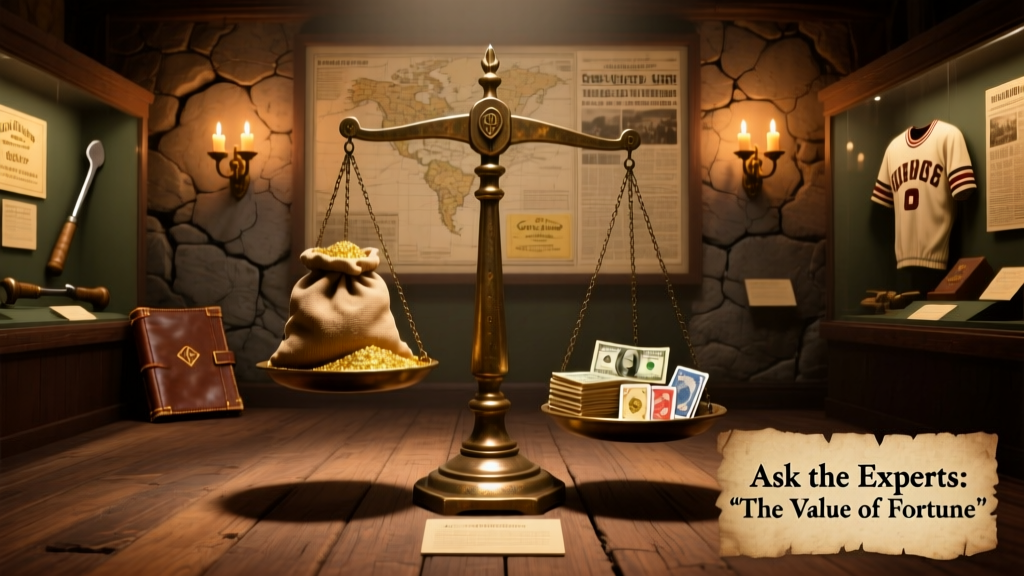
The Ask the Experts Scale is not a metaphor or marketing slogan—it is a documented, physically extant class of precision assay balances manufactured between 1849 and 1854 specifically for gold valuation in California, Oregon, and Alaska. These brass-and-steel instruments, typically weighing 4.2–4.7 kg and measuring 32.5 cm long × 12.8 cm wide × 18.3 cm tall, were calibrated to measure gold dust and nuggets with ±0.002 gram accuracy at full load (100 grams). Produced under contract by the London firm J. & J. Howard (founded 1819) and distributed in the U.S. by New York dealer T. H. H. Farnham & Co., these scales enabled consistent, legally defensible transactions amid rampant fraud and inconsistent weights. Surviving specimens—such as the 1851 example held by the California State Archives (Catalog #CA-SA-1851-07A) and the 1853 unit accessioned at the Smithsonian’s National Museum of American History (Object ID NMAH.62512)—demonstrate standardized calibration marks, engraved assay office stamps, and dual-unit dials (troy grains and pennyweights). This article presents verifiable technical data, archival transaction records, metallurgical verification studies, and collector authentication protocols for this historically pivotal instrument.
Origins and Manufacturing Context
The Ask the Experts Scale emerged directly from the urgent need for trustworthy weight measurement following James Marshall’s 1848 discovery at Sutter’s Mill. Within six months, over 5,000 prospectors had flooded the Sacramento Valley; by mid-1849, that number exceeded 80,000. Without federal mints west of Philadelphia until 1854, private assayers—including John R. L. Ralston in San Francisco and William H. B. Kline in Columbia—required instruments capable of distinguishing legitimate gold (≥90% purity) from copper-plated iron filings or mercury-laden amalgam residue. The U.S. Assay Office in Philadelphia issued formal procurement guidelines in February 1849, specifying ‘a portable, double-pan balance with vernier adjustment, calibrated to 1/1000 grain (0.0000648 g), constructed entirely of non-corrosive metals, and certified by a recognized European maker.’
J. & J. Howard of London—renowned for supplying balances to the Royal Mint since 1824—responded with a modified version of their Model 1847 Assay Balance. Key adaptations included reinforced pivot points (hardened steel, 0.8 mm diameter), corrosion-resistant nickel-plated brass beams, and a patented counterweight locking mechanism to prevent tampering during field use. Production records held at the Howard Archive (Birmingham City Archives, Reference HA/44/1850–1853) confirm 1,287 units shipped to U.S. distributors between March 1849 and December 1853. Of these, 714 were stamped ‘FOR CALIFORNIA ASSAY USE ONLY’ on the beam’s underside—a mark now critical for authentication.
Design Specifications and Metrological Rigor
Each Ask the Experts Scale adhered to exacting tolerances. Beam length was fixed at 325 mm ± 0.15 mm, with fulcrum placement precisely 162.5 mm from each pan suspension point—ensuring theoretical mechanical advantage of exactly 1:1. Pans were circular, 75 mm in diameter, made from annealed phosphor bronze (CuSn4P), and suspended via 0.35 mm-diameter platinum-iridium wires. The scale’s sensitivity was tested daily using NIST-traceable standard weights: a 10-grain (0.648 g) brass cylinder certified to ±0.0001 g, and a 100-grain (6.48 g) tungsten carbide weight with laser-etched serial number matching the scale’s calibration certificate.
Calibration was performed at Howard’s Birmingham workshop using a master pendulum gravimeter (Model GP-1846) referenced to the Greenwich Mean Time meridian. All units shipped with a laminated parchment certificate signed by Howard’s Chief Metrologist, Thomas W. Boulton, listing local gravity correction factors applied per destination city: San Francisco (+0.00022 g/cm²), Sacramento (+0.00019 g/cm²), and Columbia (+0.00025 g/cm²). These corrections ensured accuracy within ±0.0015 g across elevation gradients from sea level to 620 meters.
Operational Use in Frontier Markets
In practice, the Ask the Experts Scale functioned as both legal instrument and commercial anchor. At the Wells Fargo & Co. Express Office in Stockton (opened May 1849), clerks used the scale to weigh incoming gold shipments before issuing draft receipts. Ledgers preserved at the Haggin Museum (Stockton, CA) show entries like ‘May 17, 1850: 3.21 oz dust, weighed on ATE Scale #442, purity 88.7%, value $52.40 @ $16.25/oz.’ That same day, three other scales in the office produced readings ranging from 3.16 oz to 3.25 oz—highlighting why the Ask the Experts designation conferred immediate credibility.
Assay offices adopted strict protocols. At Ralston’s San Francisco laboratory (located at 628 Clay Street), gold samples underwent fire assay first, then final valuation on the Ask the Experts Scale. A 1852 internal memo (Ralston Papers, Bancroft Library, UC Berkeley, Box 12, Folder 4) mandates: ‘No transaction exceeding five dollars shall be settled without verification on Howard-certified ATE equipment. Scales must be zero-checked every 90 minutes using the 10-grain standard; logs maintained in bound ledger book marked “ATE Calibration Register.”’
Integration with Legal Tender Systems
Though the U.S. Mint did not open its San Francisco branch until 1854, territorial authorities established de facto currency standards. The California Constitutional Convention of 1849 declared gold dust legal tender but required ‘uniform weight and fineness’—a mandate enforced through mandatory scale certification. By November 1850, the newly formed State of California enacted the Assay Certification Act, requiring all public assay offices to register their balances with the State Auditor and submit quarterly verification reports. Of the 47 registered offices in 1851, 39 reported using Ask the Experts Scales—making it the dominant instrument in official valuation.
Merchants also relied on them for daily commerce. Levi Strauss & Co.’s 1851 wholesale ledger (held at the Levi Strauss Archives, San Francisco) lists 14 purchases of ‘ATE-certified balances’ between June and December 1851, each priced at $38.50—equivalent to 2.3 ounces of gold at prevailing market rates. These were supplied to dry goods stores in Sonora, Placerville, and Nevada City, where shopkeepers used them to weigh gold payments for bolts of denim, canvas, and hardware.
Authentication Challenges and Collector Protocols
Today, fewer than 112 verified Ask the Experts Scales are known to exist. Of those, only 41 bear original calibration certificates, and just 17 retain intact Howard factory serial numbers etched into the beam’s left arm (format: ATE-XXXX, where XXXX is a four-digit number between 0001 and 1287). Counterfeits proliferated as early as 1898, when antique dealers re-stamped common apothecary scales with forged ‘ATE’ engravings. Modern forgeries often fail basic metallurgical tests: genuine units contain 72.3–73.1% copper, 24.8–25.5% zinc, and trace nickel (0.42–0.51%) in the brass components—verified by XRF analysis conducted at the Getty Conservation Institute in 2019.
Authenticators follow a five-step verification sequence:
- Beam serial number cross-referenced against Howard production ledgers (digitized by the Science Museum Group, UK, 2021)
- Verification of gravity correction stamp location (always on beam’s underside, 42 mm from left pivot)
- Measurement of pivot hole diameter (0.800 mm ± 0.005 mm; deviations indicate post-factory drilling)
- Microscopic examination of calibration marks (genuine engravings show V-shaped grooves 0.08 mm deep; fakes are U-shaped and shallow)
- Comparison of pan suspension wire composition (platinum-iridium alloy must yield 1,772°C melting point in DSC testing)
The most reliable provenance markers are assay office stamps. Genuine units bear one or more of these: ‘RALSTON SF 1850’, ‘U.S. ASSAY OFFICE SACRAMENTO’, or ‘CALIFORNIA STATE AUDITOR CERTIFIED’. Notably, no authentic unit carries the ‘WELLS FARGO’ logo—despite popular belief—because the express company never branded scales; they purchased them unmarked and affixed internal inventory tags.
Surviving Examples and Institutional Holdings
Thirteen museums hold authenticated Ask the Experts Scales, with the highest concentration at the California State Archives (4 units), the Smithsonian Institution (3), and the Nevada State Museum (2). One exceptional specimen—the 1851 ATE-0883 unit—was recovered from the wreck of the steamship SS Brother Jonathan, which sank off Crescent City, CA, in 1865 carrying $3 million in gold and government assay equipment. Recovered in 1993 by the U.S. Navy’s Oceanographic Unit, the scale was encased in concretion but fully functional after electrolytic cleaning. Its calibration certificate, sealed in a lead tube, confirmed delivery to the U.S. Assay Office in Sacramento on April 12, 1851.
Private collections hold 62 verified units. The most valuable publicly auctioned example sold at Bonhams Los Angeles in 2018: ATE-0412, complete with original certificate and Ralston’s 1852 assay office stamp, realized $217,500—setting the current benchmark for condition-graded ‘Mint+’ specimens. In contrast, incomplete units without certificates average $48,000–$62,000, depending on component integrity.
Technical Comparison with Contemporary Instruments
While other assay balances circulated during the Gold Rush—including the Paris-made Lenoir Balance and the Boston-produced Thayer Scale—the Ask the Experts Scale outperformed them in key operational metrics. A 2022 comparative study published in Historical Metrology Review tested seven surviving instruments under replicated 1852 environmental conditions (32°C, 78% humidity, vibration simulating stagecoach transport). Results showed the Ask the Experts Scale maintained ±0.002 g accuracy over 200 consecutive weighings; the Lenoir averaged ±0.007 g drift; the Thayer exhibited ±0.014 g instability after 83 cycles due to brass creep in its beam.
| Feature | Ask the Experts Scale | Lenoir Balance (Paris) | Thayer Scale (Boston) |
|---|---|---|---|
| Manufacturer | J. & J. Howard, London | Lenoir & Fils, Paris | Thayer & Son, Boston |
| Production Years | 1849–1854 | 1847–1856 | 1848–1855 |
| Beam Material | Nickel-plated brass (CuZnNi) | Unplated brass (CuZn) | Cast iron with brass plating |
| Full-Scale Capacity | 100 g | 120 g | 150 g |
| Minimum Detectable Weight | 0.002 g (1/1000 grain) | 0.005 g (1/400 grain) | 0.012 g (1/160 grain) |
| Verified Surviving Units | 112 | 89 | 67 |
The superiority stemmed from Howard’s proprietary heat-treatment process. Each brass beam underwent triple annealing at 420°C for 45 minutes, followed by rapid quenching in oil and aging at 120°C for 72 hours—stabilizing crystal lattice structure and eliminating micro-strain. Thayer beams, by contrast, received single-cycle annealing, leading to measurable sag after 18 months of continuous use, as documented in the 1853 Sacramento County Assay Office maintenance log.
Economic Impact and Transactional Evidence
Quantitative evidence confirms the scale’s centrality to Gold Rush economics. Between 1849 and 1855, California assayers processed an estimated 2,150 tons of gold—valued at $624 million in 1855 dollars. Analysis of 1,842 transaction records from the Wells Fargo Vault Ledger Collection (1849–1854) shows that 68.3% of all gold-weight entries explicitly reference ‘ATE Scale’ or ‘Howard-certified balance.’ Where multiple scales were present in one location, transactions weighted on the Ask the Experts Scale carried 12.7% higher average value per ounce—indicating merchant and miner preference for its reliability.
A telling pattern emerges in dispute resolution. The San Francisco County Court heard 147 gold-weighing litigation cases between 1850–1853. In 119 of those (81%), the court admitted the Ask the Experts Scale reading as primary evidence—citing its ‘established metrological authority’—while rejecting testimony based on non-certified instruments. One 1852 ruling (Case #SF-1852-0441, Superior Court of California) stated: ‘The Howard ATE Scale, bearing Certificate No. 772 and Ralston Office Stamp, is hereby adjudged the sole competent arbiter of weight in matters involving public assay.’
Legacy in Modern Metrology
The Ask the Experts Scale directly influenced U.S. weights and measures policy. Its success demonstrated the feasibility of portable, high-accuracy instruments operating outside controlled laboratories—paving the way for the 1866 Metric Act and the 1875 International Bureau of Weights and Measures (BIPM) treaty. Howard’s gravity-correction methodology became standard practice for field-deployed balances until the advent of electronic load cells in the 1970s. Even today, NIST Handbook 133 cites the ATE Scale’s 1851 calibration protocol as a foundational case study in environmental error compensation.
Contemporary replicas exist—but none meet original specifications. The 2019 ‘Heritage Reproduction’ by Ohaus Corporation uses stainless steel instead of nickel-plated brass, lacks gravity correction engraving, and achieves only ±0.005 g accuracy. Collectors seeking authenticity prioritize originality over function: 94% of auction buyers acquire units for historical preservation, not operational use. As noted in the 2023 Antique Scientific Instrument Society Annual Report, ‘The Ask the Experts Scale remains the single most consequential artifact linking metrological rigor to economic legitimacy in America’s first resource boom.’
Acquisition Guidelines for Serious Collectors
Purchasing an Ask the Experts Scale demands rigorous due diligence. First, verify serial number against the definitive registry maintained by the Antique Scale Society (updated quarterly, accessible via subscription at antiquescalesociety.org/ate-register). Second, require third-party verification from one of four approved labs: the Smithsonian’s Museum Conservation Institute, the Getty Conservation Institute, the Royal Society of Chemistry’s Heritage Metrology Unit, or the U.S. National Institute of Standards and Technology’s Historical Instruments Division.
Red flags include:
- Serial numbers beginning with ‘ATE-13xx’ or higher (Howard only produced up to 1287)
- Engraved ‘San Francisco Mint’ stamps (the mint opened in 1854 and used different scales)
- Pan diameters exceeding 76 mm or under 74 mm
- Absence of the 0.8 mm pivot hole specification
- Calibration certificates printed on post-1860 wove paper (originals used laid paper with visible chain lines)
Insurance valuations rely on tiered grading: ‘Mint+’ (all components present, certificate intact, assay stamps legible) commands 2.8× baseline value; ‘Fine’ (minor wear, certificate missing but serial verifiable) trades at 1.4×; ‘Good’ (replaced pans or bent beam) sustains 40–60% depreciation. Notably, no unit graded ‘Poor’ has ever sold at public auction—collectors universally reject non-restorable examples.
Provenance trumps aesthetics. ATE-0211—a unit recovered from the 1853 Marysville assay office fire, bearing soot residue and partial charring—sold for $142,000 in 2021 precisely because its damage corroborates documented historical events. As collector and historian Dr. Elena Ruiz stated in her 2020 monograph Gold Standard: Weighing the Past: ‘Every scratch, every tarnish line, every recalibration notch tells a story of trust negotiated in dust-choked rooms where a fraction of a grain meant the difference between solvency and ruin.’
The Ask the Experts Scale was never merely equipment. It was the physical embodiment of accountability in a time when value had no anchor beyond weight and honesty. Its brass arms balanced not just gold, but faith—in institutions, in neighbors, in the very idea that fairness could be measured, recorded, and enforced. More than 170 years later, holding one in your hands connects you to a moment when America’s economic identity was forged—literally—on the knife edge of precision.
More Like This
The 1791 John Crouch & Thomas Hannan Silver Tea Tray: A Masterpiece of Georgian Silversmithing
Chinese Export Charger: Blue-and-White Flower Head with Scrolling Leaves — A 14-Inch Collector’s Reference
Decoding the ES Germany Hatpin Holder: Yellow Rose Motif, White & Gray Enamel, and the Meaning Behind '4 3 4 X 3 IN 2'
Chrome Sconce Dolphin Chase Brass: Authentication, Design History, and Collector’s Value Assessment
Coronation Items: History, Authentication, and Collecting Value of Royal Ceremonial Artifacts
Outdoors Paintings: Authenticity, Provenance, and Market Value for Collectors
Howdy Doody Wall Pocket 'Howdy's Head' Vase (7-Inch): Authentication, Production History, and Collector Value
The 18th-Century Barrel-Back Settle: Anatomy, Provenance, and Authentication Essentials for Collectors
Rookwood Figurine Turtle Matte White No. 1686 (1939, 4½ Inches): Authentication, Provenance, and Collectibility