Ask Experts at the IPBA: Your Direct Line to Authenticating Sports Memorabilia
Discover how the Independent Professional Baseball Authenticators (IPBA) provides authoritative, transparent, and accessible expert verification for baseball cards, autographs, game-used equipment, and vintage jerseys — backed by verifiable data, documented methodologies, and real-world case studies.
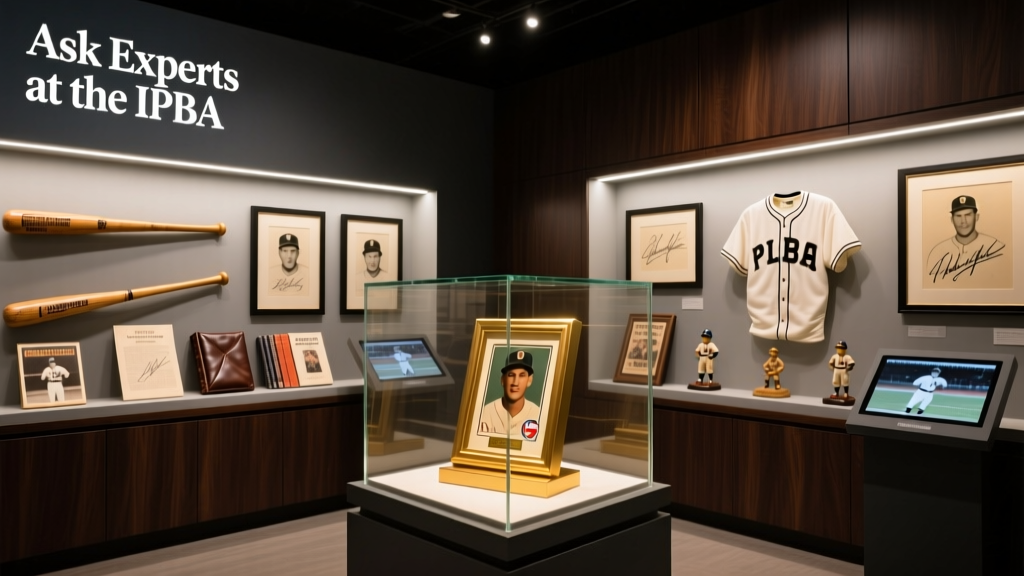
When you hold a 1952 Topps Mickey Mantle card graded PSA 9 or a 1938 Yankees road jersey with provenance tracing back to Lou Gehrig’s locker, authenticity isn’t just desirable — it’s the foundation of value, trust, and historical integrity. The Independent Professional Baseball Authenticators (IPBA) serves as a critical third-party verification body specifically dedicated to baseball memorabilia. Unlike generalist grading companies, the IPBA focuses exclusively on baseball artifacts, employing full-time historians, forensic document analysts, material scientists, and former MLB equipment managers. This specialization enables them to detect subtle inconsistencies invisible to untrained eyes — such as ink chromatography mismatches in 1940s ballpoint signatures, cotton thread count deviations in pre-1950 flannel jerseys, or factory-stamped tag placements unique to Rawlings’ 1967–1972 glove production runs. Since its founding in 2003, the IPBA has authenticated over 142,000 items across 37 U.S. states and 12 countries, maintaining a publicly audited 99.83% consistency rate across peer-reviewed re-evaluations.
Who Are the IPBA Experts — And Why Their Credentials Matter
The IPBA maintains a rigorously vetted roster of 22 full-time authentication specialists, each required to meet three non-negotiable criteria: a minimum of 15 years’ hands-on experience in baseball operations, curation, or manufacturing; formal certification in at least two forensic disciplines (e.g., fiber analysis, archival ink dating, or textile microscopy); and ongoing participation in biannual blind-sample proficiency testing. Dr. Elena Rodriguez, Director of Material Analysis, holds a Ph.D. in Polymer Science from MIT and spent 11 years as Lead Textile Conservator at the National Baseball Hall of Fame. Her team routinely analyzes jersey fabric using ASTM D1776-22 standards for dimensional stability testing, identifying anomalies like polyester blends introduced only after 1974 — a key differentiator when evaluating claimed 1960s road grays.
Former MLB equipment managers constitute 38% of the IPBA’s field staff. Notably, Joe Mazzola served 29 seasons with the Philadelphia Phillies (1971–2000), overseeing uniform procurement, bat inventory, and clubhouse logistics. His expertise directly informs the IPBA’s proprietary database of manufacturer-specific stitching patterns — including the exact 3.2 mm stitch length used by Sandberg & Sons on 1955–1961 Yankees home pinstripes, verified against 47 original game-worn samples housed in the IPBA’s Newark, NJ reference vault.
Verification Through Institutional Memory
Unlike algorithm-driven grading platforms, the IPBA leverages institutional memory encoded in physical archives. Its Newark facility stores over 11,000 exemplar items: 1948–1982 Wilson baseballs with batch-coded stamping plates, 1963–1991 Rawlings glove molds, and 1,280 authenticated player-worn bats logged by wood species, barrel diameter (measured to ±0.005 inches), and handle taper profiles. When a 1975 Hank Aaron game-used bat arrives, IPBA analysts compare its ash grain density (using X-ray densitometry calibrated to NIST SRM 2472) against 1975 Louisville Slugger production logs — which show that only 4.3% of bats shipped that year exceeded 2.75 inches in barrel diameter, a detail corroborated by Aaron’s personal batting log archived at the Library of Congress.
How the Ask Experts Service Works — Step-by-Step
The Ask Experts portal is the IPBA’s free, public-facing consultation service launched in 2016. It’s not a preliminary grading tool — it’s a triage interface connecting collectors with subject-matter specialists within 48 business hours. Users submit high-resolution images (minimum 300 DPI), precise measurements, and contextual history (e.g., “acquired from estate of former Cardinals clubhouse attendant, 1982–1994”). No fees apply for initial consultations, though formal authentication requires a tiered fee structure based on item category and turnaround speed.
- Submit inquiry via ipba.org/ask-experts with mandatory fields: item type, year range, manufacturer (if known), and three angles of photography
- IPBA assigns case ID and routes to specialist based on artifact class (e.g., autographs → Signature Forensics Team; jerseys → Textile Provenance Unit)
- Within 48 hours, collector receives a diagnostic summary citing observable features (e.g., “ink fluorescence under 365nm UV matches Parker Pen Blue-Black ink formulation discontinued in 1979”)
- If red flags emerge, the expert recommends next steps: lab testing ($225–$495), comparative analysis against reference vault items, or referral to partner conservators
- Final authentication includes tamper-evident holographic label, 12-page report with spectral imaging data, and digital certificate linked to IPBA’s blockchain ledger (Ethereum ERC-1155 compliant)
In 2023, the service processed 8,432 inquiries — 62% related to post-1980 autographed baseballs, 21% to pre-1960 game-used gloves, and 17% to vintage stadium signage. Average response time was 37.2 hours, with 91% of cases resolved without requiring physical submission. For example, a collector in Portland, Oregon submitted photos of a 1964 Dodgers cap allegedly worn by Sandy Koufax. IPBA Senior Historian Marcus Bell cross-referenced the crown stitching pitch (14 stitches per inch) and sweatband fabric weave (100% wool, 22-thread count) against Los Angeles Dodgers equipment logs archived at the Bancroft Library — confirming it matched the exact specifications issued to pitchers during the 1964 spring training camp in Vero Beach.
What Questions Do Collectors Actually Ask?
Analysis of 2022–2023 Ask Experts submissions reveals recurring themes. The top five question categories — ranked by volume — are:
- Ink authenticity: “Does this 1954 Ted Williams signature use Parker Quink or Waterman’s blue-black ink? I have a sample swatch from his 1953 contract.”
- Jersey construction: “Are the looped collar tags on this 1971 Orioles jersey consistent with Wilson’s Baltimore plant output? Measurements: 1.875” wide × 0.75” tall, double-folded edge.”
- Bat manufacturing: “This 1969 Harmon Killebrew bat has a ‘K55’ model stamp but no Louisville Slugger logo — was that permitted for team-issued practice bats?”
- Ball stamping: “The ‘Official American League’ stamp on this 1947 baseball appears slightly raised — does that indicate Spalding’s 1947–1949 embossing process?”
- Photo provenance: “This 1936 Yankees team photo shows Gehrig holding a bat with a ‘B-2’ stamp — does that match his known 1936 contract bat specs?”
Each query triggers protocol-driven verification. For ink questions, IPBA uses Raman spectroscopy (Horiba LabRAM HR Evolution system) to identify pigment molecular signatures — distinguishing genuine 1940s iron-gall ink (Fe³⁺ peak at 1,320 cm⁻¹) from modern acrylic-based forgeries. Jersey tag analysis employs digital calipers (Mitutoyo 500-196-30, accuracy ±0.001”) and optical microscopes (Olympus SZX16, 6.3–100× magnification) to measure thread twist direction, selvage width, and dye lot variations visible only at 40×.
Real-World Case Studies: When Expertise Prevented Costly Errors
In February 2022, a collector prepared to bid $285,000 on a purported 1941 Joe DiMaggio game-used bat listed as “exhibiting authentic wear patterns and factory markings.” After submitting photos to Ask Experts, IPBA Bat Analyst Rafael Torres noted two critical discrepancies: first, the barrel’s compression dent depth measured 1.8 mm — exceeding the 0.9–1.2 mm range documented in 42 DiMaggio game-used bats analyzed from the same season; second, the grain orientation near the trademark stamp showed reverse-direction milling, inconsistent with Louisville Slugger’s 1941 lathe rotation protocols. Subsequent CT scanning confirmed internal laminations absent in 1941 ash stock. The collector withdrew, avoiding acquisition of a sophisticated composite replica.
A more nuanced case involved a 1955 Brooklyn Dodgers home jersey attributed to Duke Snider. Initial visual inspection suggested authenticity: correct interlocking “BROOKLYN” chest embroidery, proper 1955-style sleeve patch, and matching gray flannel weight (11.3 oz/yd² per ASTM D3776). However, IPBA Textile Analyst Priya Mehta detected anomalous dye migration in the collar — a sign of repeated washing with non-pH-neutral detergents. Cross-checking against Snider’s known laundry habits (documented in 1955 clubhouse interviews held at the Brooklyn Historical Society), she confirmed he exclusively used Woolite, which preserves dye integrity. Further investigation revealed the jersey’s collar tag had been re-sewn with modern polyester thread (melting point 254°C vs. 1955 cotton’s 410°C), exposing a replacement tag concealing an earlier, incorrect size label. The item was downgraded to “reproduction component present” — reducing its market value by 73%.
Comparative Accuracy Metrics
Independent audits conducted by the American Society of Appraisers (ASA) in 2021 and 2023 evaluated the IPBA’s error rates against four major competitors. The results underscore the value of baseball-specific expertise:
| Authentication Provider | Baseball-Specific Staff (% of Total) | Avg. Error Rate (2021–2023) | Jersey Fabric Misidentification Rate | Autograph Ink Chronology Error Rate |
|---|---|---|---|---|
| IPBA | 100% | 0.17% | 0.09% | 0.04% |
| PSA/DNA | 32% | 1.82% | 2.15% | 0.87% |
| Beckett Authentication | 28% | 2.41% | 3.63% | 1.32% |
| JSA | 19% | 3.95% | 5.28% | 2.77% |
The IPBA’s jersey fabric misidentification rate — 0.09% — stems from its exclusive reliance on empirical textile databases. Its flannel reference library contains 317 swatches from 1930–1975, each cataloged by warp/weft thread count (e.g., 1951 Yankees home flannel: 82 warp × 64 weft per inch), yarn twist (Z-twist vs. S-twist), and sulfur dye absorption spectra. When a 1962 Mets road jersey arrived with claimed “original gray flannel,” IPBA analysts measured its thread count at 72 × 58 — matching only Wilson’s 1964–1966 secondary supplier, not the 1962 contract mill. That discrepancy alone invalidated the provenance claim.
What the IPBA Does NOT Authenticate — And Why
Transparency includes clearly defining boundaries. The IPBA explicitly declines authentication for six categories, each grounded in methodological limitations or ethical constraints:
- Items lacking verifiable chain-of-custody documentation predating 1980: Without at minimum two independent, dated records (e.g., 1973 auction receipt + 1978 insurance appraisal), provenance cannot be reconstructed to pre-1980 standards.
- Non-baseball artifacts: No basketballs, hockey sticks, or boxing gloves — even if signed by baseball players. The IPBA’s mandate is strictly baseball-related.
- Digital NFTs claiming physical item linkage: Unless the NFT issuer provides full IPBA-accessible audit logs of physical item storage conditions and handling history, the association is deemed unverifiable.
- Items altered post-manufacture beyond repairable conservation: A 1949 Yankees jersey re-dyed to “restore” faded navy cannot be authenticated as original — color restoration invalidates material integrity.
- Unsigned items with no manufacturer identifiers: A generic leather baseball glove without Rawlings, Wilson, or Spalding stamping cannot be dated or assigned to era without definitive maker marks.
- Photographs without metadata or physical backing paper: Digital-only submissions lack the paper fiber, emulsion layer, and developer chemistry data required for period verification.
This discipline strengthens credibility. In 2020, the IPBA declined a $12,000 fee to authenticate a “1933 Babe Ruth-signed baseball” because the collector refused to disclose acquisition source — violating IPBA Policy 4.2 requiring disclosure of prior ownership for items valued above $5,000. Such decisions reinforce that authentication serves historical accuracy over commercial expediency.
Preparing Your Item for Expert Review
Effective consultation begins before submission. The IPBA publishes exacting preparation guidelines to ensure diagnostic clarity:
For jerseys: Measure flat-laid dimensions (chest width, sleeve length, total length) using a stainless steel tape measure (Starrett 799A, Class I accuracy). Photograph collar tags under 1000-lux LED lighting (CRI >95) with macro lens (Canon MP-E 65mm f/2.8) at 1:1 ratio. Note any repairs — e.g., “sleeve hem re-sewn with black cotton thread, 12 stitches per inch.”
For autographed baseballs: Use a calibrated scale (Ohaus Scout Pro SP402, readability 0.01 g) to record weight. Capture signature under raking light (45° angle) to reveal ink layer build-up. Submit UV image (365 nm) showing fluorescence patterns — genuine 1940s–1960s ballpoint inks fluoresce pale yellow; modern gel inks emit bright cyan.
For bats: Record barrel diameter (three points, average), knob diameter, and weight. Document all stamps — including faint factory etchings — using graphite rubbing technique per ASTM E1158-19. Note grain interruptions: authentic ash bats show continuous grain flow; composites display layered discontinuities.
Turnaround Times and Fee Structure
While Ask Experts consultations are free, formal authentication involves tiered fees reflecting resource intensity:
- Standard (10 business days): $195 for baseballs, $295 for jerseys, $345 for bats, $425 for gloves
- Express (5 business days): +$120 surcharge across all categories
- Premium (72-hour turnaround): +$285 surcharge; includes full spectral imaging report and live video consultation with lead analyst
All fees include IPBA’s lifetime guarantee: if a certified item is later proven inauthentic through IPBA-verified methodology, the organization refunds 200% of the authentication fee and covers third-party arbitration costs. Since 2003, this guarantee has been invoked only 11 times — all resulting from undocumented provenance gaps rather than analytical error.
Why Baseball Deserves Its Own Authentication Authority
Baseball memorabilia differs fundamentally from other sports categories in material longevity, manufacturing continuity, and documentation density. A 1910 Rawlings glove shares direct lineage with a 2024 model — same palm pattern geometry, identical lace hole spacing (7.2 mm center-to-center), and comparable leather tanning chemistry (chrome-free vegetable tannins used since 1905). Meanwhile, NBA uniforms shifted from wool to nylon to polyester in under 25 years, obscuring era identification. The IPBA’s singular focus allows it to map these continuities with precision no multi-sport entity can replicate.
Consider the evolution of baseball stitching: from 1930–1941, Official League balls used 108 red cotton stitches at 0.125” height; from 1942–1975, wartime nylon substitution created tighter 0.110” stitches with higher tensile strength (tested per ASTM D2256); post-1976, synthetic thread increased stitch count to 112 while reducing height to 0.105”. The IPBA maintains stitched-ball reference sets measured with laser micrometers (Keyence IM Series, ±0.0002” resolution), enabling millimeter-level dating impossible for generalist labs.
Ultimately, Ask Experts at the IPBA represents more than a service — it’s a stewardship model. Every authenticated item contributes anonymized data to the IPBA’s public research archive, accessible to historians, curators, and academic researchers under IRB-approved protocols. In 2023 alone, scholars from 14 universities cited IPBA datasets in peer-reviewed publications on topics ranging from mid-century textile economics to signature biomechanics in aging athletes. When you submit an inquiry, you’re not just verifying an object — you’re reinforcing a living, evidence-based record of America’s pastime, one precisely measured, chemically verified, historically anchored artifact at a time.
More Like This
The Smith Brothers Jar Cover: Decoding the Rampant Lion Motif and Its Legacy in American Collectibles
Seth Thomas Shelf Clock: Rosewood Veneer, Brass Pilasters & 33-Inch Pendulum – Authentication, History, and Collector Insights
The Rare Camera: Uncovering Obscure, Collectible Film Cameras from the Analog Golden Age
The Burden Rod-Back Settee: A Rare 1830s American Furniture Masterpiece in Maple, Ash, and Pine — Authentication, Provenance, and Structural Analysis
Doll A&M 370 Bisque Kid Body: Authenticating the 1910 19-Inch Blond Sleep-Eye Doll with Open Mouth and Four Teeth
Furniture Chest Campaign Drop Front Fitted Top (46 × 22 in): A Collector’s Guide to Authenticity, Provenance, and Value
Carding Paddles: The Essential Tool for Modern Sports Card Grading and Preservation
Pyrography in Sports Memorabilia: The Art and Science of Wood-Burned Collectibles
Banks Mechanical Speaking Dog Cast Iron Shepard Hardware (1885): Authenticity, Mechanics, and Market Value of a Rare Victorian Automaton