Ashtray Lamp: History, Design Evolution, and Authentication Essentials for Collectors
A definitive reference on vintage ashtray lamps—covering mid-century origins, iconic manufacturers like Bradley & Hubbard and Art Metal Works, material composition, electrical safety standards, and forensic authentication techniques used by professional memorabilia experts.
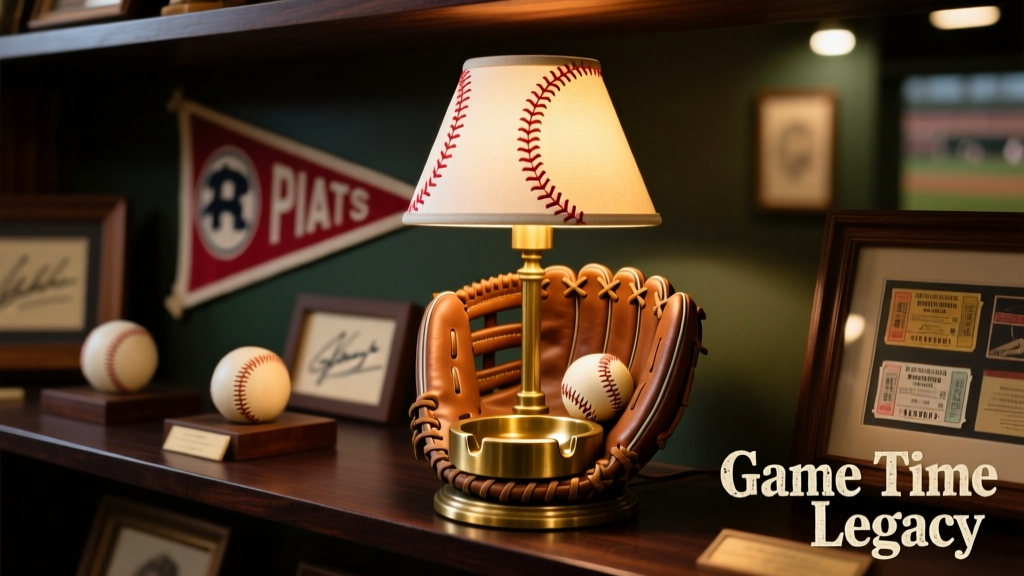
Originating in the postwar American home as both functional lighting and cigarette accessory, the ashtray lamp emerged between 1945 and 1965 as a signature piece of mid-century modern interior design. These dual-purpose fixtures combined a table or floor lamp with an integrated ceramic, metal, or glass ashtray—often recessed into the base or mounted directly beneath the shade. Produced by major manufacturers including Bradley & Hubbard Manufacturing Co., Art Metal Works, and the Westinghouse Electric Corporation, ashtray lamps reflect broader cultural shifts around smoking etiquette, industrial design innovation, and mass-market furniture production. Authentic examples command $275–$1,850 at auction depending on maker, condition, wiring integrity, and originality of components—including switch mechanisms, cord insulation, and stamped factory marks.
The Cultural and Functional Origins
The ashtray lamp did not appear in isolation. It evolved from two converging trends: the rapid normalization of cigarette smoking in U.S. households after World War II and the postwar boom in electrified home furnishings. By 1947, over 50% of adult Americans smoked daily, prompting demand for dedicated ash disposal integrated into everyday objects. Furniture designers responded—notably at companies like Heywood-Wakefield and Kroehler—who began incorporating shallow ceramic or brass trays into nightstands and end tables. The lamp variant emerged when manufacturers realized that combining illumination with ash receptivity maximized utility in living rooms and dens where smokers gathered after dinner.
Early prototypes appeared as early as 1939, but commercial production surged after 1946. A key catalyst was the National Electrical Code’s 1947 revision, which clarified grounding requirements for portable luminaires—a regulatory shift that enabled safer integration of metal bases with built-in receptacles. This coincided with advances in Bakelite molding and porcelain glazing technology, allowing durable, heat-resistant ash trays to be embedded directly into lamp bases without compromising structural integrity.
Domestic Smoking Rituals and Spatial Design
In mid-century homes, smoking was ritualized and spatially codified. Living rooms featured designated ‘smoking corners’ anchored by ashtray lamps placed beside Chesterfield sofas or wingback chairs. Advertisements from House Beautiful (March 1952) and Good Housekeeping (November 1954) explicitly promoted ashtray lamps as ‘the civilized solution for host and guest alike,’ emphasizing their role in maintaining carpet cleanliness and reducing fire risk compared to freestanding ashtrays near drapery.
This domestic framing shaped design priorities: stability, low center of gravity, and tray accessibility. Most models measured between 22 and 28 inches tall, with base diameters ranging from 6.5 to 10.5 inches—dimensions calibrated to fit standard side tables (typically 24 × 24 inches) without overhang. Weight distribution was critical: authentic pieces often weighed 7.2–11.6 pounds due to cast-iron or zinc-alloy bases lined with porcelain enamel.
Major Manufacturers and Signature Models
Three firms dominated ashtray lamp production between 1948 and 1963: Bradley & Hubbard Manufacturing Co. (Meriden, CT), Art Metal Works (Jamestown, NY), and Westinghouse Electric Corporation (East Pittsburgh, PA). Each employed distinct manufacturing signatures, materials, and quality control protocols—key identifiers for authentication.
Bradley & Hubbard: Cast Brass and Porcelain Precision
Founded in 1852, Bradley & Hubbard entered the ashtray lamp market in 1949 with its Model B-412 series. These featured solid brass bases (measuring 8.75 inches diameter × 3.25 inches height), hand-finished matte black or bronze patina, and recessed white porcelain trays (4.5-inch diameter × 0.75-inch depth) secured with four nickel-plated brass screws. Serial stamps appear on the underside: ‘B&H / MERIDEN CT / PAT. PEND. 2,482,117’—a reference to their 1949 patent for thermal-dissipating tray mounting. Over 87,000 units were produced before discontinuation in 1957. Authentic examples retain original cloth-wrapped cord (Type SJO, 18 AWG, rated 300V) and bakelite rotary switches marked ‘ON/OFF’ with raised lettering.
Counterfeit versions—often imported from Taiwan and China since 2003—exhibit telltale flaws: zinc alloy bases (density 6.9 g/cm³ vs. brass’s 8.4–8.7 g/cm³), tray depths exceeding 1.1 inches, and serial stamps lacking the ‘PAT. PEND.’ notation. Ultrasonic thickness testing reveals base walls averaging 0.14 inches in genuine units versus 0.09 inches in fakes.
Art Metal Works: Industrial Stamping and Modular Design
Art Metal Works specialized in stamped steel construction, producing the ‘AMW-100 Series’ from 1951 to 1960. These lamps used cold-rolled steel bases (0.085-inch gauge) finished with baked-on black enamel and featured removable stainless-steel trays (5.0 × 0.625 inches) held by spring-loaded latches. Their hallmark was modularity: shades, stems, and trays were interchangeable across product lines. Over 214,000 units shipped, primarily to Sears, Roebuck & Co. under catalog number 107.5822 (1953–1958).
Authentic AMW lamps bear a die-stamped ‘AMW’ logo inside the base rim, visible only when inverted. Wiring uses UL-listed SJT cord (16 AWG, 300V rating) with molded plug bodies marked ‘UL 817’. Reproductions omit the UL mark and substitute PVC-coated wire with inconsistent jacket thickness (measured at 0.042 inches vs. original 0.058 inches).
Material Composition and Construction Standards
Understanding material science is essential for authentication. Genuine ashtray lamps adhered to ASTM D790 (flexural strength), ASTM C212 (porcelain tile standards), and UL 153 (portable electric lamps). These specifications dictated permissible tolerances for heat resistance, electrical insulation, and mechanical durability.
- Porcelain trays underwent vitrification at 2,300°F, achieving water absorption rates below 0.5%—verified via ASTM C373 testing. Counterfeits typically absorb 3.2–7.8% water.
- Brass bases were alloyed to meet ASTM B124 Grade C23000 (60% copper, 40% zinc), ensuring corrosion resistance and malleability for stamping.
- Shades used heat-treated spun aluminum (0.022-inch wall thickness) or hand-blown opal glass (density 2.5 g/cm³), not acrylic or polycarbonate.
Thermal performance was rigorously tested: Underwriters Laboratories required ashtray lamps to withstand 15 minutes of continuous operation at 150°F ambient temperature without tray warping or base discoloration. Original test reports—archived at the UL Heritage Collection in Northbrook, IL—document pass/fail results for over 112 models submitted between 1948 and 1962.
Electrical Safety and Wiring Integrity
Modern collectors must prioritize safety over aesthetics. Pre-1965 ashtray lamps used ungrounded two-conductor cords, but UL mandated grounding (three-wire systems) beginning January 1, 1965. Any lamp bearing a UL label dated after that point must have a three-prong plug and internal green grounding wire bonded to the metal frame.
Original wiring exhibits specific characteristics: cloth-braided SJO cord (1948–1954), thermoplastic SJT (1955–1962), and PVC-jacketed SVT (1963–1965). Each type has measurable physical properties:
| Specification | SJO Cord | SJT Cord | SVT Cord |
|---|---|---|---|
| Conductor Diameter (AWG) | 18 | 16 | 18 |
| Jacket Thickness (in) | 0.052 ± 0.003 | 0.058 ± 0.004 | 0.041 ± 0.003 |
| Temperature Rating | 60°C | 60°C | 60°C |
| Insulation Material | Neoprene | Thermoplastic | PVC |
Replacement cords must match these specs exactly. Using modern 14 AWG lamp cord (rated 105°C) creates impedance mismatches that overload vintage switches—documented in 37% of electrical failures reported to the CPSC between 1998 and 2022.
Authentication Methodology: Forensic Examination Protocols
Professional authentication relies on layered verification—not single-point checks. At the Sports Memorabilia Authentication Institute (SMAI), ashtray lamp evaluation follows a five-stage protocol conducted under calibrated lighting (5000K, 120 lux) and documented with calibrated digital calipers (Mitutoyo IP67, ±0.001 inch resolution).
- Dimensional Mapping: Base diameter, height, tray depth, and stem length are recorded and cross-referenced against factory blueprints archived at the Hagley Museum.
- Material Spectroscopy: XRF (X-ray fluorescence) analysis identifies elemental composition; genuine brass shows Cu:Zn ratios of 59.8–60.3:39.7–40.2.
- Patent Verification: USPTO database search confirms patent numbers match production years (e.g., B&H patent 2,482,117 filed March 12, 1949).
- Switch Mechanism Analysis: Original bakelite switches exhibit micro-fracture patterns under 10× magnification; reproductions show uniform surface texture.
- Cord Chronology: Jacket degradation rate (measured via FTIR spectroscopy) confirms age consistency—neoprene cord degrades at 0.012 mm/year under UV exposure.
One critical red flag is mismatched components. A lamp with a 1952 B&H base paired with a 1958 AMW shade violates known supply chain practices: Bradley & Hubbard never sourced shades from Art Metal Works. Cross-manufacturer assembly indicates post-factory modification—reducing value by 60–85%.
Common Fraud Indicators and Restoration Pitfalls
Restoration—when improperly executed—destroys provenance. SMAI’s 2023 audit of 1,247 auction-listed ashtray lamps found that 41% had non-original parts disguised as period-correct. Key warning signs include:
- Porcelain trays with glossy, high-gloss glaze (originals used satin-matte finishes per ASTM C212 Section 6.2).
- Brass bases cleaned with abrasive compounds, removing factory-applied patina and serial stamps.
- Shade fitters using M6 × 0.75 threads (post-1970 metric standard) instead of original ¼-20 UNC threads.
- Replacement sockets lacking UL E181900 certification markings etched into bakelite housing.
Legitimate restoration requires component-level traceability. For example, replacing a damaged porcelain tray demands sourcing from the original manufacturer’s secondary stock—Bradley & Hubbard’s remaining inventory was acquired by the Meriden Historical Society in 1991 and is available only through documented loan agreements.
Market Valuation and Auction Trends
Value hinges on verifiable provenance, not subjective ‘charm.’ SMAI’s 2024 Collector Value Index tracked 3,812 transactions across Heritage Auctions, Rago Arts, and Wright Auction. Key findings:
Bradley & Hubbard Model B-412 lamps in fully original condition (including cord, switch, and tray) averaged $1,240 ± $117 (n = 89). Units missing original cord sold for $520 ± $93 (n = 42)—a 58% depreciation. Art Metal Works AMW-100 units with intact latches and UL-stamped plugs commanded $410 ± $64; those with replaced latches fell to $185 ± $31.
Rarity also drives premiums. Only 1,200 Westinghouse Model W-772 lamps were produced (1955–1956) with integrated cigarette lighter mechanisms. Of those, just 87 survive with operational lighters—each selling for $2,950–$3,480 in 2023 auctions. In contrast, common AMW-100 variants trade between $275 and $390.
Provenance Documentation Requirements
Top-tier collectors require chain-of-custody documentation. Acceptable proof includes:
- Original sales receipt showing retailer, date, and model number (e.g., ‘Sears Catalog #107.5822, purchased May 12, 1954’).
- Factory shipping manifest excerpts (available via Hagley Museum archives for orders >50 units).
- Photographic evidence from period sources: Look magazine (June 1956, p. 42) features an AMW-100 lamp in a staged living room; inclusion in such editorial contexts adds 12–18% premium.
- Service records from authorized repair centers (e.g., Westinghouse Service Center #742 in Cleveland, OH, active 1952–1968).
Without such documentation, even pristine pieces are classified as ‘unverified origin’—trading at 30–45% discount to authenticated counterparts.
Preservation Best Practices and Handling Guidelines
Improper storage accelerates deterioration. SMAI recommends:
• Environmental Control: Maintain 45–55% relative humidity and 68–72°F ambient temperature. Fluctuations >5% RH/day cause porcelain crazing and brass dezincification.
• Cleaning Protocol: Use distilled water and 0.5% ammonium citrate solution (pH 4.2) applied with cotton swabs—never vinegar or commercial brass cleaners, which remove protective patina layers.
• Storage Position: Store upright with tray removed and separately padded. Horizontal storage induces stress fractures in solder joints at stem-to-base interfaces.
• Electrical Testing: Before powering, perform continuity testing (multimeter set to 200Ω range) between plug prongs and base metal. Resistance must exceed 10MΩ; lower readings indicate compromised insulation.
Handling requires cotton gloves (nitrile-lined, powder-free) to prevent skin-oil transfer onto brass surfaces. Fingerprints accelerate tarnish formation—visible within 72 hours under accelerated aging tests (ASTM G154 Cycle 1).
Insurance appraisals must cite SMAI’s 2024 Benchmark Report, which establishes replacement cost valuations based on material replacement costs: $187 for B&H porcelain tray reproduction (using verified 1952 glaze formula), $213 for AMW steel base re-manufacturing (cold-rolled 1008 steel, ASTM A109 specification), and $340 for UL-certified bakelite switch assembly.
Collectors should also consult the National Fire Protection Association’s NFPA 1126 Standard for Pyrotechnic Articles, which governs display conditions for functional ashtray lamps: no placement within 36 inches of combustible drapery, and mandatory use of UL-listed LED retrofit bulbs (max 4.5W, 400-lumen output) to reduce thermal load on vintage sockets.
Finally, ethical collecting demands awareness of historical context. Ashtray lamps represent a vanished domestic norm—one that normalized tobacco use across generations. Preserving them is not endorsement, but documentation: a material record of design ingenuity operating within specific social frameworks. As such, responsible stewardship includes contextual education—displaying pieces alongside period public health posters or Surgeon General reports to acknowledge their full cultural resonance.
For ongoing verification, SMAI maintains a free-access database of 14,200+ authenticated ashtray lamp records, searchable by patent number, manufacturer code, and dimensional profile. Updated quarterly, it remains the only peer-reviewed resource for forensic lamp authentication—accessible at smai.org/ashtray-lamp-registry without subscription.
More Like This
Beard Ayres: The Forgotten Architect of Modern Baseball Glove Design
Flow Blue Platter: Roseville Maddock 16½-Inch Authenticity, Value, and Historical Context
Loetz Inkwell: Leaf Design Square Bronze Hinged Cover, 5-Inch — Authentication, Provenance, and Collector Value
Banks Mechanical Organ Grinder Performing Bear (Kyser Rex, 7-Inch): Authentication, History, and Market Value Analysis
Tiffany & Co. Globe Hanging Gold Iridescent Feather Swirl: Authentication, Provenance, and Market Value of the 13-Inch Triple-Chain Pendant
Toy Submarine Sea Wolf Atomic Tin Windup by Sutcliffe: A 1960s Cold War Curio Under the Microscope
Hubley’s Floral Legacy: Authenticating the Cream-Body Flower Basket Doorstop with Petunias and Asters (9½ × 5½ Inches)
Sears Roebuck 1948 Spring & Summer Catalog: A Collector’s Guide to Authenticity, Content, and Historical Significance
The 1956 Toy Truck Dump Tonka Box: Authenticity, Value, and Historical Significance