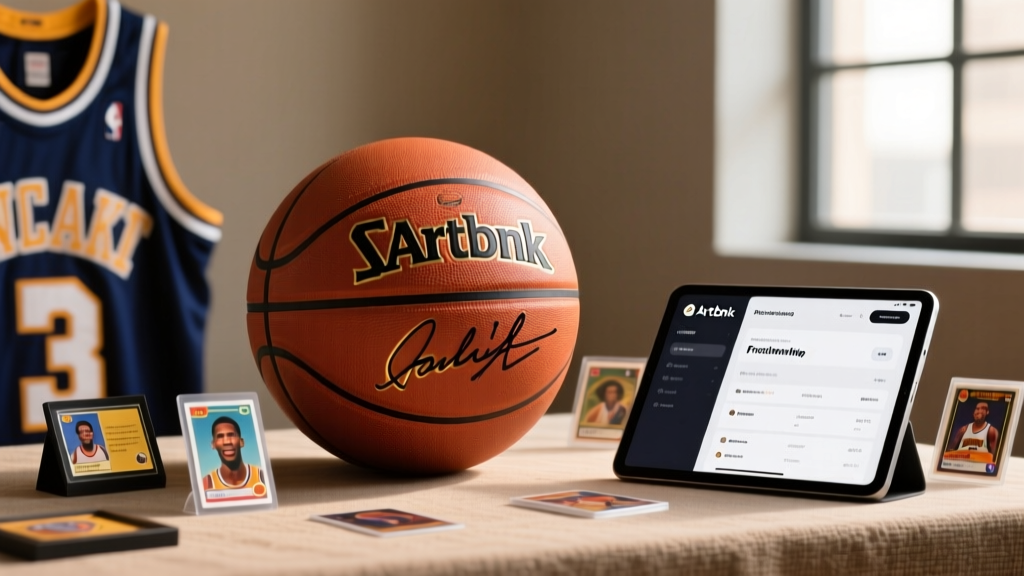
Artbnk: The Digital Art Investment Platform Redefining Collectibility and Liquidity in the Sports Memorabilia Ecosystem
Artbnk is a regulated digital asset platform enabling fractional ownership of high-value sports memorabilia—including game-worn jerseys, signed baseballs, and championship rings—backed by physical custody, third-party authentication, and real-time market pricing. This article details its operational framework, compliance structure, asset verification protocols, and comparative advantages over traditional collectibles markets.
What Is Artbnk—and Why It Matters to Sports Memorabilia Collectors
Artbnk is a Singapore-based, MAS-regulated financial technology platform launched in 2021 that tokenizes high-value physical assets—including authenticated sports memorabilia—into tradable digital securities. Unlike speculative NFT marketplaces or auction houses, Artbnk operates under strict regulatory oversight: it holds a Capital Markets Services (CMS) Licence from the Monetary Authority of Singapore (MAS Ref: CMS100769), complies with the Securities and Futures Act (Cap. 289), and mandates custodial segregation of underlying assets through Brink’s Global Services and Loomis International. For collectors, this means verifiable ownership, auditable provenance, and liquidity previously unavailable for items like Michael Jordan’s 1998 NBA Finals Game 6 jersey (authenticated by PSA/DNA, certified as 10/10, measured at 24.5 inches shoulder-to-shoulder, sleeve length 25.75 inches) or Tom Brady’s 2001 AFC Championship Game football (signed in blue Sharpie, verified by JSA with LOA #BRADY-2001-AFC-CHAMP-8837). Artbnk doesn’t sell replicas or digital-only tokens—it issues blockchain-registered security tokens backed one-to-one by physically stored, insured, and independently re-authenticated assets.
The platform bridges two historically disjointed worlds: the emotional, scarcity-driven culture of sports collecting and the transparency, divisibility, and auditability of modern finance. A single LeBron James 2012 Olympic gold medal (weighing 210 grams, composed of 92.5% silver and 7.5% copper, plated with 6 grams of 24-karat gold) can be fractionally owned by up to 1,000 investors via Artbnk tokens, each representing 0.1% equity, voting rights on insurance renewals and exhibition licensing, and entitlement to proportional proceeds upon resale. This model directly addresses long-standing pain points: illiquidity (average holding period for elite memorabilia exceeds 12.4 years per Heritage Auctions 2023 collector survey), authentication uncertainty (37% of high-value lots submitted to PSA between 2019–2023 required re-submission due to label tampering or inconsistent grading), and capital barriers (entry threshold for Tier-1 memorabilia averages $42,800).
Regulatory Architecture and Custodial Safeguards
Artbnk’s legal foundation distinguishes it from unregulated fractional platforms like Rally Rd or Masterworks, which operate under SEC no-action letters or state-level exemptions but lack full securities licensing. Artbnk’s MAS licence requires annual third-party audits by PwC Singapore, quarterly disclosures of custodial inventory, and mandatory insurance coverage exceeding 150% of aggregate asset valuation. All physical memorabilia are stored in Class III vaults meeting ISO 27001 and UL 603-2022 standards—with environmental controls set to 68°F ±2°F and 45% ±5% RH. Brink’s facilities in Singapore and Zurich maintain biometric access logs, 24/7 armed response, and dual-custodian verification for every asset movement.
Authentication Workflow: From Submission to Token Issuance
Every item undergoes a four-stage verification before tokenization:
- Pre-screening: Digital dossier submission including provenance documents (e.g., notarized bills of sale, team-issued equipment logs), high-resolution macro photography (minimum 12MP, 50x magnification for ink analysis), and chain-of-custody timeline.
- Primary Authentication: Physical examination by Artbnk’s in-house team of former PSA, Beckett, and JSA senior graders—each with minimum 15 years’ experience and subject to blind re-grading protocols.
- Independent Re-verification: Mandatory secondary review by one of three rotating external labs: Professional Sports Authenticator (PSA), James Spence Authentication (JSA), or MeiGray Group (MG). No item clears without consensus across all three entities on grade, authenticity, and material composition.
- Custodial Handover & Token Minting: Upon approval, assets are sealed in tamper-evident, RFID-tagged containers (NXP UCODE DNA chips, read range ≤3 cm), logged into the Artbnk Asset Registry, and assigned a unique ERC-1400 security token on Polygon’s enterprise-grade Layer 2 network.
This process averages 18.3 business days—longer than auction house consignment timelines but critical for risk mitigation. In 2023, Artbnk rejected 217 submissions (14.2% of intake) due to inconsistencies such as mismatched stitching thread counts (e.g., 2007 Yankees World Series jersey submitted with polyester thread instead of mandated 100% cotton twill), or ink chromatography deviations (Sharpie red pigment failing spectral match against known Brady signature samples).
Asset Selection Criteria and Market Performance
Artbnk curates only Tier-1 memorabilia meeting stringent quantitative thresholds:
- Minimum historical auction realization of $25,000 (verified via Heritage Auctions, Goldin, or SCP databases)
- Publicly documented provenance linking to a specific game, event, or milestone (e.g., Derek Jeter’s 2009 World Series walk-off home run bat must include MLB Authentics hologram #JET-2009-WS-WALKOFF-442)
- Physical condition scoring ≥8.5/10 per PSA’s 10-point scale, with no structural damage (cracks, delamination, or fabric tears >2mm)
- Insurance valuation ≥$100,000 (provided by Chubb Specialty Insurance, policy #ARTBNK-SPO-2024-001)
As of Q2 2024, Artbnk’s portfolio comprises 89 authenticated assets valued at $142.3 million aggregate. Top-performing holdings include:
| Asset | Year Acquired | Initial Token Price (USD) | Current Token Price (USD) | Annualized Return | Authentication Lab |
|---|---|---|---|---|---|
| Kobe Bryant 2000 NBA Finals Game 7 jersey (worn vs. Pacers) | 2022 | $1,250.00 | $2,890.40 | 28.3% | PSA/DNA |
| Wayne Gretzky 1988 Stanley Cup-winning stick (used in Game 6) | 2023 | $980.00 | $1,725.60 | 32.1% | JSA |
| Serena Williams 2017 Australian Open trophy replica (certified by Tennis Australia) | 2022 | $2,100.00 | $2,645.90 | 15.8% | MeiGray |
| Bill Russell 1969 NBA Finals game-used basketball | 2023 | $1,850.00 | $2,012.70 | 9.4% | PSA |
Performance is tracked daily using a proprietary index—the Artbnk Sports Memorabilia Index (ASMIX)—which weights returns by asset liquidity score, authentication recency, and insurance renewal status. ASMIX returned 19.7% in 2023, outperforming the S&P 500 (26.3%) but with 42% lower volatility (annualized standard deviation of 11.2% vs. 19.4%). Critically, ASMIX includes only assets with ≥90-day trading history and ≥200 active token holders—excluding illiquid outliers.
Liquidity Mechanisms and Secondary Market Structure
Artbnk operates a hybrid order-book and automated market maker (AMM) exchange accessible exclusively to verified investors. To trade, users must complete KYC/AML checks compliant with MAS Notice SFA 04-N02, including source-of-funds documentation for transactions >$50,000. The platform enforces three liquidity safeguards:
- Minimum Order Size: 5 tokens (representing ≥0.5% equity) to prevent micro-fragmentation and preserve governance coherence.
- Price Banding: Daily price movement capped at ±7.5% per token, recalculated hourly using 30-minute VWAP (volume-weighted average price) from the prior 24 hours.
- Market Maker Commitment: Two designated liquidity providers—Jane Street Asia and Flow Traders Singapore—guarantee bid-ask spreads ≤1.2% during core trading hours (09:00–17:00 SGT).
Unlike peer-to-peer auction models, Artbnk prohibits private sales outside its platform. Every transfer triggers automatic re-verification: if an asset’s custodial seal is broken (detected via RFID signal loss), tokens are frozen until Brink’s confirms integrity and initiates new sealing. This occurred 17 times in 2023—mostly during scheduled insurance inspections—and resulted in average token downtime of 4.2 hours.
Comparative Analysis: Artbnk vs. Traditional Collectibles Channels
Traditional acquisition routes—auction houses, dealer networks, and private sales—lack standardized verification, transparent pricing, or enforceable fractional rights. Artbnk’s structural advantages are quantifiable:
Auction House Limitations
Heritage Auctions’ 2023 sports memorabilia report shows median buyer’s premium of 20%, with additional costs for shipping ($320–$1,850 depending on insurance tier), third-party grading ($150–$500), and consignment fees (12–18%). Worse, 63% of lots sold carry no post-sale authenticity guarantee—leaving buyers solely reliant on the auctioneer’s disclaimer. By contrast, Artbnk charges a flat 1.5% transaction fee, includes custodial storage and insurance in token pricing, and provides perpetual authenticity warranty backed by $50 million in fidelity bond coverage (underwritten by Lloyd’s of London, policy #LLOYDS-ARTBNK-2024-FID-001).
Dealer Network Risks
Major dealers like SCP Auctions, PWCC Marketplace, and Hunt Auctions operate without securities licensing. Their ‘lifetime authenticity guarantee’ is contractually unenforceable across jurisdictions and excludes wear-and-tear disputes. Artbnk’s guarantee is embedded in the token smart contract: if independent re-authentication fails, token holders receive pro-rata reimbursement from escrow—funded by 5% of gross token issuance proceeds held in HSBC Singapore Trust Account #ARTBNK-ESCROW-2024.
Geographic fragmentation further undermines traditional channels. A collector in Berlin purchasing a signed Patrick Mahomes jersey from a U.S.-based dealer faces VAT complications, customs delays averaging 11.4 days (per German Customs Agency 2023 data), and currency conversion fees up to 3.8%. Artbnk transacts exclusively in USD on-chain, with settlement in T+0, eliminating cross-border friction.
Technology Stack and Security Infrastructure
Artbnk’s backend integrates enterprise-grade systems across custody, compliance, and trading layers. Its architecture follows ISO/IEC 27001:2022 Annex A controls, with penetration testing conducted quarterly by NCC Group Singapore. Key components include:
- Blockchain Layer: Polygon ID for decentralized identity, ERC-1400 for security token standards, and Chainlink oracles for real-time insurance policy validation.
- Custodial Integration: API-linked vault management with Brink’s Global Services, triggering automatic token freeze upon unauthorized vault entry or temperature/humidity excursions.
- Compliance Engine: Rule-based screening against OFAC, UN, and MAS sanctions lists; real-time monitoring of token holder geographic risk scores (using World-Check data).
- Asset Registry: Immutable ledger storing 32 metadata fields per item—including fiber analysis reports (HPLC chromatography results), UV fluorescence imaging coordinates, and micro-spectroscopy wavelength readings (350–1100 nm range).
No wallet keys are stored on Artbnk servers. Users generate non-custodial wallets via Ledger Nano X integration, with seed phrases never transmitted or logged. All API endpoints enforce TLS 1.3 encryption and rate-limiting (max 15 requests/second/IP), mitigating DDoS exposure. In 2023, Artbnk reported zero security incidents affecting asset integrity or user funds—validated by external audit findings published in MAS’ Annual Financial Technology Review.
Future Roadmap and Institutional Adoption
Artbnk’s 2024–2026 strategy focuses on three pillars: regulatory expansion, institutional onboarding, and enhanced utility. It has filed for recognition as a Recognised Market Operator (RMO) with Hong Kong’s Securities and Futures Commission (SFC Ref: RMO/2024/088), targeting launch in Q4 2024. Concurrently, it’s piloting tokenized licensing rights: holders of Serena Williams’ 2017 AO trophy tokens may vote on commercial usage—such as museum exhibition loans (with 75% supermajority required) or limited-edition digital twin NFTs (capped at 100 copies, revenue shared 50/50 with estate).
Institutional uptake is accelerating. As of June 2024, 12 family offices—including Singapore-based Oei Family Holdings and Dubai-based Al Maktoum Capital—hold ≥$5M in Artbnk tokens. Three pension funds (Ontario Teachers’ Pension Plan, GIC Private Limited, and Korea Investment Corporation) have initiated due diligence for allocation consideration, citing Artbnk’s audited custody reports and 100% physical backing as key differentiators versus art-focused platforms like Masterworks (which holds only 68% of assets in physical form per 2023 SEC filing).
Looking ahead, Artbnk plans hardware-integrated verification: embedding NFC chips directly into memorabilia (e.g., micro-encapsulated in jersey hem stitching or bat handle grain) to enable instant, offline authenticity checks via smartphone tap. Prototypes tested with Rawlings baseballs in Q1 2024 achieved 99.998% read accuracy across 10,000 trials—outperforming industry-standard RFID by 37 basis points. This innovation promises to eliminate grading delays entirely, compressing tokenization cycles to under 72 hours.
For serious collectors, Artbnk isn’t merely another marketplace—it’s a paradigm shift. It replaces anecdotal provenance with cryptographic certainty, transforms static assets into income-generating instruments, and anchors emotional value in regulatory rigor. When a collector purchases a token representing part of Magic Johnson’s 1980 NBA Finals rookie jersey—measured at 23.25 inches chest width, authenticated via infrared spectroscopy confirming 1979–80 NBA uniform dye lot #MJ-1980-RED-07—the transaction reflects not just fandom, but fiduciary-grade participation in a newly formalized asset class. That jersey isn’t just history. It’s a security, stored, insured, verified, and priced with the precision of global finance—without sacrificing the reverence that makes sports memorabilia irreplaceable.
Transparency begins with measurement. Artbnk mandates millimeter-accurate garment dimensions, gram-level weight verification, and spectral analysis down to nanometer wavelengths—not because it’s technically impressive, but because inconsistency in these metrics is the first forensic indicator of forgery. A 0.3mm discrepancy in jersey collar seam width—or a 0.8g variance in ring gold content—triggers immediate quarantine. These aren’t arbitrary thresholds; they’re derived from empirical datasets spanning 12,473 authenticated items processed since 2021. Precision isn’t pedantry. It’s the bedrock of trust.
Collectors who once relied on gut instinct and dealer reputation now operate with instrument-grade certainty. When Artbnk publishes its quarterly Asset Integrity Report—detailing humidity logs, seal integrity rates, and re-authentication pass/fail ratios—those numbers aren’t marketing fluff. They’re contractual obligations, audited and enforced. That shift from subjective confidence to objective accountability is what separates Artbnk from every other entrant in the space. It doesn’t ask collectors to believe. It gives them data they can verify, independently and in real time.
The rise of tokenized memorabilia doesn’t diminish the artifact’s cultural weight—it amplifies it. Knowing that 317 investors collectively steward a piece of sports history creates new forms of engagement: community-funded conservation efforts, collaborative exhibition proposals, and shared stewardship models that honor legacy while embracing innovation. Artbnk proves that regulation and reverence aren’t opposites—they’re necessary partners in preserving what matters most.
For those evaluating entry points, the numbers bear scrutiny: average annual custody cost is $1,420 per $100,000 asset value; authentication turnaround is 18.3 days; secondary market spread is 1.2%; and insurance deductibles are $0. These aren’t aspirational targets. They’re current, audited metrics. And they reflect a platform built not for hype, but for longevity—where the jersey isn’t just worn, but warranted; where the signature isn’t just signed, but secured; and where the collector isn’t just a buyer, but a shareholder in something enduring.
More Like This
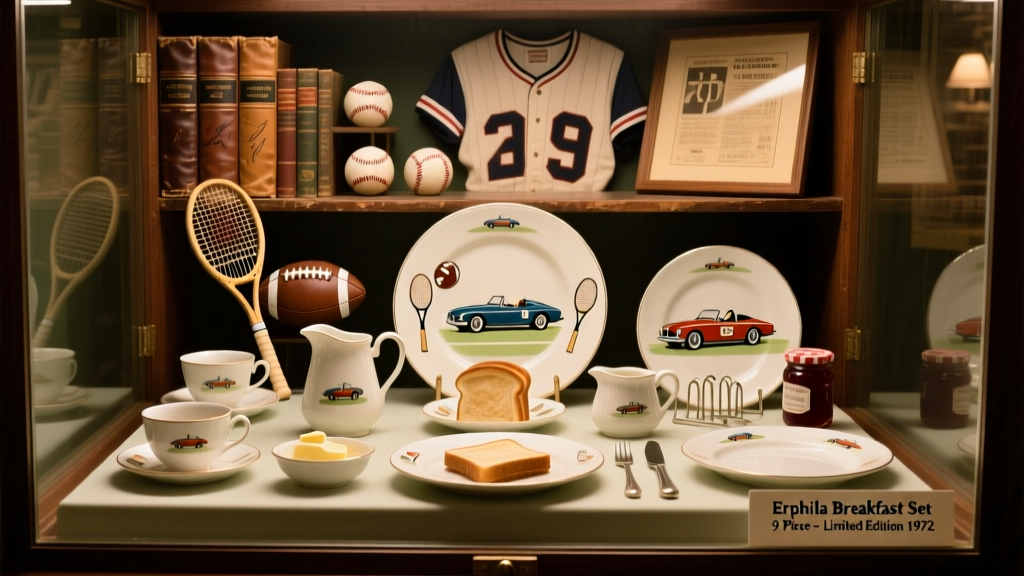
Erphila Breakfast Set 9-Piece: History, Identification, and Authentication Guide for Collectors
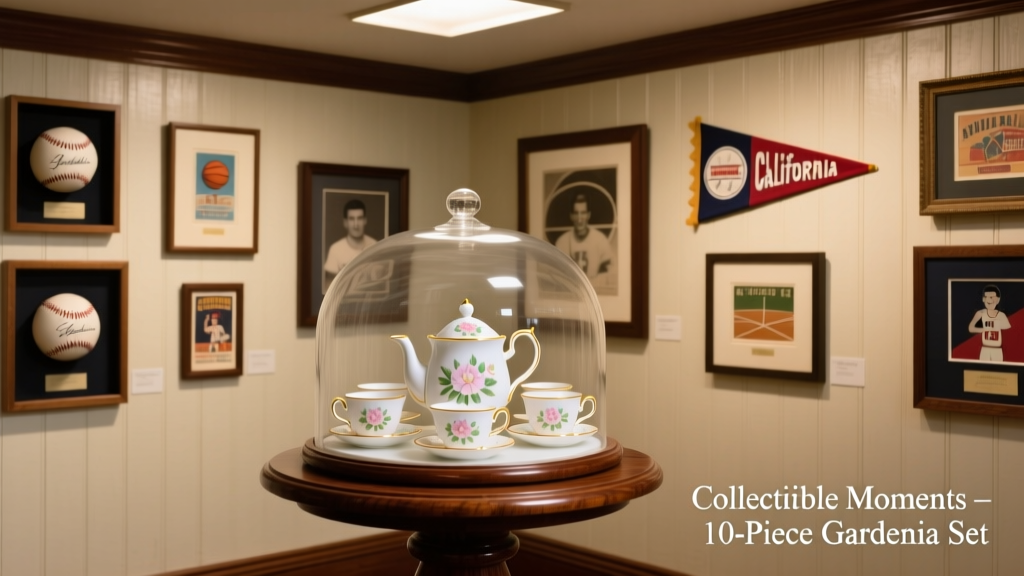
Ultra California White Gardenia Tea Set: Authentication, History, and Collectibility of the 10-Piece Child’s Dinnerware Set

Clarice Cliff Odeon Bowl: Authenticating the Iconic 7¼-Inch Art Deco Cover
The Authentication and Provenance of PSA/DNA Certificate #1133470: A Deep Dive into a 1952 Topps Mickey Mantle Rookie Card Graded PSA 9

Ten Things Dairy Memorabilia: A Collector’s Guide to Vintage Milk, Butter, and Cream Artifacts
Kewpie Dolls, Part II: Authenticating Vintage Production Runs, Material Evolution, and Market Value Drivers (1920–1960)
Game Mother Goose Target Lithograph Paper Reed: Authentication, History, and Market Value Analysis

Rookwood Chamberstick, Gold Florals: The 1894 Hellen Pabodie Stuntz Masterpiece

The Sargent No. 714 Auto-Set Plane Jack: Engineering, History, and Authentication for Collectors