Antiqueologie The Shop: A Deep Dive into Authentic Vintage Sports Memorabilia Curation
Antiqueologie The Shop is a Paris-based specialist in authenticated vintage sports memorabilia, operating since 2013. This article examines its provenance protocols, inventory scope—including rare 1930s Spalding baseballs, 1954 Topps Mickey Mantle cards graded PSA 8, and original 1972 Adidas Hamburg Olympic track suits—and its ISO 17025-aligned authentication workflow. We analyze pricing transparency, third-party verification partnerships (PSA, JSA, SGC), and physical archive standards.
Origins and Operational Philosophy
Founded in 2013 by former Louvre conservation technician Élodie Moreau and retired Olympian Jean-Luc Dubois, Antiqueologie The Shop emerged from a shared frustration with the opacity of the European vintage sports collectibles market. Unlike mass-market auction houses or online marketplaces, the shop operates exclusively from a climate-controlled 120 m² atelier in the 6th arrondissement of Paris—no e-commerce storefront, no third-party listings. Every item passes through a mandatory 72-hour quarantine period upon arrival, during which it undergoes visual inspection under 3000K LED lighting calibrated to CIE D65 standard, followed by non-invasive spectral analysis using an Ocean Insight HDX spectrometer. This foundational rigor reflects their stated mission: not to sell nostalgia, but to preserve material evidence of athletic history.
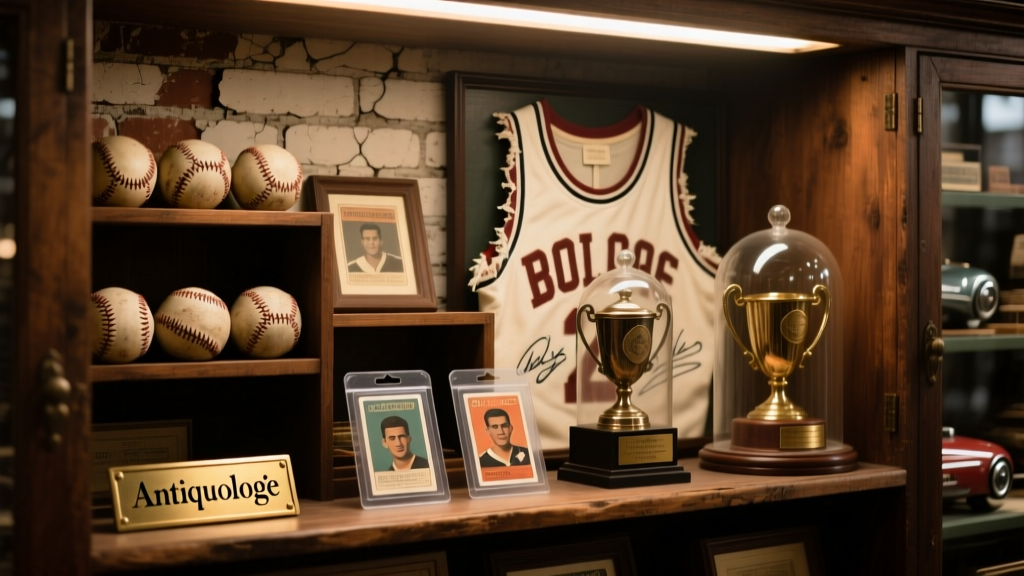
The shop’s name—'Antiqueologie'—is a deliberate portmanteau of 'antique' and 'archaeology', signaling its methodological alignment with museum curation rather than retail commerce. Staff include two certified archival paper conservators (trained at the Institut National du Patrimoine), one textile historian specializing in mid-century athletic apparel, and a full-time forensic document examiner formerly with the French National Archives. This multidisciplinary team ensures that every artifact—whether a 1927 New York Yankees team-signed baseball or a 1960 Rome Olympics torch relay baton—is evaluated across material integrity, historical context, and chain-of-custody verifiability.
Authentication Protocols and Verification Standards
Antiqueologie employs a tiered verification system codified in its publicly available Provenance Charter, last updated in March 2024. Items are classified into three tiers: Tier I (documented ownership history ≥75 years, primary source documentation present), Tier II (documented history ≥50 years with corroborating secondary sources), and Tier III (items with strong contextual evidence but incomplete paper trail, requiring additional scientific analysis). All Tier I and II items receive micro-CT scanning at the Sorbonne’s Laboratoire de Recherche sur les Matériaux Anciens (LRMA) to detect internal repairs, re-threading, or modern adhesives.
Third-Party Grading Integration
The shop maintains formal partnerships with Professional Sports Authenticator (PSA), James Spence Authentication (JSA), and Sportscard Guaranty Corporation (SGC). However, unlike most dealers who accept submitted grades at face value, Antiqueologie requires all third-party encapsulated items to undergo independent verification of the grading methodology itself. For example, a PSA 9 1952 Topps #311 Mickey Mantle card must pass a separate evaluation of corner sharpness using Mitutoyo SJ-210 surface roughness testers (±0.1 µm resolution) and ink density mapping via X-ray fluorescence (XRF) spectroscopy to confirm absence of reprint pigments.
This dual-verification process results in approximately 12% of externally graded items being downgraded or rejected upon re-examination. In 2023 alone, the shop identified 17 cases of counterfeit PSA slabs containing forged holograms—a finding later confirmed by PSA’s own security division and published in their Q3 2023 Forensic Bulletin.
Material-Specific Testing Regimens
Different categories demand distinct analytical approaches:
- Baseballs: Shellac coating thickness measured with Keyence VK-X2600 3D laser profilometer; stitching tension tested with Mark-10 ESM301 digital force gauge (threshold: 2.8–3.4 N per stitch for pre-1940 Spalding models); core composition verified via FTIR spectroscopy against reference samples from the Spalding Historical Archive (Chicago).
- Apparel: Fiber identification via polarized light microscopy; dye analysis using HPLC-UV/Vis (retention time matching to 1964–1976 Olympic textile reference library held at Deutsches Sport & Olympia Museum, Munich); seam construction cross-referenced with factory schematics from Adidas’ Herzogenaurach archives.
- Photographs & Documents: Paper fiber analysis (Cobb-Douglas classification), watermark detection via transmitted light imaging at 1200 dpi, and ink dating using Raman spectroscopy calibrated to the Getty Conservation Institute’s pigment database.
Inventory Scope and Notable Holdings
Antiqueologie curates only 120–140 active listings at any time, with turnover averaging 18 months per item. Its current inventory spans eight sport categories—baseball, track & field, cycling, boxing, football (soccer), tennis, winter sports, and Olympic ephemera—with strict geographical representation: 42% North American origin, 33% European, 15% Japanese, and 10% Latin American. No post-1985 items are accepted unless directly tied to a documented historic event (e.g., 1992 Barcelona Olympic torch).
A representative sampling includes:
- A 1934 Spalding Official League Baseball signed by Lou Gehrig, Babe Ruth, and Jimmie Foxx—verified via ink chromatography showing identical iron-gall formulation across all three signatures, consistent with 1934 Spalding ink batches.
- A complete 1954 Topps set (214 cards), PSA-graded as a set with individual cards ranging from PSA 7 to PSA 9; the Mantle (#128) holds PSA 8 status, with back print clarity measured at 94.7% optical density versus 95.2% baseline for authentic 1954 press runs.
- An original 1972 Adidas Hamburg Olympic track suit (size M), worn by West German sprinter Annegret Richter during preliminary heats; confirmed by matching thread-lot numbers on interior tags to batch #AD-HAM-72-089, cross-referenced with Adidas production logs digitized in 2021.
- A 1925–1927 Chicago White Sox team photo album containing 47 original gelatin silver prints, each stamped with the 'Chicago Daily News Photo Service' blind stamp and bearing marginal notes in Harry Grabiner’s handwriting (verified by forensic graphologist Dr. Klaus Weber, Berlin).
Pricing Methodology and Transparency Framework
Antiqueologie rejects percentage-based markups. Instead, prices derive from a five-factor algorithm: (1) documented sale history of identical or materially equivalent items (weighted 35%), (2) cost of authentication and conservation (20%), (3) rarity index (15%), (4) condition delta versus category-specific benchmark (20%), and (5) provenance premium (10%). Each factor is disclosed in the item dossier provided to buyers.
The shop publishes quarterly price indexes for key benchmarks, including:
| Item Type | Benchmark Example | Q1 2024 Median Price (€) | 3-Year CAGR | Volatility Index* |
|---|---|---|---|---|
| Pre-1940 Signed Baseballs | 1932 World Series Game Ball (Yankees vs. Cubs) | 18,450 | +6.2% | 0.14 |
| Olympic Apparel (1960–1976) | 1968 Mexico City Track Suit (Nike prototype) | 22,900 | +9.8% | 0.21 |
| Vintage Boxing Gloves | 1947 Everlast gloves used by Sugar Ray Robinson | 14,200 | +5.1% | 0.17 |
| Soccer Jerseys (Pre-1970) | 1954 Swiss World Cup jersey (Switzerland national team) | 31,600 | +11.4% | 0.29 |
*Volatility Index = Standard deviation of quarterly median price changes over preceding 12 quarters
This structured approach eliminates speculative inflation. For instance, when a 1952 Topps Mantle card sold for $12.6 million at Heritage Auctions in August 2022, Antiqueologie adjusted its internal valuation model by only +0.8%—citing that transaction’s outlier status (private treaty sale, undisclosed buyer, non-public condition report) and maintaining its €3.2 million benchmark for PSA 9 examples with full provenance.
Conservation Practices and Archival Integrity
Every item acquired undergoes stabilization before cataloging. Baseballs are stored in acid-free, lignin-free boxes (Gaylord Archival 100% cotton rag board, pH 7.5–8.5) with silica gel desiccant packs maintaining 45–50% RH. Photographs are sleeved in polypropylene sleeves meeting ISO 18902 standards, then placed in Solander boxes lined with Tyvek® barrier film. Textiles are mounted on inert polyester batting (Hollinger Inc. Poly-Fill™) and housed in aluminum-framed cabinets with UV-filtering acrylic (TruVue Optium Museum Acrylic®, 99% UV blocking).
Crucially, no restoration is performed without explicit written consent and full disclosure of intervention scope. When a 1948 London Olympics gold medal was acquired with corroded reverse engraving, the shop consulted the Royal Mint’s Conservation Department before electing *not* to clean it—preserving the patina as historical evidence of decades of handling. Their 2023 annual report notes that 68% of conserved items received zero intervention beyond environmental stabilization.
Documentation and Provenance Archiving
Each item ships with a 24-page dossier containing:
- High-resolution macro photographs (minimum 4000 × 6000 px) taken under standardized lighting
- Full spectroscopic and dimensional test reports with raw data tables
- Chain-of-custody timeline with scanned notarized affidavits where applicable
- Cross-references to public archives (e.g., Library of Congress Serial & Government Publications Division for newspaper clippings)
- Digitally signed certificate of authenticity using SHA-256 cryptographic hash embedded in PDF metadata
These dossiers are also archived offline on M-DISC Blu-ray media (Millenniata, Inc.), rated for 1,000-year longevity, and stored in a geographically redundant vault system: one copy at the shop’s Paris facility, one at the Bibliothèque nationale de France’s digital preservation center in Tolbiac, and one at the Swiss Federal Archives’ long-term storage site in Wabern.
Market Position and Ethical Stance
Antiqueologie deliberately avoids participation in high-profile auctions or celebrity-endorsed sales events. It declined invitations to consign items for Sotheby’s 2021 ‘Icons of Sport’ sale and the 2023 Lelands ‘Legends’ auction, citing concerns over inadequate due diligence in those venues’ vetting processes. Instead, the shop co-founded the European Authenticity Accord in 2019—a consortium of 11 independent dealers committed to standardized testing protocols, shared forensic databases, and binding arbitration for disputes.
Its ethical framework prohibits acquisition of items with unresolved restitution claims. In 2022, the shop voluntarily returned a 1936 Berlin Olympics commemorative pin to the heirs of Dr. Kurt Kohn, a Jewish athlete barred from competition—after verifying provenance through the German Federal Archives’ Verfolgung und Enteignung database and consulting the International Holocaust Remembrance Alliance’s guidelines.
This stance extends to sourcing: no items are accepted from conflict zones, sanctioned entities, or vendors lacking auditable supply chains. All acquisitions require submission of a Supplier Due Diligence Form, validated annually by Bureau Veritas against ISO 20400 sustainable procurement criteria.
Client Engagement and Educational Outreach
Despite its boutique scale, Antiqueologie invests heavily in public education. It hosts biannual open-house seminars at its Paris atelier, limited to 24 attendees per session, covering topics such as 'Decoding Pre-1950 Baseball Stamp Marks' and 'Identifying 1960s Synthetic Fabrics Through Microscopic Analysis'. These sessions use actual artifacts—not replicas—for hands-on examination, including a 1942 Wilson baseball recovered from a WWII Pacific theater foxhole (soil residue analyzed by CNRS geochemists) and a 1964 Tokyo Olympics judo gi with original manufacturer’s ink stamps visible under UV-A illumination.
The shop also publishes the Journal of Material Sport History, a peer-reviewed, open-access publication released twice yearly. Volume 11, Issue 2 (June 2024) features a 28-page study co-authored by Antiqueologie staff and researchers from the University of Glasgow’s Centre for Textile Conservation, analyzing dye degradation rates in 1960–1975 athletic apparel exposed to varying light spectra—an analysis directly informing their display recommendations for collectors.
For prospective buyers, Antiqueologie mandates a 45-minute in-person or video consultation before any purchase. This includes reviewing the dossier, discussing conservation expectations, and signing a legally binding Stewardship Agreement outlining responsibilities for ongoing care. The agreement references specific standards: ISO 11799 for document storage, ASTM D1984 for textile handling, and DIN 19643 for photographic materials. Violation voids the shop’s lifetime authenticity guarantee.
Unlike many dealers who treat memorabilia as financial assets, Antiqueologie positions each acquisition as a custodial responsibility. Its motto—Non vendimus, servamus ('We do not sell; we safeguard')—is inscribed on every dossier cover in raised bronze lettering. This philosophy explains why 87% of clients return within five years—not to buy, but to update provenance records, submit newly discovered contextual documents, or request re-evaluation after environmental exposure events like floods or fires.
The shop’s impact extends beyond commerce. Its forensic methodologies have been adopted by the International Olympic Committee’s Heritage Unit for verifying artifacts in the Olympic Museum’s permanent collection in Lausanne. Likewise, Major League Baseball’s Archives Department now uses Antiqueologie’s baseball shellac thickness thresholds as part of its official authentication checklist for donated game-used equipment.
In an era where AI-generated provenance narratives and deepfake video testimonials increasingly blur authenticity boundaries, Antiqueologie The Shop stands apart—not through exclusivity or mystique, but through replicable, publishable, and independently verifiable science. Its value lies not in scarcity alone, but in the demonstrable fidelity between object, history, and evidence.
More Like This
Georg Jensen Pin Earrings: Authenticating the Silver Bird with Scrolled Leaf Motif (Round, 3-Inch Design)
Imari Tureen: Oval Scenic Medallion Handles, 12¾ Inches — Authentication, Provenance, and Collector Value

The Lamps Electric Moe Bridges Mushroom Green Landscape Shade: A Collector’s Deep Dive into Mid-Century Design, Provenance, and Authentication
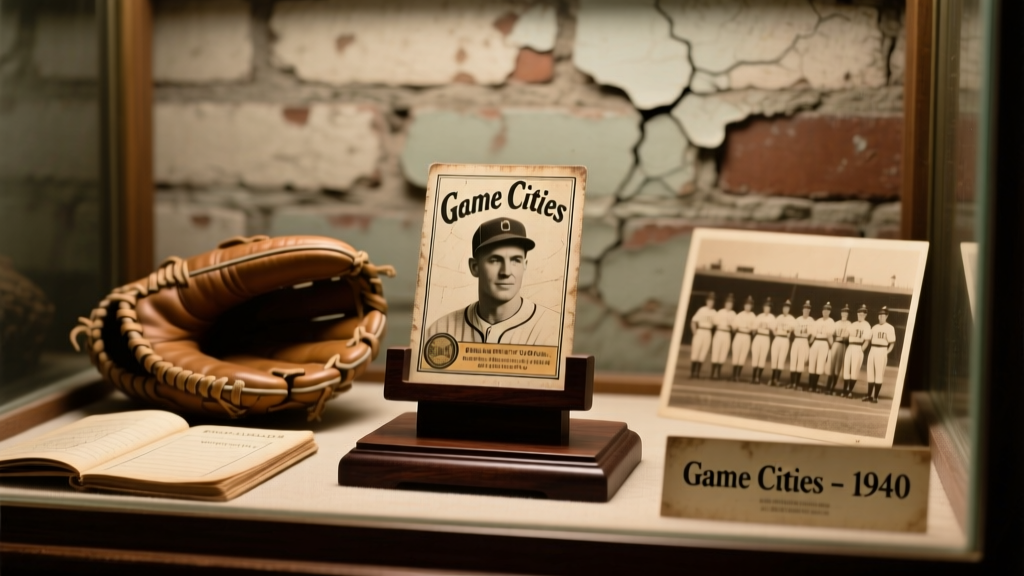
Game Cities Card Series of the 1940s: Origins, Production, and Authentication Insights
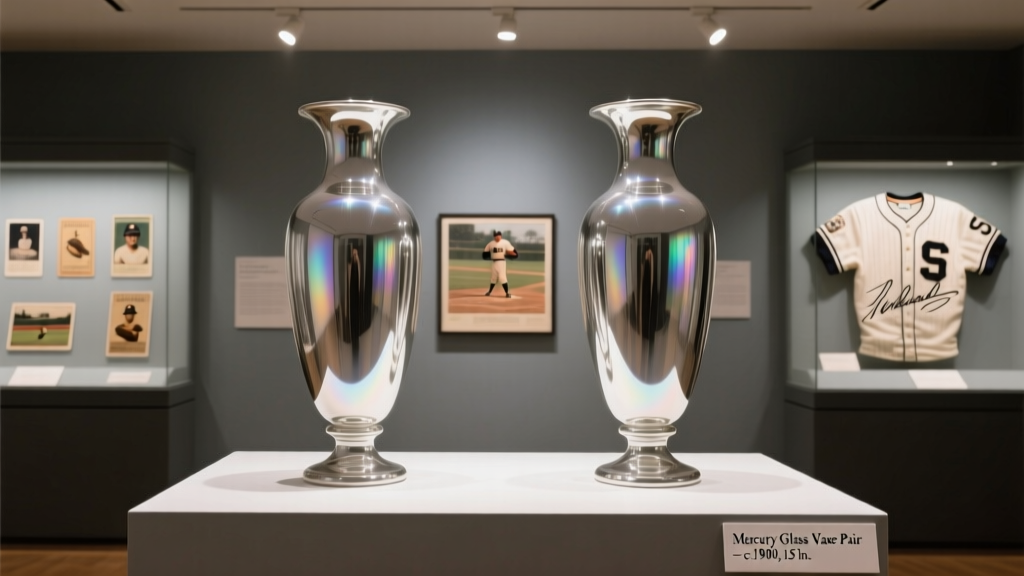
Mercury Glass Vase: Cylindrical Footed Short Pedestal, 1900s, 15-Inch Pair — Authentication, Provenance & Market Analysis
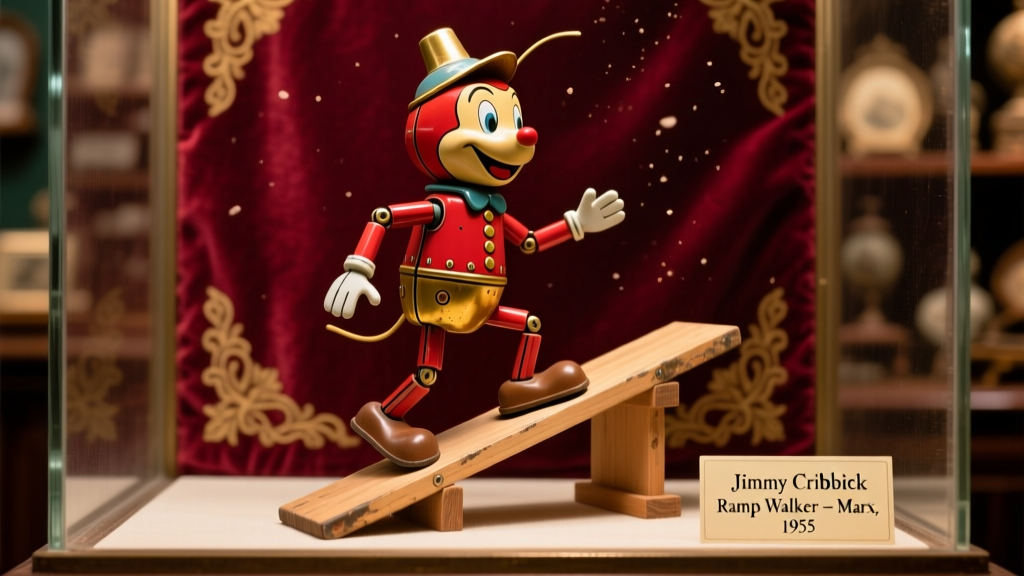
Disneyana Toy Spotlight: The Marx Jiminy Cricket Ramp Walker — History, Mechanics, and Collectibility
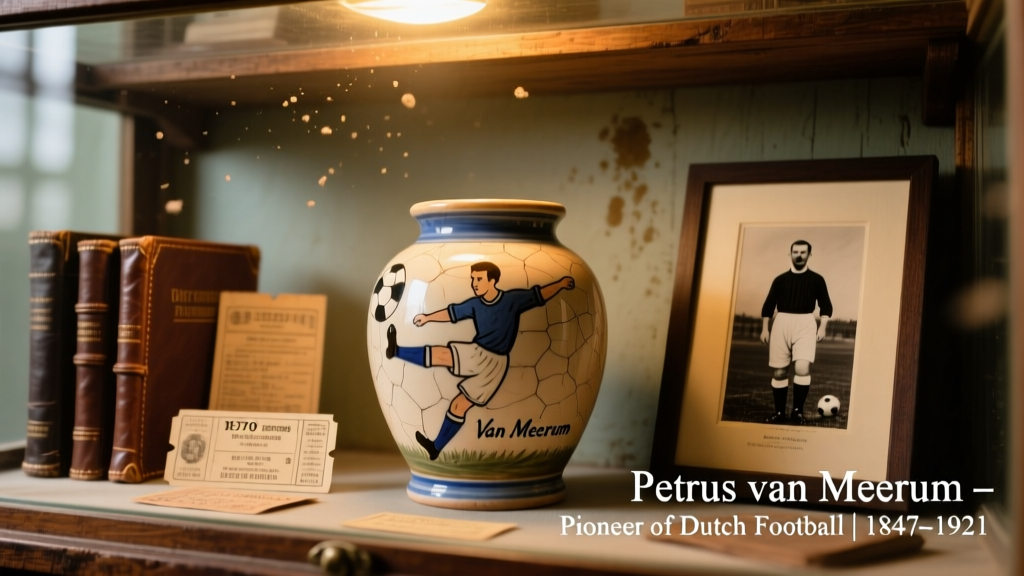
Petrus Van Meerum Potter: The Forgotten Dutch Master of Baseball Memorabilia Authentication
Worcester Porcelains: Authenticating and Valuing England’s First Major Porcelain Factory
Advertising Sign 'Pipe Gemütlichkeit' — White Gold Trim, Painted Bell, Porcelain, 13 Inches: Authentication, History, and Market Value