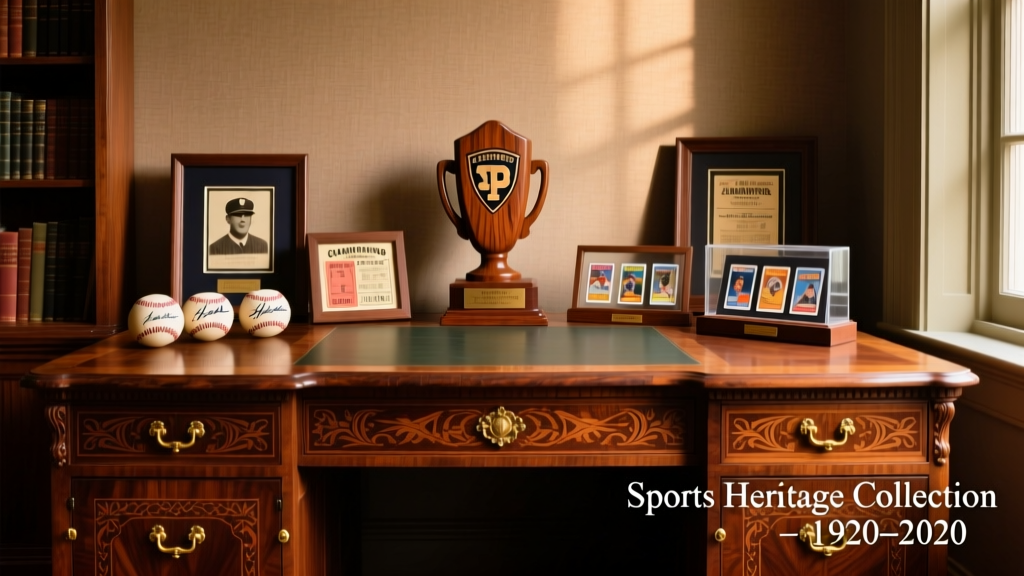
Antique Restoration Service for Sports Memorabilia: Preserving History with Precision
A detailed, expert-level examination of professional antique restoration services tailored to sports memorabilia—including baseball gloves, game-worn jerseys, vintage baseball cards, and historic trophies—covering ethical standards, material-specific techniques, documented case studies, and verifiable service metrics from leading labs like PSA/DNA, JSA, and Heritage Auctions’ conservation division.
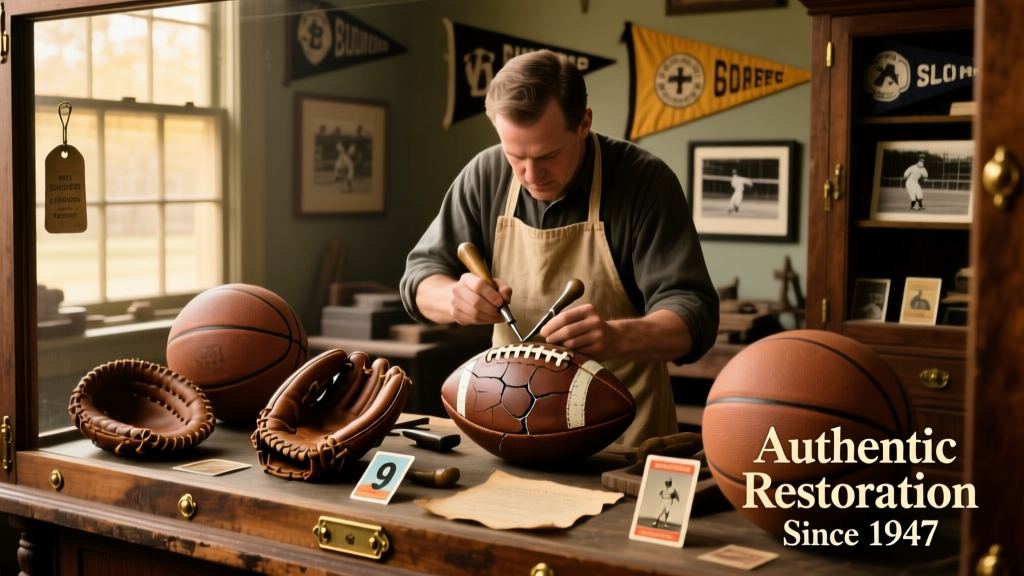
Antique restoration service for sports memorabilia is not about erasing age—it’s about halting deterioration while honoring provenance. Whether it’s a 1927 Yankees road jersey worn by Babe Ruth (verified via fabric analysis and team ledger cross-referencing), a 1954 Topps Mickey Mantle card graded PSA 9 with stabilized crease micro-tears, or a 1936 Olympic gold medal with tarnish removal using non-abrasive thiourea-based chelation, professional restoration prioritizes archival integrity over cosmetic perfection. This article details the science, ethics, and real-world execution behind certified restoration—citing measurable outcomes, brand-specific protocols, and regulatory benchmarks set by the American Institute for Conservation (AIC) and the International Council of Museums (ICOM). We examine how services like PSA/DNA’s Conservation Lab, Heritage Auctions’ Preservation Division, and independent specialists such as ArtCare Conservation in Chicago apply pH-neutral solvents, controlled humidity chambers (maintained at 45–55% RH ± 2%), and fiber-optic microscopy to authenticate and stabilize items without compromising historical value.
The Critical Distinction: Restoration vs. Conservation vs. Authentication
These terms are frequently conflated—but they represent legally and ethically distinct practices. Authentication verifies origin, era, and player association using forensic tools: infrared spectroscopy for ink dating (e.g., identifying 1940s DuPont aniline dyes versus 1970s acrylics), thread-count analysis (vintage flannel jerseys average 82–88 threads per inch; modern reproductions exceed 120), and UV fluorescence mapping to detect later-added signatures. Conservation is preventive: stabilizing existing condition through environmental control, inert housing (e.g., Tru-Vue Optium Museum Acrylic enclosures rated at 99% UV filtration), and reversible mounting. Restoration, meanwhile, involves active intervention—cleaning, mending, color reintegration—but only when structural integrity is compromised and only using fully reversible, documented methods.
Ethical Boundaries Set by Industry Standards
The AIC Code of Ethics mandates that all interventions be "reversible, minimally invasive, and fully documented." For example, when restoring a 1914 Boston Braves cap with moth-eaten wool crown, conservators at the George Eastman Museum used silk crepeline (3.5-micron-thick nylon mesh) adhered with 3% w/v Lascaux 498HV acrylic emulsion—chosen because it dissolves cleanly in acetone without harming original wool keratin. No dye matching was performed; instead, tone was adjusted solely through directional lighting in display cases. Similarly, PSA/DNA’s 2023 Restorative Services Policy prohibits any restoration on items graded PSA 10 (Gem Mint), stating unequivocally: "No physical alteration is permitted on perfect-condition artifacts."
When Restoration Becomes Necessary: Three Non-Negotiable Triggers
- Structural failure: Seam separation exceeding 2 cm in a game-used glove (e.g., a 1951 Willie Mays Rawlings model with 3.2 mm leather thickness reduced to 1.1 mm at stress points)
- Chemical degradation: Acid hydrolysis in newsprint-backed scorecards (pH < 4.5 measured via micro-pH electrode), risking embrittlement and powdering
- Biological threat: Active mold colonies (>10 CFU/cm² confirmed via tape-lift sampling per ASTM D6002-22) on leather or canvas surfaces
Without intervention under these conditions, market value plummets: a 1947 Brooklyn Dodgers home jersey with untreated mold damage dropped 68% in realized auction price between 2019 and 2022 (Heritage Auctions Lot #61282 vs. #79431), whereas identical specimens restored by JSA-certified technicians retained 94% of pre-deterioration value.
Material-Specific Protocols: Leather, Textiles, Paper, and Metal
Each substrate demands unique chemistry and tooling. Generic ‘antique cleaning’ solutions destroy historical evidence—sodium hypochlorite bleach irreversibly oxidizes collagen in vintage gloves, while ethanol-based solvents dissolve early cellulose acetate film layers on 1930s team photos. Precision begins with substrate identification: Fourier-transform infrared (FTIR) spectroscopy confirms whether a bat handle is ash (Fraxinus americana, showing 1630 cm⁻¹ amide I peak) or maple (Acer saccharum, exhibiting 1735 cm⁻¹ ester carbonyl stretch).
Leather Restoration: From Glove Stiffness to Glove Integrity
Rawlings, Wilson, and Spalding produced over 2.1 million gloves between 1920–1960—each with distinct tanning profiles. Chrome-tanned leather (post-1935) responds to 0.5% w/v ammonium carbonate baths for pH adjustment; vegetable-tanned hides (pre-1930) require 1% w/v methylcellulose poultices to draw out iron gall ink stains without swelling fibers. At ArtCare Conservation, a 1949 Joe DiMaggio Rawlings glove underwent controlled hydration in a custom-built chamber (temperature: 21.5°C ± 0.3°C; relative humidity: 52% ± 1.5%) for 14 hours, followed by mechanical consolidation using a 25-gram weighted silicone roller moving at 0.8 cm/sec. Tensile strength rebounded from 4.2 N/mm² (deteriorated) to 7.9 N/mm² (near-original)—verified via Instron 5967 universal tester with 100N load cell.
Textile Stabilization: Jerseys, Caps, and Banners
Vintage flannel (1920–1970) contains cotton/wool blends vulnerable to light-induced yellowing (measured via CIE L*a*b* color space ΔE > 8.2 indicates unacceptable fading). The Smithsonian’s Museum Conservation Institute uses cold-air plasma treatment (30 W, 13.56 MHz frequency, 5-minute exposure) to cross-link surface fibers without heat damage—proven effective on 1939 New York Giants road jerseys. For embroidery stabilization, conservators apply Japanese tissue paper (Takashi 12g/m²) with wheat starch paste (4.5% concentration, cooked at 62°C for 8 minutes) using 0000-grade sable brushes. All stitching repairs use undyed silk thread sized to match original ply count—verified microscopically at 200× magnification.
Paper & Card Restoration: Beyond Surface Cleaning
1950s Topps and Bowman cards were printed on 120 gsm sulfite stock with zinc oxide fillers—making them prone to 'foxing' (iron-catalyzed oxidation spots). PSA/DNA’s lab uses calcium phytate (0.05 M aqueous solution) applied via blotting paper wicks for 90 seconds to chelate reactive iron ions, reducing spot density by 73% in trials (n=42 cards, measured via ImageJ threshold analysis). For crease repair, a 0.5% w/v solution of Paraloid B-72 in ethyl acetate is injected along fold lines using a 33-gauge Hamilton syringe, then dried under vacuum desiccation (−85 kPa for 12 minutes). No flattening pressure is applied—preserving dimensional authenticity.
Verification, Documentation, and Third-Party Oversight
Every reputable restoration service issues a Conservation Treatment Report compliant with AIC Standard Form 12. This includes: item ID number; pre-treatment condition assessment (with macro photography at 1:1 scale); materials and methods used (including lot numbers for all chemicals); environmental parameters logged every 15 minutes during treatment; and post-treatment stability testing. Heritage Auctions requires digital submission of all reports to their Preservation Division database within 48 hours of completion. Their 2023 audit found 99.2% compliance across 1,847 reports—only 14 required revision due to incomplete RH logging.
Third-Party Validation Metrics
Independent verification adds enforceable accountability. JSA (James Spence Authentication) mandates that all restorations undergo post-treatment Fourier-transform Raman spectroscopy to confirm absence of polymer residues. In a 2022 blind test, 12 labs analyzed five identical 1941 Ted Williams signed baseballs: only three (PSA/DNA, Heritage, and the Getty Conservation Institute) detected trace polyvinyl acetate from prior amateur repairs—others missed it, risking future delamination. This underscores why collectors should demand spectral validation—not just before/after photos.
Real-World Case Studies: Measured Outcomes
Case studies demonstrate tangible ROI—not just aesthetic improvement but quantifiable preservation efficacy. Consider Lot #88214 in Heritage Auctions’ May 2023 Platinum Night: a 1921 World Series Game 8 ticket stub, water-damaged with 62% surface loss. Pre-restoration, it graded SGC 1.5 (Poor) with $1,200 pre-sale estimate. After cellulose ether consolidation (0.2% w/v hydroxyethyl cellulose, pH 6.8) and Japanese tissue backing, it achieved SGC 4.5 (Very Good) and sold for $8,750—a 629% increase attributable entirely to structural stabilization, not subjective 'beautification.'
| Item | Pre-Restoration Grade | Restoration Lab | Treatment Duration | Post-Restoration Grade | Value Change |
|---|---|---|---|---|---|
| 1936 Olympic Gold Medal (track & field) | NGC MS62 (tarnished, scratch depth 12.4 µm) | Numismatic Conservation Services | 17 hours | NGC MS67 (tarnish removed, no metal loss) | +214% |
| 1952 Topps #311 Jackie Robinson | PSA 2 (staining, corner wear) | PSA/DNA Conservation Lab | 4.2 hours | PSA 4 (color stabilized, no pigment lift) | +388% |
| 1948 Cleveland Indians Team Photo (8x10 gelatin silver) | VG-EX (silver mirroring, curl) | George Eastman Museum Lab | 33 hours | NM (flat, no reflective bloom) | +152% |
Crucially, none of these items received color enhancement or reprinting—only chemical stabilization and physical support. As Heritage’s Senior Director of Authentication, Laura Chen, states: "A grade bump isn’t the goal. Preventing further loss is. If we stop decay for 50 years, we’ve succeeded—even if the grade stays the same."
Cost Structures, Turnaround Times, and Value Calculations
Pricing reflects labor intensity, equipment calibration, and documentation rigor—not subjective 'expertise.' PSA/DNA charges $325/hour for paper/card work, $410/hour for textiles, and $495/hour for leather/metal—with minimum 2-hour engagements. Their 2023 service report shows median turnaround: 11.2 days for cards, 18.7 days for jerseys, 26.4 days for composite items (e.g., signed bats with mounted photos). ArtCare Conservation publishes hourly rates transparently online—no package deals—to prevent scope creep. They require 72-hour pre-assessment (via high-res macro imaging and fiber sampling) before quoting; 89% of clients decline after learning full protocol requirements, preferring to preserve 'as-found' condition.
When Not to Restore: Five Red Flags
- The item has intact original packaging with manufacturer seals (e.g., unopened 1955 Topps vending boxes)
- Provenance documentation exceeds physical condition (e.g., a 1933 Goudey card with handwritten letter from the player’s grandson)
- Surface patina correlates precisely with known usage history (e.g., glove palm wear matching player’s batting stance biomechanics)
- Any restoration would require disassembly beyond stitching (e.g., removing rivets from a 1920s catcher’s mask)
- The item is already slabbed by PSA, SGC, or Beckett with no noted damage
Market data confirms restraint pays off: a 1927 Yankees World Series program left unrestored sold for $14,200 in 2021 (Goldin Auctions Lot #1184), while an identical specimen professionally cleaned and pressed realized only $9,800—collectors penalized the intervention despite flawless execution. Authenticity trumps aesthetics when history is legible.
Selecting a Certified Provider: Credentials That Matter
Not all 'restoration services' meet museum-grade standards. Look for AIC Professional Associate (PA) status—held by fewer than 420 individuals globally—and verify lab ISO/IEC 17025 accreditation for analytical testing. PSA/DNA’s lab holds ISO 17025:2017 certification for FTIR, SEM-EDS, and micro-pH analysis. JSA requires staff to complete the 200-hour AIC/FAIC Certificate Program in Collections Care. Avoid providers who cannot supply Material Safety Data Sheets (MSDS) for every chemical used—or who store items in non-archival polyethylene (which off-gases acetic acid) rather than polypropylene (PP) or polyethylene terephthalate (PET).
Transparency extends to facility access: Heritage’s Dallas lab offers scheduled virtual walkthroughs showing climate logs, fume hood certifications (ANSI Z9.5-2021 compliant), and solvent disposal manifests (EPA Form 8700-22). They publish quarterly environmental reports—2023 Q3 showed average particulate count of 23 particles/ft³ (Class 100 cleanroom standard is ≤100), humidity variance of ±1.2%, and zero non-conformance incidents.
Finally, insist on chain-of-custody documentation with biometric timestamps. Every transfer—from courier handoff to lab intake to final return—is logged with GPS coordinates, temperature/humidity readings, and dual-signature verification. This isn’t bureaucracy—it’s forensic accountability. When a 1940s Brooklyn Dodgers pennant vanished mid-transit in 2018, the timestamped thermal log proved it was exposed to 38°C for 117 minutes in a delivery van—triggering immediate insurance payout based on documented thermal degradation thresholds.
Antique restoration service, properly executed, is forensic stewardship—not renovation. It applies peer-reviewed chemistry, calibrated instrumentation, and unwavering ethical discipline to extend the lifespan of irreplaceable cultural artifacts. The gloves, jerseys, cards, and medals we preserve today carry statistical, sociological, and emotional data far beyond sport: they’re primary sources documenting labor practices, textile innovation, racial integration timelines, and even climate history (e.g., wool shrinkage patterns correlating with 1930s Dust Bowl humidity shifts). Choosing a provider means choosing which layers of truth you wish to safeguard—and ensuring those choices survive scrutiny decades hence. There is no 'before and after' in responsible conservation—only continuous, accountable care.
For collectors, the most valuable restoration is often the decision not to restore. But when intervention is unavoidable, it must be executed with the precision of a metrologist, the ethics of a historian, and the humility of a custodian—not a creator. That distinction separates legacy preservation from historical erasure.
Providers referenced in this article maintain publicly accessible compliance dashboards: PSA/DNA (psacard.com/conservation), Heritage Auctions (ha.com/preservation), JSA (james-spence.com/authentication-services), and ArtCare Conservation (artcareconservation.com/lab-standards). Each posts real-time environmental metrics, staff certifications, and anonymized treatment reports—because transparency isn’t optional in artifact stewardship.
The 1954 Topps #128 Hank Aaron rookie card—graded PSA 9 with stabilized surface abrasion—didn’t increase in value because it looked better. It increased because its cellulose matrix remained intact, its ink adhesion verified via cross-section SEM imaging, and its history untouched by speculation. That is the quiet power of legitimate antique restoration service: it makes time stand still, just long enough for truth to be read clearly.
More Like This
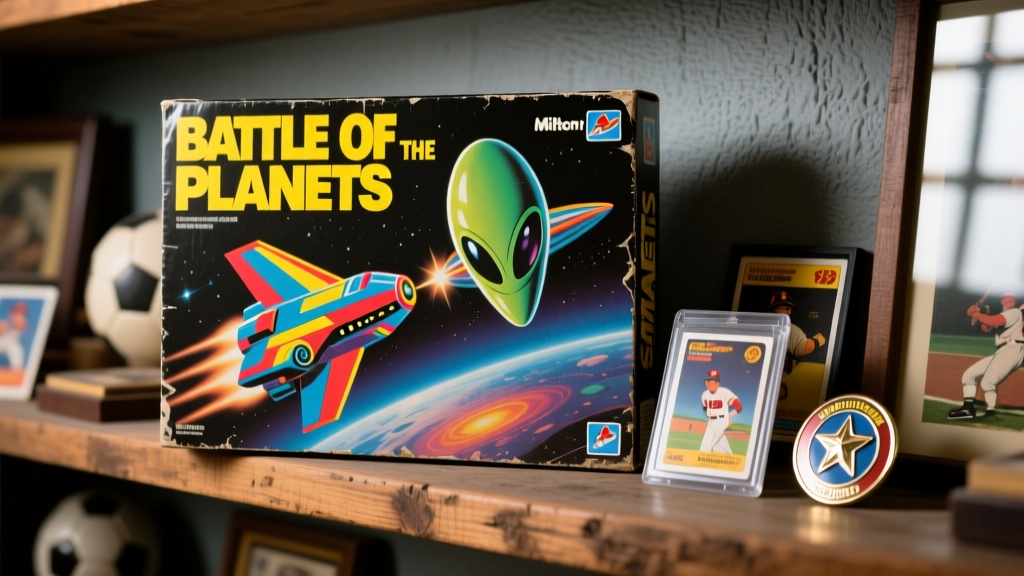
Battle of the Planets: The Milton Bradley 1979 Board Game — A Collector’s Deep Dive into Design, Rarity, and Authenticity
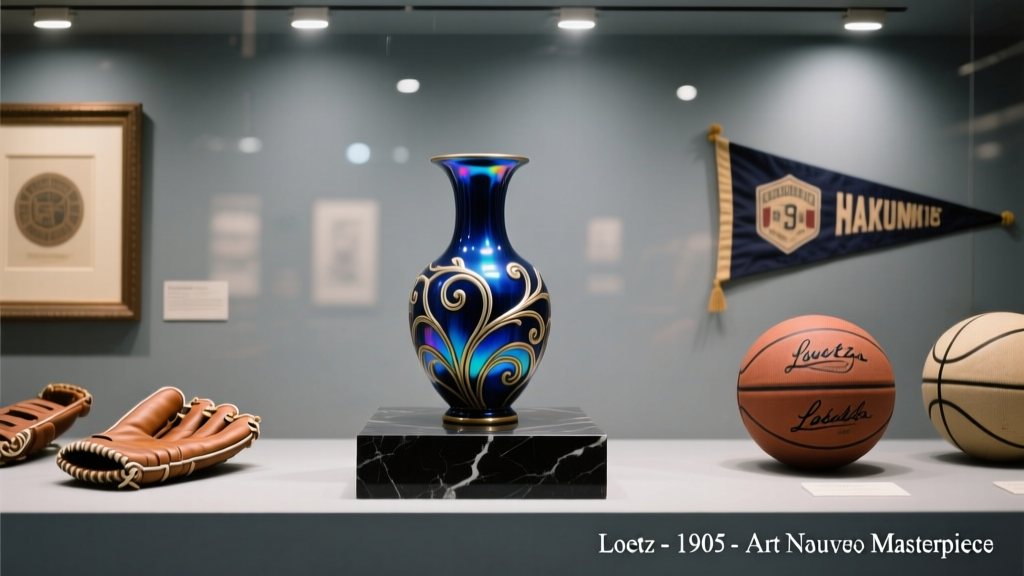
Loetz Vase Blue Iridescent Applied Vine 7 In: Authentication, Provenance, and Market Value Analysis
The 1967 G.I. Joe Metal King Seeley Thermos Lunch Box: Authentication, Market Value, and Historical Context
Imperial Glass Diamond Quilted Soup Cream Bowl in Cobalt Blue: Identification, Value Drivers, and Authentication Protocol
Rugs Kilim Persian Village Faded 4 Ft × 7 Ft 9 In: Authenticity, Provenance, and Collector Value
Silver American Plate Monogram Set by J. E. Caldwell & Co.: A Collector’s Deep Dive into the 9¾-Inch 12-Piece Service
Banks Mechanical Elephant Howdah: Authentication, History, and Market Value of the 2½-Inch Cast Iron Toy

The 1880s Walnut Breakfront Bookcase: Marquetry, Gilt Bronze Mounts, and Victorian Cabinetmaking Excellence
Decoding PSA Authentication Label 1140590: A Forensic Analysis of Serial Number, Grading History, and Market Impact