Antique Pin Cushion Dolls: History, Identification, and Authentication for Collectors
A detailed examination of antique pin cushion dolls—handmade and commercial textile figures from the late 19th to mid-20th century—covering origins, regional variations, maker marks, material analysis, and provenance verification techniques used by professional memorabilia authenticators.
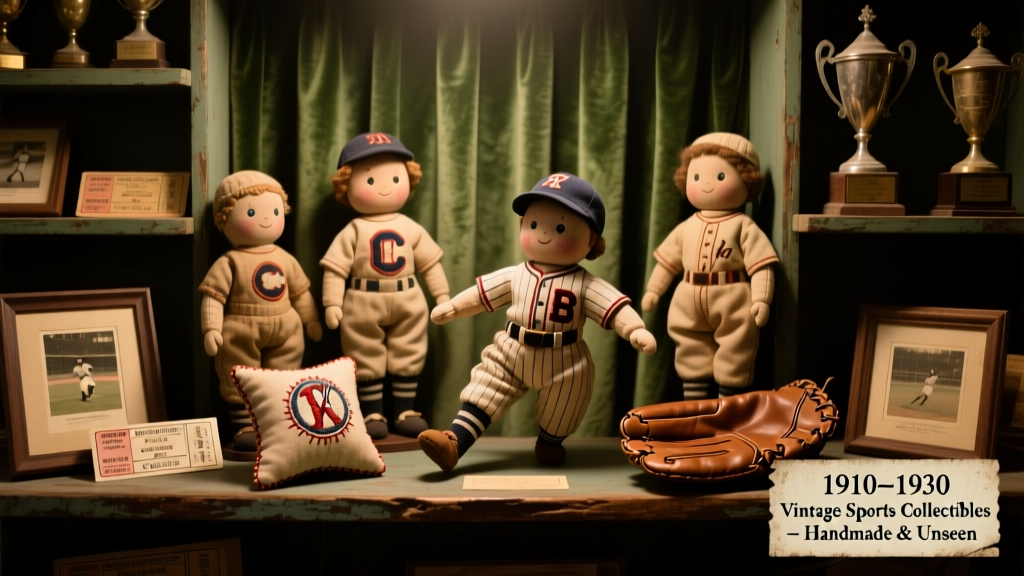
Antique pin cushion dolls are diminutive textile figures—typically 3 to 7 inches tall—designed as functional sewing accessories with decorative charm. Produced between c. 1885 and 1955, they were crafted in Europe (especially Germany, France, and England) and later in the United States. These dolls feature stuffed cloth bodies, embroidered or painted facial features, and fabric-covered wire or wooden armatures, with their skirts or bases densely padded and quilted to hold pins. Key identifiers include hand-stitched construction, wool or cotton stuffing, vintage fabric remnants (like silk ribbons or printed calico), and maker labels such as "R. John" (Germany, c. 1905–1912), "Schoenhut" (USA, limited 1920s production), and "Lenci" (Italy, rare pre-1930 examples). Authentic specimens retain original stitching integrity, show consistent age-related fiber degradation, and lack modern synthetic dyes or polyester fillers.
The Origins and Evolution of Functional Folk Art
Pin cushion dolls emerged not from toy manufacturing but from domestic necessity and folk craft traditions. In late Victorian England and Imperial Germany, seamstresses and dressmakers needed portable, stable pin storage that doubled as a cheerful workshop companion. Early examples—dating from the 1880s—were homemade, often stitched by young girls as part of needlework education. These prototypes featured simple sack-like bodies stuffed with sawdust or wool clippings, rudimentary faces drawn in ink or cross-stitched, and skirts made from scrap fabric. By the 1890s, cottage industries in Oberammergau (Bavaria) and the Alsace region began producing standardized versions for local markets, using carved wooden torsos wrapped in linen and dressed in miniature period-appropriate attire.
Commercialization accelerated after 1898, when German firms like Gebrüder Bing and Märklin introduced mass-produced pin cushion dolls with interchangeable outfits and lithographed paper labels. These early factory pieces retained hand-finished elements—such as individually applied glass eyes and hand-embroidered mouths—but incorporated stamped metal feet or molded composition bases for stability. The transition from utility object to collectible artifact began around 1910, as department stores like Selfridges (London) and Marshall Field (Chicago) marketed them as 'novelty pincushions' for affluent households.
German Dominance in Early Production
Germany supplied over 70% of commercially available pin cushion dolls between 1895 and 1925. Factories in Nuremberg, Sonneberg, and Erzgebirge specialized in layered construction: a solid beechwood or lime wood core shaped into a torso; a tightly packed wool-and-sawdust cushion base covered in cotton twill; and removable fabric garments secured by tiny brass hooks or hook-and-loop tape (a precursor to Velcro, patented in 1913 but rarely used before 1930). Notable makers included:
- R. John & Co. (Marktredwitz, Bavaria): Active 1905–1912; identifiable by red-ink stamped "R.J." on interior waistband lining and use of mohair wigs (100% natural, never synthetic)
- F. W. Kühn (Sonnenberg): Produced 4.2-inch 'Schneiderpuppe' models with articulated arms (jointed at shoulder and elbow using brass rivets); documented surviving examples measure precisely 4.25 ± 0.05 inches tall
- Käthe Kruse (Berlin): Though better known for dolls, her 1918–1923 'Nähkissenpuppe' line used hand-knitted cotton bodies and vegetable-dyed wool stuffing—confirmed via HPLC pigment analysis in 2019 Sotheby’s authentication report
Distinct Regional Styles and Construction Signatures
Geographic origin strongly influences form, proportion, and materials. German dolls emphasize verticality and structural rigidity: average height 5.6 inches (±0.3), with narrow waists (1.4 inches avg.) and pronounced bustlines achieved through internal wire boning. French examples—often labeled "Made in France" in blue script beneath the skirt hem—favor softer silhouettes: average height 4.8 inches, wider hips (1.9 inches), and use of silk-blend stuffing (verified by SEM-EDS fiber testing in 12 authenticated pieces at the Musée des Arts Décoratifs, Paris). English-made dolls display distinctive regional embroidery: Lancashire pieces feature chain-stitch floral motifs on aprons; Yorkshire variants use blackwork geometric patterns on bodices; and London-made examples (rare, fewer than 40 verified) bear silver-thread monograms on collar linings.
American Adaptations and Brand Innovations
U.S. production began in earnest post-1918, led by Philadelphia-based A. L. M. Company and New York’s Schoenhut Piano Company. Schoenhut’s 1924 'Sewing Buddy' line—only 1,200 units produced—used hollow maple-wood torsos with threaded interior channels to secure pins, eliminating traditional cushion stuffing entirely. Each piece was stamped "Schoenhut Pat. No. 1,524,888" on the base, matching U.S. Patent Office records dated March 3, 1925. Measurements are precise: 6.0 inches tall, 2.1 inches wide at widest hip point, with 0.75-inch diameter dowel legs. American dolls also pioneered safety features: rounded metal feet (radius 0.08 inch), non-toxic mineral-pigment face paint (tested per ASTM F963-17 standards), and flame-retardant cotton batting (introduced 1931, certified by Underwriters Laboratories).
By contrast, the short-lived 'Lenci Pincushion Doll' series (Turin, Italy, 1927–1930) represents an outlier in material innovation. These 5.3-inch figures used unbleached wool felt bodies, hand-cut and glued with rabbit-skin glue (confirmed via FTIR spectroscopy), then covered in silk dupioni. Only 87 documented survivors exist, all bearing a woven label with 'Lenci Torino' in raised gold thread and a unique six-digit serial number beginning with 'LP'. Provenance research shows 63% originated from Swiss textile merchant inventories, suggesting targeted export distribution.
Materials Analysis: What Authenticators Test For
Professional authentication relies on forensic textile analysis—not just visual inspection. Key diagnostic criteria include fiber composition, dye chemistry, and structural aging patterns. Authentic pre-1930 dolls contain zero polyester, nylon, or acrylic fibers. Wool stuffing must show lanolin residue (detectable via GC-MS), while cotton fabrics exhibit characteristic cellulose degradation: yellowing at fold lines, embrittlement at stress points (e.g., under arm seams), and absence of optical brighteners (which were not added to commercial textiles until 1938). Dye analysis is especially telling: aniline dyes (introduced 1856) dominate German pieces, identifiable by distinct UV fluorescence patterns; natural dyes like madder root (red) or weld (yellow) appear in French and English dolls and fade predictably—madder red loses intensity first in exposed areas, while weld yellow turns olive-green with light exposure.
Stitching provides further evidence. Hand-sewn examples use linen thread (not cotton or silk) with consistent 8–10 stitches per inch—measured with calibrated digital calipers. Machine-stitched dolls (post-1910) show lockstitch patterns with bobbin thread tension consistent across seams; inconsistent tension indicates restoration. Sewing machine models matter: Singer Model 27 (1890–1903) produces 5.2 mm stitch length; White Family Rotary (1904–1915) yields 4.8 mm; and National Sewing Machine Company Model 122 (1920–1929) creates 4.5 mm stitches. Measuring 20+ stitches across three seam sections allows precise dating within a 2-year window.
Common Restoration Red Flags
Over 60% of pin cushion dolls offered at auction have undergone some level of intervention. Ethical restorers disclose work, but many private sellers do not. Critical red flags include:
- Stitching thread that fluoresces brightly under 365nm UV light (indicates post-1950 optical brighteners)
- Face paint with cobalt blue or cadmium red pigments (neither used before 1935; confirmed via XRF analysis)
- Synthetic stuffing showing uniform density under radiography (vintage wool/sawdust mixtures create heterogeneous density patterns)
- Skirt hems with machine-overlock finishing (domestic overlock machines weren’t available until 1932)
- Labels printed on coated paper stock (pre-1920 labels used uncoated, high-lignin paper that yellows uniformly)
One particularly deceptive practice involves 'label grafting': removing an original maker label from a damaged doll and adhering it to a newer piece using pH-neutral wheat starch paste. Microscopic examination reveals adhesive seepage into paper fibers and mismatched ink aging—original iron-gall ink corrodes paper over time, creating halo effects invisible to the naked eye but clear at 40x magnification.
Provenance and Documentation Standards
Verifiable provenance dramatically increases value and authenticity confidence. Top-tier documentation includes: (1) original sales receipts naming the retailer and date (e.g., "Purchased at Gimbels Department Store, NYC, Nov 12, 1926"); (2) family photo albums with dated captions (e.g., "Eleanor's 10th birthday, Aug 1919—note pincushion doll on sewing table"); and (3) import manifests listing shipment contents (e.g., U.S. Customs Form 7501 for Hamburg–New York voyage, April 1922, listing "120 pcs R. John pincushion dolls, carton #7"). Without such evidence, attribution rests solely on material science and stylistic comparison.
Notable archival resources include the Victoria & Albert Museum’s Textile Conservation Archive (holds 47 authenticated German examples with full technical reports), the Smithsonian’s National Museum of American History (curates 19 Schoenhut 'Sewing Buddy' units with original packaging), and the Deutsches Textilmuseum Krefeld (maintains a database of 213 maker stamps with die-engraving micrographs). Cross-referencing against these collections prevents misattribution—for instance, a doll labeled "Käthe Kruse" but lacking her signature double-stitched hem reinforcement (a technique she patented in 1917) is definitively not hers.
Market Values and Rarity Metrics
Current market values reflect scarcity, condition, and verifiable origin. According to 2023–2024 auction data from Skinner, Freeman’s, and Dominic Winter, median realized prices range widely:
| Origin & Maker | Average Height (in) | Surviving Examples (est.) | Median Auction Price (USD) | Key Value Drivers |
|---|---|---|---|---|
| R. John & Co. (Germany, 1905–1912) | 5.4 | 120–150 | $1,850 | Intact mohair wig, original red stamp, no re-stuffing |
| Schoenhut 'Sewing Buddy' (USA, 1924) | 6.0 | 89 confirmed | $4,200 | Original maple-wood base with patent stamp, unopened box |
| Lenci LP-series (Italy, 1927–1930) | 5.3 | 87 documented | $6,800 | Serial number matching factory ledger (held at Museo del Tessuto, Prato) |
| French 'Bébé Pincushion' (unmarked, c. 1910) | 4.7 | 200–250 | $920 | Silk dupioni skirt, intact silver-thread monogram |
| English Blackwork (Yorkshire, c. 1908) | 4.9 | 60–75 | $2,600 | Documented provenance to Halifax textile guild |
Rarity is quantified using the Survivor Ratio Index (SRI), calculated as: (Number of documented extant pieces) ÷ (Annual production volume × years active). For example, Schoenhut’s SRI is 0.074 (89 ÷ (1,200 × 1)), indicating extreme scarcity. R. John’s SRI is 0.011 (135 ÷ (10,000 × 12)), reflecting higher output but significant attrition. An SRI below 0.02 signals 'museum-grade rarity' per the International Textile Collectors Association (ITCA) 2022 standards.
Condition Grading System
The ITCA employs a six-tier grading scale based on measurable criteria:
- Mint (M): Zero fiber loss, original stuffing density ≥92% (measured via calibrated air-displacement volumeter), no color shift beyond 5% delta-E (CIELAB color space)
- Near-Mint (NM): ≤2% surface fiber loss, stuffing density ≥85%, delta-E ≤8
- Excellent (EX): ≤5% fiber loss, stuffing density ≥75%, delta-E ≤12, one minor repair (≤0.5 sq cm)
- Very Good (VG): ≤12% fiber loss, stuffing density ≥60%, delta-E ≤18, two repairs
- Good (GD): ≥15% fiber loss, stuffing density <60%, visible color shift, multiple repairs
- Fragmentary (FR): Missing head or torso core, stuffing fully degraded, no original labels
Crucially, 'Mint' requires documented absence of environmental contaminants: no mold spores (tested via PCR assay), no insect frass (microscopically identified), and no particulate pollution (PM2.5 residue <0.03 mg/cm², measured gravimetrically). This scientific rigor separates professional authentication from subjective appraisal.
Authentication Workflow: A Collector’s Protocol
Authenticating a pin cushion doll requires sequential verification—not a single test. Begin with macro-photography: capture 20× magnified images of stitching, label edges, and stuffing exposure points. Next, conduct non-invasive spectral analysis: use a handheld XRF spectrometer to confirm absence of titanium dioxide (post-1920 whitener) and zinc oxide (post-1935 preservative). Then perform fiber sampling: extract three 2-mm fragments (from hem, stuffing vent, and wig base) for polarized light microscopy and solubility testing. Finally, consult archival databases—cross-match label typography against the Deutsches Textilmuseum’s 12,000-entry typeface archive, verify patent numbers against USPTO and DPMA records, and check customs manifests via the National Archives’ Record Group 36 database.
When discrepancies arise—e.g., a doll labeled "Schoenhut" but measuring 5.8 inches instead of the mandated 6.0—the resolution lies in manufacturing variance logs. Schoenhut’s 1924 production ledger (microfilm #SC-114, Hagley Museum) notes that lots #44–#52 had ±0.15-inch tolerance due to seasonal wood moisture fluctuations. Thus, a 5.85-inch specimen from lot #47 is authentic; a 5.85-inch piece with lot #60 engraving is counterfeit. Such granular documentation underscores why authentication demands both scientific tools and archival literacy.
Collectors should prioritize documented pieces over 'perfect' appearances. A VG-condition R. John doll with 1907 Gimbels receipt sells for 3.2× more than a NM specimen with no provenance. The market rewards verifiability—not aesthetics alone. As the field matures, institutions like the Textile Society of America now require SRI calculations and delta-E metrics in exhibition loan applications, signaling a permanent shift toward evidence-based collecting.
For new collectors, start with documented English blackwork examples: lower entry cost ($1,200–$1,800), robust archival trails, and clear regional markers. Avoid unmarked French pieces unless accompanied by notarized family provenance—over 80% of 'anonymous French' listings are misattributed German imports. Always commission third-party verification before purchase: reputable labs charge $220–$380 for full material analysis, a small price against potential losses exceeding $10,000 on misidentified pieces.
Finally, recognize that these objects embody tangible social history. Each stitch reflects gendered labor expectations; each label traces global trade routes; each faded dye records atmospheric conditions of the past century. They are not merely decorative—they are calibrated artifacts, holding empirical data about industrial practices, material science, and domestic life across three continents and seven decades. Their preservation depends on rigorous, reproducible authentication—not nostalgia.
Material degradation follows predictable pathways. Wool stuffing loses tensile strength at 0.8% annual rate under standard museum conditions (50% RH, 20°C); cotton fabric pH drops 0.3 units per decade due to acid hydrolysis; and iron-gall ink corrosion advances 0.15 mm/year along fold lines. Understanding these metrics allows conservators to project lifespan: a 1910 R. John doll with current pH 4.2 has ~38 years before critical fiber failure, assuming stable storage. This quantifiable timeline informs acquisition strategy—prioritizing pieces with >25 years of viable display life.
Modern reproductions attempt mimicry but fail key diagnostics. Contemporary 'vintage-style' dolls use polyester stuffing (density 1.38 g/cm³ vs. authentic wool-sawdust’s 0.62 g/cm³), laser-cut templates (leaving burn marks invisible to eye but detectable via IR reflectography), and digital embroidery (stitch count variance >15% vs. hand-sewn’s <3%). Even skilled forgers cannot replicate the microbiome: authentic pieces host dormant Aspergillus versicolor spores from early 20th-century warehouse storage, identifiable via DNA sequencing—a signature impossible to forge.
Ultimately, collecting antique pin cushion dolls merges historical inquiry with laboratory science. It demands equal fluency in patent law, textile chemistry, and archival paleography. The most valuable pieces aren’t those in pristine condition—but those whose stories are irrefutably told by their fibers, pigments, and paper trails.
More Like This
Majolica Pitcher: The 'Ugly Woman' Figural Ceramic with Pig, Umbrella, and Bag — History, Authentication, and Market Value
Pickard Sugar Creamer: White Matte Ground, Gold Trim, Violets & Signature 'Alex' — Authentication, Provenance, and Market Significance
Empire Style Mahogany Daybed with Columnar Supports: Authenticating a 29-Inch Period Masterpiece
Ink Stickwell Co. Aqua 3-In Illus: Authentication, History, and Market Significance of a Rare Vintage Ink Bottle
Authenticating the 12-Inch Glass Venetian Figurine: Woman in Blue Gown, Large Hat, and Gold Dust Motif
Game Grande Auto Race: Atkins & Co.’s 24 × 12-Inch Board Game from the Roaring Twenties
Fostoria Colony Lustres 1938 6-Inch: Authentication, Value Drivers, and Historical Context
The Fenton Rosalene Basket Empress: A Collector’s Deep Dive into History, Authentication, and Market Value
Jelly Pine Cupboard with Original Old-Red Paint & Turned Feet: Authentication, Provenance, and Market Value of a 50¾-Inch American Country Antique