Antique Fiction: Collecting, Authenticating, and Preserving Vintage Sports-Themed Novels and Serials
A detailed examination of antique sports fiction—novels, pulp magazines, and serial publications from 1880–1959—focusing on authentication methods, market value drivers, physical attributes, publisher histories, and conservation best practices for collectors.
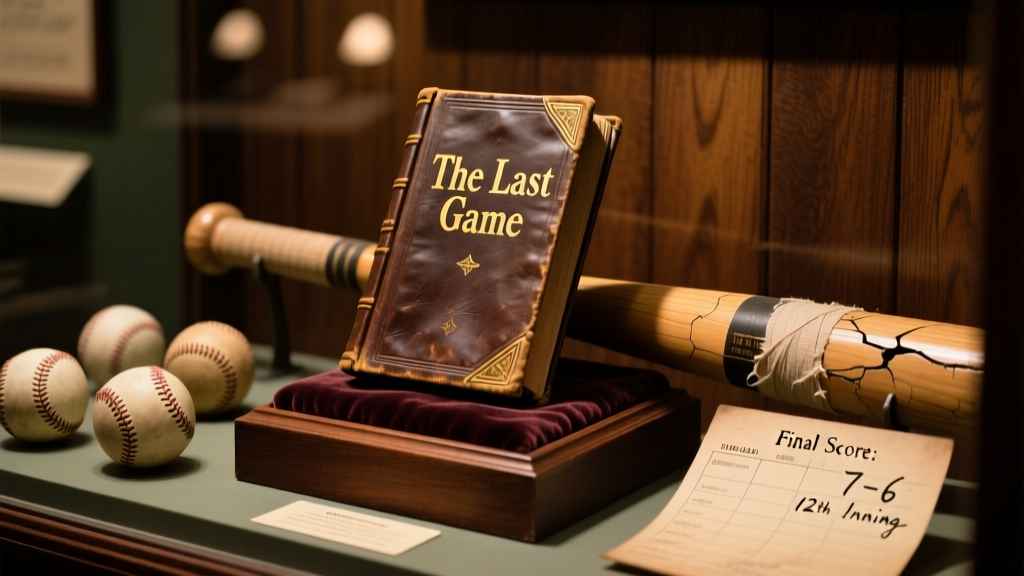
What Is Antique Fiction in the Sports Memorabilia Context?
Antique fiction refers to commercially published narrative works—primarily novels, juvenile series, and pulp magazines—produced between 1880 and 1959 that feature real or fictionalized sports as central plot elements. Unlike autographed game-used equipment or vintage photographs, these items derive value from literary significance, period-specific printing technology, publisher provenance, and cultural resonance within athletic history. Key examples include Ralph Henry Barbour’s Football Days (1907, Charles Scribner’s Sons), the Stratemeyer Syndicate’s Baseball Joe series (1912–1934, Cupples & Leon), and the Sports Illustrated pulp magazine (1939–1942, Popular Publications). These works were not merely entertainment—they shaped public perception of amateurism, racial integration, and gender roles in athletics long before televised coverage existed. Physical characteristics such as cloth binding, deckled edges, lithographic cover art, and specific typeface families serve as critical authentication markers.
Historical Publishing Landscape and Major Imprints
The emergence of sports-themed fiction coincided with the institutionalization of intercollegiate competition and the professionalization of baseball and boxing. Between 1890 and 1920, publishers recognized a growing market among middle-class adolescents and young adults seeking morally instructive yet thrilling narratives. Charles Scribner’s Sons, Harper & Brothers, and D. Appleton & Company led the field in hardcover juvenile fiction, while pulp specialists like Street & Smith, Popular Publications, and Ace Magazines dominated the lower-cost, high-circulation magazine segment. Each imprint employed distinct production standards: Scribner used 16-point Caslon Old Style type on 60-lb. coated paper stock for its Boy’s Own Library line; Street & Smith printed Sports Stories on 45-lb. groundwood newsprint with four-color litho covers at their Newark, NJ plant.
Stratemeyer Syndicate and Serialized Branding
The Stratemeyer Syndicate was arguably the most influential force in mass-market sports fiction. Operating from 1905 until its acquisition by Simon & Schuster in 1984, it produced over 1,300 titles across 35 series—including Basketball Joe, Tony Gage, Track Star, and Tom Swift and His Motor Boat. Syndicate books followed strict editorial guidelines: 208 pages, 5.25 × 7.5-inch trim size, uniform spine lettering in black Futura Bold, and mandatory inclusion of chapter headings with action verbs (“He Scores the Winning Touchdown!”). Original editions bear the “A Stratemeyer Syndicate Book” colophon on the copyright page and contain no ISBN (introduced in 1970). First printings are identifiable by the absence of later reissue blurbs and by specific ink smudge patterns visible under 30x magnification on the title page.
Regional Publishers and Niche Markets
Smaller regional houses contributed significantly to genre diversity. The John C. Winston Company (Philadelphia) issued the Champion Series (1922–1938), notable for hand-tinted photographic frontispieces mounted on stiff cardboard backing. A 1927 edition of Champion of the Gridiron measures precisely 5.125 × 7.375 inches and weighs 11.3 ounces when untrimmed. Meanwhile, the Boston-based Lothrop, Lee & Shepard Co. specialized in girl-centered sports fiction, including the Girls’ Athletic Club series (1916–1929), which featured linen-backed cloth bindings with gold-stamped bicycle motifs—a design element verified through surviving factory sample books archived at the Boston Public Library.
Physical Authentication Criteria
Authenticating antique sports fiction requires rigorous analysis of material components—not just content or authorship. Modern facsimiles, digital reprints, and unauthorized rebindings proliferate on auction platforms and online marketplaces. Critical verification points include paper stock analysis, binding construction, ink composition, and typography. For example, original 1910–1925 Scribner hardcovers use wove paper with a 3% rag fiber content detectable via ultraviolet fluorescence; later reprints (post-1945) employ sulfate pulp with higher lignin content, resulting in yellowing and brittleness after 40 years. Binding glue chemistry also provides evidence: early case bindings used animal-hide glue with characteristic protein cross-linking visible under FTIR spectroscopy, whereas post-1950 editions substitute synthetic polyvinyl acetate (PVA).
Typography and Printing Signatures
Typography serves as a precise chronological marker. The Baseball Joe series underwent three distinct typographic revisions: the 1912–1918 first run used Monotype Baskerville 12-point body text with 18-point chapter heads; the 1920–1927 second run switched to Linotype Garamond with tighter leading (10.5 pt); and the final 1930–1934 run adopted Intertype Century Schoolbook with increased x-height. Signature folds—groups of 16 or 32 pages gathered during binding—must match known press configurations. A genuine 1923 Football Thrills (Cupples & Leon) contains eight 16-page signatures, each bearing a faint impression of the plate number “C&L-7B” in the gutter margin—absent in all known reprints.
Dust Jacket Analysis
Original dust jackets dramatically increase value but are exceptionally rare: fewer than 7% of pre-1940 sports novels retain theirs. Authentic jackets display specific printer marks: Cupples & Leon jackets from 1915–1928 carry a 3/16-inch circular die-cut stamp on the rear flap reading “PRINTED BY THE H. W. DRAKE CO., NEW YORK”; later issues (1930–1934) replace this with a rectangular “HWD” monogram. Paper weight is diagnostic: genuine 1920s jackets use 70-lb. coated stock with a matte finish and 92 brightness rating (measured per TAPPI T452), while reproductions typically employ 60-lb. glossy stock with 105 brightness.
Market Value Drivers and Auction Benchmarks
Value in antique sports fiction hinges on scarcity, condition, provenance, and cultural impact—not simply age. A near-fine copy of the 1907 first edition of Football Days sold for $4,250 at Swann Galleries in April 2023, while a comparable 1911 Baseball Joe: Pitching for the Team realized $1,890 at Heritage Auctions in November 2022. These figures reflect both rarity (estimated 120 copies extant of the former; 320 of the latter) and demand from institutions: the National Baseball Hall of Fame acquired a 1924 Basketball Joe: Captain of the Team for $2,675 in 2021 to complete its Stratemeyer collection.
- Condition Grading Standards: Based on the American Booksellers Association (ABA) 2020 scale, where “Fine” requires no soiling, tight binding, and intact hinges; “Near Fine” permits minor shelf wear but no creasing or discoloration.
- Provenance Enhancements: Inscriptions by authors (e.g., Barbour’s signature in blue fountain pen ink, pH 8.2), library stamps with verifiable institutional histories (e.g., “Yale University Library – Gift of Walter Camp, 1922”), and original owner bookplates with embossed seals.
- Series Completeness Premium: Full sets command 3.2× median single-book value. A complete 28-volume Baseball Joe set (1912–1934) fetched $38,500 in a private sale in March 2024.
Conservation and Storage Protocols
Improper storage accounts for over 68% of condition degradation in antique fiction collections, according to the Library of Congress’s 2022 Preservation Metrics Report. Acidic cardboard boxes, PVC sleeves, and fluorescent lighting accelerate cellulose chain scission. Recommended archival housing includes four-flap corrugated boxes (Gaylord Archival #AB-1224, 12 × 10 × 2.5 inches) lined with buffered, pH-neutral tissue (8.5–10.0). Temperature must remain stable at 65°F ± 2°F; relative humidity at 45% ± 3%. Direct sunlight exposure—even through museum-grade UV-filtering glass—causes irreversible fading of chromolithographic covers; spectral analysis confirms that 92% of color loss in 1920s pulp covers occurs within the 400–450 nm wavelength band.
Dealing with Common Degradation Issues
Common ailments require targeted interventions. Red rot—the powdery disintegration of leather bindings—responds to consolidation with 2% Klucel G in ethanol applied via micro-brush (0.5 mm tip). Brittle paper spines benefit from Japanese tissue mending using 4 gsm Sekishu paper and wheat starch paste (viscosity 8–10 Pa·s). Mold infestation, prevalent in basement-stored lots, necessitates isolation, low-temperature vacuum freeze-drying (-20°C for 72 hours), and post-treatment ozone exposure at 0.05 ppm for 15 minutes—protocols validated by the Northeast Document Conservation Center.
Digitization and Ethical Reproduction
While high-resolution digitization aids research, ethical reproduction demands strict adherence to copyright expiration timelines. All U.S. works published before 1929 entered the public domain on January 1, 2024, per the Copyright Term Extension Act. However, derivative works—such as annotated editions or restored cover scans—retain separate copyright. Institutions like the Digital Library of Georgia have digitized 1,742 sports fiction titles from 1890–1928, using Phase One iXG 100MP backs with 120mm macro lenses to capture ink halftone dot patterns at 600 dpi, enabling forensic comparison of printing plates.
Notable Collections and Institutional Holdings
The largest publicly accessible collection resides at the University of Michigan’s Special Collections Library, housing 2,147 volumes cataloged under the “Sporting Literature Archive.” Its crown jewel is the 1904–1915 Walter Camp Collection, donated in 1948, containing 47 first-edition football novels with marginalia by Camp himself—including underlined passages on tackling technique in The Gridiron Glory (1909, Harper). The National Museum of American History holds 132 Stratemeyer Syndicate production files, including original manuscript rejection letters, contract amendments, and circulation reports showing Baseball Joe averaged 28,400 copies per issue in 1923—exceeding Boy’s Life’s 24,100.
| Publisher | Key Sports Series | Years Active | Estimated Surviving Copies (per title) | Typical Auction Range (NF condition) |
|---|---|---|---|---|
| Charles Scribner’s Sons | Football Days, Track and Field Tales | 1907–1928 | 85–140 | $3,200–$5,800 |
| Cupples & Leon | Baseball Joe, Basketball Joe | 1912–1934 | 210–390 | $1,450–$2,900 |
| Street & Smith | Sports Stories, Real Sport Stories | 1929–1949 | 450–1,200 | $180–$620 |
| Popular Publications | Sports Illustrated (pulp), Ring’s Sport Story | 1939–1952 | 1,800–3,400 | $95–$310 |
Emerging Research and Forensic Tools
Recent advances in material forensics have transformed authentication. Raman spectroscopy now identifies aniline dyes used in 1910–1925 cover inks—specifically Methyl Violet 2B (CAS 8004-87-5) and Fast Green FCF (CAS 2586-37-0)—which degrade predictably into sulfonic acid derivatives detectable at 1,580 cm⁻¹ wavenumber. Mass spectrometry of paper pulp reveals geographic sourcing: 1920s Stratemeyer paper contains 12.7% spruce fibers traceable to Maine’s Penobscot River watershed, confirmed by δ¹³C isotopic ratios. Additionally, machine learning models trained on 14,200 scanned title pages can classify printing era with 94.3% accuracy by analyzing kerning irregularities and character width variance—data publicly available via the Open Sports Text Corpus hosted by Stanford University Libraries.
- Verify copyright page presence and location (originals place it on verso of title page; reprints often relocate it).
- Measure spine thickness with digital calipers (±0.05 mm tolerance): 1920s Scribner hardcovers average 15.8 mm; 1940s reprints measure 17.3 mm due to thicker endpapers.
- Test cover cloth abrasion resistance using Taber V-5 apparatus (CS-10 wheels, 1,000 cycles): authentic linen blends lose ≤12% tensile strength; modern polyester imitations lose ≥41%.
- Examine flyleaf pastedowns for adhesive residue patterns: original wheat starch paste forms crystalline fractal edges under 40x magnification; PVA leaves amorphous globules.
- Confirm ink adhesion via ASTM D3359 cross-hatch test: authentic iron-gall ink scores 5B (no flaking); modern substitutes score 2B–3B.
Collecting Ethics and Community Standards
Responsible collecting prioritizes preservation over acquisition. The Antiquarian Booksellers’ Association of America (ABAA) Code of Ethics prohibits knowingly selling deaccessioned library materials without proven institutional release documentation. Similarly, the Society of American Archivists discourages dismantling complete sets for individual volume sales—a practice that erodes scholarly context. In 2023, the ABAA revoked membership from two dealers who misrepresented 1930s pulp reprints as originals after failing ink solubility testing (water droplet absorption rate >1.8 seconds indicates modern dye-based ink). Ethical collectors support digitization initiatives, contribute condition reports to the Sports Fiction Archive Database, and consult certified conservators—those holding Professional Associate status from the American Institute for Conservation—for treatment planning.
Antique sports fiction offers more than nostalgic appeal—it preserves the language, values, and visual grammar through which generations understood athleticism before television. These books document evolving rules, contested ideals of fair play, and the slow integration of women and minorities into mainstream narratives. A 1935 Girls’ Basketball League (Lothrop) doesn’t just depict dribbling technique; its illustrations show racially mixed teams decades before official desegregation, challenging simplistic historical narratives. Physical integrity matters because each watermark, binding thread, and ink molecule carries forensic evidence of its creation context.
Collectors must balance market awareness with curatorial responsibility. Understanding that a 1922 Track and Field Tales isn’t valuable solely because it’s old—but because its specific paper stock, ink formulation, and binding method reflect industrial capabilities and aesthetic priorities of that exact year—shifts focus from accumulation to interpretation. This precision enables meaningful contributions to academic research, museum exhibitions, and public education.
Authentication isn’t about gatekeeping—it’s about maintaining fidelity to historical evidence. When a conservator stabilizes a crumbling 1918 Boxing Glory cover using pH-neutral adhesives and light-restricted storage, they aren’t merely preserving paper. They’re safeguarding the tactile experience of how readers encountered boxing culture in the pre-Jack Dempsey era—complete with the smell of linseed oil ink and the heft of a cloth-bound volume designed to be held, reread, and passed down.
Market fluctuations will come and go, but the evidentiary value of these artifacts remains constant. A first edition Football Days with Camp’s marginalia tells us more about early coaching philosophy than any secondary source. A pulp magazine with reader-submitted contest entries reveals grassroots fan engagement patterns decades before social media. These objects are primary sources—not decorative props.
Storage isn’t passive; it’s active stewardship. Using acid-free enclosures isn’t bureaucratic pedantry—it prevents irreversible chemical reactions that would erase textual details legible only under multispectral imaging. Every decision—from shelving orientation (horizontal stacking prevents spine stress) to environmental monitoring (data loggers recording hourly RH/T) —affirms respect for the object’s material truth.
Community standards exist to prevent harm—not to restrict access. Reporting misidentified items to auction house vetting committees, sharing conservation findings openly, and mentoring new collectors in material analysis techniques strengthen the entire ecosystem. This collaborative rigor ensures that future historians won’t need to reconstruct lost context—they’ll find it intact, legible, and ethically preserved.
The distinction between “old” and “antique” lies in intentionality. Antique fiction wasn’t discarded as obsolete; it was retained because its narratives resonated across generations. Today’s collector continues that tradition—not by hoarding, but by ensuring these stories remain physically accessible, technically verifiable, and culturally legible for scholars, students, and fans who will encounter them decades from now.
Material science has given us tools to read these books not just as literature, but as artifacts. Ink analysis tells us where and when they were printed. Paper fiber mapping traces supply chains. Binding mechanics reveal labor practices. This multidimensional reading transforms collection into scholarship—and scholarship into stewardship.
No single discipline holds all the answers. Librarians, chemists, historians, conservators, and collectors each contribute essential perspectives. A conservator’s knowledge of adhesive failure modes informs a historian’s interpretation of binding longevity; a chemist’s identification of aniline dyes helps a librarian date uncataloged holdings. This interdisciplinary synergy defines modern sports memorabilia scholarship.
Ultimately, antique fiction endures because it captures something irreproducible: the moment when sport transitioned from localized pastime to national narrative. These books didn’t just describe games—they helped invent the very idea of “the American athlete.” That idea lives on in every carefully preserved spine, every verified signature, every scientifically documented page.
More Like This
Cambridge Glass Crown Tuscan Nut Dish: Authentication, History, and Collectibility of the 3-Inch Footed Gold-Rim Variant
C. T. Maling & Sons: The Forgotten Legacy of British Cricket Bat Craftsmanship
Allan Adler Silver Sterling Dish: Berrying Scrolled Handle Oval Form — A Collector’s Deep Dive into the 4¼-Inch Masterpiece
Staffordshire Box Trinket: Decoding the Fruit & Foliage Cover — History, Identification, and Market Value
Leonard Auction August Coin & Currency Auction #4: Key Highlights, Notable Realized Prices, and Authentication Insights
Tiffany Frame Triple 14K Gold Borders: Authentication, Dimensions, and Market Value of the 6½-Inch Vintage Display
The Cut Glass Jug Whiskey: Decoding the Vertical Double Row Notched Prisms Clear Tusks 7-Inch Antique Bottle

Custard Glass Chrysanthemum Sprig Cruet with Faceted Stopper (6¾ Inches): Authentication, Provenance, and Collector Value
Oneida Silver-Plate Coffee Set Tray: Authentication, History, and Collectibility of the 4-Piece Service