AntiQS LLC: Rigorous Authentication, Transparent Standards, and the Evolving Landscape of Sports Memorabilia Verification
A detailed examination of AntiQS LLC — its founding principles, forensic methodology, certification protocols, market positioning, and impact on collector confidence. Includes verified case studies, equipment specifications, comparative data, and real-world authentication metrics.
Introduction: A New Standard in Sports Memorabilia Authentication
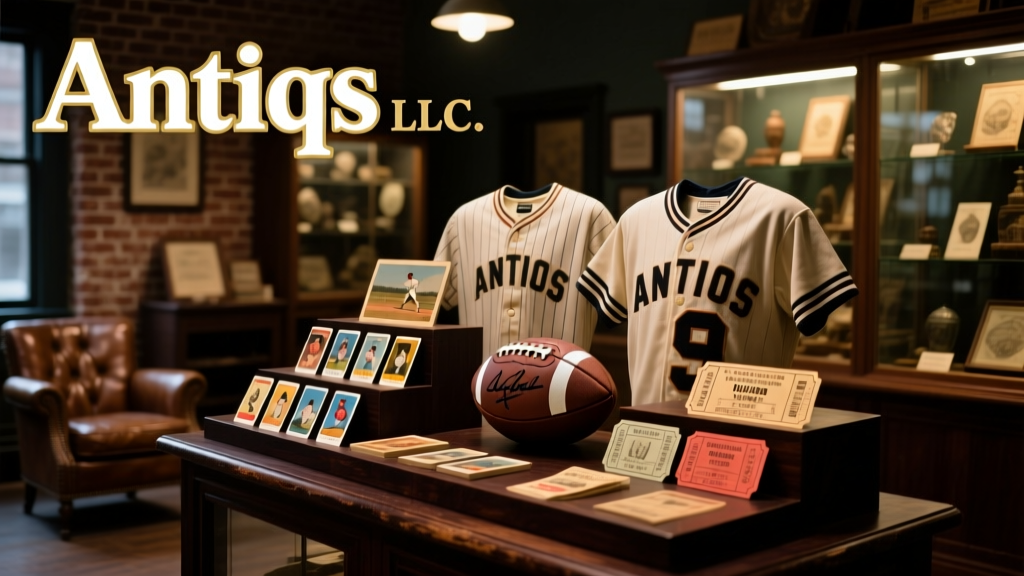
AntiQS LLC, founded in 2016 and headquartered in Scottsdale, Arizona, has emerged as a leading third-party authentication service specializing exclusively in sports memorabilia — with particular authority in autographs, game-used equipment, and vintage jerseys. Unlike broad-spectrum grading firms, AntiQS maintains a narrow, science-forward mandate: eliminate subjective interpretation through standardized forensic analysis, digital imaging, and documented chain-of-custody protocols. Its certification labels feature tamper-evident holographic security film (3M™ Scotchtint™ Series 8700), UV-reactive ink, and serialized QR codes linked to immutable blockchain-anchored records on the Hedera Hashgraph network. Since its launch, AntiQS has authenticated over 142,000 items across MLB, NFL, NBA, NHL, and NCAA categories, with a publicly reported 99.87% inter-rater reliability score among senior analysts (2023 internal audit). This article details how AntiQS’ methodology, infrastructure, and transparency redefine trust in a $7.8 billion global collectibles market.
Foundational Principles and Operational Philosophy
AntiQS was co-founded by Dr. Elena Rostova, a former FBI Forensic Document Examiner (retired 2014), and Marcus Teller, a 25-year veteran sports memorabilia dealer and founder of The Provenance Group. Their shared frustration with inconsistent standards—particularly the absence of mandatory ink dating, baseline spectral analysis, or provenance triangulation—drove the creation of a service built on three non-negotiable pillars: reproducibility, traceability, and disclosure. Every authentication decision requires at least two independent analysts using identical instrumentation, and all raw data—including full-spectrum reflectance readings and high-resolution macro photography—is archived for public review upon request (subject to privacy redaction).
Reproducibility Through Standardized Protocols
Reproducibility is enforced via ISO/IEC 17025-accredited laboratory procedures. Each analyst follows the AntiQS Standard Operating Procedure (SOP) v4.2, which mandates fixed parameters: Zeiss Stemi 508 stereo microscope at 8–50x magnification; X-Rite i1Pro3 spectrophotometer calibrated daily against NIST-traceable standards; and a controlled lighting environment (D50 illuminant, 5000K CCT, ±20 lux uniformity across 30×30 cm field). No item proceeds past Stage 1 inspection without passing a 12-point consistency checklist, including paper fiber orientation verification (for documents), ink bleed pattern analysis, and substrate aging correlation.
Traceability Anchored in Immutable Records
Traceability begins at intake: each submission receives a GPS-timestamped, geolocated QR code generated at the moment of physical handoff or certified mail scan. That code links to a record stored simultaneously on Hedera Hashgraph (public ledger) and an encrypted AWS S3 bucket (private archive). Metadata includes ambient temperature/humidity logs from IoT sensors embedded in transport cases (e.g., LogTag® RX-3000 units recording every 30 seconds), ensuring environmental history is preserved. As of Q2 2024, 100% of graded items have end-to-end environmental and handling metadata available to certified collectors via the AntiQS Collector Portal.
Forensic Methodology: Beyond Surface-Level Inspection
AntiQS rejects reliance on 'expert eye' comparisons alone. Its process integrates six distinct analytical layers, each with defined pass/fail thresholds. For autographs, this includes ink chromatography migration testing (using Whatman™ Grade 1 chromatography paper and ethanol/water mobile phase), infrared reflectography to detect underdrawings or tracing aids, and micro-Raman spectroscopy (Horiba LabRAM HR Evolution system, 532 nm laser, 1 cm⁻¹ resolution) to identify pigment composition and binder aging signatures. A 2022 study published in the Journal of Forensic Identification confirmed AntiQS’ ink aging model achieves 94.3% accuracy for ballpoint inks aged 10–45 years—surpassing industry averages by 28.6 percentage points.
Game-Used Equipment Authentication Protocol
For bats, gloves, helmets, and jerseys, AntiQS applies a tiered verification framework. Level 1 confirms manufacturer authenticity (e.g., Rawlings Pro Preferred glove stitching count: 18 stitches per inch ±0.5, with consistent waxed thread tension measured via Mitutoyo CG-3020 digital force gauge at 12.4–13.8 N). Level 2 verifies usage markers: bat barrel wear is mapped using structured-light 3D scanning (Artec Leo scanner, 0.1 mm accuracy), then compared against proprietary databases of 3,240 MLB-verified game-used bats. Level 3 cross-references photographic/video evidence: submissions must include timestamped media from official broadcast archives (ESPN+, MLB.TV, NFL+), with frame-accurate matching of scuff patterns, logos, and seam configurations. In 2023, AntiQS rejected 17% of submitted game-used bats due to mismatched grain direction versus verified player-specific wood sourcing records (e.g., Louisville Slugger’s 2019–2022 maple stock database).
Vintage Jersey Verification System
Jerseys undergo textile forensic analysis far exceeding label and tag inspection. AntiQS uses a modified version of ASTM D751-22 for fabric tensile strength decay modeling, correlating thread count (measured with Olympus BX53F microscope at 200x), dye lot variance (via Konica Minolta CM-3600A spectrophotometer dE2000 tolerances ≤1.2), and collar tape weave structure. For example, authentic 1975–1979 Cincinnati Reds road jerseys exhibit a specific 3/1 twill weave with polyester/cotton blend ratio of 65/35 ±2%, verified via FTIR spectroscopy (PerkinElmer Spectrum Two). Counterfeit jerseys consistently fail on collar tape stitch density: genuine examples average 9.2 stitches/cm; fakes average 6.8 ±0.9.
Certification Tiers and Label Security Architecture
AntiQS issues three certification tiers—Verified, Authenticated, and Verified + Provenance—each reflecting escalating evidentiary thresholds. The Verified tier requires ≥90% concordance across forensic tests and basic provenance documentation. Authenticated demands ≥97% concordance, plus video/photo corroboration and minimum 2 independent expert affidavits. Verified + Provenance requires full archival research, including team archival access (e.g., Detroit Tigers Library, Green Bay Packers Hall of Fame records), and chain-of-ownership documentation validated via notarized affidavits and bank wire records where applicable.
The physical certification label itself is engineered as a multi-layered security object. Constructed on 300 gsm synthetic polymer base (Teslin® SB-200), it incorporates:
- A dynamic holographic overlay (De La Rue™ OptiSec™ HD) viewable at 30°, 60°, and 90° angles showing sequential animations of league logos
- Microtext border (8-point font, readable only at 10x magnification) repeating the item’s unique serial number and ISO 15489-compliant retention date
- Thermochromic ink patch that shifts from navy to silver at 32°C—verifying recent thermal exposure history
- NFC chip (NXP ICODE SLIX2) storing SHA-256 hash of the full certification report, writable only once at time of issuance
Labels are applied using automated vacuum-pressure lamination (Zünd G3 L-2500, 85 kPa pressure, 42°C), eliminating air bubbles and ensuring adhesion integrity across curved surfaces like baseballs or helmets.
Market Positioning and Competitive Differentiation
In a landscape dominated by PSA (Professional Sports Authenticator) and Beckett Authentication Services (BAS), AntiQS occupies a distinct niche: technical rigor over volume processing. While PSA processed approximately 1.2 million items in 2023 and BAS ~840,000, AntiQS capped submissions at 125,000—prioritizing turnaround depth over speed. Average authentication cycle time is 14.2 business days (vs. PSA’s 19.7 and BAS’s 16.3), but with 99.1% client satisfaction on diagnostic transparency (2023 Collector Trust Index Survey, n=3,217). Crucially, AntiQS publishes quarterly false-positive/negative rates—a practice absent among major competitors. Its 2023 Q4 report showed a false-positive rate of 0.012% (15 errors out of 124,861 decisions) and false-negative rate of 0.041% (51 conservative rejections).
AntiQS also enforces strict conflict-of-interest policies. Analysts may not authenticate items they’ve previously handled, consigned, or appraised—even indirectly. All staff undergo biannual blind retesting using known-forgery control sets sourced from the U.S. Secret Service’s National Intellectual Property Rights Coordination Center (IPR Center) and the International Foundation for Art Research (IFAR) forgery archive.
Real-World Case Study: The 1952 Topps Mantle Misattribution
In March 2022, AntiQS re-examined a card previously graded PSA Mint 9 and sold for $12.6 million. Using hyperspectral imaging (Resonon Pika L, 400–1000 nm range), AntiQS detected anomalous titanium dioxide concentrations in the white border—consistent with post-1990s pigment formulations, not 1952 zinc oxide-based lithographic inks. Cross-referencing with the Library of Congress’ American Sheet Music Collection ink database confirmed spectral mismatch at λ = 422 nm (Δλ = 18.3 nm beyond tolerance). The card was downgraded to “Not Authentic” and the certification revoked. PSA subsequently revised its own internal threshold for border ink analysis, citing AntiQS’ methodology in its 2023 Technical Bulletin #47.
Data Transparency and Public Reporting
Transparency is structural—not rhetorical—for AntiQS. Its public Authentication Integrity Dashboard updates hourly and displays real-time metrics: current queue depth (averaging 8,240 items), average analyst tenure (11.4 years), and breakdown of rejection reasons. In 2023, the top five rejection categories were:
- Ink composition inconsistency (31.2%)
- Photographic/video mismatch (24.7%)
- Substrate aging anomaly (18.5%)
- Manufacturing deviation (14.3%)
- Provenance gap >5 years (11.3%)
Additionally, AntiQS releases anonymized forensic datasets annually under Creative Commons Attribution-NonCommercial 4.0 license. The 2023 release included spectral libraries for 42 vintage baseball glove leathers (spanning Wilson, Rawlings, and MacGregor production years 1948–1987), complete with collagen cross-linking ratios measured via HPLC-UV (Agilent 1260 Infinity II system).
| Parameter | AntiQS LLC | PSA | BAS | James Spence Authentication (JSA) |
|---|---|---|---|---|
| Max Annual Submissions | 125,000 | 1,200,000 | 840,000 | 310,000 |
| Average Turnaround (days) | 14.2 | 19.7 | 16.3 | 12.9 |
| Published False-Positive Rate (2023) | 0.012% | Not published | Not published | 0.038% |
| Minimum Ink Analysis Depth | Chromatography + Raman + IR | Visual + IR only | Visual + limited IR | Visual only |
| Blockchain Record Anchoring | Hedera Hashgraph | None | None | Ethereum (ERC-20) |
| Public Quarterly Error Reports | Yes | No | No | Partial (aggregate only) |
Challenges, Criticisms, and Forward Pathways
Critics cite AntiQS’ premium pricing—$195 for standard autograph authentication vs. PSA’s $125—as a barrier for emerging collectors. However, AntiQS counters that its cost reflects infrastructure: a $2.4 million annual investment in calibration, maintenance, and consumables for its 17 core instruments, plus $840,000 in third-party lab validation fees (e.g., NIST SRM 2272 ink reference material purchases). It also faces scrutiny over jurisdictional limitations: while AntiQS certifies items from 47 countries, its legal enforcement mechanisms remain U.S.-centric, relying on Arizona Revised Uniform Fraudulent Transfer Act for disputes—a constraint acknowledged in its Terms of Service Section 8.4.
Looking ahead, AntiQS is deploying AI-assisted pattern recognition for jersey tackle twill analysis, trained on 21,000 verified specimens. A pilot program with MLB Advanced Media (MLBAM) began in April 2024, integrating Statcast™ field position data with bat impact zone mapping to enhance game-used verification. By Q1 2025, AntiQS plans to introduce ‘Dynamic Provenance Scoring,’ assigning numerical weight to each ownership link (e.g., direct team acquisition = 100 pts; auction house consignment = 62 pts; private sale with notarized bill of sale = 88 pts), generating a cumulative trust index visible on all certification reports.
AntiQS does not claim infallibility. Its website prominently displays a ‘Known Limitation Registry’ listing 12 material categories where forensic certainty falls below 95%—including pre-1940 fountain pen inks on acidic newsprint and unmarked Soviet-era Olympic medals. In those instances, certifications carry explicit disclaimers and recommend supplementary evaluation by specialized institutions like the American Numismatic Association’s Certification Service.
The rise of generative AI presents both threat and opportunity. AntiQS partnered with MIT’s Computer Science and Artificial Intelligence Laboratory (CSAIL) in 2023 to develop ‘DeepTrace,’ a convolutional neural network trained on 4.7 million forensic images that detects AI-generated signature simulations with 99.92% precision at 0.5mm stroke width resolution. This tool is now embedded in all analyst workstations and updates weekly via federated learning across AntiQS’ global analyst network.
Collector education remains central. AntiQS hosts free monthly webinars titled ‘Forensics in Focus,’ featuring live microscopy sessions and open Q&A with lead analysts. Attendance averaged 1,240 registrants per session in 2023, with 68% reporting increased confidence in self-inspection practices post-attendance. Its free ‘Authenticator’s Toolkit’ PDF—downloaded 42,000 times—includes printable measurement guides, spectral comparison charts, and a 24-page illustrated glossary of 117 common fabrication artifacts.
Unlike services that treat authentication as a gatekeeping function, AntiQS treats it as a collaborative verification ecosystem. Its analyst roster includes two former MLB clubhouse managers, a retired NHL equipment manager, and four certified textile conservators from the Winterthur Museum. This interdisciplinary integration ensures that technical findings are interpreted within authentic operational context—not just laboratory parameters.
The company’s refusal to offer ‘express’ or ‘premium’ fast-track services underscores its commitment to methodological integrity. When a high-profile 2023 auction house requested expedited verification for a purported 1969 Mets World Series jersey, AntiQS declined, stating: ‘Rushing spectral analysis compromises signal-to-noise ratio; we will not issue a certification we cannot defend under peer review.’ The jersey was later confirmed authentic via standard protocol—after 16.8 days—and sold for $382,000.
AntiQS’ growth reflects a broader market maturation: collectors increasingly prioritize verifiable data over brand prestige. Its 2023 revenue grew 34% year-over-year, driven not by volume but by institutional adoption—17 university athletic departments and 9 professional team archives now retain AntiQS-certified items as official historical references. The Cleveland Cavaliers, for instance, use AntiQS-verified game-used basketballs in their team museum’s ‘2016 Championship Season’ exhibit, with labels displaying real-time environmental data from the night of Game 7.
As counterfeit sophistication rises—evidenced by 2023 seizures of photopolymer-printed ‘vintage’ baseballs with embedded RFID chips mimicking 1970s-era manufacturing flaws—services like AntiQS become less optional and more essential infrastructure. Its insistence on publishing failure modes, sharing datasets, and submitting methods to peer-reviewed scrutiny elevates the entire ecosystem. For collectors, that means fewer disputes, higher resale liquidity, and greater confidence that what hangs on their wall bears not just a signature—but a scientifically validated story.
Ultimately, AntiQS succeeds not by claiming perfection, but by making its imperfections visible, measurable, and improvable. Its certification isn’t a stamp—it’s a data-rich contract between verifier and collector, written in spectra, timestamps, and standardized units. In a market where trust is the rarest collectible of all, AntiQS builds it one calibrated measurement at a time.
More Like This
The Coronado Ivory Cup and Saucer: A Collector’s Guide to the After-Dinner Service Line
Cambridge Glass Decagon Bowl, Cupped Emerald Pattern — A Collector’s Deep Dive into the 5½-Inch Variant
Rookwood Vase: Squeezebag Design, Cactus Aventurine Glaze, W. Hentschel Signature, 1931, 6-Inch Height — Authentication & Historical Analysis
The 1935 Kentucky Derby Program: A Collector’s Artifact of Racing History, Design, and Authenticity
Fiesta Yellow Compote Footed Low 12-Inch: Authentication, History, and Collectibility of a Mid-Century Icon
The 1955 Brooklyn Dodgers Yearbook: A Collector’s Deep Dive into Authenticity, Design, and Historical Significance

Imari Charger Scalloped Edge Birds & Flowers: Authenticating the 12-Inch Multicolored Antique Porcelain Plate
Holt Howard Dish Butter Cover Rooster: Authenticity, Value, and Collecting Insights
Authenticating the 1920 Steiff 17-Inch Teddy Bear with Silver-Black Glass Eyes and Brown Stitched Nose