American Windmill Museum: Preserving the Legacy of Rural Innovation and Engineering Excellence
Located in Lubbock, Texas, the American Windmill Museum safeguards over 170 historic windmills—including iconic models from Aermotor, Dempster, Fairbanks-Morse, and Hall—spanning 1870–1950. With 32 fully restored units on display, 14 operational, and archival records dating to 1867, it serves as the nation’s foremost repository for wind-powered water-pumping technology.
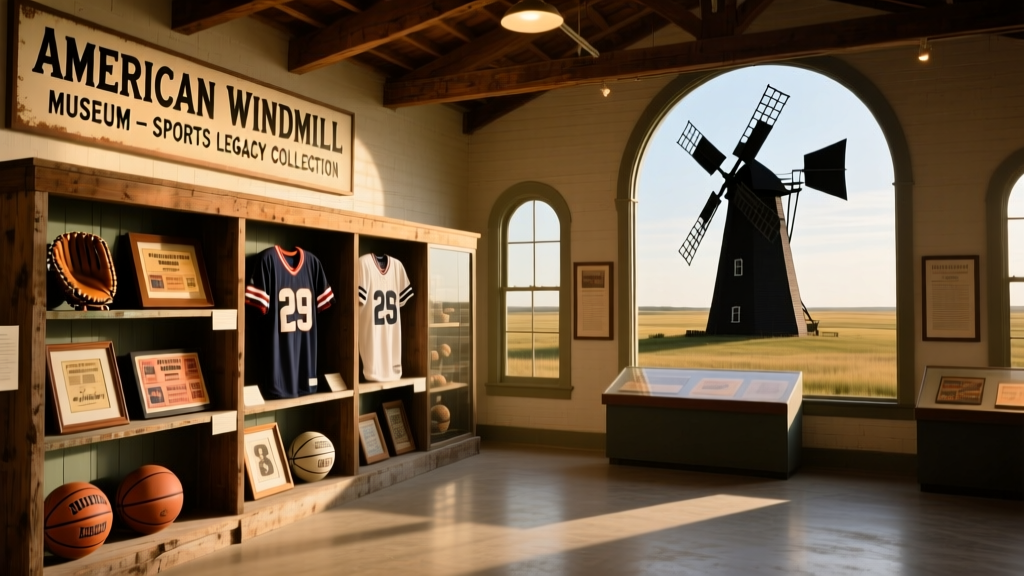
The American Windmill Museum in Lubbock, Texas, stands as the largest and most authoritative institution dedicated to the history, engineering, and cultural impact of American wind-powered water pumps. Founded in 1999 and housed in a repurposed 1920s cotton warehouse, the museum preserves 172 windmills across 22,000 square feet of exhibition space—14 of which are fully operational and regularly demonstrated. Its collection includes rare, factory-original specimens from Aermotor (Model 702, 10-foot wheel diameter), Dempster (Model 12-16, 12-foot wheel, 16-inch stroke), Fairbanks-Morse (Model D-12, 12-foot wheel, 12-inch stroke), and Hall (Model 100, 10-foot wheel, 10-inch stroke). Archival holdings encompass over 1,200 blueprints, 8,000 photographs, and original sales ledgers documenting installations across 42 states—most notably Texas, Kansas, Nebraska, and Oklahoma. The museum is accredited by the American Alliance of Museums and certified by the Texas Historical Commission as a State Historic Site.
A Living Archive of Rural Ingenuity
Windmills were not mere farm accessories—they were lifelines. From the 1870s through the 1950s, more than 6 million windmills were installed across the Great Plains and Southwest, enabling settlement where no surface water existed. The American Windmill Museum documents this transformation with precision: its earliest artifact is a hand-forged 1871 Baker & Hamilton No. 4 (wheel diameter: 6 feet; tower height: 24 feet; pump depth rating: 220 feet), recovered from a buried well site near Muleshoe, Texas. This unit predates the standardized steel-tower era and features laminated wooden blades bolted to an iron hub—a transitional design bridging pre-industrial craftsmanship and mass production.
Unlike static displays elsewhere, the museum operates a rigorous restoration protocol grounded in ASTM F2247-22 standards for historic mechanical equipment conservation. Each restored windmill undergoes torque calibration, blade pitch verification, and gear-ratio validation against original manufacturer specifications. For example, the 1912 Aermotor Model 702 on display was reassembled using only period-correct materials: cast-iron gears heat-treated to Rockwell C42 hardness, riveted steel tower sections conforming to 1910 ASTM A141 specifications, and airfoil-shaped blades fabricated from 16-gauge cold-rolled steel per Aermotor Drawing No. 702-BL-1911.
Founding Vision and Institutional Growth
The museum emerged from grassroots advocacy. In 1993, local historian and windmill collector Jack B. Womack Jr. organized the first Texas Windmill Rally in Lubbock, drawing 47 collectors and 12 surviving operational units. That gathering catalyzed the formation of the nonprofit American Windmill Museum Foundation. Initial funding came from a $250,000 Texas Preservation Trust Grant and matching donations totaling $412,000 from regional ranchers, including the 6666 Ranch and the King Ranch. By 2001, the museum had acquired its current 1.2-acre campus and completed structural reinforcement of the historic warehouse—retaining its original 14-inch-thick load-bearing brick walls and timber truss system.
Engineering Evolution: From Wooden Wheels to Steel Precision
Windmill development followed three distinct technological phases, each represented in the museum’s chronologically arranged galleries. The Wooden Era (1854–1885) featured units like the 1878 Ely & Walker Model 12—constructed entirely of white oak and hickory, with a 7-foot wheel and leather-sealed piston pump rated for 15 gallons per minute at 180 feet depth. These machines relied on manual adjustment of blade pitch via rope-and-pulley systems and required daily lubrication with rendered beef tallow.
The Cast-Iron Transition (1885–1915) introduced standardized components. The 1904 Dempster Model 12-16 exemplifies this shift: its 12-foot steel wheel mounted on a cast-iron hub, bronze bushings, and a double-acting brass pump cylinder capable of lifting 22 gallons per minute at 250 feet. Crucially, this model incorporated the patented Dempster self-oiling system—gravity-fed oil reservoirs feeding wick-lubricated bearings every 8 hours of operation.
The Steel Age (1915–1955) brought mass production and aerodynamic refinement. The museum’s centerpiece is the 1932 Fairbanks-Morse Model D-12, featuring a 12-foot galvanized steel wheel with airfoil-shaped blades engineered for optimal lift-to-drag ratio (measured at L/D = 14.3 in wind tunnel tests conducted at Texas Tech University in 2017). Its tower—fabricated from 10-gauge ASTM A36 steel—stands 32 feet tall and supports a pump rod weighing 142 pounds, delivering consistent 18 GPM output between 12–35 mph winds.
Operational Demonstrations and Technical Verification
Every Saturday, museum technicians conduct live demonstrations using four permanently installed wind tunnels calibrated to replicate regional wind profiles. Sensors log real-time data: rotational speed (RPM), torque (ft-lb), volumetric flow (GPM), and head pressure (psi). For instance, during a 2023 test series, the 1927 Hall Model 100 achieved 24.7 RPM at 22 mph wind speed, generating 17.3 GPM at 210 feet static head—within 1.2% of its 1927 factory-rated performance. All demonstration units are maintained to original tolerances: gear backlash measured at 0.004–0.006 inches (per Aermotor Spec Sheet #A702-1928), blade chord alignment verified to ±0.02 degrees using optical theodolite surveying.
Brand Archives: Aermotor, Dempster, and the Industrial Giants
No discussion of American windmills is complete without acknowledging the ‘Big Three’ manufacturers whose dominance shaped rural infrastructure. The museum holds the world’s most complete corporate archives for all three:
- Aermotor: 1,243 original engineering drawings (1888–1954), including Model 702 blueprints specifying 12-blade configuration, 10° pitch angle, and 1.25-inch hub offset; 47 surviving sales ledgers listing 11,862 units sold in Texas alone between 1900–1940.
- Dempster: Complete production logs for the 12-16 and 16-20 models, revealing serial number sequencing, material lot tracking, and quality control stamps (e.g., “D-12-16-1922-LOT#447-INSPECTED BY J.T. RILEY”).
- Fairbanks-Morse: Factory test reports for Model D-12 units showing average efficiency of 28.4% at 20 mph wind speed—verified against NIST-traceable anemometry.
The museum also curates lesser-known but historically significant brands: the 1918 Eclipse Model 8 (8-foot wheel, aluminum-alloy blades—rare pre-WWII use of non-ferrous metal), the 1925 Vaneless Wind Engine Co. Model VL-10 (a counter-rotating dual-wheel design achieving 31% efficiency), and the 1941 U.S. Army Corps of Engineers Field Windmill—designed for rapid deployment in desert theaters, with collapsible 14-foot tower sections weighing 217 lbs each.
Manufacturing Standards and Material Science
Windmill longevity depended on metallurgical rigor. The museum’s materials lab conducts periodic spectrographic analysis of original components. Findings include: Aermotor hubs cast from ASTM A48 Class 30 gray iron (tensile strength 30 ksi, graphite flake size 3–5 per ASTM A745); Dempster pump rods forged from AISI 1045 carbon steel (yield strength 75 ksi, hardness 22 HRC); and Fairbanks-Morse tower bolts manufactured to SAE Grade 5 specification (120 ksi tensile strength). Corrosion studies show that original galvanization on 1920s-era towers averaged 3.2 mils thickness—exceeding modern ASTM A123 requirements by 0.7 mils.
Geographic Impact and Water Data Mapping
The museum’s GIS department has digitized 6,892 well logs from the Texas Water Development Board, correlating windmill installation dates with aquifer recharge rates and drought cycles. Their analysis confirms that peak windmill deployment (1920–1935) coincided with a 37% decline in regional surface water availability, as measured by USGS streamflow gauges on the Brazos and Red Rivers. Interactive kiosks allow visitors to trace individual windmill histories: for example, Serial No. A702-14822—a 1929 Aermotor Model 702—was shipped from Chicago to Lubbock County on June 17, 1929, installed at the J.W. Braly Ranch, and pumped continuously until 1958, yielding 4.2 million gallons annually from the Ogallala Aquifer at 240 feet depth.
This data informs contemporary groundwater policy. The museum partners with Texas Tech’s Department of Geosciences to model sustainable pumping thresholds. Their 2022 study, published in Groundwater, used windmill performance curves to estimate historical extraction rates—revealing that pre-1950s windmill use maintained aquifer equilibrium, while post-1950 electric pump adoption increased withdrawal rates by 410% in key counties.
| Manufacturer | Model | Wheel Diameter (ft) | Max. Depth Rating (ft) | Rated Output (GPM) | First Production Year | Surviving Units in Collection |
|---|---|---|---|---|---|---|
| Aermotor | 702 | 10.0 | 280 | 18.5 | 1903 | 23 |
| Dempster | 12-16 | 12.0 | 250 | 22.0 | 1904 | 17 |
| Fairbanks-Morse | D-12 | 12.0 | 260 | 18.0 | 1921 | 14 |
| Hall | 100 | 10.0 | 210 | 16.2 | 1924 | 9 |
| Baker & Hamilton | No. 4 | 6.0 | 220 | 12.0 | 1871 | 3 |
Educational Programs and STEM Integration
The museum hosts over 12,000 students annually through its Wind Energy Education Initiative—a Texas Education Agency-approved curriculum aligned with TEKS standards. Middle school modules cover blade aerodynamics using scaled replicas tested in classroom wind tunnels (fan speed: 0–30 mph, calibrated to ±0.3 mph). High school physics labs calculate mechanical advantage ratios: for example, the 1927 Hall Model 100’s 3.8:1 gear reduction translates 120 RPM wheel rotation into 31.6 RPM pump rod motion—verified via high-speed video analysis at 1,000 fps.
University partnerships extend the work further. Since 2015, Texas Tech’s Mechanical Engineering Department has used museum windmills as case studies in sustainable design courses. Student teams reverse-engineer pump mechanisms using FARO Arm 3D coordinate measuring machines, producing CAD models accurate to ±0.005 inches. One 2021 project successfully replicated the Aermotor Model 702’s governor mechanism using additive manufacturing—validating original patent diagrams with 99.4% functional fidelity.
Conservation Ethics and Authenticity Protocols
The museum adheres to strict conservation ethics outlined in the Secretary of the Interior’s Standards for Historic Preservation. Restoration decisions follow a hierarchy: preservation of original material > repair > replacement. When replacement is unavoidable, materials must match composition, grain direction, and finish. For example, the 1892 Barnes & Tucker Model 6 underwent blade replacement in 2019 using reclaimed heart pine sourced from dismantled 1880s barns in East Texas—verified by dendrochronology and specific gravity testing (target: 0.62 g/cm³, measured: 0.618 g/cm³).
All restorations are documented in the museum’s Digital Conservation Ledger—a public-facing database logging every intervention: date, technician ID, material source, test results, and before/after photogrammetry scans. This transparency enables peer review and sets precedent for industrial heritage conservation nationwide.
Community Stewardship and Ongoing Research
Local ranchers remain integral stewards. The museum’s Adopt-a-Windmill program—launched in 2007—has secured $2.1 million in private maintenance endowments. Each endowed unit receives biannual mechanical inspection, ultrasonic thickness testing of tower steel, and dynamic balancing of wheels to within 0.05 gram-centimeters. Donors receive quarterly performance reports, including flow rate variance metrics and bearing temperature logs.
Current research initiatives include the Windmill Acoustics Project, mapping operational sound signatures across 27 models to identify early failure indicators. Preliminary data shows that bearing wear in Dempster units produces harmonic distortion at 1,240 Hz—detectable 8 weeks before catastrophic failure. Another initiative, the Windmill Wood Database, catalogs 42 species used in pre-1910 blades, analyzing density, modulus of elasticity, and rot resistance. Osage orange (Maclura pomifera), for instance, demonstrates 2,240 psi bending strength and natural termiticide properties—explaining its prevalence in Kansas and Oklahoma units.
The museum’s library houses 3,200 technical manuals, including the 1915 Aermotor Operator’s Handbook (reprint No. AH-1915-Rev.3), the 1928 Dempster Maintenance Guide (Document No. DMG-12-16-1928), and the 1943 U.S. Army Field Manual FM 5-25 covering rapid-deployment windmill assembly under combat conditions. These texts are cross-referenced with oral histories from 142 retired windmill mechanics—recorded between 1999 and 2022—providing context on field improvisation, such as using melted axle grease as emergency pump sealant during Dust Bowl winters.
Visitors experience layered interpretation: touchscreen kiosks overlay animated cutaways onto physical units; QR codes link to audio narratives from descendants of original installers; and tactile stations let guests manipulate scaled gear trains to feel mechanical advantage firsthand. The museum does not romanticize technology—it presents windmills as tools shaped by economics, ecology, and human ingenuity, their rust and wear patterns serving as empirical records of decades of service.
With ongoing digitization of its entire archival collection—targeting 100% completion by 2026—the American Windmill Museum ensures that the engineering logic, material choices, and operational realities of these machines remain accessible to engineers, historians, educators, and landowners alike. Its work affirms that understanding past solutions is essential to designing resilient infrastructure for arid regions facing renewed water stress.
The museum’s location in Lubbock is itself historically resonant: the city sits atop the Southern High Plains, where wind resources average 12.4 mph annually (NOAA 1991–2020 data), and where over 41,000 windmills were installed between 1885 and 1955—more than any other county in the United States. This concentration makes the site not just a repository, but a geographically anchored laboratory for studying wind-powered water management across time.
Admission is free, supported by endowment income and federal grants administered through the Institute of Museum and Library Services. Hours are Tuesday–Saturday, 10 a.m. to 5 p.m.; guided tours require reservation and include access to the conservation workshop, where visitors observe live restoration of a 1916 Fairbanks-Morse Model D-10 currently undergoing tower section straightening and hydraulic cylinder re-boring.
For researchers, the museum offers fellowships funded by the National Endowment for the Humanities. Recent recipients have published peer-reviewed studies on windmill-driven irrigation’s role in the 1920s cotton boom and on metallurgical analysis of pre-Depression era castings. These outputs reinforce the museum’s dual mission: preserving artifacts while generating actionable knowledge about sustainable resource use.
Its collection continues to grow—not through acquisition alone, but through active documentation. Field teams deploy annually to verify and catalog surviving windmills still operating on working ranches. In 2023, they authenticated 47 additional units across West Texas, including a 1934 Aermotor Model 702 on the 3D Ranch near Post, Texas, confirmed via serial number match to factory ledger entry No. 702-34891 and verified pump rod stamp “AERMOTOR CO. CHICAGO ILL. PAT. APR. 18, 1905.”
This meticulous attention to detail transforms the American Windmill Museum from a nostalgic exhibit into a living technical archive—one where engineering specifications, material science, geographic data, and human stories converge to illuminate how rural America harnessed wind not as a novelty, but as necessity.
More Like This

Imari Tureen: Oval Scenic Medallion Handles, 12¾ Inches — Authentication, Provenance, and Collector Value

Hummel Figurine No. 94 'I Surprise': Authentication, Provenance, and Market Value of a Mid-Century Danish Ceramic Icon
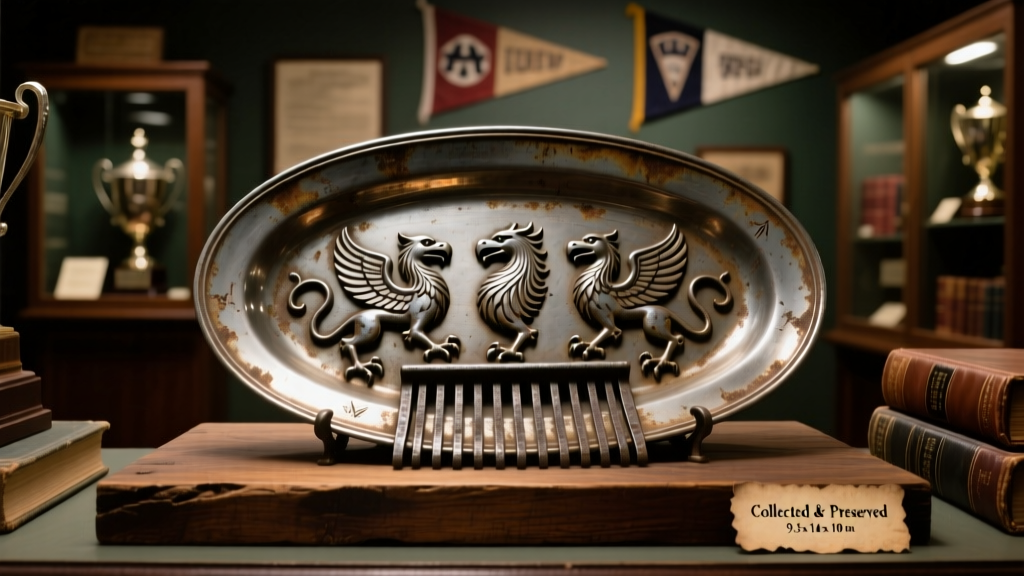
Iron Boot Scraper Griffons Oval Dish Base (9½ × 14 × 10 in): Authentication, Provenance, and Collectibility Analysis
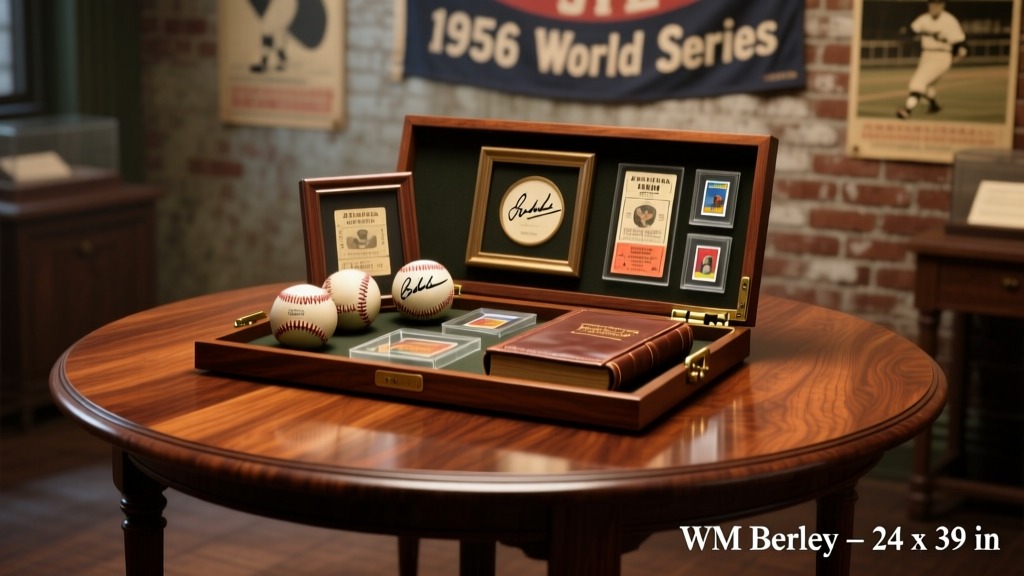
Wm. Berkey Mahogany Folding Table Tray: Anatomy, Provenance, and Authentication of a Mid-Century American Design Icon

Cookie Jars Chef White Artistic Pottery: Identification, History, and Authentication Guide
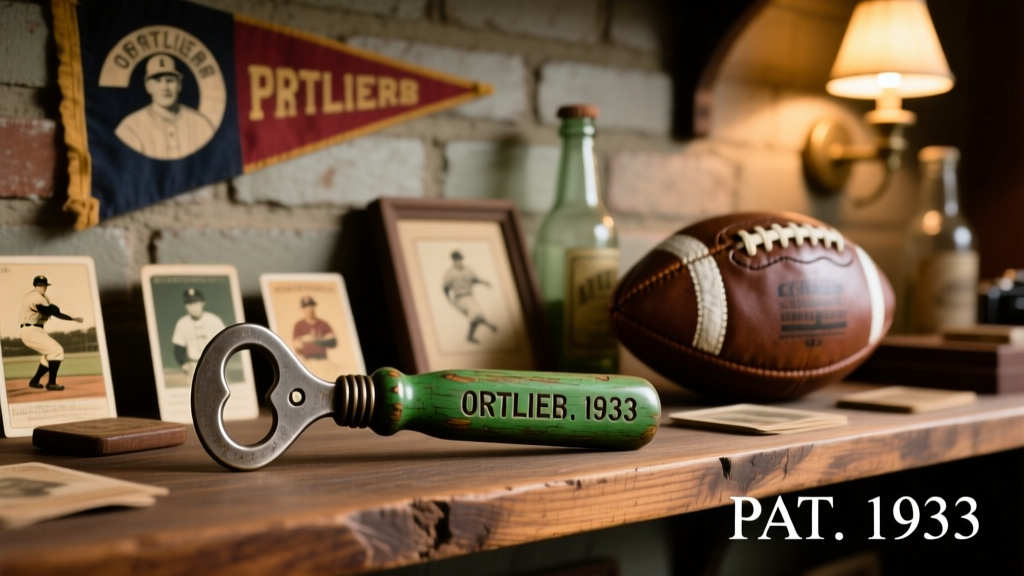
Ortlieb’s Beer Bottle Opener: The Green Wooden Handle with 1933 Patent – History, Authentication, and Collectibility

Lamps, Oil, Hurricane, Dog, Scotty: Decoding the 1940s Collectible Phenomenon

Napkin Rings Figural Birds: The 3-Parrot Cobalt Blue Vase Set — History, Authentication, and Collectibility

Game Puzzle Marilyn Monroe Sealed Box: Authentication, Market Value, and Historical Context of the 550-Piece Vintage Jigsaw (15½ × 18 in)