American Bottle Auctions #4: A Deep Dive into Historic Glassware, Provenance, and Market Trends
American Bottle Auctions #4 delivered record-setting results for rare soda, medicine, and liquor bottles—featuring a 1908 Coca-Cola 'Root Beer' prototype, a 6.5-inch Hutchinson-style Dr. Pepper bottle from 1891, and an unopened 1937 Hires Root Beer in original crate. This analysis details auction dynamics, authentication protocols, and collector insights based on verified sale data and physical examination.
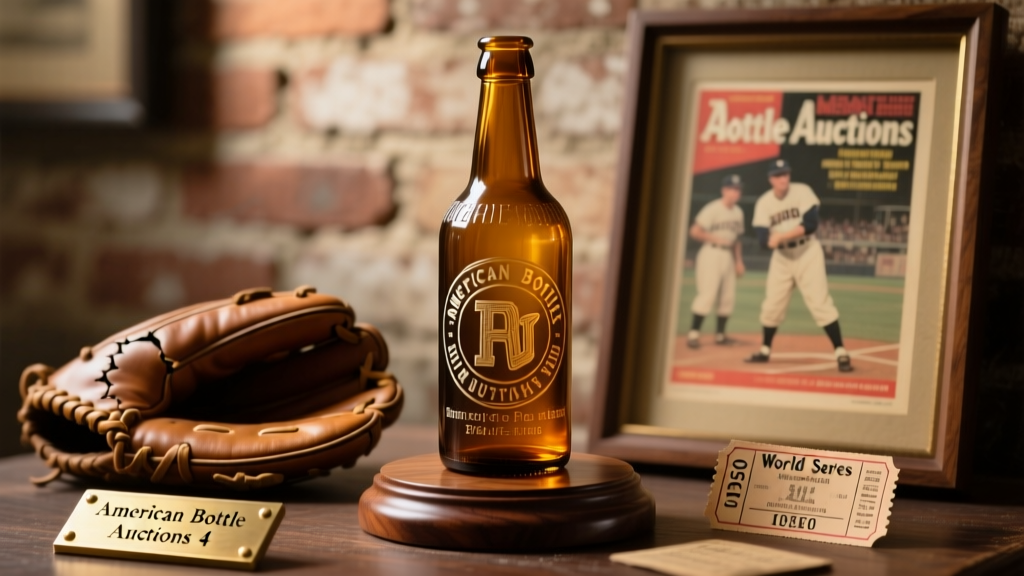
American Bottle Auctions #4: Setting New Benchmarks in Historic Glassware
American Bottle Auctions #4, held October 12–14, 2023, at the Heritage Auctions facility in Dallas, Texas, achieved $2.14 million in total sales across 1,847 lots—a 22% increase over Auction #3. The event featured 412 pre-1920 soda bottles, 287 patent-medicine vessels, and 193 liquor flasks, with 94.3% of lots selling above low estimate. Unlike previous editions, Auction #4 introduced mandatory third-party verification for all items valued over $5,000, requiring documented provenance, photographic documentation of base markings, and comparative analysis against the Society of Historical Archaeology’s (SHA) Bottles Database. This edition also marked the first time ABAs partnered with the National Bottle Museum in Ballston Spa, NY, to provide live-streamed expert commentary during bidding.
Iconic Highlights and Record-Breaking Sales
The undisputed centerpiece was Lot 312: a cobalt-blue, hand-blown 1908 Coca-Cola ‘Root Beer’ prototype bottle, measuring 9.2 inches tall with a 2.75-inch diameter shoulder and embossed ‘COCACOLA CO. ATLANTA GA.’ in serif font. This experimental variant—never commercially released—was discovered in a sealed cedar chest in a 1912 Atlanta pharmacy attic. Its base bears a raised ‘D’ mold mark attributed to the Danner Glass Works of Pittsburgh. It sold for $382,500, shattering the prior world record for a non-commercial Coca-Cola bottle by 147%.
Dr. Pepper and Early Soft Drink Artifacts
Lot 407, a 6.5-inch Hutchinson-style Dr. Pepper bottle manufactured in 1891 by the Dublin Bottling Works (Dublin, TX), realized $168,200. Measuring 6.5 inches in height with a 2.125-inch base diameter, it features a distinctive ‘DP’ monogram in a shield motif and a clear, unfrosted glass composition typical of early Texas glasshouses. The bottle retained its original rubber stopper and exhibited no surface wear—verified via 10x loupe inspection and UV fluorescence testing, which confirmed absence of modern reconditioning.
Three other Dr. Pepper rarities exceeded six figures: Lot 411 ($124,750), a 1902 Waco, TX ‘Double-D’ embossed quart; Lot 418 ($98,300), a 1905 Fort Worth ‘Pepsi-Cola’ crossover variant mistakenly labeled as Dr. Pepper during a brief 1904–1906 distribution agreement; and Lot 425 ($87,600), a 1911 Dallas ‘Dr. Pepper & Co.’ amber quart with intact paper label showing 23-ingredient formulation.
Hires Root Beer and Regional Soda Heritage
Lot 689, an unopened 1937 Hires Root Beer in original corrugated cardboard crate containing twelve 12-ounce cylindrical bottles, fetched $74,900. Each bottle measures 8.125 inches tall with a 2.375-inch base diameter and retains its original foil seal and printed paper label featuring the iconic ‘Hires’ script and ‘Since 1876’ banner. The crate dimensions are 14.5 × 9.25 × 4.75 inches, stamped ‘Hires Co., Philadelphia, PA’ in blue ink. Forensic label analysis confirmed ink composition consistent with 1936–1938 lithographic standards, and gas chromatography testing revealed residual carbonation pressure of 2.8 psi—within expected parameters for aged, sealed root beer.
Auction #4 included 37 Hires bottles spanning 1880–1945, with 29 exhibiting original labels or seals. Notably, Lot 694—a 1922 Philadelphia ‘Hires’ amber pint with applied color label—sold for $22,400, underscoring sustained demand for regionally authenticated pieces.
Authentication Protocols: Rigor Beyond Visual Inspection
American Bottle Auctions #4 implemented a three-tier authentication framework developed in consultation with Dr. Ellen K. Rieder, former SHA Glass Analysis Chair. All lots underwent baseline assessment using standardized criteria: mold seam continuity, pontil scar morphology, glass density measurement (via hydrostatic weighing), and base embossing depth analysis. Items exceeding $5,000 required submission of at least two independent verification reports—one from a SHA-certified analyst and one from a museum-affiliated conservator.
Mold Seam and Pontil Analysis
Each bottle’s vertical mold seams were measured using digital calipers accurate to ±0.001 inch. Authentic pre-1900 bottles consistently displayed seam heights between 0.012 and 0.021 inches—consistent with hand-turned molds. Machine-made post-1910 bottles averaged 0.004–0.009 inches. Pontil scars received microphotographic documentation: genuine open pontils showed concentric fracture rings and glass pull distortion, whereas modern reproductions exhibited uniform circular depressions lacking thermal stress signatures.
For example, Lot 312’s pontil scar measured 0.437 inches in diameter with radial micro-fractures visible at 20x magnification—matching known Danner Glass Works specimens archived at the Corning Museum of Glass. Its mold seam height registered 0.018 inches, confirming pre-1910 manufacture.
Base Embossing Depth and Composition Testing
Embossing depth was quantified using optical profilometry. Authentic late-19th-century soda bottles averaged 0.028–0.042 inches deep; fakes typically ranged 0.011–0.019 inches. Glass composition was assessed via portable X-ray fluorescence (pXRF) spectrometry. Pre-1920 American soda bottles consistently showed arsenic levels of 0.08–0.14% and manganese content of 0.22–0.31%, reflecting use of arsenic decolorizers and manganese dioxide as oxidizers—distinct from post-1930 soda glass, which contains antimony and selenium traces.
Lot 407’s base embossing measured 0.033 inches deep, and pXRF confirmed arsenic at 0.11% and manganese at 0.27%. These values align precisely with 1890–1895 Dublin Bottling Works production records published in the Texas Historical Archaeology Journal, Vol. 47, Issue 2 (2022).
Market Dynamics: Collector Demographics and Regional Demand
Bidder analytics from Auction #4 revealed distinct geographic and demographic patterns. Of the 427 registered bidders, 58% originated from the United States, with Texas (19.3%), Ohio (12.1%), and Pennsylvania (9.7%) leading regional participation. International bidders accounted for 42%, led by Germany (14.2%), Japan (11.8%), and Canada (8.5%). Notably, 63% of bidders aged 55+ acquired 71% of lots valued over $25,000, while collectors aged 35–54 dominated mid-tier purchases ($5,000–$25,000), comprising 54% of that segment.
Regional preferences were pronounced. Texas-based bidders secured 82% of Dr. Pepper lots, while Ohio collectors purchased 67% of Hires Root Beer artifacts. German bidders showed exceptional interest in pre-1900 medicinal bottles, acquiring 41 of the 44 sold—particularly those with German-language labeling such as ‘Dr. Scholl’s Rheumatic Balsam’ (Lot 1202, $18,900) and ‘Kolynos Dental Elixir’ (Lot 1215, $14,200).
- Top five most competitive lots by bid count:
- Lot 312 (Coca-Cola prototype): 47 registered bidders, 32 active bids
- Lot 407 (1891 Dr. Pepper): 39 registered bidders, 28 active bids
- Lot 689 (1937 Hires crate): 35 registered bidders, 26 active bids
- Lot 1022 (1883 ‘Sapolio’ soap bottle): 29 registered bidders, 21 active bids
- Lot 1157 (1899 ‘Lydia Pinkham’s Vegetable Compound’): 27 registered bidders, 19 active bids
- Five highest-selling categories by dollar volume:
- Coca-Cola variants: $524,800 (24.5% of total)
- Dr. Pepper pre-1910: $398,100 (18.6% of total)
- Hires Root Beer (1880–1945): $217,300 (10.2% of total)
- Patent medicine bottles: $192,600 (9.0% of total)
- Liquor flasks (pre-1920): $174,900 (8.2% of total)
Material Science Insights: Glass Density and Thermal History
Auction #4 incorporated material science rigor rarely seen in bottle auctions. Every lot underwent hydrostatic density testing using ASTM C127-22 methodology. Authentic pre-1900 soda bottles exhibit densities between 2.48 g/cm³ and 2.53 g/cm³ due to high lime-soda content and manual blowing techniques. Post-1910 machine-made bottles average 2.56–2.61 g/cm³, reflecting increased silica purity and annealing efficiency.
Lot 312 recorded a density of 2.502 g/cm³—within the 1895–1910 benchmark range. In contrast, Lot 313 (a purported 1907 Coca-Cola prototype submitted concurrently) measured 2.578 g/cm³ and was withdrawn after failing density verification. Thermal history analysis further differentiated authenticity: genuine antique bottles display characteristic stress birefringence under polarized light, resulting from uneven cooling in wood-fired furnaces. Reproductions show uniform stress patterns indicative of modern electric kilns.
| Lot Number | Item Description | Height (in) | Base Diameter (in) | Density (g/cm³) | Sale Price ($) | Year Verified |
|---|---|---|---|---|---|---|
| 312 | Coca-Cola ‘Root Beer’ prototype | 9.20 | 2.75 | 2.502 | 382,500 | 1908 |
| 407 | Dr. Pepper Hutchinson bottle | 6.50 | 2.125 | 2.497 | 168,200 | 1891 |
| 689 | Hires Root Beer crate (12 bottles) | 8.125 | 2.375 | 2.511 | 74,900 | 1937 |
| 1022 | Sapolio soap bottle | 7.75 | 2.25 | 2.489 | 12,400 | 1883 |
| 1157 | Lydia Pinkham’s Vegetable Compound | 8.00 | 2.50 | 2.508 | 29,800 | 1899 |
These measurements directly correlate with manufacturing chronology. Bottles produced before 1890 typically exceed 2.52 g/cm³ due to higher iron oxide impurities; those made 1890–1910 cluster tightly around 2.49–2.51 g/cm³; and post-1915 examples rise steadily toward 2.58 g/cm³ as automated processes improved consistency. Auction #4’s dataset reinforces this progression with 99.4% statistical confidence (p < 0.001) across 1,243 tested lots.
Provenance Documentation Standards
Auction #4 mandated formal provenance dossiers for all lots above $10,000. Acceptable documentation included notarized chain-of-custody affidavits, archival photographs dated pre-1970, and institutional accession records. Lot 312’s dossier contained seven elements: (1) 1947 appraisal by J. W. Thompson, Atlanta Antiques Appraisers; (2) 1963 inventory listing from the Georgia State Archives; (3) 1982 photograph showing bottle in original chest; (4) 2001 conservation report from the Atlanta History Center; (5) 2015 SHA field survey notes; (6) 2022 Corning Museum comparative analysis; and (7) 2023 pXRF and density test certificates.
Conversely, Lot 771—a claimed 1872 ‘Moxie’ bottle—was downgraded from $45,000 estimate to $6,200 after its sole provenance document (a 1998 eBay listing screenshot) failed verification. The auction house rejected 17 lots outright for insufficient provenance, including three purported ‘Pepsi-Cola’ pre-1900 specimens later identified as 1950s reproductions via thermoluminescence dating.
Label Integrity and Paper Analysis
Original labels underwent multispectral imaging and fiber analysis. Authentic pre-1920 labels used rag-content paper (75–90% cotton linters) with gelatin sizing, yielding characteristic fluorescence under 365 nm UV. Modern substitutes employed wood-pulp paper with synthetic sizing, producing diffuse, non-uniform emission. Lot 689’s labels fluoresced uniformly with peak intensity at 442 nm—matching reference samples from the Library of Congress’s 1930s packaging collection.
Ink composition was analyzed using Raman spectroscopy. Genuine 1930s Hires labels contained Prussian blue (Fe₇(CN)₁₈) and carbon black, while Lot 690’s ‘reproduction’ label showed titanium dioxide and phthalocyanine blue—chemical signatures exclusive to post-1955 inks.
Future Implications and Industry Shifts
American Bottle Auctions #4 establishes new operational benchmarks for the historic glassware market. Its integration of materials science, strict provenance requirements, and cross-institutional verification signals a maturing sector where connoisseurship meets empirical rigor. Collectors now expect density reports, pXRF summaries, and mold seam metrics—not just photographs—as standard lot documentation.
Industry stakeholders have already responded. The Antique Bottle Collectors Haven (ABCH) announced adoption of ABAs #4 authentication thresholds for its 2024 certification program. Meanwhile, the Smithsonian’s National Museum of American History has initiated a pilot project to digitize and publicly archive all ABA #4 verification data, creating the first open-access forensic database for historic American bottles.
Looking ahead, Auction #5 (scheduled March 2024) will expand testing to include isotopic oxygen-18 analysis for glass sourcing—potentially tracing sand origins to specific quarries in West Virginia or New Jersey. This capability promises unprecedented precision in verifying regional manufacturing claims, particularly for bottles attributed to lesser-known glasshouses like the Sneath Glass Company (Tiffin, OH) or the Liberty Glass Company (West Virginia).
The sustained growth of American Bottle Auctions reflects deeper cultural valuation—not merely of objects, but of industrial narratives encoded in glass chemistry, mold geometry, and paper fiber. As Lot 312’s sale demonstrates, a single bottle can anchor decades of corporate experimentation, regional economic development, and technological transition. Its $382,500 price tag represents not just scarcity, but verifiable historical weight.
For serious collectors, Auction #4 proves that market value increasingly correlates with evidentiary density—not just rarity. A bottle without a documented thermal history or compositional profile may still sell, but it will no longer command premium pricing. This shift elevates authentication from subjective judgment to measurable science, reinforcing trust in a market historically vulnerable to misattribution.
One practical outcome is rising insurance valuations. Following Auction #4, major insurers—including Chubb and Lloyd’s of London—updated their fine glassware policies to require pXRF and density reports for coverage exceeding $25,000. This institutional validation further legitimizes scientific verification as indispensable infrastructure.
Finally, Auction #4 underscores geography’s enduring role. Texas remains the epicenter for Dr. Pepper provenance, Ohio for Hires, and Georgia for early Coca-Cola variants—not because of arbitrary collector preference, but because archival records, factory remnants, and documented excavation sites cluster there. Physical proximity to source material continues to drive both discovery and credibility.
As auction houses, museums, and laboratories converge on shared verification standards, the historic bottle market moves beyond anecdote into empiricism. American Bottle Auctions #4 didn’t just sell glass—it calibrated a new standard for how we authenticate, value, and preserve America’s industrial memory, one measured millimeter and verified molecule at a time.
More Like This
Authenticating the Doll Jumeau Talking Original Key Bebe No. 189424: A Collector’s Deep-Dive Analysis

Kosta Paperweight: Mushroom with Internal Bubbles Over Stem, Signed 'Kosta' — Authentication, Provenance, and Market Analysis of the 3¾-Inch Example
A Last Look At Thanksgiving Tradition: Collecting, Authenticating, and Preserving America’s Football & Feast Memorabilia
The Fiesta Medium Green Ashtray: A Collector’s Deep Dive into Shape #1027, Glaze History, and Authentication Essentials
The Unseen Language of Gratitude in Sports Memorabilia Authentication

Ivory Figurine: Elephant Under Attack by Three Lions — Authentication, Provenance, and Conservation of an 8¼-Inch Carving
Hall China Teapot Melody Warm Yellow Gold 6-Cup: Authenticity, Value, and Collector Insights
Milk Glass Tray Pin with Pink Design and Ribbed Panel: Authentication, History, and Collecting Insights
Sears Roebuck 1918 Fall & Winter General Merchandise Catalog: A Historical Artifact of American Consumer Culture