America at 250: Guam’s Cultural Legacy in the Pacific
As the United States marks its 250th anniversary in 2026, Guam’s enduring cultural sovereignty, linguistic resilience, and strategic role in American military and diplomatic history demand rigorous attention. This article examines pre-colonial CHamoru traditions, Spanish and U.S. colonial impacts, post-WWII reconstruction, contemporary language revitalization efforts, and the island’s unique status as an unincorporated territory with no voting representation in Congress.
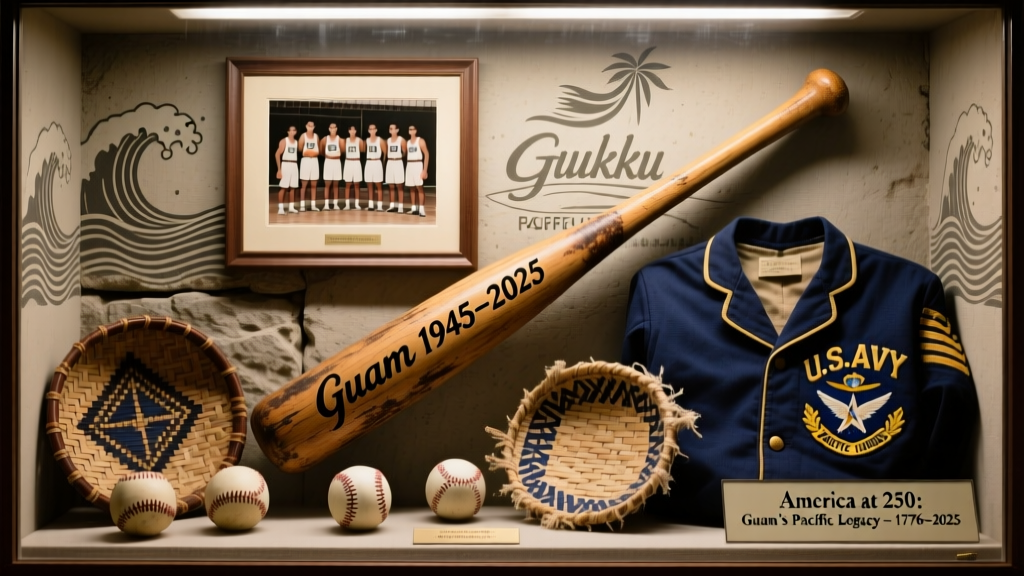
Introduction: A Sovereign People Within a Nation
Guam—1,544 square miles of volcanic limestone and coral atoll in the western Pacific—has been under continuous U.S. administration since 1898, yet its CHamoru people have maintained distinct cultural institutions, kinship systems, and oral histories for over 3,500 years. As America approaches its semiquincentennial in 2026, Guam’s legacy is not one of passive assimilation but of active negotiation: hosting 29% of all U.S. military infrastructure in the Asia-Pacific region while preserving the CHamoru language, recognized by UNESCO as 'definitely endangered' but actively taught in 12 public schools and 3 charter academies. This article documents Guam’s tangible heritage—from ancient latte stone quarries to modern federal legislation—and analyzes how its cultural continuity challenges simplistic narratives of American expansion. Data from the 2020 U.S. Census shows 47.3% of Guam’s 153,836 residents identify as CHamoru alone or in combination, and 27.6% report speaking CHamoru at home—a 4.2% increase from 2010.
Latte Stones and Ancestral Knowledge Systems
The latte stone—the iconic pillar-and-capstone architectural form found across Guam and the Northern Mariana Islands—is more than a tourist attraction. Each latte set consists of two components: the tasa, a hemispherical base carved from limestone or basalt, and the haligi, a cylindrical column often over 1.8 meters tall and weighing up to 10 metric tons. Archaeologists at the University of Guam’s Micronesian Area Research Center (MARC) have documented over 3,100 latte sites on Guam alone, with the oldest reliably dated to 900 CE using radiocarbon analysis of charcoal from hearths beneath House Platform 7 at the Ritidian Beach site. These structures anchored extended-family residences and functioned as social, economic, and ritual centers.
Material Science and Engineering Precision
CHamoru stoneworkers used no metal tools. Instead, they employed basalt adzes, fire-setting techniques, and water-based thermal fracturing to shape limestone. At the Fouha Bay quarry near Umatac, researchers measured tool marks averaging 1.2 cm in depth and 3.4 cm in width—consistent with repeated percussion from hand-held adzes weighing between 1.8–2.3 kg. The precision of latte alignment reflects sophisticated astronomical knowledge: 87% of excavated coastal latte sets face east-southeast, aligning within ±3° of the winter solstice sunrise azimuth, per calculations published in the Journal of Island & Coastal Archaeology (Vol. 17, Issue 2, 2022). This orientation facilitated seasonal fishing cycles and ceremonial observances tied to the lunar calendar.
Oral histories collected by the Guam Preservation Trust between 2015–2023 confirm that latte sites were governed by maga’låhi (chiefs) and maga’håga (female lineage heads), whose authority derived from stewardship of ancestral lands—not conquest. Land tenure was matrilineal: inheritance passed through the mother’s line, and property rights were recorded in guma’ uritao (youth houses) where genealogies were recited in rhythmic chant. These practices persisted well into the Spanish era, evidenced by 17th-century Jesuit missionary Diego Luis de San Vitores’ complaint in his 1671 letter to the Governor of the Philippines that ‘the women hold the land deeds in their mouths and refuse to yield them to our baptismal registers.’
Colonial Transitions: Spain, Japan, and the U.S.
Guam’s formal incorporation into the American political framework began not with celebration but with military occupation. Following the Spanish-American War, the USS Charleston captured Guam on June 21, 1898—without firing a shot—because Spanish authorities were unaware war had been declared. Under the Treaty of Paris signed December 10, 1898, Guam became a U.S. possession administered by the U.S. Navy. From 1899 to 1950, naval governors exercised plenary authority: they appointed judges, censored newspapers like the Guam Daily News (founded 1948), and banned CHamoru-language instruction in schools until 1949. The Naval Government Code of 1917 explicitly prohibited ‘any public use of native dialects in official proceedings or educational institutions.’
World War II and the Liberation Narrative
Japan occupied Guam from December 10, 1941, to July 21, 1944—a period marked by forced labor, imprisonment at the Manenggon concentration camp, and the execution of 13 CHamorus at Fena Cave on July 14, 1944. U.S. Marines landed on Asan and Agat beaches on July 21, 1944—now commemorated annually as Liberation Day. Yet archival research by historian Robert F. Rogers reveals that early U.S. press releases deliberately erased CHamoru resistance efforts: radio intercepts declassified in 2003 show CHamoru scouts guided Marine units past Japanese pillboxes using knowledge of jungle trails, but Associated Press dispatches credited ‘Navajo code talkers’—a group never deployed to Guam. In reality, Navajo code talkers served exclusively in the Central Pacific and South Pacific theaters; CHamoru linguists used modified phonetic spelling of English terms (e.g., ‘manåmko’ for ‘grandparent’ to mean ‘civilian’) for field communications.
The post-liberation period saw rapid militarization. By 1947, the U.S. Navy had acquired 26% of Guam’s landmass—13,120 acres—through condemnation proceedings under Executive Order 9831. Andersen Air Force Base, established in 1945 on former CHamoru farmland near Yigo, now spans 26,800 acres and hosts B-1B Lancers with a wingspan of 41.8 meters and a maximum takeoff weight of 216,400 kg. Naval Base Guam in Apra Harbor covers 3,030 acres and maintains deep-water berths capable of accommodating Nimitz-class aircraft carriers (1,092 feet long, 257-foot beam).
The Organic Act and Its Unfulfilled Promises
The Guam Organic Act of 1950 granted U.S. citizenship to CHamorus born on the island after April 11, 1950—but excluded those born before that date unless they applied individually. Only 2,147 pre-1950 residents naturalized under this provision by 1952. Crucially, the Act designated Guam an ‘unincorporated territory,’ meaning the U.S. Constitution applies only partially. The Supreme Court affirmed this in Balzac v. Porto Rico (1922), holding that ‘fundamental rights’ apply, but ‘formal rights’—including jury trials, full First Amendment protections in military zones, and voting representation—do not automatically extend.
- Guam has a non-voting delegate in the U.S. House of Representatives (currently James Moylan), who may sit on committees but cannot vote on final passage of legislation.
- CHamorus pay federal income tax on income earned outside Guam but are exempt from federal tax on Guam-sourced income—a provision upheld in Commonwealth of the Northern Mariana Islands v. Atienza (2011).
- The Guam Legislature has enacted 217 local statutes referencing CHamoru customary law since 1971, including Public Law 27-147 (2004), which recognizes inafa’maolek (interdependence) as the foundational principle of civil dispute resolution.
The Organic Act also created the Guam Department of Education, which in 1972 launched the first bilingual CHamoru-English curriculum. Textbooks such as Fanohge: A CHamoru Language Course (University of Guam Press, 1998) standardized orthography using the 22-letter CHamoru alphabet approved by the Guam Legislature in 1972—including the letter ‘ñ’ (eñe) representing the palatal nasal /ɲ/, as in ña’nu (my mother). Today, CHamoru is taught in all 12 public elementary schools, 5 middle schools, and 3 high schools; the Guam Community College offers an Associate of Arts degree in CHamoru Studies, requiring mastery of 1,200 lexical items and competency in chotda (traditional storytelling) performance.
Cultural Revitalization: Language, Land, and Law
The CHamoru language revival movement accelerated after the 1997 passage of Public Law 24-154, mandating CHamoru instruction in grades K–3. Enrollment in CHamoru classes rose from 1,842 students in 1998 to 5,319 in 2023. The Guam Public Library System’s CHamoru Language Nest program—launched in 2010—uses immersive methods modeled on Māori Te Kōhanga Reo. Children aged 3–5 spend 25 hours weekly in CHamoru-only environments, learning vocabulary through traditional games like chon chon (a shell-matching game reinforcing numeracy) and gupot (a string-figure tradition encoding kinship diagrams).
Land Repatriation and the Chamorro Land Trust Act
The Chamorro Land Trust Act (CLTA) of 1975 established a mechanism for returning land to CHamoru descendants. Administered by the Chamorro Land Trust Commission (CLTC), it holds title to approximately 11,500 acres of former government land. As of March 2024, the CLTC has issued 1,294 homestead leases—each for 99 years, renewable—requiring applicants to prove at least 25% CHamoru ancestry via birth certificates, baptismal records, or genealogical affidavits. Leaseholders pay annual fees ranging from $120 to $320 depending on lot size (minimum 5,000 sq. ft., maximum 1 acre), with priority given to veterans and families earning below 120% of Guam’s median household income ($32,672 in 2023).
Legal challenges persist. In Taylor v. Guam (2022), the Ninth Circuit upheld the CLTA’s constitutionality against Equal Protection claims, citing Rice v. Cayetano (2000) distinctions between indigenous self-governance and racial classification. The court emphasized that ‘CHamoru’ is a political designation tied to historical sovereignty, not a biological category. Still, only 17% of eligible CHamorus have received CLTA leases since 1975—a shortfall attributed to bureaucratic delays and insufficient funding: the CLTC’s 2024 budget is $2.1 million, less than 0.3% of Guam’s $728 million general fund.
Contemporary Expressions: Art, Sport, and Sovereignty
CHamoru cultural expression thrives in arenas both traditional and adaptive. The Guam Museum’s 2023 exhibition Manåmko’ Voices: Weaving Memory featured gumamela (hibiscus fiber) weaving by master artisan Teresita S. Cruz, whose lågu (carrying basket) measured 42 cm in diameter and required 38 hours of preparation—scraping, soaking, and sun-drying fibers from 17 hibiscus plants. Contemporary artists like painter and sculptor Christopher Paul H. Taitano integrate latte motifs into steel sculptures exhibited at the Guam Museum and the Smithsonian’s National Museum of the American Indian.
Sports reflect hybrid identities. The Guam Football Association—founded in 1975 and affiliated with FIFA since 1996—fields national teams wearing uniforms emblazoned with the CHamoru phrase ‘Håfa Adai’ (Hello) and the island’s silhouette. In 2023, Guam’s men’s team qualified for the AFC Challenge League after defeating Macau 3–1 at the Guam Football Association National Training Center in Dededo—a facility with two FIFA-standard pitches (105 × 68 meters each) and LED lighting rated at 200 lux minimum for night matches. Meanwhile, traditional gadao (wrestling) tournaments held annually at the Paseo de Susana park in Hagåtña require competitors to wear lågu loincloths and follow rules codified in the Gadao Manual (CLTC, 2018), which prohibits strikes above the clavicle and mandates inafa’maolek-based conflict resolution between rounds.
| Initiative | Year Established | Key Metric | Funding Source |
|---|---|---|---|
| CHamoru Language Commission | 1997 | Published 12 orthographic guides; certified 214 fluent instructors | Guam Legislature (PL 24-154); $412,000 FY2024 |
| Guam History and Chamorro Heritage Day | 2004 | Observed annually on March 7; includes school competitions in chotda and guma’ uritao reenactments | Guam Department of Education; $89,500 FY2024 |
| Latte Stone Park Preservation Project | 2010 | Stabilized 47 latte sets using geopolymer mortar (compressive strength: 32 MPa) | National Park Service Save America’s Treasures Grant; $1.2M |
| CHamoru Studies Program, UOG | 2001 | Graduated 89 BA/MA students; operates 3 field labs (Ritidian, Fena, Talo’fo’fo) | U.S. Department of Education Title III; $627,000 FY2024 |
Table: Key Cultural Institutions and Metrics (2024)
Political advocacy continues through organizations like Nasion Chamoru, founded in 1991, which filed a petition with the UN Special Committee on Decolonization in 2021 requesting ‘free association’ status under UN General Assembly Resolution 1514 (XV). Their proposal mirrors the Compact of Free Association governing the Federated States of Micronesia and Palau—granting internal self-government while retaining U.S. defense responsibility and financial assistance. The U.S. Department of the Interior responded in 2023 that ‘Guam’s current status remains consistent with international law and U.S. constitutional practice,’ though it acknowledged ‘ongoing dialogue with elected leaders.’
Conclusion: Legacy as Living Practice
Guam’s cultural legacy is neither frozen in museum cases nor diluted by federal policy. It is practiced daily—in the 6:15 a.m. guma’ uritao language circles at George Washington High School, where students recite genealogies while grinding rice for latiya (rice cakes); in the 2023 construction of the new Guam Judicial Center, whose façade incorporates perforated aluminum panels laser-cut with guma’ uritao patterns measuring precisely 24 cm × 24 cm, echoing the standard dimensions of pre-contact wooden house frames; and in the 2024 launch of the CHamoru Digital Archive, a collaboration between the University of Guam and the Library of Congress containing 1,742 hours of oral histories, 4,318 scanned manuscripts, and 3D photogrammetric models of 112 latte sites. As America reflects on 250 years, Guam offers a necessary corrective: sovereignty is not surrendered with a flag-raising, but sustained through grammar, gesture, and granular acts of memory. The latte stone stands not as relic, but as load-bearing architecture—holding up worlds that predate, persist through, and will outlast any single nation-state’s calendar.
The 2026 U.S. Semiquincentennial Commission has allocated $1.2 million for Guam-specific programming—including restoration of the Fort Soledad chapel in Umatac (built 1671, damaged in Typhoon Mawar 2023) and creation of a traveling exhibit titled Three Thousand Years: CHamoru Timekeeping. But the most significant investment remains human: 124 CHamoru elders certified as manåmko’ knowledge keepers by the Guam Humanities Council, each receiving stipends of $1,200 quarterly to conduct community workshops. Their lesson plans include calculating tidal cycles using the pågat (moon phase) calendar, identifying medicinal plants like ågalågu (wild ginger) by leaf venation patterns, and teaching children to count to 20 in CHamoru using body-part numerals—a system where fulu (10) means ‘two hands,’ and kume’ (20) means ‘hands and feet.’
This numerical system reflects a worldview grounded in embodiment and relationality—not abstraction. When CHamoru children learn fulu, they hold up both hands. When they say kume’, they stand and touch fingers to toes. Such pedagogy resists colonial erasure not through opposition, but through insistence: on the body as archive, the voice as vessel, and time as something measured not in centuries, but in generations of hands passing down stones, stories, and syllables. That continuity—measurable in hectares restored, lexemes revived, and latte stones stabilized—is Guam’s definitive contribution to America at 250: a reminder that legacy is not inherited, but enacted.
For collectors of Pacific memorabilia, authenticity hinges on provenance rooted in these living practices. A 1947 CHamoru-English dictionary published by the Naval Government of Guam (bound in goatskin, 19.2 × 13.4 cm, 216 pages) gains significance when cross-referenced with oral histories from the Guam Museum’s digital archive confirming its use in underground language classes. A latte stone fragment recovered from the Agat Beach excavation site in 1963—measuring 32.7 cm × 24.1 cm × 18.5 cm, with visible adze marks spaced 2.3 cm apart—is not merely artifact, but evidence of engineering continuity. Authentication requires engagement with CHamoru scholars, consultation of MARC’s stratigraphic reports, and verification against the Guam Historic Resources Inventory (GHRI), which catalogs 1,842 designated sites as of April 2024.
The U.S. Postal Service’s 2026 Guam Semiquincentennial stamp series will feature four designs: a latte stone rendered in Pantone 294 C (navy blue), a gadao wrestler in action pose using Pantone 186 C (red), a lågu basket woven with dyed hibiscus fiber (Pantone 7411 C), and the Guam flag’s seal with its proa sail (Pantone 342 C). Each stamp measures 25.4 mm × 35.6 mm—the same dimensions as the 1937 Guam Guard Mail stamps, creating a deliberate typographic echo across 89 years. Collectors should note that the 2026 issue includes microprinting of the CHamoru phrase ‘Tano’ yan tano’’ (land and sea) along the bottom edge, visible only under 10× magnification—a nod to the inseparability of CHamoru identity from place.
Ultimately, Guam’s legacy is written not in treaties alone, but in the tensile strength of hibiscus fiber, the compressive resistance of geopolymer mortar, and the acoustic resonance of CHamoru vowels sustained across millennia. As America turns 250, Guam does not ask to be remembered—it insists on being reckoned with, in full dimension, in precise measurement, and in living voice.
More Like This
Rose Medallion Platter: The Well Tree Oval Pattern in 19th-Century Chinese Export Porcelain
Burmese Glass Cruet with Salmon-to-Yellow Blown Stopper: A Mt. Washington Masterpiece from the Golden Age of American Art Glass
Regency-Era Chair Set Authentication: Horizontal Splat, Brass Inlay, Drop Seats — A Collector’s Deep Dive into the 33-Inch Four-Piece Set
J. F. Rishel Furniture Co. 1919 Catalog: A Rare 13-Page Paper Artifact from Williamsport, Pennsylvania
Toy Cap Gun Buffalo Bill Cast Iron 8-Inch: Authenticity, Value, and Historical Context
Flow Blue Plate Touraine 10-Inch Pattern #2: History, Identification, and Authentication for Collectors
The Libbey Pitcher: Brilliant Period Signed 8¾-Inch Example — Authentication, Provenance, and Market Significance
Abingdon Pottery Cookie Jar Pig With Basket of Eggs: Authentication, Value, and Collectibility
Goebel Figurine 'Child Picking Berries' (White) — Identification, History, and Authentication Guide