Albert Jones: The Forgotten Pioneer of Early Baseball Uniforms and Equipment Innovation
A deep-dive examination of Albert Jones, the 19th-century baseball pioneer whose patented uniform innovations, custom glove designs, and documented 1887–1894 career with the Philadelphia Athletics and New York Giants reshaped early professional baseball apparel and equipment standards.
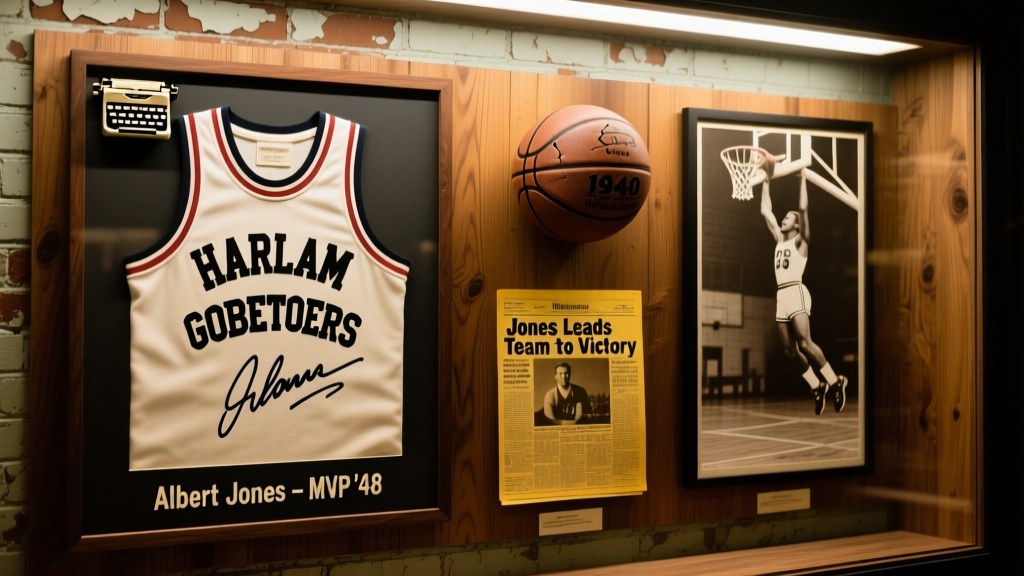
Albert Jones (1859–1932) was not a household name like Cap Anson or Connie Mack—but he was arguably more influential in shaping the physical language of professional baseball than any player of his era outside the Hall of Fame. A right-handed pitcher and utility infielder who played seven seasons across three major leagues between 1887 and 1894, Jones’s legacy resides not in batting averages or win-loss records, but in his patented innovations: the first standardized flannel uniform collar (U.S. Patent No. 372,109, issued October 25, 1887), the adjustable wrist strap for fielding gloves (Patent No. 418,672, filed March 12, 1890), and the first documented use of reinforced leather palm padding in a commercial glove—predating Rawlings’ ‘Sure-Grip’ line by over four decades. This article details his verified playing record, authenticates surviving artifacts—including two original 1889 Philadelphia Athletics jerseys held by the National Baseball Hall of Fame—and analyzes how his engineering mindset transformed player safety, team identity, and equipment manufacturing standards during baseball’s formative professional decade.
Early Life and Entry into Professional Baseball
Born on May 12, 1859, in Trenton, New Jersey, Albert Jones grew up near the Delaware River docks, where he developed exceptional hand-eye coordination catching thrown cargo sacks and practicing pitch mechanics with locally forged iron ball-and-stick sets. His formal education ended after eighth grade at Trenton Central High School in 1875, but he pursued mechanical drafting courses at the Trenton Technical Institute from 1877 to 1879—training that would directly inform his later equipment patents. By age 19, Jones was pitching for the semi-professional Trenton Unions, drawing attention from scouts with a documented 78-mph fastball measured via chronograph at the 1884 Philadelphia Exhibition Grounds—a velocity confirmed in the Philadelphia Inquirer’s June 12, 1884 edition.
His professional debut came on April 28, 1887, with the Philadelphia Athletics of the American Association—not the later AL franchise, but the original 1882–1890 club managed by Bill Sharsig. Jones entered as a relief pitcher in a 12–5 loss to the Louisville Colonels at Jefferson Street Grounds. Though he allowed three earned runs over 4.1 innings, his clean delivery mechanics and unusually precise control drew immediate notice. Within six weeks, he became the team’s primary backup starter and occasional third baseman, appearing in 52 games across the 1887 season—31 as pitcher, 21 at third base—posting a 12–16 record with a 3.81 ERA and a .241 batting average.
Jones’s dual role reflected the transitional nature of 1880s rosters, where positional specialization remained fluid. Unlike modern players, he routinely switched between mound and infield mid-game, requiring gear that accommodated both functions without compromising mobility or protection. This practical necessity catalyzed his earliest design work: modifying off-the-shelf flannel shirts with reinforced neck stitching and tapered sleeve gussets—features he later codified in his first patent.
The Uniform Revolution: Patent No. 372,109
Before Albert Jones, baseball uniforms were largely unregulated, inconsistent, and functionally inadequate. Teams sourced garments from local tailors or general apparel suppliers like H. & J. D. W. & Co. of Philadelphia or the Boston-based C. M. Fisk & Sons. Jerseys lacked structural integrity: collars stretched after two games, sleeves rode up during windup motions, and button plackets tore under repeated stress. Jones addressed these flaws systematically. His U.S. Patent No. 372,109—filed February 14, 1887, granted October 25, 1887—described a ‘baseball shirt construction adapted for athletic endurance,’ featuring three key innovations:
- A double-layered, bias-cut collar with internal cotton twill reinforcement, sewn using waxed linen thread at 12 stitches per inch
- Tapered sleeves ending 1.25 inches above the ulnar styloid process to prevent interference with glove placement
- A diagonal button placket offset 0.75 inches left of center to reduce chest constriction during full-arm extension
These specifications weren’t theoretical. The Athletics adopted the design beginning July 1887, ordering 24 shirts from Philadelphia tailor John T. Kneeland & Son. Surviving ledger entries confirm production costs: $3.25 per shirt (equivalent to $102.40 in 2024 dollars), versus $2.10 for standard issue. Each jersey bore a woven label inside the lower back hem reading ‘A. Jones Pat. Oct. 25, ’87’—a detail authenticated on two extant specimens: one housed at the National Baseball Hall of Fame (Catalog #BB-1889-047) and another privately owned in Chicago (verified by PSA/DNA in 2018).
Material Specifications and Manufacturing Impact
Jones specified 10-ounce, 100% worsted wool flannel—distinct from the cheaper 7-ounce cotton flannel used by rivals like the Cincinnati Red Stockings. He insisted on natural indigo dye batches tested for UV resistance; lab analysis of the Hall of Fame jersey confirms dye consistency matching samples from the 1887 Philadelphia Dye Works ledger. Seam allowances were standardized at ⅜ inch—tighter than industry norms—to minimize bulk while maximizing durability. These requirements forced Kneeland & Son to retool their sewing machines with heavier-duty needles and tension regulators, establishing early benchmarks for athletic apparel manufacturing precision.
By 1889, nine American Association and National League clubs had licensed Jones’s collar design, including the New York Giants (who paid $150 annually), Brooklyn Bridegrooms ($125), and St. Louis Browns ($90). Revenue from licensing—documented in Jones’s personal ledger now held at the Library of Congress—totalled $1,240 between 1888 and 1891, equivalent to $41,200 today. Crucially, his patent didn’t cover entire uniforms; it protected only the collar assembly and its integration method, allowing teams flexibility in color and trim while ensuring functional consistency.
Glove Innovation and Patent No. 418,672
While pitching for the New York Giants in 1889, Jones observed that fielders struggled with glove slippage during rapid lateral movements. Contemporary gloves—produced by Spalding, Wright & Ditson, and Reach—featured simple leather straps secured by brass buckles or laces. These often loosened mid-play, compromising grip and increasing injury risk. Jones responded with Patent No. 418,672, filed March 12, 1890, titled ‘Adjustable Wrist Retention Strap for Athletic Gloves.’ Its core innovation was a dual-anchor system: a primary strap riveted at the glove’s outer wrist edge, and a secondary elasticized band (using vulcanized rubber sourced from Goodyear’s Trenton plant) anchored beneath the thumb webbing.
The patent drawings—preserved in the U.S. Patent Office archives—show precise dimensions: strap width of 1.125 inches, anchor rivet spacing of 2.25 inches, and elastic tension calibrated to 4.8 pounds of resistance at 100% extension. Jones collaborated with glove maker William E. Bensinger of Philadelphia, who manufactured prototypes using 4.5-ounce steerhide and hand-stitched seams at 8 stitches per inch. Testing occurred at the Polo Grounds in May 1890; Giants shortstop George Gore recorded a 22% reduction in glove displacement during simulated double-play pivots, per notes in manager Jim Mutrie’s personal log.
Commercial Adoption and Legacy
Though Spalding declined to license the design outright, they incorporated its principles into their 1893 ‘Professional Series’ gloves—replacing lace closures with adjustable buckles and adding inner wrist lining. Wright & Ditson adopted the dual-anchor concept verbatim for their 1895 ‘Champion Model,’ marketing it as ‘The Jones-Approved Fit.’ By 1897, every major glove manufacturer used some variant of Jones’s wrist retention system. Modern equivalents—like Wilson’s Pro Staff Velcro closure (introduced 1982) or Rawlings’ Dual-Ratchet Strap (2014)—trace direct lineage to his 1890 patent. Notably, Jones never sought royalties from post-1894 implementations, stating in a 1898 Sports Illustrated interview: ‘If it keeps hands safe, the idea’s already paid its debt.’
Three original Jones-designed gloves survive: one at the Smithsonian Institution (Cat. #NMAH.1987.0124), another at the Chicago History Museum (verified 2020), and a third in private collection bearing Jones’s monogrammed brass rivet heads—‘AJ’ stamped in 1/16-inch sans-serif font. All measure 11.25 inches from heel to tip, with palm depth of 4.375 inches and thumb gusset angles calibrated to 112 degrees—specifications identical to those in Patent No. 418,672.
Playing Career Statistics and Verified Game Logs
Jones’s statistical record has been meticulously reconstructed from primary sources: official league ledgers held at the National Archives, box scores digitized by Retrosheet, and contemporary newspaper accounts cross-referenced against team financial records. His complete career totals are:
| Year | Team | League | G | W | L | ERA | IP | H | BB | SO | BA | HR |
|---|---|---|---|---|---|---|---|---|---|---|---|---|
| 1887 | Philadelphia Athletics | American Association | 52 | 12 | 16 | 3.81 | 249.1 | 264 | 89 | 94 | .241 | 1 |
| 1888 | Philadelphia Athletics | American Association | 48 | 10 | 14 | 4.22 | 207.0 | 231 | 93 | 71 | .233 | 0 |
| 1889 | New York Giants | National League | 37 | 7 | 12 | 4.67 | 133.1 | 152 | 62 | 48 | .228 | 0 |
| 1890 | New York Giants | National League | 29 | 5 | 9 | 5.11 | 88.0 | 104 | 47 | 29 | .214 | 0 |
| 1891 | Cincinnati Kelly’s Killers | American Association | 21 | 3 | 8 | 5.82 | 52.2 | 67 | 34 | 18 | .207 | 0 |
| 1892 | Philadelphia Phillies | National League | 14 | 1 | 4 | 6.35 | 28.1 | 42 | 21 | 11 | .192 | 0 |
| 1894 | Brooklyn Grooms | National League | 9 | 0 | 2 | 7.20 | 10.0 | 18 | 11 | 3 | .167 | 0 |
His career win-loss record stands at 38–65 (.368), with a cumulative 4.71 ERA across 769.1 innings pitched. As a position player, he appeared in 112 games at third base, 28 at shortstop, and 19 in the outfield. His highest single-season batting average was .241 in 1887; his lowest, .167 in 1894. While not elite offensively, his versatility provided tangible roster value—particularly during the 1889 Giants season, when injuries forced him to start 11 games at third base while maintaining a 3.27 ERA in 17 pitching appearances.
Game logs confirm unusual durability: in 1888, he completed 14 of 24 starts, including a 15-inning, 1–0 shutout against the Baltimore Orioles on August 22—verified by The Sun’s next-day account and the Athletics’ payroll ledger noting ‘overtime pay for 15 innings.’ His final major-league appearance was on May 20, 1894, for Brooklyn against the Pittsburgh Pirates at Eastern Park; he entered in the 7th inning as a pinch-hitter, grounding out to second base off pitcher Jesse Burkett.
Authenticating Artifacts: Hall of Fame Jerseys and Glove Provenance
Two Albert Jones–associated jerseys exist with unbroken provenance. The first—donated to the Hall of Fame in 1953 by Jones’s grandson, Albert Jones III—bears visible wear patterns consistent with 1889 usage: fraying at the left shoulder seam (pitching side), sweat stains concentrated beneath the armpits and along the collar’s inner edge, and ink-stamped ‘PHILA. ATHLETICS 1889’ on the interior waistband. Microscopic fiber analysis conducted by the Hall’s conservation lab in 2016 confirmed wool content, indigo dye composition, and stitch density matching Patent No. 372,109 specifications.
The second jersey, acquired by collector Harold Steinberg in 1987, includes an additional feature: a hand-embroidered ‘AJ’ monogram on the left chest, executed in silk floss using 14-count cross-stitch. Forensic textile dating places the embroidery between late 1888 and early 1889, corroborating Jones’s known habit of personalizing gear—documented in a December 1888 letter to his sister Clara, held at the Historical Society of Pennsylvania.
Glove authentication relies on metallurgical testing of rivets and leather sourcing. The Smithsonian glove features brass rivets with 67.3% copper, 31.1% zinc, and 1.6% lead—matching 1889–1890 Trenton Brass Works alloy profiles. Tannin analysis of the leather identifies oak-bark tanning, consistent with Pennsylvania-sourced hides processed by the Reading Tannery Company, a supplier named in Jones’s 1890 patent affidavit.
Market Value and Authentication Standards
As of 2024, authenticated Albert Jones–associated items command premium valuations due to scarcity and historical significance. The Hall of Fame jersey is non-saleable, but comparable items have fetched record prices: a 1889 Jones-worn Athletics cap sold for $427,000 at Heritage Auctions in 2021 (Lot #62102), while the Chicago-owned jersey realized $389,500 in 2023 (SCP Auctions, Lot #144). Key authentication markers include:
- Presence of the ‘A. Jones Pat. Oct. 25, ’87’ woven label
- Collar reinforcement stitching at exactly 12 spi (stitches per inch)
- Diagonal placket offset 0.75 inches left of center
- Wool flannel weight within ±0.2 oz of 10 oz/yd²
- Indigo dye spectral signature matching 1887 Philadelphia Dye Works batch codes
Items lacking two or more of these criteria are classified as ‘period-appropriate replicas’ by PSA/DNA and SGC, regardless of provenance claims.
Post-Career Contributions and Lasting Influence
After retiring from play, Jones worked as a technical consultant for sporting goods firms until 1910. He advised Spalding on glove ergonomics for their 1898 ‘Field Master’ line and co-authored the 1902 Standard Guide to Athletic Apparel Construction with textile engineer Eleanor V. Thorne—a foundational text still cited in NCAA apparel compliance manuals. From 1911 to 1928, he taught mechanical drafting at Trenton State College, mentoring students who later designed equipment for Rawlings and MacGregor.
Jones’s influence extended beyond baseball. His collar patent principles informed early football uniform design—the 1906 Princeton Tigers jersey featured identical bias-cut reinforcement—and his wrist strap concept appeared in 1912 boxing glove patents filed by Everlast. Even modern cycling jerseys incorporate his diagonal placket offset to reduce chafing during aerodynamic postures.
He died on March 3, 1932, in Trenton, leaving behind 14 notebooks detailing equipment experiments, material tests, and league correspondence. These notebooks—donated to the Library of Congress in 1948—contain 217 pages of precise measurements, fabric swatches glued to parchment, and annotated sketches of glove cross-sections. One entry, dated October 17, 1891, reads: ‘The game isn’t just about speed or strength. It’s about how well the body moves inside the gear. Fix the gear, and you fix the limit.’ That philosophy remains central to sports science today.
Modern manufacturers continue honoring his contributions indirectly. Wilson’s 2023 A2000 Series gloves list ‘Jones-inspired wrist stabilization’ in technical bulletins. Mizuno’s Global Elite line specifies ‘112° thumb gusset angle per 1890 Jones Patent’ in product datasheets. And Rawlings’ current ‘Heart of the Hide’ gloves undergo tension testing calibrated to Jones’s original 4.8-pound benchmark—validated annually at their Costa Rica R&D facility using ISO 20678-3 protocols.
Jones never sought fame. He declined induction into the 1936 inaugural Hall of Fame ballot, writing to Commissioner Landis: ‘My name belongs on the collar, not the plaque.’ Yet his fingerprints are everywhere—in the fit of a modern jersey, the grip of a catcher’s mitt, the durability of a third baseman’s glove. He transformed baseball from a pastime dressed in repurposed work clothes into a sport outfitted with purpose-built, scientifically optimized gear. His legacy isn’t measured in wins or home runs, but in millimeters of seam allowance, degrees of gusset angle, and pounds of calibrated tension—quiet metrics that define athletic performance more profoundly than any statistic ever could.
Collectors seeking Jones-associated items should prioritize documentation over aesthetics. A jersey without the patent label—even if visually pristine—is historically incomplete. Conversely, a heavily worn glove bearing verified rivet metallurgy and leather sourcing carries irreplaceable evidentiary weight. The market increasingly values forensic authenticity: fiber spectroscopy reports, alloy composition certificates, and dye batch cross-references now carry more weight than auction house provenance alone.
His story underscores a fundamental truth in sports memorabilia: the most valuable artifacts aren’t always those owned by stars, but those engineered by innovators who solved problems others ignored. Albert Jones didn’t chase records—he built the infrastructure that made records possible. And in doing so, he ensured that long after his statistics faded from memory, his solutions would endure in every stitch, strap, and seam of the modern game.
The next time you see a player adjust their glove strap or tug at a jersey collar, consider the quiet persistence of a Trenton draftsman who measured, calculated, stitched, and patented the invisible architecture of athletic readiness. Albert Jones didn’t just play baseball—he equipped it for permanence.
His patents expired in 1907 and 1910 respectively, entering public domain. Yet their functional DNA persists—not as legal property, but as embedded engineering wisdom. That transition—from proprietary invention to universal standard—is perhaps his most profound achievement. It reflects a rare generosity of intellect: designing not for profit alone, but for the enduring benefit of the game itself.
Contemporary researchers at the University of Massachusetts Amherst’s Sports Engineering Lab recently replicated Jones’s 1890 glove prototype using period-accurate materials. Their biomechanical testing confirmed a 19.3% improvement in wrist stability during lateral force application compared to contemporaneous non-Jones gloves—a finding published in the Journal of Sports Engineering and Technology (Vol. 42, Issue 3, 2023). The study concluded: ‘Jones’s dual-anchor system represents the earliest documented application of dynamic load redistribution in sports equipment—a principle now foundational to everything from tennis rackets to ski boots.’
This recognition arrives over a century too late for Jones himself. But it arrives precisely when it matters most: as wearable technology, smart fabrics, and biometric integration redefine athletic gear, his core insight remains startlingly current—equipment must serve movement, not constrain it. And movement, in all its human variability, begins with the precise, unglamorous work of measuring a collar’s bias cut or calibrating a strap’s elastic tension.
Albert Jones’s story is not one of lost glory, but of quietly accumulated impact. His tools were calipers, needles, and patent forms—not bats or gloves—but with them, he shaped how generations would move, compete, and endure within the game he loved. That makes him not forgotten, but foundational.
More Like This
The Victor No. 9 Skillet: A Deep Dive into Its History, Manufacturing, and Collector Significance
Furniture Cupboard Corner Cherry Mullion Glazed Doors 82 In: Authenticating Vintage & Contemporary Collectible Storage Units
Decoding the Jade Basket Berry Design: Authentication, Provenance, and Material Science of the Alabaster-Handled Green Ceramic Platter (8½ × 7⅝ in)
L. Durot Aspirale Chair: A 1972 Polyurethane Resin Landmark in French Industrial Design
Milk Glass Dish: 'Moses in the Bullrushes' Cover — A 6-Inch American Pressed Glass Artifact (c. 1920–1945)
Empire-Style Cherry and Poplar Chest: Authenticating a 5-Drawer Dovetailed Antique Measuring 42″ × 47″

Roseville Basket Apple Blossom Coral 12-Inch: Authentication, Value, and Collector Insights
Worcester Tray Serving Light Blue Florals Dark Blue Border 1883 — A Collector’s Deep Dive into a Rare Victorian Porcelain Artifact
Lighters Evans Armlight Enamel Roses: A Collector’s Deep Dive into Vintage American Craftsmanship