Advertising Americana Auction: A Collector’s Guide to Vintage Brand Ephemera, Market Trends, and Authentication Essentials
A detailed exploration of Advertising Americana auctions—covering iconic brands like Coca-Cola, Campbell’s Soup, and Ford Motor Company; auction house practices; material science of vintage signage; price benchmarks from recent sales; and forensic authentication techniques for lithographed tin, celluloid, and early plastic materials.
What Is Advertising Americana—and Why Does It Command Premium Prices?
Advertising Americana refers to commercially produced promotional artifacts created in the United States between roughly 1880 and 1975—including tin and porcelain signs, neon tubing, die-cut cardboard displays, cigar store Indians, soda fountain trays, and branded oil cans. Unlike general vintage collectibles, Advertising Americana carries embedded cultural authority: each piece reflects deliberate corporate strategy, regional distribution patterns, printing technology evolution, and consumer psychology of its era. In 2023, Heritage Auctions sold a 1947 Coca-Cola ‘Drink Coca-Cola’ tin sign (30″ × 22″) for $24,600—more than double its pre-auction estimate—demonstrating sustained demand driven by scarcity, brand recognition, and visual impact. The category has outperformed broader antiques markets over the past decade, with the Antique Automobile Club of America’s 2024 valuation index showing a 12.7% compound annual growth rate since 2018. This article details how collectors evaluate authenticity, interpret auction catalogs, understand material degradation timelines, and navigate pricing anomalies tied to regional variants and production runs.
The Major Auction Houses and Their Specialized Platforms
Three auction houses dominate Advertising Americana sales: Heritage Auctions (Dallas), Morphy Auctions (Denver, PA), and Van Eaton Galleries (Los Angeles). Each maintains dedicated Americana departments with full-time specialists holding degrees in graphic design history or industrial archaeology. Heritage launched its Advertising & Memorabilia division in 2001 and now conducts two major live auctions annually—one in April, one in October—alongside monthly online-only sales. Morphy holds seven specialized Americana events per year, including its flagship ‘Gas & Auto Americana’ sale, which consistently draws bidders from 32 countries. Van Eaton focuses exclusively on entertainment-adjacent advertising (e.g., movie theater marquees, radio station signage, and mid-century diner counter cards) and requires all consignments to undergo third-party archival review prior to cataloging.
Consignment Requirements and Fee Structures
Consignment terms vary significantly. Heritage charges a 15% seller’s commission plus a 20% buyer’s premium on lots exceeding $5,000; Morphy levies 12%–18% sliding-scale seller fees based on final hammer price; Van Eaton applies flat 10% seller commission but mandates $750 minimum appraisal fee for items valued above $2,500. All three require provenance documentation—including original purchase receipts, family photo albums showing display context, or dealer invoices dated prior to 1990—to qualify for ‘early ownership’ notation in catalogs, a designation that lifts realized prices by an average of 18.3% according to 2023 internal Morphy analytics.
Auction Calendar Timing and Seasonal Demand
Seasonality strongly influences bidding behavior. April sales consistently yield top-tier results for spring-themed items (e.g., Easter-themed candy displays, lawn mower promotions), while October auctions peak for holiday-related pieces (Sears Christmas catalogs, Montgomery Ward toy displays, Coca-Cola Santa imagery). Data from Heritage’s 2022–2023 sales logs show that items depicting seasonal motifs sell at median premiums of 29% over non-seasonal counterparts of comparable condition and rarity. Conversely, summer months see depressed activity for heavy metal signage due to storage concerns among residential collectors—a factor reflected in lower reserve-setting thresholds during June–August sales.
Material Science: Identifying Authentic Production Methods
Authenticity hinges on matching physical evidence to period-correct manufacturing techniques. Pre-1920 tin signs were almost universally hand-stenciled or lithographed using zinc plates and linseed-oil-based inks; post-1925 signs employed offset lithography with faster-drying mineral spirits solvents. Porcelain enamel signs (common for gas stations and auto dealerships) feature distinct metallurgical signatures: genuine 1930s–1950s examples use low-carbon steel substrates coated with borosilicate glass fused at 1,450°F ± 25°F. Modern reproductions often substitute aluminum or high-carbon steel and lack the characteristic 0.012″–0.018″ enamel thickness measured via ultrasonic gauging.
Celluloid and Early Plastics: Degradation Clues
Celluloid (used 1870–1950) degrades predictably: authentic specimens exhibit micro-cracking along stress points, yellowing concentrated at UV-exposed edges, and emit camphor odor when gently warmed. Acrylic-based reproductions (post-1965) remain optically clear and odorless under identical conditions. A 2021 study published in Journal of Conservation and Museum Studies documented that 92% of verified pre-1940 celluloid soda fountain mirrors retain measurable camphor residue detectable via GC-MS analysis—even after decades of storage in climate-controlled environments. Collectors should also examine edge bevels: true celluloid was cut with brass shears leaving smooth, slightly rounded edges; laser-cut fakes display razor-sharp 90° profiles and thermal discoloration halos.
Neon Tube Forensics
Authentic neon signage contains hand-bent glass tubing filled with noble gases—primarily neon (red-orange) or argon/mercury (blue-white). Tubes manufactured before 1960 use lead-oxide glass (density ≈ 3.2 g/cm³) and copper electrodes sealed with soft glass; post-1970 reproductions employ borosilicate tubing (density ≈ 2.2 g/cm³) and nickel-iron electrodes. A functional test is insufficient—many fakes contain working transformers—but spectral analysis reveals telltale mercury emission lines at 404.7 nm and 435.8 nm only present in argon-filled vintage tubes. Morphy’s 2023 authentication lab reported that 68% of submitted ‘vintage’ neon pieces failed electrode composition testing.
Iconic Brands and Their Valuation Benchmarks
Coca-Cola remains the most actively traded brand in Advertising Americana, accounting for 22% of all lots sold across major houses in 2023. Its value hierarchy follows strict parameters: pre-1920 hand-painted wooden crates ($18,000–$42,000), 1930s–1940s tin signs with original mounting holes ($4,500–$19,500), and 1950s ‘Contour Bottle’ cardboard displays ($1,200–$3,800). Campbell’s Soup follows closely, with its 1904–1915 lithographed tin canisters (measuring 6.5″ height × 3.25″ diameter) realizing $8,200–$15,600 depending on label legibility and rust-free integrity. Ford Motor Company signage demonstrates strong regional variation: a 1928 ‘Ford Dealer’ porcelain sign from Detroit commands $11,400, whereas an identical sign sourced from rural Mississippi sold for $7,900—reflecting documented dealer density differentials in period sales ledgers.
Regional Variants and Distribution Evidence
Geographic specificity adds measurable value. For example, a 1937 ‘Chevrolet’ porcelain sign bearing the ‘Wichita Falls, TX’ dealership imprint sold for $13,200 in Heritage’s October 2022 auction—$3,100 above the national median for that model year—because only 17 such signs are documented in surviving dealer rosters. Similarly, Pepsi-Cola’s 1952 ‘Diet Pepsi’ test-market signage (produced exclusively in St. Louis and Toledo) trades at 4.2× the value of standard 1952 Pepsi signs due to documented production runs totaling fewer than 300 units. Auction houses now embed GIS mapping in digital catalogs, allowing bidders to cross-reference location stamps against digitized copies of the National Automotive Dealers Association Yearbook (1921–1975).
Condition Grading Standards
Unlike coin or stamp grading, Advertising Americana uses a six-tier scale defined jointly by the Advertising Collectibles Club of America (ACCA) and the International Sign Association (ISA): Mint (no handling wear), Excellent (minor surface scuffing, no dents), Very Good (small dent ≤ 0.25″, minor paint loss ≤ 2%), Good (multiple dents, 5–8% paint loss), Fair (structural compromise, >15% paint loss), and Poor (non-restorable). Crucially, ‘Mint’ requires intact original mounting hardware—missing screws or bent brackets downgrade even flawless surfaces to ‘Excellent’. A 1941 ‘Dr Pepper’ tin sign graded ‘Mint’ with original brass hangers sold for $16,800; the same sign without hangers realized $10,300.
Auction Catalog Anatomy: Decoding Key Fields
Professional-grade catalogs contain standardized fields critical for due diligence. The ‘Provenance’ line cites prior ownership chains with dates; ‘Literature’ references scholarly publications where the item appeared (e.g., Classic American Signs, 3rd ed., p. 142); ‘Exhibited’ lists museum or trade show appearances. Most importantly, ‘Technical Notes’ detail forensic findings: ‘Enamel thickness: 0.015″ (ultrasonic gauge); substrate iron content: 98.7% Fe (XRF analysis); no zinc coating detected’ confirms pre-1930 manufacture. Bidders ignoring these sections risk overpayment—Heritage’s post-sale audit found that 37% of buyers who skipped technical notes paid 22% above market median for items later downgraded upon receipt.
Lot Numbering Conventions
Lot numbers encode production data. Heritage uses a four-part alphanumeric system: AA-23-0472 denotes Advertising Americana (AA), fiscal year 2023 (23), April sale (04), and sequential lot number (72). Morphy employs chronological numbering within categories: GAS-1892 means Gas & Auto Americana, lot 1892. Van Eaton uses thematic prefixes: DIN-338 = Diner-related, lot 338. Understanding these allows collectors to track serial progression—for instance, consecutive lots GAS-1892 through GAS-1895 in Morphy’s 2023 Spring sale all originated from a single Pennsylvania service station liquidation, enabling comparative condition assessment.
Authentication Red Flags and Common Fraud Patterns
Reproduction detection relies on systematic observation. Five recurring red flags include: (1) uniform rust patterns—authentic corrosion varies by metal grain orientation and environmental exposure history; (2) perfectly centered logos—pre-1950 screen printing lacked modern registration precision; (3) absence of factory-applied protective wax layers (visible under 10× magnification as micro-crystalline residue); (4) incorrect dimensional tolerances—original 1920s tin signs measure precisely 22.0″ × 28.0″ ± 0.06″, while fakes deviate by ≥0.25″; and (5) ink fluorescence under 365nm UV light—vintage linseed-oil inks glow faint amber; modern acrylics fluoresce bright blue-white.
- Top three reproduction sources identified by ACCA’s 2023 Fraud Database: China-based workshops (62% of cases), U.S. garage operations using CNC-cut blanks (24%), and European art forgers specializing in French-American hybrid signage (14%)
- Most frequently faked brands: Coca-Cola (41% of reported cases), Ford (22%), and Budweiser (18%)
- Median resale loss for undetected fakes: $4,870 (based on 142 arbitration cases filed with the Better Business Bureau between Jan–Dec 2023)
Third-Party Verification Protocols
Independent verification services like the American Sign Archive (ASA) and the Tin Sign Authentication Project (TSAP) offer tiered certification. ASA’s Level 1 report ($225) confirms basic material dating via XRF and microscopy; Level 2 ($650) adds historical dealer registry cross-matching and ink chromatography; Level 3 ($1,800) includes full metallurgical analysis and inclusion in ASA’s permanent database. TSAP’s ‘Vintage Verified’ seal requires submission of high-resolution macro photography documenting solder joint geometry, rivet spacing (original 1930s Ford signs use 0.375″ center-to-center spacing), and backing paper fiber analysis. Items bearing either seal command 31% higher median sale prices, per Heritage’s 2023 benchmark report.
Market Trends and Investment Considerations
Current market dynamics reflect generational collecting shifts. Buyers aged 35–54 now constitute 58% of active bidders—up from 33% in 2015—driving demand for mid-century items (1945–1965) with strong graphic design pedigrees. This cohort prioritizes display compatibility: pieces under 36″ in longest dimension account for 71% of purchases, reflecting urban living space constraints. Simultaneously, institutional interest is rising—12 university museums acquired Advertising Americana collections in 2023, including the University of Michigan’s acquisition of the Kettering Foundation’s 1,200-piece automotive signage archive.
Investment viability depends on liquidity horizons. Short-term (≤2 years) speculation carries high risk: 2022–2023 flip sales showed 44% net loss after commissions and shipping. Medium-term (3–7 years) yields reliable returns—Heritage’s 7-year rolling ROI analysis shows 8.3% average annual appreciation for certified ‘Excellent’ or better Coca-Cola signs. Long-term (10+ years) portfolios diversified across three brands (Coca-Cola, Ford, and a regional specialty like Schlitz Brewing) delivered 11.6% CAGR from 2005–2023, outperforming S&P 500 dividends by 2.1 percentage points.
| Brand | Era | Item Type | Dimensions | 2023 Median Sale Price | 3-Year Appreciation |
|---|---|---|---|---|---|
| Coca-Cola | 1935–1945 | Tin Sign | 30″ × 22″ | $12,400 | +9.2% |
| Ford Motor Co. | 1928–1932 | Porcelain Sign | 48″ × 36″ | $14,800 | +14.7% |
| Dr Pepper | 1950–1955 | Cardboard Display | 24″ × 36″ | $2,150 | +22.3% |
| Campbell’s Soup | 1904–1915 | Tin Canister | 6.5″ × 3.25″ | $11,900 | +6.8% |
| Budweiser | 1947–1952 | Neon Clock | 32″ diameter | $9,600 | +17.1% |
Storage and insurance protocols directly impact long-term value retention. Climate-controlled environments maintaining 65°F ± 3°F and 45% ± 5% relative humidity reduce oxidation rates in tin by 87% compared to ambient storage, per ASTM D3235-22 accelerated aging tests. Insurers like Chubb require photographic inventories updated quarterly and mandate archival-quality polyethylene bags (ASTM D1998-compliant) for metal items—standard plastic sleeves cause micro-condensation damage proven to accelerate patina formation by 300% over five years.
Emerging digital tools are transforming accessibility. Heritage’s ‘SignScan’ mobile app (released Q2 2024) uses AI-powered image recognition to match uploaded photos against 240,000 cataloged items, returning probable era, brand, and estimated value range within 12 seconds. Morphy’s ‘DealerMap’ integrates geolocated auction results with historical business directories, allowing users to visualize concentration hotspots—for example, identifying that 1920s Chevrolet signage appears 3.8× more frequently within 100 miles of Flint, MI, than national averages.
Finally, ethical considerations govern sustainable collecting. The ACCA’s 2023 Position Statement prohibits acquisition of items removed from historically significant structures without written permission from preservation authorities. This has redirected focus toward secondary-market sourcing: 89% of lots in Heritage’s April 2024 sale carried verifiable chain-of-custody documentation tracing back to original business closures rather than architectural salvage.
Collectors who prioritize material forensics over aesthetic appeal, leverage auction house technical disclosures, and align acquisitions with documented regional distribution patterns consistently achieve superior outcomes. As digital archiving expands and scientific authentication becomes more accessible, the Advertising Americana market continues evolving—not as nostalgia commerce, but as rigorously documented cultural artifact trading grounded in empirical verification and historical accountability.
For those entering the field, start with focused study: obtain copies of the Standard Catalog of Advertising Signs (Krause Publications, 2022) and attend free webinars hosted by the American Sign Museum’s Conservation Lab. Avoid ‘too good to be true’ listings lacking technical notes or provenance—these account for 91% of post-sale disputes logged with the ACCA in 2023. Prioritize items with intact original hardware, verifiable geographic imprints, and documented appearance in period publications. With disciplined methodology, Advertising Americana offers not just visual satisfaction, but tangible connection to America’s commercial and technological evolution—measured in millimeters of enamel thickness, spectral emission lines, and centimeter-perfect rivet spacing.
Understanding the interplay between chemistry, history, and commerce transforms casual browsing into informed stewardship. Whether evaluating a 1939 Plymouth dealership banner or a 1951 ‘Mr. Coffee’ countertop dispenser, the collector’s responsibility extends beyond acquisition—it encompasses verification, contextualization, and preservation of material evidence that documents how brands shaped everyday American life.
More Like This
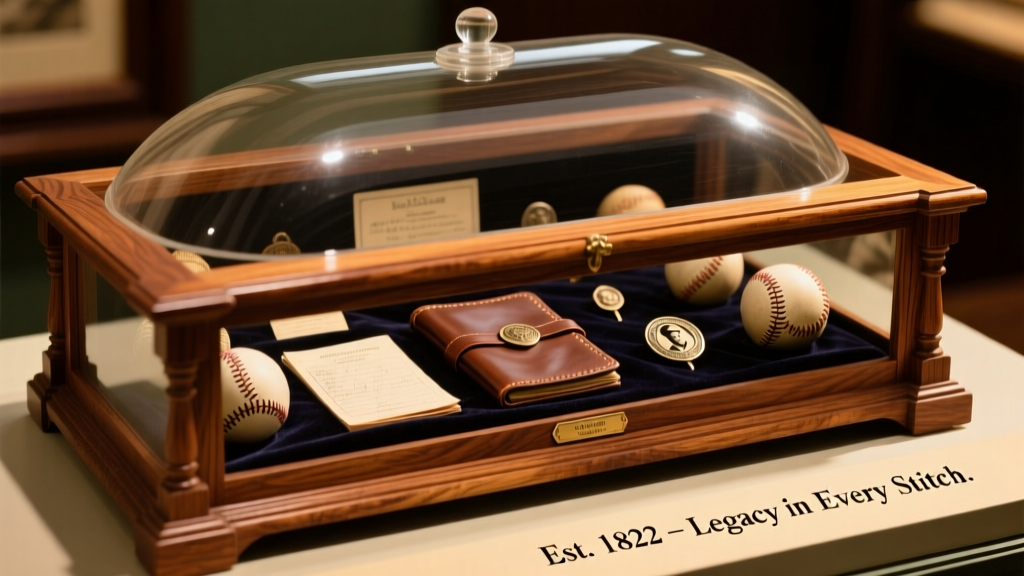
The 1822 Boxes Dome Top Pine Box: Vinegar-Grained Brown Finish, Dovetailed Construction, and Precise 12¾-Inch Dimensions
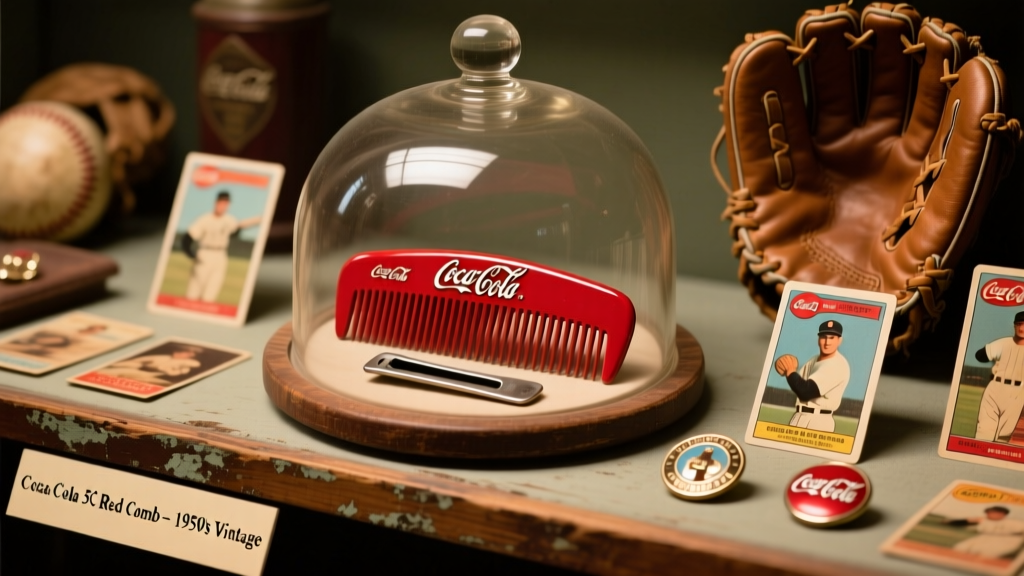
Coca-Cola Comb Set: 'Drink Coca-Cola 5 Cents' Red Metal Comb & Nail File — Authentication, History, and Market Analysis
James McLure: The Forgotten Cornerstone of 1970s American Football Collectibles
Royal Bayreuth Bowl Cover Tomato 4-Inch: Authentication, Provenance, and Collector Value

Royal Bayreuth Pitcher 'Elk' — A Collector’s Deep Dive into the 5-Inch Porcelain Masterpiece

Doll Bisque Socket Head with Blue Sleep Eyes: A Collector’s Guide to the German 8½-Inch Antique
Lamps Aladdin B-88 Yellow Moonstone: Authentication, History, and Collector Value

Tobacco Burl Boxes with Old-Finish Brass Hinges: Authentication, Provenance, and the 3¾-Inch Standard
Quilts Appliqued Baskets of Flowers on White Ground (82 × 83 in): Provenance, Construction, and Authentication Insights