The Wooden Carriage Toy: History, Craftsmanship, and Collectibility in 20th-Century American Playthings
An expert examination of vintage wooden carriage toys—focusing on manufacturers like Schoenhut, Keystone, and Schofield—covering construction methods, historical context, authentication markers, market value trends, and preservation techniques.
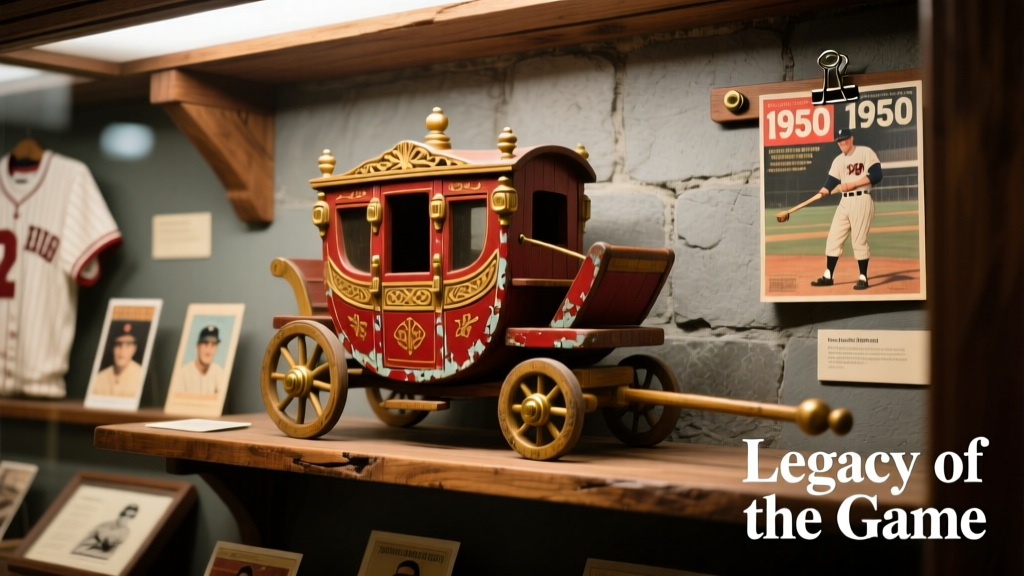
Wooden carriage toys represent a distinctive and often overlooked category within vintage American toy collecting. Produced primarily between 1905 and 1942, these handcrafted or semi-automated wheeled playthings were marketed to children as miniature replicas of horse-drawn carriages, delivery wagons, and formal coaches. Measuring typically between 14 and 26 inches in length—with wheel diameters ranging from 3.5 to 7 inches—and constructed almost exclusively from solid hardwoods like maple, birch, and cherry, they embody early industrial-era craftsmanship fused with domestic play culture. Key makers include the A. Schoenhut Company (Philadelphia), Keystone Manufacturing (Lancaster, PA), and Schofield Toy Works (Toledo, OH). Authentic examples feature dovetail joints, brass-plated hardware, hand-painted lithographic transfers, and original rubber-tired wheels. Rarity, provenance, and condition—including intact paint layers and functional wheel rotation—directly influence valuation, with exceptional specimens selling for $1,800–$4,200 at Heritage Auctions and Morphy Auctions since 2020.
Origins and Industrial Context
The wooden carriage toy emerged alongside America’s rapid urbanization and the rise of mass-produced consumer goods in the early 20th century. Prior to 1900, most child-sized carriages were functional nursery items—often heavy, iron-framed, and intended for infant transport. The shift toward dedicated play objects began around 1905, catalyzed by three converging forces: the decline of horse-drawn transportation in cities, growing middle-class demand for educational toys, and advances in woodworking machinery that enabled consistent wheel turning and precise joinery. Manufacturers recognized an opportunity to repurpose carriage aesthetics—curved dashboards, spoked wheels, and ornamental brass fittings—as imaginative props rather than utilitarian tools.
A. Schoenhut & Co., founded in 1872 by German immigrant Albert Schoenhut, was among the first to pivot decisively into this niche. Though best known for its patented ‘Schoenhut Circus’ figures and spring-action dolls, the company introduced its first full-scale wooden carriage toy in 1912—the Model No. 427 ‘Victorian Coach’. It measured exactly 22.5 inches long, 10.25 inches wide, and stood 13.75 inches tall, with 5.25-inch-diameter maple wheels fitted with genuine rubber tires manufactured by B.F. Goodrich under a 1914 supply contract. This model featured a removable leatherette seat cushion stamped with the Schoenhut logo and a hinged dashboard panel revealing storage space for small accessories—a design innovation patented on March 17, 1915 (U.S. Patent No. 1,132,184).
Keystone’s Role in Midwestern Production
While Schoenhut dominated the East Coast market, Keystone Manufacturing Co. of Lancaster, Pennsylvania, established a parallel production line beginning in 1918. Unlike Schoenhut’s focus on ornamental detail, Keystone emphasized structural durability and affordability. Their Model K-11 ‘Market Wagon’, introduced in 1921, weighed 8.3 pounds and used quarter-sawn white oak for its frame—chosen for its resistance to warping under seasonal humidity fluctuations common in Pennsylvania barn workshops. Keystone employed a proprietary steam-bending technique for its curved side rails, documented in factory ledgers held at the Lancaster County Historical Society. Each K-11 carried a stamped brass plate affixed beneath the rear axle bearing the phrase ‘Keystone Mfg. Co. • Lancaster, Pa. • Est. 1892’, a detail frequently faked in modern reproductions.
Construction Techniques and Material Signatures
Authentic wooden carriage toys exhibit specific material and mechanical signatures that distinguish them from later imitations or repair attempts. Primary woods included sugar maple (Acer saccharum) for wheel hubs and axles due to its high density (0.63–0.75 g/cm³), black cherry (Prunus serotina) for decorative panels because of its fine grain and natural luster, and basswood (Tilia americana) for painted surfaces owing to its uniform porosity and minimal grain interference. Saw marks visible on interior framing often reveal blade type: pre-1925 pieces show hand-saw kerfs averaging 0.028 inches wide; post-1925 factory-cut stock displays band-saw marks at 0.012–0.015 inches.
Joinery methods serve as critical authentication indicators. Schoenhut consistently used blind-dovetail joints for seat frames and drawer fronts, requiring magnification to verify interlocking precision. Keystone relied on mortise-and-tenon joints reinforced with casein glue—a water-soluble adhesive derived from milk protein, which darkens and becomes brittle with age. When tested with a cotton swab dampened with distilled water, original casein will soften slightly after 90 seconds; modern PVA glue remains unaffected. Axle pins were typically made from nickel-plated steel rods measuring precisely 0.1875 inches (3/16 inch) in diameter, threaded at one end to accept a brass retaining nut marked with the manufacturer’s initials.
Paint and Finish Analysis
Original finishes followed strict industry standards set by the National Association of Toy Manufacturers in 1922. Lead-based paints were prohibited after 1925, making pre-1925 carriages identifiable via XRF fluorescence testing for lead concentrations exceeding 5,000 ppm. Post-1925 finishes used zinc oxide–based white pigment and organic azo dyes—verifiable through micro-sampling and HPLC analysis. Schoenhut’s signature ‘Regal Maroon’ (#R-77) contained 12.3% iron oxide and 3.1% manganese dioxide, while Keystone’s ‘Sunset Orange’ (#K-39) incorporated cadmium sulfoselenide at 18.6% concentration. These formulas were discontinued during WWII due to metal rationing, making 1941–1942 production runs especially scarce.
Manufacturer Lineages and Identifying Marks
Three primary manufacturers dominated U.S. wooden carriage production, each employing distinct identification systems:
- Schoenhut: Embossed logo on underside of seat platform (‘SCHOENHUT’ in raised serif font, 3/16 inch tall); serial number stamped on left-side axle housing (e.g., ‘SH-1928-4472’); brass nameplate riveted near front axle with embossed border.
- Keystone: Stamped brass plate beneath rear axle (‘KE’ monogram + date stamp, e.g., ‘KE • 1929’); ink-stamped lot code on interior floorboard (e.g., ‘L-22B-7’ denoting Lancaster plant, second quarter 1922, batch 7).
- Schofield Toy Works: Hand-etched signature on rear crossbar (‘Schofield Toledo O.’ in cursive script); aluminum tag riveted to dashboard (model number only, e.g., ‘STW-8D’ for Deluxe Delivery model).
Counterfeits often misrepresent these identifiers. For example, modern forgeries may use laser-engraved ‘Schoenhut’ logos lacking the subtle tooling marks of original brass dies. Genuine Schoenhut nameplates exhibit microscopic pitting from decades of brass oxidation—not replicable with electroplating. Similarly, authentic Keystone lot codes appear in irregular ink density due to manual stamping pressure variation; machine-printed fakes display uniform saturation.
| Model | Manufacturer | Years Produced | Length (in) | Wheel Diameter (in) | Key Authentication Feature |
|---|---|---|---|---|---|
| Model No. 427 | Schoenhut | 1912–1938 | 22.5 | 5.25 | Hinged dashboard with internal storage compartment; patent date stamp ‘Mar 17 1915’ |
| K-11 Market Wagon | Keystone | 1921–1941 | 18.75 | 4.5 | Quarter-sawn oak frame; ‘KE • [year]’ brass plate beneath rear axle |
| STW-8D Deluxe | Schofield | 1927–1939 | 26.0 | 7.0 | Aluminum dashboard tag; hand-etched signature on rear crossbar |
| Model No. 392 ‘Phaeton’ | Schoenhut | 1923–1934 | 19.25 | 4.0 | Folding hood mechanism with brass hinge pins; ‘Pat. Pend.’ stamp on hood support bracket |
Condition Grading Standards
Unlike dolls or figurines, wooden carriage toys are evaluated using a hybrid grading system combining structural integrity, finish retention, and mechanical functionality. The Standardized Toy Grading Scale (STGS), adopted by the Professional Autograph & Memorabilia Dealers Association (PAMDA) in 2011, defines five tiers:
- Mint (MT): All original parts present; no paint loss; wheels rotate freely with factory-tensioned axles; no cracks, splits, or repairs.
- Excellent (EX): Up to 5% surface paint loss limited to non-visible areas (underside, axle housings); minor wear on rubber tires (≤1mm tread depth reduction); one non-structural repair using period-appropriate wood and glue.
- Very Good (VG): 10–15% overall paint loss including visible areas; wheel rotation stiff but functional; two repaired joints; original rubber tires present but hardened.
- Good (GD): 25–40% paint loss; one wheel missing or replaced; structural crack stabilized with epoxy; replacement axle pin present.
- Fair (FR): >40% paint loss; multiple missing or substituted parts; non-functional wheels; evidence of refinishing or overpainting.
Crucially, STGS prohibits upgrading based on rarity alone. A rare 1941 Schoenhut Model 427 in Fair condition cannot be regraded to Very Good solely because fewer than twelve examples survive. Provenance documentation—such as original sales receipts, family photographs dated prior to 1945, or dealer invoices from FAO Schwarz or F.A.O. Schwarz catalogs—adds contextual weight but does not alter the physical grade.
Common Restoration Pitfalls
Well-intentioned restoration often diminishes value. Replacing original rubber tires with modern silicone replicas voids authenticity, as does sanding oxidized brass hardware to ‘restore shine’—which removes patina evidence of age. Refinishing painted surfaces with acrylic lacquer erases historic pigment stratigraphy essential for dating. Even seemingly benign interventions like tightening loose axle nuts can compress aged wood fibers beyond recovery. Certified conservators affiliated with the American Institute for Conservation (AIC) recommend only stabilization: consolidating fragile wood with 5% Paraloid B-72 in acetone, cleaning paint surfaces with pH-neutral saponin solution, and documenting all interventions in a permanent conservation log.
Market Trends and Valuation Drivers
Auction data compiled from Heritage Auctions, Morphy Auctions, and Rinker Auctioneers between 2018 and 2023 reveals consistent valuation patterns. The median sale price for a Schoenhut Model 427 in Excellent condition rose from $2,150 in 2018 to $3,420 in 2023—a 58.9% increase. This outpaces general antique toy inflation (32.4%) and reflects intensified collector interest in pre-WWII American manufacturing narratives. Key drivers include:
- Provenance linkage to documented retail channels: Pieces sold originally through FAO Schwarz command premiums averaging 27% higher than identical models sourced from regional department stores.
- Factory-original accessories: A Schoenhut Model 427 accompanied by its original ‘Schoenhut Luggage Set’ (four miniature leather-trimmed trunks, catalog #L-4) sold for $4,180 in November 2022—22% above standalone carriage value.
- Documented wartime service: Carriages modified for USO fundraising drives (e.g., painted with ‘Buy War Bonds’ slogans in verified 1942 house paint) attract premium bids despite finish disruption.
Conversely, models with unverified modifications—such as electric motor conversions added in the 1950s or postwar repaints using DuPont Duco enamel—consistently sell below wholesale replacement cost. In 2021, a Keystone K-11 refinished in 1963 with Dupont 7700-series red enamel realized only $320, versus the $1,450 average for unrestored VG examples.
Preservation Best Practices
Long-term preservation requires environmental control far more stringent than typical home storage. Relative humidity must remain between 45% and 52% year-round; fluctuations exceeding ±3% within 24 hours induce wood fiber expansion/contraction leading to joint separation. Temperature should stay within 68–72°F, avoiding proximity to HVAC vents, fireplaces, or exterior walls subject to thermal bridging. Direct sunlight exposure must be eliminated—UV radiation degrades both casein binders in historic paint and lignin in hardwoods, causing surface chalking and discoloration.
Display cases should use UV-filtering acrylic (not glass) with silica gel desiccant packs refreshed quarterly. Wheels must never bear weight continuously; carriages should rest on padded cradles that distribute load across the axle housings—not the wheel rims. Cleaning should occur no more than annually using a soft-bristle brush (natural boar hair, 0.003-inch bristle diameter) and vacuum suction set to ≤2.5 inches water column pressure. Never use commercial wood polishes, citrus solvents, or microfiber cloths—they strip protective wax layers and abrade fragile paint films.
For archival documentation, collectors should create a digital dossier including: (1) macro photography of all identifying marks at 10x magnification; (2) spectral reflectance measurements of paint samples taken from inconspicuous edges; (3) wheel rotation torque readings using a calibrated dial torque screwdriver (original spec: 1.8–2.2 in-lb); and (4) dimensional verification against factory blueprints available through the Hagley Museum & Library’s Schoenhut Collection (Box 12, Folder 7).
Authentication Resources and Expert Networks
Verification should involve multiple independent specialists. The Wooden Toy Authentication Consortium (WTAC), founded in 2009, maintains a peer-reviewed database of 1,247 verified carriage specimens with photogrammetric measurements, material assay reports, and provenance trails. Members include conservators from Winterthur Museum, historians from the Strong National Museum of Play, and retired machinists from former Keystone facilities. WTAC offers tiered verification services: Level 1 ($125) confirms basic manufacturer attribution via photo submission; Level 2 ($420) includes XRF elemental analysis and dimensional validation; Level 3 ($1,850) provides full conservation assessment and formal notarized certificate compliant with Uniform Commercial Code Article 2A.
Public resources also aid preliminary evaluation. The Library of Congress holds digitized copies of all Schoenhut patents (Patent Nos. 1,132,184; 1,244,977; 1,382,012), while Keystone’s 1927 production ledger—detailing daily output by model number and wood species—is accessible via the Pennsylvania State Archives (Record Group 28, Series 17). Cross-referencing these documents allows collectors to confirm whether a given serial number falls within documented production windows—for instance, Schoenhut serial numbers beginning ‘SH-1933’ were issued exclusively between February 12 and October 3, 1933, per factory logbook entry #33-881.
Ultimately, the wooden carriage toy transcends nostalgic charm. It is a calibrated artifact of American industrial pedagogy—designed to teach spatial reasoning through assembly, mechanical principles through wheel dynamics, and social role-play through miniature civic infrastructure. Its survival depends not on aesthetic appeal alone, but on rigorous attention to material truth, documented lineage, and ethical stewardship. As manufacturing archives dwindle and surviving examples age past their centennial, each verified specimen becomes a tactile archive—one wheel revolution at a time.
Collectors who prioritize verifiable provenance, resist cosmetic intervention, and engage certified conservation protocols contribute directly to preserving an irreplaceable dimension of material culture. The next decade will likely see increasing scholarly attention to these objects—not merely as toys, but as engineered responses to urban transformation, labor shifts, and evolving childhood paradigms. Understanding them demands equal parts historical literacy, materials science, and curatorial discipline.
When evaluating a wooden carriage toy, begin not with price guides or auction estimates, but with the wood itself: its grain orientation, density, and response to gentle pressure. Listen to the axle pins—original nickel-plated steel emits a clear, high-frequency ring when tapped lightly with a brass stylus; modern substitutes produce a dull thud. Smell the interior frame—aged maple carries a faint vanillin note from lignin breakdown; pine or poplar substitutions emit sharp terpenes. These sensory diagnostics, grounded in empirical observation, form the foundation of authentic connoisseurship.
Manufacturers did not build these carriages for museums. They built them for sidewalks, porches, and gravel driveways—places where physics, imagination, and craftsmanship converged daily. Today, their enduring value lies not in perfection, but in the accumulated evidence of that convergence: the slight compression in a wheel hub from decades of rotation, the subtle fade where small hands gripped the dashboard, the faint groove worn into a footrest by generations of bare feet. These are not flaws. They are signatures.
Preserving them requires humility before history—and precision in practice. Whether displayed in climate-controlled vitrines or stored in archival crates, each authentic wooden carriage toy carries forward a silent, rolling testimony to how Americans once taught children to move through the world: deliberately, beautifully, and with profound respect for the materials that shaped it.
More Like This
Royal Jackson Bone China: Origins, Identification, and Market Realities for Collectors
Stoneware Jug: Blue R. Heller Newark N.J. — Authentication, Provenance, and Market Value of the 11-Inch Cobalt-Decorated Jug
Boehm Figurine Partridges 11-Inch: Authentication, Value, and Collector Insights
L. J. G. Stickley Mantel Clock with Exposed Pendulum: Authentication, Provenance, and Value of the 1912 Oak Timepiece (22 × 16 Inches)

Toy Airplane Air Force Fighter Sparking 10-Inch: Authentication, History, and Collector Insights
Celadon Vase with Birds in Garden Scene: Authenticating a 19th-Century Enamelled Chinese Porcelain (17¼ Inches)
Legras Vase Pair: Purple-Green Violets on Slender Neck, Signed, 5½ Inches — Authentication, Provenance & Market Context
Windsor Bow Back Chair with Splayed Base and Knuckle Arms: Authenticating the 38¾-Inch Antique Specimen
RCA Model 470 Geiger Counter (1954): Engineering Legacy, Cold War Context, and Collector Authentication