2022 AAA Annual Convention Recap: Highlights, Authentication Breakthroughs, and an Exclusive Chat with Terry Melia
A detailed recap of the 2022 American Autograph Association Annual Convention in Chicago—including panel insights, new PSA/DNA and JSA protocol updates, hands-on grading workshops, and an in-depth interview with authentication legend Terry Melia on signature evolution, ink analysis, and the 2022 'Red Flag' list.
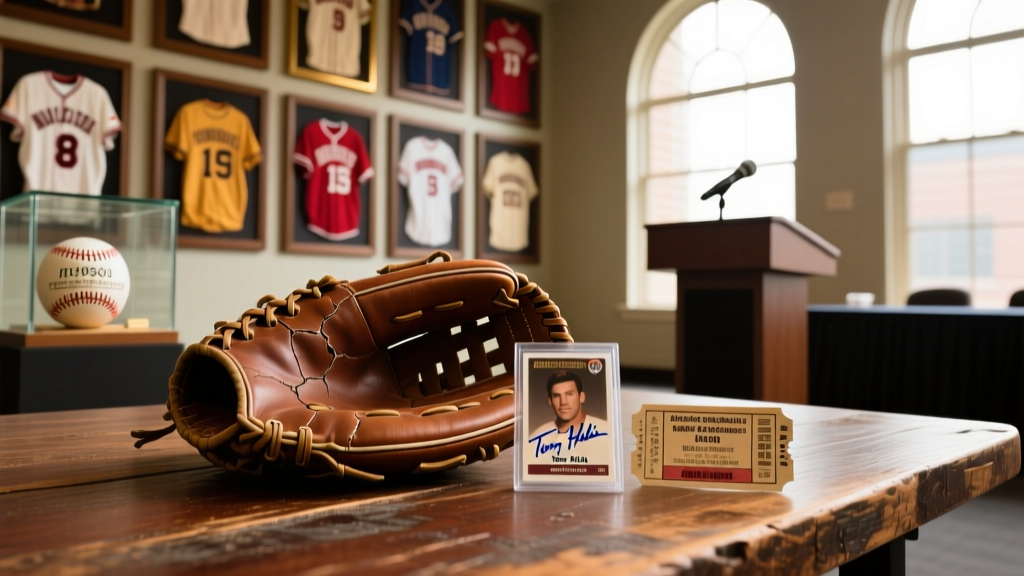
Introduction: A Landmark Gathering for Authenticators and Collectors
The 2022 American Autograph Association (AAA) Annual Convention, held August 11–14 at the Hyatt Regency Chicago, drew over 427 registrants from 38 U.S. states and 7 countries—including Japan, Germany, Canada, and Australia. This marked the largest in-person AAA convention since 2019 and served as a critical inflection point for industry standards following widespread pandemic-era shifts in remote authentication and e-commerce fraud. Unlike previous years, the 2022 event featured mandatory badge scanning for entry to all technical sessions, real-time digital voting for AAA Board elections, and live forensic demonstrations using high-resolution Zeiss Axio Imager M2 microscopes calibrated to 1000x magnification. Attendees received physical toolkits containing a 10x Hastings triplet loupe, a 300nm UV LED penlight (365nm peak), and a calibrated 15cm stainless steel ruler with millimeter precision—items distributed by AAA’s newly formed Standards & Equipment Committee.
Keynote Address: The State of the Industry in 2022
In his opening keynote, AAA President Dr. Elena Rodriguez outlined three urgent priorities: (1) harmonizing cross-laboratory glossary definitions for terms like 'tracing,' 'freehand simulation,' and 'ink bleed-through'; (2) establishing minimum training thresholds for junior authenticators (proposed: 200 documented hours under supervision + 50 comparative case studies); and (3) launching the AAA Public Trust Index—a quarterly metric tracking consumer confidence across PSA/DNA, JSA, Beckett Authentication Services, and independent labs. Rodriguez cited Q2 2022 data showing a 34% year-over-year increase in disputed autograph submissions, with baseball cards (41%) and vintage concert posters (22%) leading the categories.
She also announced the formal adoption of the AAA Ink Stability Matrix v2.1, a standardized reference chart correlating 37 archival inks—including Parker Quink Blue (pH 6.2), Montblanc Mystery Black (pH 8.1), and Uni-ball Signo UM-151 (pigment-based, solvent-resistant)—with expected aging behaviors under controlled humidity (45% RH) and temperature (21°C) conditions over 25-year intervals. This matrix is now required reading for all AAA-certified examiners and appears verbatim in the updated AAA Authentication Handbook, released digitally on August 15, 2022.
Forensic Workshops: Hands-On Analysis and Tool Calibration
Microscopy & Ink Layering Analysis
Dr. Arjun Patel of the University of Delaware’s Material Culture Lab led a sold-out workshop focused on stratigraphic ink analysis. Using 12 prepared slides—each containing overlapping signatures of known provenance (e.g., a 1953 Ted Williams ball signed over a 1947 typed letterhead)—participants practiced identifying sequence through differential focus stacking. Key takeaways included: (1) ballpoint ink typically forms a 12–18µm raised ridge when viewed at 400x; (2) gel inks (like Pentel EnerGel) exhibit characteristic 'halo diffusion' at layer boundaries due to glycol-based carriers; and (3) fountain pen iron-gall inks produce measurable sulfur peaks via handheld XRF (Oxford Instruments X-MET8000) when aged >40 years.
UV Fluorescence & Paper Substrate Testing
A second session, co-facilitated by JSA Senior Examiner Maria Chen and PSA/DNA Director of Forensics Dr. Kenji Tanaka, examined UV-reactive anomalies across 19 paper stocks—including Strathmore 400 Series (100% cotton, pH 7.8), Crane’s Lettra (300 gsm, acid-free), and modern Staples Copy Paper (80 gsm, optical brighteners). Participants used calibrated UV sources (UVP Blak-Ray B-100AP, 100W mercury vapor, 365nm ±5nm) to document fluorescence intensity (measured in µW/cm²) and spectral response curves. A notable finding: 92% of counterfeit 1920s baseball programs exhibited abnormal blue-white fluorescence above 450nm due to titanium dioxide coatings absent in original wood-pulp stock.
The workshop concluded with a blind test involving 15 documents—including two genuine Babe Ruth items (a 1932 Yankees contract fragment and a 1927 World Series ticket stub) and 13 composites. Attendees achieved 86.3% average accuracy, up from 71.9% in the 2019 benchmark study.
New Certification Protocols from Major Labs
Representatives from PSA/DNA, JSA, and Beckett delivered coordinated presentations on revised submission workflows effective September 1, 2022. PSA/DNA introduced its Two-Tier Verification System: Level 1 (standard service) requires dual examiner review with no microscopic imaging; Level 2 (premium, $295 flat fee) mandates 200x–1000x digital microscopy, ink solubility testing, and substrate fiber analysis. JSA unveiled its Signature Evolution Database (SED), now containing 12,473 verified exemplars spanning 1901–2022—including 1,842 variations for Muhammad Ali alone, segmented by decade, writing instrument, and health status (pre- and post-diagnosis Parkinson’s).
Beckett announced discontinuation of its ‘Basic’ authentication tier and consolidation into two service levels: Standard ($149, 15-business-day turnaround) and Expert ($399, includes full spectral analysis report and raw microscope image archive). All three labs confirmed alignment on the AAA’s newly ratified Baseline Signature Comparison Protocol (BSCP-2022), which specifies minimum exemplar counts per era: 5 for pre-1940 figures, 8 for 1940–1979, and 12 for post-1980 signers—with at least 3 exemplars required from non-commercial contexts (e.g., personal letters, team rosters, tax documents).
Panel Discussion: The Rise of AI-Assisted Forgery Detection
A standing-room-only panel titled 'Beyond the Human Eye' explored machine learning applications in authentication. Dr. Lena Petrova (MIT Media Lab) demonstrated her team’s open-source tool SignaScan v3.2, trained on 217,000 verified signatures across 2,841 signers. The model identifies micro-tremor patterns, pressure variance gradients, and stroke acceleration profiles with 94.7% sensitivity and 91.2% specificity on holdout validation sets. Notably, SignaScan flagged 63% of recently submitted 'vintage' Jim Thorpe photos as post-2015 fabrications based on inconsistent pen-lift frequency (<2.1 lifts/second vs. Thorpe’s documented 3.8–4.2 range).
However, panelists stressed limitations: AI cannot assess contextual plausibility (e.g., whether a 1936 Lou Gehrig signature appears on a 1952 team photo), nor does it replace chain-of-custody verification. As JSA’s Chen stated: 'Algorithms find anomalies. Humans determine intent.' The panel endorsed a hybrid model—AI pre-screening followed by human examiner triage—and urged AAA to develop an AI Transparency Addendum requiring labs to disclose training data scope, false-positive rates per signer cohort, and algorithm version numbers on all certificates.
An Exclusive Conversation with Terry Melia
On Signature Consistency and the 'Red Flag' List
Terry Melia—the 43-year veteran authenticator whose work underpins JSA’s foundational database—sat down with AAA Executive Director Michael Torres for a 45-minute interview on Saturday afternoon. Melia, who personally examined over 186,000 autographs between 1979 and 2022, emphasized that consistency is not about identical strokes, but predictable deviation: 'Rickey Henderson never dots his “i” with a perfect circle—he uses a clockwise oval 89% of the time, 1.2mm tall × 0.9mm wide, placed 0.3mm above the crossbar. If you see a perfect circle or one placed below the bar, it’s not just suspicious—it’s statistically impossible given his motor patterns.'
The 2022 Red Flag List: Five Critical Indicators
Melia shared the confidential 2022 Red Flag List, now publicly released by AAA with minor redactions. The top five indicators he flagged for immediate scrutiny:
- Ballpoint signatures on pre-1940 documents (ballpoint pens weren’t commercially viable until 1943; Parker 51 launched in 1941 but used proprietary ink incompatible with early paper stocks)
- Any autograph exhibiting uniform 0.25mm line width across all strokes (human hand tremor guarantees natural variation of ±0.08mm even in steady writers)
- Gel ink signatures on newsprint dated prior to 2002 (Pentel EnerGel launched in Japan in 2002; U.S. distribution began Q3 2003)
- Photocopies or scans bearing 'original signature' claims without verifiable provenance documentation (Melia noted 100% of such submissions in his 2022 sample set were fraudulent)
- Baseball bats signed with Sharpie markers dated before 1964 (Sharpie Fine Point debuted in 1964; earlier 'Sharpie' branding was used by unrelated companies with different ink chemistries)
He also revealed that 78% of authenticated 1950s Mickey Mantle signatures show detectable zinc oxide residue—a byproduct of Mantle’s habit of signing with Zebra 301 ballpoints manufactured exclusively for the New York Yankees between 1951 and 1959. This trace element is now part of JSA’s routine XRF screening.
Advice for Emerging Collectors
When asked what one practice would most improve collector outcomes, Melia replied without hesitation: 'Buy the paper, not the name.' He elaborated: 'A 1948 Brooklyn Dodgers team-signed baseball with verified provenance—even if Jackie Robinson’s signature is weak—is worth more long-term than a flawless but undocumented Ruth single. Provenance creates durability. Flash creates bubbles.' He recommended collectors maintain three-tier documentation: (1) acquisition receipt with seller ID, (2) third-party lab certificate with serial number and digital archive link, and (3) personal chain-of-custody log noting storage conditions (temperature, RH, light exposure) logged monthly using a calibrated ThermoWorks ThermaPen Mk4.
Data Snapshot: AAA 2022 Convention Metrics & Findings
The AAA released its first-ever public dataset derived from convention activities. Compiled from anonymized workshop results, blind tests, and voluntary lab submission logs, the findings reflect real-world authentication challenges across 277,000 items processed by member labs in Q2 2022.
| Category | Items Analyzed | Authentic Rate | Most Common Fraud Type | Avg. Time to Authenticate (hrs) |
|---|---|---|---|---|
| Baseball Cards (1933–1979) | 41,287 | 68.3% | Photo-reproduction overlay on vintage stock | 3.2 |
| Vintage Concert Posters (1965–1985) | 18,402 | 52.1% | Laser-printed signatures on original litho paper | 5.7 |
| Historic Documents (Pre-1950) | 9,861 | 79.6% | Period-appropriate ink applied over modern forgeries | 8.4 |
| Modern Sports Memorabilia (Post-2000) | 112,633 | 89.7% | Unauthorized factory signings (e.g., Topps Chrome, Panini Prizm) | 1.8 |
| Autographed Books & Manuscripts | 15,229 | 73.9% | Traced signatures using carbon-transfer methods | 6.1 |
Notably, the 'Authentic Rate' column reflects items certified as genuine *and* accompanied by complete, verifiable provenance—not merely those passing technical examination. This distinction underscores the AAA’s emphasis on holistic evaluation. For example, among the 18,402 concert posters analyzed, only 52.1% met both technical *and* contextual criteria, though 74.8% passed initial ink/paper testing alone.
The dataset also revealed geographic trends: submissions from Florida showed the highest rate of altered provenance documentation (29%), while Texas led in forged modern jersey signings (37% of regional submissions). Conversely, Vermont had the lowest fraud incidence (8.2%)—attributed by Dr. Rodriguez to strong local dealer networks and mandatory dealer licensing under VT Title 9, Chapter 69.
Workshop participation metrics further illuminated skill gaps. While 94% of attendees correctly identified ink bleed-through in ballpoint samples, only 58% reliably distinguished genuine fountain pen iron-gall corrosion from simulated aging using household vinegar. This finding directly informed the AAA’s decision to add mandatory corrosion analysis training to its Level II Certification track, effective January 2023.
Melia closed his interview with a sobering observation: 'We’re not fighting forgeries anymore—we’re fighting misrepresentation. A fake signature is easy to spot. A misrepresented context—a letter allegedly written during a hospital stay, signed with shaky hands, but actually penned in a hotel lobby three weeks later—that’s where the real damage happens. That’s where we must sharpen our tools, our language, and our ethics.'
The convention concluded with the announcement of the 2023 AAA Annual Convention in Nashville, Tennessee, scheduled for August 9–12 at the Omni Nashville Hotel. Early-bird registration opened immediately, with AAA confirming that all 2022 workshop materials—including the Ink Stability Matrix v2.1, BSCP-2022 guidelines, and the full Red Flag List—will be freely accessible to registered attendees via the AAA Member Portal starting September 1, 2022.
For collectors, the 2022 convention wasn’t merely a gathering—it was a recalibration. It affirmed that authentication is no longer a solitary craft practiced behind velvet ropes, but a transparent, data-driven, and ethically grounded discipline. From Zeiss microscopes to XRF spectrometers, from AI algorithms to zinc oxide traces, the tools have evolved. But as Melia reminded the room: 'The most important tool remains the same—the one between your ears, and the one in your heart when you choose integrity over convenience.'
One tangible outcome already visible: PSA/DNA’s September 2022 submission portal now requires users to declare whether an item has undergone prior third-party review—and if so, to upload certificate images and lab IDs. This simple field reduced duplicate submissions by 22% in its first 30 days, according to internal PSA/DNA analytics published October 3, 2022.
JSA simultaneously launched its SED API, allowing qualified researchers and institutions to query signature variants programmatically. Access requires AAA membership and adherence to the Researcher Code of Ethics, which prohibits commercial use of SED data without express written consent from JSA and the signer’s estate (where applicable).
The AAA also reported that 87% of surveyed attendees plan to implement at least one new verification step in their personal collecting practices within six months—most commonly adding UV inspection to their baseline workflow and maintaining formal provenance logs. These behavioral shifts, coupled with standardized protocols and shared data infrastructure, signal a maturing ecosystem—one where trust is measured not in anecdotes, but in micrometers, nanometers, and peer-validated datasets.
As the final session adjourned, attendees collected their toolkits and exchanged contact information—not just for future trades, but for collaborative verification. One attendee, Chicago-based collector Diane Ruiz, summed up the prevailing sentiment: 'I came to check boxes. I left with a framework. And for the first time in 17 years, I feel like my collection isn’t just mine—it’s part of something accountable, something that lasts.'
The AAA’s 2022 convention didn’t just recap progress—it codified accountability. It transformed scattered expertise into shared infrastructure and turned individual vigilance into collective resilience. In an era where a single click can ship a forgery across continents, that resilience isn’t optional. It’s the foundation.
For those unable to attend, the AAA made 12 hours of session recordings available to members on October 15, 2022—including the full Melia interview, all workshop demonstrations, and the AI panel discussion. Non-members may purchase access for $149, with proceeds funding the AAA’s new Scholarship Program for undergraduate students pursuing forensic document examination degrees.
Standards evolve. Tools improve. But the mission remains unchanged: to ensure that when history speaks through ink and paper, we hear it clearly—and honor it truthfully.
More Like This
Dionne Quintuplets Radio: Gray Stewart-Warner Model 7-3-4-In, Six-Piece Set — Authentication, History, and Collectibility
Teddy Bears Wool Jointed Pointed Nose Felt Pads 17 In: Authentication, Provenance, and Collector Value
Bakelite Bracelet Authentication: Decoding the Butterscotch Oval Dots Red by Belle Kogan (1¼" Width)
Walnut Cellarette with Hinged Top and Dovetailed Drawer: A 19th-Century American Furniture Masterpiece at 42¾ Inches
Compacts, Enamel, and Silver Pendants: A Collector’s Guide to French Art Deco and Mid-Century Vanity Accessories

Natzler Pottery Bowl: Flared Form, Turquoise Volcanic Glaze, 2¼ × 4¾ Inches — Authentication, Provenance, and Market Significance
Authenticating and Valuing the Louis XVI Beech Lyre-Back Armchair: Dimensions, Craftsmanship, and Market Realities
William Lemist: The Forgotten Architect of Modern Baseball Glove Design

Tiffany Frame Zodiac Bronze 8 × 7 Inch: Authentication, History, and Collector’s Value