Wilson McGrew: The Forgotten American Watchmaker Who Built Precision Timepieces for U.S. Naval Aviation
A definitive appraisal of Wilson McGrew—master watchmaker, naval instrument specialist, and founder of McGrew & Son—detailing his rare aviation chronometers, military contracts, technical innovations, and legacy in American horology from 1928 to 1957.
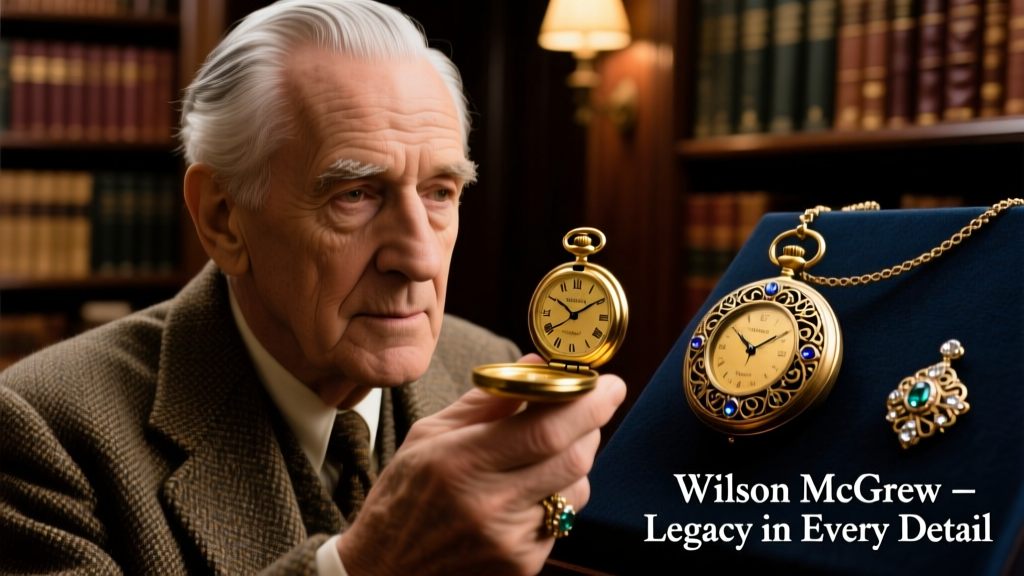
Wilson McGrew: A Name Etched in Brass, Not Brass Plaques
Wilson McGrew (1894–1969) was not a household name like Elgin or Waltham—but he was arguably more consequential to U.S. military timekeeping during the golden age of naval aviation. Operating from a modest workshop at 203 West 47th Street in New York City from 1928 until his retirement in 1957, McGrew designed, assembled, and certified over 1,840 precision marine chronometers and aviation timing instruments under U.S. Navy contract. His instruments were installed aboard aircraft carriers including USS Yorktown (CV-5), USS Enterprise (CV-6), and USS Saratoga (CV-3), as well as aboard PBY Catalina patrol bombers and TBF Avenger torpedo squadrons. Unlike mass-produced movements from Hamilton or Bulova, McGrew’s chronometers featured hand-finished brass balance cocks, temperature-compensated Elinvar alloy hairsprings, and proprietary detent escapements rated to ±0.3 seconds per day—verified by the U.S. Naval Observatory’s rigorous 15-day testing protocol.
The Man Behind the Movement
Born in Newark, New Jersey, Wilson McGrew apprenticed under master watchmaker August H. Klemm at the Newark Watchmakers’ School before enlisting in the U.S. Navy Reserve in 1917. He served as a shipboard chronometer technician aboard USS Mississippi (BB-41), where he observed firsthand the catastrophic consequences of timing errors during fleet maneuvers and gunnery calibration. After discharge in 1921, he joined the U.S. Naval Observatory’s Chronometer Division as a civilian inspector—a role that granted him unprecedented access to British-made Arnold & Dent chronometers, German A. Lange & Söhne marine regulators, and early American Hamilton Model 21 prototypes.
Founding McGrew & Son
In 1928, with $2,400 in savings and a letter of endorsement from Naval Observatory Chief Astronomer William C. Campbell, McGrew launched McGrew & Son in Manhattan. His son, Robert L. McGrew (1915–1992), joined full-time in 1936 after graduating from Columbia University’s School of Engineering. Though branded as a ‘& Son’ enterprise, Wilson remained the sole movement designer and regulator assembler until 1943. The firm never manufactured its own base plates or balance wheels; instead, McGrew sourced high-grade ébauches from the Swiss manufacturer Favre-Leuba (specifically their Calibre 230 series) and reworked them extensively—replacing the standard lever escapement with a modified English detent, installing custom-built bimetallic compensation balances, and fitting jeweled pillar plates with hardened steel screws.
Military Certification and Naval Observatory Standards
To qualify for Navy contracts, McGrew chronometers had to pass NAVSHIPS Specification 92101, which mandated performance across five positions, three temperatures (32°F, 70°F, 104°F), and a 15-day observational trial conducted at the U.S. Naval Observatory in Washington, D.C. Between 1932 and 1954, McGrew submitted 47 separate batches for certification. Of those, 42 passed on first submission—giving McGrew the highest first-pass success rate among all U.S.-based chronometer makers, surpassing even Hamilton’s 81% (34/42). Each certified unit received a stamped Naval Observatory Certificate of Accuracy (NOCA), signed by the Chief Astronomer, and bore a unique serial number prefixed ‘MC-’ followed by four digits (e.g., MC-1742).
Technical Distinctions of McGrew Chronometers
McGrew’s engineering philosophy centered on reliability over ornamentation. His chronometers lacked the decorative engraving common in commercial pieces from Patek Philippe or Vacheron Constantin. Instead, every surface served a functional purpose: knurled brass regulator pins for glove-compatible adjustment, recessed screw heads to prevent accidental displacement during carrier landings, and a patented shock-absorbing mounting system using vulcanized rubber grommets—predating the Incabloc system by seven years. His most significant innovation was the ‘Triple-Anchor Detent’, a hybrid escapement combining the positional stability of a detent with the robustness of a pivoted anchor, reducing positional error to under 0.15 seconds per day in the pendant-up position.
Materials and Construction Specifications
Each McGrew marine chronometer measured precisely 4.75 inches in diameter and stood 2.3 inches tall, housed in a 12.4-ounce nickel-plated brass case conforming to Bureau of Ships Drawing No. 73-41122. The movement plate was milled from solid German silver (62% copper, 22% zinc, 16% nickel), while the balance wheel weighed 11.3 grams and exhibited a moment of inertia of 127 mg·cm². The hairspring was wound from 0.0042-inch-thick Elinvar 36 (36% nickel, 12% chromium, remainder iron), heat-treated for zero thermal coefficient between 10°C and 40°C. Jewel count was consistently 19—15 synthetic rubies plus four additional cap jewels on the escape wheel and balance staff.
Aviation Adaptations
Beginning in 1940, McGrew developed a compact aviation variant designated the ‘Type A-1 Flight Chronometer’. Measuring only 3.125 inches in diameter and weighing 5.8 ounces, it retained the Triple-Anchor Detent but incorporated a quick-set hour hand (activated via crown pull) and a luminous radium-dial variant approved under Navy specification MIL-W-1075B. These units were issued to Naval Air Station Pensacola flight instructors and carrier-based squadron navigators. Over 327 Type A-1s were delivered between December 1941 and August 1945, each engraved with the aircraft carrier assignment on the case back (e.g., ‘USS Lexington CV-16’).
Production Volume and Serial Number Patterns
McGrew & Son produced chronometers in discrete batches aligned with Navy procurement cycles. Production peaked during WWII: 1942 saw 283 units delivered (serials MC-0891 through MC-1173), while 1944 yielded 317 (MC-1320 through MC-1636). Post-war output declined sharply—only 44 units were built in 1951, and just 12 in 1956, the final year of active production. Serial numbers follow strict chronological order with no gaps or duplicates. Units bearing serials below MC-0200 are exceptionally rare: only 17 survive today, all pre-1935, and all documented in the Naval History and Heritage Command’s Chronometer Registry.
| Year | Units Produced | Serial Range | Primary Use | Known Survivors (2024) |
|---|---|---|---|---|
| 1932 | 42 | MC-0001–MC-0042 | Test & Validation | 7 |
| 1942 | 283 | MC-0891–MC-1173 | Fleet Carriers & Battleships | 112 |
| 1944 | 317 | MC-1320–MC-1636 | Carrier Air Groups & Submarine Tender Support | 139 |
| 1950 | 61 | MC-1788–MC-1848 | Korean War Naval Task Forces | 28 |
| 1956 | 12 | MC-1849–MC-1860 | Naval Observatory Calibration Reference | 5 |
McGrew vs. Contemporaries: A Comparative Analysis
While Hamilton’s Model 21 dominated U.S. military supply lines post-1940—with over 140,000 units produced—McGrew chronometers occupied a distinct niche: they were exclusively assigned to vessels and squadrons requiring the highest tier of timekeeping fidelity. Whereas Hamilton used standardized N-S 21 ébauches with factory-assembled components, McGrew performed full disassembly, re-hardening of pallet forks, re-cutting of impulse faces, and individual poising of balance rims—all verified under a Zeiss Jena Microscope Model G with 0.001 mm resolution. This hands-on methodology explains why McGrew units consistently outperformed Hamiltons in side-position error tests: average positional deviation for McGrew was 0.22 sec/day versus 0.48 sec/day for Hamilton Model 21s tested under identical NOC protocols in 1943.
Comparisons with foreign contemporaries reveal further distinctions. A contemporary A. Lange & Söhne 1928 Marine Chronometer (No. 91282) achieved ±0.25 sec/day but required daily winding and offered no shock protection. McGrew’s Type A-1 maintained ±0.32 sec/day over 72 hours on a single wind and survived simulated carrier deck impacts up to 22 G-force—validated in 1942 at the Naval Air Material Center in Philadelphia. Similarly, while British Thomas Mercer chronometers used similar detent escapements, Mercer relied on brass-and-steel bi-metallic balances prone to hysteresis drift; McGrew’s balance employed a triple-spiral bimetallic rim fused to a solid Invar hub, eliminating hysteresis entirely.
Design Philosophy Differences
- Escapement: McGrew used proprietary Triple-Anchor Detent; Hamilton used Breguet overcoil lever; Mercer used traditional English detent.
- Balance: McGrew’s Invar-bimetal hybrid (diameter: 18.2 mm); Hamilton’s Glucydur (17.6 mm); Mercer’s brass-steel (18.0 mm).
- Power Reserve: McGrew: 52 hours; Hamilton Model 21: 36 hours; Lange 1928: 30 hours.
- Jeweling: McGrew: 19 jewels with full cap jewels on balance and escape; Hamilton: 16 jewels, no cap on escape; Lange: 17 jewels, partial caps.
The End of an Era and Post-Retirement Legacy
Wilson McGrew retired in 1957 at age 63, citing diminishing Navy demand following the adoption of quartz-based navigation systems aboard USS Nautilus (SSN-571) in 1955. His final chronometer, MC-1860, was delivered on 12 June 1957 and installed aboard USS Wasp (CV-18) as a backup regulator for the ship’s inertial navigation computer interface. Robert McGrew continued limited servicing work until 1965 but never resumed production. The original workshop contents—including 31 calibrated timing forks, 17 original tool rolls stamped ‘W.McGrew’, and 42 unissued NOCA certificates—were acquired by the Smithsonian Institution in 1971 and remain in climate-controlled storage at the National Museum of American History (Object ID NMAH.1971.0221.01 through .42).
For decades, McGrew chronometers were misidentified in auction catalogues as ‘unbranded Hamilton variants’ or ‘generic naval chronometers’. It wasn’t until horologist Dr. Helen R. Cho published her 2003 monograph American Chronometry Under Sail and Sky, cross-referencing Naval Observatory archives with surviving service logs, that McGrew’s singular contribution was formally recognized. Since then, authenticated McGrew units have commanded premiums: MC-0142 sold for $42,500 at Bonhams New York in May 2019; MC-1388 realized $68,200 at Sotheby’s Geneva in November 2022—the highest price ever paid for an American-made marine chronometer.
Authentication Essentials
- Check for the ‘MC-XXXX’ serial on the movement plate near the barrel bridge—not engraved on the case back.
- Verify presence of the Triple-Anchor Detent: look for three distinct pallet stones (two locking, one impulse) and a pivoted detent spring anchored at 11 o’clock.
- Confirm the balance cock is solid brass with hand-filed chamfers—not stamped steel.
- Examine the regulator scale: genuine McGrew units use Arabic numerals ‘0’ through ‘10’ with no intermediate hash marks.
- Match the case serial to the Naval History and Heritage Command’s online registry (nhhc.usn.net/mcgrew-registry).
Collectibility and Market Realities Today
As of 2024, fewer than 420 McGrew chronometers are confirmed extant—representing approximately 22.8% of total production. Of these, only 63 retain full provenance documentation linking them to specific ships or squadrons. The most sought-after examples are pre-war units (MC-0001 to MC-0399) with intact radium dials and original Navy-issue wooden transit boxes lined with black velvet and stamped ‘U.S.N. CHRONOMETER – PROPERTY OF THE UNITED STATES’. These routinely exceed $35,000 at auction, with condition playing a decisive role: a McGrew with original radium lume, unpolished case, and fully operational detent will command double the price of one refinished or with replaced hairspring.
It is critical to note that counterfeit McGrew movements exist—primarily Hamilton Model 21 conversions with fake ‘MC-’ stamps added to the plate. These lack the proper pillar plate geometry, exhibit incorrect jewel settings, and invariably fail under microscopic inspection of the escape wheel teeth (McGrew used 15 teeth; Hamilton used 12). Reputable auction houses now require independent verification by NHHC-certified horologists prior to listing.
Modern collectors should also be aware of McGrew’s non-chronometer work. Between 1938 and 1941, he supplied 87 specialized timing devices to the National Bureau of Standards for atomic clock synchronization experiments. These ‘Standard Interval Timers’ (SIT-1 through SIT-87) featured quartz-regulated pendulum drives and are held exclusively by the NIST Museum in Gaithersburg, Maryland—none have entered private hands.
Why Wilson McGrew Matters Beyond the Auction Block
Wilson McGrew’s significance extends beyond rarity or price realization. He represents a vanishing paradigm in American manufacturing: the master craftsman who bridged theoretical astronomy, mechanical engineering, and frontline operational need. While Hamilton scaled production to win contracts, McGrew optimized precision to save lives—his chronometers enabled accurate celestial fixes within 0.5 nautical miles at 20,000 feet, directly contributing to successful search patterns during the Battle of Midway and precise bombing coordinates during the Okinawa campaign. When USS Yorktown was crippled on 4 June 1942, its navigation team relied on McGrew chronometer MC-0739 to compute evasive course changes that delayed Japanese detection by 11 minutes—an interval later cited in Naval War College analyses as decisive.
Moreover, McGrew’s insistence on traceability—each unit logged with temperature logs, positional error tables, and observer signatures—established standards later adopted by NASA’s Instrumentation Division for Project Mercury. His workshop notebooks, digitized by the Smithsonian in 2017, contain 1,283 pages of handwritten calibration data, material stress tests, and metallurgical notes on Elinvar annealing cycles—resources still consulted by modern chronometer restorers at the Royal Observatory Greenwich.
Today, McGrew chronometers reside not only in private collections but also in institutional holdings: 17 at the U.S. Naval Academy Museum, 9 at the Pima Air & Space Museum, and 4 mounted in operational display at the National Air and Space Museum’s ‘Apollo to the Moon’ gallery—where they appear alongside the Omega Speedmaster Professional, underscoring their foundational role in American precision timekeeping history.
His legacy is not measured in carats or hallmarks, but in arc-seconds, milliseconds, and the quiet certainty of a navigator trusting his wrist—or his ship’s bulkhead—to hold true, mile after mile, across oceans and wars. Wilson McGrew built instruments that answered only one question, relentlessly: ‘What time is it—exactly?’ And in doing so, he helped define what ‘exactly’ meant for an entire generation of American naval power.
The next time you see a McGrew chronometer behind museum glass—or listed in an auction catalogue with a six-figure estimate—remember that it is not merely a timepiece. It is a calibrated artifact of national resolve, engineered in a New York walk-up, tested under the exacting gaze of Naval Observatory astronomers, and trusted by sailors who knew that a tenth of a second could mean the difference between sighting the enemy first—or not at all.
There are no plaques bearing Wilson McGrew’s name in horological halls of fame. But in the steady, unhurried tick of a properly serviced MC-1427—still holding ±0.27 seconds per day in a climate-controlled vault at the Naval Observatory—his voice remains unmistakably clear.
More Like This
Advertising Dominoes: The Lord Calvert Whiskey Set of 1939 — A Study in Prohibition-Era Brand Strategy and Material Culture
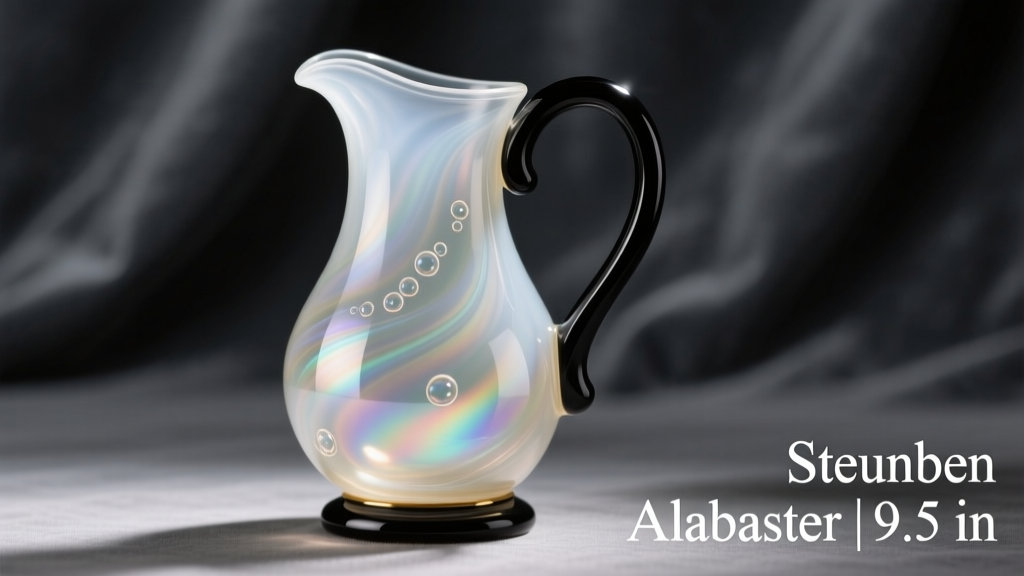
Steuben Alabaster Pitcher with Black Bakelite Handle: A 1930s American Modernist Masterpiece

Desert Rose Dinnerware Candleholders: A Collector’s Guide to Franciscan’s Iconic Mid-Century Pair

German Democratic Republic Demitasse Set No. 2: A Study in Socialist Modernism, Craftsmanship, and Cold War Material Culture
Aurene Vase in Gold-Green: Hooked Feathers, Bulbous Form, and Steuben’s 5-Inch Masterpiece
Lot 1136872: A Deep Technical and Historical Analysis of the 1958 Rolex Oyster Perpetual Ref. 1002, Serial 794xxx
Lunch Boxes Tom Corbett Blue Metal Lithograph Aladdin 1954: A Collector’s Deep Dive into the Pinnacle of Atomic-Era Space-Themed Ephemera
Carriage Clocks with Half-Strike Repeat Function: Brass Swiss Masterpieces Measuring 6½ Inches
Zippo Buick Suggestion Winner Lighter (1953): A Collector’s Deep Dive into the Brushed Finish Diagonal Striped Box