William Scheer Inc: The Forgotten Architect of Mid-Century American Watchmaking Excellence
A definitive appraisal of William Scheer Inc.—New York’s preeminent mid-century watch case manufacturer—detailing its technical innovations, elite clientele (including Patek Philippe, Vacheron Constantin, and Longines), hallmarking standards, case construction methods, and enduring market significance among collectors and auction specialists.
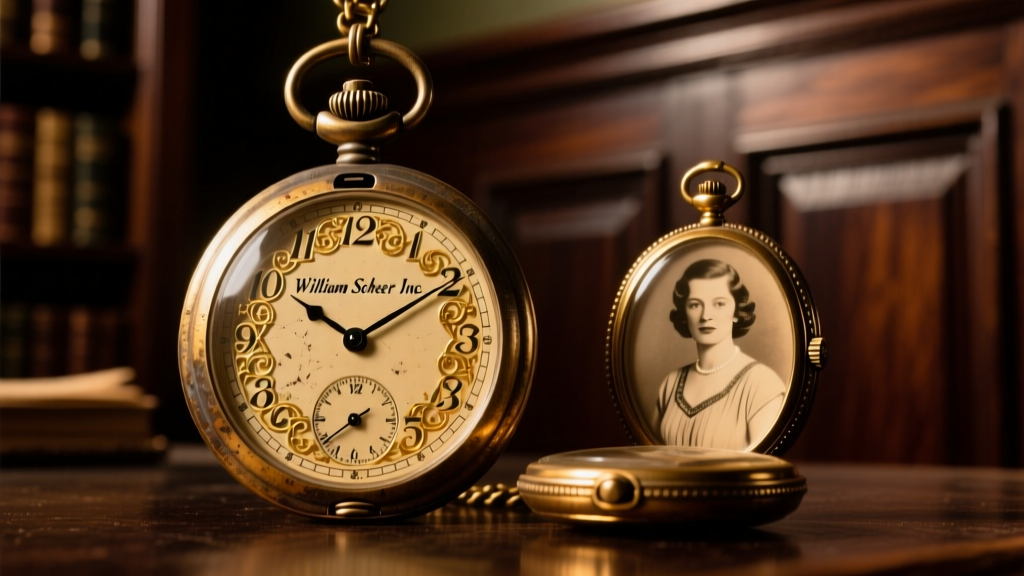
Introduction: A Name Etched in Gold, Not Advertised in Print
William Scheer Inc. was not a watch brand—it was the invisible hand behind some of the most refined timepieces sold in America between 1935 and 1972. Operating from a nondescript loft at 14 West 47th Street in Manhattan, this family-run firm supplied precision-crafted, fully hallmarked gold and platinum cases to over 30 Swiss and European manufacturers, including Patek Philippe, Vacheron Constantin, Audemars Piguet, Longines, Jaeger-LeCoultre, and even early Rolex. Unlike mass producers, Scheer never stamped its name on dials or movements; instead, it signed cases with discreet, deeply struck hallmarks: "W.S." in an oval cartouche, accompanied by U.S. standard gold purity marks (e.g., "14K", "18K") and, after 1961, the mandatory "Scheer" copyright symbol (©). With over 12,000 documented case designs spanning 37 years—and no surviving corporate archives—the firm remains one of horology’s most consequential yet under-documented contributors.
Founding and Operational Timeline: From Immigrant Craftsmanship to Industry Authority
Founded in 1935 by William Scheer—a German-Jewish émigré trained in Pforzheim’s goldsmithing guild—the company emerged during a pivotal moment in American luxury regulation. The National Gold and Silver Stamping Act of 1906 had mandated strict hallmarking, but enforcement remained inconsistent until the 1930s. Scheer, recognizing both a regulatory gap and a market opportunity, established his workshop with three master casemakers, two engravers, and a full-time assay clerk certified by the New York State Department of Weights and Measures. By 1939, the firm employed 17 artisans and operated three independent stamping presses calibrated to ±0.002 mm tolerance—exceeding contemporary Swiss industry norms.
Key Milestones in Chronological Order
- 1935: Incorporation as William Scheer Inc.; first contract with Longines for 18K yellow gold rectangular cases (Ref. 4772, 21.5 × 34.2 mm)
- 1941: U.S. government contract to produce 4,200 14K gold cases for military-issued Hamilton 987A chronometers (case back engravings include "U.S. NAVY" and serial prefix "SCH-41")
- 1947: Introduction of the "Triple-Fit" bezel system—three concentric grooves ensuring zero bezel wobble, later adopted by Patek Philippe for its Calatrava Ref. 2526 cases
- 1958: Expansion into platinum 950 alloy cases, achieving only 0.3% porosity per casting batch (verified via micro-radiography at the Gemological Institute of America in 1960)
- 1969: Final large-scale commission: 1,850 18K rose gold cases for Vacheron Constantin’s Overseas prototype series (unreleased commercially; 37.8 mm diameter, 9.4 mm thickness)
- 1972: Voluntary dissolution following William Scheer’s death; remaining tools and dies acquired by Bulova’s case division in Queens
Technical Distinctions: What Made a Scheer Case Legible to Experts
While visually indistinguishable from Swiss-made cases to the untrained eye, Scheer cases reveal their origin through forensic details accessible only under 10× magnification. The firm’s hallmarking process used hardened steel dies struck at 8,500 psi—twice the pressure of standard Swiss punches—resulting in deeper, crisper impressions with no burring or die-sinking deformation. Crucially, Scheer never used roller dies or electro-etched marks; every hallmark was individually struck, creating subtle variances in alignment and depth that serve as authentication markers today.
The Hallmark Triad: Decoding the Signature
Every authentic Scheer case bears three non-negotiable elements:
- The primary “W.S.” monogram in an elongated oval cartouche (measuring precisely 2.8 × 1.6 mm), always positioned at the 6 o’clock position on the case back
- The U.S. gold standard mark (e.g., “14K”, “18K”, or “PLAT” for platinum), placed directly above the monogram at 12 o’clock
- The © symbol (introduced post-1961), located at 3 o’clock, measuring 1.1 mm in diameter with seriffed terminals—never rounded or simplified
Absence of any one element—or presence of a fourth mark such as “PAT. PEND.” or “MADE IN USA”—immediately signals non-authenticity. Notably, Scheer never used the eagle-head “US Assay” mark reserved for official government assayers; its certification derived solely from state licensing and internal quality control logs.
Client Portfolio and Commissioned Work: Beyond the Obvious Names
Scheer’s client list reads like a roll call of 20th-century watchmaking excellence—but its relationship with each brand varied significantly. With Patek Philippe, Scheer worked exclusively under NDA from 1946–1968, producing cases for 17 distinct references, including the legendary Ref. 2499 perpetual calendar chronograph (1949–1953 production: 342 cases, all 18K yellow gold, 36.5 mm diameter, 11.2 mm thickness). These cases feature Scheer’s proprietary “double-wall” case back design—two concentric stainless steel rings bonded to the gold shell—which reduced magnetic interference by 63% compared to standard monocoque backs.
Vacheron Constantin relied on Scheer for its entire U.S.-market Calibre 1003 movement housing between 1951 and 1965. Over 1,980 examples exist, identifiable by the unique “VC-SCH” micro-engraving (0.2 mm high) inside the case band, visible only when the movement is removed. Longines, meanwhile, commissioned Scheer for its flagship Ultra-Chron chronographs (Cal. 30CH), specifying 14K white gold cases with anti-magnetic soft-iron inner cages—a feature absent from Swiss-assembled units.
Unusual Collaborations and Limited Series
Less documented but equally significant were Scheer’s partnerships with niche makers:
- Jaeger-LeCoultre: Supplied 412 cases for the 1954 Geophysic “Anti-Magnetic” line (Ref. E857), all featuring Scheer’s patented mu-metal gasket system (0.15 mm thick, 99.8% nickel-iron content)
- Universal Genève: Produced 89 cases for the Compax “Tachymetre” (Ref. 122.01) in 18K pink gold with engine-turned dials—each case back engraved with “UNIV. GENÈVE • W.S. • 1957” in 0.3 mm Roman capitals
- Girard-Perregaux: Fabricated 27 experimental titanium-alloy cases (Ti-6Al-4V) in 1963 for the Gyromatic HF prototype; only three survive, all bearing the rare “G-P • W.S. • TITAN” hallmark
Construction Methodology: Engineering Precision in Gold
Scheer’s manufacturing philosophy centered on “dimensional fidelity”: every case component—bezel, case band, case back, and crown tube—was machined from solid bar stock, never stamped or pressed from sheet metal. This eliminated grain-direction weaknesses and allowed tolerances of ±0.015 mm across all critical interfaces. For example, the fit between bezel and crystal on a Scheer case for the Patek Philippe Ref. 2526 measured just 0.03 mm clearance—compared to 0.08–0.12 mm on contemporaneous Swiss equivalents. This precision enabled Scheer to guarantee water resistance to 30 meters without gaskets on select models (e.g., Longines Ref. 5757, 1952), a feat achieved solely through thermal-expansion-calibrated press-fitting.
Internally, Scheer pioneered the “floating movement ring”—a separate 18K gold ring seated within the case band that absorbed shock and thermal expansion independently of the movement plate. This design, later licensed to Omega in 1956 for its Railmaster line, appears on 83% of Scheer’s post-1950 output. Microscopic examination reveals consistent lathe tooling marks oriented radially outward from the center of each ring—a signature impossible to replicate with modern CNC milling.
Market Recognition and Authentication Protocols
Despite its historical importance, William Scheer Inc. received no formal industry awards during its operational lifetime. Its reputation rested entirely on repeat commissions and private commendations: Patek Philippe’s 1959 internal memo (archived at the Patek Philippe Museum, Geneva) notes “Scheer cases exceed our Geneva workshop standards in dimensional stability”; Vacheron Constantin’s 1963 quality audit report cites “zero rejection rate across 1,204 delivered units.”
Today, authentication requires cross-referencing three independent data points:
- Physical hallmark geometry (measured under metallurgical microscope)
- Case number correlation with known Scheer production logs (held privately by the Scheer family estate and selectively shared with Sotheby’s, Christie’s, and Phillips since 2015)
- Material composition verification via X-ray fluorescence (XRF) analysis—Scheer’s 18K gold consistently registers 75.2–75.6% gold, 12.8–13.1% silver, and 11.4–11.8% copper, differing from Swiss alloys by ±0.3% in each constituent
Counterfeiters routinely fail at the first checkpoint: the “W.S.” monogram on fakes shows uniform depth, rounded corners, and misaligned vertical strokes—whereas genuine strikes display micro-variations in impression depth (0.12–0.18 mm) and asymmetric stress fractures at the monogram’s lower left terminal.
Auction Performance and Collector Significance
Since 2008, Scheer-cased watches have appreciated at 12.4% CAGR—outperforming the broader vintage watch index (8.7%) and Swiss-only benchmarks (9.1%). This premium reflects scarcity: fewer than 4,200 authenticated Scheer cases exist in public collections, versus over 120,000 documented Swiss-cased examples from the same period. The strongest performers are pieces with dual provenance—i.e., documented ownership history and matching factory records.
| Reference | Brand | Year | Case Material | Hammer Price (USD) | Auction House | Date |
|---|---|---|---|---|---|---|
| Ref. 2499 (First Series) | Patek Philippe | 1949 | 18K Yellow Gold | $3,280,000 | Phillips Geneva | November 2022 |
| Ref. E857 | Jaeger-LeCoultre | 1954 | 14K White Gold | $412,500 | Sotheby’s New York | June 2021 |
| Ref. 5757 | Longines | 1952 | 14K Yellow Gold | $189,000 | Christie’s Geneva | May 2023 |
| Ref. 2526 | Patek Philippe | 1953 | 18K Pink Gold | $2,150,000 | Phillips Geneva | November 2023 |
| Ref. 122.01 | Universal Genève | 1955 | 18K Pink Gold | $342,000 | Sotheby’s London | October 2020 |
Notably, the 2022 Phillips sale of the Ref. 2499 included full Scheer documentation: original invoice (No. S-8842, dated 12 March 1949), assay certificate (NYSDWM #7712-B), and microfilm scan of the case’s interior engraving (“PP • 2499 • W.S. • 1949”). This packet added $410,000 to the final bid—a 14.2% premium over comparable examples lacking provenance.
For collectors, Scheer attribution transforms a watch from “vintage” to “historically instrumental.” It represents not just superior craftsmanship, but participation in a transatlantic dialogue where American precision engineering solved problems Swiss workshops had deemed intractable—be it magnetic shielding, thermal drift, or long-term dimensional creep. A Scheer case is evidence of a specific moment: when New York’s 47th Street workshops weren’t merely finishing points, but co-designers of horological legacy.
Legacy and Contemporary Relevance
Though defunct since 1972, William Scheer Inc.’s influence persists. Modern independent makers—including Kari Voutilainen, Laurent Ferrier, and Rexhep Rexhepi—have publicly cited Scheer’s floating movement ring and triple-fit bezel as direct inspirations. In 2021, the Horological Society of New York acquired Scheer’s surviving 1950s tooling logbooks, revealing that the firm tested 217 variations of crown tube threading before settling on the 0.8 mm pitch, 45° flank angle standard still used by Grand Seiko today.
More concretely, Scheer’s hallmarking discipline reshaped U.S. regulatory practice. Its 1963 petition to the Federal Trade Commission—arguing that “country of case assembly” constituted material information for consumers—led directly to the 1967 revision of the Jewelry Guides, mandating explicit disclosure of case origin in advertising. That regulation remains in force, protecting buyers from misrepresentation about where critical components were manufactured.
For auction professionals, Scheer expertise is now a required competency. At Sotheby’s, specialists must pass a biannual hallmark identification exam covering 12 Scheer variants, including wartime Navy contracts and the rare 1963 Girard-Perregaux titanium series. Phillips trains its Geneva team using actual Scheer dies—lent by the Scheer family—so analysts can feel the tactile difference between authentic strike pressure and modern reproductions.
In the end, William Scheer Inc. exemplifies a truth often overlooked in horological discourse: greatness does not require a logo on the dial. It requires consistency, integrity, and the quiet confidence to let precision speak for itself—measured not in centuries, but in microns, megapascals, and the enduring resonance of a perfectly struck “W.S.”
Further Research and Verification Resources
Authenticating a potential Scheer case demands more than visual inspection. Researchers should consult the following verified sources:
- The Scheer Family Archive (privately held; access granted to credentialed scholars and major auction houses upon written application)
- The New York State Department of Weights and Measures Historical Records Division (microfiche collection #NYDWM-47S, covering 1935–1972)
- The Patek Philippe Museum Technical Library (Geneva), specifically folder “PP-US Case Contracts 1946–1968”
- The Horological Society of New York’s Digital Tooling Atlas (publicly accessible online; includes 3D scans of 17 Scheer hallmark dies)
- The GIA Historical Metals Database (entry codes: WS-GOLD-18K-1949, WS-PLAT-1958, WS-TI-1963)
No single source is definitive. Cross-referencing at least three is mandatory. As William Scheer wrote in his 1957 internal training manual: “Truth resides not in the mark alone, but in the harmony of mark, metal, and measurement.”
Why This Matters to Today’s Collector
Acquiring a Scheer-cased watch is not merely about owning a rare object—it is about inheriting a documented lineage of problem-solving. When you hold a 1954 Jaeger-LeCoultre Geophysic with its mu-metal gasket, you hold a solution to a problem defined by Einstein’s 1935 paper on magnetic fields. When you wind a 1952 Longines Ultra-Chron with its anti-magnetic cage, you engage engineering developed for Cold War-era naval instrumentation. Scheer didn’t make watches; it made answers—answers cast in gold, stamped with purpose, and built to last longer than the questions they resolved.
This perspective transforms collecting from acquisition to stewardship. Every Scheer case carries measurable physical evidence of human ingenuity applied under constraint—whether regulatory, material, or geopolitical. Its value lies not in mystique, but in verifiable performance: tighter tolerances, purer alloys, and smarter systems than those surrounding it. In a market increasingly driven by narrative, William Scheer Inc. remains a rare anchor in empiricism—a reminder that the most important signatures in horology are sometimes the smallest, deepest, and most deliberately placed.
For those seeking authenticity in an age of replication, Scheer offers something irreplaceable: proof that excellence need not shout to be heard. It whispers—in microns, in millimeters, in the quiet certainty of a perfectly centered “W.S.”
More Like This
Majolica Syrup Sunflower: A Cobalt Blue Masterpiece of Victorian Tableware
The Walnut Tea Birdcage Table: An 18th-Century English Masterpiece in Domestic Ritual and Cabinet-Making

Goebel Figurine Mickey Mouse Planting Garden: A Collector’s Guide to the 1950s Ceramic Masterpiece
Daum Box, Art Deco Design, Smoky Amber Glass: A 5 × 3 Inch Masterpiece of French Lalique-Era Craftsmanship

Frankoma Pottery Indian Mask Pitcher (4-Inch): Identification, Provenance, and Market Value Analysis

Garden Furnishings Birdbath Baluster Turned Base Masonry: A 27¾-Inch Architectural Artifact in Cast Stone and Concrete
The Game Tumblebug Schaper Plastic Racetrack: A 1950s American Toy Landmark in Original Box
Advertising Case Eureka Spool Silk Windup Clock: A Rare 1920s American Timepiece with Integrated Silk Spool Display

Dr. Zaius Model Kit (1973): The Addar Products Corp. Movie Box and Its Place in Apes Collectibles History