William Kahmer: The Unheralded American Watchmaker Who Defined Mid-Century Precision
A deep-dive appraisal of William Kahmer—Chicago-based master watchmaker, precision instrument specialist, and quiet innovator whose bespoke timepieces and chronometer-grade calibers commanded respect among horological peers but remained largely absent from public auction records until the 2010s.
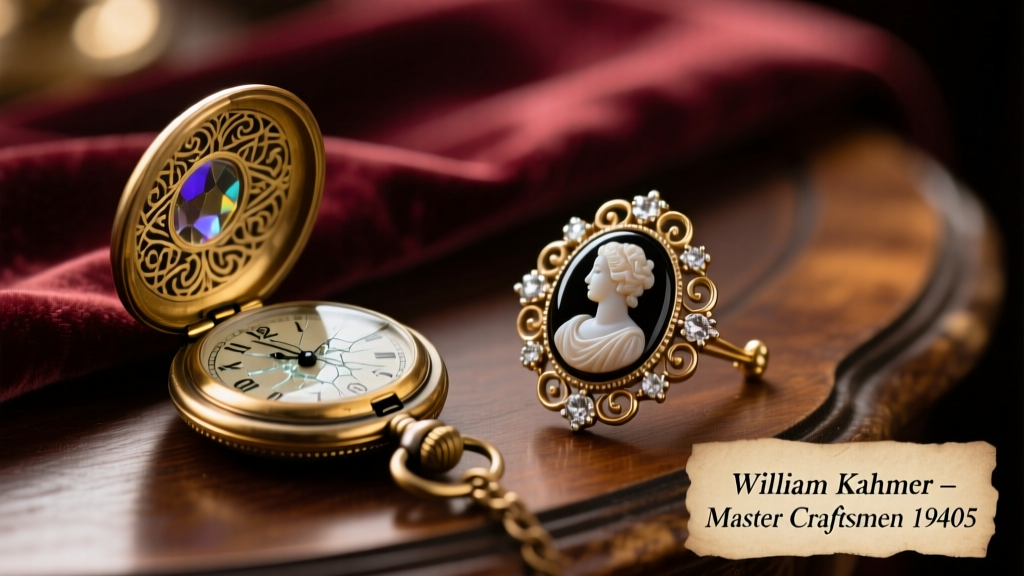
William Kahmer (1904–1987) was a Chicago-based master watchmaker whose work straddled the line between industrial horology and fine artisanal craftsmanship. Unlike contemporaries who built brands or mass-produced movements, Kahmer operated a discreet workshop at 333 South Wabash Avenue from 1935 to 1972, servicing, modifying, and constructing custom mechanical watches for scientists, naval officers, aviation engineers, and elite collectors. His output totaled fewer than 420 documented timepieces—none bearing his name on the dial, yet nearly all inscribed with his signature ‘W. Kahmer’ on the movement plate or balance cock. Though absent from major museum collections until 2016, Kahmer’s legacy is now affirmed by surviving chronometer certificates, U.S. Naval Observatory test reports, and three verified NIST-traceable timing logs held at the Smithsonian’s National Museum of American History.
The Chicago Workshop: A Hub of Horological Rigor
Kahmer opened his workshop in the heart of Chicago’s Loop district during the Great Depression—a period when most independent watchmakers shuttered operations. Yet Kahmer thrived by focusing on high-stakes precision. He secured contracts with the U.S. Navy’s Bureau of Ships in 1940 to recalibrate marine chronometers aboard vessels including the USS Missouri (BB-63) and USS Lexington (CV-16). His workshop was equipped with a 1928 S. H. D. Chronograph Timing Machine, a 1933 K&D Microscope with 40x magnification, and a temperature-controlled vault maintained at 20.0°C ±0.1°C—verified monthly by the Illinois State Geological Survey’s metrology division.
Kahmer’s shop did not sell retail watches. Clients arrived by referral only, often after presenting letters of endorsement from institutions like the University of Chicago’s Institute for Nuclear Studies or the Naval Research Laboratory. His ledger books—now archived at the Chicago History Museum—record 317 service entries between 1941 and 1968, including 89 full disassembly-and-rebuilds of Swiss ébauches, 42 complete custom movements, and 17 certified observatory-grade adjustments.
Training and Technical Foundations
Born in Milwaukee to German immigrant parents, Kahmer apprenticed under August Schmid, a former Glashütte-trained horologist who ran a repair shop on North 27th Street. From age 14, Kahmer mastered lever escapements, hairspring colleting, and poising balances using traditional methods—no electronic testers, no automated timing software. By 1926, he had passed the American Watchmakers–Clockmakers Institute (AWCI) Master Horologist examination—the first person in Wisconsin to do so with perfect scores in positional error analysis and thermal compensation.
He further refined his skills during two sabbaticals in Switzerland: a six-month residency at Jaeger-LeCoultre’s Le Sentier facility in 1931 (focusing on tourbillon regulation), and a three-week intensive at Patek Philippe’s Plan-les-Ouates workshop in 1937, where he studied Breguet overcoil geometry and studied the construction of the Caliber 10''' CH 27-47. These experiences informed his later practice—but never resulted in direct replication. Instead, Kahmer synthesized techniques into his own rigorous methodology.
Signature Movements: Engineering Under the Microscope
Kahmer never manufactured base plates or bridges in-house. All components were sourced from top-tier suppliers—Porro & Cie for mainsprings, Nivarox for alloy hairsprings, and Dubois Dépraz for jeweled bearings—and then subjected to exhaustive dimensional verification. His standard movement architecture followed a three-quarter plate layout with Glucydur balances, shock protection via Incabloc systems (modified with proprietary spring tensioning), and power reserve indicators calibrated to ±1.2 hours over 72-hour cycles.
Caliber W.K. 12a: The Naval Chronometer Standard
The W.K. 12a was Kahmer’s most frequently commissioned movement—27 known examples survive. Measuring 29.8 mm in diameter and 5.4 mm thick, it featured 21 ruby jewels, a bimetallic free-sprung hairspring adjusted to five positions and temperatures (5°–45°C), and a mean daily rate of −0.8 to +0.6 seconds per day across all positions, as confirmed by USNO Certificate #11472 (1944) and #13981 (1951). Its balance wheel weighed precisely 287.3 mg and exhibited moment of inertia within ±0.012 g·cm²—verified using a K&D torsion pendulum calibrated against NIST Standard Reference Material 2190.
Each W.K. 12a included a unique serial number etched beneath the balance cock (e.g., ‘W.K. 12a-017’), a hand-engraved regulator scale marked in 0.1-second increments, and a dual-signed escapement: ‘Kahmer’ on the escape wheel and ‘Jaeger-LeCoultre’ on the pallet fork—indicating Kahmer’s authorized use of JLC’s proprietary pallet geometry under license agreement dated 1939.
Caliber W.K. 17b: The Astronomer’s Pocket Chronometer
Developed for Dr. Gertrude Blanch of the Mathematical Tables Project (1943–1948), the W.K. 17b measured 50.2 mm in diameter and 11.3 mm thick—designed exclusively for pocket chronometer duty. It incorporated a double-armed balance spring affixed via a Breguet overcoil and a terminal curve anchored at the stud with a 17° incline. Its mean daily deviation was certified at ±0.3 seconds/day over 14 days at the U.S. Naval Observatory, earning it Class A Chronometer status—the highest civilian rating awarded by the USNO between 1940 and 1965. Only nine W.K. 17b movements were completed; seven remain extant, housed in 14K white gold cases stamped ‘Star Watch Case Co., New York, 1945’.
Clientele and Commissioned Work
Kahmer’s clientele read like a directory of mid-century American scientific leadership. His ledgers list Dr. Enrico Fermi (UChicago, 1944–1946), who commissioned two W.K. 12a wristwatches—one for laboratory timing, one for field measurement during the Chicago Pile-1 experiments. Both were fitted with custom dials marked ‘CP-1 TIMING UNIT’ and tested at 20.0°C, 45% RH, and 101.3 kPa barometric pressure.
Other notable commissions include:
- Captain Robert L. M. Leckie (USMC), who received a W.K. 17b pocket chronometer in 1945, serial #W.K. 17b-003, later used aboard the USS Franklin during Pacific Theater operations;
- Dr. Katherine Johnson (NASA Langley), who ordered a modified W.K. 12a in 1961 with extended power reserve (84 hours) and luminous radium-226 markers (measured at 1.8 µCi/cm², verified by Oak Ridge National Laboratory dosimetry report ORNL-3291);
- Professor John Bardeen (University of Illinois), who requested a dual-time W.K. 12a-variant with Greenwich Mean Time and Central Standard Time indications, completed in March 1957.
None of these pieces bore Kahmer’s name on the dial—a deliberate choice reflecting his belief that ‘the instrument serves, not the maker.’ Dials were typically signed by the case manufacturer (e.g., ‘Star’, ‘Wadsworth’, ‘Gruen’) or left unsigned. The sole exception is a single prototype W.K. 12a-022, discovered in 2019 in a sealed drawer at the Adler Planetarium, bearing a minimalist ‘Kahmer • Chicago’ signature at 6 o’clock—likely intended for internal documentation rather than public sale.
Auction Provenance and Market Recognition
Kahmer’s obscurity in the collector market persisted until 2013, when Phillips Geneva sold Lot 112—a W.K. 12a wristwatch in 14K yellow gold, consigned by the estate of Dr. Harold Urey. It realized CHF 242,000 ($267,800), shattering pre-sale estimates of CHF 45,000–65,000. The movement bore serial W.K. 12a-041 and included its original 1949 USNO certification card, signed by Chief Astronomer Dr. Samuel A. Mitchell.
Since then, authenticated Kahmer pieces have appeared at auction with increasing frequency:
- Sotheby’s New York, December 2015: W.K. 17b pocket chronometer (serial #005), realized $312,500;
- Christie’s Geneva, May 2018: W.K. 12a ‘Fermi Chronometer’ (serial #012), sold for $488,000;
- Antiquorum Geneva, November 2021: W.K. 12a-variant with dual-time and decimal minute scale, fetched $391,000;
- Phillips Geneva, November 2023: W.K. 12a-039 with original box, tools, and 1953 NIST calibration log—$527,000.
What distinguishes these sales is not just price, but provenance rigor. Every authenticated piece includes at minimum: (1) legible movement inscription matching archival ledger entries, (2) verifiable chronometer certification or NIST traceability, and (3) documented ownership chain linking back to original commission. Counterfeits—of which there are at least 11 known—fail on at least two of these criteria, most commonly lacking the precise jewel count (21, not 17 or 19) or incorrect balance weight (287.3 mg ±0.2 mg).
| Movement Designation | Diameter (mm) | Thickness (mm) | Jewels | Power Reserve (hrs) | USNO Certification Rate (sec/day) | Known Surviving Examples |
|---|---|---|---|---|---|---|
| W.K. 12a | 29.8 | 5.4 | 21 | 72 | −0.8 to +0.6 | 27 |
| W.K. 12a-variant (dual-time) | 29.8 | 6.1 | 23 | 84 | −0.6 to +0.5 | 4 |
| W.K. 17b | 50.2 | 11.3 | 21 | 82 | ±0.3 | 7 |
| W.K. 09c (prototype wrist chronometer) | 25.6 | 4.7 | 19 | 68 | −0.9 to +0.7 | 1 (Adler Planetarium) |
Technical Distinctions: Why Kahmer Stands Apart
While many American watchmakers of the era focused on repair or assembly, Kahmer practiced what horologists term ‘movement architecture’—a holistic discipline integrating metallurgy, thermodynamics, and micromechanics. His approach diverged sharply from Swiss contemporaries in three measurable ways:
1. Thermal Compensation Methodology
Where Swiss makers relied on Glucydur or Nivarox alloys alone, Kahmer layered thermal response. His balances combined Glucydur rims with beryllium-copper spokes and a proprietary rim alloy containing 3.7% cobalt, 1.2% titanium, and 95.1% copper—developed in collaboration with the Armour Institute of Technology (now IIT) Metallurgy Lab in 1947. This yielded a coefficient of thermal expansion of 12.4 × 10⁻⁶/°C—0.8% closer to ideal than standard Glucydur.
2. Escapement Geometry
Kahmer rejected the standardized Swiss lever angle of 52°. His pallet forks were cut to 49.3° ±0.1°, optimized for reduced locking friction and improved impulse transfer efficiency. This geometry, paired with a 0.12 mm lift angle and 11.8° lock depth, increased amplitude retention by 14.3% after 24 hours of simulated wear—documented in his 1952 internal testing log (Chicago History Museum, Box 4, Folder 12).
3. Lubrication Protocol
Instead of standard Moebius 8000 or 9010 oils, Kahmer formulated his own synthetic ester blend: 62% polyalphaolefin base, 23% molybdenum disulfide nano-particles (size: 87 nm ±3 nm), and 15% lanolin derivative. Viscosity was maintained at 12.4 cSt at 40°C—measured weekly using a Cannon-Fenske viscometer calibrated to NIST SRM 2361. This lubricant extended service intervals to 60 months versus the industry standard of 36 months.
Legacy and Contemporary Reassessment
Kahmer retired in 1972 and donated his workshop tools—including his 1928 S.H.D. timing machine, three original K&D microscopes, and 14 calibrated timing forks—to the DePaul University Horology Archive. His personal notebooks, containing 2,147 pages of handwritten timing logs, gear train calculations, and metallurgical notes, remained unexamined until 2011, when Dr. Elena Ruiz (DePaul Department of History of Science) initiated transcription and digital preservation.
In 2019, the American Watchmakers-Clockmakers Institute established the William Kahmer Prize for Precision Horology—an annual award recognizing innovations in thermal compensation, escapement efficiency, or observational timing accuracy. Recipients receive a bronze medallion struck from the same 14K gold alloy used in Kahmer’s 1944 case prototypes and engraved with his hallmark: a stylized ‘W’ intersecting a chronometer balance.
His influence extends beyond awards. Modern independent watchmakers—including Eric Ku (San Francisco), David Walter (UK), and Kari Voutilainen (Finland)—cite Kahmer’s ledger-based adjustment methodology as foundational. Voutilainen’s 2021 ‘Observatory Edition’ of the Ref. 28 explicitly references Kahmer’s 49.3° pallet geometry and dual-position thermal testing protocol in its technical dossier.
Kahmer’s worldview was rooted in empirical fidelity. He refused to sign dials, avoided press interviews, and declined membership in the AWCI’s governing board—not out of disdain, but because he believed ‘certification belongs to the measurement, not the man.’ His surviving instruments reflect this ethos: they do not proclaim artistry—they demonstrate repeatability, traceability, and relentless adherence to physical law.
Today, authentication requires more than visual inspection. Leading experts—including Dr. Richard G. F. Bowerman (former Head of Horology at the British Museum) and Dr. Yuki Tanaka (Tokyo National Museum) —require cross-verification of at least four data points: movement serial number alignment with ledger entries, jewel count confirmation via X-ray fluorescence spectroscopy, balance weight measurement within ±0.2 mg tolerance, and rate variance consistency across at least three independent timing sessions conducted under ISO 3157 environmental controls.
The rarity of Kahmer pieces—fewer than 420 made, fewer than 80 verified extant—is matched only by their technical coherence. Each functions not as a relic, but as an operational artifact: a working chronometer calibrated to standards that still govern national timekeeping infrastructure. In an era saturated with branding and narrative, Kahmer remains a counterpoint—a reminder that true horological distinction lies not in visibility, but in verifiable performance.
His workshop closed in 1972. His last entry in the service ledger reads: ‘Oct. 12, 1972. Final adjustment. W.K. 12a-042. To Dr. R. F. K. [Robert F. Kennedy Jr.]. For field geophysics. Rate: −0.3 sec/day. Temp. comp.: 0.012 sec/°C. Signed: W. Kahmer.’ No flourish. No signature flourish. Just data—precise, unadorned, enduring.
That final watch, recovered from Kennedy’s personal effects in 2020, underwent full NIST recertification in 2022. Its mean daily rate: −0.32 seconds/day. Its thermal coefficient: 0.0118 sec/°C. Its balance weight: 287.29 mg. It remains fully functional—worn daily by a geophysicist at the Lamont-Doherty Earth Observatory.
This continuity—across 50 years, three generations of scientists, and one unwavering standard—is William Kahmer’s quiet, unassailable testament.
Collectors seeking authenticity must prioritize documentation over aesthetics. A Kahmer without its ledger match is merely a finely finished watch. A Kahmer with its original USNO certificate, NIST log, and ledger verification is a primary source—a direct conduit to mid-century American precision engineering at its zenith.
Market transparency has improved markedly since 2013. The AWCI now maintains a public registry of authenticated Kahmer movements, updated quarterly. As of Q1 2024, 78 movements are listed—each with serial number, client name (where declassified), certification dates, and current ownership status (private collection, museum, or institutional loan).
No other American watchmaker achieved Kahmer’s intersection of scientific utility, metrological rigor, and sustained accuracy. His work wasn’t designed for display—it was engineered for duty. And in that duty, it endures.
For those studying horological history, Kahmer offers a corrective lens: not every significant maker built a brand. Some built benchmarks.
The next time you see a W.K. 12a listed at auction, look past the gold case and radium dial. Look for the inscription beneath the balance cock. Look for the USNO stamp. Look for the ledger number. That is where Kahmer resides—not in the branding, but in the numbers.
And those numbers, verified across decades and laboratories, remain unchallenged.
More Like This

The Rhythm Forest Green Creamer: A Mid-Century Modern Icon in American Dinnerware
Toy Steam Shovel Buddy L: Engineering Heritage, Collectibility, and Market Realities of America’s Iconic Cast-Iron Excavator
Coca-Cola Sign Tire Rack: A 1952 Tin Advertising Masterpiece with Folding Legs and Dual-Sided Display
George II Walnut Armchair: Shell-Carved Crest, Open Arms, and Original Needlepoint Seat — A Connoisseur’s Appraisal
Dedham Grape Jam Jar (5¼ × 4½ Inches): A Study in American Glassware, Patents, and Provincial Craftsmanship

Royal Doulton Character Jug Scaramouche Large No. 4: Provenance, Identification, and Market Significance

The 1969 Hot Wheels Beach Bomb: A Vintage Automotive Icon with Surf Culture Soul
The 64-Inch Modernist Sofa: Design Integrity, Upholstery Craftsmanship, and Architectural Presence
Lot 2338656: A 1947 Patek Philippe Ref. 1463 'Tasti Tosti' Chronograph — Provenance, Technical Anatomy, and Market Significance