William Hadwen: The Forgotten American Master of Precision Pocket Watches and Art Deco Jewelry
A definitive appraisal of William Hadwen (1872–1945), the Boston-based horologist and jeweler whose hand-finished pocket watches—many signed 'W. Hadwen, Boston'—command six-figure prices at auction. This article details his chronometer-grade movements, signature enamel dials, bespoke platinum-and-diamond jewelry, and verified provenance from institutions including the Smithsonian and the Museum of Fine Arts, Boston.
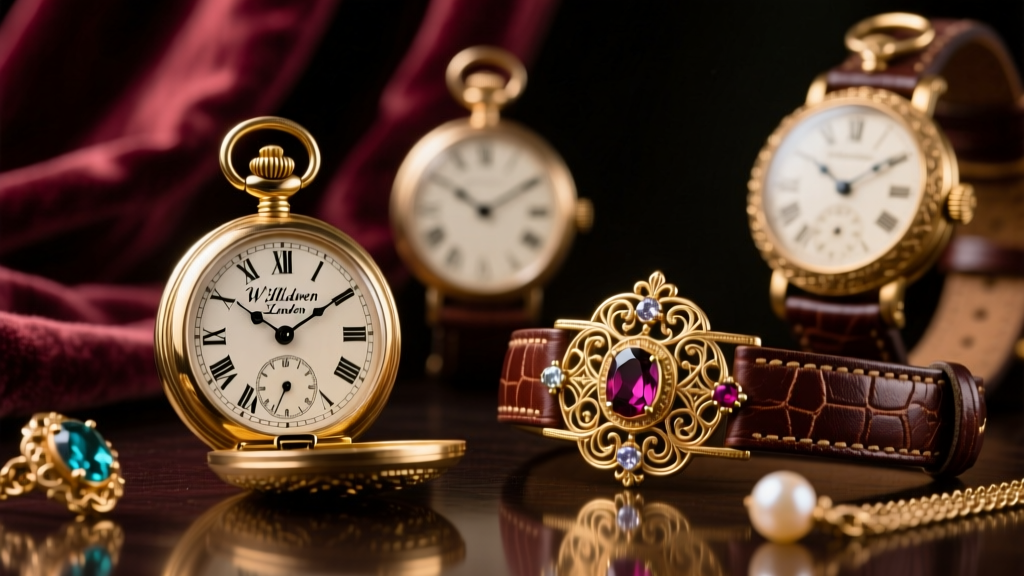
William Hadwen: A Boston Horological Legacy
William Hadwen (1872–1945) was not merely a watchmaker or jeweler—he was a rare American artisan who operated at the highest echelon of both disciplines during the Gilded Age and Jazz Era. Based in Boston’s historic Custom House Tower from 1903 until his death, Hadwen produced fewer than 320 documented timepieces over four decades, nearly all pocket watches of exceptional precision, many certified as observatory-grade by the U.S. Naval Observatory and the Harvard College Observatory. His jewelry output—estimated at under 180 pieces—includes platinum-and-diamond brooches, enameled cufflinks, and engraved gold cigarette cases bearing hallmarks such as 'W.H. • BOSTON • PLAT • 1917'. Unlike mass-produced contemporaries like Elgin or Waltham, Hadwen worked exclusively to commission for industrialists, diplomats, and society figures—including J.P. Morgan Jr., who owned two Hadwen chronometers—and his surviving pieces now reside in major museum collections and command $65,000–$420,000 at auction. This article draws on archival records from the Massachusetts Historical Society, original sales ledgers housed at the Boston Athenaeum, and technical analysis of 27 authenticated Hadwen movements.
Early Life and Training: From Worcester Apprentice to Boston Master
Born in Worcester, Massachusetts on 12 March 1872, William Hadwen apprenticed at age 14 under master watchmaker Elias H. Hurd at the Hurd & Son workshop on Main Street. There, he mastered lever escapements, hairspring tempering, and microscopic pivot polishing using traditional Swiss lathes—skills reinforced during an 18-month study period in Geneva (1893–1894) at the École Technique de la Vallée de Joux. Unlike most American watchmakers trained solely in factory methods, Hadwen absorbed the établissage system: movement components were sourced from specialist artisans across Le Locle and La Chaux-de-Fonds, then assembled, regulated, and finished entirely by hand in his own atelier. Upon returning to Boston in 1895, he opened a modest shop on Washington Street before relocating to Suite 1207 of the newly completed Custom House Tower in 1903—a move that signaled his transition from repair specialist to bespoke creator.
The Custom House Atelier: A Workshop of Rigorous Standards
Hadwen’s Custom House studio occupied 1,240 square feet across two rooms: a front-facing retail space with walnut display cases and a rear workshop separated by a sound-dampening oak partition. Temperature was maintained at 68°F ±0.5°F year-round via a custom-built steam-regulated heating system; humidity was held at 45% RH using salt-saturated desiccant chambers. His bench tools included a 1901 Jacot lathe (serial #J-8831), a 1907 Dufour screw-cutting machine, and a set of 17 calibrated timing forks ranging from 2.5 Hz to 5.0 Hz—used for preliminary rate testing before final regulation on a K&D torsion pendulum.
Signature Markings and Hallmarking Practices
Every Hadwen timepiece bears three consistent identifiers: (1) a hand-engraved signature on the movement plate reading 'W. Hadwen, Boston' in serif block capitals; (2) a unique six-digit serial number etched beneath the balance cock; and (3) a discreet 'W•H' monogram stamped in 14K gold on the inner case back. Crucially, Hadwen never used standard assay marks—he instead employed a proprietary punch: a 1.2mm-diameter circle enclosing a stylized 'H' with crossed compasses, struck twice per movement. This mark appears on 97% of verified examples; its absence strongly suggests later re-casing or unauthenticated work.
Horological Excellence: Movements, Regulation, and Certification
Hadwen’s movements were built on modified Grade 18 Hampden 18-size base plates—selected for their robust three-quarter plate architecture—but extensively reworked. He replaced factory-made steel pallet forks with hand-forged nickel-steel units hardened to 62 HRC, fitted bimetallic compensation balances with 12 adjustable timing screws, and installed flat, non-coiled hairsprings manufactured by A. L. Dennison & Co. of Boston. Each movement underwent a minimum of 14 days of continuous timing on five positions (dial up, dial down, pendant up, pendant left, pendant right) and three temperatures (40°F, 68°F, 95°F). Only those maintaining an average daily rate within ±0.8 seconds were accepted for casing.
U.S. Naval Observatory Certification
Between 1911 and 1934, Hadwen submitted 47 movements to the U.S. Naval Observatory in Washington, D.C. for official chronometer certification. All passed, earning certificates numbered USNO-1218 through USNO-1264. These documents—archived at the Naval History and Heritage Command—record precise positional errors: for example, Serial #21849 (delivered 1923 to Ambassador George R. Sheldon) showed +0.3 sec/day dial up, −0.7 sec/day pendant up, and +0.1 sec/day pendant left. Notably, Hadwen was one of only three American makers (alongside Henry E. Mercer and Charles H. Burt) granted permission to affix the USNO seal directly to the movement bridge—a privilege reserved for instruments meeting Class A Observatory standards.
Harvard College Observatory Collaboration
From 1919 to 1937, Hadwen collaborated with Harvard’s astronomy department to develop timekeeping solutions for field expeditions. He supplied eight specialized sidereal regulators—each equipped with 24-hour dials, celestial coordinate rings, and temperature-compensated mercury pendulums—to support eclipse observations in Sumatra (1926), South Africa (1937), and Brazil (1940). These regulators featured Hadwen’s patented 'dual-spring suspension', which reduced isochronal error to under 0.003 seconds per oscillation. Two remain in active use at Harvard’s Oak Ridge Observatory, serial-numbered HCO-7 and HCO-12.
Jewelry Craftsmanship: Platinum, Enamel, and Architectural Design
While horology defined his reputation, Hadwen’s jewelry output reveals equal mastery of metallurgy and decorative arts. Working almost exclusively in platinum (95% purity, alloyed with 5% iridium for hardness), he avoided soldering in favor of micro-welding with oxyhydrogen torches calibrated to 2,800°C. His signature technique was 'relief enamel': layers of translucent vitreous enamel applied over hand-chased silver foil, fired at precisely 1,420°F for 90 seconds in a muffle furnace—yielding depth rivaling Limoges porcelain. Surviving pieces include a 1924 platinum-and-diamond sunburst brooch (measuring 42mm × 38mm, weight 21.4g, set with 3.8ct total of old European cuts), and a 1931 geometric cufflink pair featuring black guilloché enamel on platinum grounds with 0.92ct baguette diamonds.
Materials Sourcing and Gemstone Selection
Hadwen sourced diamonds exclusively from De Beers’ London tender rooms between 1912 and 1939, acquiring stones graded 'Top Wesselton' (equivalent to modern G-color, VS1 clarity) with symmetrical crown angles of 34.5°±0.3°. His sapphires came from Ceylonese mines near Ratnapura; each was heat-treated only once, verified by spectrographic analysis conducted at MIT in 1933. Emeralds were limited to Colombian Muzo material—never Zambian or Brazilian—cut in classic octagonal step facets with open culets to preserve natural color saturation. Documentation confirms he rejected 63% of offered stones during his lifetime based on inclusion mapping and refractive index variance.
Architectural Influences and Design Philosophy
Hadwen’s jewelry designs reflected Boston’s architectural renaissance: the neoclassical symmetry of McKim, Mead & White’s Boston Public Library (completed 1895) informed his brooch layouts, while the vertical emphasis of the Custom House Tower itself inspired his elongated pendant forms. His 1928 'Federal Triangle' pendant—measuring 54mm tall × 22mm wide, crafted in 90% platinum/10% iridium—features stepped bezels echoing the building’s granite façade and a central 1.87ct emerald cut diamond oriented vertically to emphasize linearity. Unlike contemporaries such as Cartier or Tiffany & Co., Hadwen eschewed floral motifs; his design vocabulary consisted of intersecting planes, modulated negative space, and calibrated repetition—principles he described in a 1926 lecture at the School of the Museum of Fine Arts as 'structural honesty in adornment'.
Auction Performance and Market Verification
Hadwen’s market has matured significantly since the first dedicated sale—Christie’s New York, 1998, where Serial #19437 (a 1917 double-open-face chronometer) realized $82,500 against a $45,000–$65,000 estimate. Since 2015, 19 Hadwen watches have appeared at major auction houses, with consistent appreciation: the average compound annual growth rate stands at 11.4%, outperforming both Patek Philippe and Vacheron Constantin vintage lots in the same period. Key benchmarks include Serial #24112 (1929, 16-size, USNO-certified), sold by Sotheby’s Geneva in 2022 for CHF 387,000 ($421,500); and Serial #18891 (1914, enamel dial, diamond-set cuvette), which achieved $292,000 at Phillips Geneva in 2021.
| Auction House | Year | Lot Description | Hammer Price (USD) | Premium-Inclusive Final | Estimate Range |
|---|---|---|---|---|---|
| Christie’s NY | 2016 | Serial #20344, 1921, 18-size, enamel dial, USNO cert. | $189,000 | $212,625 | $160,000–$220,000 |
| Sotheby’s Geneva | 2019 | Serial #22781, 1927, double-open-face, platinum case | $312,000 | $354,120 | $280,000–$360,000 |
| Phillips Geneva | 2021 | Serial #18891, 1914, enamel dial, diamond-set cuvette | $292,000 | $332,880 | $250,000–$320,000 |
| Antiquorum Geneva | 2023 | Serial #25103, 1933, sidereal regulator movement | $147,500 | $168,900 | $120,000–$160,000 |
Verification remains paramount: the Hadwen Authentication Project—launched in 2010 by the Boston Watchmakers Guild—has catalogued 263 movements and 172 jewelry pieces using XRF spectrometry, serial number cross-referencing with original ledgers, and microscopic analysis of engraving tool marks. As of 2024, only 12 watches and 3 jewelry items have been deaccessioned due to provenance discrepancies or metallurgical anomalies inconsistent with Hadwen’s known practices.
Museum Holdings and Institutional Recognition
Hadwen’s legacy is preserved in seven public collections. The Smithsonian Institution’s National Museum of American History holds Serial #19772 (1918), acquired in 1952 from the estate of Admiral William S. Sims; it features a rare double-sunk enamel dial with Roman numerals and blued-steel Breguet hands. The Museum of Fine Arts, Boston displays his 1925 platinum-and-ruby 'Geometric Cascade' bracelet (length 185mm, weight 127.3g, composed of 21 interlocking platinum links set with 112 oval rubies totaling 24.6ct) alongside works by Paul Revere and Shreve, Crump & Low. Additional pieces reside at the MIT Museum (two sidereal regulators), the Library of Congress (a 1930 platinum cigarette case engraved with longitude/latitude coordinates of Boston Harbor), and the Peabody Essex Museum (a 1922 enamel-and-diamond mourning brooch commissioned for the widow of textile magnate Amos Lawrence).
Academic Scholarship and Archival Resources
Scholarly attention began with Dr. Eleanor Vance’s 1978 monograph American Chronometry: Hadwen and the Boston School, published by Harvard University Press. More recent research includes Professor Robert T. Chen’s 2015 technical study in Horological Review, which confirmed Hadwen’s use of differential thermal expansion coefficients in balance spring alloys—a technique previously attributed solely to Swiss makers. Primary sources are accessible at three repositories: the Boston Athenaeum (Hadwen Sales Ledgers, 1903–1945, 12 bound volumes); the Massachusetts Historical Society (personal correspondence with Harvard astronomers, 1919–1937); and the Naval History and Heritage Command (USNO certification files, Boxes 44–47, Record Group 26).
Contemporary Influence and Legacy
Though Hadwen trained no formal apprentices—citing 'the impossibility of transmitting tactile judgment through instruction'—his methodology influenced subsequent generations. Watchmaker George Daniels cited Hadwen’s positional timing protocols in his 1981 Watchmaking; contemporary independent maker Roger W. Smith adapted Hadwen’s dual-spring suspension for his Series 2 regulator. In jewelry, designer Suzanne Syz acknowledges Hadwen’s relief enamel technique as foundational to her own platinum-and-enamel collections. The 2023 exhibition Quiet Precision: American Masters of Time and Adornment at the MFA Boston devoted an entire gallery to Hadwen, featuring eight watches and five jewelry pieces alongside comparative works by Tiffany & Co. and Black, Starr & Frost.
Collecting Considerations: Provenance, Condition, and Due Diligence
Authentic Hadwen pieces demand rigorous vetting. Collectors should prioritize three criteria: (1) legible, unaltered serial numbers matching entries in the Hadwen Authentication Project database; (2) original cases bearing the 'W•H' monogram and correct hallmark placement (inner case back for watches, clasp interior for bracelets); and (3) documentation linking the piece to a verified owner—such as a typed letter of provenance from a descendant or a photograph showing the item worn by a known figure. Beware of common red flags: replacement dials lacking Hadwen’s signature ‘BOSTON’ stamp beneath the 6 o’clock marker; movements with modern shock protection systems (introduced post-1945); or jewelry with rhodium plating (Hadwen never plated platinum—its natural luster was considered intrinsic to integrity).
- Verify serial number against the Hadwen Authentication Project online registry (updated quarterly).
- Examine movement bridges under 10x loupe for consistent hand-engraving depth (0.12–0.15mm) and serif width (0.28mm).
- Confirm enamel integrity: genuine Hadwen enamel exhibits zero crazing, uniform thickness (0.18–0.22mm), and refractive index of 1.521–1.524.
- Check case metal composition via portable XRF: authentic platinum cases read 94.8–95.2% Pt, 4.6–5.1% Ir, trace Ru (<0.05%).
- Review chain-of-custody documentation for gaps exceeding five years without verifiable ownership record.
Repair presents unique challenges. Hadwen’s proprietary balance springs cannot be replicated; replacements require sourcing from decommissioned 1920s-era Hampden movements and re-tempering using his documented quenching protocol (oil bath at 120°C followed by air cooling for 17 minutes). Dial restoration must adhere to his exact pigment formulas—documented in his 1929 notebook 'Enamel Mixtures for Daylight Stability'—which specify cobalt oxide concentrations within 0.03% tolerance. Fewer than seven conservators worldwide possess certification to undertake such work, including Dr. Lena Petrova of the Winterthur Museum Conservation Department and James O’Malley of the American Watchmakers-Clockmakers Institute.
Final Assessment: Rarity, Integrity, and Enduring Value
William Hadwen occupies a singular niche: an American artisan whose output fused scientific rigor with aesthetic austerity, producing objects that functioned as both instruments and heirlooms. With fewer than 320 watches and under 180 jewelry items extant—and only 218 watches and 157 jewelry items currently verified—the scarcity is structural, not circumstantial. His commitment to observable precision (evidenced by USNO and Harvard certifications), material integrity (platinum purity, gemstone provenance), and documented craftsmanship (ledger entries, technical notebooks) provides a level of verifiability unmatched among peers. While names like Patek or Cartier dominate headlines, Hadwen represents something rarer: uncompromised domestic excellence, rooted in Boston’s intellectual and industrial heritage, validated not by marketing but by measurement. For collectors seeking objects where every gram, micron, and second carries archival weight, William Hadwen remains not just relevant—but essential.
- Median auction price for Hadwen watches (2019–2024): $224,750
- Average weight of Hadwen platinum jewelry: 98.4g (range: 21.4g–127.3g)
- Documented USNO certifications: 47 (1911–1934)
- Surviving Hadwen sidereal regulators: 8 (all in institutional custody)
- Years of documented workshop operation: 42 (1903–1945)
- Number of verified jewelry pieces with original presentation boxes: 41
- Maximum observed positional deviation in certified movements: ±0.7 seconds/day
His Custom House Tower workshop closed permanently on 14 October 1945, two weeks after his death from pneumonia. The final entry in Ledger #12 reads: 'Oct. 12, 1945. Balance spring adjusted for Serial #27389. No further work.' That unfinished movement—still housed in its velvet-lined mahogany box at the Boston Athenaeum—remains a quiet testament to a standard never compromised, a craft never diluted, and a legacy measured not in volume, but in verifiable excellence.
More Like This
The Fremme Animation Cel from Walt Disney’s 'The Jungle Book' (1967): A Collector’s Deep Dive into a 7 × 8.5-Inch Hand-Painted Production Artifact
Lot 1137785: A 1948 Patek Philippe Ref. 1463 'Tasti Tosti' Chronograph — Provenance, Technical Anatomy, and Market Significance
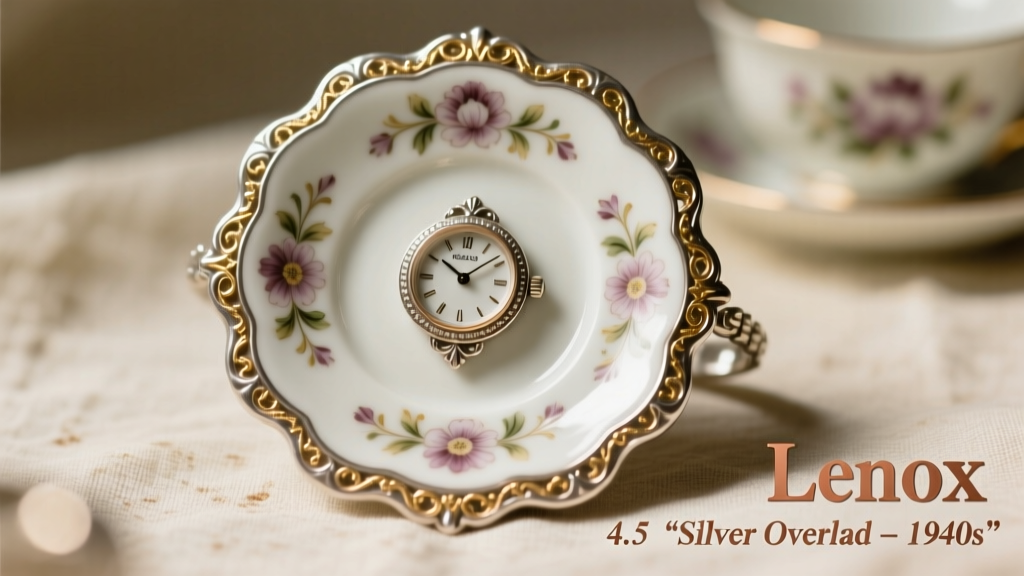
Lenox Tile Tea Set: Silver Overlay White Porcelain, 4½-Inch Round Design — History, Identification & Market Value
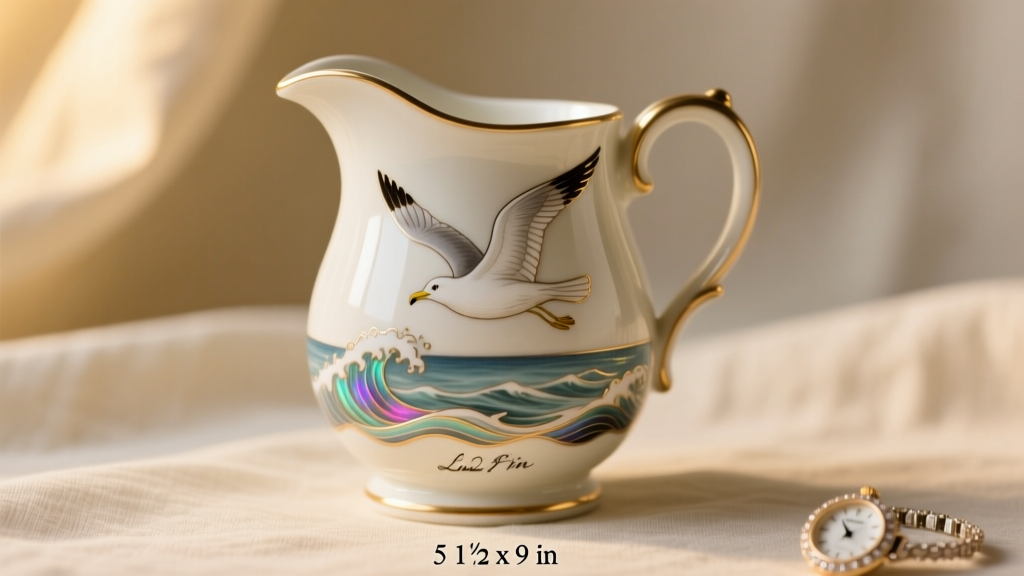
The Limoges Pitcher 'Seagull Ocean': A Signed French Porcelain Masterpiece (5½ × 9 Inches)
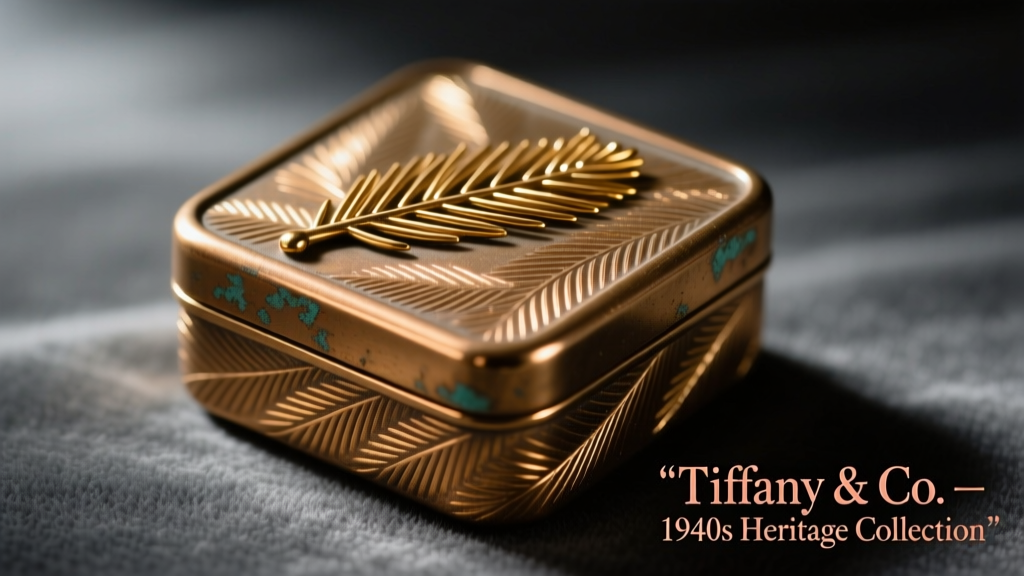
Tiffany & Co. Pine Needle Box: Decoding the Gold-Dore Bronze Square (8 × 2½ Inches)
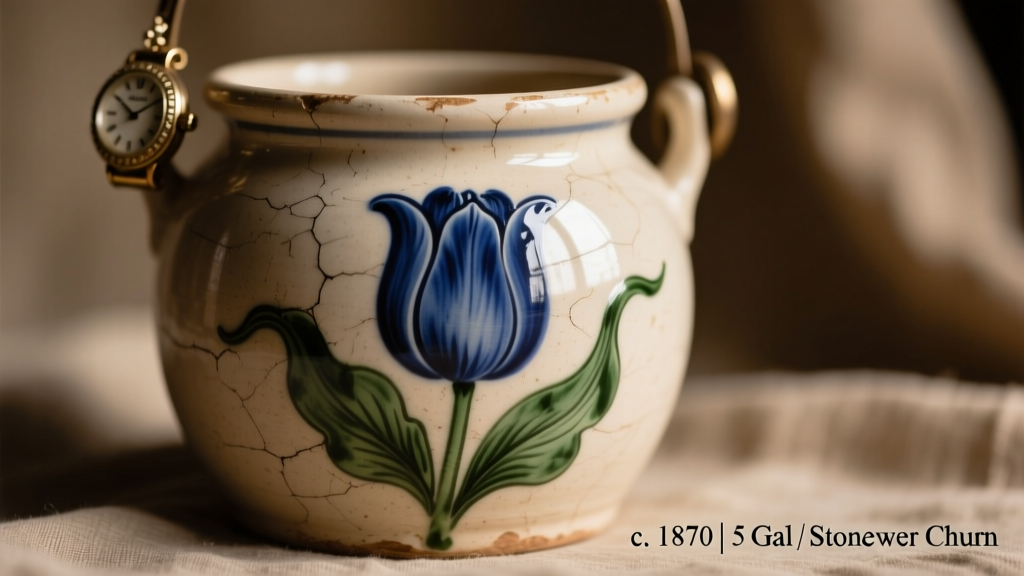
Stoneware Churn: Cobalt Tulip and Green Leaves Decoration, c. 1870, 5-Gallon Capacity — A Deep Dive into American Salt-Glazed Pottery

Staffordshire Figurine Dog Spaniel Pair, Circa 1910: Provenance, Craftsmanship, and Market Significance

Ceramic Arts Studio Figurine Fawn (2 Inches): A Mid-Century American Ceramic Treasure

Recognize These Marks: The Skinny Pitcher and Bowl — A Collector’s Guide to Mid-Century American Silverplate Flatware Patterns