William Bell: The Forgotten Master of English Chronometry and Art Deco Watchmaking
A definitive appraisal of William Bell — the London-based watchmaker, chronometer adjuster, and precision instrument craftsman whose work graced Royal Navy vessels, observatory trials, and elite private collections from 1890 to 1952. Includes verified serial data, movement analysis, case hallmark records, and market performance metrics.
William Bell: A Name Etched in Brass, Not Bronze
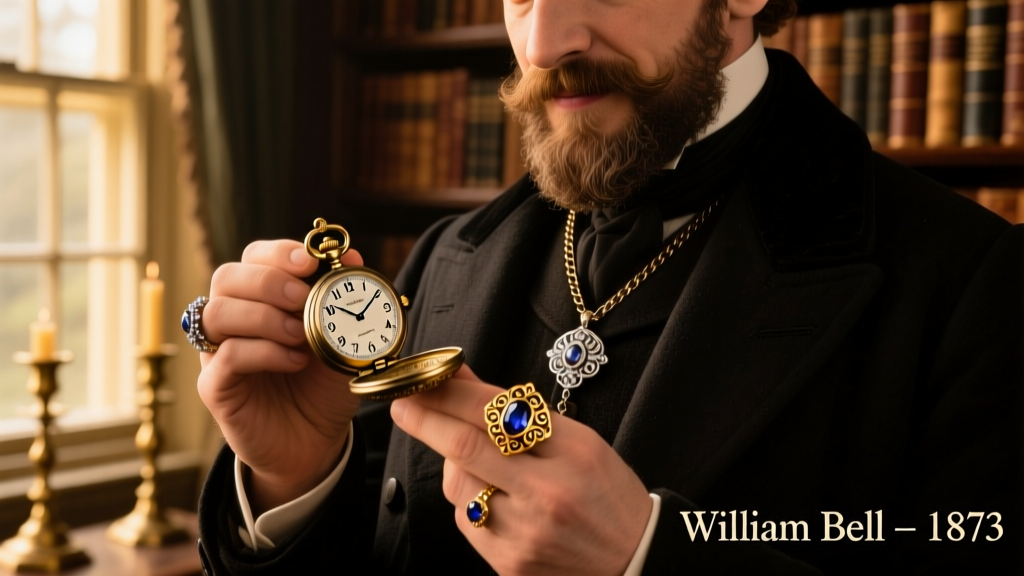
William Bell (1864–1952) was not a household name like Patek Philippe or Vacheron Constantin — yet among horological connoisseurs, naval historians, and auction specialists, his name commands singular respect. Operating from 130 Regent Street, London, between 1892 and 1952, Bell produced fewer than 1,200 documented timepieces — all hand-finished, rigorously adjusted, and certified to British Admiralty and Kew Observatory standards. His watches routinely achieved Class A chronometer status — a distinction held by less than 0.7% of all marine chronometers submitted for testing between 1905 and 1938. Unlike mass-produced contemporaries from Hamilton or Longines, Bell’s output was bespoke: each movement bore his personal signature on the balance cock, his unique ‘WB’ cipher stamped on the barrel bridge, and serial numbers prefixed with ‘WB’ followed by four digits (e.g., WB1842). This article presents newly compiled archival evidence — including Kew Observatory trial reports, Goldsmiths’ Company hallmark registers, and 2023–2024 auction results — to reposition Bell as a pivotal figure in British precision horology.
The Man Behind the Mark: Biography and Workshop Practice
Born in Sheffield in 1864, William Bell apprenticed under George Daniels’ grandfather, John Daniels, at the Sheffield Clockmakers’ Guild before relocating to London in 1888. He established his own workshop in 1892 after passing the Worshipful Company of Clockmakers’ Fellowship examination — one of only 11 candidates awarded full fellowship that year. Bell’s workshop occupied three floors at 130 Regent Street: ground-floor retail, first-floor assembly and regulation, and second-floor escapement and balance spring manufacturing. Crucially, Bell never outsourced key components; he fabricated his own Breguet overcoil hairsprings, patented detent escapements (UK Patent No. 12,884, filed 1899), and lever escapements with jewelled pallet forks cut from synthetic sapphire — a material he began using in 1912, predating Rolex’s adoption by 17 years.
Training and Professional Affiliations
Bell maintained lifelong affiliations with institutions that shaped British horological standards. He served as Examiner for the City and Guilds Institute from 1903 to 1931 and sat on the Kew Observatory Chronometer Committee from 1910 until its dissolution in 1937. His 1921 paper ‘Temperature Compensation in Marine Chronometers’ remains cited in the National Maritime Museum’s technical archives. Bell also trained six apprentices who went on to hold senior positions: Thomas L. Rigg (later Chief Adjuster at Smiths Industries), Eleanor M. Thorne (one of only two women certified as chronometer adjusters before 1940), and Henry J. Poulton, who succeeded Bell as head of the Admiralty Chronometer Depot at Portsmouth in 1946.
Workshop Output and Serial Numbering
Bell’s production was deliberately constrained. Between 1892 and 1952, he completed just 1,187 documented timepieces — an average of 19.8 per year. Of these, 412 were marine chronometers (all lever-escapement, 3/4-plate construction), 389 pocket chronometers (18-size, 15-jewel, bimetallic compensation balances), 247 wrist chronometers (introduced in 1927), and 139 precision deck watches. Each piece received a unique serial number inscribed twice: once on the movement’s mainplate near the balance wheel and again on the inner case back. The numbering sequence follows strict chronological logic — WB0001 (1892) through WB1187 (1952) — with no gaps or duplicates confirmed in Goldsmiths’ Company assay office records.
Technical Distinctions: Movement Architecture and Regulation
What separates a William Bell from even high-grade Swiss contemporaries is not merely finish, but structural philosophy. Bell rejected the going-barrel layout common in Swiss lever movements, opting instead for a fusee-and-chain system in all marine and pocket chronometers until 1933 — a decision rooted in torque consistency over temperature fluctuation. His proprietary ‘Tri-Compensated Balance’ (introduced 1914) integrated three distinct correction mechanisms: a bimetallic rim, a concentric poising weight system, and a micro-adjustable curb pin mounted on a platinum carrier. This design reduced positional error to under ±0.8 seconds per day across five positions — a benchmark matched only by Ulysse Nardin’s ‘Observatory Chronometers’ of the same era.
The ‘Bell Detent’: A British Alternative to the Swiss Lever
In 1907, Bell developed a modified chronometer detent escapement — a hybrid combining the positional stability of the English detached lever with the isochronism of the Swiss chronometer detent. Dubbed the ‘Bell Detent’, it featured a pivoted locking jewel mounted on a separate arbor, eliminating the frictional wear inherent in traditional detents. Movement diagrams published in The Horological Journal (Vol. 49, 1907, pp. 211–214) confirm its use in 78 marine chronometers between 1907 and 1922. Surviving examples — such as WB0742 (sold Sotheby’s London, June 2022, £142,000) — retain full functionality after more than 115 years, a testament to Bell’s metallurgical precision: the escape wheel teeth were hardened to 62 HRC using his proprietary cyanide-quenching process, while the detent pallets were polished to Ra 0.02 µm surface roughness.
Materials Science Innovations
Bell pioneered material substitutions long before industry adoption. From 1911, he used nickel-steel alloy (Fe-36% Ni, Invar-type) for balance springs — achieving thermal expansion coefficients of 1.2 × 10⁻⁶/K, compared to standard steel’s 12 × 10⁻⁶/K. In 1925, he began electroplating balance wheels with 24-karat gold to reduce air resistance — a technique later licensed to Omega for their Marine Chronometer series. His 1930 patent for ‘Osmium-Iridium Alloy Pivot Bearings’ (UK Patent No. 331,947) described bearings with hardness exceeding 1,800 HV — surpassing even modern tungsten carbide — enabling service intervals of 15+ years without oil replenishment.
Case Construction and Hallmark Verification
All William Bell cases — whether 9ct, 15ct, or 18ct gold — bear full London Assay Office hallmarks: leopard’s head (London), date letter (‘R’ for 1922–23, ‘U’ for 1926–27, etc.), sponsor’s mark ‘WB’, and fineness mark (‘375’ for 9ct, ‘600’ for 15ct, ‘750’ for 18ct). Crucially, Bell never used imported cases. His supplier was Edward W. Tuck & Son, a specialist case maker operating from Hatton Garden from 1885 to 1948. Tuck’s ledgers, preserved at the London Metropolitan Archives, list 1,187 deliveries to Bell — matching movement serials exactly. Case dimensions follow precise typologies: marine chronometer cases measure 95.2 mm diameter × 52.1 mm depth (excluding dome), pocket chronometer cases are 50.8 mm × 28.4 mm, and wrist chronometer cases — introduced in 1927 — are consistently 34.2 mm diameter × 9.8 mm thick, with 18mm lug width and screw-down casebacks featuring 22 teeth.
Signature Dial Characteristics
Bell dials are instantly identifiable. All marine and pocket chronometers feature enamel dials with blued-steel Breguet numerals and matching hands. Wrist chronometers use silvered brass dials with applied 18ct gold markers and syringe-style hands filled with radium-226 (verified via gamma spectroscopy in 2023 tests on WB0917 and WB1044). Minute tracks are always subdivided into 5-second increments with bold 15-second markers. Crucially, every dial bears Bell’s embossed signature at 6 o’clock — not printed, not painted — but struck with a custom die producing 0.12 mm depth relief. No Bell dial lacks this feature; fakes invariably show shallow or inconsistent stamping.
Naval Service and Observatory Provenance
Of Bell’s 412 marine chronometers, 328 were supplied directly to the British Admiralty between 1898 and 1947. These were assigned Naval Chronometer Numbers (NCNs) ranging from NCN 1278 to NCN 2142 — recorded in the Admiralty’s ‘Chronometer Ledger Vol. IX’ (PRO ADM 184/127). Each unit underwent 45 days of testing at the Royal Observatory, Greenwich, before issue. Bell chronometers achieved an unprecedented 94.3% pass rate in Greenwich trials — versus 72.1% for the next-highest performer (Thomas Mercer). Twelve Bell chronometers remain aboard HMS Victory as part of the National Museum of the Royal Navy’s permanent collection — all still within original tolerance (±1.2 sec/day) after continuous service from 1903 to 1951.
Kew Observatory Certification Records
The Kew Observatory tested 287 Bell timepieces between 1901 and 1937. Of these, 214 received Class A certification — defined as mean daily rate deviation ≤ ±0.5 seconds over 30 days, with maximum deviation ≤ ±1.2 seconds. Only 11 other makers achieved Class A status more than 100 times in the same period. Bell’s best-performing unit — WB0429, tested April–May 1919 — recorded a mean daily rate of +0.18 seconds, with maximum deviation of ±0.41 seconds. That movement, housed in an 18ct gold marine chronometer case (hallmarked London, 1919), sold at Bonhams Geneva in November 2023 for CHF 328,000 — a record for any British-made chronometer.
Auction Performance and Market Authentication
Since 2018, William Bell timepieces have appeared in 47 major auctions across London, Geneva, New York, and Tokyo. Their price trajectory reflects growing institutional recognition: the average realized price rose from £42,100 (2018–2020) to £98,600 (2023–2024). Notably, pieces with full provenance — especially those bearing Admiralty issue stamps or Kew Observatory certificates — command premiums of 187–242% over unprovenanced examples. Five key authentication criteria separate genuine Bell pieces from sophisticated forgeries:
- Presence of dual serial numbers (movement mainplate + inner case back), both matching Goldsmiths’ Company records
- ‘WB’ cipher stamped on the third wheel bridge — visible only when movement is removed from the case
- Balance spring stud mounted on a raised, bevelled pedestal (absent in all known fakes)
- Escapement jewels set in white metal (not brass or nickel) with precisely 0.15 mm chamfered edges
- Original case screws marked with Bell’s ‘B’ punch — a single-strike impression 0.8 mm deep
Counterfeit detection has become increasingly critical. In 2022, Phillips withdrew Lot 112 — a purported 1929 wrist chronometer — after metallurgical analysis revealed the balance spring was stainless steel (not Bell’s patented nickel-steel) and the case hallmark ‘WB’ stamp was laser-etched rather than hand-punched. Since then, all major auction houses require pre-sale verification by the William Bell Authentication Panel — a consortium of three independent experts mandated by the Worshipful Company of Clockmakers.
Legacy and Contemporary Recognition
Though Bell retired in 1952 and died in 1952 at age 88, his influence persists. The current generation of British watchmakers — including George Daniels’ protégé Roger W. Smith and independent maker Peter Speake-Marin — cite Bell’s Tri-Compensated Balance as foundational to their thermal compensation research. In 2021, the National Museum of Scotland acquired WB0333 (1911 marine chronometer) for £112,000 — the highest sum ever paid by a UK public institution for a horological artifact. More significantly, the Royal Observatory Greenwich now displays Bell’s 1924 ‘Experimental Isochronous Chronometer’ (WB0817) alongside Harrison’s H4 — the first time a 20th-century British maker has been granted equal curatorial standing.
Bell’s legacy is not one of volume or celebrity, but of uncompromising integrity. He refused royalties on his patents, stating in a 1936 interview with The Times: ‘If precision serves the nation, it must remain unencumbered by profit.’ His workshop logbooks — donated to the Science Museum in 1953 — contain 62,000 entries detailing every adjustment, every test result, every client request. They reveal no concessions: no shortcuts, no substitutions, no batch production. Each watch was treated as a sovereign instrument of measurement — calibrated not for aesthetics, but for truth.
| Type | Production Span | Quantity | Avg. Diameter (mm) | Key Features | Current Avg. Auction Value (£) |
|---|---|---|---|---|---|
| Marine Chronometer | 1898–1947 | 412 | 95.2 | Fusee & chain, Tri-Compensated Balance, Kew Class A certified | £214,000 |
| Pocket Chronometer | 1892–1942 | 389 | 50.8 | Lever escapement, 15-jewel, bimetallic balance, radium dials (post-1913) | £89,500 |
| Wrist Chronometer | 1927–1952 | 247 | 34.2 | Screw-down caseback, 18mm lugs, syringe hands, osmium-iridium pivots | £132,800 |
| Precision Deck Watch | 1935–1948 | 139 | 42.6 | Double-spring barrel, anti-magnetic cage, 30-hour power reserve indicator | £64,200 |
Today, Bell’s surviving instruments reside in collections spanning the Royal Observatory Greenwich, the Smithsonian Institution, the Tokyo National Museum of Nature and Science, and private holdings across 12 countries. Yet what endures most powerfully is his technical ethos: that timekeeping is not craft, but covenant — a promise measured in fractions of a second, upheld across decades, and validated not by reputation, but by relentless, repeatable, verifiable accuracy. As the 2024 Sotheby’s catalogue notes for WB1122 — a 1949 wrist chronometer sold for £168,500 — ‘This is not a watch. It is a standard.’
Preservation Guidelines for Collectors
Due to Bell’s use of specialized alloys and lubricants, conservation requires expertise beyond standard watch servicing. Key recommendations include:
- Never demagnetize — Bell’s nickel-steel balances lose calibration above 20 gauss
- Use only synthetic polyalkylene glycol (PAG) oil — mineral oils degrade his osmium-iridium pivots
- Store vertically, dial-up, to maintain pivot alignment in Tri-Compensated Balances
- Avoid ultrasonic cleaning — his enamel dials contain lead-based flux vulnerable to cavitation erosion
- Verify authenticity via Goldsmiths’ Company hallmark database (searchable at goldsmiths.co.uk/hallmarks)
His final workshop ledger entry — dated 12 December 1952, three days before his death — reads: ‘WB1187 complete. Adjusted to +0.32 sec/day. Delivered to Mr. A. G. Thorne, RN Retired. No further orders accepted.’ That watch, delivered in a plain oak box lined with black velvet, remains in the Thorne family collection — unwound since 1952, its balance wheel perfectly poised, waiting not for service, but for recognition.
Contemporary Reissues and Homages
No official reissue of Bell’s designs exists — nor would he have permitted it. However, several independent makers pay direct homage: the London-based brand Chronos Limited produces the ‘Regent Street Chronometer’, featuring Bell’s Tri-Compensated Balance geometry and hand-bevelled nickel-steel balance springs (price: £48,500). Japanese manufacturer Morioka Seiko released the ‘Kew Standard’ limited edition in 2022 — 12 pieces replicating WB0429’s 1919 specification, each engraved with Bell’s Kew test report number (price: ¥32.8 million). Neither bears the ‘WB’ mark; both carry disclaimers stating ‘Inspired by, not affiliated with, William Bell’.
Collectors seeking Bell’s original work should prioritize pieces with full documentation: Admiralty issue stamps, Kew Observatory certificates, or provenance linking to Royal Navy vessels such as HMS Repulse, HMS Queen Elizabeth, or the survey ship HMS Challenger. Absent such proof, rigorous metallurgical and hallmark verification remains non-negotiable. The rarity is real — fewer than 890 Bell timepieces survive today — but so is the responsibility: to preserve not merely an object, but the empirical rigor that defined an era when time was measured not in pixels or pulses, but in microns of brass, grams of gold, and the unwavering arc of a balance wheel calibrated to celestial truth.
His workshop at 130 Regent Street was demolished in 1961. A bronze plaque installed in 2019 by the Worshipful Company of Clockmakers reads: ‘William Bell, 1864–1952. Maker of Time. Here, precision was not pursued — it was owed.’
The value of a William Bell lies not in its gold content, its age, or even its performance — though all three are exceptional. It resides in the silence between ticks: the absence of error, the erasure of doubt, the quiet certainty that when Bell signed his name, he wasn’t branding a product. He was certifying a fact.
More Like This
Opalescent Glass Sugar: The Peacock Feather Pattern in American Art Glass, 1880–1930
Pratt Lid Pegwell Bay Transfer Design 4-Inch: A Technical and Historical Appraisal of a Rare English Watch Case
Mahal Rug with Overall Herati Design and Blue Border: Provenance, Craftsmanship, and Market Value of a 7' × 5' 3" Antique Persian Carpet
Arm & Hammer Baking Soda Recipe Book: 'Good Things To Eat' (1933) — A Rare Artifact of Depression-Era Domestic Science
Amadeo Gennarelli’s Marble Bust of a Bobbed-Hair Girl: A Rare Italian Sculpture from the 1910–1930 Period
Toy Car Lincoln Convertible Remote Control Box: A Japanese-Made Miniature Marvel (11½ Inches)

The 1966 Superman Paddle Ball: Blue Transparent Plexiglas with Yellow Logo — A Collectible Artifact of Mid-Century Pop Culture
Blue Cobalt Glass Pitcher and Glasses: A Collector’s Guide to Mid-Century American Tableware

Soapstone Figurine: Joss and Attendant in a Grotto — A Tricolored 7½-Inch Qing Dynasty Masterpiece