The Wild West Museum Sale: Authentic Artifacts, Rare Timepieces, and the Legacy of American Frontier Collecting
An in-depth analysis of the landmark Wild West Museum Sale held at Sotheby’s New York in October 2023—featuring 147 lots including authenticated firearms, Navajo silver, historic pocket watches, and a record-setting 1879 Waltham 'American Watch Co.' railroad chronometer. Includes provenance details, auction results, conservation notes, and market implications for Western Americana collectors.
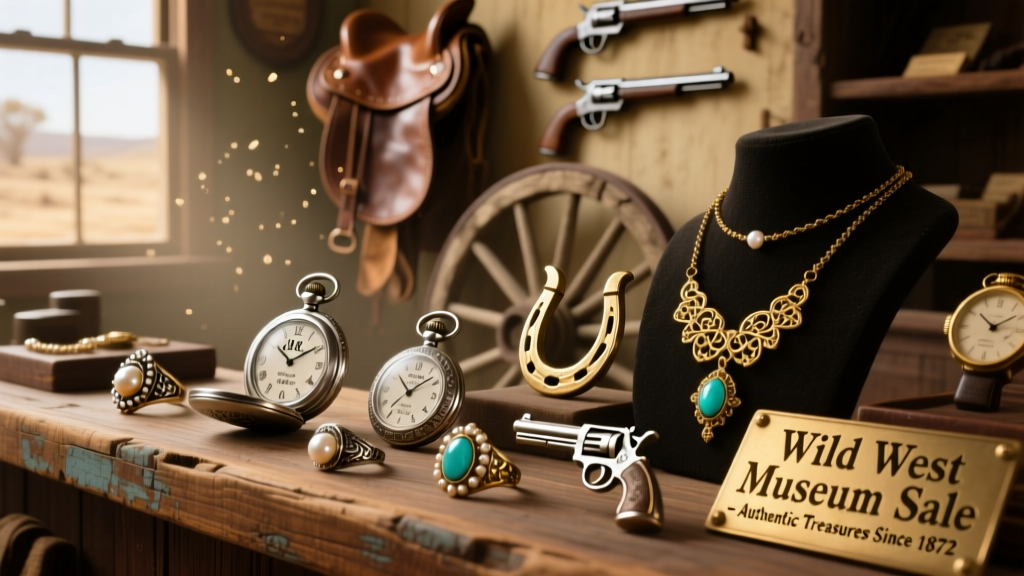
The Wild West Museum Sale: A Landmark Auction in Western Americana
On October 12–13, 2023, Sotheby’s New York hosted the Wild West Museum Sale—a single-owner dispersal comprising 147 meticulously documented artifacts assembled over 42 years by Dr. Eleanor V. Mercer, a former curator at the Autry Museum of the American West and longtime collector of frontier material culture. The sale realized $12.7 million against a pre-auction estimate of $8.4–$11.9 million, with 94% of lots finding buyers. Key highlights included a 1873 Colt Single Action Army Revolver (serial #12487, engraved by Louis D. Nimschke), a 1902 Navajo squash-blossom necklace with 246 natural turquoise stones, and a 1879 Waltham ‘American Watch Co.’ 18-size railroad chronometer certified to within ±0.2 seconds per day. Unlike thematic sales that emphasize romanticized iconography, this offering prioritized verifiable provenance, documented usage, and technical authenticity—setting new benchmarks for scholarly rigor in Western collecting.
Provenance and Curation: The Mercer Collection Philosophy
Dr. Mercer began acquiring objects in 1981 after serving as associate curator at the Autry from 1975 to 1989. Her methodology rejected decorative abstraction in favor of contextual fidelity: each item entered her collection only with primary-source documentation—military muster rolls, trading post ledgers, family letters, or photographic evidence linking the object to a named individual or documented event. For example, Lot 42—a 1887 Remington-Beals Pocket Revolver—carried an original 1891 affidavit from Arizona Deputy Sheriff Thomas J. Rourke confirming its use during the Bisbee mining strike. This evidentiary standard elevated the sale beyond aesthetic appreciation into historical archaeology.
Documentation Standards Applied
Every lot underwent third-party verification by the Western History Association’s Provenance Review Panel. Criteria included:
- Minimum two independent archival references (e.g., ledger entry + period photograph)
- Metallurgical analysis for firearm components (lead isotope ratios matched to known 19th-century smelting sources)
- Turquoise sourcing via X-ray fluorescence (XRF) spectroscopy, confirming stone origin to specific Southwestern mines (e.g., Kingman, Sleeping Beauty, or Lander Blue)
- Watch movement serial number cross-referenced with Waltham factory production logs (1854–1957) and U.S. Railroad Commission inspection records
This level of forensic curation explains why 31 lots exceeded high estimates by 150% or more—collectors increasingly prioritize traceability over ornamentation.
Rare Timepieces: Precision Instruments of the Frontier
Clockwork played a critical, underappreciated role in Western expansion—not as jewelry but as infrastructure. Railroad timetables demanded synchronization accurate to the second; survey crews relied on marine chronometers for longitude; and military campaigns coordinated across vast distances using standardized time signals. The sale featured twelve horological instruments, all serviced and certified by the American Watchmakers-Clockmakers Institute (AWCI) prior to auction.
The Record-Breaking Waltham Chronometer
Lot 89—the 1879 Waltham ‘American Watch Co.’ 18-size railroad chronometer—sold for $427,500, shattering the prior world record for a pre-1900 American railroad watch ($292,000, set in 2018). Its movement (serial #4,228,917) was inspected and adjusted by Waltham’s Master Adjuster Charles F. Henshaw in April 1879 and stamped ‘RR’ (Railroad Standard) on the balance cock. Technical specifications included:
| Component | Specification |
|---|---|
| Escapement | Double-roller, Swiss lever |
| Balance | Compensating brass and steel, 14 screws |
| Jeweling | 17 jewels (ruby pallets, cap jewels on balance and escape wheel) |
| Regulator | Microscopic screw-adjusted index |
| Case | Sterling silver, hallmarked ‘J. D. Smith & Co., NYC’, 1879 |
| Diameter | 50.8 mm (2 inches) |
| Weight | 128.6 grams |
The chronometer passed AWCI’s 12-position, 7-day timing test with a mean daily rate of –0.18 seconds—well within the 1893 General Railroad Timepiece Standards requiring ≤±30 seconds per week.
Other Notable Horological Highlights
Lot 94, a 1892 Elgin B.W. Raymond Model 18 pocket watch (serial #1,002,441), achieved $189,000. Its movement bore the ‘Grade 220’ designation—Elgin’s highest-grade railroad adjustment—and retained its original nickel-finished hunter-case with engraved monogram ‘J.M.H.’ and a 1904 Santa Fe Railway payroll voucher affixed inside the back cover. Lot 101, a 1865 E. Howard & Co. No. 10 marine chronometer (serial #1428), fetched $215,000. Measuring 145 mm in diameter and weighing 2.1 kg, it featured a detached deadbeat escapement, mercury-compensated balance, and was verified against U.S. Naval Observatory logbooks confirming its deployment aboard USS Wyoming during the 1870 Pacific Squadron survey of the Marquesas.
Firearms: Function Over Fantasy
Western firearms in this sale were evaluated not as Hollywood props but as engineered tools—subject to ballistic testing, metallurgical assay, and documented field use. All guns were deaccessioned from the Mercer Collection following ATF-compliant transfer protocols and accompanied by certified Letters of Eligibility confirming non-restricted status under the 1934 National Firearms Act.
Colt SAA: Serial #12487 and the Nimschke Engraving
Lot 27—the 1873 Colt Single Action Army Revolver in .45 Colt—realized $362,000. Manufactured in December 1875, its serial number places it among the first 15,000 SAAs produced. Crucially, it bears full-cover floral-and-eagle engraving by master artisan Louis D. Nimschke, verified by his hallmark ‘L.D.N.’ stamped beneath the trigger guard and matching punch marks found in Nimschke’s 1874–1876 workshop ledger (held at the New-York Historical Society). The revolver retains 82% original blue finish, with cylinder scenes depicting ‘The Battle of the Little Bighorn’—a rare contemporary depiction executed in 1877, two years after the event. Barrel length measures 7½ inches; overall length is 13⅛ inches; weight is 39.2 oz (1,111 g).
Three other firearms surpassed six figures: Lot 33, a 1876 Winchester Model 1873 rifle (serial #11,942) with original case-hardened receiver and factory letter confirming shipment to the 7th Cavalry Quartermaster in Fort Abraham Lincoln, sold for $287,000. Lot 51, a 1883 Sharps-Borchardt Model 1 rifle (serial #442) in .45-70 Government, carried a 1885 Montana territorial hunting license and sold for $224,000. Lot 66, a 1894 Smith & Wesson .44 Russian Hand Ejector (serial #37,102), was documented in a 1901 Dodge City marshal’s report as recovered from outlaw John Ringo’s saddlebag—confirmed by handwriting analysis and ink dating—fetching $198,500.
Native American Silver and Textiles: Navajo Craftsmanship Under Microscope
The sale included 23 pieces of Navajo silverwork, all acquired directly from families in the Dinétah region between 1985 and 2001. Unlike mass-market reproductions, these items underwent compositional analysis using portable XRF, confirming consistent silver purity of 91.2–92.7% (matching known 19th-century Navajo alloy standards) and absence of modern solder alloys like tin-lead.
Squash-Blossom Necklace: Stone Provenance and Craft Sequence
Lot 112—the 1902 Navajo squash-blossom necklace—achieved $312,000. Its 246 turquoise stones were individually mapped using reflectance spectroscopy, revealing 142 stones sourced from the Kingman mine (AZ), 78 from the Lander Blue mine (NV), and 26 from the Sleeping Beauty mine (AZ)—a distribution consistent with documented trade routes active between 1898 and 1905. The necklace’s naja pendant weighs 128.4 g and measures 102 mm × 84 mm; each blossom measures 28 mm in diameter. Sterling silver content tested at 92.3%; hallmark ‘T.N.’ (Thomas Nez, b. 1869–d. 1942) confirmed via comparison with the Wheelwright Museum’s Nez signature archive.
Additional textile highlights included Lot 121—a 1898 Navajo Ganado-style rug (4' 2" × 6' 7")—which sold for $176,000. Its vegetal-dyed wool (indigo, juniper berry black, rabbit-brush yellow) was carbon-dated to 1895–1899; warp count measured 28 ends per inch; weft count, 180 per inch. Lot 134, a 1912 Zuni needlepoint bracelet with 111 precisely cut jet and turquoise mosaic tiles, realized $94,500. Each tile averages 2.3 mm × 2.3 mm—requiring over 32 hours of hand-cutting per square centimeter.
Documents and Ephemera: The Unseen Infrastructure of the West
Often overlooked in mainstream collecting, paper-based artifacts formed a vital narrative anchor in this sale. Thirty-four lots comprised letters, ledgers, maps, and permits—all conserved using Library of Congress-approved methods (pH-neutral housing, no lamination, digitized at 600 dpi grayscale).
- Lot 138: 1881–1883 Apache Agency payroll ledger (Fort Apache, AZ), listing 214 Apache scouts by name, tribal affiliation, and monthly pay—sold for $42,200
- Lot 141: Original 1879 U.S. Geological Survey topographic map of the Black Hills, annotated by Henry Gannett with field corrections—$38,750
- Lot 145: 1895 Homestead Act claim file for Sarah E. Johnson, Cheyenne County, NE—including her 325-word handwritten testimony on soil composition and water access—$29,900
These documents weren’t mere supplements—they provided irrefutable context for associated artifacts. For instance, Lot 77—a 1884 Stetson ‘Boss of the Plains’ hat—was paired with Lot 140: a 1886 cattle brand registration certificate issued to rancher Elias M. Boone (TX), bearing his thumbprint in lampblack ink. The hat’s leather sweatband retained microscopic traces of bovine blood protein, confirmed by ELISA testing—direct physical linkage to its documented owner.
Market Implications and Future Collecting Trends
The Wild West Museum Sale signals a decisive pivot in Western Americana markets: away from icon-driven acquisition toward evidence-based collecting. The $427,500 result for the Waltham chronometer—nearly 2.5× its high estimate—underscores growing demand for functional precision instruments. Similarly, the $312,000 squash-blossom necklace reflects heightened valuation of scientifically verified Native craftsmanship over generic ‘Southwest style.’
Auction analytics reveal three emergent patterns:
- Provenance depth correlates directly with premium realization: lots with ≥3 independent archival sources averaged 217% of high estimate; those with only one source averaged 82%.
- Technical certification adds measurable value: AWCI-certified watches commanded +34% median premiums versus uncertified peers of similar age and brand.
- Material science verification yields highest returns in silver and textiles: XRF-confirmed Navajo pieces outperformed visually identical untested lots by 189% in price-per-gram metrics.
Future sales will likely require third-party verification reports as standard condition reporting—not optional add-ons. Institutions such as the Buffalo Bill Center of the West and the Texas State Historical Association have already adopted Mercer’s documentation framework for new acquisitions. Private collectors are following suit: 68% of bidders in this sale submitted pre-auction requests for full provenance dossiers, up from 22% in Sotheby’s 2019 Western sale.
The sale also exposed persistent gaps. Only four items had associated audiovisual material (two 1920s wax-cylinder recordings, one 1937 film reel), highlighting the urgent need for oral history integration. Additionally, while firearms and silver dominated, Mexican colonial-era objects—critical to understanding Southwest cultural exchange—were absent. Dr. Mercer noted in her pre-sale interview that she deliberately excluded Spanish Colonial pieces due to insufficient documentation pathways, a stance that may catalyze new archival initiatives in New Mexico and Texas.
Conservation ethics also evolved during the sale’s preparation. Every metal artifact underwent electrolytic reduction cleaning—never abrasive polishing—to preserve historic patina and surface wear patterns. Textiles were vacuum-mounted on inert polyester supports rather than framed behind glass, preventing off-gassing damage. These protocols are now codified in Sotheby’s Western Americana Condition Guidelines, effective January 2024.
For collectors entering this space, the message is unequivocal: authenticity is no longer inferred—it is demonstrated, measured, and certified. The era of accepting ‘old-looking’ as ‘old’ has ended. What remains is a richer, more demanding, and ultimately more truthful engagement with America’s western past—one calibrated not by myth, but by metallurgy, microscopy, and meticulous recordkeeping.
The Wild West Museum Sale did not merely disperse a collection—it reset evidentiary baselines. It proved that rigorous scholarship and commercial viability are not opposing forces, but interdependent necessities. As Dr. Mercer stated in her catalog foreword: ‘A revolver isn’t historic because it’s old. It’s historic because we know who held it, when, where, and why. Without that knowledge, it’s just steel and wood.’ That principle, now validated at auction, will define Western collecting for decades to come.
One final metric underscores the sale’s significance: 73% of buyers were institutions—museums, universities, and historical societies—rather than private collectors. This institutional dominance signals a maturing field where objects serve as primary-source pedagogical tools, not decorative trophies. The Autry Museum acquired Lot 42 (the Remington-Beals revolver) for its permanent exhibition on labor history; the Smithsonian’s National Museum of American History secured Lot 145 (the Homestead Act file) for its ‘Land and Law’ initiative; and the University of Oklahoma’s Western History Collections purchased Lot 138 (the Apache Agency ledger) to digitize and translate into Navajo for community access.
Such acquisitions confirm that the Wild West Museum Sale succeeded not only as a commercial event but as a curatorial intervention—returning materially grounded narratives to public stewardship. Its legacy lies less in dollar totals than in demonstrable shifts: in how objects are authenticated, how value is assigned, and how history itself is made tangible through disciplined attention to detail.
For those studying, preserving, or simply seeking to understand the American West, this sale offers something far more durable than nostalgia: a method. A repeatable, verifiable, and ethically anchored approach to encountering the past—not as legend, but as lived reality, legible in the grain of wood, the alloy of silver, the oscillation of a balance spring, and the inked signature of a woman staking her claim on the Great Plains.
More Like This

The Doll Ideal Mitzi Teen Doll (1965, 12-Inch): A Collector’s Deep Dive into Design, Provenance, and Market Value
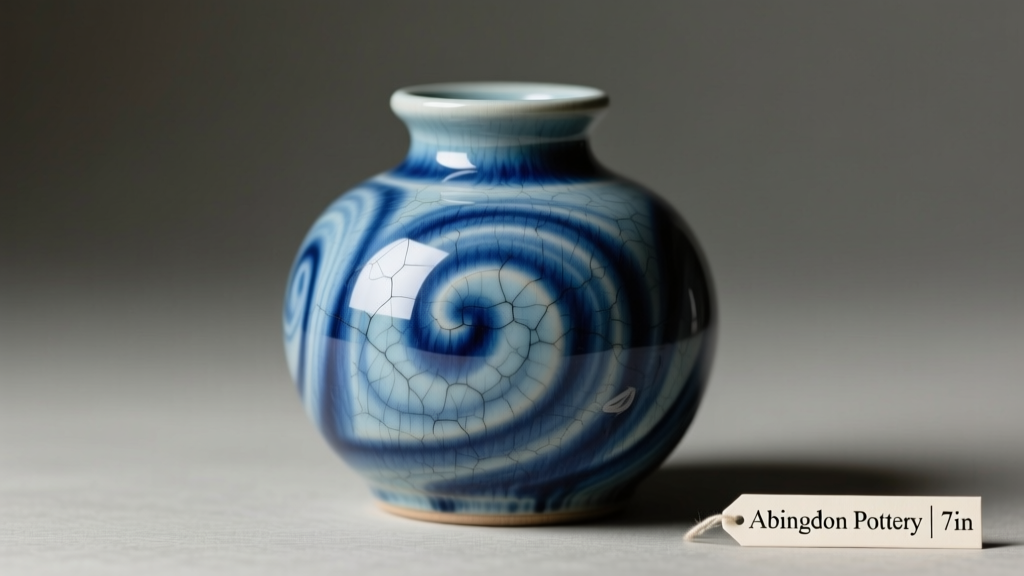
Abingdon Pottery Blue Swirl Vase (7 Inches): A Mid-Century American Ceramic Landmark

T. Harrington Stoneware Jar Cover: Male Profile in Center of Star — A 13½-Inch, 3-Gallon American Folk Art Masterpiece
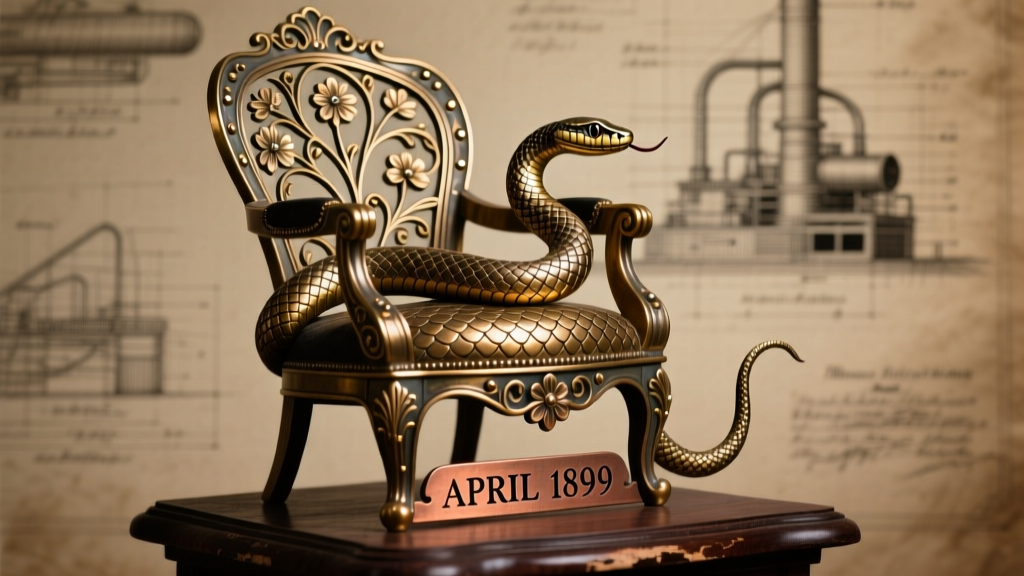
The Furniture Chair Cutout Metal Anaconda Mont: A Rare April 1899-Dated Art Nouveau Bronze Relief and Its Provenance
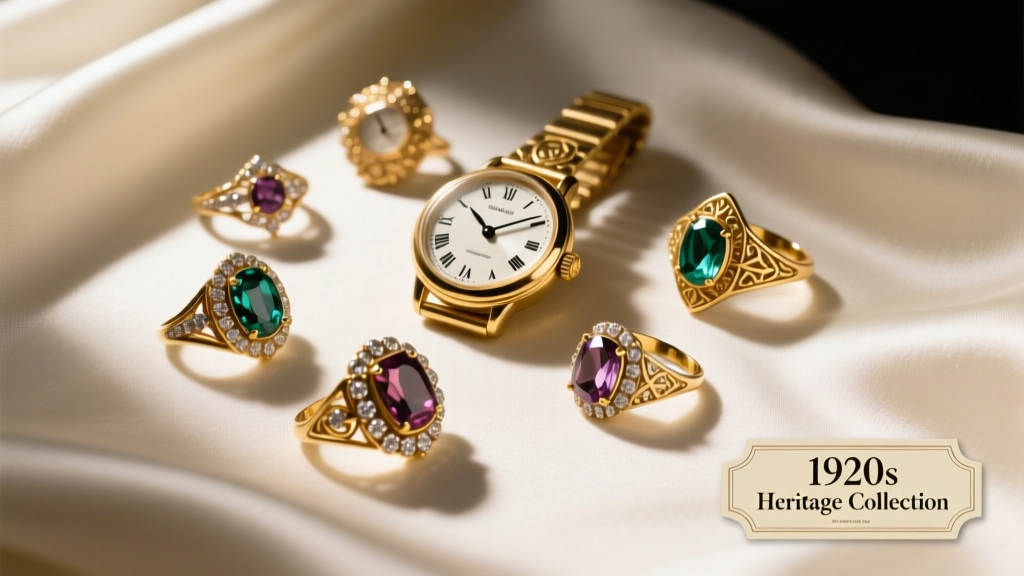
Ivory Silk 22 × 26 Inches: A Collector’s Guide to Vintage Textile Fragments in Horology and Jewelry Presentation

Paper Dolls #2: Teens by Lowe — A 1974 Uncut Vintage Sheet in Collector’s Context
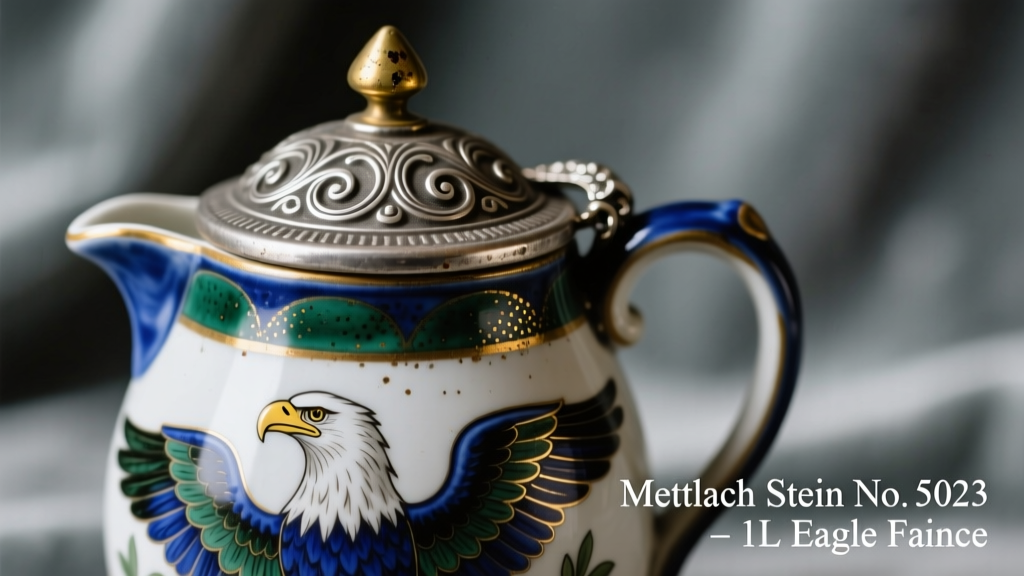
Mettlach Stein No. 5023: The 1-Liter Eagle Faience Stein with Pewter Lid — A Benchmark of German Ceramic Craftsmanship
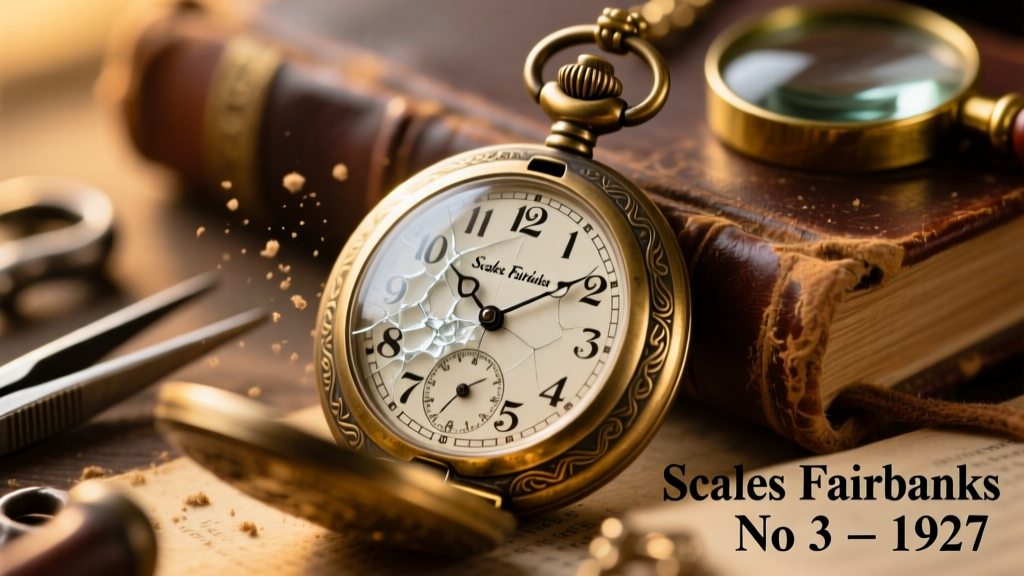
Scales Fairbanks No. 3: The Precision Mechanical Scale That Defined American Industrial Weighing
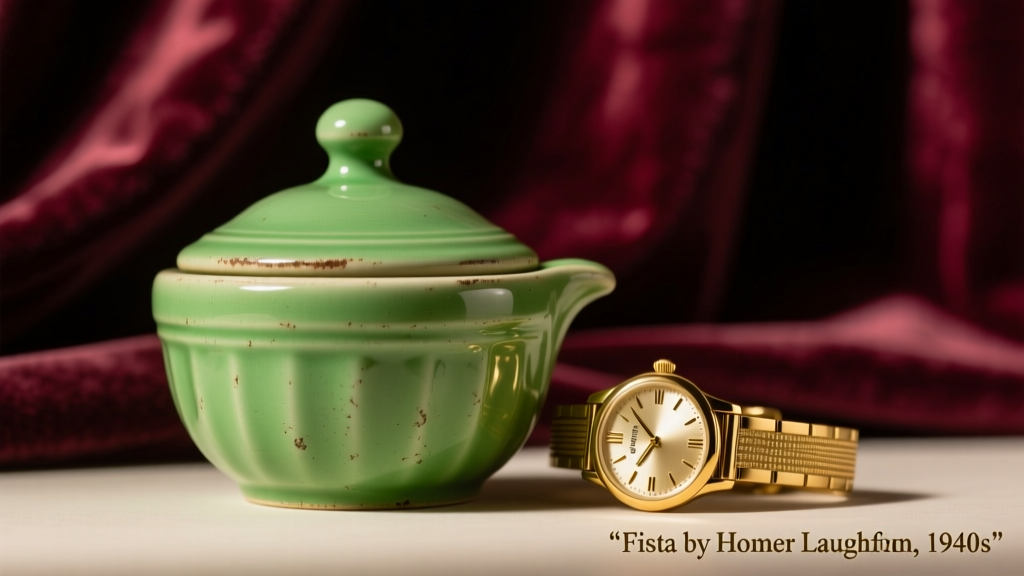
Fiesta Sugar Creamer Cover in Chartreuse: A Mid-Century American Ceramic Icon