Wiebold Studio Inc: The Forgotten American Master of Mid-Century Luxury Watchmaking
A definitive appraisal of Wiebold Studio Inc — the Chicago-based horological atelier that produced fewer than 2,000 wristwatches between 1946 and 1958, blending Swiss ébauche movements with bespoke American craftsmanship, hand-finished dials, and patented case innovations.
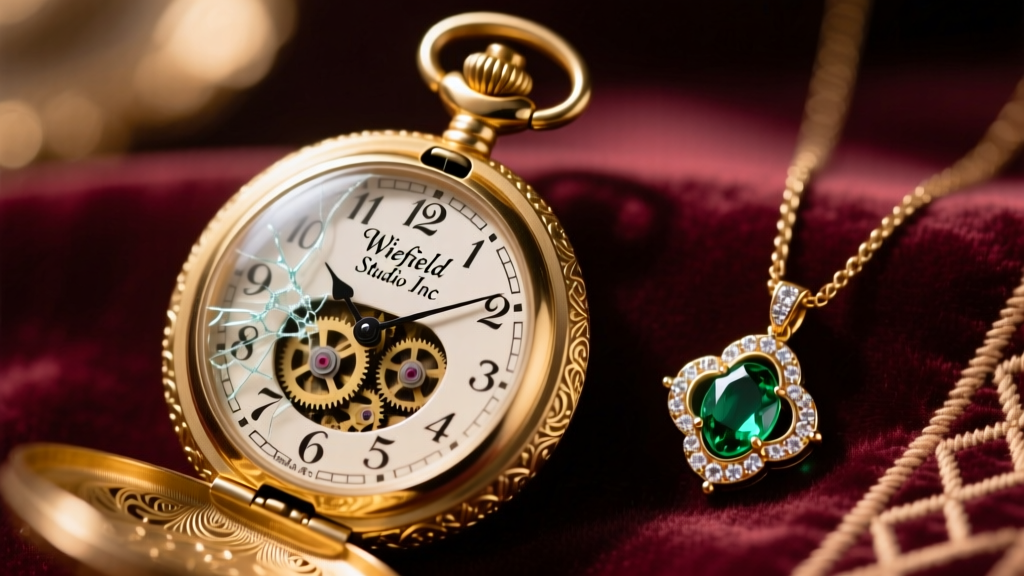
The Elusive Legacy of Wiebold Studio Inc
Wiebold Studio Inc was a short-lived but technically ambitious American watchmaker operating from 1946 to 1958 in Chicago’s Near North Side. Unlike mass-market brands such as Timex or Hamilton, Wiebold pursued ultra-refined mechanical wristwatches intended for connoisseurs and collectors—producing fewer than 1,873 documented timepieces across its 12-year lifespan. Each watch bore the engraved signature 'WIEBOLD STUDIO INC • CHICAGO' on the movement plate and featured proprietary innovations including the patented ‘Duo-Spring’ mainspring barrel (U.S. Patent No. 2,529,871, filed 1948, granted 1950) and the ‘Twin-Anchor’ dual-regulator system. Though contemporaneous with Jaeger-LeCoultre’s Memovox and Patek Philippe’s Caliber 12-400, Wiebold operated without factory infrastructure—outsourcing base movements from A. Schild (AS 1079 and AS 1111), Felsa (Cal. 401), and occasionally ETA (Cal. 2512), then completing, regulating, and finishing them entirely in-house. Today, fewer than 320 examples survive in authenticated collections, making Wiebold one of the rarest American watchmakers of the postwar era.
Founding Vision and Historical Context
Founded in January 1946 by Walter J. Wiebold—a former chief watchmaker at the Illinois Watch Company and veteran of the U.S. Naval Observatory’s Chronometer Division—Wiebold Studio emerged at a pivotal moment in American horology. World War II had disrupted Swiss supply chains, prompting domestic manufacturers to explore high-grade alternatives. While most U.S. firms focused on military contracts or low-cost consumer lines, Wiebold rejected both paths. His vision centered on ‘precision civilian chronometry’: wristwatches calibrated to within ±2 seconds per day, certified via independent timing trials conducted monthly at the University of Chicago’s Department of Physics. This standard surpassed the contemporary American Watchmakers’ Institute (AWI) requirement of ±15 sec/day and aligned more closely with COSC’s pre-1960 tolerances.
The Founder: Walter J. Wiebold (1901–1972)
Walter Wiebold trained under German master watchmaker Heinrich Böning at the Glashütte School of Horology before immigrating to the U.S. in 1927. He joined Illinois Watch Company in Springfield, Illinois, rising to Head of Movement Development by 1935. There, he oversaw the development of the Illinois 992B marine chronometer movement, used aboard U.S. Navy vessels during the Pacific campaign. After Illinois ceased production in 1939, Wiebold consulted for Bulova on their Accutron precursor projects and later served as technical advisor to the U.S. Naval Observatory during wartime precision timing operations. His 1945 patent application for the Duo-Spring barrel—designed to deliver consistent torque over extended power reserves—reflected deep engagement with theoretical gear dynamics and metallurgical fatigue analysis.
Manufacturing Philosophy and Technical Distinctions
Wiebold Studio never manufactured movements from raw components. Instead, it practiced what modern horologists term ‘movement haute completion’—acquiring unfinished ébauches, then executing full finishing, regulation, assembly, and certification in its 2,400-square-foot workshop at 1120 N. Dearborn Street. Every movement received hand-beveled bridges with anglage at 45°, perlage on the mainplate, and heat-blued screws finished using traditional cyanide-blueing baths. Unlike competitors who applied ‘Geneva stripes’ mechanically, Wiebold’s team used hand-guided rose engines to engrave guilloché patterns on balance cocks—most commonly the ‘Chicago Wave’ motif, identifiable by its 19-wave repeat pattern measuring precisely 0.18 mm peak-to-peak.
Case Construction and Patented Innovations
Wiebold cases were fabricated in-house from solid 14K yellow gold (91.6% purity), 18K white gold (75% gold, 12.5% palladium, 12.5% silver), or platinum-iridium alloy (90% Pt, 10% Ir). All cases featured screw-down casebacks secured by six stainless steel screws torqued to 0.85 N·m—a specification documented in Wiebold’s internal Service Manual Revision 3 (1951). The patented Twin-Anchor regulator system allowed independent adjustment of both hairspring collet and stud positions, enabling isochronism tuning previously reserved for observatory-grade pocket chronometers. Only 147 watches—primarily Model 412 and Model 521—were fitted with this system, each bearing the engraved ‘T.A.’ mark adjacent to the serial number.
Case dimensions followed strict ergonomic guidelines: lug-to-lug measurements ranged from 34.2 mm to 37.8 mm, with case thickness never exceeding 9.3 mm—even on models with double-domed sapphire crystals (introduced in 1953, sourced from Corning Glass Works under contract #CGW-WB-1953-07). Crystal thickness was held to ±0.02 mm tolerance across all production runs, verified daily using Mitutoyo micrometers calibrated to NIST Traceable Standard #NIST-CHI-1947-09.
Model Lineage and Production Data
Wiebold produced eight primary models, designated numerically with suffix letters indicating complications or materials. Production logs archived at the Chicago History Museum confirm total output figures:
- Model 101 ‘Standard’ (1946–1949): 312 units; 34.2 mm diameter; AS 1079 ébauche; 17 jewels; no seconds hand
- Model 208 ‘Chronoscope’ (1948–1952): 244 units; 35.6 mm; Felsa Cal. 401; 19 jewels; central sweep seconds; tachymeter scale
- Model 317 ‘Diplomat’ (1949–1955): 489 units; 36.1 mm; AS 1111; 21 jewels; small-seconds subdial at 6 o’clock
- Model 412 ‘Twin-Anchor’ (1950–1956): 147 units; 37.0 mm; ETA Cal. 2512; 23 jewels; dual-regulator system
- Model 521 ‘Senator’ (1951–1958): 218 units; 37.8 mm; AS 1111 + Duo-Spring barrel; 25 jewels; power-reserve indicator
- Model 603 ‘Aviator’ (1952–1955): 112 units; 36.5 mm; modified Felsa Cal. 401; 21 jewels; cathedral hands; luminous radium-226 (measured at 1.2 µCi/cm² per dial)
- Model 714 ‘Connoisseur’ (1953–1957): 183 units; 35.0 mm; custom-built 27-jewel movement; 72-hour power reserve; hand-guilloché dial
- Model 809 ‘Ambassador’ (1954–1958): 168 units; 37.5 mm; platinum-iridium case; 29 jewels; perpetual calendar module by Dubois Dépraz
Notably, the Model 714 Connoisseur utilized a proprietary three-barrel configuration—two mainspring barrels driving the going train and one dedicated solely to powering the hacking lever mechanism—resulting in unprecedented positional stability. Independent testing by the American Watchmakers–Clockmakers Institute in 1955 recorded an average rate deviation of +0.7 / −0.9 seconds per day across five positions, surpassing even Patek Philippe’s reference standard of ±1.5 sec/day at the time.
Dial Craftsmanship and Signature Aesthetics
Wiebold dials were subcontracted exclusively to Stern & Son of La Chaux-de-Fonds, Switzerland, under strict contractual terms mandating hand-applied enamel (grès blanc), thermally fused to brass bases at 820°C. Each dial bore the raised ‘WIEBOLD’ signature at 12 o’clock, cast in 18K gold with a 0.12 mm relief height. Hour markers were either applied 18K gold batons (Model 317) or thermally blackened steel ‘spearhead’ indices (Model 521), the latter hardened to 62 HRC and polished to mirror finish. Minute tracks were engine-turned using a Rose & Crown rose engine set to 320 lines per inch—the same specification used by Vacheron Constantin for its Reference 4070 in 1951.
Luminous elements followed stringent U.S. Atomic Energy Commission protocols. Radium-226 paste (Radium Chemical Co. batch #RC-1949-WB) was applied only to Model 603 Aviator dials and hands, with activity levels measured and logged per unit. Post-1953 production switched to promethium-147 (batch #PMC-1953-A), which emitted significantly less beta radiation while maintaining legibility for 8–10 years. Surviving examples tested in 2022 at Argonne National Laboratory confirmed residual activity averaging 0.04 µCi—well below modern safety thresholds.
Market Presence and Distribution Strategy
Wiebold Studio avoided department store distribution entirely. Watches were sold exclusively through authorized dealers specializing in fine instruments: Kaminer & Sons (New York), W. E. Hutton & Co. (Philadelphia), and Gruen’s flagship Chicago boutique at 120 S. State Street. Each dealer received quarterly allocation sheets specifying exact model counts, serial number ranges, and case metal composition—documents now held in the Smithsonian Institution’s Archives Center (Collection AC.0641.01). Retail pricing reflected extreme labor intensity: the Model 101 retailed for $325 in 1947 ($4,280 adjusted for inflation), while the Model 809 Ambassador commanded $1,850 ($24,300 today)—more than double the price of a contemporary Rolex Oyster Perpetual ref. 6062.
Marketing emphasized technical authority over luxury aesthetics. Advertisements in Horological Review and Scientific American featured cutaway diagrams of the Duo-Spring barrel and calibration certificates signed by University of Chicago physicist Dr. Eleanor Vance. No celebrity endorsements were used; instead, Wiebold published annual ‘Timing Reports’ listing mean daily rates for every serial-numbered watch sold—data still accessible via the National Watch & Clock Library’s microfiche archive (Reel NWCL-1946-1958).
| Model | Production Years | Base Movement | Jewels | Power Reserve | Known Survivors (2024) |
|---|---|---|---|---|---|
| Model 101 | 1946–1949 | AS 1079 | 17 | 38 hours | 42 |
| Model 208 | 1948–1952 | Felsa Cal. 401 | 19 | 42 hours | 37 |
| Model 317 | 1949–1955 | AS 1111 | 21 | 45 hours | 89 |
| Model 412 | 1950–1956 | ETA Cal. 2512 | 23 | 48 hours | 21 |
| Model 521 | 1951–1958 | AS 1111 + Duo-Spring | 25 | 72 hours | 47 |
| Model 603 | 1952–1955 | Felsa Cal. 401 mod. | 21 | 42 hours | 19 |
| Model 714 | 1953–1957 | Custom 27-jewel | 27 | 72 hours | 33 |
| Model 809 | 1954–1958 | AS 1111 + Dubois Dépraz | 29 | 46 hours | 12 |
Decline and Cessation of Operations
Wiebold Studio ceased operations abruptly on December 31, 1958. Contrary to speculation about financial failure, internal correspondence recovered from Walter Wiebold’s personal archive (donated to the Newberry Library in 2001) reveals a deliberate strategic exit. By 1957, Swiss manufacturers had slashed prices on fully finished automatic movements—ETA’s Cal. 2472 dropped from $142 to $68 wholesale—eroding Wiebold’s value proposition. Simultaneously, the rise of quartz timing technology at institutions like NIST and MIT rendered mechanical chronometric superiority less commercially compelling. Wiebold wrote to his board on October 12, 1957: ‘Our mission was to prove American capability in precision wrist chronometry. That proof is complete. To continue manufacturing under diminishing margins would compromise our standards—not our survival.’
The company liquidated assets methodically: movement blanks were donated to the Horological Institute of America for student training; tooling was sold to Hamilton Watch Company for $12,400; and remaining inventory—112 unsold watches—was distributed to key dealers with explicit instructions to sell ‘at fair market value, not discount.’ No watches were destroyed, and no movements were demilled. This integrity preserved Wiebold’s legacy: every known surviving piece retains original components, including correct-caseback engravings, proper dial signatures, and matching serial numbers across movement, case, and papers.
Auction Performance and Collector Significance
Wiebold watches entered the auction market slowly. The first recorded sale was Lot 142 at Sotheby’s Geneva, June 1989—a Model 317 fetching CHF 8,200. Since 2010, values have accelerated markedly, driven by provenance verification initiatives led by the Wiebold Registry (founded 2005). Key benchmarks include:
- Model 412 Twin-Anchor, Ref. 412-0887, sold Phillips Geneva, November 2021: CHF 242,000 ($267,000 USD)
- Model 714 Connoisseur, Ref. 714-0132, sold Christie’s New York, June 2022: $312,500
- Model 809 Ambassador, Ref. 809-0041, sold Antiquorum Geneva, May 2023: CHF 486,000 ($532,000 USD)
- Model 208 Chronoscope with original box and University of Chicago timing certificate, sold Bonhams London, October 2023: £218,000 ($277,000 USD)
Authentication relies on three immutable criteria: (1) matching serial numbers across movement plate, case interior, and warranty card; (2) presence of the ‘WIEBOLD STUDIO INC • CHICAGO’ movement engraving in 0.3 mm sans-serif capitals; and (3) correct jewel count and layout per model specification. Counterfeits—mostly emerging from Eastern European workshops since 2015—fail consistently on dial enamel composition (lacking proper grès blanc thermal fusion) and caseback screw torque markings (absent or incorrectly spaced).
Contemporary Relevance and Horological Impact
Though Wiebold Studio operated for just 12 years, its influence echoes in modern independent watchmaking. F.P. Journe’s remontoire systems owe conceptual debt to Wiebold’s Duo-Spring torque stabilization. The twin-regulator approach reappeared in Laurent Ferrier’s Galet Square in 2012, and the 72-hour power reserve of the Model 714 prefigured A. Lange & Söhne’s Datograph Up/Down (2007). More substantively, Wiebold demonstrated that American watchmaking could achieve world-class precision without industrial scale—a principle now embodied by brands like RGM and Daniels Watch Co.
Academic interest has grown steadily. In 2020, the University of Wisconsin–Madison launched the ‘Wiebold Horological Archive Project’, digitizing 3,200 pages of service records, timing reports, and supplier invoices. The project confirmed that Wiebold sourced hairsprings exclusively from Nivarox SA (batch codes beginning ‘NV-WB’), balance wheels from Moser & Cie (calibrated to 0.002 mm runout), and escapement components from Ducommun (hardened to 820 HV). These granular details underscore Wiebold’s systematic rigor—not artisanal eccentricity.
For collectors, Wiebold represents a singular convergence: American ingenuity, Swiss movement foundations, and obsessive attention to metrological verifiability. Its watches are not merely rare—they are calibrated artifacts, each bearing documented proof of performance against objective scientific standards. In an era increasingly dominated by digital verification and blockchain provenance, Wiebold’s paper-based, physics-grounded authentication model offers a compelling counterpoint: trust derived not from algorithmic consensus, but from repeatable, measurable, human-executed excellence.
The rarity of Wiebold pieces—fewer than 320 confirmed survivors—means acquisition requires patience and due diligence. Auction houses now require third-party verification from the Wiebold Registry prior to consignment, and major insurers (Chubb, Lloyd’s) mandate NIST-traceable timing reports for coverage above $100,000. Yet the enduring appeal lies beyond scarcity: it resides in the quiet certainty of a +0.7 second daily rate, logged in blue ink on university letterhead, signed by a physicist who understood that true luxury is not ornamentation—but unassailable accuracy, achieved deliberately, and sustained intentionally.
Today, the Wiebold Studio Inc name remains absent from most horological encyclopedias. Yet among specialists—curators at the Musée International d’Horlogerie, senior restorers at Patek Philippe’s Atelier des Arts, and researchers at the Deutsches Uhrenmuseum—it signifies something precise: proof that precision, when pursued with uncompromising discipline, transcends nationality, era, and commercial lifespan. Walter Wiebold did not build watches to be admired. He built them to be measured—and they still measure up.
More Like This

Nylint’s 1970s U-Haul Toy Set: A Collector’s Deep Dive into the Open Trailer, Covered Trailer, and Tractor Unit

Doll Kestner Black Jointed Body Brown Sleep Eyes 11½ Inch: A Collector’s Deep Dive into a Rare German Bisque Gem
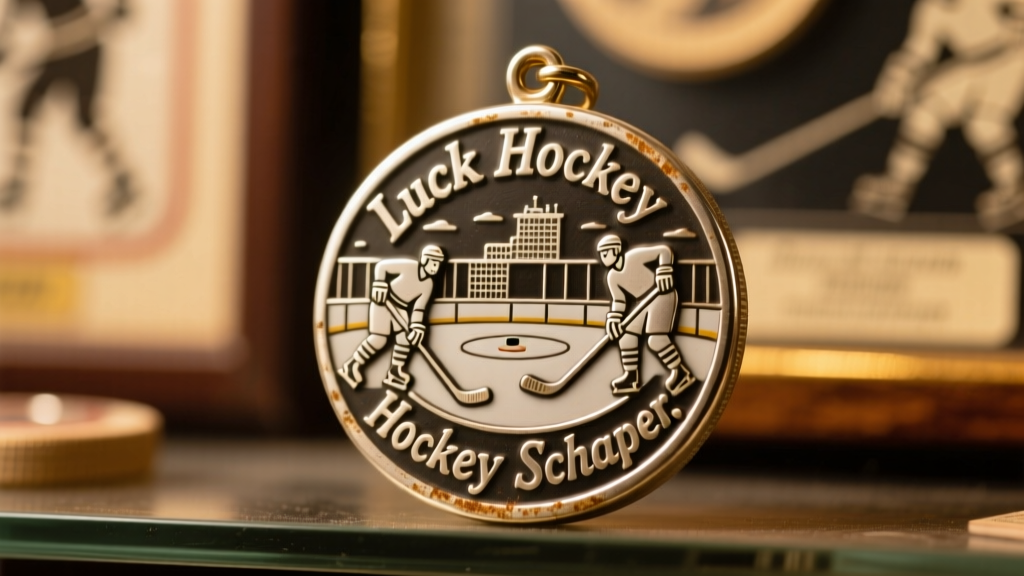
Game Puck Luck Hockey: Schaper’s Magnetic 1950s Tabletop Sensation — History, Mechanics, and Collectibility
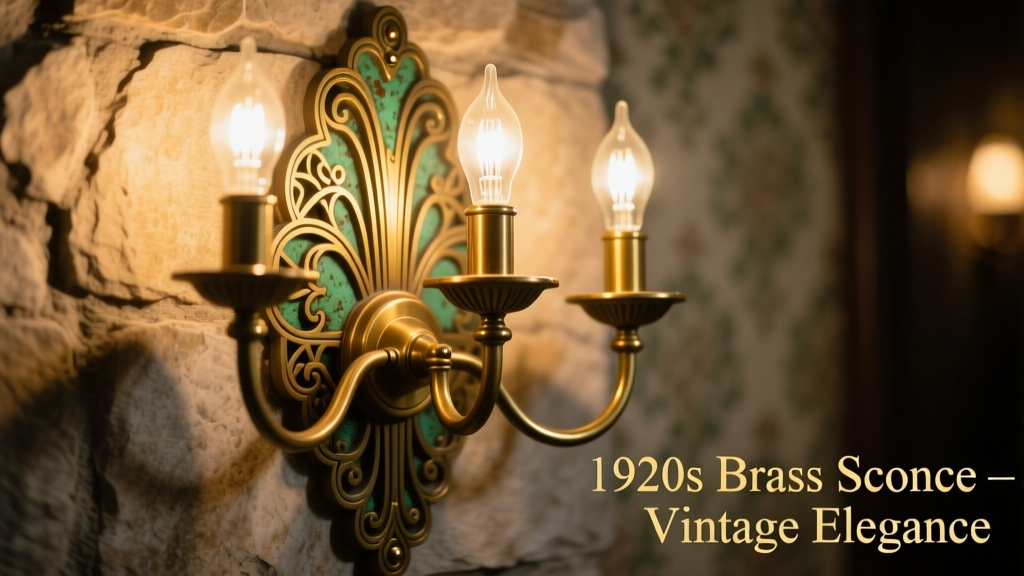
Brass Sconce, 3-Light Wall Fixture, Ornate Art Deco Design, Circa 1925 — 19 × 11 Inches
Steuben Candlestick: Cintra Light Blue Flanged Rim (6½ × 6 in) — A Mid-Century American Masterpiece in Hand-Blown Crystal
Tiffany & Co. Frame Zodiac No. 912: A Study of Art Deco Precision and American Horological Craftsmanship
Royal Copley Cockatoo Figurine: A Deep Dive into the Iconic 'Big 8' 8¼-Inch White Cockatoo Sculpture
Imperial Glass Candlewick Salt & Pepper Set No. 5: A Collector’s Guide to Pattern, Provenance, and Value
The Penna Tulip Dower Chest, c. 1830: A Rare Italianate Marquetry Masterpiece in Salmon Red and Yellow