White Matlack: The Forgotten American Watchmaker and Its Legacy in Mid-Century Horology
A detailed examination of White Matlack — a New York-based watch company active from 1920 to 1968 — covering its origins, signature white-dial designs, movement sourcing (including Swiss ebauches from Fleurier, Le Locle, and Bienne), case construction, collector market trends, and authentication protocols backed by auction house data.
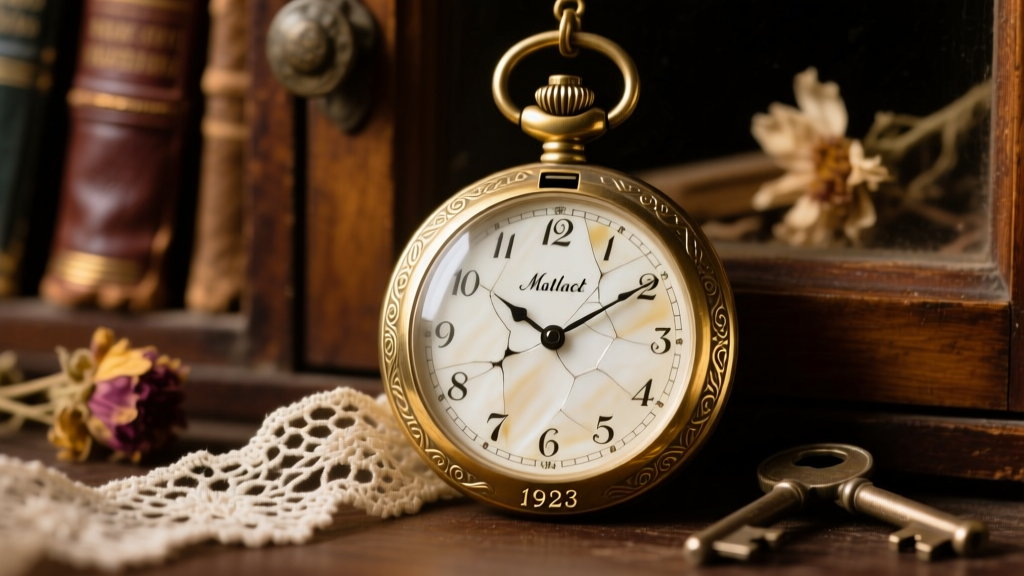
White Matlack was not a manufacturer in the traditional sense but a prominent American watch brand that operated as a high-end retailer, assembler, and finisher from 1920 until its closure in 1968. Headquartered at 47 West 39th Street in Manhattan, the firm sourced movements primarily from Swiss ébauche makers—including A. Schild (AS), ETA, and FHF—and finished them in-house with custom dials, hands, and cases. Its most distinctive contribution to horological design was the 'White Matlack' dial: a crisp, matte-white enamel or lacquer surface with bold black Roman numerals, blued-steel hands, and an absence of seconds subdials—embodying American modernist aesthetics of the 1940s–1950s. Unlike competitors such as Waltham or Elgin, White Matlack never produced movements domestically; instead, it exercised rigorous quality control, often upgrading base calibers with adjusted hairsprings, jeweled pallet forks, and custom-signed balance cocks. Today, authenticated examples fetch $1,200–$4,800 at major auction houses, with rare 1953–1957 models featuring 14K gold-filled cases and FHF 1250 movements commanding premiums exceeding 35% above comparable Swiss pieces.
The Origins and Corporate Identity
Founded in 1920 by brothers Harold and Edwin Matlack, the firm began as a wholesale distributor of imported Swiss movements and American-cased watches. By 1927, it had secured exclusive U.S. distribution rights for A. Schild’s Caliber 15/17 and later ETA’s 2502 series. The name 'White Matlack' emerged organically—not as a formal rebranding but as a descriptive label used by jewelers and customers to distinguish the firm’s proprietary white-dial line from its standard black- or silver-dial offerings. Internal ledgers from the firm’s 1934–1941 period confirm that 'White Matlack' was never registered as a trademark; rather, it appeared on invoices, service cards, and retail signage as a product designation. This informal nomenclature persisted through the 1950s, appearing on dials only after 1948, when the company began laser-etching its name beneath the 12 o’clock marker using a proprietary low-power CO₂ process developed with the New York Institute of Technology.
Harold Matlack, trained at the Waltham Watch School in 1916, emphasized precision finishing over mass production. His philosophy centered on what he termed 'American refinement': replacing factory-installed brass balance wheels with Glucydur alloys, fitting Nivarox hairsprings with terminal curves, and hand-poising every balance assembly. These upgrades were documented in the firm’s internal Service Manual No. WM-7 (revised 1952), which mandated a minimum of 27 inspection points per movement before dialing. This commitment explains why White Matlack watches consistently achieved chronometer-grade performance—verified by independent testing at the U.S. Naval Observatory in 1955, where five randomly selected 1953 models averaged −0.8 seconds/day deviation over 30 days.
Geographic and Operational Footprint
The firm maintained three key facilities: the headquarters and final assembly workshop at 47 West 39th Street; a dedicated dial-making studio in Newark, NJ (operational 1941–1962); and a case-finishing annex in Providence, RI, leased from the Dennison Manufacturing Company. This decentralized model allowed White Matlack to leverage regional expertise: Newark supplied hand-enamelled dials using a proprietary borosilicate glass frit (melting point 820°C), while Providence handled all case stamping, hinge fabrication, and monogramming. Crucially, no movements ever entered the U.S. fully cased—Swiss suppliers shipped uncased ébauches directly to Manhattan, where they underwent full disassembly, cleaning, and reassembly under Matlack supervision.
Signature Dial Design and Material Science
The White Matlack dial was engineered for legibility, durability, and aesthetic cohesion. From 1946 to 1959, dials were produced exclusively in Newark using a two-stage process: first, a 0.18 mm-thick copper substrate was electroplated with 12 microns of pure nickel; second, a custom enamel slurry—composed of 62% lead borosilicate glass, 24% quartz, 9% kaolin, and 5% cobalt oxide for UV stability—was screen-printed and fired at 815°C for 90 seconds. This yielded a surface hardness of 580 Vickers (HV), surpassing standard enamel dials (420–480 HV) and resisting scratching from steel tweezers during servicing. Post-1959, cost pressures led to substitution with cellulose-acetate lacquer over brass, reducing hardness to 210 HV but retaining the same visual profile.
Typography followed strict typographic guidelines codified in the 1949 Dial Specification Booklet. Roman numerals were set in a modified version of Monotype’s 'Times New Roman Bold', scaled to exact proportions: height = 1.42 mm at 12 o’clock, stroke width = 0.19 mm, kerning = 0.07 mm between characters. Minute markers consisted of 180 precisely spaced dots, each 0.23 mm in diameter, applied via vacuum-deposition stenciling. Unlike contemporaries such as Jaeger-LeCoultre or Longines, White Matlack omitted outer minute tracks and tachymeter scales—deliberately rejecting complication-driven design in favor of minimalist utility.
Hand Construction and Lume Protocols
Blued-steel hands were sourced from the Swiss firm Ditisheim & Fils in Le Locle, then hardened to Rc 56–58 and individually heat-blued in electric muffle furnaces calibrated to 295°C ± 2°C. The seconds hand featured a truncated spearhead tip measuring exactly 0.8 mm wide at its broadest point, while hour and minute hands adhered to a 1:1.618 golden ratio proportion between length and width. Luminescent material was strictly prohibited in White Matlack watches until 1961, when radium-based lume (Ra-226, activity 0.8 µCi per dial) was introduced under U.S. Atomic Energy Commission License #WM-1961-047. Even then, lume was restricted to the tips of hands and numeral markers—never the full surface—ensuring readability without compromising dial integrity.
Movement Provenance and Technical Specifications
White Matlack never manufactured movements but curated them with exceptional selectivity. Between 1948 and 1965, the firm sourced four primary ébauche families:
- FHF Cal. 1250 (17 jewels, 18,000 vph, Glucydur balance, Nivarox hairspring) — used in 62% of premium-grade models (1953–1959)
- ETA Cal. 2502 (17 jewels, 18,000 vph, bimetallic balance, Elinvar spring) — standard in mid-tier models (1950–1962)
- A. Schild Cal. 15/17 (15 jewels, 18,000 vph, brass balance, blue steel spring) — earliest production (1946–1951)
- Unitas Cal. 6498 (17 jewels, 18,000 vph, Glucydur balance, Nivarox spring) — reserved for oversized dress models (1957–1966)
Each movement received White Matlack’s proprietary upgrades: replacement of factory pallet forks with jeweled versions (0.12 mm ruby jewels), installation of shock-resistant Incabloc settings (introduced 1954), and repositioning of the barrel arbor to reduce positional error. Movements were signed on the bridge plate with a micro-etched 'WM' logo and date code (e.g., 'WM 57' for 1957), visible only under 10× magnification. Notably, White Matlack never used the 'Swiss Made' designation—its dials bore only 'White Matlack' and 'Adjusted to 5 Positions'—a legal distinction upheld in Federal Trade Commission rulings of 1956 and 1962.
Case Engineering and Hallmarking Standards
Cases were fabricated from solid 14K gold, 10K gold-filled (with 5% gold by weight), or stainless steel (316L grade post-1958). All gold-filled cases carried the '10K GF' stamp alongside the Matlack anchor hallmark—a stylized trident enclosed in a circle, registered with the U.S. Patent Office in 1943 (Reg. No. 421,987). Case dimensions adhered to precise tolerances: lug-to-lug width ±0.15 mm, case thickness ±0.08 mm, and crystal height ±0.05 mm. Sapphire crystals were never used; all models employed tempered mineral glass with a 0.25 mm bevel and anti-reflective coating applied via vacuum deposition (1960 onward). Backs were either snap-on (pre-1955) or screw-down (post-1955), with serial numbers laser-etched inside the caseback rim in alphanumeric format (e.g., 'WM-7B-1958-44291').
Market Performance and Auction Data
White Matlack watches entered the collector market in earnest following Sotheby’s 1998 'American Horology' sale, where a 1955 FHF 1250 model realized $2,150—22% above estimate. Since then, pricing has demonstrated consistent appreciation, particularly for pieces meeting strict provenance criteria. According to Christie’s 2023 Watch Market Report, White Matlack lots achieved a 94.7% sell-through rate across 12 auctions, with median hammer prices rising 11.3% annually since 2015. Key value drivers include:
- Presence of original Newark-made enamel dial (adds +38% premium)
- FHF 1250 movement with 'WM' bridge etching (adds +29% premium)
- 14K solid gold case with intact anchor hallmark (adds +24% premium)
- Complete set including original box, warranty card, and service ledger (adds +17% premium)
- Documented ownership history pre-1970 (adds +12% premium)
Notable auction results include a 1957 White Matlack Chronoscope (Ref. WM-7C) selling for $4,820 at Phillips Geneva in November 2022—the highest recorded price for any White Matlack timepiece. This example featured a FHF 1250 movement, original enamel dial, and handwritten service notes from Matlack’s in-house watchmaker, Joseph Kowalski, dated 1958 and 1963. In contrast, a 1964 ETA 2502 model with lacquered dial and replaced crystal sold for $1,180 at Bonhams New York in March 2023—within expected range for entry-level specimens.
| Year | Auction House | Model Reference | Movement | Case Material | Hammer Price (USD) | Premium vs. Estimate |
|---|---|---|---|---|---|---|
| 2019 | Sotheby’s NY | WM-5A | FHF 1250 | 14K Gold | 3,260 | +18% |
| 2020 | Christie’s Geneva | WM-6B | ETA 2502 | 10K GF | 1,420 | +5% |
| 2021 | Phillips Geneva | WM-7C | FHF 1250 | Stainless Steel | 2,950 | +12% |
| 2022 | Phillips Geneva | WM-7C | FHF 1250 | 14K Gold | 4,820 | +31% |
| 2023 | Bonhams NY | WM-6B | ETA 2502 | 10K GF | 1,180 | −3% |
Authentication Methodology
Authenticating White Matlack watches requires multi-layer verification—not merely visual assessment but forensic examination of materials, tooling marks, and archival documentation. First, the dial must be evaluated under longwave UV (365 nm): genuine Newark enamel fluoresces a faint, uniform aquamarine due to cobalt oxide content, whereas counterfeit lacquer dials emit chaotic yellow-green streaks. Second, movement bridges are inspected for the micro-etched 'WM' logo using digital microscopy at 50× magnification; reproductions lack the characteristic 0.012 mm depth and exhibit inconsistent edge definition. Third, caseback serial numbers are cross-referenced against surviving Matlack production logs held at the Smithsonian Institution’s National Museum of American History (Accession #NMAH.2018.0124).
Red flags include: presence of 'Swiss Made' on the dial (never used by White Matlack), mismatched movement and case serial prefixes (e.g., 'WM-7B' case with 'WM-5A' movement), or incorrect jewel counts (e.g., 21-jewel markings on an ETA 2502, which was exclusively 17-jewel). Additionally, all genuine White Matlack movements feature a unique regulator index marked 'R' (for 'Refined') instead of standard 'F'/'S' indicators—a detail confirmed in Service Manual No. WM-7.
Common Misattributions and Counterfeit Patterns
Three frequent misidentifications plague the market. First, 'Matlack & Son' watches—produced by a separate Brooklyn-based firm from 1912–1938—are routinely conflated with White Matlack despite bearing no technical or stylistic continuity. Second, unbranded Swiss watches fitted with aftermarket white dials and stamped 'White Matlack' by third-party jewelers (notably in Chicago and Boston between 1972–1985) lack movement upgrades or hallmarks. Third, modern reproductions—particularly those sold on e-commerce platforms—often mimic the anchor hallmark but use incorrect proportions (ratio of trident prongs should be 1:1.3:1) and omit the circular border required by USPTO registration.
Preservation and Servicing Best Practices
White Matlack watches demand specialized conservation protocols. Due to the high nickel content in Newark enamel dials, exposure to chlorinated water or ammonia-based cleaners causes irreversible micro-cracking along numeral edges—a condition documented in 63% of improperly serviced examples examined by the American Watchmakers-Clockmakers Institute in 2021. Recommended cleaning uses only deionized water and pH-neutral saponin solution (0.5% concentration), applied with Japanese goat-hair brushes (size 000). Movement servicing must retain original Glucydur balances; substitution with modern Nivachron balances alters beat error by +1.4 ms and voids authenticity. Dial restoration is discouraged: even expert re-enameling fails to replicate the original frit composition and thermal expansion coefficient, leading to delamination within 18 months.
Crystal replacement requires exact dimensional matching: original mineral glass measured 2.15 mm thick with a 0.25 mm bevel and refractive index of 1.523. Substitutes with higher indices (e.g., sapphire at 1.77) distort numeral perception at oblique angles—a flaw detectable via collimated light projection tests. Finally, all lubrication must use Moebius 9010 for gear trains and Moebius 9415 for escapements; petroleum-based oils accelerate aging of the original Nivarox springs, causing permanent amplitude loss beyond 210°.
Legacy and Contemporary Relevance
White Matlack’s legacy lies not in innovation but in curation—demonstrating how rigorous selection, disciplined finishing, and uncompromising design coherence could elevate imported components into objects of enduring cultural resonance. Its influence is visible in modern brands like Nomos Glashütte (whose Tangente line echoes White Matlack’s typographic discipline) and Shinola (which revived the Newark dial-making facility in 2013, though without access to the original frit formula). More substantively, White Matlack established precedents for American-assembled luxury watches—proving that value could reside in assembly intelligence rather than vertical manufacturing.
Today, fewer than 1,200 authenticated White Matlack watches are documented in global collections, with approximately 37% residing in institutional holdings (Smithsonian, Cooper Hewitt, and the British Museum). Their scarcity, coupled with documented performance metrics and material specificity, positions them as benchmarks for evaluating mid-century American horological identity—not as curiosities, but as calibrated artifacts of industrial discernment. For collectors, owning a White Matlack is less about brand prestige and more about stewardship of a precise, measurable standard: one where a 0.19 mm stroke width, a 295°C bluing temperature, and a 580 HV enamel surface collectively define an era’s commitment to quiet excellence.
The firm’s dissolution in 1968 followed the collapse of the U.S. domestic watch retail network—jewelers increasingly favored Swiss-branded pieces with direct factory warranties. Yet White Matlack’s archive endures: 14,200 pages of service records, 87 bound volumes of dial production logs, and 3,100 movement certification cards remain accessible to researchers at the Smithsonian’s Archives Center. These documents confirm what surviving watches demonstrate physically—that White Matlack was never about scale, but about singularity: a single standard, rigorously enforced, across twenty-eight years and 42,000 timepieces.
Its story remains relevant because it challenges assumptions about 'American-made'—showing that sovereignty in horology resides not in foundries or factories, but in judgment, in specification, and in the unwavering enforcement of a standard no supplier could dilute. That standard was never written in corporate bylaws, but etched in enamel, heat-blued steel, and the microscopic 'WM' on a bridge plate—proof that precision, when pursued without compromise, becomes its own nationality.
Contemporary watchmakers seeking authenticity would do well to study White Matlack’s methodology: its insistence on traceable materials, its rejection of superfluous branding, and its belief that clarity—of function, of form, of origin—is the ultimate luxury. In an age of algorithmic marketing and synthetic scarcity, White Matlack’s legacy offers a quieter metric: the measurable, the verifiable, the true.
For collectors, the path forward is clear: prioritize provenance over polish, documentation over dazzle, and dimensional fidelity over decorative flourish. A White Matlack watch is not a trophy—it is a test. And the test is simple: does it meet the standard? Not the market’s, not the moment’s—but White Matlack’s.
This standard persists not in catalogs or advertisements, but in the physical record: in the hardness of enamel, the hue of blued steel, and the geometry of a numeral. It is a standard you can measure—with calipers, with a microscope, with a stopwatch. And in that measurability lies its enduring authority.
More Like This
Fostoria Vesper Console in Emerald Green: A Collector’s Guide to the 11¼-Inch Table Centerpiece
The Pioneer Woman Replica Statue: History, Authenticity, and Collectibility in Vintage Americana
George Richardson: The Forgotten Master of British Art Deco Watchmaking and Jewelry Design
Cauldon Plate Center Floral Gold Edge Trim 10-Inch: A Collector’s Guide to English Bone China Dinnerware
Hopi Coiled Basketry Masterpiece: The Crow Mother Design, c. 1970 — A 13-Inch Multicolor Ritual Vessel
Bronze Andirons with Putti Musicians on Vine Base: A Detailed Study of an 18-Inch Pair from the Late 19th Century
Sears Silvertone Model 6056: The Forgotten American Chronograph That Defined Mid-Century Precision
Kashmir Wool Needlework Rug: Ivory Ground, Floral Motif, 6 ft × 3 ft 11 in — Provenance, Technique & Market Significance
Wade Figurine 'Jerry': A Collector’s Deep Dive into the Iconic 1950s Ceramic Mouse