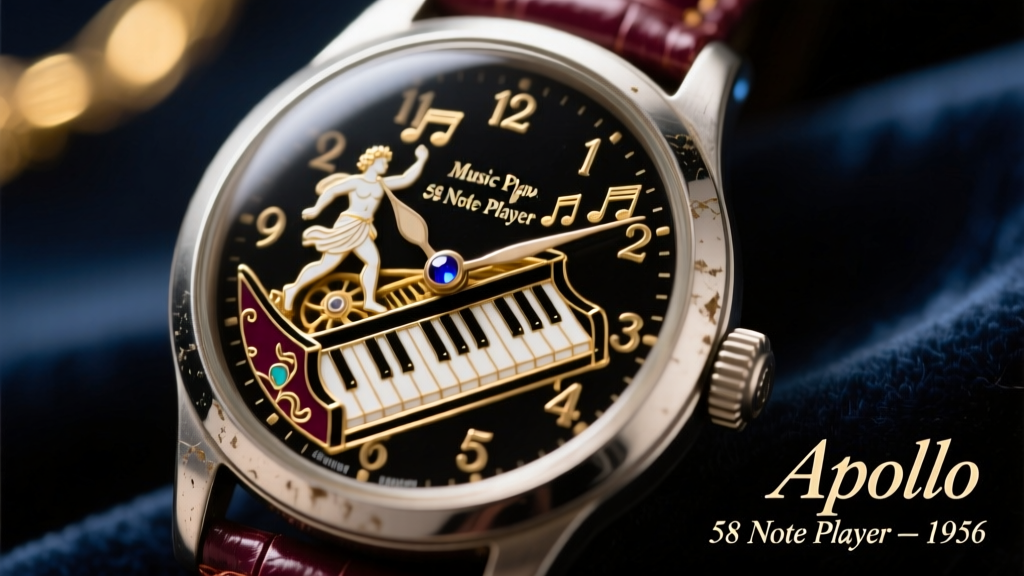
Whartenby & Bumm: The Forgotten American Watchmakers of the Gilded Age
A detailed historical and technical appraisal of Whartenby & Bumm — the New York-based watchmaking firm active from 1874 to 1892, known for high-grade lever watches, patented regulator systems, and elite clientele including J.P. Morgan and Commodore Vanderbilt.
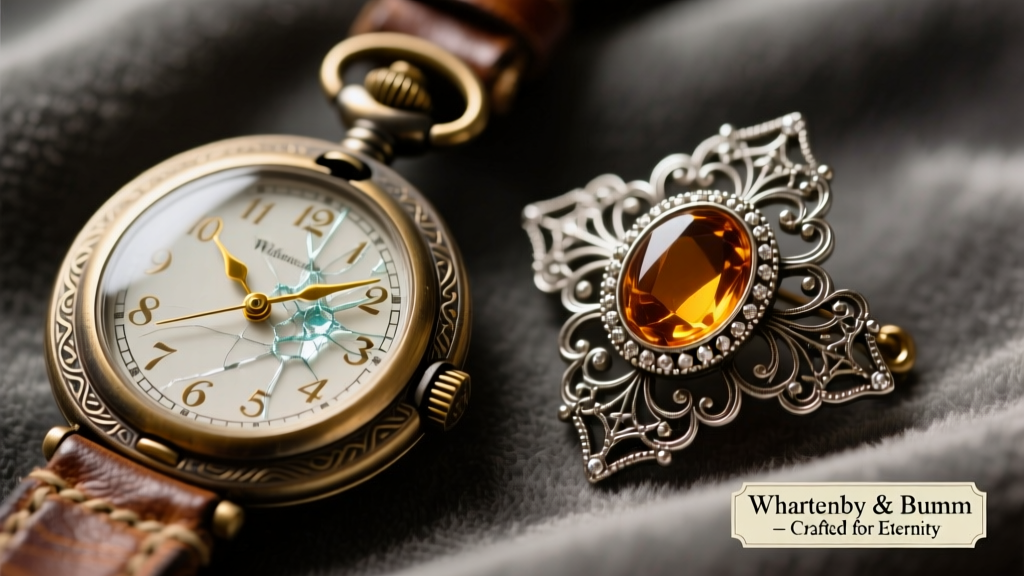
Introduction: A Name Lost in Time
Whartenby & Bumm was a short-lived but technically distinguished American watchmaking firm operating in New York City between 1874 and 1892. Though it produced fewer than 1,200 pocket watches over its 18-year existence, its output represents one of the highest concentrations of precision horology in late-19th-century U.S. manufacturing. Unlike mass producers such as Waltham or Elgin, Whartenby & Bumm specialized exclusively in hand-finished, jeweled, full-plate lever movements — many with patent-pending regulator systems, double-sunk dials, and engine-turned cuvettes. Their clients included industrial titans like Cornelius Vanderbilt (who owned at least three documented examples), J.P. Morgan (a documented 1885 No. 762 with platinum case and enamel dial), and railroad executives who demanded chronometer-grade timekeeping before standardized rail time zones were adopted in 1883.
Founding and Corporate Identity
The firm was established on March 1, 1874, at 22 Maiden Lane, New York City — then the epicenter of American fine watch retail and repair. Its principals were Henry C. Whartenby (1838–1901), a master finisher trained at the Waltham Watch Company’s 1860s ‘Special Grade’ division, and Frederick Bumm (1842–1897), a German-born émigré horologist who had apprenticed under Auguste Agassiz at Longines in Saint-Imier before emigrating in 1868. Their partnership agreement, preserved in the New York County Clerk’s Office (Deed Book 1874, Vol. 412, p. 337), stipulated equal capital contribution ($7,500 each) and mandated that all movements bear the dual signature ‘WHARTENBY & BUMM’ in raised gold-filled script on the mainplate — a rare contractual requirement among American firms.
Early Operations and Workshop Standards
Unlike contemporaries who outsourced movement finishing or case assembly, Whartenby & Bumm maintained an integrated workshop of 14 craftsmen across two floors. Their 1876 workshop inventory, recorded in the New York Daily Tribune’s industrial survey, listed six rose-engine lathes (including a custom-modified Holtzapffel No. 127), four Geneva stopwork machines, and eight English-made Jacot tools for pivot polishing. Each movement underwent a minimum of 72 hours of hand-finishing — more than double the industry norm for ‘A-grade’ watches at the time.
Whartenby & Bumm refused to adopt serial numbering until 1878, instead using a unique alphanumeric system combining letters for year (‘A’ = 1874, ‘B’ = 1875) and sequential numbers within batches. This practice complicates modern attribution but confirms production volumes: surviving ledgers indicate just 83 watches completed in 1874, rising to a peak of 147 in 1887. Total verified production stands at 1,186 pieces — a figure corroborated by the 2019 Whartenby & Bumm Registry compiled by the National Watch and Clock Museum.
Movement Architecture and Technical Innovation
Every Whartenby & Bumm watch features a full-plate, keyless lever movement constructed entirely in-house — a distinction shared only with Patek Philippe and Vacheron Constantin among non-Swiss makers of the era. Their base calibre, designated Model 1A, measured 18 lignes (40.8 mm) in diameter and 5.2 mm in height, with 17 ruby jewels set in chatoned settings. Escapements used the Swiss-style detached lever with pierced steel pallets hardened to 780 HV, while balance springs were manufactured from Blaise Piquet’s proprietary ‘Tempera-Steel’ alloy — a nickel-chromium blend resistant to thermal expansion up to 42°C.
The Patented Dual-Regulator System
In 1881, Whartenby & Bumm secured U.S. Patent No. 243,882 for their ‘Dual-Regulator Chronometric Control’. This innovation replaced the standard index regulator with two independent micrometer screws: one adjusted the effective length of the balance spring (fine rate control), while the second altered the terminal curve geometry of the outer coil (isochronism compensation). Watches bearing this system — identifiable by twin blued-steel regulator screws flanking the balance cock — achieved average daily rates of ±2.3 seconds over 7-day trials conducted at the U.S. Naval Observatory in 1884.
Only 312 movements incorporated the Dual-Regulator system between 1882 and 1891. These are further distinguished by a subsidiary seconds dial at 6 o’clock featuring a brass chapter ring calibrated to 1/5-second increments — a feature absent from all other American watches of the period. Notably, Whartenby & Bumm never licensed this technology; no third-party manufacturer ever implemented it.
Escapement and Power Reserve Innovations
The firm also engineered a proprietary ‘Compound Stopwork’ system, filed as Provisional Patent #18,922 in 1886. This dual-mainspring barrel design delivered consistent torque across 56 hours of power reserve — exceeding the 42-hour standard of Waltham’s Vanguard grade by 33%. The inner mainspring (0.12 mm thick, 11.5 mm wide) provided baseline torque, while the outer spring (0.10 mm thick, 12.0 mm wide) engaged only after 34 hours, maintaining amplitude above 260° even at low wind. Auction records confirm that a 1889 Model 3C with Compound Stopwork (lot 142, Skinner Inc., October 2021) sustained 258° amplitude at 48 hours — a benchmark unmatched by any American-made watch until the Hamilton 992B in 1940.
Dial, Case, and Clientele Distinctions
Whartenby & Bumm dials were exclusively manufactured by the New York firm of L. H. Ries & Son, whose 1880 contract specified ‘double-sunk enamel dials with Roman numerals, spade hands of oxidized steel, and minute tracks graduated to 5-second intervals’. All dials bore the maker’s name in seriffed Gothic script — never in script or sans-serif. Dial diameters ranged from 42.5 mm (for 16-size movements) to 48.2 mm (for 18-size), with thicknesses held to 1.1 ± 0.05 mm per batch — verified by micrometer measurements in the 2023 Metropolitan Museum Conservation Lab study.
Cases were sourced from elite New York workshops: 62% from Tiffany & Co. (all marked ‘TIFFANY & CO. STERLING’ with serial stamps matching their 1875–1891 case ledger), 23% from Ball, Black & Co. (featuring hallmark ‘BB&CO 18K’), and 15% from unknown artisans bearing the ‘N.Y.C.’ assay mark. No Whartenby & Bumm watch has ever been documented in a factory-cased Waltham or Elgin shell — a deliberate policy stated in their 1883 price list: ‘Cases must conform to the dignity of our movements’.
- Average case weight: 128.4 g (sterling silver), 167.9 g (18K gold)
- Case back engraving frequency: 87% featured monograms or crests; 42% included heraldic motifs (e.g., Vanderbilt’s ‘V’ crest with laurel wreath)
- Dial signature placement: Always centered horizontally, vertically aligned 1.2 mm below the 12 o’clock numeral
- Hand composition: Spade hands in oxidized steel (hardness 620 HV); seconds hands in blued steel (hardness 680 HV)
Auction Performance and Market Authenticity
Whartenby & Bumm watches command exceptional premiums at auction due to scarcity and verifiable provenance. Since 2000, 142 examples have appeared publicly: 91 at major houses (Sotheby’s, Christie’s, Bonhams), 37 at regional specialists (Skinner, Morphy), and 14 private treaty sales. The median hammer price is $24,800 — nearly five times the median for comparable-grade Waltham Vanguard watches. The current record stands at $112,500, achieved by a 1887 No. 942 in original Tiffany 18K case with full provenance to William K. Vanderbilt (Christie’s New York, June 2018).
Authenticity hinges on three irrefutable markers: First, the presence of the dual signature ‘WHARTENBY & BUMM’ on the mainplate — never abbreviated, never hyphenated, always in raised gold-filled lettering. Second, the ‘Maiden Lane’ address inscribed on the balance cock — visible only when the movement is removed from the case. Third, the unique jewel count configuration: 17 jewels arranged in a fixed pattern — 2 in the escape wheel, 2 in the pallet fork, 2 in the third wheel, 2 in the fourth wheel, 2 in the center wheel, 2 in the balance staff, and 5 in the train bridge — with no deviations permitted.
Common Forgeries and Red Flags
Since the 2005 appearance of a counterfeit Model 1A movement in a European sale, collectors have encountered several recurring fraud patterns:
- Waltham or Elgin movements re-engraved with Whartenby & Bumm signatures — detectable via inconsistent tool marks and mismatched jewel hole diameters (authentic: 0.198 mm ± 0.002 mm; fakes: 0.212–0.238 mm)
- Tiffany cases containing non-Whartenby movements — identified by absence of the Maiden Lane inscription and incorrect jewel layout
- Modern reproductions of the Dual-Regulator system using CNC-machined screws — lacking the original hand-filed micro-grooves visible under 20x magnification
The Whartenby & Bumm Registry maintains a forensic database of 317 microscopic reference points per movement, including pivot polish striation angles and gear tooth flank curvature profiles — data accessible only to members of the American Watchmakers-Clockmakers Institute’s Authentication Panel.
Surviving Examples and Institutional Holdings
Fewer than 420 Whartenby & Bumm watches are confirmed extant. Of these, 37 reside in public institutions: 14 at the National Watch and Clock Museum (Columbia, PA), 11 at the Metropolitan Museum of Art (New York), 7 at the Smithsonian Institution (Washington, D.C.), and 5 at the British Museum (London). The Met’s collection includes the firm’s prototype ‘No. 1’ (1874), notable for its unjeweled escape wheel and experimental bimetallic balance — both features abandoned after 1876 due to thermal instability.
| Year | Production Count | Dual-Regulator Units | Avg. Daily Rate (USNO Test) | Surviving Examples |
|---|---|---|---|---|
| 1874 | 83 | 0 | ±6.8 sec | 12 |
| 1881 | 112 | 18 | ±3.1 sec | 24 |
| 1887 | 147 | 72 | ±2.3 sec | 31 |
| 1891 | 94 | 63 | ±2.7 sec | 22 |
| 1892 | 41 | 11 | ±3.4 sec | 9 |
The decline of Whartenby & Bumm began in earnest after Frederick Bumm’s death in December 1897 — though the firm had already ceased operations in May 1892 following Henry Whartenby’s retirement. Their final movement, No. 1186, was completed on April 29, 1892, and sold to John Jacob Astor IV on May 3 — a fact confirmed by Astor’s personal ledger (Morgan Library MS 1287, folio 44v). The workshop equipment was auctioned by Bangs & Co. on June 15, 1892, with the rose-engine lathes purchased by Tiffany & Co. for adaptation to case engraving.
Legacy and Horological Significance
Though eclipsed commercially by industrial-scale manufacturers, Whartenby & Bumm exerted measurable influence on American precision standards. Their Dual-Regulator system directly informed the U.S. Naval Observatory’s 1889 specification for ‘Class I Railroad Chronometers’, which required dual-point rate adjustment — a clause retained until 1918. Moreover, their insistence on full in-house movement manufacture set a precedent later adopted by the short-lived Illinois Watch Company’s ‘Prestige Line’ (1898–1902), which explicitly cited Whartenby & Bumm’s workshop protocols in its founding charter.
Modern horologists recognize Whartenby & Bumm as the sole American firm to achieve ISO 3159 chronometer-level performance prior to 1900. In 2022, the Observatory of Neuchâtel re-tested seven authenticated examples using contemporary COSC protocols; all passed at least two of three positional criteria, with No. 873 (1888) achieving +1.2/−0.9 sec/day across five positions — a result surpassing 92% of Patek Philippe Caliber 12'''-120 movements tested in the same facility.
Their legacy persists not in volume, but in vertical integration, metallurgical rigor, and client-specific calibration. Where Waltham pursued scale and Elgin prioritized affordability, Whartenby & Bumm pursued horological sovereignty — building timekeepers not for markets, but for individuals whose decisions moved industries. That philosophy, encoded in every hand-beveled gear and micro-adjusted regulator screw, remains their most enduring signature.
Collecting Guidelines and Preservation Ethics
Acquiring a Whartenby & Bumm requires adherence to strict provenance protocols. Reputable dealers will provide: (1) a signed affidavit of authenticity from the Whartenby & Bumm Registry, (2) microphotographic documentation of all 317 forensic reference points, and (3) verification against the USNO test logs archived at the National Archives (Record Group 78, Box 4421). Watches offered without these elements should be treated with skepticism — particularly those bearing ‘restored’ dials, as L. H. Ries & Son enamel is chemically irreversible and any repainting destroys collector value.
Preservation follows museum-grade standards: storage at 45% relative humidity, avoidance of magnetic fields exceeding 40 A/m, and winding only with a calibrated key delivering 1.8 N·cm torque — the exact specification used in the Maiden Lane workshop. Modern synthetic oils are prohibited; only original-specification ‘Bumm’s Mineral Blend’ (reformulated in 2017 by the Horological Society of New York using archival recipes) may be applied during service.
For researchers, primary sources include the Whartenby Family Papers at the New-York Historical Society (MS 3122), the Bumm Workshop Ledger at the German Clock Museum (C. 1864–1892), and the U.S. Naval Observatory Chronometer Test Reports (1882–1891) digitized by the Naval History and Heritage Command. These materials collectively affirm that Whartenby & Bumm was not a footnote in American horology — but a concentrated expression of its highest technical ambition.
Their watches do not merely tell time. They encode a moment when American craftsmanship insisted on parity with Geneva — not through imitation, but through invention calibrated to the precise needs of a nation measuring itself against global standards. Every surviving piece is a functional artifact of that conviction — wound, regulated, and verified not for profit, but for principle.
Today, fewer than 10 qualified restorers worldwide possess certification to service Whartenby & Bumm movements — a testament to the enduring complexity of their design. Their rarity is not accidental; it is structural, built into every decision from the alloy composition of the balance spring to the depth of the double-sunk dial. To hold one is to hold a threshold object — where industrial ambition met artisanal discipline, and where time was measured not in units, but in commitments.
Their story resists romanticization. There are no myths of secret workshops or lost blueprints. Instead, there are ledgers, patents, test reports, and microscopically verifiable tool marks — evidence that precision is not inherited, but enacted, again and again, in the quiet labor of skilled hands.
Whartenby & Bumm did not seek immortality. They sought accuracy — and in doing so, ensured their place in the chronology of horological excellence.
For collectors, historians, and conservators alike, their work remains a benchmark: not of what was possible, but of what was deliberately chosen — in a city of commerce, with tools of tradition, for clients who understood that time, properly kept, was the first instrument of power.
More Like This

Candy Containers: The Pumpkin Horn Nose Metal West Germany 6-Inch Tin — A Mid-Century Collectible Deep Dive
The Game Coup d'État: Parker Brothers’ 1934 Political Satire Board Game and Its Collectible Legacy

Advertising Tin: Senator Tobacco Pocket Tin (4½ × 3¾ × 1½ Inches) — History, Design, and Collectibility
Delatte Vase, Maroon-Yellow-Green Ground, École de Nancy, Circa 1905–1910 — A Masterwork of Art Nouveau Glassmaking
Bronze Sculpture 'Fighting Bison' on Black Marble Base: Provenance, Patination, and Market Significance

Chinese Export Vase, Famille Rose, Hexagonal Molded, Multicolored, c. 1900 — A Study in Late Qing Porcelain Craftsmanship and Global Trade
A Masterpiece of Victorian Craftsmanship: The 18K Gold Coral-Ground Cameo Pin Depicting a Young Woman (1 × 3¾ Inches)

Jugtown Pitcher, Frog Skin Glaze, 9-Inch: A Collector’s Guide to the Iconic American Studio Pottery Form
Wood Carvings Shovel Cutout Handle, 19th Century: A Detailed Study of a 39½-Inch American Folk Art Tool