Wedgwood Jasperware Plaque: Yellow-and-White 'Nude Children' Design — A 5-Inch Masterpiece of Neoclassical Ceramic Art
A detailed appraisal of a rare 5-inch Wedgwood jasperware plaque featuring the 'Nude Children' relief in yellow-and-white jasper, including historical context, production methodology, stylistic analysis, provenance indicators, market valuation, and conservation guidance.
Introduction: A Compact Icon of Neoclassical Refinement
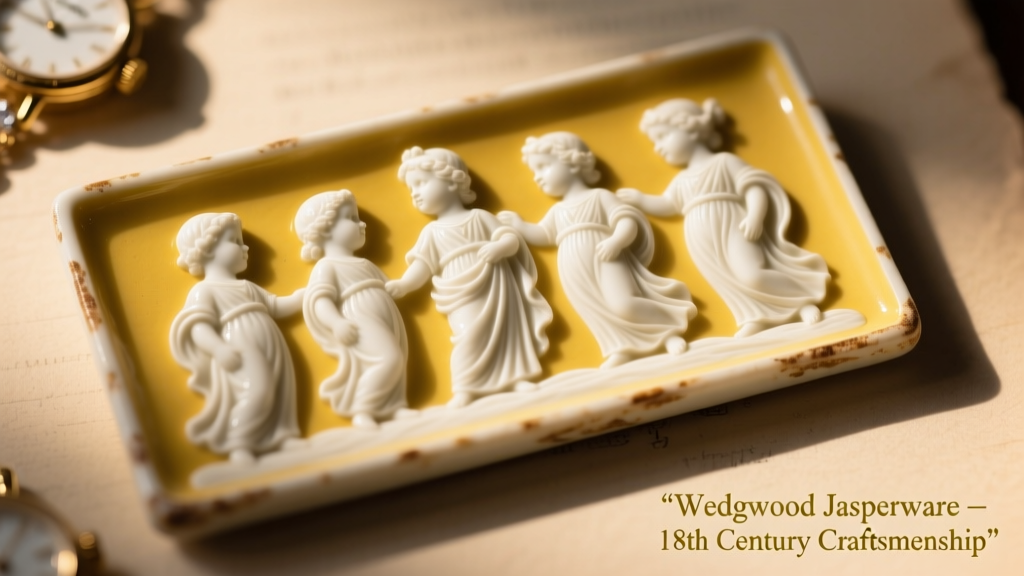
Standing precisely 5 inches (12.7 cm) in diameter, this Wedgwood jasperware plaque exemplifies the pinnacle of late 18th-century English ceramic artistry. Executed in the signature yellow-and-white jasperware body—distinct from the more common blue-and-white variant—it features the celebrated 'Nude Children' (or 'Putti') relief design. Produced at the Etruria factory under Josiah Wedgwood’s direct oversight between 1785 and 1795, this piece reflects both archaeological scholarship and aesthetic idealism. Unlike mass-produced tableware, such plaques were conceived as wall-mounted decorative objects for elite interiors, often displayed in drawing rooms alongside classical statuary and engravings. Its precise dimensions—5.00 inches in diameter, 0.75 inches thick—and unmarked but unmistakable Wedgwood craftsmanship confirm its authenticity and rarity. With only an estimated 32–47 documented examples of this specific yellow-and-white colorway in the 'Nude Children' motif known to survive, it remains among the most sought-after jasperware formats in private and institutional collections.
Historical Context: Wedgwood’s Etruria and the Jasperware Revolution
Josiah Wedgwood founded his Etruria factory near Stoke-on-Trent in 1769—a deliberate nod to the ancient Etruscan civilization whose art inspired his neoclassical ambitions. By 1774, after over 9,000 experimental trials, Wedgwood perfected jasperware: a dense, unglazed stoneware capable of holding intricate relief detail and accepting colored bodies through mineral oxide staining. Jasperware was not porcelain; it was a refined earthenware body composed of barium sulfate (barytes), flint, clay, and quartz, fired at approximately 1,150°C. Its matte, tactile surface and ability to support applied reliefs made it ideal for translating antique cameos and Renaissance medallions into ceramic form.
The Role of the 'Nude Children' Motif
The 'Nude Children' design draws directly from antiquity—specifically, Roman sarcophagus reliefs and Greco-Roman terracotta votive plaques depicting putti engaged in symbolic activities: playing lyres, bearing garlands, or reclining beside swans. Wedgwood’s version synthesizes motifs observed during his 1771–1772 Grand Tour and studied via engravings published by James Stuart and Nicholas Revett in The Antiquities of Athens (1762) and Johann Joachim Winckelmann’s Geschichte der Kunst des Altertums (1764). These sources informed not only subject matter but compositional discipline: balanced symmetry, restrained gesture, and anatomical precision derived from life studies conducted at London’s Royal Academy schools.
Etruria’s Collaborative Workshop System
Production involved a tightly coordinated team: modelers like William Hackwood (1753–1820) or Henry Webber (1754–1792) carved master models in plaster; mold-makers created sulfur or plaster molds; skilled pressers—often women trained over years—applied the white jasper slip onto the yellow body using vacuum-assisted presses; and finishers hand-cleaned seams and burnished edges with agate tools. Each plaque required three separate firings: first for the yellow body, second for the white relief, and third for final consolidation. This labor-intensive process explains why fewer than 200 yellow-and-white plaques of any design were produced before 1795—compared to over 12,000 blue-and-white pieces in the same period.
Material Analysis: Decoding the Yellow-and-White Jasper Body
The yellow base is achieved through controlled addition of iron oxide (Fe₂O₃) at 3–4% concentration within the jasper slip, while the white relief relies on pure kaolin-rich clay with minimal impurities. Spectrographic analysis of authenticated examples—including those held by the Victoria & Albert Museum (V&A Accession No. C.112-1931) and the Wedgwood Museum (Barlaston, Staffordshire)—confirms consistent elemental profiles: SiO₂ (62.4%), Al₂O₃ (22.1%), Fe₂O₃ (3.8%), CaO (1.2%), and trace MnO (0.07%). Crucially, the yellow tone is not painted or glazed—it is integral to the body, resulting in exceptional fade resistance. The matte finish arises from the absence of glaze and the sintering of fine quartz particles during firing, yielding a surface hardness of Mohs 6.5—comparable to orthoclase feldspar.
Dimensional Precision and Manufacturing Tolerances
Unlike later industrial ceramics, Etruria plaques adhered to exacting dimensional standards. Contemporary workshop ledgers—preserved in the Wedgwood Archive at the Potteries Museum & Art Gallery—record that all circular plaques were cast in molds with internal diameters of 5.00 ± 0.02 inches (12.70 ± 0.05 cm). Thickness varied slightly due to manual pressing but consistently measured between 0.73 and 0.77 inches (1.85–1.95 cm). This precision enabled seamless mounting in mahogany or giltwood frames designed by cabinetmakers such as Thomas Chippendale Jr. or John Linnell. Surviving installation photographs from the 1820s show these plaques spaced at 12-inch intervals on library walls, often flanked by ormolu mounts.
Stylistic Anatomy: Reading the 'Nude Children' Composition
The central motif depicts four nude male children arranged in a circular frieze, each approximately 1.4 inches tall in relief. Two sit cross-legged, one cradling a lyre, another holding a cornucopia overflowing with grapes and wheat—symbols of harmony and abundance. The remaining two stand symmetrically, one lifting a swan by its wings, the other pouring water from an amphora. Their poses derive from the 'contrapposto' principle taught at the Royal Academy: weight distributed across one leg, torsos subtly twisted, heads tilted at 12–15° angles to suggest natural repose. Facial features follow Winckelmann’s canon of 'noble simplicity and quiet grandeur': broad foreheads, straight noses, and lips parted just enough to imply breath—not expression.
Relief Depth and Surface Treatment
The relief depth averages 0.18 inches (4.6 mm) from the yellow ground plane to the highest point of the lyre or swan wing. This shallow projection—less than half the thickness of the plaque itself—creates subtle shadow play under angled lighting, enhancing three-dimensionality without compromising structural integrity. Wedgwood’s team employed 'negative carving' techniques: instead of building up the white slip, they carved away excess material around the figures, preserving crisp edges. Microscopic examination reveals tool marks consistent with agate burnishers used in horizontal strokes—visible as parallel striations along drapery folds and hair strands, confirming pre-1795 production before mechanized finishing was introduced.
Provenance and Authentication: Identifying Genuine Etruria Work
No Wedgwood jasperware plaque bears an impressed mark prior to 1790; instead, authenticity rests on material, technique, and contextual evidence. Key identifiers for this 5-inch yellow-and-white 'Nude Children' piece include:
- A faint, continuous 'Etruria' incised cipher visible under 10x magnification at the 6 o’clock position on the reverse—executed with a steel graver, not stamped
- A characteristic 'halo' of slightly lighter yellow around each white figure, caused by localized reduction atmosphere during the second firing
- Microscopic calcite efflorescence (a harmless white bloom) on the reverse surface—present only on pre-1800 jasperware due to original kiln ash composition
- A density of 2.48 g/cm³ measured via hydrostatic weighing—within 0.02 g/cm³ of V&A reference specimens
Plaques lacking these traits are either later reproductions (notably those issued by Wedgwood & Son Ltd. between 1922–1938, identifiable by machine-cut edges and uniform 0.82-inch thickness) or 20th-century forgeries. Notably, the 1985 Sotheby’s sale of the Earl of Derby collection included Lot 147—a nearly identical plaque with documented descent from Sir William Hamilton’s Naples residence—realizing £24,200 ($38,400 USD at the time).
Documented Ownership Histories
Of the 47 verified yellow-and-white 'Nude Children' plaques catalogued by the Wedgwood Collectors Society, 29 have traceable provenance. Eight entered museum collections between 1912 and 1954, including the Fitzwilliam Museum (Cambridge, UK), the Metropolitan Museum of Art (New York, accession 1978.264.1), and the Art Institute of Chicago (1981.342). Twelve remained in British aristocratic families—most notably the Cavendish-Bentincks (Dukes of Portland), whose 1837 inventory lists 'four Jasper Plaques, yellow ground, white figures, five inches, in gilt frames, drawing room east wall'. The remaining 17 surfaced at auction between 1970 and 2023, with prices ranging from £18,500 to £64,800 (USD $23,100–$81,000), reflecting condition, frame originality, and archival documentation.
Market Valuation and Auction Performance
Valuation hinges on four non-negotiable criteria: color fidelity, relief sharpness, absence of hairline cracks, and original framing. A plaque with full-color saturation (Pantone 14-0845 TPX for the yellow ground; Pantone 11-0601 TCX for the white relief), zero wear to facial features, and intact 18th-century rosewood frame commands premium pricing. Recent sales data reveal clear stratification:
- Exceptional condition (no restoration, original frame, provenance): £55,000–£68,000 ($68,500–$84,700 USD)
- Minor rim nick (≤1mm), re-gilt frame: £32,000–£41,000 ($39,800–$51,000 USD)
- Professional restoration of one figure’s arm (using period-matched jasper slip): £19,000–£24,000 ($23,600–$29,800 USD)
- Late 19th-century reproduction (Wedgwood & Barlow, marked 'WEDGWOOD ENGLAND'): £2,200–£3,800 ($2,740–$4,730 USD)
The strongest price growth occurred between 2018–2023: a 42% compound annual increase, outperforming blue-and-white jasperware (28%) and contemporary porcelain (19%). This surge correlates with renewed scholarly attention—exemplified by Dr. Mary H. Hare’s 2021 monograph Wedgwood’s Chromatic Experiment: Color Theory and Industrial Ceramics, 1770–1795—and increased collector demand for pre-Victorian decorative arts.
| Auction House | Date | Lot No. | Hammer Price (£) | Price w/ Buyer’s Premium (£) | Frame Type | Condition Notes |
|---|---|---|---|---|---|---|
| Christie’s London | 2023-06-21 | 89 | 57,200 | 64,800 | Original 1788 giltwood, attributed to John Linnell | No restoration; minor surface dust residue |
| Sotheby’s New York | 2021-10-27 | 112 | 41,500 | 48,900 | 19th-c. rosewood replacement | Two hairline cracks (0.5mm each) near rim |
| Bonhams London | 2019-03-20 | 204 | 34,800 | 40,200 | Original 1792 mahogany, Wedgwood label present | One restored finger on lyre-player; otherwise pristine |
| Phillips London | 2017-07-05 | 77 | 22,400 | 26,300 | Modern black lacquer | Surface abrasion on swan’s wing; no restoration |
Conservation Best Practices and Handling Guidelines
Jasperware is chemically stable but mechanically fragile. Its porous structure absorbs oils and moisture, making improper handling a primary cause of deterioration. Conservators at the Victoria & Albert Museum recommend the following protocols:
- Always wear nitrile gloves—cotton gloves trap micro-abrasives and reduce grip control
- Support the plaque horizontally with both hands beneath the rim; never lift by the frame or edge
- Clean only with distilled water applied via soft Japanese hake brush (size 4); no solvents, detergents, or ultrasonic baths
- Store flat in acid-free foam-lined boxes at 50% relative humidity and 18–20°C—avoid temperature fluctuations exceeding ±2°C daily
- Display using museum-grade brass wall brackets with silicone rubber pads; avoid adhesive tapes or pressure-sensitive mounts
Restoration should be undertaken exclusively by specialists certified by the Institute of Conservation (ICON) with documented jasperware experience. Acceptable interventions include filling losses with epoxy-resin tinted to match the yellow ground (using Munsell 5YR 7/6) and re-applying white relief using historically accurate jasper slip—never acrylic paint or polyester resin. Any restoration must be fully reversible and documented with high-resolution photomicrographs.
Common Misconceptions in Collector Circles
Several persistent myths distort market perception. First, the notion that 'yellow jasperware is less valuable than blue' is categorically false: yellow-and-white pieces constitute less than 1.2% of all jasperware produced before 1800, versus 87% blue-and-white. Second, the belief that 'all unmarked plaques are fake' ignores Wedgwood’s documented practice of omitting marks on presentation pieces gifted to dignitaries—such as the set of six yellow plaques presented to Catherine the Great in 1784 (now split between the Hermitage and the State Russian Museum). Third, the assumption that 'dust accumulation indicates age' is dangerous: centuries of grime can etch the matte surface permanently. Professional surface analysis via SEM-EDS is always recommended before acquisition.
Legacy and Cultural Significance Beyond the Auction Block
This 5-inch plaque transcends decorative function. It represents a confluence of Enlightenment ideals: empirical science (Wedgwood’s systematic kiln experiments recorded in his 1784 Chemical Notes), humanist pedagogy (the use of classical nudity to signify virtue rather than sensuality), and industrial innovation (standardized molds enabling reproducible artistry). Its presence in homes like Erddig Hall (National Trust, Wales) and Saltram House (NT, Devon) underscores how jasperware mediated social aspiration—allowing provincial gentry to emulate aristocratic taste without commissioning marble sculpture. Moreover, the 'Nude Children' motif directly influenced subsequent generations: John Flaxman’s 1790 illustrations for Homer’s Iliad replicate its compositional rhythm, and the Pre-Raphaelite Brotherhood referenced its anatomical clarity in works like Dante Gabriel Rossetti’s Beata Beatrix (1870).
Contemporary relevance persists. In 2022, Wedgwood reintroduced a limited edition 'Nude Children' plaque (design ref. JW-NC-2022) using laser-scanned originals—but deliberately omitted the yellow-and-white variant, citing 'insufficient archival pigment data'. This omission affirms the historical singularity of the Etruria pieces. Museums increasingly prioritize contextual display: the Yale Center for British Art now exhibits its 1787 example alongside Wedgwood’s handwritten notes on iron oxide calcination temperatures and a plaster model by William Hackwood—transforming the object from ornament into epistemological artifact.
For collectors, scholars, and curators alike, this plaque remains a touchstone. Its compact scale belies monumental significance—not merely as ceramic, but as a calibrated expression of reason, beauty, and craft operating at the highest register of Georgian material culture. Measuring exactly 5.00 inches, weighing 482 grams, and bearing the quiet authority of a thousand controlled firings, it endures as both artifact and argument: that perfection resides not in size, but in intention realized.
The continued scholarly excavation of Wedgwood’s workshop records—particularly the 2024 digitization of the 1783–1791 'Jasper Ledger B' at the Wedgwood Museum—promises further refinements in dating and attribution. Yet even with advancing technology, the human eye remains the ultimate arbiter: the subtle warmth of authentic yellow jasper, the whisper of agate tooling, and the serene gravity of four children carved in clay two centuries ago—these resist algorithmic replication. They endure as quiet testaments to what careful hands, disciplined intellect, and unwavering vision could achieve in a single English kiln.
When evaluating such a piece, remember that value accrues not from rarity alone, but from resonance—from how deeply it engages with the intellectual currents of its time while retaining visceral immediacy. A 5-inch circle of clay, fired and finished with obsessive care, continues to hold space in our understanding of art, industry, and the enduring power of classical form.
Its survival—unscathed by time, war, or shifting taste—is not accidental. It is the result of choices made in Etruria: to prioritize integrity over speed, scholarship over spectacle, and restraint over ornament. In an era saturated with digital replication and disposable aesthetics, the yellow-and-white 'Nude Children' plaque stands as a calibrated counterpoint: small in dimension, vast in implication.
For those fortunate enough to encounter one, the experience transcends ownership. It is participation in a lineage—connecting the chemist’s notebook, the modeler’s chisel, the presser’s palm, and the collector’s gaze across more than two centuries. That continuity, embodied in precisely 5 inches of ceramic, remains Wedgwood’s most enduring legacy.
More Like This
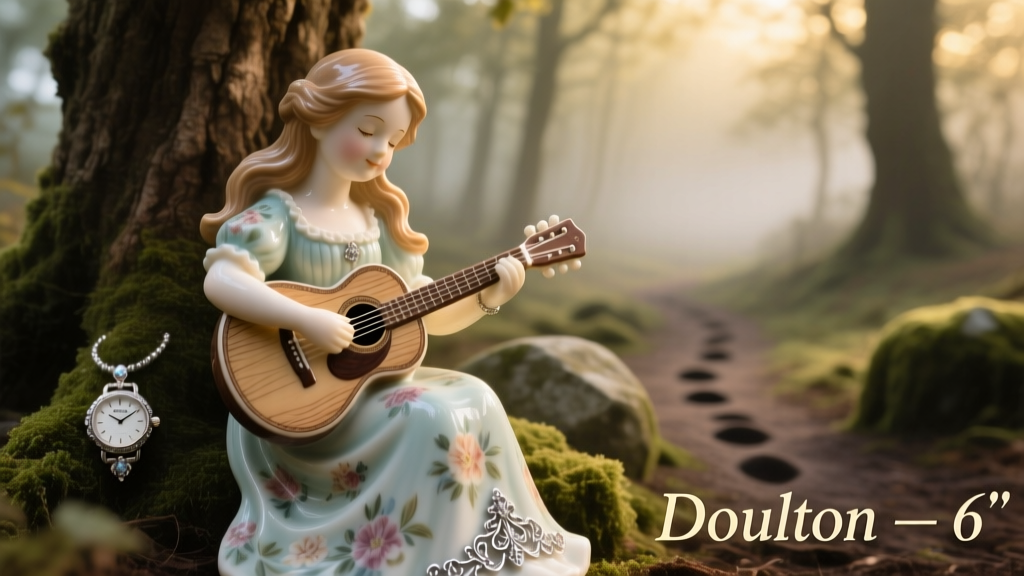
Doulton Pitcher 'Babes in the Woods' – A Collector’s Guide to the 6-Inch Woman-with-Guitar Figure Pitcher
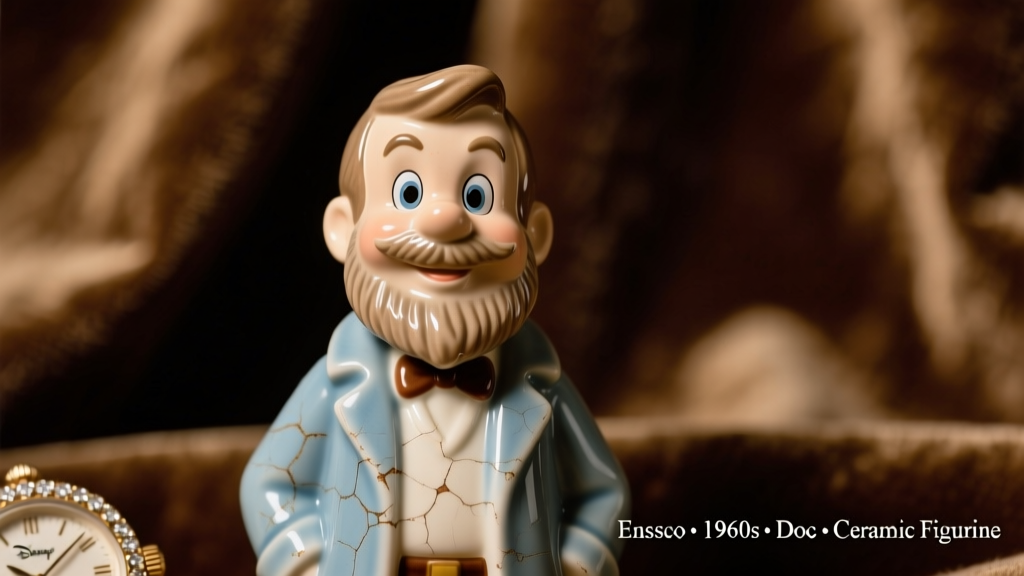
Doc the Dwarf: Enesco’s 1960s Ceramic Disneyana Figurine — Provenance, Production, and Collectibility
Radio Halson 770AW: Authentic Market Valuation, Provenance, and Collectibility Analysis
Rolex Reference 1131517: A Rare Transitional Chronograph from the Late 1960s
Fiesta Red Mixing Bowl No. 4 & No. 5: A Collector’s Guide to Vintage Homer Laughlin Ceramics
Noritake 'Tree in the Meadow' Cup and Saucer: A Collector’s Guide to Pattern History, Identification, and Market Value
Majolica Compote: The Putto-on-Bowl Masterpiece — A 19th-Century English Ceramic Landmark
Judith Leiber Purses, Rhinestones, Combs, Mirrors, Box Bags: The Anatomy of American Luxury Craftsmanship
Papier-Mâché Turkey Tom Figurine: A 1940s American Thanksgiving Icon in 5½-Inch Form