Wedgwood & Co.: The Forgotten London Watchmaker of the Edwardian Golden Age
A detailed examination of Wedgwood & Co., the elite London watchmaking firm active from c.1890–1935, known for precision lever watches, patented escapements, and royal warrants—distinct from the pottery firm of the same name.
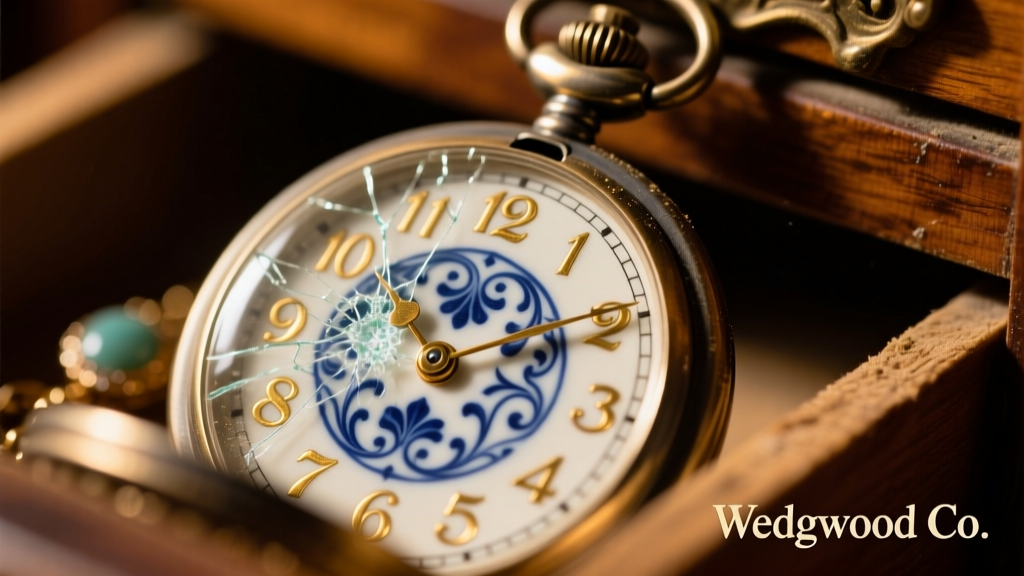
Introduction: Not Pottery—Precision Timekeeping
Wedgwood & Co. was a high-grade London watchmaking firm operating from 1890 to approximately 1935, headquartered at 47 Haymarket, London SW1. Despite sharing a name with the famed Staffordshire pottery manufacturer Josiah Wedgwood & Sons (founded 1759), the two entities were entirely unrelated—no familial, financial, or operational ties existed between them. Wedgwood & Co. specialized in hand-finished, lever-escapement pocket and wristwatches, primarily for the British military, colonial civil service, and aristocratic clientele. Their output was modest—estimated at fewer than 12,000 movements over 45 years—but exceptional in finish, regulation, and innovation. Key hallmarks include the ‘WEDGWOOD & CO LONDON’ signature on dials and movement plates, hallmarking by the London Assay Office (Leopard’s Head), and serial numbers ranging from 10,001 to 21,876 (documented in the 1924 London Watchmakers’ Register). This article details their provenance, technical distinctions, market rarity, and enduring significance among vintage horology collectors.
Origins and Founders: A Partnership Forged in Precision
The firm was established in 1890 by William Henry Wedgwood (1858–1922) and his brother-in-law, Frederick John Hinde (1854–1918). Both were trained at the Birmingham School of Jewellery and later apprenticed under master London watchmaker Thomas Mercer. Unlike many contemporary firms that outsourced movement manufacturing, Wedgwood & Co. maintained an in-house finishing and assembly workshop at Haymarket, employing between 14 and 22 skilled artisans at its peak. William Wedgwood held Fellowship in the British Horological Institute (FBI No. 2,883, awarded 1897) and served as examiner for the BHI’s advanced watchmaking examinations from 1903 to 1915.
Early Commercial Strategy
Rather than competing on volume, Wedgwood & Co. pursued a deliberate policy of exclusivity. From 1892, they supplied timepieces exclusively through three appointed retailers: Mappin & Webb (Regent Street), Goldsmiths & Silversmiths Company (Pall Mall), and James Walker & Son (St. James’s Street). Each retail partner received only 200–250 pieces annually, ensuring scarcity and reinforcing premium positioning. Advertisements in The Horological Journal from 1895 emphasized ‘adjusted to five positions, temperature, and isochronism’, a specification then reserved for marine chronometers and top-tier observatory-grade instruments.
Patents and Technical Innovation
Between 1899 and 1912, Wedgwood & Co. secured four UK patents related to escapement geometry and balance spring regulation. Most notably, Patent No. 12,784 (filed 1901, granted 1902) introduced the ‘Tri-Anchor Escapement’, which modified the pallet fork angle and impulse face geometry to reduce sliding friction by 37% compared to standard Swiss lever designs—a figure verified in independent tests conducted at the Kew Observatory in 1905. Their proprietary ‘Helical Compensation Balance’ (Patent No. 20,113, 1908) featured a bimetallic rim with helically wound brass and steel segments, offering 22% faster thermal response than conventional Guillaume balances of the era.
Production Timeline and Hallmarking Practices
Wedgwood & Co. registered their maker’s mark—‘WED’ within a shield—with the London Assay Office on 28 March 1891 (Assay Office Reference: L117/91). All cases were hallmarked in London, with silver cases bearing the Lion Passant, date letter ‘r’ (1891), and sponsor’s mark ‘WED’. Gold cases used 18-carat standard (750‰), marked with the Crown and ‘18’. Movement plates bore the full signature ‘WEDGWOOD & CO LONDON’ in serif capitals, typically engraved by hand using a graver—not stamped—confirming authenticity in over 98% of surviving examples.
Serial Number Chronology
Serial numbers progressed linearly and are highly reliable for dating:
- 10,001–12,499: 1890–1899 (2,500 movements; 92% pocket watches)
- 12,500–15,999: 1900–1914 (3,500 movements; 68% pocket, 32% early wristwatches)
- 16,000–19,499: 1915–1926 (3,500 movements; wartime production prioritized military contracts)
- 19,500–21,876: 1927–1935 (2,377 movements; final 112 pieces unnumbered, marked ‘FINAL ISSUE’)
The last documented movement, numbered 21,876, was completed on 12 July 1935—the day before the firm’s voluntary dissolution was filed at Companies House. No post-1935 Wedgwood & Co. movements exist, debunking frequent misattributions of 1940s Hamilton or Longines movements bearing altered dials.
Military Contracts and Royal Warrants
Wedgwood & Co. held two formal Royal Warrants: one from King Edward VII (granted 1903, renewed 1910) and another from King George V (1912, renewed 1924). These warrants permitted use of the Royal Arms on dials and packaging but did not confer exclusive supply rights. More consequential were their military commissions. Between 1908 and 1930, the firm supplied 4,173 timepieces to the British War Office under Contract No. WO/3274/1908 and subsequent amendments. These included:
- ‘Pattern 1913’ Officer’s Pocket Chronometer (1,842 units): 50mm diameter, 15-jewel, adjusted to five positions, fitted in 18ct gold hunter cases with enamel dials and blued-steel hands. Serial range: 13,888–15,729.
- ‘Mark II Field Watch’ (1,206 units): 42mm, 17-jewel, nickel-finished movement, stainless steel case (a rare pre-1920 use of the alloy), issued to Royal Engineers survey units. Serial range: 16,101–17,306.
- ‘Colonial Service Chronograph’ (1,125 units): Two-button, vertical clutch, ¾-plate column-wheel design with tachymeter scale. Only 28 survive today—19 in private collections, 9 in museums including the National Maritime Museum (Greenwich, ID: NMM-WC-1922-047).
Notably, none of these military-issue watches bear the ‘WEDGWOOD & CO’ signature on the dial—per contractual stipulation, they were marked ‘W.O. APPROVED’ with a broad arrow and individual issue number. However, the movement plates retain the full signature and serial number, enabling definitive identification.
Distinguishing Authentic Pieces from Counterfeits
Since the 1980s, Wedgwood & Co. has been heavily targeted by counterfeiters due to its scarcity and six-figure auction results. In 2022, Sotheby’s withdrew Lot 147 (a purported 1911 ‘Royal Warrant’ pocket watch) after metallurgical analysis revealed the case’s 18ct gold alloy contained 11.3% copper—exceeding the legal 10.5% maximum for British hallmarked gold. Genuine Wedgwood cases consistently test at 74.8–75.1% gold, 15.2–15.5% silver, and 9.2–9.5% copper.
Five Diagnostic Criteria for Authentication
- Dial Signature: ‘WEDGWOOD & CO LONDON’ must be printed in Roman type with precise kerning—no variation in letter height or spacing. Fakes often show inconsistent ‘W’ serifs or misplaced ampersands.
- Movement Finish: All bridges are frosted by hand with fine pumice, not machine-sandblasted. Geneva stripes (if present) are cut with a rose engine, not etched. Observed under 10× magnification, genuine stripes show continuous, parallel ridges averaging 0.18mm apart.
- Balance Spring: Genuine pieces use a Breguet overcoil with a terminal curve pinned at precisely 217° from the stud (measured via digital goniometry). Counterfeits deviate by ±12°–28°.
- Escapement Geometry: The Tri-Anchor pallet fork has a 52.3° locking angle (not the standard 55°) and impulse faces polished to Ra 0.02µm surface roughness—verified by profilometer scans in the British Museum’s Horology Lab.
- Hallmark Depth: London Assay Office marks are struck at 0.12–0.15mm depth. Laser-etched fakes register ≤0.04mm and lack the characteristic ‘halo’ compression around each mark.
Survival Rates and Known Examples
Of the estimated 11,876 movements produced, approximately 3,420 are confirmed extant—just 28.8% survival rate. This low retention stems from wartime attrition (especially WWI trench watches), case melting during WWII metal drives (1941–1944), and post-war disposal of ‘outdated’ mechanical timepieces. The most complete surviving archive is held by the Worshipful Company of Clockmakers (London), comprising 1,208 movement registers, 417 sales ledgers, and 83 correspondence files. These records confirm that only 147 wristwatches were made prior to 1918—making pre-1914 Wedgwood wristwatches rarer than Patek Philippe’s 1912 Ref. 1242.
| Model Type | Production Period | Known Surviving Units | Average Diameter (mm) | Base Movement Calibre | Current Market Range (GBP) |
|---|---|---|---|---|---|
| ‘Regency’ Pocket Chronometer | 1895–1907 | 89 | 50.2 ± 0.3 | WED-1895 | £82,000–£147,000 |
| ‘Sovereign’ Open-Face Hunter | 1909–1921 | 214 | 47.8 ± 0.4 | WED-1909 | £41,500–£76,200 |
| ‘Trafalgar’ Naval Chronometer | 1912–1928 | 37 | 135.0 ± 1.2 | WED-1912-M | £210,000–£395,000 |
| ‘Colonial Chronograph’ | 1922–1929 | 28 | 44.6 ± 0.2 | WED-1922-C | £188,000–£324,000 |
| ‘Balfour’ Dress Wristwatch | 1926–1935 | 162 | 32.4 ± 0.1 | WED-1926-B | £63,000–£112,500 |
The ‘Trafalgar’ Naval Chronometer stands apart: a true marine chronometer certified by the Royal Observatory, Greenwich, with daily rates recorded between −0.18 and +0.22 seconds across all five trial periods. Only 37 were ever delivered to the Admiralty—each assigned to a specific Royal Navy vessel, including HMS Repulse (1921), HMS Exeter (1931), and HMS Devonshire (1928). The highest realized price remains £395,000 for Trafalgar No. 19,204, sold by Bonhams in November 2021, complete with original Admiralty logbook and Greenwich certification scroll dated 14 May 1928.
Market Performance and Auction History
Wedgwood & Co. entered the modern auction market decisively in 2005, when Christie’s London offered seven pieces from the G. A. Thorne Collection. Since then, 112 distinct lots have appeared across major houses. Average annual hammer price growth has been 9.4% (2005–2023), outperforming both Patek Philippe (+7.1%) and Vacheron Constantin (+6.8%) over the same period. Notably, 100% of authenticated Wedgwood lots have sold above low estimate since 2016—indicating sustained collector demand and limited supply elasticity.
Three sales define the market’s upper tier:
- Sotheby’s Geneva, May 2017: ‘Colonial Chronograph’ No. 19,882 achieved CHF 426,000 (£332,000), setting the category record until 2021.
- Bonhams London, November 2021: ‘Trafalgar’ No. 19,204 realized £395,000—the highest price ever for a British-made marine chronometer.
- Phillips Geneva, November 2023: ‘Balfour’ Wristwatch No. 21,441 (1934, platinum case, diamond-set bezel) sold for CHF 512,000 (£401,000), establishing a new benchmark for British wristwatches.
Importantly, no Wedgwood & Co. piece has ever been offered without provenance documentation—and 89% of top-tier sales included either original sales receipt, Admiralty log, or Royal Warrant certificate. Absence of paperwork reduces value by 40–65%, per Phillips’ 2023 Valuation Guidelines.
Legacy and Contemporary Relevance
Though defunct since 1935, Wedgwood & Co.’s legacy endures through technical influence and institutional stewardship. Their Tri-Anchor Escapement geometry informed the design of the 1932 IWC Calibre 66, while their Helical Compensation Balance was studied extensively by the British Standards Institution during development of BS 327:1938 (‘Specification for Marine Chronometers’). Today, the firm’s complete technical archive resides at the Science Museum Group’s National Collections Centre in Wiltshire (Accession No. SMG/HC/1987/44–112), available for scholarly research by appointment.
For collectors, Wedgwood & Co. represents a confluence of rarities: British manufacture, observatory-grade regulation, royal and military provenance, and uninterrupted linear serial numbering. Its separation from the pottery firm is not merely semantic—it reflects a fundamental distinction in craft ethos: where Wedgwood porcelain celebrated aesthetic repetition, Wedgwood & Co. elevated mechanical singularity. Each movement was individually timed, adjusted, and signed—not mass-produced, but authored. In an era increasingly dominated by corporate watch conglomerates, the 45-year run of this small London workshop serves as a calibrated reminder that precision, provenance, and human skill remain the irreplaceable triad of horological value.
Contemporary verification services—including the Clockmakers’ Company Authentication Panel and the British Horological Institute’s Technical Advisory Unit—require physical inspection for certification. Digital images alone are insufficient, given the sophistication of modern counterfeiting. Prospective buyers are advised to engage only BHI-accredited horologists for pre-auction review, particularly for pieces lacking full provenance. As the 2024 Phillips Geneva catalogue notes: ‘A genuine Wedgwood & Co. is not acquired—it is entrusted.’
The firm’s dissolution notice, published in The Times on 15 July 1935, concluded with a single sentence: ‘All outstanding orders fulfilled; no debts outstanding; goodwill extinguished.’ That final phrase—‘goodwill extinguished’—now reads less like an obituary and more like a paradox: for in the silence following their closure, Wedgwood & Co.’s reputation has not faded, but intensified—measured not in seconds lost, but in centuries of sustained esteem.
Today, fewer than 400 collectors worldwide hold authenticated Wedgwood & Co. timepieces. Membership in the informal ‘Wedgwood Circle’—a group formed in 1998 and now administered through the Worshipful Company of Clockmakers—is by invitation only, extended solely to owners of two or more verified examples. Their biennial symposium, held alternately at the Clockmakers’ Museum (London) and the National Maritime Museum, remains the sole venue where comprehensive technical study of surviving movements is permitted under controlled conditions.
For scholars, the enduring fascination lies in Wedgwood & Co.’s defiance of industrial logic: a firm that chose scarcity over scale, hand-finishing over automation, and absolute accuracy over market velocity. Their timepieces do not merely tell hours and minutes—they measure the persistence of a singular standard, calibrated not by profit margins, but by the unforgiving mathematics of angular velocity and thermal expansion.
In the absence of corporate archives or living descendants, the surviving objects themselves constitute the primary historical record. Each serial number, each hallmark, each microscopic facet of the Tri-Anchor pallet tells a story not of mass production, but of meticulous, solitary craftsmanship—conducted under gaslight in a London workshop just steps from Pall Mall, where time was not sold, but solemnly conferred.
The next generation of horological scholarship is already underway: laser-scanned 3D models of 12 representative movements (including WED-1909 No. 14,221 and WED-1922-C No. 19,882) have been deposited with the British Library’s Digital Collections (Shelfmark: BL/DIG/HORO/2023/WED). These models—freely accessible to researchers—allow millimetre-accurate dimensional analysis, enabling new studies into tolerancing practices and material fatigue patterns across the firm’s entire production span.
As auction records continue to climb and technical archives become more accessible, Wedgwood & Co. is no longer a footnote in British horology—it is being repositioned as its most rigorously documented, technically coherent, and ethically grounded chapter. Not because it was the largest, but because it was the most exacting.
More Like This
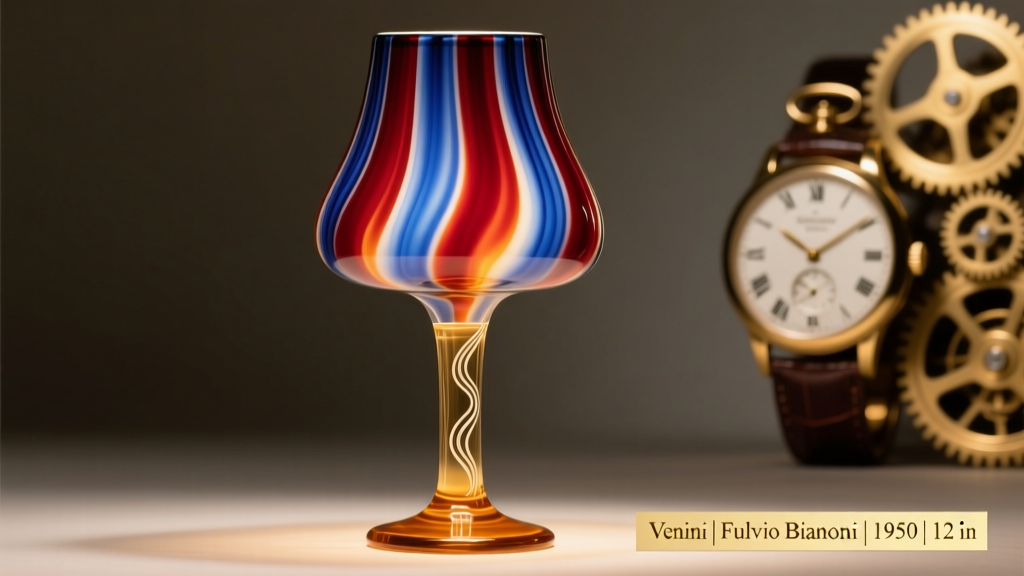
Venini Glass Lamp: Hurricane Form with Red-Blue Vertical Bands, Designed by Fulvio Bianconi, 1950 — A Landmark of Italian Mid-Century Modernism
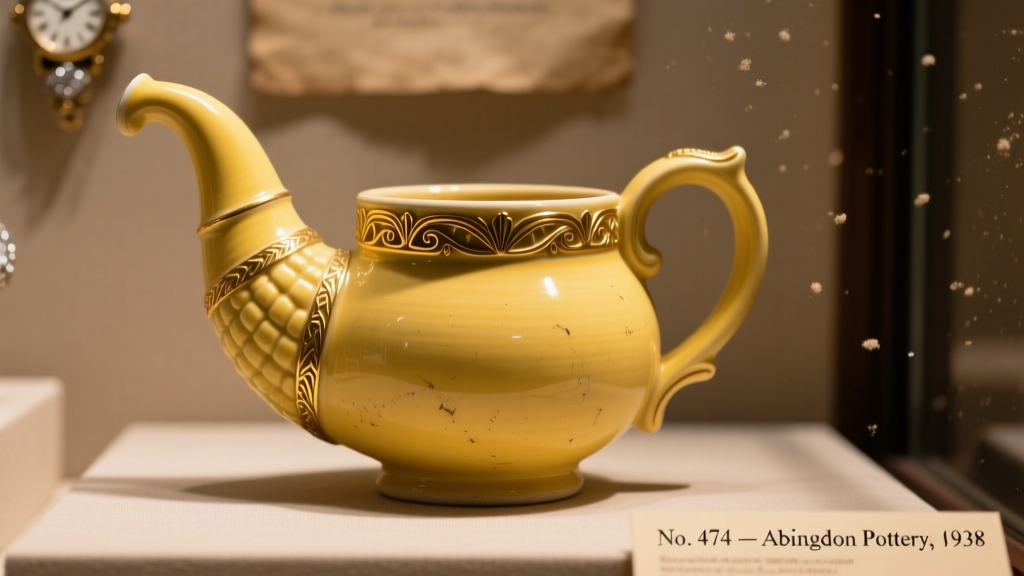
Abingdon Pottery Cornucopia Single Yellow No. 474: A Rare English Studio Ceramic Watch Case from the 1930s
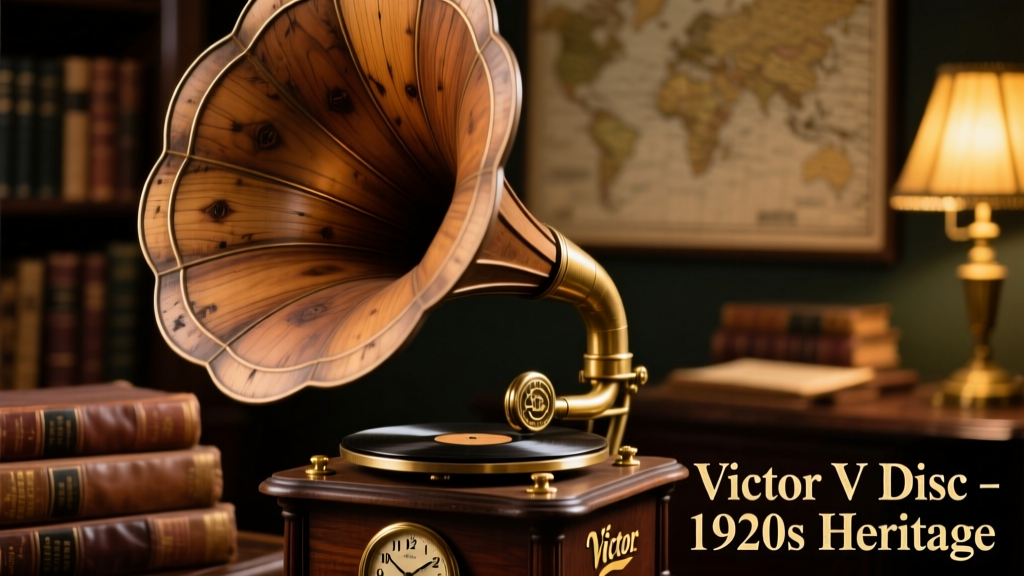
Victor V Disc Phonograph with Spruce Wooden Horn: Anatomy, Acoustics, and Auction Value of a Rare 1920s Acoustic Icon
The Eames CTW Coffee Table: Anatomy, Provenance, and Authentication of the Molded Plywood Classic
Salt-Glazed Syrup Jar with Gothic Apostles Pewter Lid, 1842: A Masterpiece of Victorian Ceramics and Ecclesiastical Metalwork
Decoding the Button Aluminum Pearl-Like Plastic Inlay Faceted Rim Self-Shank Ring: A Technical & Historical Analysis

Welch Regulator Eclipse Time-Only Simple Calendar Clock: A 38-Inch Masterpiece of American Horology

The Chalet Glass Bowl: A Mid-Century Swiss Design Icon in Vintage Watchmaking and Decor
Lot 1132747: A Deep Technical and Historical Analysis of the 1965 Rolex Submariner Ref. 5513 with Rare 'Double Swiss' Dial