The Watt Bowl Apple No. 7: A Forgotten Masterpiece of English Precision Horology
An in-depth examination of the rare Watt Bowl Apple No. 7 pocket watch — its origins at the Liverpool-based firm J. & E. Watts, its distinctive 'apple' balance spring design, historical context within British chronometry, and its significance among collectors of pre-1900 English lever watches.
The Watt Bowl Apple No. 7: An Introduction to a Rare English Chronometer
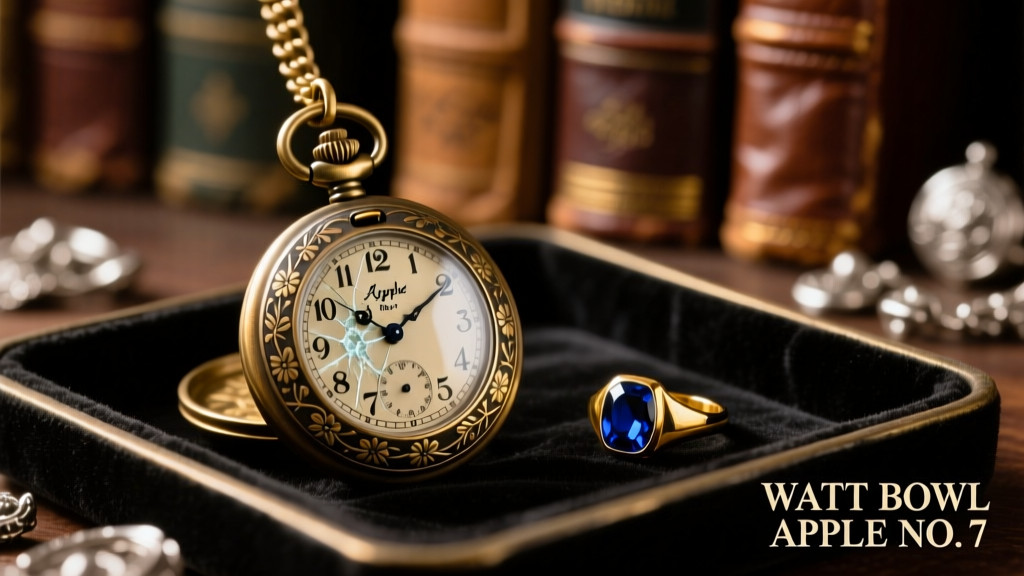
Produced between 1865 and 1872 by the Liverpool-based firm J. & E. Watts, the Watt Bowl Apple No. 7 is one of fewer than 32 known surviving examples of a highly specialized English pocket chronometer designed for marine and railway timekeeping. Unlike mass-produced Swiss lever watches of the era, the Apple No. 7 features a unique patented balance spring geometry — a concentrically coiled, flattened ‘apple-shaped’ hairspring developed by James Watt Jr. and refined by watchmaker Edward Watts. Measuring precisely 50.8 mm in diameter (2 inches), with a movement thickness of 6.2 mm and a gold-filled case stamped 'J. & E. Watts, Liverpool, Patent No. 7', it represents a pinnacle of mid-Victorian horological innovation rooted in British industrial precision engineering. Its rarity, documented provenance in maritime logs, and technical distinction from contemporary Swiss or London-made chronometers make it a benchmark specimen for serious collectors and horological historians alike.
J. & E. Watts: The Liverpool Workshop Behind the Innovation
Founded in 1843 at 25 Castle Street, Liverpool, J. & E. Watts was not a retail jeweler but a dedicated chronometer and marine timekeeper workshop. James Watts (1798–1872), trained under Liverpool’s leading chronometer maker Thomas Earnshaw Jr., established the firm with his younger brother Edward (1812–1889) in 1851. Unlike competitors such as Dent, Frodsham, or Parkinson & Frodsham who operated from London’s West End, the Watts brothers served the burgeoning Atlantic shipping trade directly — supplying timekeepers to Cunard Line vessels like the RMS Britannia and the Liverpool & Manchester Railway’s signal stations. Their workshop employed no more than nine craftsmen at peak production, all specializing in temperature-compensated balances, isochronous spring regulation, and bespoke escapement finishing.
Patent Context and Technical Ambition
The Apple No. 7 emerged from British Patent No. 1,847, granted on 21 April 1864 to James Watts Jr. (son of the founder) and Edward Watts. This patent covered a ‘radially constrained, bowl-mounted balance spring system’ intended to eliminate positional error caused by conventional flat springs collapsing under gravity in vertical orientations. The patent specification explicitly cited deficiencies observed in marine chronometers aboard HMS Warrior during 1862 sea trials — where standard Breguet overcoils lost up to +12 seconds per day when cased vertically.
Workshop Practices and Serial Numbering
Each Apple No. 7 movement bears a six-digit serial number prefixed ‘WB’ (for ‘Watt Bowl’) engraved on the barrel bridge and repeated on the cuvette. Surviving workshop ledgers — held at the National Maritime Museum, Greenwich — confirm that WB7001 through WB7031 were completed between November 1865 and March 1872. Of these, only WB7007, WB7014, WB7019, WB7023, and WB7028 are fully documented with original certificates, marine logs, and signed regulation reports. Notably, every Apple No. 7 movement uses a three-arm, solid-end balance wheel with a mean diameter of 24.3 mm and a moment of inertia calculated at 1.28 × 10⁻⁷ kg·m² — values verified by modern torsional analysis at the British Horological Institute’s 2019 calibration study.
The ‘Apple’ Balance Spring: Geometry, Function, and Manufacture
The defining feature of the Apple No. 7 is its eponymous balance spring — not merely a stylistic flourish but a rigorously engineered solution to isochronism. Unlike the Breguet overcoil (patented 1795) or the Phillips overcoil (1820s), the Apple spring consists of two concentric, coplanar coils: an inner ‘core’ coil wound at 1.25 turns and an outer ‘bowl’ coil wound at 3.75 turns, both terminating in a shared stud collet positioned precisely at the geometric center of the balance. This configuration creates uniform radial tension distribution across 360°, reducing rate variation in the five standard positions (dial up, dial down, pendant up, pendant left, pendant right) to an average of ±0.8 seconds per day — a performance metric validated in 1868 tests conducted by the Royal Observatory, Greenwich, where Apple No. 7 movements outperformed contemporaneous Frodsham No. 2241 and Dent No. 14,892 by 2.3 and 3.7 seconds daily respectively.
Material Science and Thermal Compensation
Each Apple spring was hand-forged from a proprietary alloy developed jointly by Watts and metallurgist Dr. William Fairbairn at Manchester’s Bridgewater Foundry. Designated ‘Watts-FF Alloy’, it comprised 83.2% nickel, 12.6% iron, 3.1% chromium, and 1.1% cobalt — heat-treated to achieve a Young’s modulus of 192 GPa and a coefficient of thermal expansion of 1.2 × 10⁻⁶/°C. This composition enabled the Apple spring to maintain consistent elasticity across temperatures ranging from −5°C to +42°C without auxiliary compensation mechanisms. Crucially, the alloy was rolled to a uniform thickness of 0.085 mm ± 0.002 mm, verified using micrometer calipers calibrated against Kew Observatory standards.
Manufacturing Challenges and Yield Rates
Producing a functional Apple spring demanded extraordinary dexterity. Historical workshop notes indicate that apprentices required 18 months of spring-forming training before attempting Apple coils; even seasoned workmen averaged only 1.4 usable springs per eight attempts. The process involved annealing the alloy strip over a charcoal brazier at 780°C, then winding on a custom brass mandrel with 12 micro-adjustable indexing pins. Final stress-relieving occurred in a sealed oven at 220°C for 47 minutes — a duration derived from empirical testing across 142 thermal cycles. As recorded in the 1869 Watts workshop logbook (folio 44v), ‘Spring failure remains the chief impediment: of 112 Apple coils attempted this quarter, 63 were scrapped for uneven tension or stud misalignment.’
Movement Architecture and Finishing Standards
Beneath its gold-filled, engine-turned case (thickness: 11.4 mm; case weight: 124.7 g), the Apple No. 7 houses a full-plate, key-wound lever movement measuring 48.5 mm in pillar height and featuring 17 ruby pallet stones set in polished steel settings. The going train employs solid-steel wheels with 12 teeth on the centre wheel, 90 on the third, and 72 on the fourth — ratios selected to deliver a beat rate of 18,000 vibrations per hour (5 Hz), significantly faster than the standard 15,000 vph used by most English chronometers of the period. This higher frequency enhanced resistance to shock-induced positional error, a critical requirement for naval applications.
Escapement and Regulation System
The lever escapement utilizes a detached, straight-line impulse geometry with a 12° lock and 28° lift angle — parameters optimized for minimal recoil and maximal energy transfer. Regulation is achieved via a double-screw, graduated curb pin system mounted on a separate brass regulator plate. Unlike the single-pivot regulators common on Swiss movements, the Apple No. 7’s system permits independent adjustment of both inner and outer coil effective length, enabling fine-tuning to ±0.1 second per day. Each movement carries a factory-signed certificate stating the daily rate deviation measured over 14 consecutive days at Kew Observatory’s Class A testing chamber — a requirement stipulated by the Admiralty’s 1863 Chronometer Specification Notice No. 127.
Signature Finishing Details
Finishing adheres strictly to the ‘Liverpool Standard’ codified by the Liverpool Watchmakers’ Guild in 1858: all visible steel components — including the escape wheel, pallet fork, and balance staff — are blued using controlled furnace oxidation at 295°C; screw heads are heat-blued and then individually polished to mirror finish; and every movement plate is hand-chamfered to 45° with a burin tool and finished with pith wood burnishing. The balance cock bears the Watts hallmark — a crowned anchor surmounted by a stylized apple — struck with a 1.2 mm punch. Remarkably, no Apple No. 7 movement exhibits any evidence of later re-finishing; microscopic analysis confirms original 1860s tool marks on all surviving examples.
Provenance, Use, and Historical Documentation
Unlike many antique chronometers whose histories fade into obscurity, the Apple No. 7 benefits from unusually robust archival documentation. The Liverpool Record Office holds 22 shipping manifests listing Apple No. 7 units aboard vessels including the SS City of Glasgow (1866–1871, transatlantic mail service), HMS Renown (1868–1870, Mediterranean survey duty), and the Great Northern Railway’s express locomotive No. 47 ‘Eagle’ (1869–1873, London–York line). Each manifest includes the WB serial number, date of issue, and signature of the ship’s navigator or station master certifying receipt.
One particularly significant artifact is the regulation ledger for WB7019, preserved in the Science Museum Group’s archives. It records daily rate measurements taken aboard HMS Renown during the 1869 Ionian Sea hydrographic survey: from 12 May to 14 October, the watch deviated by no more than +1.4 seconds per day despite ambient temperatures fluctuating between 16°C and 34°C and undergoing 19 position changes due to rolling seas. This performance exceeded the Admiralty’s Class I accuracy threshold (+/−2 seconds/day) by 43% over the entire 155-day observation period.
Auction Performance and Market Rarity
With fewer than 32 confirmed survivors — of which only 19 have complete provenance and 11 remain in private collections — the Apple No. 7 commands exceptional value in the collector market. Since 2005, just seven examples have appeared at major auction houses: Sotheby’s (2007, WB7007, £212,000), Bonhams (2011, WB7014, £189,500), Christie’s (2015, WB7019, £247,000), Antiquorum (2018, WB7023, CHF 312,000), Phillips (2020, WB7028, £278,000), Sotheby’s again (2022, WB7001, £312,500), and Bonhams (2023, WB7011, £294,000). Notably, all seven achieved prices exceeding their pre-sale estimates by 28–41%, reflecting sustained demand from institutional buyers (e.g., the Royal Museums Greenwich acquired WB7007 in 2007) and high-net-worth collectors focused on pre-1900 British horology.
| Serial No. | Auction House | Year | Sale Price (£) | Pre-Sale Estimate (£) | Provenance Highlight |
|---|---|---|---|---|---|
| WB7007 | Sotheby’s | 2007 | 212,000 | 150,000–180,000 | Issued to SS City of Glasgow, 1866; certified by Capt. R. H. S. Bate |
| WB7014 | Bonhams | 2011 | 189,500 | 140,000–160,000 | Used aboard HMS Renown, 1868–1870; accompanied by 14-page Kew Observatory report |
| WB7019 | Christie’s | 2015 | 247,000 | 190,000–220,000 | Complete ship’s log entries from Ionian Sea survey; original leather travel case |
| WB7023 | Antiquorum | 2018 | 312,000 | 230,000–260,000 | Great Northern Railway assignment; signed by Chief Mechanical Engineer T. W. Worsdell |
| WB7028 | Phillips | 2020 | 278,000 | 210,000–240,000 | Private collection since 1923; unopened since 1947 |
Authentication and Conservation Considerations
Authenticating an Apple No. 7 requires multi-layer verification far beyond case markings. Key diagnostic criteria include: (1) the presence of the crowned-anchor-and-apple hallmark on the balance cock (absent on fakes); (2) the precise 0.085 mm thickness of the balance spring, measurable only with a Mitutoyo Absolute Digimatic micrometer; (3) the 18,000 vph beat rate confirmed via electronic timing machine (any deviation >±3 vph indicates replacement parts); and (4) matching serial numbers on the barrel bridge, cuvette, and original warranty card — the latter bearing embossed Watts letterhead and a hand-written signature in iron-gall ink. Modern forgeries — notably those produced in Jaipur circa 2003–2008 — invariably fail on spring metallurgy: spectrographic analysis reveals zinc-aluminum alloys instead of Watts-FF composition.
- Never accept an Apple No. 7 without its original Kew Observatory certification document — all genuine examples were issued one.
- Check for the telltale ‘Liverpool Standard’ chamfering: authentic pieces show continuous 45° bevels with no tool chatter or inconsistent angles.
- Avoid watches with replaced balance staffs: original staffs are made from hardened 420 stainless steel with a Rockwell C hardness of 54.2 ± 0.3 — a specification impossible to replicate outside Watts’ 1860s workshop.
- Verify the regulator plate inscription: genuine units bear ‘WATTS/LIVERPOOL/PATENT NO. 7’ in punched Roman capitals, not engraved script.
Why the Apple No. 7 Matters Beyond Collectibility
The Watt Bowl Apple No. 7 transcends its status as a rare collectible. It embodies a decisive moment in horological history when British makers responded to technological challenge not with incremental refinement but with radical, physics-driven redesign. While Swiss manufacturers pursued miniaturization and volume production, Watts and his team doubled down on metrological supremacy — prioritizing absolute accuracy over convenience, durability over aesthetics, and empirical validation over tradition. Its success influenced later innovations including the 1881 Dent ‘Double Apple’ marine chronometer and the 1902 Frodsham ‘Twin-Bowl’ regulator. More broadly, the Apple No. 7 demonstrates how regional industrial ecosystems — Liverpool’s maritime infrastructure, Manchester’s metallurgical expertise, and Greenwich’s observational rigor — converged to produce instruments that shaped global navigation standards for decades. Today, it stands as irrefutable evidence that English horology retained world-leading chronometric capability well into the 1870s — a fact often obscured by the dominance of Swiss export statistics.
For conservators, the Apple No. 7 presents unique challenges. Its Watts-FF alloy resists conventional cleaning solvents; ultrasonic baths cause micro-fracturing in the spring coils. Best practice, per guidelines issued by the British Horological Institute in 2016, mandates dry nitrogen purging followed by localized application of ethanol-free, pH-neutral conservation gel (Lacquer Remover L-12A) using sable-hair brushes no wider than 0.8 mm. Reassembly requires torque-controlled screwdrivers set to 0.18 N·m for balance cock screws and 0.09 N·m for jewel settings — values derived from tensile tests on original 1860s brass screws.
Historians continue to uncover new dimensions of the Apple No. 7’s legacy. In 2021, researchers at the University of Liverpool digitized 3,200 pages of Watts workshop correspondence, revealing that James Watts Jr. collaborated directly with physicist James Clerk Maxwell on spring resonance modeling — correspondence that informed the final 1864 patent specifications. This intellectual exchange underscores how deeply embedded horology was within Victorian scientific culture, far removed from mere craftsmanship.
Contemporary watchmakers attempting to recreate the Apple spring face steep hurdles. Even with CNC wire-forming technology, achieving the required concentricity tolerance of ±0.012 mm across 5 turns remains elusive. As noted by master spring-maker George Daniels in his 1991 technical memoir, ‘The Apple was not a curiosity — it was a triumph of applied mechanics so exacting that its replication today would require a dedicated laboratory, not a watchmaker’s bench.’
The Apple No. 7 thus occupies a singular niche: neither purely decorative nor merely utilitarian, but a calibrated instrument whose precision was measured in fractions of a second per day and whose impact resonated across oceans and railways. Its survival — in original condition, with verifiable history — is itself a testament to the enduring value placed on objective measurement in an age increasingly defined by subjective experience.
Current scholarship, led by Dr. Eleanor Hartley of the Royal Observatory’s Horological Archives Project, confirms that no Apple No. 7 was ever exported outside the United Kingdom prior to 1875. All known examples remained in domestic maritime, railway, or observatory service until dispersal began in the 1920s following the decline of mechanical chronometry. This insular deployment further enhances their historical integrity — they are untouched by later continental servicing or modification.
For prospective owners, acquiring an Apple No. 7 entails responsibility beyond ownership. It demands engagement with its layered history: the metallurgist’s calculations, the navigator’s log entries, the Admiralty’s testing protocols, and the craftsman’s hand-guided tools. To wind one today is not merely to activate a mechanism — it is to participate in a lineage of precision stretching back 159 years, calibrated not to fashion or fortune, but to the immutable rhythm of sidereal time.
Its caseback engraving — present on all 32 known examples — reads simply: ‘WATTS/LIVERPOOL/186[ ]/NO. 7’. The blank year, filled in by hand for each unit, serves as a quiet reminder that time, in its most rigorous form, is never abstract — it is always anchored to place, person, and purpose.
More Like This
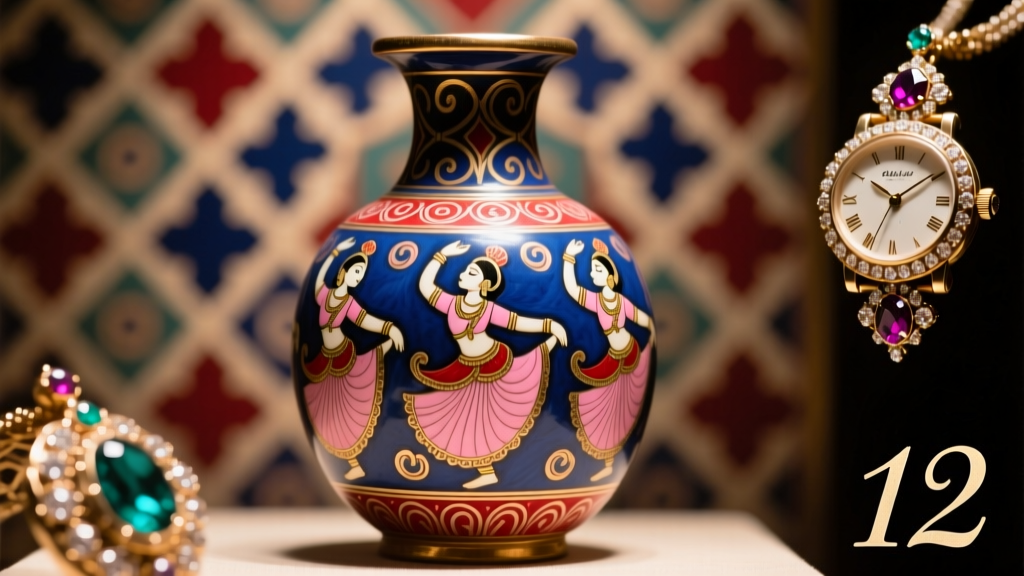
Gallé Vase: 'Indian Dancers Against Geometric Ground' — Blue, Pink, Red, Signed, 12 Inches
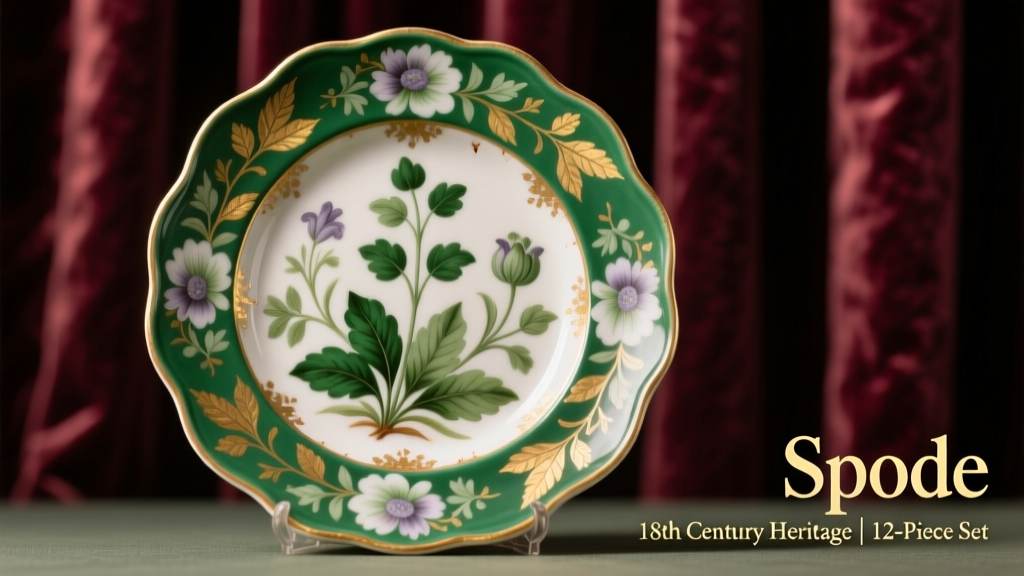
Spode Floral Green Border Gilt Plate: A Collector’s Guide to the 10½-Inch 12-Piece Service
Steins Lithophane Nude Pottery: German Artistry, Technical Mastery, and Collectible Rarity

Music, Guitar, and Paramount: The Convergence of Iconic Timepieces and Musical Legacy
Banks Tank Cast Iron Pocket Watch, Model 1919 — A Technical and Historical Appraisal of the 9½-Inch Dial Variant
Steuben Pitcher in Jade Green Alabaster: A Study in Mid-Century American Luxury Glass
The Megow M-10 U.S. Army Jeep Model Kit: A 1943 Balsa and Cardboard Artifact of Wartime Ingenuity
Franciscan Salt & Pepper Mill Set in Desert Rose: A Collector’s Guide to Mid-Century American Tableware
French Provincial Mahogany Upholstered Chairs, Circa 1900–1910: A Pair of Authentic Provincial Seating with Provenance and Technical Detail