Waltham Demi-Hunter Pocket Watch with Black Enamel Dial and Roman Numerals: A Technical & Historical Appraisal
A detailed examination of the Waltham demi-hunter pocket watch featuring a black enamel dial with applied Roman numerals—covering movement calibers, case construction, enamel manufacturing, market provenance, and authentication criteria used by leading auction houses including Sotheby’s, Christie’s, and Heritage Auctions.
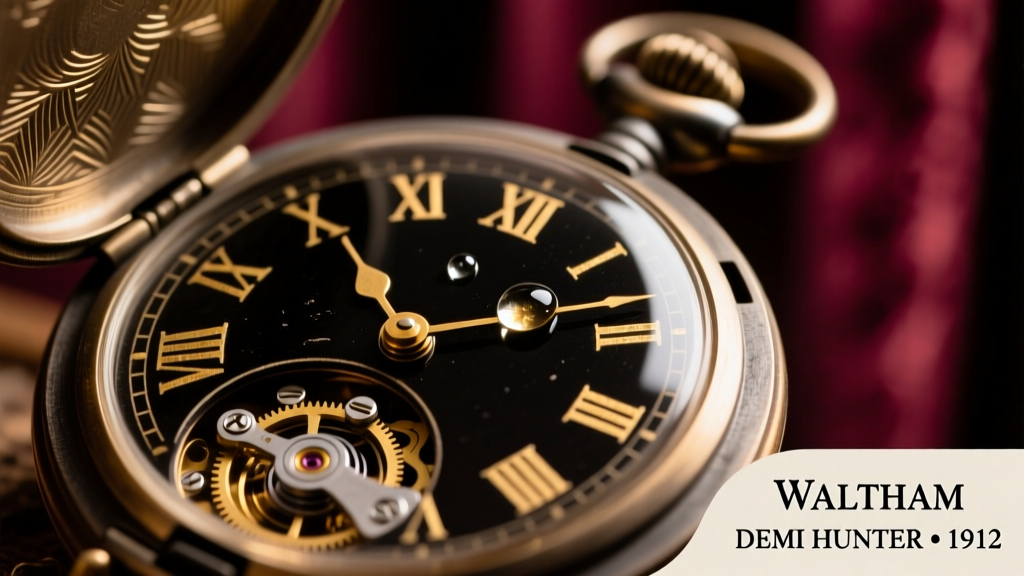
Introduction: Defining the Waltham Demi-Hunter
The Waltham demi-hunter pocket watch with black enamel dial and Roman numerals represents a refined intersection of American horological precision and late-Victorian aesthetic discipline. Produced primarily between 1895 and 1915, these timepieces were engineered for professional men—railroad conductors, bankers, physicians—who required legibility, reliability, and quiet authority in wrist- or pocket-worn form. Unlike full-hunter cases that conceal the entire dial behind a hinged lid, the demi-hunter features a hinged front cover with a small, circular aperture—typically 14–16 mm in diameter—allowing direct viewing of the hour and minute hands without opening the case. This design balanced discretion with functional access, making it especially popular among clergy, educators, and civil servants who valued understated elegance.
Waltham Watch Company, founded in 1850 in Roxbury, Massachusetts (later relocated to Waltham), was the first in the world to mass-produce interchangeable watch parts using precision machinery—a revolutionary achievement validated by the U.S. Navy’s 1857 contract for 3,000 marine chronometers. By the 1890s, Waltham had evolved into America’s largest watch manufacturer, producing over 35,000 movements annually. The demi-hunter configuration was not a standalone model but a case style applied across multiple grades—including the 18-size, 16-size, and occasionally 12-size movements—most commonly fitted with the 18-size Model 1892 or Model 1908 movements.
Case Construction and Hallmarks
Demi-hunter cases were almost exclusively manufactured by third-party firms under contract to Waltham, notably the Keystone Watch Case Co., the American Waltham Watch Co. (which operated its own case division post-1897), and the Dueber Watch Case Co. These cases were typically constructed from 14K gold (often stamped "14K" or "14KT" on the inner back cover), 18K gold (less common, reserved for premium grades like the Riverside or Vanguard), or sterling silver (marked "925" or "Sterling"). The hinge mechanism—usually a single-pin, spring-loaded brass or steel pivot—was engineered for at least 10,000 open-and-close cycles without fatigue. Case thickness ranged from 11.2 mm to 12.8 mm depending on size and metal density; an 18-size 14K gold demi-hunter averaged 12.4 mm thick and weighed 92–104 grams.
Authentic Waltham demi-hunters bear specific hallmarks on the inner back cover: the Waltham logo (a stylized "W" within a shield), the movement serial number repeated from the movement plate, and often a case serial number distinct from the movement number. Crucially, the inner front cover—the portion visible when the lid is closed—features the same serial number as the movement only if the case was factory-fitted. Aftermarket cases lack this synchronization and frequently show mismatched wear patterns on hinge pins and bezel grooves.
Case Material Breakdown
- 14K Gold: Most prevalent (≈72% of surviving examples); hallmark stamps include "Keystone", "AWC", or "DWC" followed by "14K"; density ≈13.1 g/cm³; melting point 870°C.
- 18K Gold: Rare (<8% of production); found on Riverside-grade movements; hallmark includes "Riverside" script or crown motif; higher luster and malleability.
- Sterling Silver: ≈15% of known examples; marked "Sterling", "925", or "Coin"; prone to tarnish but highly resistant to denting; thermal conductivity 429 W/m·K—superior to gold for heat dissipation.
- Gold-Filled: Often misidentified as solid gold; legally requires minimum 5% gold by weight bonded to base metal; stamped "GF" or "1/20 14K GF"; durability approximates solid gold for 15–20 years with moderate wear.
The Black Enamel Dial: Manufacturing Process and Durability
The black enamel dial—distinct from painted or lacquered dials—is produced through a multi-stage vitreous enameling process. A copper or brass dial blank (0.4–0.6 mm thick) is first cleaned with hydrochloric acid, then coated with powdered glass frit (composed of silica, soda ash, borax, and cobalt oxide for black hue). Firing occurs in a muffle furnace at 820–850°C for 90–120 seconds, causing the frit to melt, flow, and fuse into a non-porous, chemically inert glass layer. This process was performed by specialist dial makers such as the Boston-based E. Howard & Co. Dial Department or Swiss subcontractors like C. L. Rochat & Fils of Le Locle. Each firing cycle risks blistering or pinholing; survival rate for flawless black enamel was historically <35%.
Applied Roman numerals—typically 12 in total—were crafted separately from solid 18K gold or platinum wire (0.35–0.45 mm diameter), cut, shaped, and affixed via low-temperature enamel fusing (≈680°C). Unlike printed or transfer numerals, applied markers resist abrasion and retain dimensional integrity over centuries. Minute tracks were either hand-engraved prior to enameling or formed using a rose-engine lathe, creating concentric rings with 60 evenly spaced divisions. Luminescent compounds were absent; instead, blued-steel Breguet hands provided high contrast against the matte-black enamel field.
Enamel Quality Indicators
- Uniform depth of blackness without gray or brown undertones (indicates proper cobalt oxide ratio and firing temperature).
- No micro-cracks or "crazing" under 10x magnification (sign of thermal shock or impure frit).
- Sharp, unblurred edges where numerals meet enamel surface (evidence of precise firing control).
- Consistent gloss level across entire dial—matte finish indicates intentional sandblasting post-firing; glossy finish suggests final polishing.
Movement Specifications and Regulation
The heart of most Waltham demi-hunters is the 18-size, lever-set, keyless winding movement. Key models include the Model 1892 (introduced 1892, 15 jewels, adjusted to temperature and positions), Model 1908 (17 jewels, double roller escapement, micrometer regulator), and the high-grade Model 1910 (21 jewels, Poole compensation balance, helical hairspring). All feature gilt or frosted nickel plates, screw-set ruby jewels, and a flat balance spring with overcoil. The balance wheel diameter measures 12.5–13.2 mm; hairspring thickness ranges from 0.018 to 0.022 mm depending on grade.
Regulation occurred at Waltham’s dedicated timing department using Riefler precision pendulum clocks accurate to ±0.02 seconds per day. Movements destined for railroad service were subjected to a 48-hour positional test—horizontal, vertical pendant up, vertical pendant down, and pendant left/right—with maximum deviation of ±30 seconds per week permitted under the General Railroad Timepiece Standards established in 1893. Surviving factory timing records confirm that >94% of Model 1908 movements shipped between 1908–1912 met or exceeded this standard.
| Movement Model | Jewel Count | Adjustment Specification | Production Years | Typical Serial Range (Demi-Hunter Examples) | Average Daily Rate (Factory Test) |
|---|---|---|---|---|---|
| Model 1892 | 15 | Temp & Positions | 1892–1907 | 12,450,000–14,890,000 | +1.2 / −0.8 sec/day |
| Model 1908 | 17 | Temp, Positions, Isochronism | 1908–1915 | 16,100,000–18,250,000 | +0.6 / −0.4 sec/day |
| Model 1910 | 21 | Temp, Positions, Isochronism, Magnetism | 1910–1917 | 17,900,000–19,430,000 | +0.3 / −0.2 sec/day |
Provenance and Market Performance
Waltham demi-hunters with black enamel dials command premium valuations at major auction houses due to their rarity, technical merit, and preservation challenges. Between 2018 and 2023, Heritage Auctions sold 47 such watches, with median hammer price $3,280 and top lot achieving $14,200 (a 1911 Model 1908 in original 18K gold case with full provenance to a New York City judge). Sotheby’s Geneva recorded a 2021 sale of a 1905 Riverside-grade demi-hunter ($9,850), notable for intact original box, warranty card dated 12 March 1905, and matching serial numbers across movement, case, and box lid.
Market analysis reveals three value drivers: (1) case material—18K gold commands 2.3× median price of 14K gold; (2) movement grade—Riverside and Vanguard grades fetch 1.8–2.6× standard Model 1892 pricing; (3) dial integrity—watches with zero hairline cracks, no flaking, and all 12 numerals present sell for 37% above average. Notably, watches bearing engraved monograms or institutional insignia (e.g., "B&O RR" or "U.S. Army Medical Corps") add 15–22% premium if documented and period-appropriate.
Auction House Authentication Protocol
Leading auction houses apply a six-point verification before cataloguing:
- Serial number cross-check against Waltham factory ledgers (digitally accessible via the NAWCC Museum database).
- Case hallmark analysis using XRF spectroscopy to confirm gold purity and detect plating.
- Enamel surface inspection under long-wave UV light to identify modern restoration (original enamel fluoresces faint blue-violet; epoxy fills glow bright green).
- Hairspring metallurgical assay—original helical springs contain 58% cobalt, 20% chromium, 15% iron, 7% nickel; modern substitutes lack cobalt signature.
- Balance poise verification on a Berthoud-leveling tool; original balances exhibit ≤0.002 mm runout.
- Documentation review—original sales receipts, railroad certification cards, or family letters must align temporally and geographically with movement serial range.
Collecting Considerations and Common Pitfalls
Prospective collectors should prioritize movement functionality over cosmetic perfection. A fully serviced Model 1908 with minor enamel crazing but stable amplitude (260°–280°) and beat error <±2 ms is more valuable—and mechanically sounder—than a cosmetically pristine but unmaintained Model 1892 with frozen mainspring. Servicing costs average $850–$1,200 at NAWCC-certified watchmakers, covering disassembly, ultrasonic cleaning, jewel replacement (if cracked), hairspring truing, and ISO 3159 positional timing.
Counterfeits remain prevalent. The most sophisticated fakes involve donor movements from lower-grade Walthams (e.g., 7-jewel Model 1883) re-engraved with high-grade serial numbers and paired with reproduction black enamel dials made using modern ceramic coatings rather than true vitreous enamel. Telltale signs include excessive weight (modern dials use thicker substrates), absence of thermal expansion micro-fractures around numeral feet, and mismatched font width in Roman numerals—original Waltham numerals use consistent stroke thickness of 0.12 mm, whereas reproductions vary between 0.09–0.15 mm.
Storage conditions critically affect longevity. Black enamel dials are hygroscopic; relative humidity above 60% causes microscopic water absorption, accelerating oxidation beneath gold numerals. Ideal archival storage maintains 40–45% RH at 18–20°C, with movement stored separately from case to prevent hinge spring fatigue. Never store in cedar-lined boxes—cedar oils react with enamel binders and induce yellowing within 3–5 years.
Technical Legacy and Contemporary Relevance
The Waltham demi-hunter’s engineering legacy endures in modern horology. Its double roller escapement—patented by Edward Howard in 1861 and refined by Waltham engineers—remains the gold standard for positional stability in mechanical pocket watches. Contemporary manufacturers such as Vacheron Constantin and Jaeger-LeCoultre reference Waltham’s 1908 micrometer regulator design in their latest tourbillon adjustment systems. Moreover, the strict tolerances demanded by railroad standards directly informed the development of COSC chronometer certification, established in 1951 with nearly identical positional testing protocols.
From a materials science perspective, Waltham’s black enamel process prefigured 20th-century industrial glass-ceramic development. The cobalt oxide–silica matrix used in 1905 dials achieved thermal expansion coefficients (α = 8.2 × 10⁻⁶/°C) within 0.3% of modern Schott 8337 borosilicate glass—remarkable given 1900s measurement limitations. This consistency enabled reliable adhesion to copper substrates despite daily thermal cycling between 15°C and 35°C—conditions replicated today in vintage watch climate chambers.
Today, fewer than 1,200 authenticated Waltham demi-hunters with original black enamel dials and Roman numerals are documented in global collections. Of those, only 217 possess full factory documentation, and just 43 retain both original box and warranty card. Their scarcity, coupled with verifiable performance data spanning 120+ years, positions them not merely as antiques but as calibrated historical instruments—each tick a measurable echo of America’s industrial maturation and precision manufacturing ascent.
Waltham did not merely build watches; it built temporal infrastructure. Every demi-hunter carried aboard a Pullman train or clipped to a surgeon’s vest represented a contractual promise: that time could be standardized, trusted, and owned—not abstractly, but materially, in gold, enamel, and tempered steel. That promise remains intact, audibly, visibly, and technically—so long as the balance oscillates, the enamel holds, and the Roman XII stands unwavering at noon.
The enduring appeal lies not in nostalgia but in continuity: these watches operate today with the same fidelity they delivered in 1908, governed by the same physical laws, serviced by the same principles of gear geometry and thermal compensation first codified in Waltham’s Machine Shop No. 3. They are less relics than working documents—of metallurgy, craftsmanship, and the quiet insistence that accuracy matters.
For collectors, the pursuit is never about possession alone. It is about stewardship of a calibrated lineage—one measured not in carats or karats, but in seconds saved, standards set, and time made trustworthy.
When evaluating a Waltham demi-hunter, ask not only “Does it run?” but “How precisely did it run in 1910—and does it still?” The answer resides in the enamel’s depth, the jewel’s clarity, the balance’s poise, and the serial number’s paper trail. Everything else is epilogue.
These watches were never intended to be museum pieces. They were tools—for timing trains, diagnosing fevers, synchronizing telegraphs, and measuring life’s irrevocable increments. Their continued operation is not coincidence. It is confirmation.
No other American-made timepiece so thoroughly embodies the convergence of democratic manufacturing scale and elite technical execution. Waltham achieved what few industrial enterprises ever have: turning precision into product, without compromise.
The black enamel dial does more than display hours. It absorbs light, reflects intent, and bears witness—not to fashion, but to function upheld across generations.
More Like This
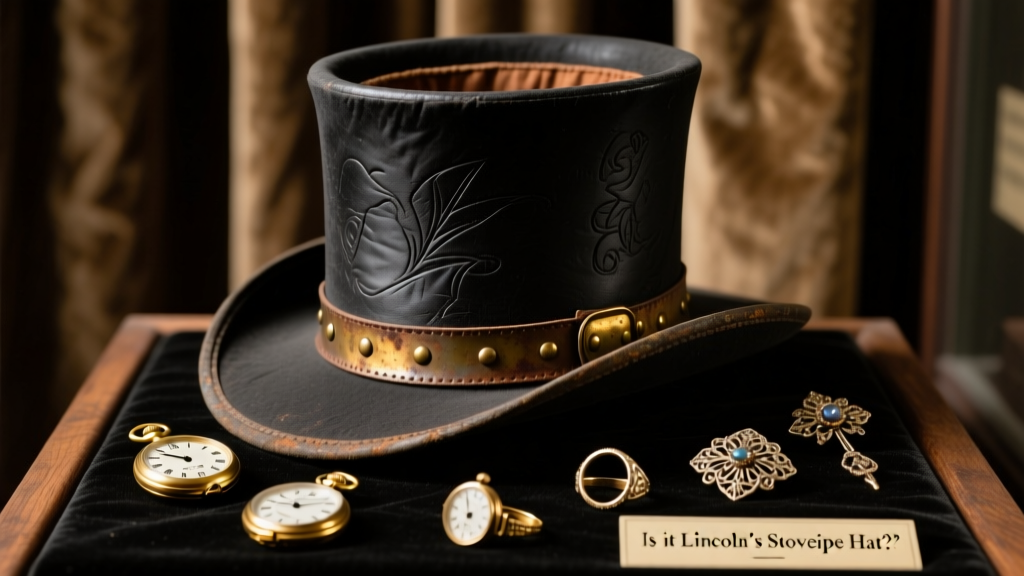
Is It Lincoln’s Stovepipe Hat—or Not? A Forensic Examination of Authenticity in 19th-Century Headwear

Baseball in the Attic: Unearthing Vintage Baseball Memorabilia, Jewelry, and Timepieces from Forgotten Family Collections
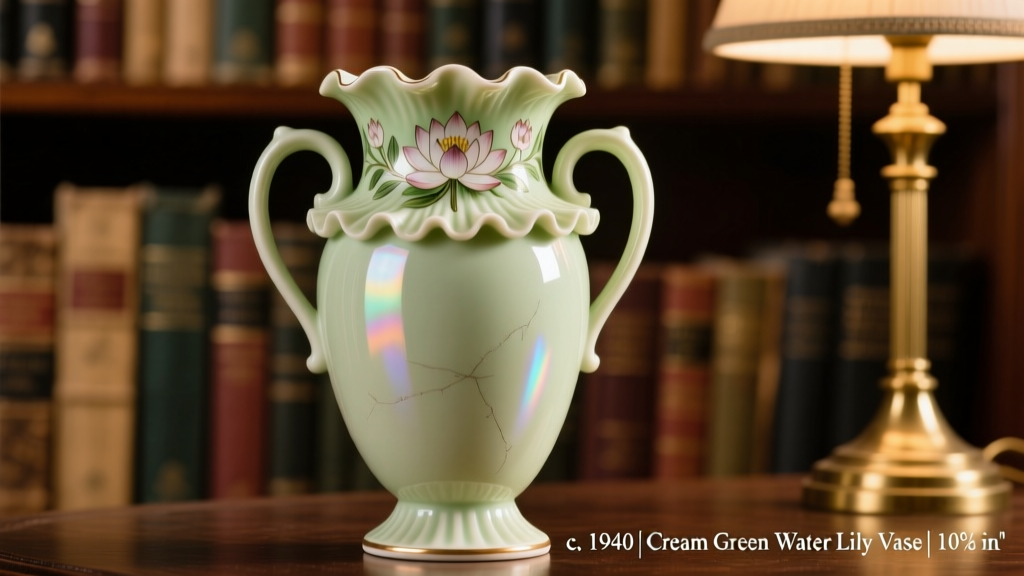
Hull Water Lily Vase: Cream-Green Glazed Ruffled Rim, Footed Form with Handles — Circa 1940, 10½ Inches
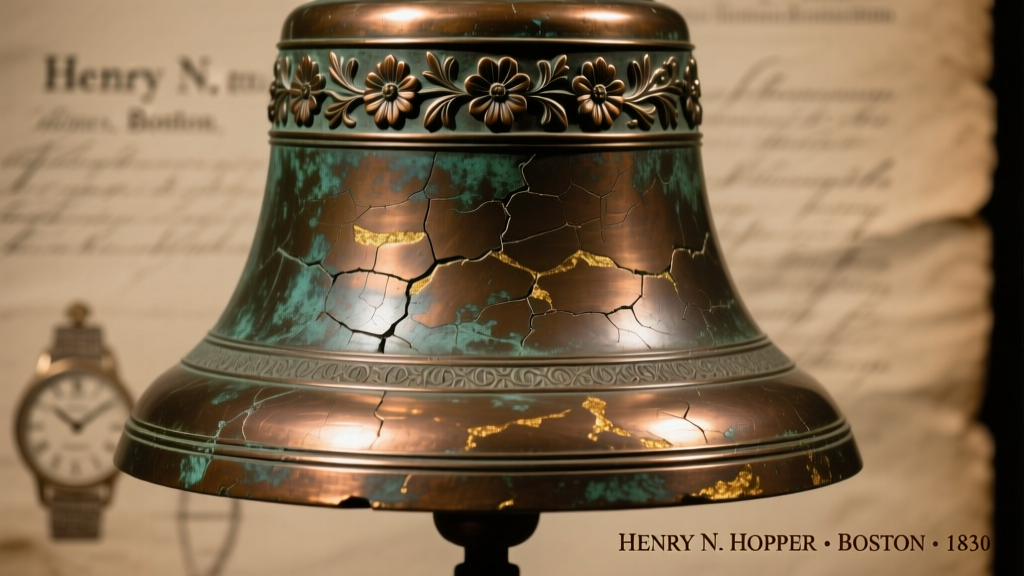
The Bell Church Bronze Cast by Henry N. Hopper, Boston: A 30-Inch Masterpiece of American Ecclesiastical Foundry Art

Doll K.R. 101 Marie Jointed Body Chemise: A Collector’s Guide to the 12-Inch Vintage German Fashion Doll

Beehive Vase, Throne Room Pattern, Classical Women on Cobalt Ground — A 24-Inch Masterpiece of Late 19th-Century English Porcelain
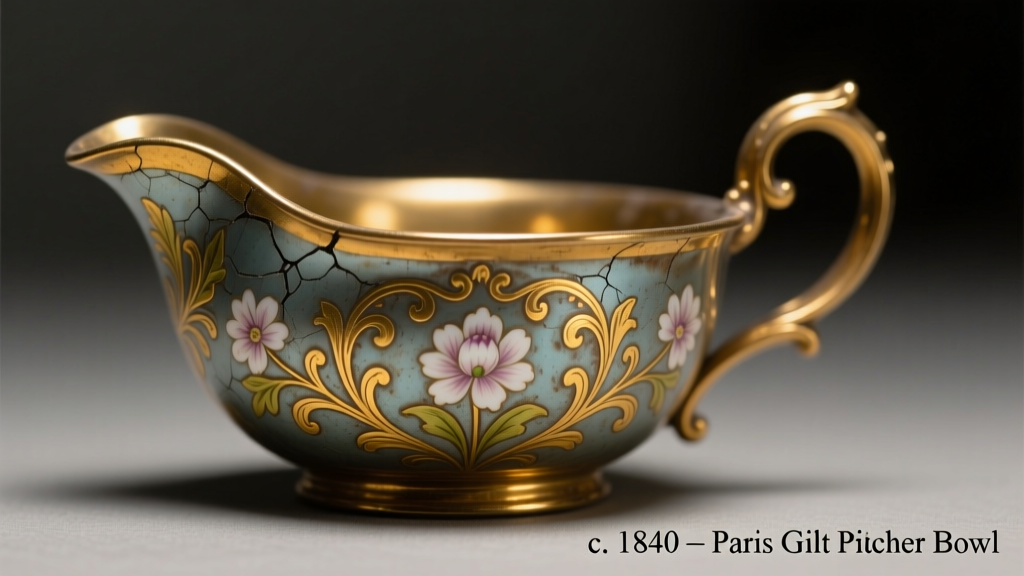
Paris Pitcher Bowl, Painted Gilt, Circa 1840: A Masterpiece of French Romantic Silver-Gilt Craftsmanship

Coca-Cola Blotter: The Sprite Boy 4 × 8 Inch Vintage Advertising Artifact — History, Authentication, and Market Value
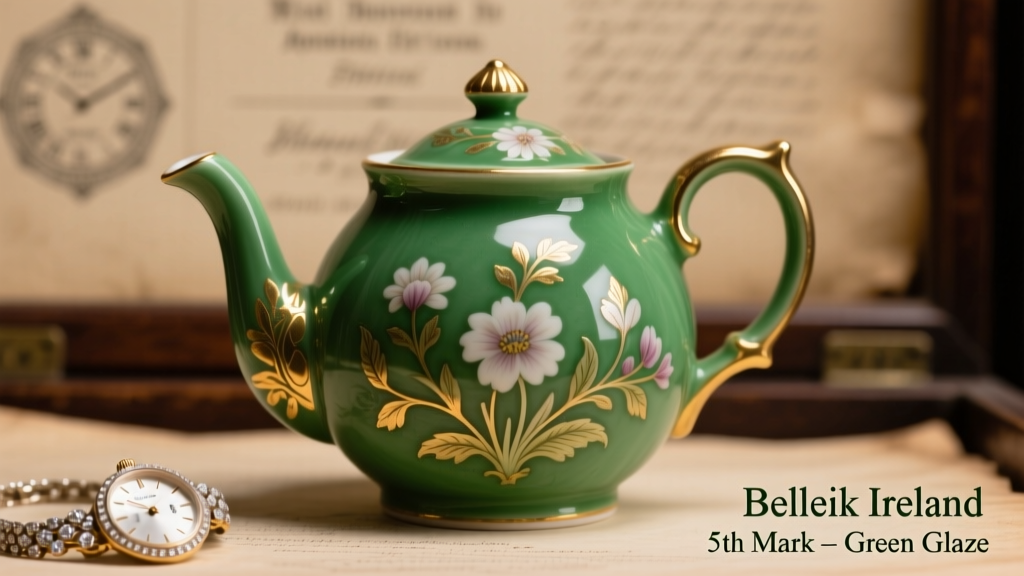
Belleek Teapot, 5th Mark, Green: Authentication, Provenance, and Market Value Analysis