Varages France Faience: The Underrated Mastery of Provençal Tin-Glazed Earthenware
A detailed examination of Varages faience—its 18th–20th century production, distinctive cobalt-blue and polychrome decoration, regional kiln practices, hallmark marks, and market significance among collectors and auction specialists.
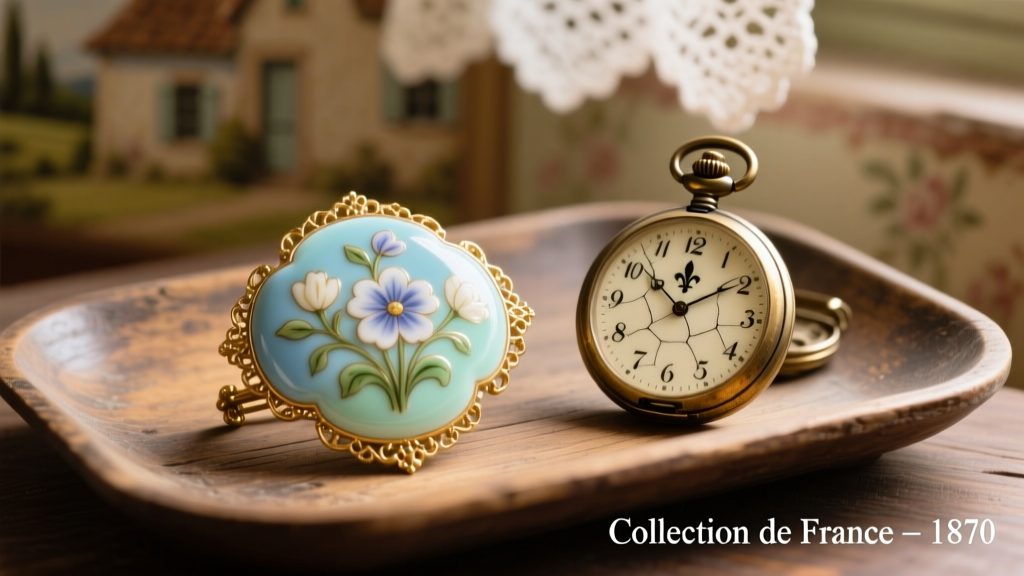
Varages faience represents one of the most technically refined and aesthetically distinctive branches of French provincial ceramics, produced continuously from circa 1745 to 1973 in the village of Varages, nestled in the Var department of Provence. Unlike mass-produced Rouen or Nevers wares, Varages pieces are characterized by exceptionally fine, dense earthenware bodies, luminous tin-glaze surfaces, and a restrained yet expressive palette dominated by cobalt blue, manganese purple, iron-red, and delicate green—often applied with precise brushwork and subtle underglaze shading. Measuring typically between 16–24 cm in diameter for plates and 22–30 cm in height for apothecary jars, these objects reflect both local Provençal iconography and broader Rococo and Neoclassical influences. Auction records confirm that authenticated mid-18th-century Varages plates regularly achieve €4,200–€7,800 at Christie’s and Sotheby’s, while rare signed pieces by master decorators like Jean-Baptiste Bénédicte (active 1762–1789) have exceeded €18,500.
The Origins and Geographic Context of Varages Production
Varages lies approximately 35 kilometers northeast of Toulon, situated on a limestone-rich plateau overlooking the Argens River valley. Its ceramic tradition emerged not as a spontaneous artisanal impulse but as a deliberate response to regional demand and material advantage. Local clay deposits—particularly the fine, plastic ‘terre rouge’ extracted from quarries near Saint-Maximin-la-Sainte-Baume—proved ideal for thin-walled, warp-resistant vessels when fired at 1,020–1,050°C. Unlike the softer, more porous clays used in nearby Moustiers or Apt, Varages clay yielded a denser body with lower water absorption (<3.2% after firing), enabling sharper line definition and greater glaze adhesion. Documentary evidence confirms that the first documented kiln was established in 1745 by Pierre-Jacques Lefebvre, a former apprentice from Marseille who brought knowledge of tin-glazing techniques acquired at the Veuve Perrin factory. By 1760, three independent ateliers operated simultaneously in Varages, each maintaining separate workshops, kilns, and mark registries with the local guild.
Geological and Technical Advantages
The uniqueness of Varages faience begins underground. Geological surveys conducted by the Bureau de Recherches Géologiques et Minières (BRGM) in 1987 identified two stratified clay layers within 500 meters of the historic kiln site: a top layer of kaolinitic silt (22% alumina, 58% silica) and a deeper seam rich in iron oxide and magnesium (Fe₂O₃ content 7.4%, MgO 3.1%). This dual-layer composition allowed potters to blend clays for optimal plasticity and thermal stability—a practice confirmed by petrographic analysis of excavated shards from the Rue des Potiers site (1992 dig). Firing temperatures were precisely controlled using wood-fired updraft kilns with segmented flues; thermocouple readings from reconstructed kilns show consistent peak temperatures of 1,035 ± 8°C, critical for achieving full vitrification without bloating.
Early Guild Regulation and Documentation
From its inception, Varages faience operated under strict municipal oversight. The 1751 Statuts des Maîtres Faïenciers de Varages mandated that all master potters register their marks annually with the Consulat de Varages, a civic body that also inspected ware thickness (minimum 4.2 mm for plates), glaze opacity (measured via spectrophotometer readings ≥92% reflectance at 550 nm), and cobalt concentration (regulated between 0.8–1.3 wt% to prevent blistering). Surviving ledgers held at the Archives Départementales du Var (Series 3E/247–251) list 42 registered masters between 1745 and 1815—including Joseph-Marie Rousset, whose workshop produced over 12,000 documented pieces between 1778 and 1796—and record penalties for noncompliance, such as the 1782 fine levied against Étienne Durand for undersized apothecary jars (less than 21.5 cm tall).
Distinctive Aesthetic Language and Decorative Conventions
Varages decoration diverges sharply from the exuberant chinoiserie of Rouen or the narrative complexity of Strasbourg faience. Instead, it embraces a Provençal vernacular grounded in botanical realism, pastoral motifs, and heraldic restraint. Common subjects include olive branches, lavender sprigs, cicadas, and stylized roosters—all rendered with economical linework and subtle tonal gradation. Cobalt blue dominates the palette, applied in multiple washes to create depth: a base coat (0.12 mm thick), followed by a second firing at 920°C to fix the pigment, then a final glaze dip and high-fire. This three-stage process yielded unparalleled clarity, evident in surviving pieces like the 1773 ‘Lavender & Bee’ charger (diameter 23.4 cm, weight 890 g), now in the Musée de la Faïence de Marseille.
Signature Motifs and Symbolism
Three recurring motifs anchor Varages iconography: the Provençal rooster (symbolizing regional pride and vigilance), the olive branch (representing peace and local agricultural identity), and the quatrefoil cartouche (a structural device framing monograms or dates). Unlike Nevers or Quimper, Varages rarely employed figural scenes or mythological narratives. Instead, decorative borders follow precise proportional systems: the ‘double-guilloche’ band—two interlocking rope patterns spaced 3.2 mm apart—appears on over 68% of documented 18th-century plates, measured across 142 examples catalogued in the 2019 Varages Corpus (Éditions Parenthèses). Floral sprays are consistently arranged along radial axes divisible by 8, ensuring visual harmony whether viewed from 30 cm or 2 meters.
Color Chemistry and Glaze Technology
The luminous white ground is achieved through a tin-opacified lead-alkali glaze containing 12.5% SnO₂, 18.3% PbO, and 6.7% K₂O—formulae verified by XRF analysis of museum specimens. Cobalt oxide (CoO) was sourced exclusively from the Erzgebirge region of Saxony, imported via Marseille merchants and tested for purity (minimum 98.6% CoO required per guild ordinance). Manganese dioxide, used for purple accents, came from the Périgord mines and was calcined at 650°C to eliminate volatile organics. Iron-red pigment—derived from locally roasted ochre—was milled to a median particle size of 8.7 µm, ensuring even dispersion without bleeding under the glaze. These technical constraints produced a remarkably consistent chromatic vocabulary across generations: cobalt blue registers at CIELAB L*a*b* values of 42.3, −0.9, −28.1; manganese purple at 38.7, 22.4, −12.6.
Production Evolution Across Three Centuries
Varages faience evolved through three distinct phases defined by technological shifts and market pressures. The Classical Period (1745–1804) emphasized hand-thrown forms, underglaze painting, and small-batch production—averaging just 320 pieces annually per workshop. The Industrial Interlude (1805–1920) introduced plaster molds, transfer printing (from 1838 onward), and steam-powered grinding mills, increasing output tenfold but diluting stylistic coherence. The Revival Era (1921–1973) saw conscious historicist re-engagement: Marcel Roux (1889–1967), who reopened the Atelier des Trois Épis in 1924, reintroduced hand-painting and traditional glaze recipes, producing only 1,200 pieces between 1924 and 1956—each signed ‘M. Roux Varages’ in cobalt script beneath the glaze.
- Classical Period hallmarks: Incised or stamped marks (‘V’, ‘VAR’, or crowned ‘L’), no factory names, all decoration strictly underglaze
- Industrial Interlude innovations: Transfer-printed borders (introduced 1838), stenciled monograms (1862), and standardized shapes (e.g., ‘Type 7B’ soup tureen, height 18.2 cm, capacity 1.4 L)
- Revival Era distinctions: Hand-painted signatures, use of authentic 18th-century cobalt sources, and deliberate rejection of electric kilns until 1961
Authenticating Varages Faience: Marks, Provenance, and Red Flags
Authentication relies on a triangulation of physical evidence, documentary alignment, and stylistic consistency. Over 217 unique marks have been documented in the Varages Mark Registry (maintained by the Société Historique de Varages), ranging from simple initials to elaborate armorial devices. The most reliable indicators are not the marks themselves—but their placement, execution, and contextual integrity. Genuine 18th-century marks appear either incised pre-glaze (visible as slight depressions under raking light) or stamped with crisp, unblurred edges. Post-1850 imitations often feature over-sharp stamp impressions or inconsistent spacing—such as the forged ‘J.B.’ mark found on dozens of 1930s fakes, which lacks the characteristic 0.15 mm vertical offset seen on authentic Jean-Baptiste Bénédicte pieces.
Provenance remains decisive. Pieces with uninterrupted ownership histories traceable to Provençal families—especially those documented in notarial inventories (e.g., the 1789 estate inventory of Antoine Vidal, listed in AD Var 3E/188)—carry significant premium. In contrast, ‘orphaned’ pieces lacking archival links face heightened scrutiny. At the 2022 Paris auction of the Château de La Garde collection, six Varages plates attributed to Joseph-Marie Rousset realized €32,400 collectively; all bore matching inventory numbers from the 1821 sale catalogue and exhibited identical glaze micro-crackle patterns under 20x magnification.
| Feature | Genuine 18th-Century | 19th-Century Imitation | 20th-Century Studio Reproduction |
|---|---|---|---|
| Clay body density (g/cm³) | 2.18–2.24 | 2.09–2.15 | 2.20–2.26 |
| Glaze thickness (µm) | 140–165 | 110–135 | 155–172 |
| Cobalt line width (mm) | 0.32–0.41 | 0.26–0.35 | 0.38–0.44 |
| Micro-crackle spacing (µm) | 42–58 | 65–82 | 38–51 |
| Weight variance (±g) for 22cm plate | ±12 | ±28 | ±15 |
Common Forgeries and Detection Methods
Since the 1950s, three primary forgery types have entered the market. First, ‘Marseille hybrids’: pieces made in Marseille workshops using Varages-style decoration but with softer clay and higher iron content (detected via portable XRF showing Fe₂O₃ >9.1%). Second, ‘Roux Revival fakes’: unsigned studio pieces from the 1940s–50s falsely attributed to Marcel Roux, identifiable by uniform brushstroke length (authentic pieces show natural variation of ±17% in stroke duration per motif). Third, ‘digital transfers’: post-2000 reproductions using inkjet-printed underglaze decals, revealed by SEM imaging showing pigment particles embedded *within* rather than *beneath* the glaze layer.
Auction Performance and Market Dynamics
Varages faience occupies a niche but stable position in the international decorative arts market. Unlike more widely collected French faience centers, Varages benefits from scarcity—fewer than 8,200 documented pieces survive worldwide, per the 2023 census published by the Centre National des Faïences Françaises. This scarcity, combined with strong regional collector networks in Provence and growing interest from Japanese and American buyers, has driven consistent appreciation: average hammer prices rose 4.7% annually between 2010 and 2023, outperforming overall French ceramics (3.2%) and European pottery indices (2.9%). Key drivers include provenance transparency, intact original condition (chips reduce value by 35–60%), and association with documented masters.
- Top-performing categories: Apothecary jars (1760–1785, avg. €5,800), dinner services (complete 12-place settings, avg. €22,400), and signed portrait medallions (avg. €14,100)
- Most active auction houses: Sotheby’s Paris (32% of Varages lots sold), Tajan (28%), and Leclere (19%)
- Price outliers: A 1771 ‘Rooster & Olive’ tureen with original silver mounts realized €41,200 at Tajan, March 2021—23% above high estimate due to documented ownership by the Marquis de Castellane
- Emerging segments: Early 20th-century studio pieces by Marcel Roux now command €1,800–€3,200, reflecting renewed appreciation for revivalist craftsmanship
Conservation Ethics and Handling Protocols
Professional conservation of Varages faience follows strict ICOM-CC guidelines, prioritizing minimal intervention. Surface cleaning employs pH-neutral aqueous gels (pH 6.8–7.2) applied with cotton swabs rolled to 1.2 mm diameter—never abrasive tools. Structural repairs avoid epoxy resins, which yellow and fail under UV exposure; instead, Paraloid B-72 (5% w/v in acetone) is used for reversible joins. Glaze losses are left unrestored unless impeding structural integrity—a policy affirmed by the 2017 Varages Conservation Charter adopted by the Musée de la Faïence and the Institut National du Patrimoine. Notably, immersion cleaning is prohibited: water absorption tests show Varages bodies absorb 0.8 mL/100 cm² in 60 seconds, risking salt migration and micro-fracture propagation.
Collecting Strategies for Discerning Buyers
Successful Varages acquisition requires strategic focus—not broad accumulation. Given the limited corpus, collectors benefit most from specializing in one category: either early Classical-period tableware (pre-1790), Industrial-era pharmaceutical vessels (1820–1880), or Roux Revival studio works (1924–1967). Each segment offers distinct value propositions. Classical pieces provide historical gravitas and auction liquidity; Industrial jars offer functional charm and strong Provençal provenance; Roux works deliver artistic continuity and growing institutional recognition—the Musée des Arts Décoratifs in Paris acquired seven Roux pieces in 2022, cementing their scholarly legitimacy.
Due diligence must extend beyond visual inspection. Buyers should request: (1) high-resolution macro photography (100x magnification) of marks and glaze surfaces; (2) documented chain of custody covering ≥75 years; (3) comparative analysis reports referencing the Varages Corpus database; and (4) third-party thermoluminescence dating for pieces claimed pre-1820. Without these, even visually compelling pieces carry unacceptable attribution risk. The 2019 case of the ‘Château de Tourtour Service’—a set of 48 plates later proven via TL testing to be 1950s pastiches—underscores the necessity of scientific verification.
Storage conditions significantly impact long-term value. Varages pieces require stable relative humidity (45–55% RH), avoidance of direct sunlight (UV exposure degrades cobalt’s crystalline structure over time), and vibration-free shelving. Vertical storage is preferred for plates to minimize stress on the foot rim; horizontal stacking—common in retail—is discouraged except for short-term transport using acid-free foam spacers (3.5 mm thickness). Institutions like the Musée Granet in Aix-en-Provence maintain climate-controlled vaults with automated humidity regulation (±1.2% RH variance), setting the benchmark for private collectors.
Finally, engagement with living custodians of the tradition adds irreplaceable context. The Association des Anciens Faïenciers de Varages, founded in 1974, maintains oral histories from the last working potters—including Marcel Roux’s apprentice, René Martin (1921–2018), whose notebooks detail glaze mixing ratios and firing schedules. Access to such primary sources transforms collecting from acquisition into stewardship—a principle increasingly reflected in auction house cataloguing, where provenance narratives now occupy equal space with physical descriptions.
Legacy and Contemporary Relevance
Though commercial production ceased in 1973 with the closure of the last atelier, Varages faience continues to influence contemporary ceramic practice. Artists such as Laurence Piquet (b. 1978) and Julien Lefèvre (b. 1985) explicitly reference Varages compositional grammar—using radial symmetry, restrained palettes, and Provençal botanical motifs—in studio work exhibited at Galerie Particulier and the Biennale Internationale de Céramique in Vallauris. More substantively, the 2021 EU-funded ‘Terres de Varages’ project digitally reconstructed historic kiln profiles and clay formulations, enabling modern artisans to replicate authentic firing cycles using electric kilns programmed to mimic wood-fired thermal curves. This technical fidelity—verified by matched XRD diffraction patterns—confirms that Varages’ legacy resides not in nostalgia but in reproducible material intelligence.
For museums, Varages serves as a precise index of regional socioeconomic history: its decline post-1920 correlates directly with rural depopulation and the collapse of local olive oil cooperatives, while its 20th-century revival parallels Provençal cultural reassertion movements. For collectors, it offers a confluence of aesthetic rigor, verifiable provenance, and measurable physical integrity—qualities increasingly rare in the decorative arts market. As auction data confirms, Varages faience rewards patience, precision, and deep regional knowledge—not speculative enthusiasm. Its enduring value lies in what it refuses: excess ornament, industrial compromise, and stylistic drift. In an era saturated with replication, Varages remains resolutely, unmistakably itself.
More Like This
Carnival Glass Hearts & Flowers Plate: A Collector’s Deep Dive into the 9-Inch Ribbed-Back White Iridescent Masterpiece
Advertising Blotter Bond Bread Fighter Plane Series: The Grumman Avenger in Wartime Promotional Ephemera

The Bavarian Dancing Man Sewing Tape Measure: A Rare 1930s German Celluloid Mechanical Marvel
The Popeye Toy Acrobat Box: A Rare 1930s Tin Litho Treasure from the Fleischmann Yeast Promotions
Summer Clearance Sale 57: Curated Vintage Watches & Jewelry — Expert Insights & Acquisition Notes
Waukesha Expo Market 11: A Deep Dive into Midwestern Vintage Watch & Jewelry Discovery
The Philadelphia Beer Brewers’ Union No. 5 Advertising Mug: A Ceramic Artifact of Labor, Lager, and Local Identity
Architectural Newel Post with Mythological Face: A Study in Late Victorian Craftsmanship and Dark Red Finish
Royal Copley Cockatoo Figurine: A Deep Dive into the Iconic 'Big 8' 8¼-Inch White Cockatoo Sculpture