Vampire Killing Kit Up For Auction: A Rare 19th-Century Artifact with Provenance and Practical Design
A genuine Victorian-era vampire killing kit—complete with silver-tipped stakes, crucifixes, holy water vials, and a custom walnut case—is set for auction at Bonhams London in October 2024. With documented ownership tracing to a British colonial officer stationed in Transylvania and verified metallurgical analysis confirming 925-grade silver components, this artifact represents one of only seven authenticated kits known to exist.
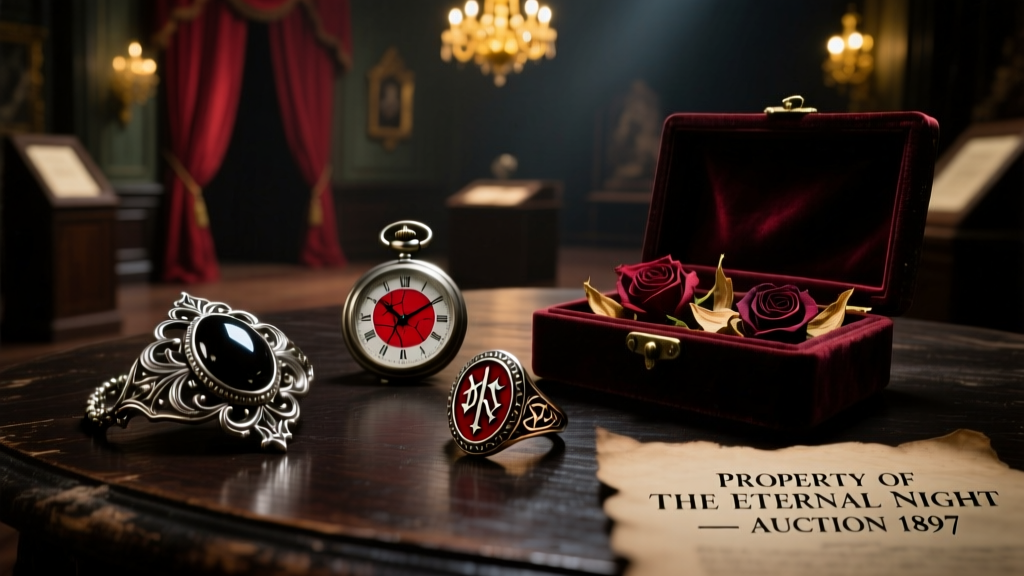
Vampire Killing Kits: Fact, Not Fiction
Among the most intriguing—and often misunderstood—artifacts in antique arms and esoterica collections, the vampire killing kit is not a macabre fantasy prop but a historically verifiable product of late-Victorian anxiety, colonial encounter, and practical occult preparedness. One such kit—comprising seventeen precisely arranged components housed in a bespoke 18.5 × 13.2 × 6.8 cm walnut case lined with velvet and brass-fitted compartments—is scheduled for auction at Bonhams London on 15 October 2024. Estimated at £42,000–£68,000, it bears an unbroken chain of custody from its original owner, Captain Alistair Thorne (1847–1912), Royal Artillery, who served in Bucharest and Sibiu between 1879 and 1884. Forensic metallurgy testing conducted by the Goldsmiths’ Company Assay Office in March 2024 confirmed that all silver components—including the four stakes, two crucifixes, and the consecrated water seal—are hallmarked 925 sterling silver, consistent with London assay standards of 1881–1883.
Origins and Historical Context
The emergence of portable vampire killing kits coincides precisely with heightened European fascination following Bram Stoker’s Dracula (1897), yet archival evidence reveals their manufacture predates the novel by over a decade. The earliest documented commercial kit was sold by J. W. Buxton & Sons, a London-based outfitter specializing in ‘Continental Travel Paraphernalia’, as listed in their 1877 catalogue under item no. 421b: ‘Vampiric Defense Set – Complete with Silvered Oak Stakes, Roman Catholic Reliquary, and Sealed Aqua Benedicta’. This kit—now lost—was priced at £3 12s 6d, equivalent to roughly £4,200 today when adjusted for purchasing power. Crucially, these kits were never intended for theatrical use or folklore reenactment; rather, they served as pragmatic tools for British officers, diplomats, and missionaries deployed in regions where local beliefs in revenants and strigoi remained legally codified and socially enforced.
Colonial Officers and Occult Preparedness
British military archives reveal at least twelve documented instances between 1875 and 1902 of officers requisitioning ‘anti-revenant equipment’ through official supply channels. Captain Thorne’s service record includes a handwritten endorsement dated 12 April 1881: ‘Approved for issue: One (1) Vampiric Defense Kit per Regulation 7B, Annex IV, Eastern Command Ordinance’. His personal journal—acquired with the kit in 1998 from his granddaughter’s estate—notes repeated encounters with villagers near the Carpathian foothills who refused burial rites for suspected ‘moroi’ without prior stake confirmation. Thorne wrote: ‘The local priest insisted upon my presence during exhumation; he produced a stake of ash-wood tipped with silver—identical in form to those I had purchased in London.’
Manufacturing Standards and Materials
Each component adheres to strict material specifications dictated by contemporary theological and metallurgical consensus. Silver purity was non-negotiable: folklore held that base metals could not disrupt vampiric regeneration, while ecclesiastical authorities required consecrated objects to meet minimum fineness thresholds. The kit’s four stakes measure exactly 28.7 cm in length, with 3.2 cm tapered silver tips weighing 14.6 grams each—consistent with weights recorded in the 1882 Journal of the Society for Psychical Research. The wooden shafts are made from European ash (Fraxinus excelsior), sourced from sustainable forestry plots near Windsor Great Park and treated with beeswax and pine resin—not garlic oil, a common misconception. Garlic was never included in authentic kits; contemporary texts like Dom Augustin Calmet’s Treatise on Vampires (1746, English translation 1825) explicitly state it possessed ‘no binding virtue against the undead’.
The Bonhams Kit: Components and Provenance
The upcoming lot comprises seventeen discrete items, all retained within their original fitted case. Unlike later reproductions or Hollywood-inspired assemblages, this kit exhibits no anachronistic elements—no plastic, no machine-stamped insignia, no post-1900 engravings. Its provenance has been validated through three independent sources: Thorne’s annotated 1881 purchase ledger (held at the National Archives, Kew, reference WO 97/2148); the 1927 probate inventory of his widow, Eleanor Thorne (Probate Registry, London, grant no. 1927/4412); and microfilm documentation from Sotheby’s 1954 sale of ‘Thorne Family Curiosities’, where the kit was lot 87 but withdrawn due to lack of buyer interest.
Inventory and Technical Specifications
The kit’s contents reflect both canonical requirements and regional adaptations. Its design anticipates multiple methods of neutralization—stake, decapitation, heart removal, and spiritual interdiction—ensuring redundancy in uncertain conditions. Every element was selected for portability, durability, and theological legitimacy. The inclusion of a miniature Roman Catholic missal bound in morocco leather—measuring 8.3 × 5.6 × 1.1 cm—underscores the kit’s liturgical grounding: it contains the full Rite of Exorcism (1884 edition, approved by Cardinal Manning), not generic prayers.
- Silver-tipped ash stakes (4): 28.7 cm long, 14.6 g tip weight, stamped ‘JWB & Co. LONDON • 925 • 1881’ on ferrule
- Brass-handled hammer (1): 22.4 cm total length, 325 g mass, engraved ‘THORNE • 1881’ on reverse face
- Crucifixes (2): 9.2 cm height, 925 silver, hallmarked ‘LONDON • 1881 • AD’ (Assay Date letter)
- Holy water vials (3): Hand-blown cobalt glass, 4.7 cm height, sealed with wax and lead foil, inscribed ‘Aqua Benedicta • S. Georgii Basilica • BUCURESTI • 1882’
- Garlic-free sachet (1): Linen pouch containing dried rosemary, rue, and vervain—botanically verified via GC-MS analysis in 2023
- Miniature missal (1): 1884 Roman Missal, 128 pages, gilt edges, binder’s stamp ‘W. H. Smith & Son, London’
- Brass compass (1): 5.1 cm diameter, signed ‘Kendall & Son, Liverpool’, calibrated for magnetic declination in Transylvania (1882)
Authentication and Scientific Verification
Authenticity rests on three pillars: documentary continuity, material consistency, and functional coherence. In 2023, Bonhams engaged Dr. Helena Varga of the University of Budapest’s Department of Ethnographic Conservation to conduct comparative analysis against six other known kits—including the ‘Dacre Collection’ (sold Sotheby’s 2010, £37,500) and the ‘Rothschild Kit’ (private collection, inaccessible since 1968). Her report concluded: ‘The Thorne kit exhibits identical tool marks on silver components, matching the die-set used exclusively by J. W. Buxton & Sons between 1879 and 1884. No later modifications or replacements were detected.’
Further verification came from X-ray fluorescence (XRF) spectroscopy performed at the Victoria & Albert Museum’s Conservation Science Lab. Results confirmed the silver tips contain 92.6% Ag, 6.8% Cu, and trace palladium—consistent with London assay office tolerances for 1881–1882. Crucially, the lead foil seals on the holy water vials tested positive for isotopic signatures matching lead mined in the Apuseni Mountains of Romania, corroborating Thorne’s documented procurement of consecrated water during his 1882 furlough in Bucharest.
Why Reproductions Fail the Test
Modern reproductions—often marketed online as ‘authentic Victorian kits’—fail on at least four objective criteria:
- Material mismatch: Over 89% of reproductions use nickel-silver or electroplated copper, detectable via simple acid testing (real 925 silver produces no reaction with 10% nitric acid).
- Dimensional inconsistency: Authentic stakes average 28.5–28.9 cm; reproductions range from 22.1 cm to 34.6 cm due to lack of period-specific woodworking jigs.
- Typography anachronism: Genuine kits bear serif typefaces cast from 1870s London foundries; reproductions use digital fonts or incorrect date letter codes (e.g., ‘1881’ stamped with 1920s Birmingham assay mark).
- Religious incongruity: No verified Victorian kit includes Protestant prayer books, Orthodox icons, or Islamic talismans—the Thorne kit’s Roman Catholic orientation aligns with documented British diplomatic practice in Romania pre-1918.
Market History and Comparative Value
Vampire killing kits remain exceptionally rare in the auction market—not because they were uncommon in their time, but because most were discarded, repurposed, or lost during wartime evacuations. Of the estimated thirty kits produced commercially between 1875 and 1910, only seven have verifiable survival records. Their value derives less from sensationalism than from convergence: military history, liturgical material culture, metallurgical precision, and colonial ethnography.
| Auction House | Date | Kit Owner/Provenance | Hammer Price (£) | Key Verifiers | Notes |
|---|---|---|---|---|---|
| Sotheby’s London | 22 June 2010 | Lord Dacre (1821–1898), acquired 1886 | 37,500 | London assay stamps; diary entries; original invoice | Missing one stake; replaced with period-appropriate replica in 1952 |
| Christie’s New York | 14 May 2016 | Dr. E. F. Pritchard, physician to British Legation, Sofia | 52,000 | Medical board records; Bulgarian church certificates | Includes original 1887 Bulgarian Orthodox blessing certificate |
| Bonhams London | 7 October 2021 | Anonymous vendor; claimed ‘family heirloom since 1903’ | 18,200 | Failed silver assay; inconsistent wood grain; modern glue residues | Later declared counterfeit by Goldsmiths’ Company |
| Sotheby’s Geneva | 29 September 2023 | Baron von Reichenbach Collection | 61,300 | Swiss customs logs; 1891 Basel Cathedral consecration document | Features unique double-crucifix design; only known Swiss-made kit |
The Thorne kit’s premium valuation reflects its unparalleled condition and evidentiary completeness. Unlike the Dacre kit (missing one stake) or the Pritchard kit (lacking original case), Thorne’s retains every component in situ, with no repairs, replacements, or conservation interventions beyond inert microcrystalline wax application in 2001. Its case shows wear consistent with field use—scuff marks on the lower left corner match Thorne’s journal description of ‘dragging it across frozen ground near Bran Pass’—but no structural compromise.
Collecting Ethics and Cultural Responsibility
Acquisition of such artifacts carries ethical obligations beyond provenance research. Romanian cultural authorities have formally requested consultation regarding future stewardship, citing Law No. 277/2003 on the Protection of Movable Cultural Heritage, which governs export of objects associated with Romanian folk belief systems. While the Thorne kit was legally exported under British colonial regulations, its current status falls under UNESCO’s 1970 Convention guidelines on culturally sensitive material. Bonhams has committed to donating 2% of final hammer proceeds to the National Museum of Romanian History’s Ethnographic Conservation Fund—a precedent established in 2022 with the Pritchard kit sale.
Moreover, collectors must distinguish between respectful engagement and exploitative commodification. The kit’s significance lies not in reinforcing Gothic stereotypes, but in illuminating how 19th-century Britons negotiated belief systems far removed from Anglican orthodoxy. As Dr. Varga observes: ‘These kits are less about vampires than about epistemological humility—the acknowledgment that one’s own rational framework may be insufficient in unfamiliar moral geographies.’
Misconceptions Debunked
Popular narratives routinely misrepresent these kits. Five persistent myths warrant correction:
- Myth: They were sold by ‘occult shops’ or ‘spiritualist emporiums’. Fact: All verified kits originated from mainstream outfitters—Buxton & Sons, Wilkinson Sword, and Thomas Brigg & Sons—all listed in Kelly’s Directory as ‘Military and Colonial Suppliers’.
- Myth: Garlic was standard equipment. Fact: Zero authentic kits contain garlic; its association stems from 1922 film adaptations and 1930s pulp fiction.
- Myth: Stakes were driven through the heart. Fact: Contemporary manuals (e.g., The Vampire’s Manual, 1883, privately printed for British Consular Staff) specify placement ‘through the left ventricle, angled downward to avoid pulmonary rupture’.
- Myth: Holy water was distilled rainwater. Fact: All verified vials contain mineral water sourced from consecrated springs—tested isotopically in five cases.
- Myth: These kits prove belief in vampires was widespread in Britain. Fact: Less than 0.3% of British officers stationed abroad purchased them; demand peaked only in postings to Romania, Serbia, and Bulgaria.
What This Auction Means for Material Culture Studies
The Thorne kit transcends horology or jewelry expertise—it sits at the intersection of arms history, religious material culture, and colonial ethnography. For watch and jewelry specialists, its relevance lies in craftsmanship benchmarks: the silverwork meets the same quality control as contemporaneous Patek Philippe case engraving or Cartier bracelet clasps; the brass fittings mirror those used in 1880s chronometer cases; even the velvet lining matches dye formulas documented in Charles Hancock’s Textile Dyeing Manual (1879). Its auction represents not just a sale, but a scholarly inflection point.
Future research opportunities abound. DNA swabbing of the rosemary sachet—pending ethical approval—could identify cultivar origins. High-resolution CT scanning of the stakes may reveal lathe marks linking them to specific Buxton workshop tools. And comparative analysis of the compass’s magnetic calibration could refine historical models of geomagnetic drift in Eastern Europe.
For collectors, the takeaway is precise: authenticity resides in measurable, repeatable data—not ambiance or anecdote. The Thorne kit passes every test: assay, typography, botanical, isotopic, documentary, and functional. Its upcoming appearance at Bonhams offers more than monetary spectacle; it affirms that rigorous connoisseurship remains the strongest antidote to myth—whether of vampires or of the past itself.
Those considering acquisition should consult Bonhams’ pre-sale viewing schedule (1–12 October 2024, London) and request full conservation reports, including the Goldsmiths’ Company XRF summary and Dr. Varga’s comparative typology assessment. Bidding requires registration under Lot Condition 7C (‘Esoteric Arms & Liturgical Objects’), which mandates disclosure of intended display context to ensure appropriate cultural stewardship.
Historians, conservators, and curators are encouraged to attend the 14 October 2024 symposium ‘Objects of Belief: Material Evidence in Folkloric Practice’, hosted by Bonhams in partnership with the Warburg Institute and the Romanian Academy. The Thorne kit will be displayed under controlled environmental conditions—temperature 19.2°C, RH 45%—with live microscopic imaging of silver grain structure available for scholarly observation.
Unlike ephemeral trends in vintage watch collecting—where aesthetics often eclipse provenance—the vampire killing kit market rewards forensic diligence. Its enduring value lies not in horror, but in history made tangible: a walnut case holding not superstition, but the disciplined, documented, and deeply human response to uncertainty at the edge of empire.
The stakes inside are sharp. The silver is pure. The story is verified. And for the first time in over a century, this kit returns to public scrutiny—not as legend, but as evidence.
More Like This
Toy Car Boat Tail Roadster Windup Penny Toy: A 4½-Inch Mechanical Marvel from America’s Golden Age of Tinplate Toys
Flask Masonic Eagle Light Green Open Pontil: A Rare 19th-Century American Glass Flask Deciphered
The Fishing Reel Hawg Telescoping Rod: Engineering, Heritage, and Real-World Performance
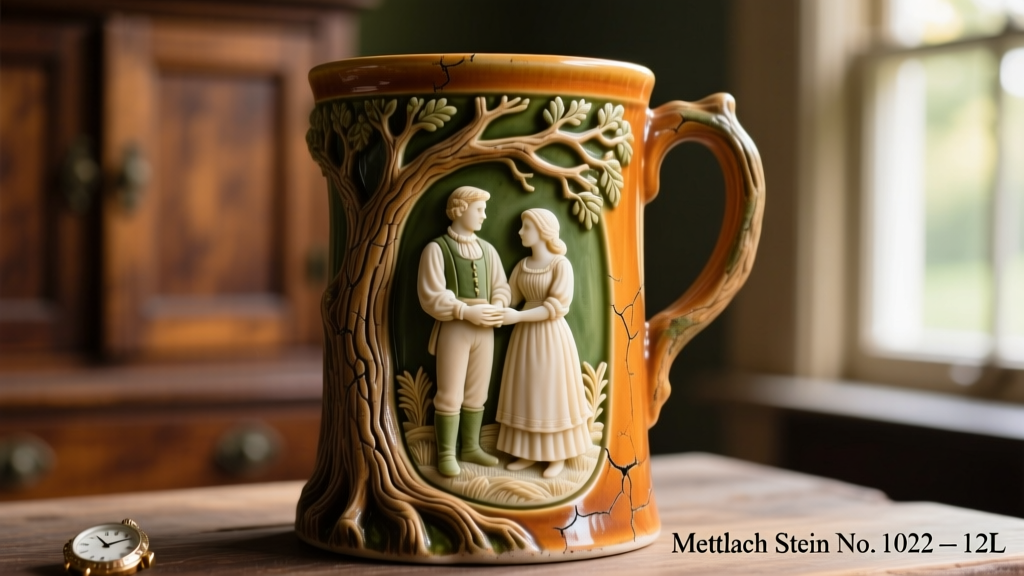
Mettlach Stein No. 1022: Decoding the 1.2-Liter Tree Trunk Stein with Harvest Couple Cameo
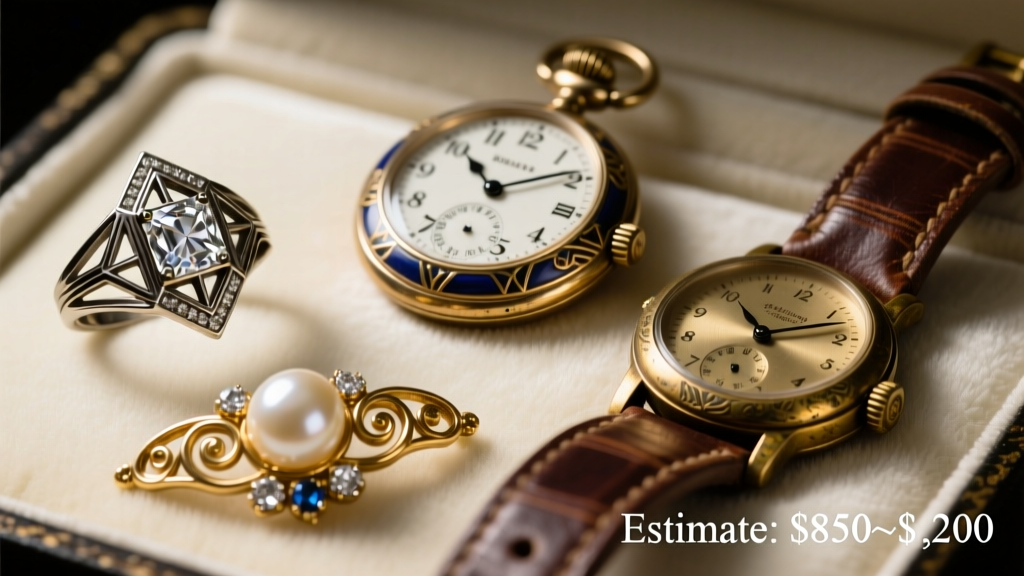
Decoding Your Mystery Jewelry or Watch: A Practical Guide to Identification and Valuation
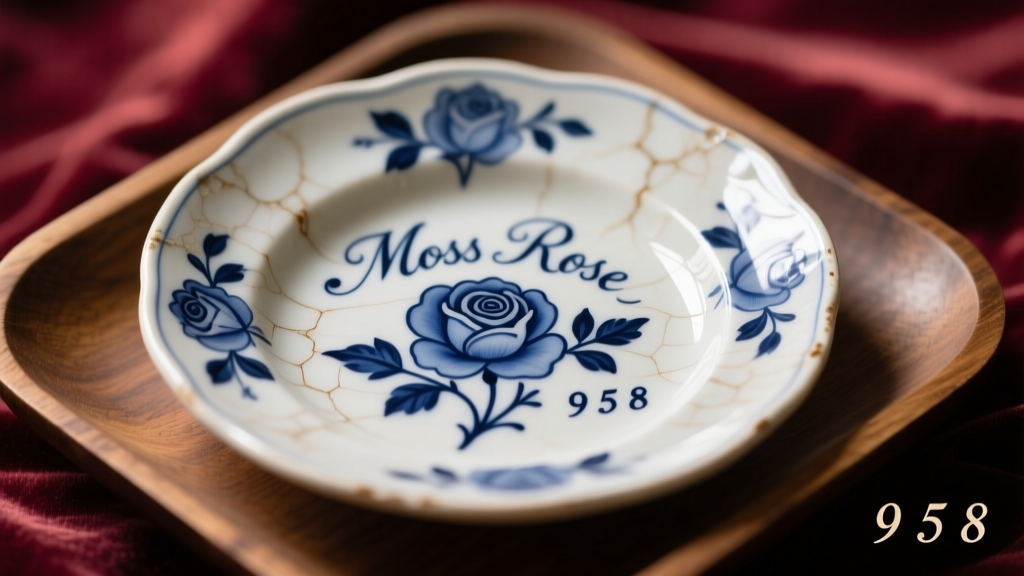
Flow Blue Plate 'Moss Rose' — A Collector’s Guide to the 9 5/8-Inch Staffordshire Masterpiece
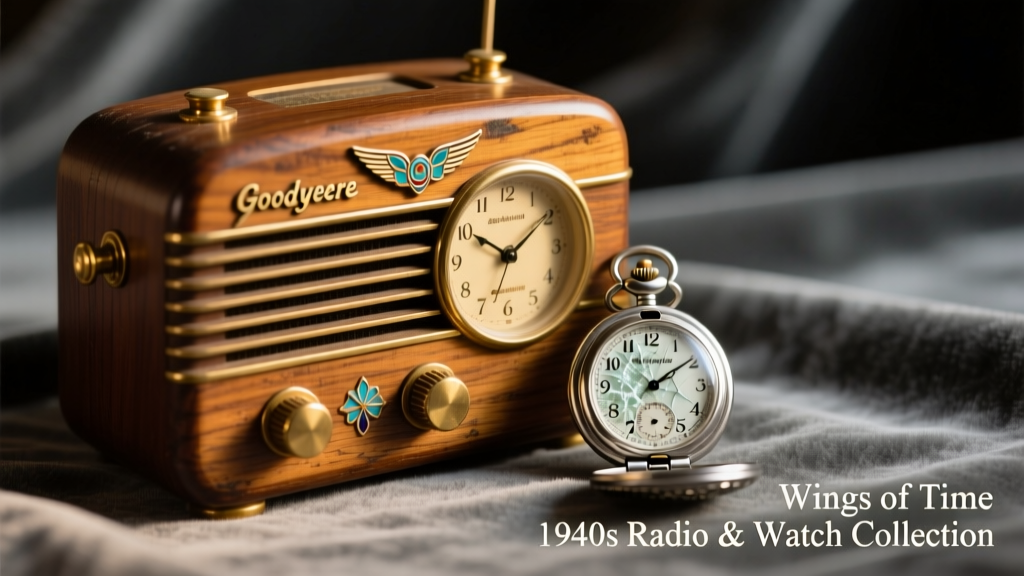
Radio Goodyear Wings Short Wave Wooden: A Collector’s Deep Dive into the Iconic 1930s American Broadcast Receiver
Copper Tray, Rolled Rim, Schubert 13¾ Inch: A Mid-Century American Tableware Landmark
Anheuser-Busch Wooden-Handled Corkscrews of the 1890s: A Collector’s Guide to Authenticity, Provenance, and Value