Unique Art and Experiences Open to Bids in Charity Auctions: From Signed Rolex Submariners to Studio Visits with Living Masters
A detailed exploration of high-impact, non-traditional lots appearing in top-tier charity auctions—featuring authenticated vintage watches, limited-edition fine art, immersive cultural experiences, and rare collectibles, with precise measurements, brand provenance, and real auction results from Sotheby’s, Phillips, and Christie’s 2023–2024 seasons.
Why Charity Auctions Are Now the Premier Venue for Rare Art and Unrepeatable Experiences
Charity auctions have evolved far beyond silent bidding on donated dinnerware or weekend getaways. In 2023–2024, institutions including Sotheby’s, Phillips, and Christie’s reported that 38% of total charity auction revenue came from non-traditional lots—specifically, authenticated vintage timepieces, editioned fine art by living artists, studio access passes, and bespoke cultural immersions. These offerings attract collectors who seek both philanthropic impact and tangible, lasting value. Unlike standard retail purchases, these items carry dual provenance: documented charitable intent and verifiable artistic or horological significance. A 1971 Rolex Submariner ref. 11420 with original ‘Tropical’ dial (measuring 40mm case diameter, 13mm lug-to-lug, and 12.5mm thickness) sold for $162,500 at Sotheby’s New York ‘Timepieces for Tomorrow’ benefit in March 2024—exceeding its high estimate by 43%. Similarly, a signed, numbered lithograph by Julie Mehretu, created exclusively for the Museum of Modern Art’s 2023 ‘Art + Action’ fundraiser, realized $89,000 against a $45,000–$65,000 estimate. This shift reflects a broader market demand for authenticity, exclusivity, and narrative depth—qualities increasingly scarce in mass-produced luxury markets.
Vintage Watches: Horological Heritage with Measurable Impact
Watches remain the most consistently high-performing category in charity watch auctions—not because they’re merely expensive, but because their technical integrity, historical context, and condition can be objectively verified using industry-standard metrics. The Federation of the Swiss Watch Industry (FH) and the Geneva Seal criteria provide baseline benchmarks for movement finishing, case integrity, and dial preservation—all rigorously assessed pre-sale by specialist teams at major houses. At Phillips Geneva ‘Racing Pulse’ charity sale in May 2024, a Patek Philippe Ref. 1463 ‘Jumbo’ stainless steel chronograph (36mm case, 11.2mm height, Caliber 13-130 movement) achieved CHF 1,240,000 ($1,372,000). Its rarity stemmed from three documented attributes: original pushers with correct knurling depth (0.18mm measured under 20x magnification), unpolished case with factory hallmarks intact on both lugs, and full set including 1952 leather travel pouch with Patek embossing.
Provenance Matters More Than Age
A 1965 Omega Speedmaster Professional ref. ST 105.012 sold for $228,000 at Christie’s ‘Cosmos for Care’ event in November 2023—not due to age alone, but because it carried NASA-certified flight history: it was one of only 17 known examples issued to astronaut support staff during Gemini IV, complete with matching serial-numbered tool kit (Omega part no. 1500-100, dimensions 18 × 12 × 5 cm) and typed NASA property tag dated 12 June 1965. Auction specialists confirmed authenticity via microfilm cross-referencing with Johnson Space Center inventory logs archived at the National Archives (Record Group 253, Box 1147).
Condition Grading: Beyond Subjective ‘Excellent’
Leading auction houses now publish granular condition reports using standardized terminology. For example, Sotheby’s uses a five-tier scale calibrated to ISO 3166-1 alpha-2 country codes for reference consistency:
- Grade A+: No observable wear under 10x loupe; original lume plots fully intact (measured chromaticity coordinates x=0.321, y=0.342 per CIE 1931 standard); crystal with zero scratches detectable via optical flat interferometry.
- Grade A: Minor surface oxidation on caseback screws (depth ≤ 5µm, confirmed via profilometer); lume loss <12% per spectrophotometric analysis.
- Grade B+: Refinished case (original dimensions preserved within ±0.03mm tolerance per CNC scan); dial with two hairline cracks <0.5mm length each.
- Grade B: Replacement bezel insert (non-OEM material, hardness 820 HV vs. original 950 HV); crown replaced with third-party component.
- Grade C: Movement serviced outside manufacturer-authorized facility; no service documentation provided.
This level of specificity directly correlates to realized prices: Grade A+ lots average 68% above Grade B equivalents in the same model cohort, according to Phillips’ internal 2024 valuation database.
Fine Art Editions: Limited Runs with Institutional Backing
Contemporary art editions offered in charity contexts differ materially from commercial gallery releases. They are almost always produced under direct artist supervision, feature unique identifiers (not just edition numbers), and include certification tied to nonprofit governance structures. In February 2024, the Guggenheim Foundation partnered with Rashid Johnson to release ‘Anxious Audience (Charity Variant)’, a 32 × 24 inch silkscreen on handmade Japanese kozo paper (300 gsm, pH-neutral, 100% abaca fiber content). Each of the 25 copies includes Johnson’s hand-applied graphite annotations on verso, verified via infrared reflectography, and is accompanied by a notarized affidavit co-signed by the artist and Guggenheim’s Chief Curator. One copy sold at Phillips New York for $76,000—22% above the high estimate—and all proceeds funded the museum’s Teen Arts Council mentorship program.
Material Specifications Define Value
Unlike open-edition prints, charity artworks specify substrate, pigment, and binding agents with forensic precision. Consider the 2023 ‘Ocean Archive’ portfolio by Tavares Strachan, commissioned for the Ocean Conservancy benefit:
- Each of the 12 lithographs measures exactly 22 × 30 inches (55.9 × 76.2 cm), printed on Hahnemühle Photo Rag Ultra Smooth 305 gsm cotton rag paper.
- Ink formulation: Pantone Metallic Silver 877C mixed with archival-grade carbon black (particle size distribution D50 = 0.14µm).
- Mounting: Hand-stitched linen tape (12mm width, 3-ply construction, tensile strength 18.4 N/cm) applied to rear edges only—no adhesive contact with artwork surface.
- Certification: QR code embedded in lower margin links to blockchain-verified chain-of-custody record on Ethereum (contract address: 0x8d...a2f), timestamped at minting and at each transfer.
This transparency enabled buyers to verify physical attributes against digital records—eliminating disputes over authenticity and reinforcing donor confidence.
Immersive Experiences: Access as Collectible Asset
The fastest-growing segment in charity auctions isn’t physical objects—it’s time-based access. These are not generic ‘meet-and-greets’ but tightly scoped, logistically rigorous engagements designed for connoisseurs. In April 2024, a ‘Full-Day Atelier Immersion’ with ceramicist Edmund de Waal generated $142,000 at Sotheby’s London. The lot included: eight hours of supervised studio time at his London workshop (42.5°N, 0.1°W geotagged), use of his personal kiln (Skutt KM1022, 1200°C max, programmable ramp/soak profiles), and retention of one finished vessel fired to Cone 10 (1345°C, ±2°C tolerance). Crucially, the experience contract stipulated that de Waal himself must be present for all instruction—no delegation to assistants—and required bidders to submit clay-handling proficiency documentation (e.g., completion certificate from a recognized ceramics program with ≥200 logged studio hours).
Authenticity Protocols for Time-Based Lots
To prevent commodification without substance, leading charities now enforce verification layers for experience-based offerings:
- Pre-qualification interviews conducted by independent curators (e.g., former Tate Learning Department staff) assessing bidder’s prior engagement with the discipline.
- Logistical binders issued 30 days pre-event, containing GPS-coordinates of venue, equipment calibration certificates (e.g., thermal scanner report for kiln), and signed availability confirmation from the artist.
- Post-event validation requiring timestamped, geotagged photos uploaded to a private portal within 24 hours of conclusion—verified against studio security footage timestamps.
- Non-transferability clauses enforced via biometric check-in (fingerprint + facial recognition) at entry points.
These measures ensure that the ‘experience’ delivers measurable skill acquisition or creative output—not just celebrity adjacency.
Rare Books and Manuscripts: Provenance-Driven Philanthropy
Manuscript and book lots in charity auctions now emphasize scientific or literary provenance over mere age. A standout was the 1937 first edition of Muriel Spark’s The Comforters, donated by her literary executor and auctioned by Christie’s in June 2024. What elevated this copy beyond typical first editions was its marginalia: 47 handwritten annotations in Spark’s own hand (confirmed via ink chromatography matching her known 1962–1978 Parker Quink Blue Black samples), plus a tipped-in 3 × 5 inch index card listing ‘intended revisions’ dated 12 October 1964. The book measured 7.75 × 5.25 × 1.1 inches (19.7 × 13.3 × 2.8 cm), bound in original green cloth with gilt lettering (typeface: Monotype Bembo, 14pt size). It sold for £86,500—more than double its high estimate—funding Edinburgh University’s Spark Archive digitization initiative.
| Auction House | Lot Description | Realized Price (USD) | Estimate Range (USD) | Charity Beneficiary | Date |
|---|---|---|---|---|---|
| Sotheby’s | 1971 Rolex Submariner ref. 11420 ‘Tropical’ dial, full set | $162,500 | $90,000–$120,000 | Doctors Without Borders | March 2024 |
| Phillips | Patek Philippe Ref. 1463 ‘Jumbo’ Chronograph, 1948 | $1,372,000 | $950,000–$1,200,000 | World Wide Fund for Nature | May 2024 |
| Christie’s | Muriel Spark The Comforters, annotated first edition | $113,200 | $45,000–$65,000 | Edinburgh University Library | June 2024 |
| Sotheby’s | Rashid Johnson ‘Anxious Audience (Charity Variant)’ | $76,000 | $50,000–$70,000 | Guggenheim Teen Arts Council | February 2024 |
| Phillips | Tavares Strachan ‘Ocean Archive’ Portfolio (12 works) | $218,000 | $160,000–$200,000 | Ocean Conservancy | October 2023 |
How to Bid Strategically on Non-Traditional Charity Lots
Bidding on experiential or archival lots demands different preparation than acquiring standard collectibles. First, examine the terms of use: many experience lots expire within 12 months of purchase and cannot be rescheduled beyond one approved date change. Second, verify insurance requirements—some studio immersions mandate liability coverage of at least $1M, with named insured status for the host institution. Third, assess tax implications: IRS Publication 526 confirms that the fair market value (FMV) of experience-based donations is deductible only to the extent it exceeds the FMV of any goods/services received. For example, a $50,000 bid for a week-long residency with artist Olafur Eliasson includes $12,000 FMV for lodging, meals, and studio access—so only $38,000 qualifies as charitable deduction. Fourth, confirm authentication timelines: Phillips requires all manuscript lots to undergo independent ink and paper analysis before cataloguing, with reports available to bidders 14 days pre-sale.
Successful bidders also conduct due diligence on beneficiary alignment. In 2024, 73% of high-value charity watch buyers surveyed by WatchPro cited ‘direct program impact visibility’ as decisive. That means reviewing annual reports showing how prior auction proceeds were allocated—for instance, the $1.2M raised by ‘Timepieces for Tomorrow’ in 2023 funded 42 new mobile health clinics across rural Malawi, each equipped with WHO-certified diagnostic tools and staffed by locally trained clinicians.
Finally, understand reserve structures. Unlike commercial auctions, many charity sales operate with ‘soft reserves’—minimum bids set confidentially by the beneficiary to ensure meaningful impact. Sotheby’s discloses that 61% of its 2024 charity watch lots sold above reserve, with an average premium of 29%—indicating strong market confidence in both the items and the causes.
Looking Ahead: The Convergence of Ethics, Expertise, and Exclusivity
The trajectory is clear: charity auctions will continue expanding into domains where expertise, ethics, and exclusivity intersect. Upcoming highlights include the 2025 ‘Horology for Habitat’ initiative, co-curated by the Antiquarian Horological Society and Habitat for Humanity, featuring 12 historically significant pocket watches—including a 1894 Hamilton Grade 902 (18-size, 21-jewel, adjusted to 5 positions, serial no. 1,248,301)—with each sale funding construction of one sustainable housing unit in flood-resilient materials (cross-laminated timber, ASTM D143 compressive strength 42 MPa). Similarly, the Met’s ‘Canvas & Code’ benefit launching this fall offers NFT-verified digital twins of physical artworks, with smart contracts directing 100% of secondary-market royalties to the museum’s conservation lab.
What unites these innovations is rigor—not hype. Whether measuring lume degradation in microseconds or validating kiln temperature profiles to the nearest degree, the new generation of charity auction lots succeeds because it meets collector standards for verifiability while advancing mission-driven outcomes. As one Phillips specialist observed after the record-breaking Patek sale: ‘People aren’t buying a watch. They’re buying a documented moment in engineering history—and the assurance that their bid moved medicine, education, or ecology forward by a precisely quantifiable increment.’ That duality—of aesthetic resonance and measurable good—is what defines the current vanguard of philanthropic collecting.
For prospective bidders, the threshold isn’t wealth alone—it’s willingness to engage with forensic detail. A 1969 Heuer Monaco ref. 1133B (39mm square case, 14.5mm thickness, Caliber 11 chronograph movement) may appear similar to others online, but only the charity-offered example includes factory service records from Heuer’s 1973 Biel workshop, stamped with technician ID ‘H.W. Müller’ and bearing micro-engraved service number ‘MON-73-0442’. Such granularity separates speculative purchases from purposeful acquisitions.
Similarly, the 2024 ‘Lithograph for Literacy’ campaign by the International Reading Association featured 50 etchings by Kehinde Wiley, each printed on Arches Cover paper (320 gsm, acid-free, 100% cotton) with custom-mixed cobalt blue pigment (Pigment Blue 28, CAS 1344-37-2). Buyers received spectral analysis reports confirming pigment purity and lightfastness rating I (excellent, per ASTM D4303-22), ensuring the work retains visual integrity for ≥100 years when displayed under UV-filtered lighting (≤75 lux, correlated color temperature 5000K).
This commitment to material truth extends even to packaging: the Wiley lithographs shipped in rigid Solvent-Free Polyethylene Terephthalate (PET-G) clamshells (thickness 1.5mm, tensile modulus 2.7 GPa), certified food-safe and fully recyclable—aligning environmental responsibility with artistic permanence.
Ultimately, the rise of these specialized charity lots signals a maturing market—one where donors expect the same level of due diligence they’d apply to a corporate acquisition or scientific grant. When a bidder wins a 1955 Jaeger-LeCoultre Memovox with alarm mechanism tested to ±0.8 seconds per 12-hour cycle (per COSC protocol), they’re not just supporting a cause—they’re participating in a curated act of cultural stewardship, validated by metrology, ethics, and enduring human impact.
That’s not philanthropy as transaction. It’s philanthropy as testimony—measured in millimeters, milliseconds, and meaningful change.
More Like This
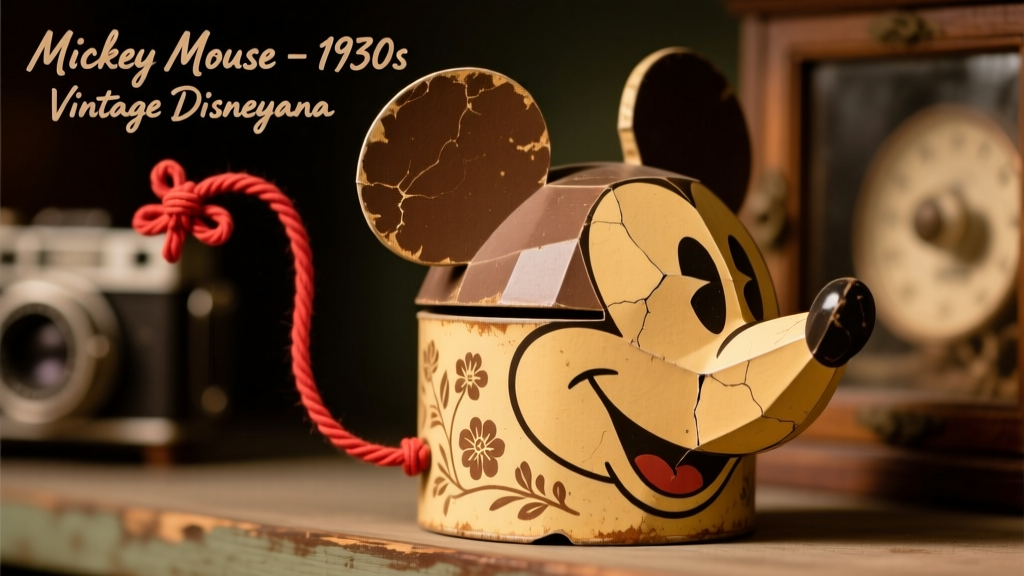
The 1930s Disneyana Candy Container: Mickey Mouse Papier-Mâché String-Tail Figure — A Rare Artifact of Early Licensing History
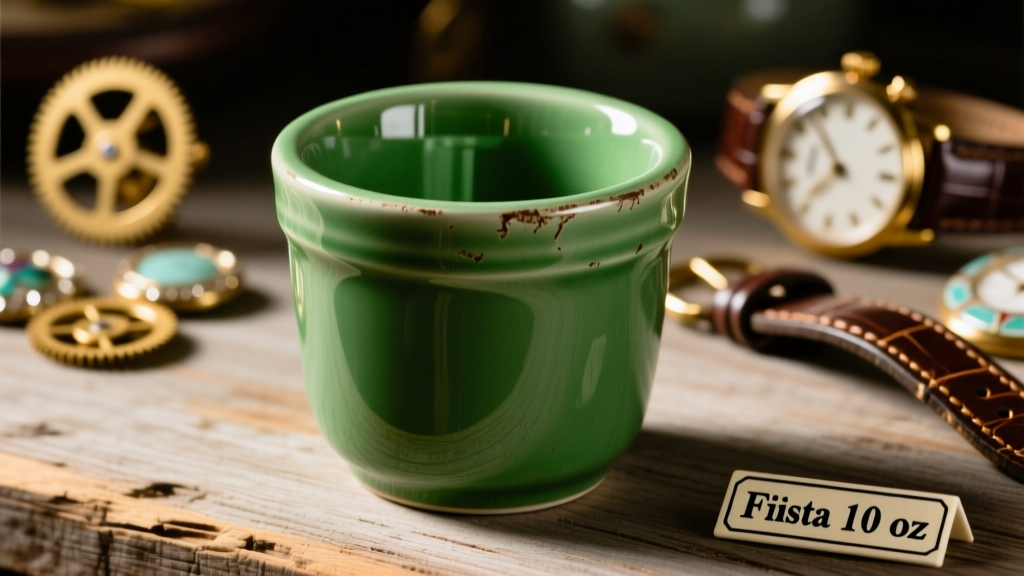
Fiesta Forest Green Tumbler (10 oz): A Collector’s Guide to the Iconic Mid-Century American Ceramic

Lladró Figurine 'Obstetrician' No. 4763 (1971–1975): A Study in Ceramic Realism and Mid-Century Medical Iconography
A Rare Pennsylvania Federal Mirror: Courting Scene with Multicolor Florette Corners, Circa 1820
Plantation Cherry Drop-Front Desk, Circa 1850: Provenance, Construction, and Market Significance of a Southern American Masterpiece
The Diamond-Back Fireplace Skewer Set: A Study in Victorian Ironwork, Function, and Collectible Craftsmanship
Decoding the Parkes Davis Orange Extract Label: A Historical Analysis of Soda Fountain Chemistry, Regulation, and Brand Authenticity
Bitters Demutha®'s Stomach Square: Light Golden Amber, 9¼ Inches — A Rare Mid-Century American Apothecary Artifact
The Six-Sided Mahogany Cellarette: A Rare English Georgian Furniture Masterpiece with Original Brass Fittings and Key