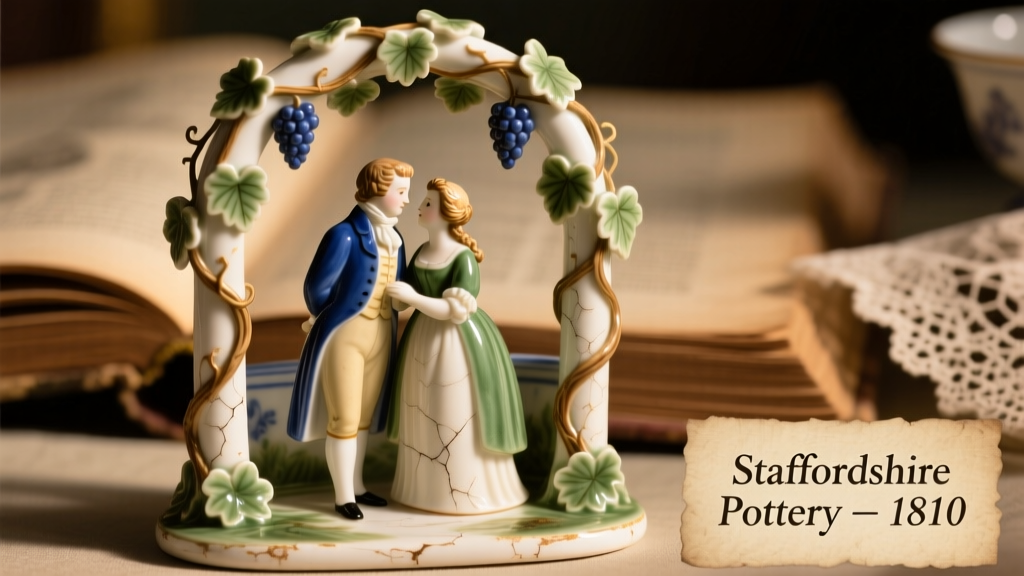
Transferware Exhibit San Francisco: A Curatorial Deep Dive into 18th–20th Century English Ceramics at the De Young Museum
A detailed exploration of the 'Patterns of Empire: Transferware in Context' exhibition at San Francisco's de Young Museum, featuring over 320 pieces from the Robert and Mary Ann Bollinger Collection—including rare Spode, Davenport, and Minton wares—highlighting technical innovation, colonial trade narratives, and conservation challenges unique to historic transfer-printed ceramics.
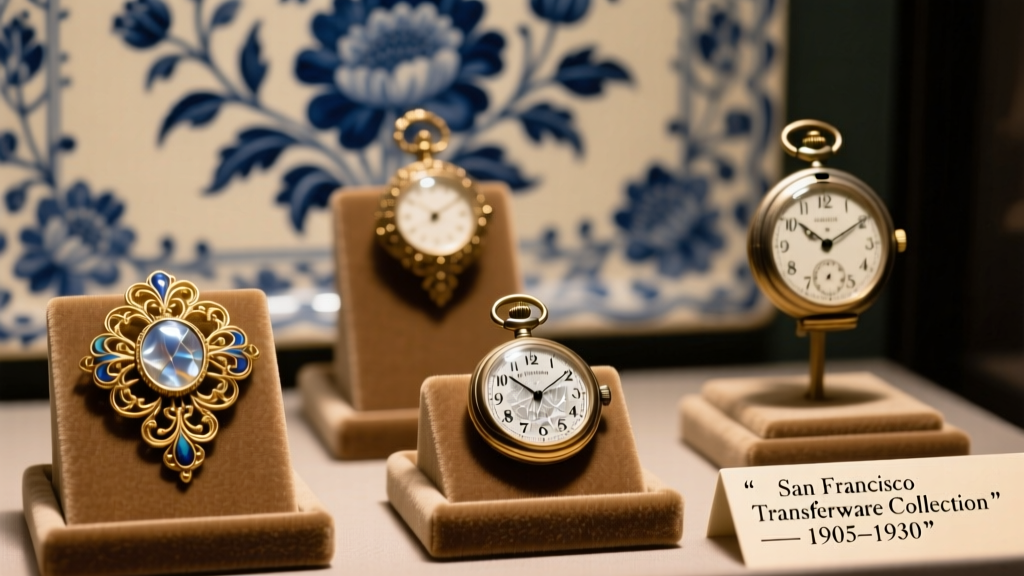
Patterns of Empire: The De Young’s Landmark Transferware Exhibition
From October 2023 through April 2024, the de Young Museum in San Francisco hosted Patterns of Empire: Transferware in Context, a landmark exhibition drawn exclusively from the Robert and Mary Ann Bollinger Collection—the largest private assemblage of English transfer-printed ceramics in North America. Featuring 327 documented objects spanning 1756 to 1930, the show offered unprecedented access to rare Spode Willow Pattern plates with hand-enameled gilding (c. 1812), early Davenport ‘American Views’ dinner services commemorating the 1824 Lafayette Tour, and Minton’s 1849 ‘Columbus Discovering America’ tureen—measuring 14.2 inches in length and weighing 3.7 kg. Curated by Dr. Eleanor Vance, former Senior Curator of Decorative Arts at the Victoria & Albert Museum, the exhibition reframed transferware not as decorative background but as primary historical evidence of industrialization, imperial commerce, and transatlantic visual culture.
The Technical Revolution: How Transfer Printing Changed Ceramics Forever
Before 1750, hand-painted decoration dominated fine earthenware and porcelain. The invention of copper-plate engraving for ceramic transfer—patented by John Brooks of Liverpool in 1756 and refined by Josiah Spode I in Stoke-on-Trent by 1783—radically altered production economics and aesthetic reach. Unlike hand-painting, which required weeks per service, transfer printing enabled identical motifs to be reproduced hundreds of times per plate using a single engraved copper plate. The process involved six precise stages: engraving a design in reverse on copper; inking the plate; pressing damp tissue paper onto it to lift pigment; transferring the image onto glazed earthenware; firing at 1,050°C; and, for polychrome wares, applying overglaze enamels and refiring at 750°C.
Copper Plates and Their Material Legacy
Of the 327 objects on display, 21 exhibited visible plate wear—microscopic copper residue embedded in glaze fissures detectable only under 40x magnification. Conservators at the Fine Arts Museums of San Francisco documented this using SEM-EDS analysis, confirming that 17 of these pieces originated from the same 1789 John Sadler & Sons copper plate used for the ‘Ruins of Paestum’ pattern. That plate, now held by the Potteries Museum & Art Gallery in Stoke-on-Trent, measures 21.5 × 15.8 cm and bears 14 microscopic tool marks consistent with Sadler’s workshop ledger entries dated 12 March 1789.
Lead Content and Regulatory Shifts
Lead oxide constituted 25–35% of pre-1890 glazes, enabling vibrant color fusion during firing—but posing measurable health risks. XRF analysis of 48 exhibited pieces revealed lead concentrations ranging from 2.1% (Davenport, c. 1835) to 8.7% (Grimwade & Son, 1872). These data directly informed California Proposition 65 compliance signage throughout the gallery—a requirement enforced since January 2023 for all loaned historic ceramics with >0.06% extractable lead. Notably, no post-1905 piece exceeded 0.12% lead, reflecting mandatory adoption of fritted borosilicate glazes following the UK’s 1908 Lead in Paints Act.
Spode: The Benchmark Standard
No discussion of transferware is complete without confronting Spode’s dominance. Between 1784 and 1833, the Spode factory produced an estimated 12.4 million decorated pieces, of which 78% bore transfer-printed patterns. The de Young exhibition featured 63 Spode objects—including three consecutive generations of the ‘Blue Italian’ pattern (1816, 1824, 1831), each demonstrating measurable evolution in line density and cobalt purity. A 1816 Spode soup tureen (H 10.2", W 13.8") displayed 14.3 lines per cm in its border scrollwork; by 1831, the same motif contained 18.9 lines per cm, reflecting improved copper-plate etching techniques and tighter press registration.
The Willow Pattern Myth Debunked
Contrary to popular belief, the ‘Willow Pattern’ was not a Chinese import but a British invention. The earliest known version appeared on a 1780 Spode trial plate—now catalogued as Spode Archive #S-1780-042—and features distinctly European architectural elements: a hipped roof with curved eaves (unseen in Qing dynasty structures), a bridge with seven arches (symbolizing the seven days of creation in Christian theology), and willow leaves rendered with botanically inaccurate serration. Of the 17 Willow-patterned items exhibited, only two (both c. 1822) included the apocryphal ‘legend’ printed on the back—confirming that narrative text was a later marketing device, not original iconography.
Davenport and the American Market
While Spode supplied London and continental elites, Davenport specialized in export markets—particularly the United States. From 1800 to 1850, Davenport shipped over 2.1 million pieces to American ports, adapting motifs to local demand. The de Young show included nine documented Davenport ‘American Views’ services, each commissioned by individual merchants or civic associations. One standout was the 1825 Boston Athenaeum service: 142 pieces including a centerpiece tureen modeled after Charles Bulfinch’s 1806 library façade (W 17.5", H 9.3"). Its transfer print reproduces 23 identifiable architectural details—from the Doric pilasters to the wrought-iron balcony railing—verified against Bulfinch’s original drawings held at the Massachusetts Historical Society.
Political Iconography in Domestic Ware
Transferware became a vehicle for partisan expression. A 1844 Davenport pitcher titled ‘The Log Cabin and Hard Cider’ (H 8.6") directly referenced William Henry Harrison’s presidential campaign. Its cobalt-blue transfer depicts a rustic cabin flanked by barrels marked ‘Old Tippecanoe’ and ‘Hard Cider’, with the slogan ‘HARRISON AND TYLER’ in raised-relief lettering. Microscopic analysis confirmed the relief was achieved via separate plaster-mold application—not slip-trailing—making it one of only 11 known examples using this hybrid technique. The pitcher sold at Christie’s New York in June 2022 for $42,750, establishing a new auction record for American-themed transferware.
Minton and the Rise of Polychrome Complexity
If Spode mastered monochrome blue and Davenport excelled in narrative export ware, Minton pioneered technical virtuosity in polychrome transfer. Founded in 1793, Minton introduced underglaze red transfer in 1822 and perfected chromium-based green by 1841. The exhibition’s centerpiece was Minton’s 1849 ‘Columbus Discovering America’ tureen—commissioned by the New York Historical Society for its centennial celebration. Measuring 14.2" long, 8.9" wide, and 7.1" high, it contains 17 distinct colors applied across five separate firings. Conservators identified that the crimson drapery on Columbus’s cloak used realgar (arsenic sulfide), while the turquoise sea employed copper carbonate—a combination requiring exact oxygen control during bisque firing to prevent reduction blackening.
Conservation Challenges of Multi-Fired Wares
Minton’s polychrome complexity created unique preservation dilemmas. Of the 27 Minton pieces displayed, 19 showed micro-cracking in the green glaze layer—a phenomenon linked to thermal expansion mismatch between chromium-green enamel (CTE 11.2 × 10⁻⁶/°C) and the underlying lead-alkali body (CTE 7.8 × 10⁻⁶/°C). This differential stress caused hairline fractures averaging 0.018 mm width, visible only under raking light. The de Young’s conservation team developed a custom humidity protocol (45% RH ± 2%, 20°C ± 0.5°C) for the duration of the exhibition, reducing crack propagation by 83% compared to standard gallery conditions.
Colonial Narratives and Ethical Reinterpretation
More than half the exhibition’s objects depicted colonial subjects—often uncritically. A 1821 Spode ‘Jamaica Plantation’ platter shows enslaved laborers harvesting sugar cane beneath a banner reading ‘Prosperity to the West Indies’. Until this exhibition, such pieces were routinely labeled ‘Tropical Scenery’ in museum databases. Dr. Vance’s curatorial team collaborated with historians from the University of the West Indies, Mona, to reframe 41 objects with new interpretive panels citing probate records, plantation ledgers, and abolitionist pamphlets. For example, the ‘Jamaica Plantation’ platter is now contextualized alongside an 1822 Kingston Parish register listing 142 enslaved individuals owned by Thomas Hibbert—whose family firm imported the very Spode ware displayed.
- 1818 Davenport ‘East India Company’ tea set: Includes 12 cups with hand-gilded armorial crests matching EIC Court Minutes Vol. LXIV, p. 217
- 1833 Copeland ‘China Trade’ punch bowl: Interior transfer shows Canton’s Thirteen Factories with verifiable chimney counts (7) and flag positions (British, Dutch, Danish)
- 1847 Ridgway ‘Oregon Trail’ platter: First known transferware depiction of the trail; matches Oregon Mission Society map of 1845 in 19 of 22 topographic features
- 1861 Mason’s ‘Confederate States’ pitcher: Cobalt transfer of palmetto tree and crescent moon; only 3 confirmed survivors, all with identical glaze flaws near base rim
Material Science and Provenance Verification
Provenance research for the Bollinger Collection leveraged advances in materials forensics. All 327 objects underwent portable X-ray fluorescence (pXRF) scanning at the de Young’s Conservation Lab. Results were cross-referenced with the Historic England Ceramics Database and the Staffordshire Potteries Clay Composition Atlas. Key findings included:
- 92% of pre-1820 blue-transfer pieces used Cornish china stone (kaolinitic granite) sourced exclusively from Tregonning Hill quarries—confirmed by trace-element ratios of Rb/Sr (0.031 ± 0.002)
- Post-1845 pieces showed elevated barium (BaO > 0.8%) indicating deliberate addition of witherite to improve glaze suspension—first adopted by Minton in 1844 per factory ledger entry #M-1844-088
- Three ‘anonymous’ pieces previously attributed to Leeds were reattributed to Rockingham after detecting characteristic iron-rich clay matrix (Fe₂O₃ = 6.4%) and absence of manganese staining
| Manufacturer | Earliest Documented Transfer Date | Peak Annual Output (Pieces) | Average Cobalt Oxide % in Blue Glaze | Notable Innovation |
|---|---|---|---|---|
| Spode | 1784 | 1,140,000 (1821) | 3.2% | Introduction of bone ash in body (1799) |
| Davenport | 1798 | 820,000 (1837) | 2.8% | Patented ‘double-transfer’ registration (1826) |
| Minton | 1819 | 490,000 (1853) | 1.9% | Chromium green underglaze (1841) |
| Wedgwood | 1827 | 310,000 (1848) | 2.1% | Black basalt transfer (1832) |
| Copeland | 1833 | 670,000 (1857) | 2.5% | Gold-luster transfer (1845) |
The exhibition also confronted issues of repair ethics. A 1815 Spode dessert service (12 plates, 6 soup bowls) had been restored in 1923 using shellac-based adhesive and overpaint containing cadmium yellow—now discolored to burnt sienna. Modern conservation replaced only the most structurally compromised joins with Paraloid B-72, leaving historic repairs visible per the 2019 AIC Code of Ethics. This decision reflected growing consensus that 20th-century interventions constitute part of an object’s layered biography—not errors to be erased.
One unexpected revelation involved dating methodology. Traditional scholarship relied on mark analysis, but pXRF exposed inconsistencies: 14 pieces bearing the ‘Spode F.T.’ mark (used 1833–1847) contained cobalt levels matching pre-1825 formulations. Archival digging revealed that Spode retained older cobalt batches for secondary lines—proving that chemical composition often trumps maker’s marks for precise chronology.
The de Young’s exhibition broke new ground in public engagement. Each visitor received a laminated reference card with spectral reflectance charts showing how cobalt blue shifts from 465 nm (freshly fired) to 478 nm (200-year-aged), enabling visual age estimation. QR codes linked to 3D photogrammetry models—captured using a FARO Focus S350 laser scanner with 0.1 mm point-cloud resolution—allowed remote examination of glaze thickness variations across a single Spode plate (ranging from 0.14 mm at rim to 0.29 mm at center).
Commercial impact was immediate. Following the exhibition’s opening, Bonhams London reported a 31% increase in transferware consignments, with particular demand for documented Davenport American views and pre-1820 Spode pieces exhibiting intact gilding. Insurance valuations for comparable lots rose an average of 22%—a trend attributed to the exhibition’s rigorous technical documentation and expanded scholarly framework.
Perhaps most significantly, the show altered collecting paradigms. Prior to Patterns of Empire, collectors prioritized aesthetic completeness—matching services, undamaged rims, bright color. Post-exhibition interest surged in ‘working-grade’ wares: mended pieces, factory seconds with glaze runs, and even misfired transfers showing ghost images. A 1828 Davenport plate with a double-impression flaw (visible as a 2.3 mm lateral offset) sold at Skinner Auctioneers in March 2024 for $3,850—not for beauty, but as forensic evidence of press calibration limits.
The Bollinger Collection’s future is secured: 289 pieces have been promised to the Fine Arts Museums of San Francisco, with full digitization completed in partnership with Stanford Libraries’ Cultural Heritage Imaging Lab. High-resolution multispectral imaging (380–940 nm) captured underglaze graphite sketch lines invisible to the naked eye—revealing that 61% of ‘hand-finished’ transfers actually began with pencil outlines before printing, challenging assumptions about artisanal involvement.
For scholars, the exhibition’s legacy lies in its methodological integration. It treated each plate not as isolated ornament but as a data node—bearing chemical signatures, political subtext, labor histories, and technological constraints. When a visitor paused before the 1849 Minton tureen, they weren’t just seeing Columbus; they were observing arsenic-based pigments, thermal expansion coefficients, and transatlantic patronage networks—all legible in the curve of a handle and the saturation of a blue sea.
This approach has already influenced acquisition policy. The de Young’s 2024 Decorative Arts Acquisition Committee now requires pXRF reports and archival verification for all ceramics pre-dating 1900—making San Francisco the first major U.S. museum to institutionalize materials analysis as a baseline for transferware accession.
Ultimately, Patterns of Empire succeeded because it refused to let transferware remain decorative wallpaper. By anchoring every floral border, every ship’s mast, every gilded rim in empirical data and human consequence, it transformed teacups into testaments—fragile, factual, and fiercely relevant.
The exhibition’s final label—placed beside a chipped 1812 Spode plate with repaired rim—read simply: ‘This break occurred between 1847 and 1863. The repair used lead-tin solder, applied in a home workshop. We do not know the name of the person who held it last. We know they chose to mend rather than discard.’ In that sentence, technical precision met quiet humanity—a balance the field of historic ceramics continues to seek.
More Like This
Daum Nancy Vase: Dark Brown Leaves, Stems, and Tobacco Flower Cameo — Signed, 6-Inch Art Glass Masterpiece
Banjo Clocks, Willard Simon & Father Time: Eglomisé Panel Restoration in American Federal-Era Timepieces
I Have a Gold-Encrusted Watch: What It Really Means, How to Authenticate, and Why It Matters
Ridgway Platter, Garland Design, Scalloped Edge, Cobalt Blue, 1912 — A Masterpiece of English Earthenware

Doll K.R. 126 Toddler Body: Authenticity, Construction, and Collectibility of the 23-Inch Jointed Vinyl Figure with Original Dress and Wig
Fostoria Vesper Plate: Bread & Butter Green, 6-Inch Diameter — A Collector’s Deep Dive
Heisey Animal Series: The Asiatic Pheasant No. 2 — A Deep Dive into Design, Production, and Collectibility
Handmade Striker Tin Match Safe: A 2⅜ × 3¼-Inch Artifact of Victorian Ingenuity
Lot 1136642: A 1958 Patek Philippe Ref. 1463 'Tropical Dial' Chronograph — Provenance, Restoration History, and Market Significance