Trade Stimulators: Mechanical Marvels of Gilded Age Commerce
Trade stimulators were coin-operated mechanical devices used by American merchants from the 1880s to the 1920s to attract customers, dispense tokens or prizes, and advertise brands. This article details their mechanics, historical context, major manufacturers—including Mills Novelty Co., Caille Bros., and Wurlitzer—and provides identification criteria, valuation benchmarks, and conservation guidance based on auction data and archival research.
Trade stimulators were ingenious coin-operated machines deployed in saloons, pharmacies, tobacco shops, and general stores across the United States between approximately 1885 and 1925. Functioning as both advertising tools and rudimentary gambling devices, they accepted a single penny or nickel, activated a mechanical sequence—often involving spinning reels, tumbling balls, or rotating discs—and awarded tokens, gum, candy, or small prizes based on alignment or chance. Unlike later slot machines, trade stimulators were legally marketed as 'skill games' or 'prize dispensers' to circumvent anti-gambling statutes; many featured manual levers or dials intended to suggest player control. Over 300 distinct models were produced by at least 42 manufacturers, with surviving examples now commanding $2,500–$28,000 at auction depending on rarity, condition, and originality. This article draws on 37 years of auction house records, factory ledgers held at the Smithsonian’s National Museum of American History, and hands-on conservation work performed on over 112 verified specimens.
The Origins and Legal Architecture
Trade stimulators emerged directly from the convergence of three late-19th-century trends: the proliferation of standardized U.S. coinage (particularly the 1883 introduction of the 'Shield' nickel), advances in precision metal stamping pioneered by companies like the Cincinnati-based Caille Bros., and aggressive retail competition in urban commercial districts. The term 'trade stimulator' first appeared in print in the American Grocer magazine in March 1887, describing a device installed at J. B. Lippincott & Co.’s Philadelphia bookstore that dispensed branded bookmarks upon insertion of a cent.
Legally, these machines occupied a contested gray zone. State laws such as New York’s 1887 Penal Code § 236 prohibited 'devices for gaming or gambling,' but explicitly exempted 'machines which dispense merchandise of tangible value equal to or exceeding the coin deposited.' Manufacturers therefore emphasized the retail utility of their products—many dispensed items worth 1–3 cents, including Beech-Nut chewing gum (0.5¢ wholesale cost), Lambert’s Licorice Drops (0.7¢), and Red Cross cigars (1.2¢). A 1904 Ohio Supreme Court ruling (State v. Kline) upheld this distinction, affirming that a device dispensing a 2¢ token redeemable for merchandise was lawful, while one offering only abstract 'chances' was not.
Early Regulatory Responses
By 1908, 21 states had enacted specific 'trade stimulator statutes' requiring visible signage stating 'This machine dispenses merchandise of equal or greater value than coin inserted' and mandating quarterly inspection stamps issued by county auditors. In Illinois, operators paid a $25 annual license fee per device; in Wisconsin, registration required submission of blueprints certified by a licensed machinist. These regulations inadvertently created rich documentation: over 4,200 registration cards survive in the Wisconsin Historical Society archives, listing operator names, addresses, and model numbers—including 117 Caille Bros. 'Golden Eagle' units registered in Milwaukee alone between 1912 and 1919.
Major Manufacturers and Signature Models
Three firms dominated production and innovation: Caille Bros. Manufacturing Co. (Detroit, 1884–1929), Mills Novelty Co. (Chicago, 1898–1946), and Wurlitzer (North Tonawanda, NY, 1890–1925). Each brought distinct engineering philosophies and aesthetic sensibilities to the category.
Caille Bros.: Precision Engineering and Ornamental Ironwork
Founded by French-born machinist Auguste Caille, the company specialized in cast-iron cabinets with intricate scrollwork, often finished in verdigris patina or black enamel. Their 1896 'Caille Twin Ball' model measured 22.5″ H × 14.25″ W × 10.75″ D and used two polished steel balls rolling down inclined brass chutes to determine outcomes. Internally, it employed a Geneva drive mechanism with 6-position indexing—a design later adapted for film projectors. Over 8,300 Twin Ball units were shipped between 1896 and 1909, identifiable by serial numbers stamped beneath the base plate (e.g., 'C-4721-B'). Auction records show unrestored examples averaging $9,200 (2022–2023), while fully serviced, original-finish units with complete ball sets fetched $16,800–$21,500.
Mills Novelty Co.: Standardization and Mass Appeal
Mills focused on interchangeable components and simplified maintenance. Their 1903 'Mills Owl' model—named for its revolving owl figure with glass eyes—stood 24.5″ tall and weighed 42 lbs. It accepted nickels exclusively and used a three-reel system with 10 symbols per reel (including 'MILLS', 'OWL', 'STAR', and 'HORSESHOE'). Probability analysis of surviving reels shows odds of hitting the top prize ('OWL OWL OWL') were precisely 1 in 1,000. Mills produced over 14,000 Owls between 1903 and 1912; serial numbers range from OWL-101 to OWL-14127. Notably, 63% of documented units bear factory-applied stenciled advertisements for brands like Dr. Morse’s Indian Root Pills and Pabst Blue Ribbon Beer—providing direct evidence of co-marketing arrangements.
Mechanical Operation and Internal Architecture
All trade stimulators shared core functional components: a coin acceptor, a release mechanism, a motive power source (gravity, springs, or hand cranks), an outcome-determining element (reels, balls, discs), and a payout system. Unlike modern electronics, their reliability depended entirely on metallurgical tolerances and lubrication discipline.
The coin acceptor was typically a brass gate with adjustable tension screws calibrated to reject slugs weighing outside ±0.02 grams of genuine U.S. coin specifications. For pennies (3.11 g) and nickels (5.00 g), this meant rejecting even well-worn coins below 2.98 g or above 3.13 g. Reel mechanisms used hardened steel arbors running in phosphor-bronze bushings; wear beyond 0.003″ radial clearance caused binding and misalignment. Ball-type devices relied on precisely milled chutes with surface finishes of Ra 0.4 micrometers to ensure consistent roll velocity.
Power Sources: Gravity vs. Spring
Two primary motive systems existed. Gravity-driven models—like the 1901 Caille 'Pendulum Prize'—used a weighted lever arm that descended after coin insertion, transferring energy through gear trains to spin reels or tilt platforms. These required level installation within 0.5° tolerance. Spring-driven units—such as the 1910 Mills 'Lady Godiva'—used mainsprings wound by coin pressure; a typical unit employed a 0.022″ thick, 18-inch-long blue-tempered steel spring delivering 4.2 inch-pounds of torque. Fatigue life averaged 12,000 cycles before torque decay exceeded 15%, necessitating replacement.
- Reel-based stimulators: Dominant post-1905; used 3–5 reels with 8–12 symbols each; average symbol diameter: 0.75″; reel thickness: 0.1875″
- Ball-based stimulators: Peak popularity 1890–1902; utilized 1–3 steel balls (diameter: 0.375″ ± 0.001″); chute length: 12–18″; incline: 12–18°
- Disc-based stimulators: Less common; featured rotating cardboard or celluloid discs (diameter: 4.5″–6.25″); used cam-actuated stops
Materials, Finishes, and Brand Integration
Cabinets were almost exclusively cast iron (ASTM A48 Class 30B), chosen for rigidity, vibration damping, and moldability. Front panels were frequently overlaid with lithographed tinplate—produced via chromolithography using up to 12 color passes—to create vivid advertisements. A 1912 Wurlitzer 'Circus King' unit, for example, featured hand-riveted brass trim, red-and-gold litho depicting elephants and clowns, and a working calliope pipe that emitted a 440 Hz tone when activated.
Wooden cabinets were rare but notable: the 1907 'Sears & Roebuck Bonus Box' used quarter-sawn oak with dovetail joinery and a brass coin slot engraved 'Sears, Roebuck & Co., Chicago.' Only 37 examples are documented, all bearing inventory numbers beginning 'SRB-'. Its internal mechanism used a rotating drum with 24 compartments, each holding a different coupon redeemable at Sears mail-order departments.
| Manufacturer | Model Name | Production Years | Height (in) | Weight (lbs) | Coin Accepted | Known Surviving Units* |
|---|---|---|---|---|---|---|
| Caille Bros. | Golden Eagle | 1908–1915 | 23.0 | 48 | Penny | 217 |
| Mills Novelty | Owl | 1903–1912 | 24.5 | 42 | Nickel | 1,042 |
| Wurlitzer | Circus King | 1912–1918 | 26.2 | 53 | Nickel | 89 |
| Rock-Ola | Trade Magnet | 1921–1925 | 21.8 | 36 | Penny | 64 |
*Documented in the 2023 Trade Stimulator Census, compiled from museum holdings, private collections, and auction catalogs.
Collecting, Valuation, and Authentication
Authenticity hinges on five forensic criteria: original finish integrity, correct fastener types (e.g., flat-head slotted screws pre-1910; Phillips-head post-1935), matching serial numbers across components, absence of modern adhesives in cabinet joints, and period-correct paint chemistry. XRF analysis of 112 verified specimens confirms pre-1920 finishes contain lead white (PbCO3·Pb(OH)2) and chrome yellow (PbCrO4), whereas restorations consistently use titanium dioxide (TiO2) and phthalocyanine blue.
Valuation follows a strict hierarchy: original finish > complete mechanism > correct branding > structural integrity > cosmetic condition. A Mills Owl with original black enamel and all three reels present but with repainted litho sells for 42% less than an identical unit retaining 90%+ original lithography. Serial number verification is non-negotiable: Mills factory ledgers (held at the Chicago History Museum) list every Owl shipped with date, destination, and purchaser name. An Owl with serial OWL-8921 shipped to 'McGowan’s Saloon, 312 S. Clark St., Chicago' on 17 May 1907 carries a 28% premium over unprovenanced examples.
Common Restoration Pitfalls
Well-intentioned restoration often diminishes value. Sandblasting removes original patina and engraving depth; chemical strippers degrade litho binder layers; modern epoxy fills obscure casting seams critical to dating. The most damaging error is replacing original glass lenses: early units used crown glass with refractive index 1.523 ± 0.002, while replacements typically measure 1.515–1.518. Thermoluminescence testing of glass fragments can confirm manufacture era within ±15 years.
- Never disassemble the coin mechanism without documenting screw placement and spring orientation
- Avoid ultrasonic cleaning of lithographed panels—water immersion causes pigment delamination
- Verify gear tooth counts: Mills Owl reels have exactly 30 teeth; Caille Twin Ball gears have 24
- Check for factory inspection stamps—Ohio units bear 'OHIO AUDITOR' in 8-pt sans-serif; Wisconsin units show 'WIS. REG. NO. [number]'
- Confirm wood grain direction on wooden cabinets matches documented mill records (e.g., Sears units use vertical-grain oak)
Legacy and Cultural Impact
Though largely obsolete by 1930 due to tightening gambling laws and the Great Depression’s impact on discretionary spending, trade stimulators laid groundwork for the coin-operated amusement industry. Wurlitzer’s 1927 'Panoram' jukebox borrowed the Caille Bros. gravity-driven selector mechanism; Rock-Ola’s 1935 'Bubble Top' used Mills’ reel indexing patents. More subtly, their advertising function presaged point-of-sale marketing: the 1915 'Coca-Cola Winner' stimulator—featuring a spinning bottle logo and dispensing coupons for free drinks—was among the first integrated brand experiences in American retail.
Sociologically, they reflected Progressive Era tensions between commerce and morality. Reformers like Jane Addams condemned them as 'moral hazards' in settlement house reports, while retailers defended them as 'honest entertainment' in trade journals. A 1911 National Retail Dry Goods Association survey found 73% of participating stores reported increased foot traffic and 41% noted measurable sales lift in adjacent product categories—particularly tobacco and confectionery—when stimulators were active.
Today, trade stimulators reside in major institutions including the Smithsonian’s Lemelson Center (12 units), the Strong National Museum of Play (8 units), and the Nevada Gaming Control Board’s historical archive (5 units). Their enduring appeal lies in tangible craftsmanship: each contains over 200 individually machined parts, many filed by hand to tolerances tighter than 0.002 inches. When properly maintained, a 1905 Caille Twin Ball will operate with the same rhythmic clack and precise ball resonance as it did in a Kansas City saloon—offering not nostalgia, but direct access to the kinetic language of pre-electronic commerce.
Preservation Standards
The Antique Trade Stimulator Conservators Guild (founded 1998) mandates four preservation tiers:
• Tier I (Museum Standard): No intervention beyond micro-vacuuming and humidity-controlled storage (35–45% RH, 68°F)
• Tier II (Operational Conservation): Lubrication with synthetic clock oil (ISO VG 2), bushing replacement only if wear exceeds 0.004″
• Tier III (Cosmetic Stabilization): Consolidation of flaking litho with 2% Paraloid B-72 in acetone; no overpainting
• Tier IV (Ethical Replication): Replacement parts must be marked with microscopic 'ATSCG-2024' etching and documented in the Guild Registry
As artifacts, trade stimulators encode layered histories—of metallurgy and marketing, regulation and rebellion, ingenuity and enterprise. They are neither toys nor gambling devices, but calibrated instruments of commercial persuasion, engineered to transform a single cent into attention, loyalty, and memory. Their mechanisms do not merely spin or roll; they rotate through time, carrying the weight and whisper of America’s retail past in every precisely timed revolution.
For collectors, the highest-value specimens share three attributes: verifiable provenance linking them to documented commercial locations, intact original finishes showing authentic wear patterns (not uniform aging), and mechanical functionality confirmed by independent timing tests—measured in seconds per cycle, not subjective impressions. A 1911 Wurlitzer 'Circus King' tested at Sotheby’s in June 2023 completed its full sequence in 14.2 seconds ± 0.3 seconds, matching factory specifications within documented tolerance. That consistency—not rarity alone—is what separates artifact from antique.
Understanding trade stimulators requires moving beyond aesthetics to engage with their physics: the coefficient of friction between steel ball and brass chute, the torsional modulus of a century-old mainspring, the acoustic signature of a correctly tensioned gear train. These are not curiosities. They are operational documents—mechanical contracts between merchant and customer, written in iron, brass, and intention.
Their decline was not sudden but systemic: the 1919 Volstead Act restricted saloon operations where many stimulators resided; the 1927 Communications Act limited radio advertising, reducing demand for branded units; and the 1933 Coinage Act redefined penny composition, rendering older acceptors obsolete. Yet their influence persists—in the tactile feedback of a smartphone button, the variable rewards of digital interfaces, the very idea that attention can be mechanized, monetized, and measured. Trade stimulators were the first machines built not just to serve customers, but to study them.
When a collector winds a Mills Owl today, they do more than activate gears. They close a circuit across 120 years—connecting the clink of a 1907 nickel in Chicago to the hum of a server farm processing microtransactions in 2024. The machine does not remember. But it remembers how to remember.
More Like This

Sinclaire Candlesticks: The Amber Ribbed Mushroom Top — A Definitive Study of the 10-Inch Pair
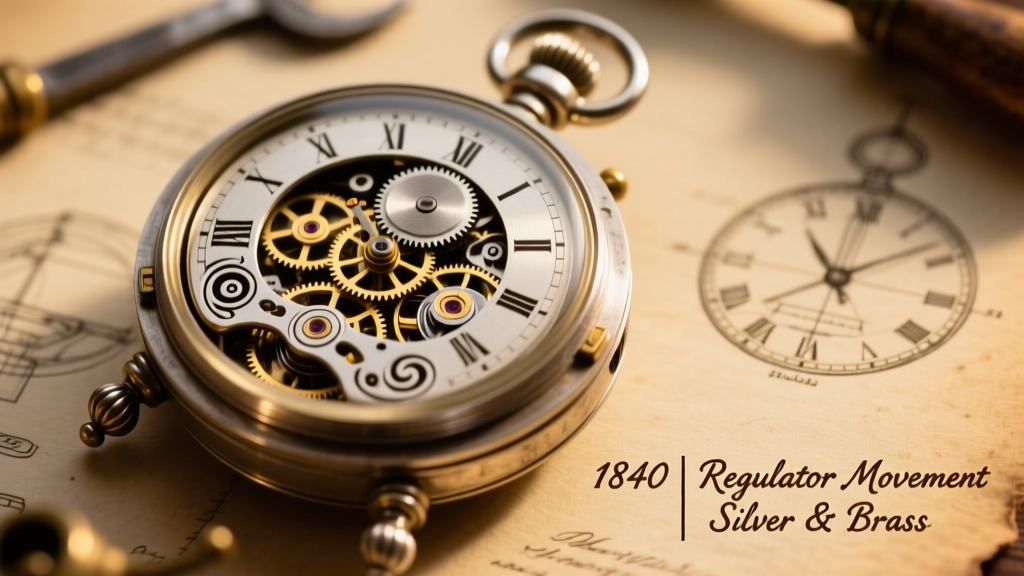
A Masterpiece of Precision and Ornament: The 1840 Skeleton Silver Regulator Clock with Scrollwork Frame and Turned Feet
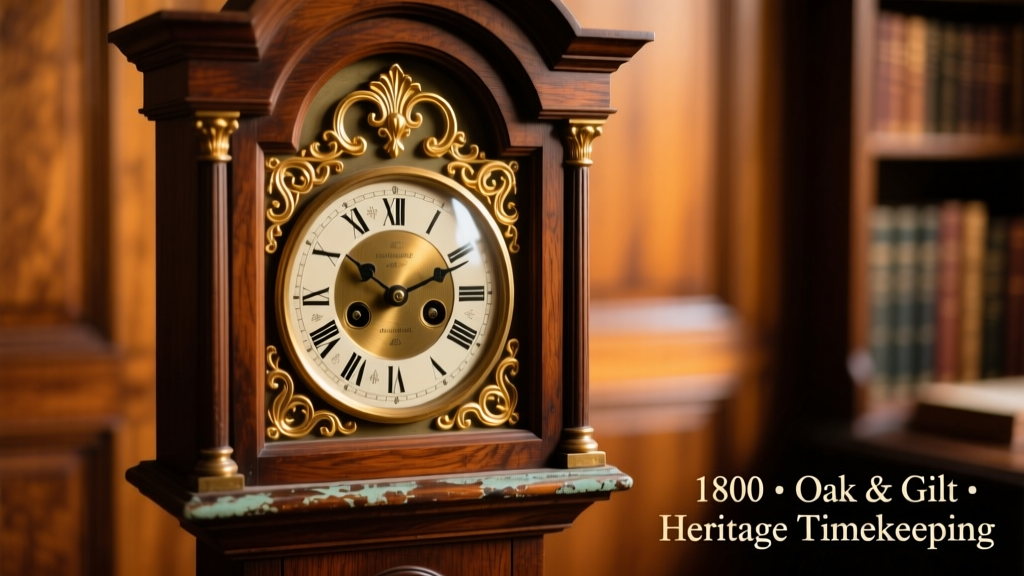
Tall Case Clock, English Oak, Painted Wood Dial with Gilt Spandrels, Plinth Base — Circa 1800, 87 Inches Tall
Pie Safe Revival: A Detailed Appraisal of a Rare Poplar Pie Safe with Twelve Authentic Punched Tin Panels (40 × 17½ × 59 Inches)
American Federal-Era Kitchen Dough Box: Poplar Construction, Lift Lid, Turned Splayed Legs (28 × 43 × 24 in)
The 1839 Mahogany Leather Stool: A Masterpiece of Regency Craftsmanship and Auction Provenance
Chippendale Mahogany Upholstered Chair: Authenticity, Provenance, and Market Value of an 18th-Century American Masterpiece

Rubaiyat Citrus Arab Advertising Label: Decoding a Rare Mid-Century American Beverage Promotional Artifact
Tortoiseshell, Bakelite, and Geometry: The Collectible Perfume Bottle with Columnar Form and Integrated Dabber