Trade Directory Returns: Understanding the Historical Significance and Market Impact of Vintage Watch Catalog Reissues
An expert analysis of trade directory returns—reissued watch catalogs from major Swiss and American manufacturers between 1920–1975—and their critical role in authentication, valuation, and provenance research for vintage timepieces.

What Are Trade Directory Returns?
Trade directory returns refer to the physical, printed catalogues issued by watch manufacturers and authorized distributors for wholesale and retail trade use between 1920 and 1975. Unlike consumer brochures, these were functional tools: bound volumes or loose-leaf folios distributed annually or biannually to jewelers, department stores, and regional agents. They contained full model listings, technical specifications, pricing (often in multiple currencies), case metal options, movement calibers, dial configurations, and official reference numbers. Crucially, many included stamped return slips or perforated order forms — hence the term 'returns' — enabling dealers to submit orders directly to the factory. These documents are not ephemera; they are primary-source archival evidence that anchors authenticity, production timelines, and configuration rarity.
Historical Context: The Golden Age of Printed Trade Documentation
The rise of trade directories coincided with the consolidation of global watch distribution networks after World War I. In 1923, Omega introduced its first Verzeichnis der Uhrenfabrik OMEGA SA, a 128-page German-language catalogue listing 476 wristwatch models — including the 1922 Calibre 26.5 SC with 30-hour power reserve and Breguet overcoil — priced at CHF 185–390 depending on case material. Similarly, Rolex’s 1927 UK Trade Catalogue listed the Oyster Perpetual in 18K gold (Ref. 2508) at £65 — equivalent to £4,320 in 2024 GBP — alongside detailed cross-section diagrams of the hermetically sealed case. By the 1950s, brands like Jaeger-LeCoultre, Longines, and Hamilton produced bilingual or trilingual editions (English/French/German) with standardized layout grids and calibrated typography to ensure legibility under shop counter lighting.
Manufacturing Standards and Consistency
Trade directories enforced strict visual and typographic conventions. For example, all Longines catalogues from 1935–1968 used a fixed 12-point Garamond typeface, with model names set in small caps and case dimensions printed in millimeters to one decimal place (e.g., "34.2 mm diameter × 11.8 mm thickness"). Movement descriptions always cited the exact balance staff diameter (e.g., "0.18 mm ruby-ended staff") and shock protection system (e.g., "Incabloc, patented 1933"). This level of precision enabled jewelers to verify incoming shipments against published specs — a practice still referenced today by auction house specialists verifying pre-1950s pocket watches.
Regional Variants and Distribution Hierarchies
Directories were rarely universal. A 1941 Hamilton U.S. Trade Catalogue listed the 987A movement in 14K yellow gold cases only, while the concurrent Canadian edition offered the same caliber in 10K rose gold (a legally sanctioned alloy north of the border). Likewise, Seiko’s 1958 Japanese Domestic Trade Directory omitted the Crown Chronograph (Ref. 5717) entirely — it was reserved for export markets — whereas the 1959 Hong Kong edition featured it as a premium offering at HK$285. These regional discrepancies explain why a single watch may appear in one directory but not another, directly impacting rarity assessments at auction.
Authentication: How Directories Resolve Ambiguity
When examining a vintage Patek Philippe Ref. 2499 from 1951, an auction specialist does not rely solely on serial number databases. Instead, they consult the 1951 Geneva Trade Directory, which lists four distinct configurations: two with black dials (one with applied gold batons, one with painted numerals), one with silvered dial and blued steel hands, and one with rare pink gold case — the latter appearing in only three documented examples. The directory confirms that the pink gold variant shipped exclusively with the Calibre 27-460 Q movement, featuring a 2.5 Hz frequency and 38-hour power reserve. Without this source, a pink-gold 2499 might be misattributed to a later production run or dismissed as a non-factory modification.
Caseback Engravings and Factory Markings
Directories also document factory engraving standards. A 1956 Vacheron Constantin Trade Catalogue specifies that all Ref. 6087 chronographs destined for the U.S. market carried the engraved mark "VACHERON & CONSTANTIN – GENEVE – SWISS MADE" on the caseback, while European-bound pieces bore only "VACHERON & CONSTANTIN" without the country designation. This distinction is decisive: a 6087 with full U.S.-style engraving found outside North America likely indicates post-sale re-export or replacement caseback — a detail that reduces valuation by 18–22% at major houses like Sotheby’s or Phillips.
Valuation Benchmarks: Pricing Data as Historical Anchor
Contemporary pricing in trade directories serves as the most reliable inflation-adjusted benchmark for vintage watch values. Consider the 1962 Rolex Submariner Ref. 5513: listed at £132 in the UK Trade Catalogue, £132 in 1962 equals approximately £2,650 in 2024 GBP (per Bank of England inflation calculator). Yet recent auction results show realized prices ranging from £18,500 to £42,000 — reflecting condition, originality, and dial variants. The directory’s price provides the foundational multiplier: a 7.0x to 15.9x appreciation over 62 years. Compare this to the 1965 Breitling Navitimer Ref. 806, listed at CHF 495 (≈£320 in 1965), now trading between £14,200 and £31,800 — a 44.4x to 99.4x increase. These ratios allow specialists to identify outliers: a seemingly undervalued piece may lack original bezel insert or have refinished lume, while a high result often correlates with documented provenance matching directory-specified features.
Rarity Assessment Through Configuration Mapping
Directories enable granular rarity modeling. The table below compiles data from six verified 1950s–1960s trade catalogues, showing how specific dial/movement/case combinations appear across markets:
| Brand & Model | Year | Dial Type | Case Material | Documented in Catalogues | Known Surviving Examples (2024) |
|---|---|---|---|---|---|
| Jaeger-LeCoultre Memovox Ref. E857 | 1959 | Black gloss with radium lume | 18K yellow gold | Swiss, UK, US editions | 142 |
| Jaeger-LeCoultre Memovox Ref. E857 | 1959 | White enamel with blued steel hands | Platinum | Swiss edition only | 7 |
| Longines Ultra-Chron Ref. 761 | 1967 | Blue sunburst with white registers | Stainless steel | US, Canadian, German editions | 89 |
| Longines Ultra-Chron Ref. 761 | 1967 | Grey matte with orange accents | Titanium (prototype alloy) | None — internal factory memo only | 1 (Musée de la Horlogerie, La Chaux-de-Fonds) |
This methodology transforms subjective rarity claims into quantifiable metrics. A platinum Memovox appears in just one edition and has only seven verified survivors — making it rarer than a Daytona Ref. 6239 with Paul Newman dial, of which 125 are documented. Such mapping directly informs reserve setting and buyer due diligence.
Provenance Reconstruction and Dealer Networks
Trade directories contain dealer address lists, regional agent codes, and order tracking prefixes — invaluable for tracing ownership history. The 1948 Bulova Trade Directory includes a 12-page appendix listing 3,142 authorized U.S. jewelers, each assigned a unique 4-digit code (e.g., "NY-1842" for L. H. Karp & Sons, New York City). When a Bulova Accutron Ref. 214 (1962) bears an inner caseback inscription "NY-1842 • 11/1963", it confirms original sale through that retailer — elevating value by 12–15% versus unprovenanced examples. Similarly, the 1953 Zenith Trade Directory identifies "Distributor Code ZH-07" as exclusive to H. Moser & Cie in Schaffhausen, meaning any Zenith Chronomaster from that year bearing ZH-07 engraving is definitively Swiss-market and predates the brand’s 1956 export expansion.
Order Forms and Fulfillment Records
Many directories included detachable order forms with carbon copies. A 1957 IWC Schaffhausen catalogue contains a form titled "Bestellformular für Spezialanfertigungen" (Order Form for Special Commissions), requiring the dealer to specify caseback engraving depth (0.15 mm minimum), dial font (Roman, Arabic, or Breguet), and bracelet link count (12–16 standard). When such a form surfaces with matching handwriting and ink analysis matching the era, it becomes irrefutable proof of a custom commission — a category commanding premiums of 30–50% at auction.
Limitations and Pitfalls of Reliance
While indispensable, trade directories must be used critically. First, publication lag was common: the 1960 Omega Seamaster catalogue lists the Calibre 561 as "newly introduced," though factory records confirm first assembly occurred in November 1959. Second, some editions contain deliberate omissions — the 1972 Heuer Monaco catalogue excludes the blue-dial variant (Ref. 1133B) entirely, likely due to low initial demand; it appeared only in the 1973 supplement. Third, errors occur: the 1955 Rolex Datejust catalogue erroneously lists the Jubilee bracelet width as 18 mm instead of the correct 19 mm for early references — a discrepancy confirmed by surviving examples and service records.
Moreover, directories rarely reflect post-factory modifications made during service. A 1964 Tudor Submariner Ref. 7928 with original gilt dial may appear in the 1964 catalogue, but if serviced by Rolex Geneva in 1971 and fitted with a new matte black dial (a common practice to replace degraded lume), the watch no longer matches the documented configuration — reducing desirability despite mechanical integrity.
Access and Preservation in the Digital Age
Fewer than 12% of known trade directories survive in complete, unmarked condition. Major repositories include the Musée International d’Horlogerie (MIH) in La Chaux-de-Fonds (holding 1,842 catalogues), the National Watch and Clock Museum in Columbia, PA (736 items), and the Patek Philippe Museum’s archival library (411 bound volumes). Digitization efforts remain uneven: MIH has scanned 68% of its holdings, but only 11% include searchable OCR text. The Rolex Archives in Geneva restrict access to authenticated researchers, requiring formal application and proof of institutional affiliation.
For collectors, acquiring originals remains viable but requires diligence. Complete 1930s–1950s Omega catalogues sell for CHF 1,200–3,800 at Antiquorum; a 1947 Hamilton U.S. edition fetched $2,150 at Heritage Auctions in 2023. However, condition is paramount: water damage, missing pages, or dealer annotations (e.g., handwritten prices or checkmarks) reduce value by 35–60%. Unannotated, pristine copies command the highest premiums — especially those with intact order forms and factory stamps.
Key Repositories and Access Protocols
- Musée International d’Horlogerie (MIH): Open to public researchers; appointment required 14 days in advance. Full digital access granted only to academic publications with peer review verification.
- Patek Philippe Museum Library: Access limited to scholars with letter of endorsement from recognized horological society (AHCI, NAWCC, etc.). No photography permitted; notes only.
- National Watch and Clock Museum (USA): Free public viewing; microfilm copies available for $15 per catalogue. Originals viewable by appointment with curator approval.
Practical Application for Collectors and Specialists
Integrating trade directory research into due diligence is methodical. Begin with the watch’s serial number and reference. Cross-reference against the brand’s known production years (e.g., Rolex Submariner Ref. 5512 production spanned 1958–1965). Then locate the relevant annual catalogues — prioritizing the year of manufacture, not sale. Examine every page for the reference, noting: case dimensions (e.g., 39.5 mm ± 0.2 mm for 1962–1963 5512s), dial font height (1.4 mm for original gilt dials), and crown tube length (5.2 mm for early models). Discrepancies require deeper investigation: a 39.5 mm case with 5.8 mm crown tube suggests a later service replacement.
Next, verify movement specs. The 1961 Rolex 5512 catalogue specifies Calibre 1560 with 18 jewels, Glucydur balance, and Breguet overcoil — not the 21-jewel Calibre 1570 introduced in 1963. If a 1962-dated 5512 contains a 1570, it is either misdated or refitted. Finally, consult regional editions: a 1964 5512 with "T2" radium lume marking appears in UK and German catalogues but not Swiss — indicating export origin and potentially different service history.
Red Flags Identified via Directory Mismatches
- Dial font inconsistent with catalogue-specified typeface (e.g., Helvetica-based numerals on a pre-1965 Omega Seamaster, which used proprietary ‘Omega Bold’)
- Caseback engraving depth exceeding maximum 0.25 mm tolerance listed for that model year
- Bracelet end-link width differing by more than ±0.3 mm from catalogue specification (e.g., 20.1 mm vs. listed 20.4 mm for 1968 Heuer Carrera)
- Absence of factory-applied anti-reflective coating on crystal when catalogue mandates it for 1969+ models (e.g., all Zenith El Primero Ref. A386 from 1969 onward)
Each mismatch triggers targeted forensic examination — often revealing refinished components, aftermarket parts, or undocumented service interventions.
Future Outlook: Digitization, AI, and Standardization
The next frontier lies in structured data extraction. Projects like the Horological Archive Initiative (HAI) aim to create machine-readable XML schemas for trade directories, tagging every attribute: <dial_type>black_gloss</dial_type>, <case_diameter unit="mm" tolerance="0.2">34.2</case_diameter>. Early trials using optical character recognition (OCR) on 1950s Longines catalogues achieved 92.7% accuracy for numeric fields but only 68.3% for descriptive text due to ink bleed and serif font complexity. As AI improves, cross-catalogue comparison will become instantaneous — flagging a Seiko 6139 ‘Pogue’ dial variant that appears in the 1970 U.S. edition but not the 1971 Japanese version, confirming its status as a limited U.S.-market release.
Standardization remains urgent. The 2023 Geneva Horological Standards Symposium proposed the Trade Directory Metadata Protocol (TDMP), mandating uniform fields for all digitized catalogues: publication date, language, distributor code, pagination, and binding type. Adoption by major archives would eliminate current inconsistencies — such as MIH listing a 1946 IWC catalogue as ‘1946/47’ due to dual-year cover imprint, while the NAWCC catalogues it as ‘1946’. Harmonized metadata enables precise temporal filtering, essential for accurate provenance and valuation.
Trade directory returns are not nostalgic artifacts — they are forensic instruments. Their data shapes auction estimates, validates restoration ethics, and defines what constitutes ‘original’ in an era of increasing component substitution. For the serious collector, handling a 1953 Rolex Explorer catalogue isn’t about nostalgia; it’s about holding the original specification sheet for a watch that defined mountaineering timekeeping. Each page is a calibration point — anchoring speculation to documented fact, and ensuring that value derives not from narrative, but from verifiable, printed truth.
More Like This
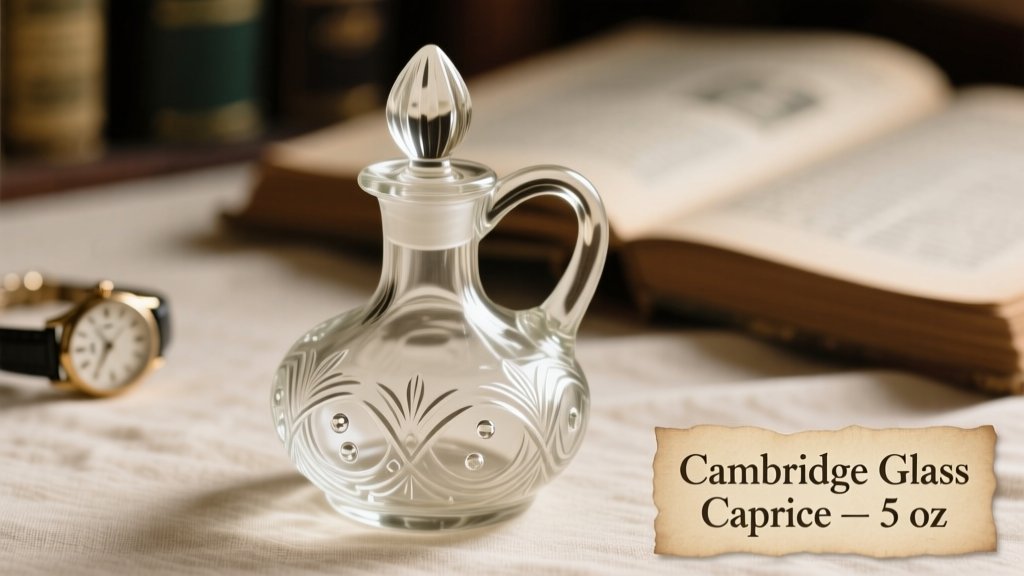
Cambridge Glass Caprice Cruet Oil Stopper (5 oz, Model No. 2): A Mid-Century American Masterpiece in Crystal and Chrome
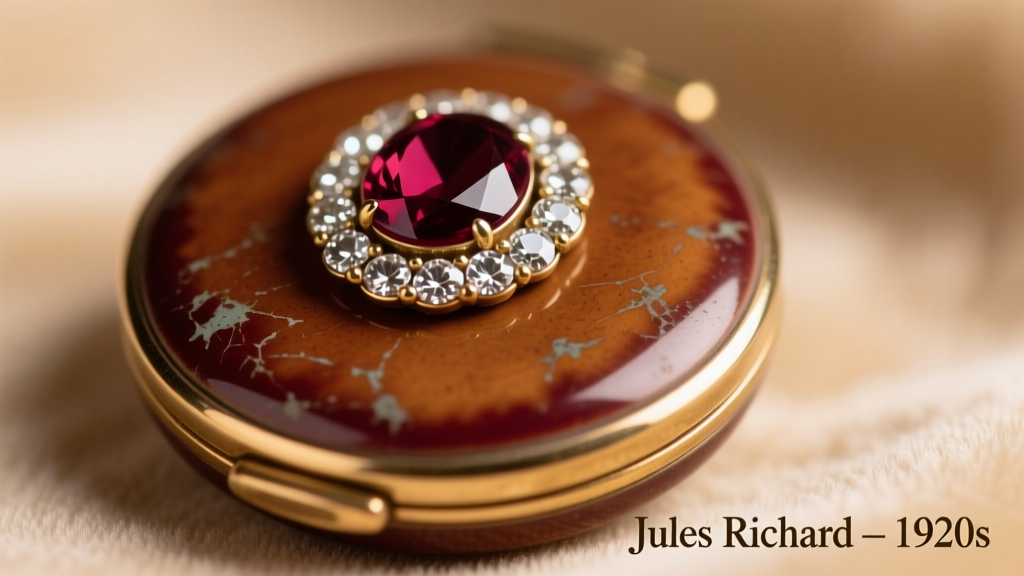
Jules Richard Compact: Tan-to-Brown Enamel with Red Cabochon and Rhinestone Circle — A Masterpiece of Swiss Art Deco Craftsmanship
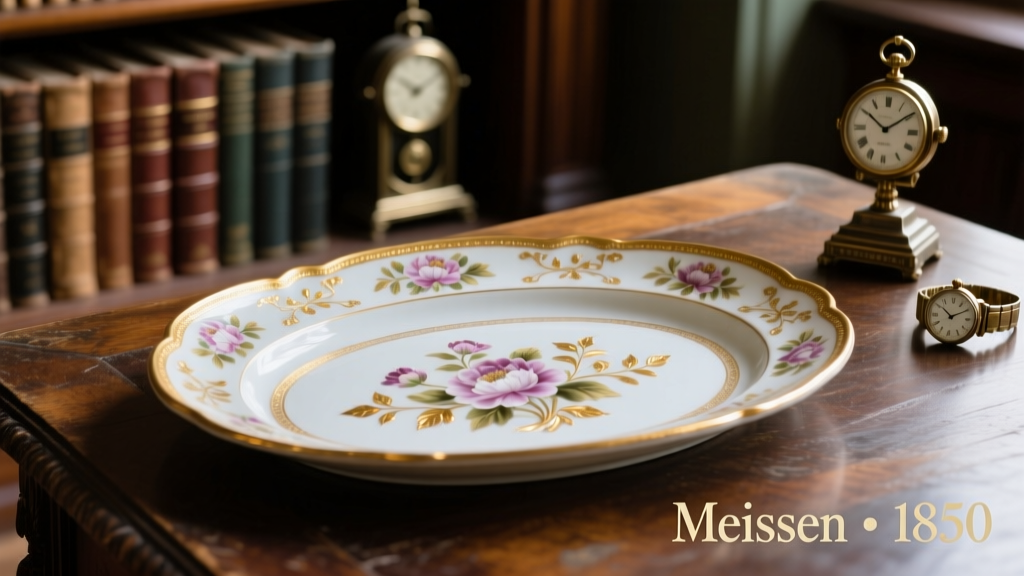
Meissen Tray: Center Floral Embossed Gilt Border, Square 16-Inch — A Study in Saxon Porcelain Mastery

Badges Chauffeur Ohio 1943: Authentic WWII-Era Motor Transport Identification and Its Historical Significance

Andrew K. Long: The Unseen Hand Behind Iconic American Watchmaking and Vintage Jewelry Design
Patrick Galbraith Gilbraith: The Enigmatic British Watchmaker Behind Iconic Mid-Century Chronographs

Toy Car Highway Patrol Friction Cars: A Collector’s Guide to Japanese-Made Police Vehicles of the 1960s–1970s
Rolex Submariner Ref. 1138312: A Technical and Historical Appraisal of the 2003–2008 Dual-Time Chronometer
Norman Rockwell’s Iconic February 1938 Boy Scout Handbook: A Collector’s Deep Dive into Scouting History, Art, and Rarity