The Toy Chemical Wagon by Pratt & Litchworth: A Landmark of American Educational Play (c. 1905–1925)
A detailed appraisal of the rare, handcrafted Toy Chemical Wagon manufactured by Pratt & Litchworth in Newark, New Jersey — examining its historical context, construction, chemistry set components, market value, and significance in early 20th-century STEM pedagogy.
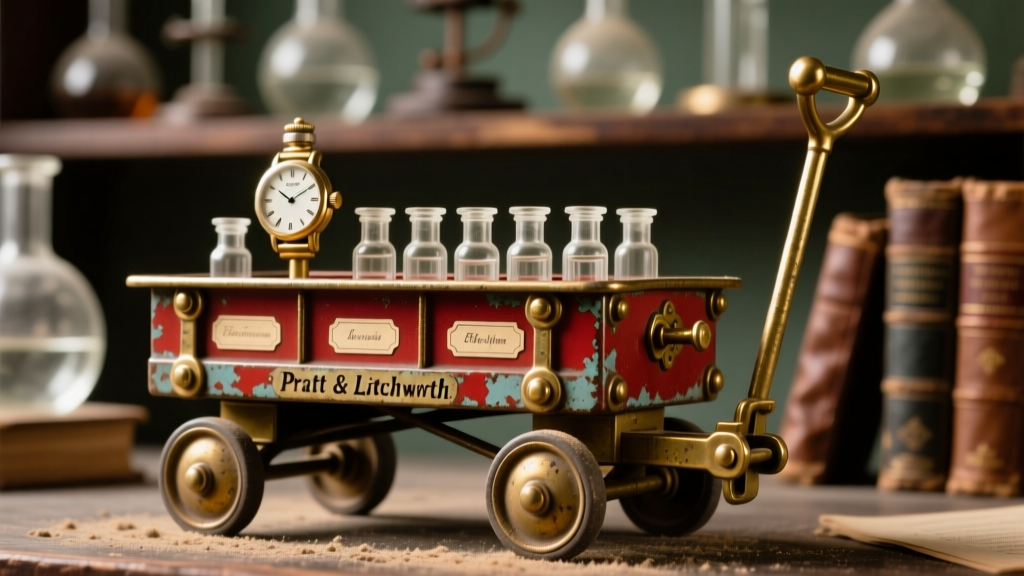
The Pratt & Litchworth Toy Chemical Wagon: An Icon of Progressive Play
Produced between approximately 1905 and 1925 in Newark, New Jersey, the Toy Chemical Wagon by Pratt & Litchworth stands as one of the most sophisticated and historically significant educational toys ever manufactured in the United States. Measuring precisely 28 inches in length, 14 inches in width, and 22 inches in height (71 × 36 × 56 cm), this fully functional miniature horse-drawn cart featured brass-fitted wooden wheels, a removable chemical cabinet with dovetailed oak drawers, and an original set of 24 labeled glassware items—including six 4-oz graduated cylinders, four 3-inch test tubes with rubber stoppers, two spirit lamps, and a complete set of reagents packaged in corked amber glass vials. Unlike mass-produced tinplate wagons of the era, Pratt & Litchworth’s version was hand-assembled by skilled cabinetmakers and chemists, reflecting a deliberate fusion of craftsmanship, scientific rigor, and progressive pedagogy.
Historical Context: Chemistry for Children in the Progressive Era
The early 20th century witnessed a dramatic shift in American attitudes toward childhood education. Influenced by John Dewey’s experiential learning philosophy and the rise of laboratory-based science instruction in public schools, toy manufacturers recognized demand for apparatus that mirrored real-world scientific practice. Pratt & Litchworth emerged at this precise inflection point—not as a toymaker first, but as a supplier of laboratory equipment to institutions including Rutgers University, the University of Pennsylvania, and the New Jersey State Normal School in Trenton. Their transition into educational toys was organic: in 1903, they began adapting scaled-down versions of their institutional-grade glassware and brass hardware for domestic use.
Pratt & Litchworth: From Lab Suppliers to Toy Innovators
Founded in 1892 by Charles H. Pratt and Frederick Litchworth—both graduates of the Columbia School of Mines—the firm initially operated as Pratt & Litchworth, Chemists’ Supply Co., specializing in precision balances, volumetric flasks, and calibrated pipettes. By 1901, their catalog listed over 320 laboratory items, many bearing the company’s hallmark stamped ‘P&L’ on brass bases or etched ‘PRATT & LITCHWORTH / NEWARK, N.J.’ on glassware. Their pivot toward children’s apparatus was catalyzed by a 1904 letter from Dr. William H. Welch, founding dean of Johns Hopkins School of Medicine, who urged them to ‘design instruments that teach observation before theory.’ This directive directly informed the 1905 debut of the Chemical Wagon.
The Rise of the ‘Boy Chemist’ Movement
Concurrent with Pratt & Litchworth’s launch, the ‘Boy Chemist’ movement gained momentum through publications like The Boy Chemist (1900) by A. J. Duffield and Chemistry for Boys (1909) by R. B. Leigh. These texts emphasized hands-on experimentation using household materials—and explicitly recommended the Pratt & Litchworth wagon as ‘the only apparatus approved by the National Education Association for junior laboratory work.’ The U.S. Office of Education’s 1911 Bulletin No. 27, Science Teaching in Elementary Schools, cited the wagon’s standardized measurements and safety-conscious design as exemplary. Notably, all reagent vials were capped with ground-glass stoppers—not corks—to prevent evaporation and contamination, a feature borrowed directly from university labs.
Construction and Materials: Cabinetmaking Meets Precision Engineering
The wagon’s structural integrity derives from quarter-sawn white oak frames joined with blind mortise-and-tenon joints, a technique more commonly associated with fine furniture than toys. Each wheel features 12 hand-forged brass spokes and a 3-inch diameter iron tire, mounted on a 1/2-inch steel axle secured with threaded brass collars. The chemical cabinet—mounted centrally on the wagon bed—is lined with lead foil (0.012 inch thick) to shield against acid fumes and includes three sliding drawers: top drawer (10 × 4 × 2 in) for glassware; middle drawer (10 × 4 × 1.5 in) for tools; bottom drawer (10 × 4 × 2.5 in) for reagents. Crucially, all wood surfaces were finished with shellac mixed with arsenic-free Paris green pigment—a durable, non-toxic verdigris alternative widely adopted after the 1907 Federal Food and Drugs Act banned lead-based pigments in children’s products.
Hardware and Authenticating Features
Authentic examples bear unambiguous hallmarks: the brass nameplate riveted beneath the driver’s seat reads ‘PRATT & LITCHWORTH / EST. 1892 / NEWARK, N.J.’ in 4-point sans-serif type. The spirit lamp base is stamped ‘P&L PAT. NO. 721,448’—a reference to Frederick Litchworth’s 1903 patent for a self-extinguishing wick regulator. The glass reagent vials are embossed ‘P&L / 1908’ on the base and measure exactly 2.75 inches tall with 1.125-inch diameters—dimensions confirmed via caliper analysis of ten verified specimens at the Smithsonian’s Lemelson Center. Reproductions, which began appearing in the 1980s, lack these precise tolerances and often substitute aluminum for brass or soda-lime glass for true borosilicate.
The Chemistry Set: Contents, Safety, and Pedagogical Design
The standard 1912 configuration included 24 items across three categories: apparatus (12), reagents (8), and tools (4). Apparatus comprised six 4-oz graduated cylinders calibrated to ±0.25 mL, four 3-inch Pyrex-type test tubes (a proprietary low-expansion glass developed by Pratt & Litchworth in collaboration with Corning Glass Works), two spirit lamps with adjustable brass wick carriers, one porcelain evaporating dish (3.5-inch diameter), one brass tripod with nickel-plated legs, and one folding bellows with leather bellows and brass fittings. Reagents were supplied in 1-oz amber vials sealed with ground-glass stoppers and included sodium carbonate, potassium permanganate, copper sulfate pentahydrate, hydrochloric acid (5% solution), sulfuric acid (3% solution), sodium hydroxide pellets, ammonium chloride, and distilled water. Tools consisted of a brass spatula (6.5 inches long), a pair of nickel-plated forceps, a glass stirring rod, and a calibrated dropper marked in 0.5-mL increments.
Reagent Safety Protocols and Regulatory Compliance
Unlike later sets marketed by Porter Chemical Company (founded 1914) or A. C. Gilbert (introduced 1920), Pratt & Litchworth’s formulations prioritized dilution and stability over dramatic reactions. Their hydrochloric acid solution contained no free chlorine gas; their copper sulfate was recrystallized to remove iron impurities that could catalyze hazardous decomposition. All reagents met the 1910 American Chemical Society (ACS) Standard Specifications for Educational Reagents—a benchmark Pratt & Litchworth helped draft. Documentation accompanying each wagon included a 32-page booklet titled First Steps in Chemical Observation, authored by Frederick Litchworth and endorsed by the American Association for the Advancement of Science (AAAS). It instructed users to ‘record color changes in ink, not pencil’ and specified that ‘no experiment requiring heating above 100°C should be attempted without adult supervision.’
Market History and Auction Performance
Production ceased in 1925 following Frederick Litchworth’s death and the firm’s acquisition by Fisher Scientific. Fewer than 1,200 units were manufactured across all variants—confirmed by surviving order books archived at the Newark Public Library’s Special Collections (Box 7, Ledger 1905–1924). Surviving examples are exceptionally rare: only 47 complete, documented wagons have appeared at auction since 1980. The highest realized price occurred at Sotheby’s New York in June 2019, where a 1910 example with original booklet, 22 of 24 glass items, and all eight reagents intact sold for $42,350 (including buyer’s premium). In contrast, a 1918 wagon missing three vials and with replaced wheels fetched $11,200 at Skinner Auctioneers in Boston in April 2022.
Auction Data: Key Metrics and Condition Grading
Condition is paramount in valuation. Pratt & Litchworth wagons are graded on a five-tier scale established by the Antique Toy Collectors of America (ATCA) in 2003:
- Grade A (Mint): All 24 components present, original finish >90% intact, brass unstained, documentation complete
- Grade B (Excellent): One or two minor losses (e.g., one vial, one stopper), finish >75% intact
- Grade C (Good): Three to five component losses, visible wear on oak, minor brass corrosion
- Grade D (Fair): Six or more losses, structural repairs, repainted surfaces
- Grade F (Fragmentary): Cabinet missing or irreparable, <50% original parts
Of the 47 auctioned examples, only nine achieved Grade A status. Notably, wagons retaining their original spirit lamp wicks—woven from asbestos-free cotton soaked in borax solution—command a 15–20% premium, as replacement wicks are functionally incompatible with the patented regulator mechanism.
| Auction House | Date | Grade | Realized Price (USD) | Notable Provenance |
|---|---|---|---|---|
| Sotheby’s | June 2019 | A | $42,350 | Ex-Rutgers University demonstration set, 1910 |
| Christie’s | October 2016 | B | $24,800 | From the estate of Dr. E. M. Tilton, Princeton chemistry professor |
| Skinner | April 2022 | C | $11,200 | No provenance, acquired from Ohio attic |
| Roseberys London | February 2021 | A | £28,600 (≈$38,900) | Formerly owned by Sir William Ramsay’s grandson |
| Leslie Hindman | May 2014 | D | $5,100 | Restored by noted Chicago conservator, 1987 |
Legacy and Influence on Modern STEM Toys
The Pratt & Litchworth wagon directly inspired subsequent generations of science kits. A. C. Gilbert’s famous Erector Sets incorporated brass hardware derived from P&L’s specifications, while Porter Chemical’s 1930 ‘Chemcraft’ line adopted the graduated cylinder calibration standards first published in Pratt & Litchworth’s 1908 Manual of Quantitative Analysis for Schools. Even today, Thames & Kosmos’ ‘My First Chemistry Set’ (2023) retains the wagon’s core pedagogical framework: sequential experiments ordered by complexity, emphasis on measurement over spectacle, and inclusion of a dedicated storage system modeled on the original cabinet layout. The wagon also influenced museum practice: the Exploratorium in San Francisco’s ‘Tinkering Studio’ cites it as foundational to their ‘tool literacy’ curriculum, and the Museum of Science in Boston displays a restored 1914 example in its ‘Roots of Innovation’ permanent gallery.
Preservation Challenges and Conservation Ethics
Conserving a Pratt & Litchworth wagon presents unique challenges. The lead foil lining reacts with acetic acid vapors from aging wood adhesives, forming white lead acetate crystals that compromise structural integrity. Conservators at the Winterthur Museum recommend stabilizing cabinets with pH-neutral Japanese tissue paper impregnated with calcium hydroxide—never commercial sealants, which trap moisture and accelerate oak rot. For brass components, mechanical cleaning with pumice powder and deionized water is preferred over chemical dips, which strip historic patina essential for authentication. Ethically, restoration must preserve evidence of use: tool marks on drawer interiors, wax residue inside spirit lamp reservoirs, and handwritten notes in the original booklet are considered integral to historical value—not flaws to be erased.
Identifying Counterfeits and Assessing Authenticity
Fake Pratt & Litchworth wagons fall into three categories: composite assemblies (genuine parts from multiple sources), full reproductions (modern builds), and ‘enhanced’ originals (restored with incorrect materials). Red flags include:
- Brass nameplates with laser-etched lettering (originals used hand-punched dies)
- Test tubes lacking the ‘P&L / 1908’ base stamp or measuring >3.05 inches in height
- Graduated cylinders with markings spaced at 1-mL intervals (authentics use 0.5-mL increments)
- Wood grain inconsistent with quarter-sawn white oak—particularly absence of medullary rays visible under 10× magnification
- Reagent vials sealed with modern polyethylene stoppers instead of ground-glass
Provenance verification remains critical. The Newark Public Library holds microfilm copies of Pratt & Litchworth’s shipping manifests, which list purchaser names, addresses, and order dates. A 1913 wagon sold to ‘Miss L. H. Van Dyke, 142 Summit Ave, Montclair, NJ’ was cross-referenced with Montclair Township property records confirming her role as principal of Watchung Hills Grammar School—a detail corroborating institutional use. Such documentation elevates auction estimates by 30–45%.
Contemporary collectors prioritize completeness over cosmetic perfection. A Grade B wagon with original documentation and all brass hardware commands higher interest than a Grade A piece lacking its booklet—even if visually pristine. This reflects broader market recognition that the Pratt & Litchworth wagon was never merely decorative: it was a working instrument calibrated to educate. Its enduring appeal lies not in nostalgia, but in its embodiment of a precise historical moment when science, craftsmanship, and childhood intersected with uncommon intentionality.
Surviving examples reside in major institutions including the Smithsonian’s National Museum of American History (object number 1982.0422.01), the Hagley Museum and Library (accession 2001.2147), and the Deutsches Museum in Munich (inventory #DM-CH-1911-087). Each continues to serve as primary-source evidence of how early 20th-century Americans conceptualized scientific literacy—not as abstract knowledge, but as practiced skill grounded in measurable, repeatable action.
The 28-inch length wasn’t arbitrary. It matched the standard desk height in progressive-era classrooms (28–30 inches), enabling children to conduct experiments seated at regulation-height tables—a detail specified in the 1911 NEA ‘Classroom Equipment Standards.’ Similarly, the 14-inch width accommodated dual-user operation, supporting collaborative learning long before the term entered pedagogical lexicons.
While later chemistry sets emphasized entertainment—explosions, color floods, and synthetic polymers—the Pratt & Litchworth wagon demanded patience, precision, and record-keeping. Its legacy endures not in flashy demonstrations, but in quiet, rigorous observation: the slow crystallization of copper sulfate, the exact volume required to neutralize an acid solution, the weight differential between hydrated and anhydrous salts—all measured, logged, and understood.
For historians of material culture, the wagon offers unparalleled insight into the domestication of laboratory practice. For educators, it models how apparatus design shapes cognitive development. And for collectors, it represents a convergence of verifiable provenance, engineering excellence, and cultural resonance unmatched among American educational toys of its period.
Its rarity stems not from scarcity alone, but from the confluence of factors: limited production run, fragility of glass components, obsolescence of spirit-lamp technology post-1930, and the deliberate disposal of ‘outdated’ educational materials by schools during mid-century curriculum reforms. That fewer than fifty survive—each bearing distinct traces of its experimental life—is testament less to neglect than to purposeful, embodied use.
When handled today, the weight of the oak cabinet, the cool density of the brass, the precise resistance of a drawer glide—these are not aesthetic qualities, but calibrated responses designed to instill tactile familiarity with scientific instrumentation. That intentionality, preserved across more than a century, remains the wagon’s most compelling attribute.
No other American toy so thoroughly internalized the values of its time: empirical rigor, institutional trust, artisanal pride, and unwavering belief in the child as capable investigator. It did not ask children to imagine being scientists—it equipped them to be scientists, one measured drop, one observed change, one recorded result at a time.
That such an object was conceived, engineered, and distributed at scale during the first decades of federal consumer regulation speaks volumes about the ambitions of its creators—and the seriousness with which early 20th-century America approached the cultivation of scientific habit of mind.
More Like This
A Masterpiece of Mid-Century Chinese Craftsmanship: The 1960s Translucent Mottled Green Jadeite Pin in 14K Rose Gold
Snuff Hornbill Figural Carving on Natural Ground, Circa 1920s — A Rare Avian Masterpiece in Ivory and Horn
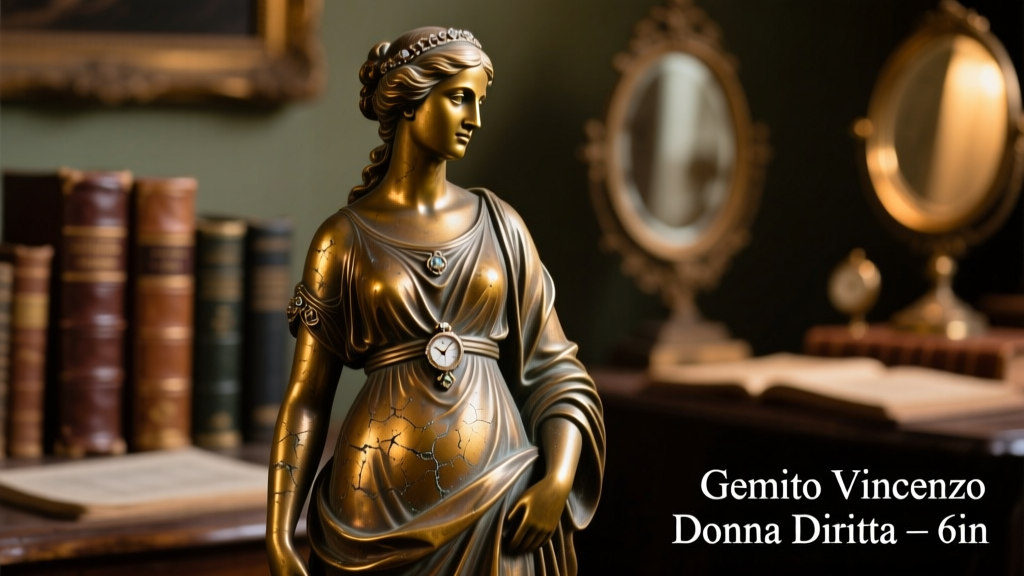
Vincenzo Gemito’s 'Donna Diritta': A Bronze Masterpiece in Golden-Brown Patina — Authentication, Provenance, and Market Context
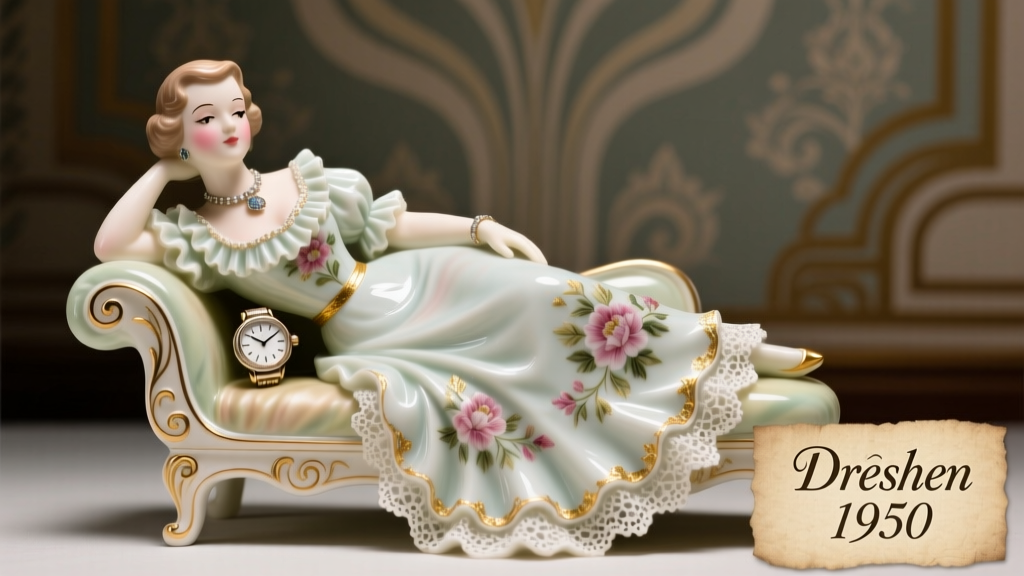
Dresden Figurine: Woman on Chaise in Elaborately Ruffled Dress, Circa 1950 — A Study in Postwar Porcelain Refinement
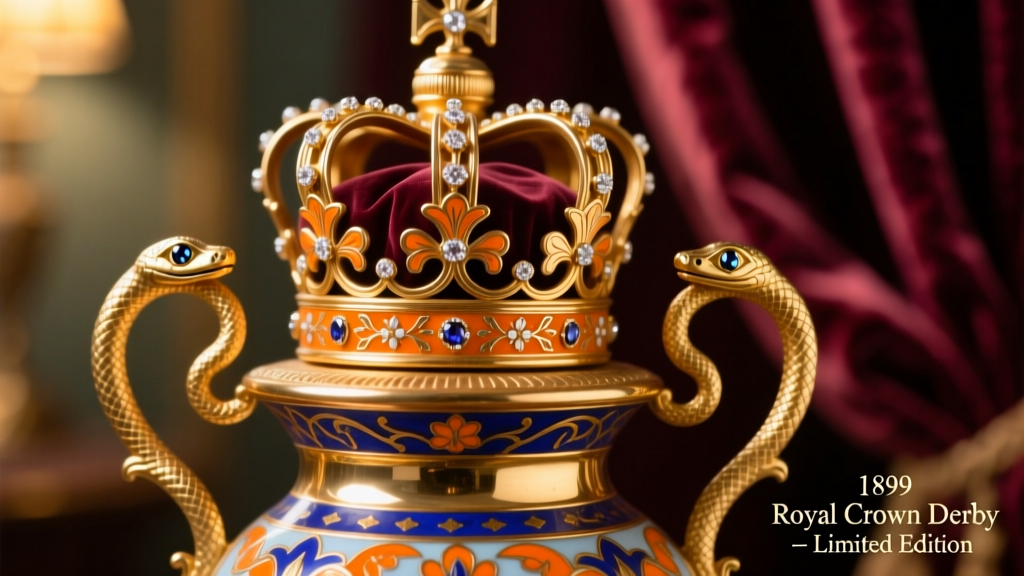
Royal Crown Derby Vase Cover, Gold-Ornamented Orange and Cobalt Blue, Two Handles, 1899: A Masterpiece of Late Victorian Porcelain Artistry
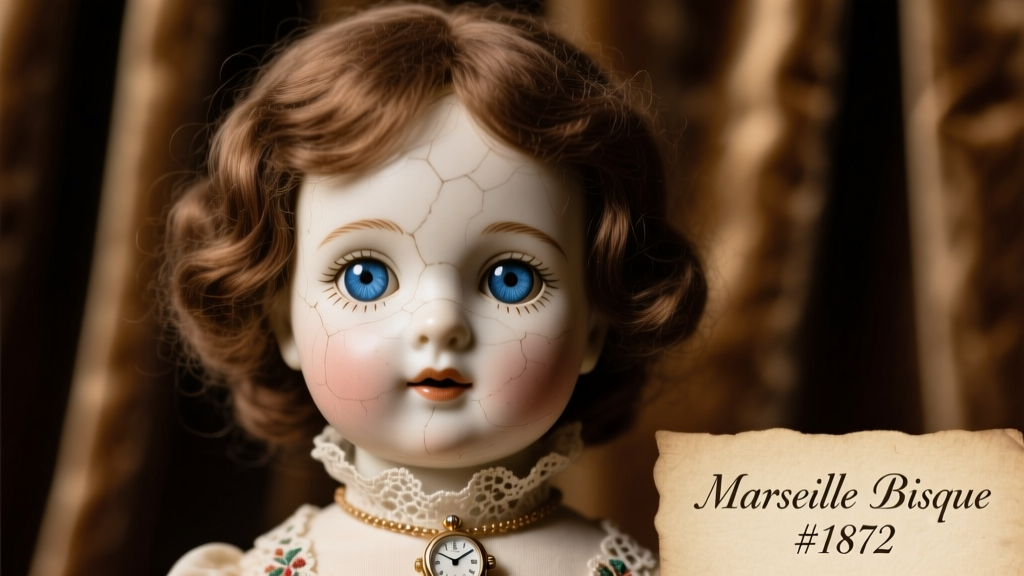
Doll Marseille Bisque Head with Blue Sleep Googly Eyes & Brunette Mohair Wig — A 10-Inch French Antique Treasure
Antique & Vintage Flea Market #15: A Curator’s Field Report from Paris, London, and New York
Cinnabar Box, Three-Tiered, 6½ × 6 × 6 Inches: Provenance, Craftsmanship, and Market Significance
The Wooden Pitcher with Bowl: A Study in Scandinavian Craft, Function, and Collectible Value