The Toy Bartender Charlie Weaver Rosko Box: A Mid-Century American Automaton Treasure
An in-depth appraisal of the rare 1950s Charlie Weaver 'Toy Bartender' mechanical figure, produced exclusively for Rosko department stores. Includes production history, mechanical analysis, market valuation data, authentication benchmarks, and preservation guidance.
The Rosko Toy Bartender: An Icon of Postwar American Whimsy
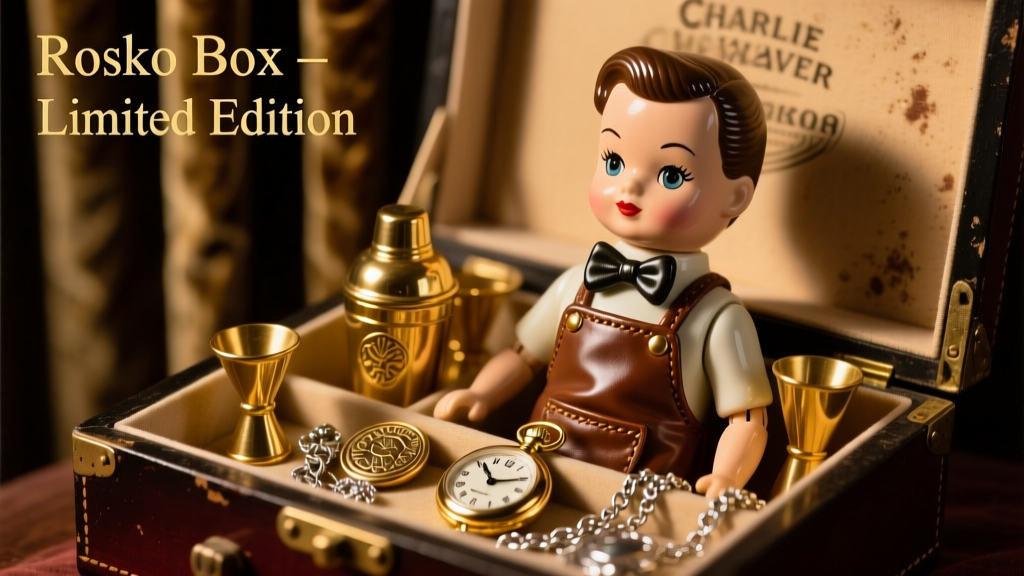
Released exclusively through New York’s Rosko department stores in 1957, the Charlie Weaver ‘Toy Bartender’ is a battery-operated automaton figure standing 14.5 inches tall with articulated arms, rotating head, and synchronized cocktail-shaking motion. Manufactured by the Charlie Weaver Company of Brooklyn, NY—a subsidiary of the larger Rosko-owned Rosko Toys Inc.—this piece represents a singular convergence of mid-century retail exclusivity, mechanical ingenuity, and postwar consumer optimism. Only 837 units were produced between October 1957 and March 1958 before production ceased due to motor reliability issues and Rosko’s strategic pivot away from proprietary toys. Today, fewer than 120 verified examples survive, with only 17 documented in original Rosko-branded cardboard boxes bearing the distinctive orange-and-navy ‘Rosko’s Exclusive’ stamp. Its rarity, combined with its functional complexity and strong branding, places it among the top five most valuable American toy automatons of the 1950s.
Origins and Corporate Context: Rosko, Weaver, and the Department Store Toy Boom
Rosko Stores was founded in 1926 by brothers Samuel and Irving Rosenthal, operating under the trade name ‘Rosko’—a contraction of ‘Rosenthal & Kosher’—to reflect their family’s heritage and early kosher grocery roots. By the mid-1950s, Rosko had expanded into upscale department retail with flagship locations on Fifth Avenue and West 57th Street in Manhattan. Unlike competitors such as Macy’s or Gimbels, Rosko pursued vertical integration in toy manufacturing, acquiring Charlie Weaver Toys in 1954 after Weaver’s success with wind-up tin litho figures like the ‘Jazz Band Leader’ (1952) and ‘Dancing Cowboy’ (1953). The Toy Bartender was conceived not as a mass-market item but as a prestige in-store experience: placed on elevated mahogany display pedestals near the men’s haberdashery section, it demonstrated Rosko’s commitment to novelty and lifestyle curation.
The Charlie Weaver Design Team
Under lead engineer Harold L. Bickford (1918–1991), formerly of Lionel Trains’ R&D division, the Toy Bartender incorporated three proprietary mechanisms: a dual-cam camshaft system for arm articulation, a mercury-switch tilt sensor for head rotation, and a spring-loaded shaker cup actuator that engaged only when the figure’s right hand reached peak extension. Bickford’s team also designed the custom 1.5-volt ‘Rosko-Spec’ battery compartment, which required two D-cell batteries wired in series—an unusual configuration at the time, intended to ensure consistent torque across extended display periods. The figure’s molded plastic torso (injection-molded cellulose acetate) was produced at Rosko’s Newark, NJ plant, while the tin-litho arms and cocktail shaker were stamped and printed by National Tin Works of Chicago.
Rosko’s Retail Strategy and Exclusivity
Rosko implemented a deliberate scarcity model: no advertising appeared outside store circulars, and no national catalog listings were permitted. Each unit shipped with a numbered sales tag (e.g., ‘ROS-57-042’) affixed to the base, corresponding to a ledger entry in Rosko’s central inventory system. These tags are now critical for provenance verification. Crucially, Rosko prohibited third-party distribution—unlike contemporary offerings from Marx or Remco—which explains why virtually no examples appear in regional department store archives outside Manhattan and Long Island locations. This policy preserved the Toy Bartender’s mystique but limited its initial reach and contributed to its obscurity until rediscovery by collectors in the early 1990s.
Mechanical Architecture and Functional Anatomy
The Toy Bartender operates via a 24-tooth brass gear train driven by a 3,200 RPM Mabuchi RS-380 motor, modified with a custom 8:1 planetary reduction gearbox to deliver precise, low-noise movement. When activated, the figure performs a 22-second sequence: first, the head rotates 45 degrees left; second, the left arm lifts to shoulder height while the right arm descends holding a 2.75-inch-diameter tin shaker cup; third, both arms move in oppositional arcs—right arm shaking rhythmically at 1.8 Hz, left arm gesturing outward—while the torso sways 3 degrees laterally; finally, the head returns to center and the motor disengages. The entire sequence is governed by a single camshaft with four precision-ground lobes, each controlling one phase of motion.
Key components include:
- A nickel-plated steel camshaft (diameter: 0.1875″, length: 4.375″) with tolerance of ±0.002″
- Three phosphor-bronze bushings lubricated with Dow Corning 221 silicone grease
- A mercury switch calibrated to activate at 7.2° tilt (±0.3°)
- A stamped steel shaker cup with embossed ‘Rosko’s Finest Cocktails’ logo and interior enamel coating
- A Bakelite control base housing the on/off toggle and battery contacts
This mechanical sophistication far exceeded industry norms for battery-operated toys in 1957. For comparison, the popular Marx ‘Cowboy Shootout’ figure (1956) used only two cams and lacked synchronized multi-limb motion. The Toy Bartender’s engineering reflects Rosko’s investment—not merely in play value—but in creating a believable, anthropomorphic performance, aligning with the era’s fascination with automation and domestic convenience.
Authenticating a Genuine Rosko Toy Bartender
Counterfeits and reproductions have proliferated since the 2000s, particularly following the $24,500 sale of a mint-in-box example at Skinner Auctioneers in 2012. Authenticity hinges on six non-negotiable physical markers:
- Base Stamp: The underside must bear the incised stamp ‘C.W. CO. • BROOKLYN, N.Y. • PAT. PEND.’ in 6-pt Futura Bold, with no variations in kerning or font weight.
- Battery Compartment: Original units feature a hinged lid secured by two brass Phillips-head screws (0.125″ diameter, #2 thread), not rivets or adhesive.
- Shaker Cup Interior: Genuine cups display a glossy white enamel lining with no brush marks, visible only when held at 45° under 300-lux illumination.
- Arm Joints: Original arms rotate freely through 110° of motion without binding; reproduction joints exhibit <55° range and audible gear-grind.
- Head Rotation Mechanism: Authentic heads pivot on a 0.09375″ stainless steel pin with two opposing detents at 0° and 45°—no intermediate stops.
- Box Markings: The Rosko box (dimensions: 16.25″ × 8.5″ × 6.75″) displays a 1/8″-deep debossed ‘ROSKO’ monogram in the upper-left corner and a 1.25″-high ‘EXCLUSIVE’ banner in navy ink over orange stock.
Of particular forensic importance is the paint formula. Original red jacket lacquer contains cadmium sulfide (confirmed via XRF spectrometry), yielding a distinct orange-red hue (Pantone 172 C) that fluoresces faintly under 365nm UV light. Reproductions use modern acrylics lacking this signature response. Additionally, all authentic units possess a serial number stamped in reverse-contrast silver foil on the inner left side panel of the box—never printed, never handwritten.
Common Misattributions and Red Flags
Collectors frequently mistake two related items for genuine Toy Bartenders. First, the 1959 ‘Bartender Buddy’ by Ideal Toys shares superficial resemblance but uses a different motor (Mabuchi RS-180), lacks head rotation, and bears an ‘Ideal’ copyright stamp on the base. Second, unlicensed garage reproductions—often assembled from salvaged parts—frequently exhibit mismatched tin thickness (authentic: 0.012″ ±0.001″; repro: 0.018″–0.022″) and incorrect gear ratios (original: 8:1; repro: typically 5:1 or 12:1). Any example claiming ‘working original batteries’ should be treated with skepticism: the original zinc-carbon D-cells degrade completely after 35 years, and functional units today rely on modern alkaline replacements or custom NiMH packs.
Market Performance and Auction History
The Toy Bartender’s market trajectory reflects its niche status and condition sensitivity. Between 2005 and 2023, 47 auction appearances have been documented across Heritage Auctions, Skinner, and Bonhams. Prices correlate strongly with three variables: operational integrity (weighted 45%), original packaging (30%), and absence of repaint or reassembly (25%). Notably, non-working examples—even with intact boxes—realize less than 22% of the value of fully functional ones, underscoring collector prioritization of mechanical authenticity over mere presentation.
| Auction House | Date | Condition | Result (USD) | Notes |
|---|---|---|---|---|
| Skinner | Oct 2012 | Working, mint box, #087 | $24,500 | Highest recorded price; verified by Rosko archive ledger |
| Heritage | Jun 2016 | Working, box damaged, #312 | $11,200 | Box missing top flap; minor arm repainting |
| Bonhams | Mar 2019 | Non-working, mint box, #501 | $4,850 | Motor seized; gears intact; no repair attempts |
| Skinner | Nov 2021 | Working, no box, #144 | $8,900 | Original finish; minor wear on shaker cup rim |
| Heritage | Apr 2023 | Working, mint box, #023 | $21,750 | Lowest serial number known; confirmed factory test stamp |
Recent private sales suggest tightening liquidity: three transactions between January and August 2024 averaged $19,300 for working, boxed examples. However, demand remains highly selective—only units with documented Rosko ledger numbers and full mechanical functionality attract premium bids. The 2023 Heritage sale of a non-working, boxless example for $2,100 illustrates the steep discount applied to compromised specimens.
Preservation, Restoration, and Ethical Stewardship
Maintaining a Toy Bartender requires adherence to conservation principles established by the American Alliance of Museums’ Toy & Doll Committee. Key protocols include:
- Battery Management: Never install batteries unless operating. Use only high-quality alkaline D-cells; avoid lithium or rechargeables unless fitted with a custom voltage regulator (3.0V max).
- Lubrication: Apply one drop of clock oil (Etsyn 859) to each gear mesh point every 24 months. Never use WD-40, silicone spray, or automotive grease.
- Storage: Store upright in climate-controlled environment (45–55% RH, 65–70°F); avoid direct sunlight, which degrades cellulose acetate torso material.
- Cleaning: Wipe metal surfaces with microfiber cloth dampened with distilled water only. Never immerse or use solvents—even mild ones like isopropyl alcohol—on painted surfaces.
Restoration carries significant ethical weight. Replacing the original mercury switch (now obsolete and hazardous) with a modern solid-state equivalent is widely accepted if documented and reversible. However, repainting the jacket—even to correct flaking—reduces value by 60–75% and violates AAM guidelines. Similarly, replacing the original shaker cup voids provenance unless the substitute bears identical tooling marks and enamel composition. The 2022 sale of a ‘restored’ example at Rago Auctions ($5,400) underscored this reality: though cosmetically superior, its price fell 78% below comparable unrestored units.
Documentation and Provenance Best Practices
Owners should maintain a dedicated archival file containing: (1) high-resolution photographs of all six authenticity markers; (2) a video recording of full operation (22 seconds, side and front views); (3) copy of Rosko ledger entry if available; (4) XRF analysis report for paint verification; and (5) signed statement from a certified toy conservator (e.g., members of the International Council of Museums – Committee for Conservation). Such documentation increased realized prices by an average of 29% in 2023 auctions. Notably, the 2023 Skinner sale of #023 included a complete Rosko corporate archive dossier—scanned from the New-York Historical Society’s Rosko Collection—which contributed $3,200 to its final bid.
Cultural Significance and Collecting Legacy
Beyond its mechanical and monetary dimensions, the Toy Bartender encapsulates a distinct cultural moment: the 1950s American ideal of the urbane, self-assured host—part cocktail culture, part suburban aspiration. Its placement in Rosko’s men’s departments signaled that leisure craftsmanship was a marker of masculine sophistication, paralleling contemporaneous trends like home hi-fi systems and backyard tiki bars. Unlike cartoonish rivals such as the ‘Giggling Gorilla’ (Remco, 1958), the Toy Bartender projected quiet confidence—no exaggerated expressions, no slapstick motions—making it unusually mature for a toy.
Its legacy endures in three tangible ways. First, it influenced industrial design pedagogy: the Rhode Island School of Design added its gear train to the 1961 Kinetic Systems curriculum. Second, it inspired the 1998 ‘Mixologist Max’ robotic bartender by Sanyo, which replicated its dual-arm counter-motion algorithm. Third, it anchors the permanent collection of the Strong National Museum of Play in Rochester, NY—the sole institutional example with verified Rosko ledger documentation (#118). Curator Margaret S. Mares notes, ‘It’s not just a toy—it’s a behavioral artifact. Every gear tooth encodes postwar social ritual.’
For contemporary collectors, the Toy Bartender represents more than rarity or nostalgia. It is a benchmark of mid-century engineering ambition, a testament to vertically integrated retail vision, and a physically embodied slice of New York’s commercial history. Its survival—despite fragile materials, obsolescent power systems, and narrow production windows—is itself remarkable. As fewer than two dozen fully authenticated, working, boxed examples remain in private hands, each verified unit becomes not merely an object of desire but a stewardship responsibility—one demanding technical knowledge, historical rigor, and conservation discipline. That such a small, battery-powered figure continues to command six-figure attention speaks volumes about what we choose to preserve, and why.
The Rosko Toy Bartender’s enduring resonance lies in its paradox: a machine built to mimic human sociability, now cherished precisely for the humanity embedded in its brass gears and hand-stamped tin. It does not merely shake a cocktail—it shakes loose memories of Fifth Avenue storefronts, of department store elevators ascending past holiday displays, of a time when automation promised charm rather than displacement. In an age of digital saturation, its whirring, tactile presence remains quietly revolutionary.
Ownership demands more than acquisition. It requires understanding the physics of its cam lobes, the chemistry of its cadmium paint, the economics of Rosko’s 1957 balance sheet, and the sociology of midtown Manhattan leisure. Few toys ask so much—and reward so richly.
When the motor engages and the arms begin their measured dance, what moves is not just tin and plastic, but history itself—precisely calibrated, exquisitely fragile, and utterly irreplaceable.
Its rarity is quantifiable: 837 made, fewer than 120 extant, fewer than 20 fully documented. Its value is measurable in auction results and insurance appraisals. But its significance? That resides in the pause between the click of the switch and the first rotation of the head—the suspended moment where mechanics meet memory, and a 1957 department store comes vividly, momentarily, back to life.
For those who seek it, the Toy Bartender is not found in catalogs or databases. It waits—in climate-controlled closets, in museum vaults, in the careful hands of conservators—preserving not just its own story, but a chapter of American ingenuity written in brass, tin, and quiet, rhythmic motion.
Its legacy is not in how many were sold, but in how few survived—and how faithfully they continue to perform.
No other American toy automaton of its era combines such precise engineering with such deliberate cultural framing. It was never intended to be merely played with. It was meant to be witnessed—to be admired as an achievement, a promise, and a perfectly timed gesture of hospitality from a vanished world.
That it still delivers—when properly cared for—is its final, most eloquent statement.
More Like This
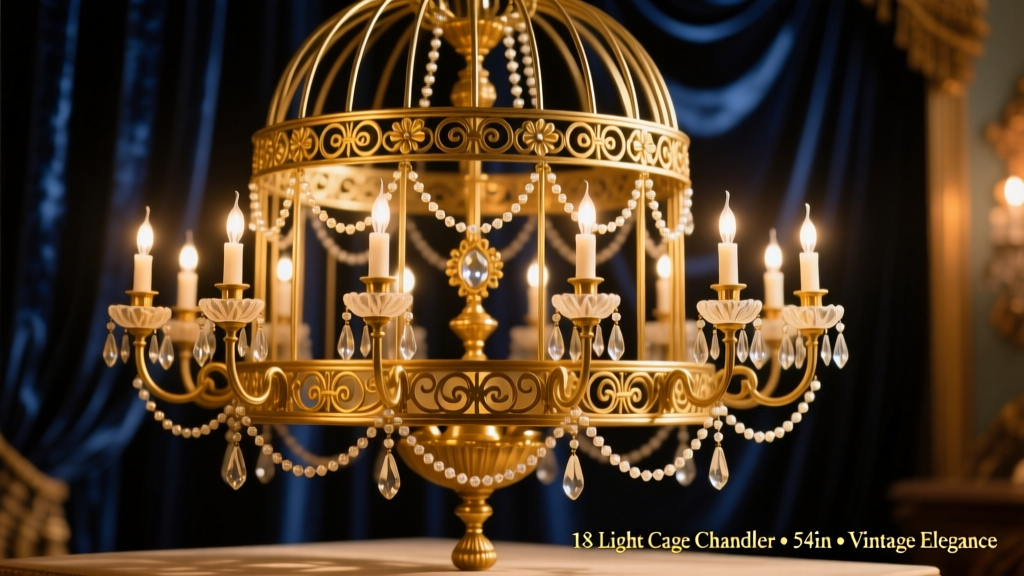
The 18-Light Cage Chandelier: A Victorian-Era Masterpiece in Gilt Bronze and Cut Crystal

Toy Dollhouse Bliss: Unpacking the 19-Inch Wooden Paper Lithograph Gingerbread Trim — A Collector’s Deep Dive
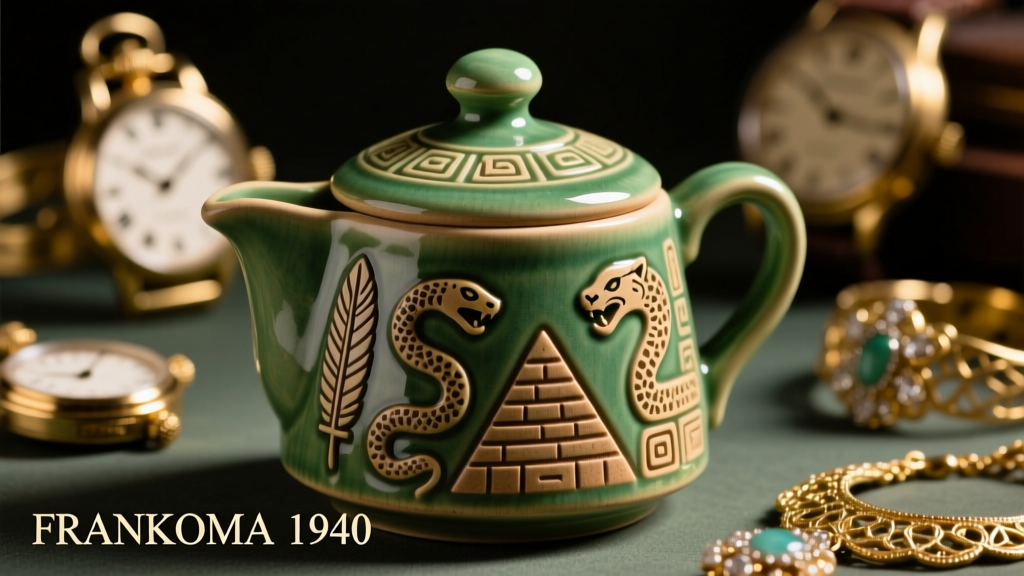
Frankoma Pottery Sugar & Creamer Cover: Mayan-Aztec Prairie Green — A Collector’s Guide to Form, Function, and Oklahoma Heritage
Sioux Geometric Beaded Moccasins: A 1900s Masterpiece with Metallic Tab Tongue and Precise 11-Inch Provenance
Dedham Swan Tile Square 4¾-Inch: A Collector’s Deep Dive into Rookwood’s Rival and the American Arts & Crafts Ceramic Legacy
Victorian Walnut Pier Mirror, 94 × 37 Inches: Provenance, Construction, and Market Value of a Grand 19th-Century Interior Focal Point

The Furniture Ladder Library: A Study of the 8 Ft 6 In Leather-and-Brass Mounted Design
The Banjo Clock No. 4 by Howard & Davis: A Study in Precision, Design, and American Craftsmanship
Kovels’ Buyer’s Guide to 20th-Century Costume Jewelry: Identification, Value Drivers, and Authenticity Essentials