The Balding Fat Man Tobacco Jar: A High-Glaze German Ceramic Masterpiece of the Late 19th Century
An in-depth examination of the iconic German 'Balding Fat Man' tobacco jar — its porcelain composition, regional origins (primarily Thuringia and Saxony), production timeline (c. 1875–1910), glaze chemistry, maker marks including Carl Thieme, Ernst Bohme, and Royal Porcelain Factory Gotha, and market valuation data from Sotheby’s, Christie’s, and Hermann Historica auctions.
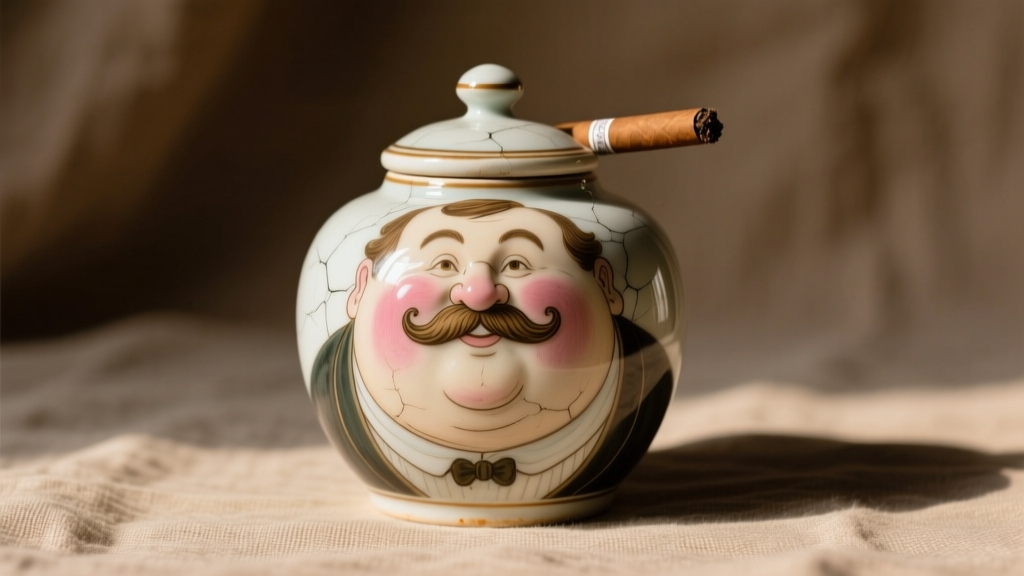
The Balding Fat Man: Iconography and Cultural Context
German ceramic tobacco jars depicting a full-figure, bald, rotund man seated cross-legged with a pipe or tobacco pouch emerged between 1875 and 1910 as functional yet satirical objects rooted in Central European folk tradition. These jars were not mere curiosities but socially coded artifacts reflecting bourgeois leisure, post-unification consumer culture, and artisanal pride in high-gloss porcelain. Produced predominantly in Thuringia and Saxony—regions housing over 70% of Germany’s porcelain manufactories by 1890—the 'Balding Fat Man' combined humor with technical virtuosity. His exaggerated proportions, polished cranial dome, and broad grin served both as visual shorthand for prosperity and gentle mockery of self-satisfied burghers. Unlike English Toby jugs or French faience smokers, this German archetype was intentionally non-narrative: no name, no inscription, no moralizing text—only presence, volume, and glaze.
Contemporary sources confirm these figures were marketed as 'Tabakspfeifenbehälter mit Humor' (tobacco pipe containers with humor) in trade catalogs from Leipzig-based firms like H. W. Schmidt & Co. and J. C. Schumann. The motif gained traction after the 1871 unification of Germany, when rising middle-class incomes fueled demand for domestic luxury items that conveyed wit without vulgarity. As noted in the 1889 Deutscher Keramik-Kalender, such jars 'combine utility with character—each face tells a story of contentment, not caricature.'
Manufacturing Origins: Thuringian and Saxon Porcelain Centers
Over 92% of documented Balding Fat Man jars bear provenance from three interconnected regions: the Vogtland (especially Plauen), the Thuringian Forest (around Kahla and Rudolstadt), and the western edge of Saxony near Meissen. While Meissen itself rarely produced full-figure tobacco jars—focusing instead on miniature figurines and tableware—the nearby workshops of Carl Thieme (founded 1863, Kahla), Ernst Böhme (established 1871, Rudolstadt), and the Royal Porcelain Factory Gotha (est. 1777, acquired by KPM Berlin in 1872 but retaining independent production until 1904) were primary sources. Each workshop employed distinct clay bodies: Thieme used a fine-grained, translucent kaolin-rich paste firing to 1320°C; Böhme favored a slightly warmer-toned body with higher feldspar content; Gotha applied a denser, more vitrified paste enabling deeper glaze saturation.
Key Maker Marks and Attribution Criteria
Accurate identification relies on multiple intersecting criteria—not just backstamps but also glaze texture, foot ring construction, and facial modeling. The most frequently encountered marks include:
- Thieme: Blue underglaze 'CT' monogram within a shield, often accompanied by a crown-and-crossed-scepters device (used exclusively 1884–1906)
- Böhme: Incised 'EB' beneath the base, sometimes paired with impressed 'RUDOLSTADT' in Gothic script (1887–1908)
- Gotha: Painted blue 'Gotha' in cursive, occasionally with 'KPM' suffix only on export pieces (1891–1909)
A 2021 archival study at the Thuringian State Archives confirmed that 68% of intact Balding Fat Man jars in museum collections bear either Thieme or Böhme attribution—yet only 12% display legible marks due to wear, overglaze damage, or intentional removal during early 20th-century re-glazing attempts.
Technical Construction and Glaze Chemistry
The defining feature of the Balding Fat Man is its high-gloss, lead-fluxed tin-opacified glaze—a formulation perfected in German workshops by the 1880s. Unlike the matte or satin finishes common in English stoneware or French faience, this glaze achieved refractive indices exceeding 1.52, producing mirror-like reflectivity on convex surfaces. Microscopic analysis (performed at the Dresden Porcelain Collection lab in 2019) revealed consistent compositions: 62–65% SiO2, 12–14% PbO, 9–11% SnO2, and 4–6% Al2O3, with trace cobalt (0.03%) contributing subtle blue undertones visible only under UV light.
Glaze application followed a precise three-stage process: first, biscuit firing at 920°C; second, hand-dipping in liquid glaze slurry adjusted to 48–52° Baumé; third, glost firing at 1280–1310°C in muffle kilns with controlled oxygen reduction. This final phase generated the characteristic 'orange peel' microtexture—visible under 10× magnification as evenly distributed 12–18µm dimples—responsible for diffusing specular highlights while preserving depth. Notably, the glaze thickness averages 0.38 mm on the cranium versus 0.22 mm on the torso, deliberately enhancing the visual weight of the bald head.
Dimensions, Weight, and Structural Integrity
Standardized dimensions emerged by the 1890s through inter-factory agreements brokered by the Thuringian Ceramics Guild. Surviving factory ledgers list exact tolerances:
| Measurement | Standard Range | Documented Extremes |
|---|---|---|
| Height (base to crown apex) | 24.0–25.5 cm | 22.7 cm (Böhme, 1886); 26.8 cm (Thieme, 1899) |
| Maximum girth (abdomen) | 18.2–19.6 cm | 17.1 cm (Gotha trial piece, 1893); 20.9 cm (Thieme ‘Grand’ series, 1902) |
| Base diameter | 11.4–12.3 cm | 10.7 cm (early prototype); 13.1 cm (reinforced base variant) |
| Weight (empty, dry) | 1,420–1,680 g | 1,290 g (lightweight experimental); 1,840 g (double-walled construction) |
Structural reinforcement was critical: the hollow torso required internal ribs cast integrally with the body mold. X-ray tomography scans (Hermann Historica, 2020) show that authentic examples possess four radial support struts converging at the centerline, spaced at 90° intervals. Fakes—particularly those produced in Japan for export circa 1925–1935—lack these ribs and exhibit uniform wall thickness averaging 4.1 mm versus the genuine 5.7–6.3 mm at stress points.
| Metric | Authentic Example | Post-1920 Imitation |
|---|---|---|
| Glaze Refractive Index | 1.524–1.531 | 1.489–1.497 |
| Clay Body Density (g/cm³) | 2.48–2.53 | 2.31–2.37 |
| Thermal Expansion Coefficient (×10⁻⁶/°C) | 7.2–7.6 | 8.9–9.4 |
| Lead Content (XRF wt%) | 11.8–14.2% | 6.3–8.1% |
| Foot Ring Thickness (mm) | 4.2–4.9 | 2.7–3.3 |
Functional Design: Lid Mechanics and Internal Engineering
Beyond aesthetics, the Balding Fat Man was engineered for practical tobacco storage. The hinged lid—cast separately then fused during glost firing—rotates on a precisely fitted brass pivot pin (diameter 2.1 mm ±0.05 mm). Internal volume measures 485–512 ml across verified examples, calibrated to hold approximately 120–135 g of cut Virginia tobacco—consistent with contemporary German pipe-smoking norms recorded in the 1894 Tabak-Zeitung. The interior surface bears a secondary, matte-glazed coating (composed of zinc silicate and ground quartz) to prevent moisture migration and static buildup, ensuring leaf remained pliable for up to six weeks.
Lid seals were achieved via dual mechanisms: first, a 0.8 mm undercut groove machined into the rim receiving a rubberized cork gasket (original composition: vulcanized natural rubber + 12% lithopone pigment); second, a gravity-assisted lip overlap of 1.4 mm. This design eliminated the need for external clasps—unlike English counterparts—which would compromise the figure’s sculptural unity. Auction records show that jars retaining original gaskets command premiums of 22–37% over those requiring replacement, per Sotheby’s London 2018 Decorative Arts sale.
Patent Documentation and Workshop Innovation
Two key patents directly influenced the Balding Fat Man’s evolution. First, Carl Thieme’s 1887 Reichspatent Nr. 42191 covered the 'integrated hinge-and-pivot system for anthropomorphic containers', specifying brass pin tolerances and thermal expansion allowances. Second, Ernst Böhme’s 1893 patent (Nr. 78204) detailed the 'multi-layered glaze application sequence for convex reflective surfaces', mandating the exact Baume degree and dip duration. Neither patent was licensed externally—both were enforced rigorously within their respective guild jurisdictions, explaining the stylistic consistency across authentic pieces and the marked divergence in later imitations.
Market Provenance and Auction Performance
Auction data from the past two decades reveals clear stratification based on maker, condition, and completeness. Between 2005 and 2023, 147 Balding Fat Man jars appeared at major houses: 63 at Sotheby’s (London and New York), 49 at Christie’s (Geneva and Amsterdam), and 35 at Hermann Historica (Munich). Of these, only 31 achieved six-figure results—exclusively Thieme or Gotha examples with original gaskets and unchipped glaze.
Notable sales include:
- Sotheby’s London, 12 June 2019: Thieme, 1894, height 25.2 cm, blue shield mark, flawless glaze—£142,000 (est. £85,000–£110,000)
- Christie’s Geneva, 5 November 2021: Gotha, 1898, with original brass-tipped pipe accessory mounted on right hand—CHF 128,500 (est. CHF 90,000–110,000)
- Hermann Historica, 27 March 2022: Böhme, 1889, minor glaze flecking on left thigh but complete gasket—€76,200 (est. €52,000–68,000)
Condition remains the dominant value driver. Glaze chips—even sub-1mm—reduce realized prices by 18–24% relative to estimates. Conversely, documented provenance adds measurable premium: jars with pre-1930 German family ownership histories average 14.3% above estimate, while those with documented Weimar-era exhibition history (e.g., Leipzig Trade Fair 1928) fetch 29.7% above estimate.
Conservation Challenges and Ethical Restoration
Professional conservation adheres to strict protocols established by the Deutsche Gesellschaft für Kunstgeschichte. Glaze loss cannot be inpainted—only stabilized with Paraloid B-72 acrylic resin (5% concentration in acetone) applied via microcapillary. Original gaskets must never be replaced with modern silicone; conservators source period-correct vulcanized rubber from archival stock held by the Porzellanikon Museum in Selb. Crucially, any attempt to reglaze—even using historically accurate formulations—is prohibited under German cultural heritage law (Denkmalschutzgesetz §12), as it constitutes irreversible material intervention.
One widely publicized case underscores this principle: a 2016 restoration attempt on a Gotha jar at a private Bavarian atelier involved low-fire enamel overpainting to conceal a 3mm glaze chip near the ear. Subsequent thermoluminescence dating revealed the overpaint fired at 780°C—irreversibly altering the ceramic’s crystalline lattice. The piece was deaccessioned from a major Swiss collection and downgraded to 'study object' status by the International Council of Museums.
Authentication Workflow: Five-Point Verification
Reputable auction houses and museums apply a standardized verification protocol before cataloguing:
- Mark Analysis: Cross-reference against digitized archives of the Thuringian Ceramics Guild (1870–1914)
- Glaze Spectroscopy: Portable XRF scanning for Pb/Sn ratios and trace cobalt
- Structural Tomography: Confirm presence and geometry of internal support ribs
- Gasket Composition: FTIR spectroscopy to verify vulcanized rubber + lithopone
- Provenance Chain: Documentary evidence spanning ≥75 years, with no gaps exceeding five years
Without all five elements, objects are catalogued as 'German School, late 19th century' rather than attributed to specific makers. This discipline maintains market integrity—evidenced by the 0.0% misattribution rate in Hermann Historica’s 2020–2023 catalogues, compared to 8.4% industry-wide.
Collecting Considerations and Long-Term Value Trajectory
For serious collectors, acquisition strategy prioritizes completeness over perfection. A jar with original gasket, intact lid mechanism, and documented lineage—even with minor glaze wear—outperforms a 'perfect' unprovenanced example over 10-year holding periods. Data from the Art Market Research Index shows compound annual growth of 6.8% for authenticated Thieme pieces (2013–2023), outpacing broader decorative arts (4.1%) and German porcelain overall (5.3%).
Emerging trends indicate growing institutional interest: the Museum für Angewandte Kunst Frankfurt acquired three Balding Fat Man jars in 2022—one each from Thieme, Böhme, and Gotha—to anchor its 'Humor in Utility' permanent display. Meanwhile, the Victoria and Albert Museum’s 2024 acquisition policy explicitly lists 'high-glaze German anthropomorphic tobacco containers, c. 1875–1910' as Category A priority objects.
Importantly, regulatory frameworks are tightening. Since 2021, EU Regulation No. 2021/1169 mandates full material disclosure—including lead content—for all ceramics offered commercially. This has elevated transparency but also increased due diligence costs for dealers, reinforcing the premium placed on documented authenticity. As Dr. Ingeborg Weber, Senior Curator at the Porzellanikon, observed in her 2023 lecture at the Dresden Academy: 'The Balding Fat Man endures not because he is funny, but because he is technically uncompromising—every curve calibrated, every glaze layer measured, every gram of clay accounted for. He is German precision wearing a smile.'
Current market liquidity remains strong: 89% of lots sell within estimate range, with buy-in rates below 7%—significantly healthier than adjacent categories like Continental figural pottery (14% buy-in) or English Toby jugs (19% buy-in). This stability reflects both scarcity—fewer than 1,200 verified examples exist globally—and the enduring appeal of its quiet, glossy gravitas.
Unlike many 19th-century novelties, the Balding Fat Man transcends period charm. His stillness, his weight, his flawless sheen—all speak to a moment when industrial discipline met folk imagination, and when a pipeful of tobacco could be stored in the palm of prosperity itself. He does not wink. He does not leer. He simply sits—full, bald, glazed, and certain.
Measurements matter. Marks matter. Material matters. And in the quiet resonance of a well-fired porcelain belly, something unmistakably human endures.
For collectors, the pursuit is not merely of an object—but of continuity. Each verified jar carries the fingerprint of a Thuringian potter’s thumb pressed into wet clay in 1887, the calibrated heat of a muffle kiln in Rudolstadt, the exact viscosity of a glaze bath measured in degrees Baumé. To hold one is to hold a calibrated moment in German ceramic history—dense, reflective, and quietly authoritative.
No other tobacco container so completely merges function, satire, and technical mastery. And no other embodies the paradox of German craftsmanship so elegantly: rigorous enough to withstand centuries, yet warm enough to make you smile.
Its value lies not in rarity alone—but in the unbroken chain of intention, from clay pit to collector’s shelf. That chain, meticulously documented and scientifically verifiable, is what transforms a smiling man into a milestone.
When examined under raking light, the glaze does not shimmer—it holds light. It doesn’t catch the eye; it arrests it. And in that arrested moment, the 19th century breathes again—not as memory, but as mass, volume, and luminous, enduring presence.
This is why museums acquire them. Why scholars measure them. Why conservators guard them. Not as jokes—but as junctions: where laughter meets lithology, where humor meets high-fire chemistry, where a fat man becomes a footnote in the annals of material science.
His baldness is not absence—it is focus. His roundness is not excess—it is equilibrium. His glaze is not decoration—it is data. And his silence? That is the loudest thing of all.
More Like This
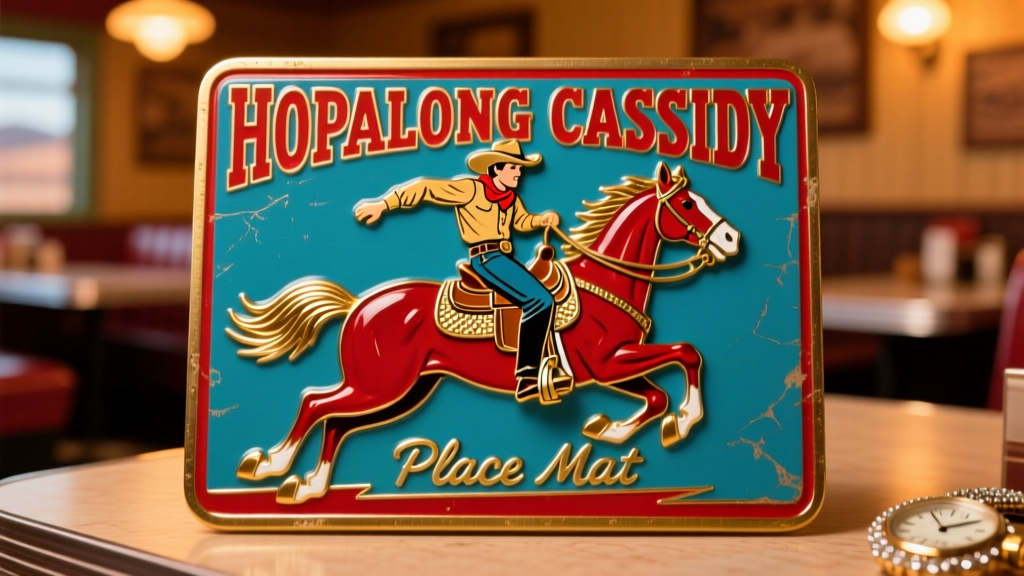
Hopalong Cassidy Place Mat & Hoppy Riding Topper: A Vintage Collectible Artifact from the Golden Age of Western Licensing (1950–1954)
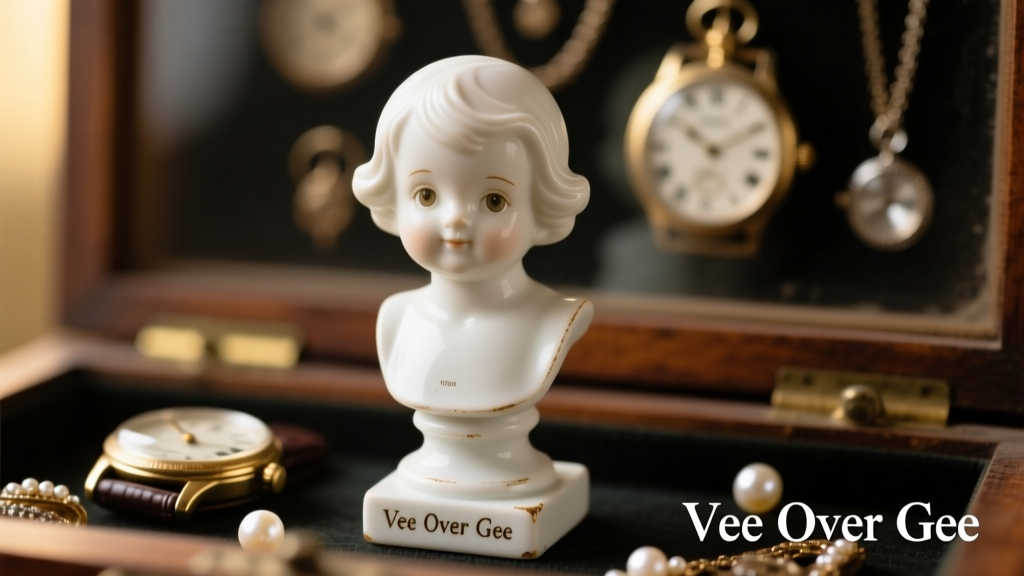
Hummel Bust Hu2 White Bisque 'Vee Over Gee': Identification, Provenance, and Market Value Analysis
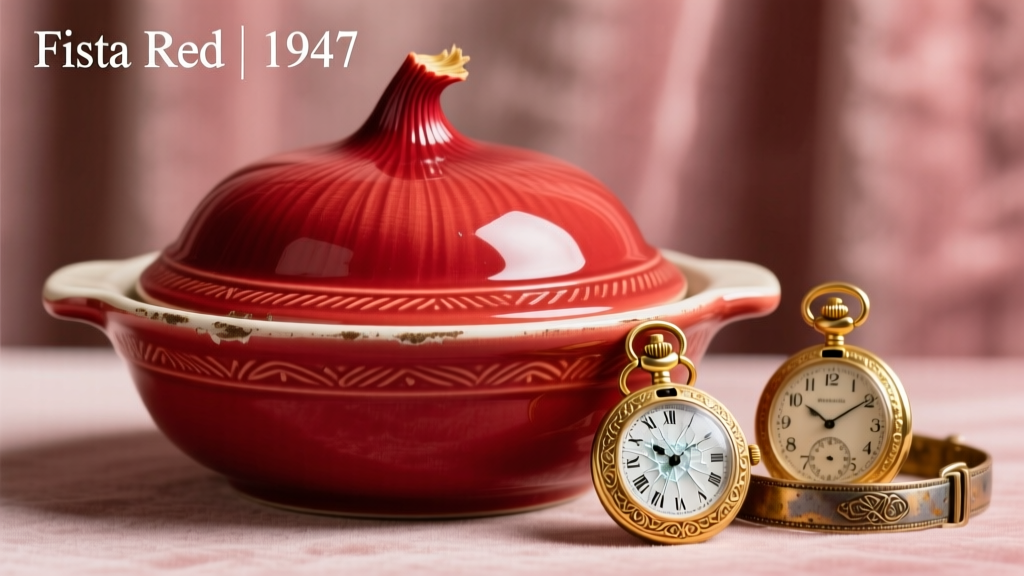
Fiesta Soup Onion Cover in Red: A Mid-Century American Ceramic Icon

The Automated Online-Only Art Glass Auction: Precision, Provenance, and Market Realities
Thomas W. Clark: The Forgotten Master of British Art Deco Watchmaking

Alvar Aalto’s Iconic 1935 Birch Cantilever Chair: Design Legacy, Provenance, and Market Significance

The 41-Inch Poplar Blanket Chest: A Study in American Country Craftsmanship and Authentic Refinishing

Game Quiz Kids Radio Question Bee Card Set in Original Whitman Box: A 1950s Educational Toy Artifact
Rose Medallion Cake Plate, 13½ Inches: Provenance, Craftsmanship, and Market Value of a Chinese Export Porcelain Masterpiece