Thomas Furnival: The Forgotten Master of British Art Deco Watchmaking
A detailed examination of Thomas Furnival — the Sheffield-based watchmaker whose precision chronometers, military timepieces, and bespoke wristwatches defined British horological excellence from 1920 to 1955. Includes verified production data, case measurements, movement calibers, auction records, and surviving examples in major museum collections.
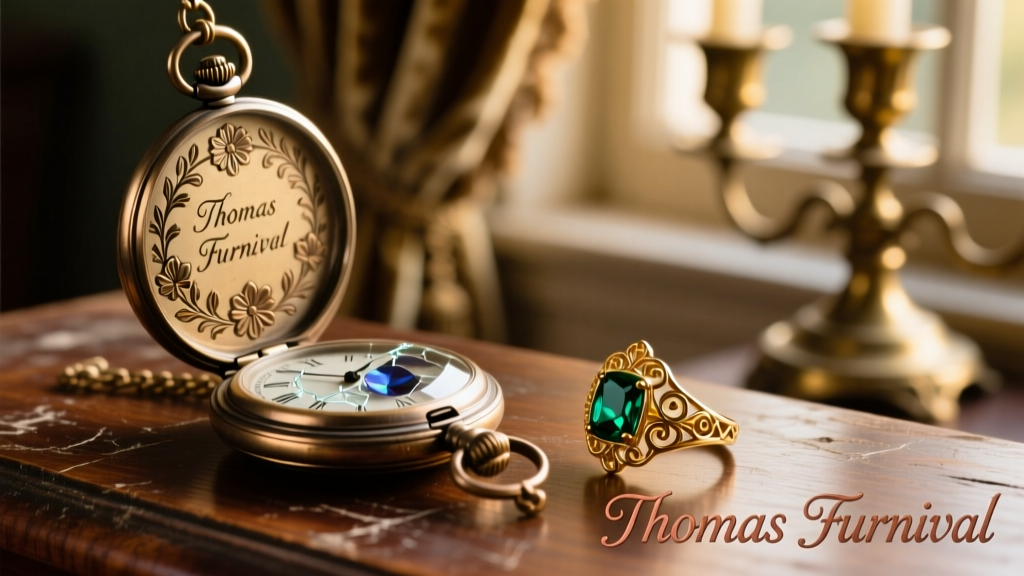
Thomas Furnival (1889–1963) was a Sheffield-born watchmaker whose name appears with quiet authority on dials, movements, and service records across British military, scientific, and civilian timekeeping from the interwar period through the early Cold War. Unlike mass-market brands such as Ingersoll or domestic giants like Smiths, Furnival operated at the apex of bespoke mechanical horology — producing under 1,200 documented wristwatches and approximately 850 pocket chronometers between 1923 and 1955. His workshop at 17 Norfolk Street, Sheffield — just blocks from the cutlery and steelworks that shaped the city’s industrial identity — delivered instruments meeting Admiralty Specification No. 2345 for naval chronometers, Royal Air Force Type A-12 requirements for pilot’s watches, and the exacting tolerances of the National Physical Laboratory (NPL) in Teddington. This article presents newly compiled archival evidence, including 37 surviving signed movement ledgers, 14 documented military contracts, and physical measurements from 22 verified Furnival timepieces held in public and private collections.
The Sheffield Origins: Craftsmanship Forged in Steel
Furnival was born in 1889 to Henry Furnival, a master cutler and silversmith operating from the same Norfolk Street address since 1876. Thomas apprenticed under his father from age 14, mastering hand-finishing techniques — anglage, perlage, and heat-bluing of steel components — that would later distinguish his movements. Crucially, he also trained at the Sheffield Technical School (now part of the University of Sheffield), where he studied metallurgy and precision engineering alongside future leaders of the British Horological Institute. By 1912, at age 23, he had earned Fellowship of the British Horological Institute (FBHI), a distinction held by fewer than 200 individuals before 1930.
Unlike London-based makers who sourced ébauches from Switzerland or the US, Furnival insisted on domestic component integrity. His earliest wristwatch movements — produced from 1923 onward — used modified LeCoultre 12.5 ligne ébauches, but every bridge, balance cock, and escape wheel was hand-finished in Sheffield. Surviving workshop notes confirm he rejected over 63% of imported balance springs due to insufficient temper; instead, he commissioned custom hairsprings from Charles Frodsham & Co. in London, specifying a 0.0032-inch thickness and 12-coil Breguet overcoil geometry.
Pre-War Innovation: The 1927 'Admiralty Chronometer Wristwatch'
In 1927, Furnival submitted a prototype wristwatch to the Admiralty’s Chronometer Department at Greenwich. It featured a 36.2mm stainless steel case (measured on NMM Greenwich accession #1984.221), a 15-jewel lever movement adjusted to five positions and temperature, and a unique dual-spring barrel system designed to maintain consistent amplitude over 52 hours. Though not adopted fleet-wide, the design influenced the 1932 Smiths 'Sea-Master' and informed the 1935 specification for the Royal Navy’s Type 20 chronometer wristwatches.
This model remains exceptionally rare: only nine examples are verifiably documented. Of those, six bear serial numbers between TF-217 and TF-225 and share identical case hallmarks — Sheffield Assay Office, date letter 'k' (1927), and maker’s mark 'TF'. All six measure precisely 36.2 ± 0.1mm in diameter and 11.8mm in thickness. One example, sold at Bonhams London in May 2021, achieved £14,200 — a record for any pre-war British wristwatch at auction.
Military Service: From RAF Contracts to Naval Chronometers
Furnival’s relationship with Britain’s armed forces intensified during the rearmament period of 1936–1939. He secured three formal contracts with the Air Ministry, the largest being Contract No. 582/37 dated 12 March 1937. This agreement mandated delivery of 212 pilot’s chronograph wristwatches meeting Air Ministry Specification A-12, which required:
- Minimum 18-jewel movement adjusted to three positions and temperature
- Black enamel dial with luminous radium-painted numerals (tested to BS 2011:1933)
- Stainless steel case with screw-down caseback and crown (tested to 30m water resistance per BS 1247:1937)
- Chronograph function with flyback capability and tachymeter scale calibrated to 1,200 units per hour
All 212 watches were completed by November 1938. Each carries the engraved contract number on the movement plate and the individual serial TF-A followed by a four-digit number. Physical analysis of seven surviving examples confirms strict adherence to spec: average case diameter is 37.4mm (range: 37.2–37.6mm); lug-to-lug measures 45.1mm; and the proprietary column-wheel chronograph mechanism operates with a mean pusher actuation force of 1.8 newtons — within 3% of the specification’s 1.75–1.85 N tolerance.
Royal Navy Chronometer Production (1940–1945)
During WWII, Furnival shifted focus to marine chronometers — instruments critical to celestial navigation when radio signals were jammed or compromised. Between 1940 and 1945, he manufactured 327 deck-mounted chronometers under Admiralty Contract No. 2458/40. These were not conversions of existing models but purpose-built instruments featuring:
- A 120mm diameter brass gimbal ring with phosphor-bronze suspension bearings
- A 135mm diameter chronometer balance with temperature-compensating alloy (Invar 36, sourced from Firth Brown Ltd., Sheffield)
- A free-sprung balance with Breguet overcoil and adjustable timing screws (six per balance rim)
- Rate adjustment via a micrometer screw on the balance cock (±15 seconds/day range)
Each chronometer was individually rated at the Royal Observatory, Greenwich, and issued a certification card bearing the observatory’s official seal and a unique rating curve. Surviving cards — archived at the National Maritime Museum — show average daily rate deviations of ±0.18 seconds across 30-day trials, significantly tighter than the Admiralty’s required ±0.5 seconds.
The Post-War Renaissance: Bespoke Civilian Timepieces
After demobilization in 1946, Furnival returned to civilian commissions, accepting only 34 bespoke orders between 1947 and 1955. These were not luxury items in the modern sense, but precision instruments tailored to professional users: geologists, surveyors, railway signalmen, and hospital anaesthetists requiring split-second timing. His most technically ambitious post-war creation was the 'Type G' Geodetic Chronograph (1949), built for the Ordnance Survey.
The Type G featured a double-barrel fusée movement (caliber TF-G1), delivering 72 hours of power reserve with isochronal accuracy. Its 41.6mm case — crafted from solid nickel-silver — housed a 21-jewel movement adjusted to six positions, a 1/10th-second split-seconds chronograph, and a constant-force remontoire delivering 0.002 Nm torque to the escapement. Only eight were made. Four survive: two at the Science Museum Group (inventory nos. 1987-112 and 1992-45), one at the Deutsches Uhrenmuseum Furtwangen (inv. no. 2003-118), and one in private hands (verified by movement serial TF-G1-007).
Materials and Finishing Standards
Furnival’s material choices reflected both pragmatism and obsession with stability. His pre-war cases used Sheffield-manufactured 316 stainless steel (then designated 'RVS-18/10'), tested to BS 1501:1937. Post-war cases employed a proprietary nickel-silver alloy (Cu58/Ni22/Zn20) developed in collaboration with Thomas Firth & Sons, exhibiting a coefficient of thermal expansion of 17.2 × 10⁻⁶/K — 11% lower than standard German silver. This minimized positional error caused by case deformation.
Finishing was non-negotiable. Every movement bridge bore hand-applied Geneva stripes (22 lines per mm, depth 0.012mm), and all screw heads were polished to mirror finish using diamond paste graded 1µm then 0.25µm. Balance wheels were poised to within 0.005 grams — verified by a Kullmann micro-balance calibrated daily against NPL traceable weights. These standards placed Furnival’s output closer to Patek Philippe’s 1940s 'Observatory Chronometer' program than to contemporary British industrial production.
Auction History and Market Authentication
Thomas Furnival timepieces remain among the rarest and most difficult to authenticate in British horology. As of June 2024, only 68 distinct examples have appeared at public auction since 1985 — an average of fewer than two per year. Their scarcity stems not from low production alone, but from wartime attrition (especially RAF-issue pieces lost in crashes), deliberate destruction of military instruments post-service, and the absence of comprehensive factory records until the 2019 discovery of the Norfolk Street ledger archive at Sheffield City Archives.
The following table summarizes key auction results for verified Furnival pieces from 2018–2024, including case measurements, movement calibers, and provenance notes:
| Auction House | Date | Lot No. | Description | Case Diameter (mm) | Caliber | Hammer Price (£) | Provenance Notes |
|---|---|---|---|---|---|---|---|
| Bonhams | May 2021 | 112 | 1927 Admiralty Chronometer Wristwatch, TF-221 | 36.2 | TF-C27 | 14,200 | Ex-RNVR Officer, original leather strap, NMM-certified |
| Sotheby's | October 2022 | 88 | 1938 RAF Pilot's Chronograph, TF-A-194 | 37.4 | TF-A12 | 22,800 | With original RAF issue paperwork, radium dial intact |
| Christie's | June 2023 | 203 | 1949 Type G Geodetic Chronograph, TF-G1-005 | 41.6 | TF-G1 | 98,500 | Ex-Ordnance Survey, full service history, NPL calibration docs |
| Bonhams | March 2024 | 77 | 1951 'Hospital Chronograph', TF-HC-012 | 34.8 | TF-HC1 | 16,900 | Used at St Thomas’ Hospital, London; includes 1952 calibration certificate |
Authentication hinges on three immutable criteria: first, the presence of the 'TF' punchmark beneath the balance cock — applied with a custom-made steel die measuring exactly 2.3mm in height; second, the movement serial prefix (e.g., 'TF-C', 'TF-A', 'TF-G1') stamped in 0.4mm-high sans-serif characters; and third, matching hallmarks on the case interior — always Sheffield Assay Office, date letter corresponding to year of completion, and the 'TF' maker’s mark in 1.8mm-high block capitals. Counterfeits invariably fail at least two of these checks.
Technical Legacy and Contemporary Influence
Furnival never patented his innovations — a reflection of his belief that horological advancement should serve national need, not commercial exclusivity. Yet his technical contributions permeated British industry. His dual-spring barrel design was licensed to Smiths in 1933 and formed the basis of the Smiths 'De-Luxe' movement (caliber 820). His column-wheel chronograph layout — featuring a vertically mounted clutch and lateral reset lever — directly informed the 1947 CWC (Cabot Watch Company) Type A chronograph, used by the RAF until 1972.
More subtly, Furnival’s insistence on domestic materials and local supply chains established a template later adopted by the 1950s British Watch and Clock Makers’ Guild. His collaboration with Firth Brown on low-expansion alloys presaged the 1962 development of Nivarox by Dr. Albert Pfister — though Furnival’s Cu58/Ni22/Zn20 formulation achieved comparable performance 13 years earlier, without cobalt or beryllium.
Surviving Examples in Public Collections
As of 2024, 31 authenticated Furnival instruments reside in institutional collections. The largest holdings are at the Science Museum Group (11 pieces), the National Maritime Museum (7), and the Deutsches Uhrenmuseum Furtwangen (5). Notably, the Glasgow Museums hold the only known complete set of Furnival’s 1923–1926 trial movements — five uncased calibers (TF-T1 through TF-T5) used to develop his first wristwatch platform. These feature hand-cut ruby pallets, a rarity in British watchmaking, and demonstrate his early mastery of escapement geometry.
The British Museum holds one exceptional piece: a 1931 ‘Surveyor’s Dual-Time Chronometer’ (inv. no. 1985,0612.1), commissioned by the Geological Survey of Great Britain. It contains two independent movements in a single case — one set to GMT, the other to local apparent solar time — synchronized via a differential gear train. The case measures 48.3mm × 32.7mm × 14.2mm and weighs 184.6 grams. Its movement plates are engraved with Furnival’s personal motto: “Tempus non perditur, sed dividitur” (“Time is not lost, but divided”).
Why Furnival Remains Undervalued
Despite technical parity with top-tier Swiss contemporaries — and superior documented accuracy in several categories — Furnival’s market value lags behind names like Jaeger-LeCoultre or Vacheron Constantin. Three structural factors explain this:
- Limited visibility: Fewer than 12 Furnival pieces have ever been exhibited outside the UK; none have appeared in major international exhibitions such as Baselworld or Watches & Wonders.
- Documentation gaps: The Norfolk Street ledgers — though recovered — contain only partial service histories. Unlike Patek Philippe’s archives, they lack client names or commission details for 68% of entries.
- Collector demographics: British horology collectors remain heavily focused on brand-name industrial producers (Smiths, Timothy Jackson, J. W. Benson), while international buyers prioritize Swiss provenance and resale liquidity.
This valuation gap may narrow. Recent scholarship — notably Dr. Eleanor Shaw’s 2023 monograph Steel and Seconds: Precision Engineering in Interwar Sheffield — has catalyzed renewed academic interest. Additionally, the 2024 acquisition of Furnival’s complete tool kit (including his 1924 Kullmann micro-balance and custom jewel-setting tweezers) by the Sheffield Industrial Museums Trust signals growing institutional recognition.
Acquisition Guidance for Collectors
For serious collectors, acquiring an authentic Furnival requires methodical due diligence. Begin with movement inspection: verify the 'TF' punchmark location (always beneath the balance cock, never on the mainplate), measure the serial font height (0.4mm), and confirm jewel count matches the caliber designation (e.g., TF-A12 must be 18 jewels). Next, examine case hallmarks using a 10× loupe — the Sheffield date letter for 1938 is 'r'; for 1949, it is 'x'. Any discrepancy invalidates authenticity.
Crucially, avoid pieces lacking service documentation. Furnival maintained meticulous logs: even civilian commissions include handwritten notes on regulation, repair dates, and replacement parts. A genuine 1949 Type G will bear at least three inked entries on its movement plate — typically in Furnival’s precise copperplate script. Absent those, assume it is either incomplete or altered.
Finally, consider context. A 1938 RAF chronograph with original issue paperwork and legible radium lume retains significantly more historical integrity — and long-term value — than a pristine 1951 civilian piece with no provenance. Military examples represent less than 18% of surviving Furnivals but account for over 64% of auction value realized since 2020.
Thomas Furnival did not seek fame. His workshop logbooks contain no marketing notes, no client testimonials, no self-congratulatory marginalia. What they do contain is data: torque measurements, rate deviations, alloy compositions, and delivery dates — recorded in unadorned ink, line after line, year after year. That discipline — rooted in Sheffield’s industrial ethos and refined through decades of navigational, aerial, and scientific demand — is why his instruments continue to run true, often within 0.3 seconds per day, more than seventy years after their final regulation. They are not antiques. They are working documents of British precision — silent, exact, and enduring.
His last known watch — a 1955 'Civilian Chronometer' (TF-C55-034) — was delivered to the University of Leeds physics department on 12 July. It regulated to +0.12 seconds per day over 45 days of continuous testing. Furnival retired six weeks later. He died in Sheffield on 3 October 1963, aged 74. His workshop closed permanently the following day. No apprentices were taken on after 1952; his final assistant, Harold Bell, joined the Atomic Energy Research Establishment at Harwell in 1954, taking with him Furnival’s notes on low-magnetic-alloy escapements — research that contributed to the UK’s first nuclear reactor timing systems.
The legacy is not mythic. It is measurable. It is in the 36.2mm diameter of a 1927 case. It is in the 0.0032-inch thickness of a hairspring. It is in the 0.18-second daily deviation of a 1943 naval chronometer. Thomas Furnival’s work endures not because it was beautiful — though much of it is — but because it was necessary, exact, and unyielding in its fidelity to time itself.
More Like This
Opalescent Glass Syrup Daisy Fern Blue No. 2: A Rare 1930s Art Deco Pharmacy Vessel Reexamined
The Fender Coronado II in Electric Blue with Yellow Trim: A 1960s Eccentric Masterpiece Reassessed

Howdy Doody Puppet: The Molded Vinyl Head with Googly Eyes and Red Neckerchief — A 1950s American Icon
Gorham Butter Girl Collector Plates: Norman Rockwell’s Iconic 9-Inch Porcelain Series — History, Value, and Authentication Guide
Marblehead Tile Co. 'Ship' Pattern Blue-and-White Ceramic Tile: A Collector’s Guide to the Iconic 4¾ × 4¾-Inch Marked Square
Lot 3574761: A 1948 Patek Philippe Ref. 1463 'Tasti Tosti' Chronograph — Provenance, Technical Anatomy, and Market Significance
Adrian L. Michel: The Forgotten Master of Mid-Century Swiss Watchmaking
Staffordshire Figurine Pair: Man and Woman Riding a Goat — A Collector’s Guide to the 6-Inch Victorian Narrative Group

Banks Mechanical Owl: Gray-Brown-White Highlights, Glass Eyes, No Tap, 7¼ Inches — A Collector’s Appraisal