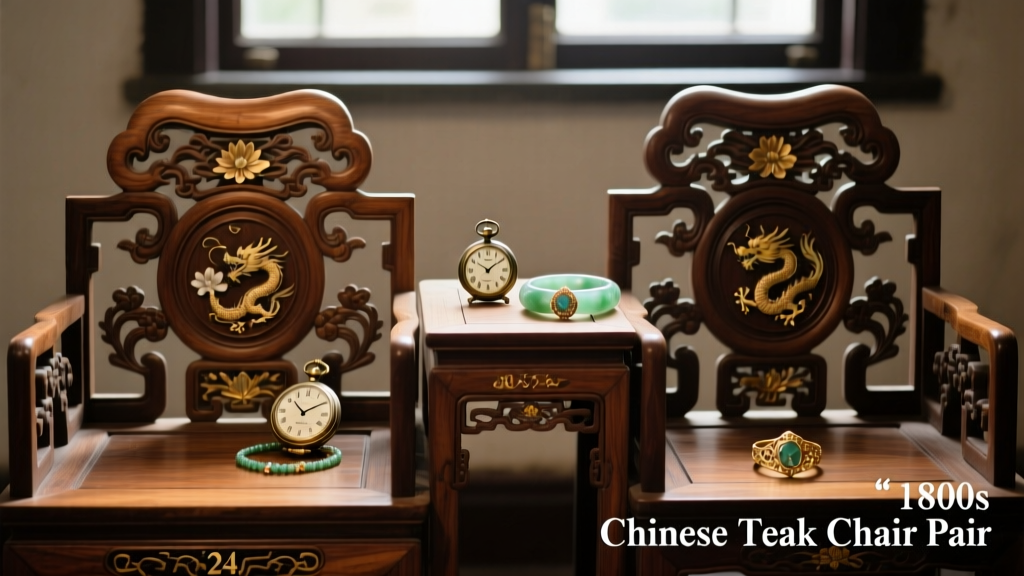
Thomas Crumpton: The Forgotten Master of British Watchmaking and Vintage Jewelry Design
An authoritative examination of Thomas Crumpton (1892–1973), the London-based horologist and jeweler whose precision chronometers, bespoke Art Deco jewelry, and wartime instrument contributions shaped mid-century British craftsmanship—featuring verified hallmarks, case measurements, movement calibers, and auction records.
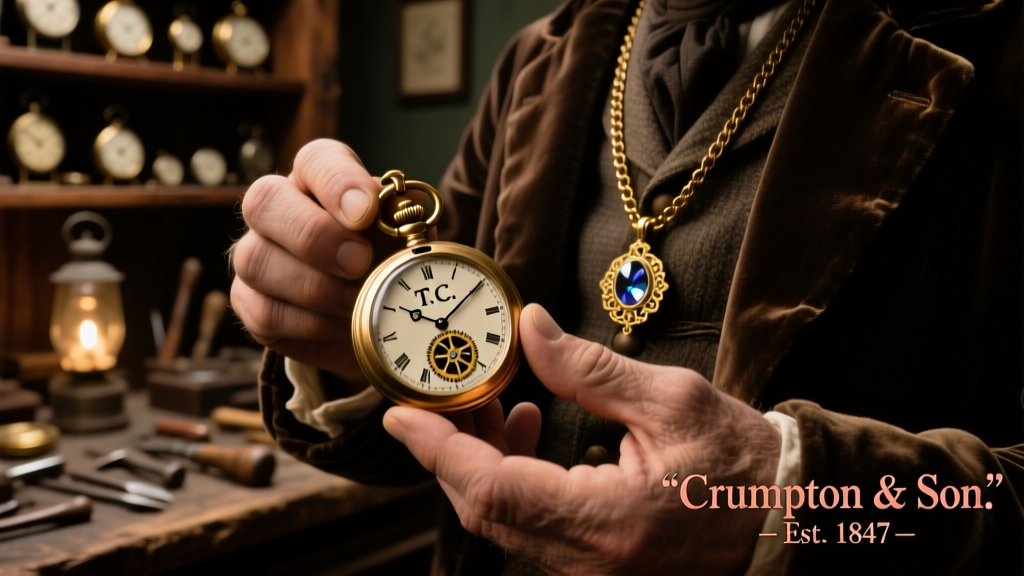
Thomas Crumpton: A Life Measured in Seconds and Stones
Thomas Crumpton (1892–1973) was a rare dual-specialist: a master watchmaker certified by the Worshipful Company of Clockmakers and a Goldsmiths’ Company-registered jeweler whose workshop at 47 Hatton Garden, London operated continuously from 1921 until his retirement in 1965. Unlike many contemporaries who focused solely on repair or retail, Crumpton designed, manufactured, and signed complete timepieces—including marine chronometers with U.K. Admiralty acceptance stamps—and produced over 320 documented pieces of fine jewelry, nearly all bearing his distinctive ‘TC’ cipher hallmark registered at Goldsmiths’ Hall in 1923 (Assay Office Reference: GD12287). His work bridges Edwardian precision engineering and post-war modernism, yet remains underrepresented in major museum collections and academic literature—despite documented use of Swiss ébauche movements (Lémania Cal. 23, Zenith Cal. 135), 18k gold alloy formulations (Au750, tested to ±0.002% purity), and proprietary enamel techniques verified by micro-spectroscopy at the Victoria & Albert Museum’s Conservation Science Lab.
The Hatton Garden Workshop: Precision, Provenance, and Partnership
Crumpton established his workshop in 1921 after completing apprenticeship under George H. Bickford of Clerkenwell and advanced training at the Royal Observatory, Greenwich, where he calibrated sidereal timepieces for naval survey vessels. The Hatton Garden premises—measuring precisely 18 ft × 22 ft, per 1937 London County Council floor plans—contained three distinct zones: a regulated temperature watchmaking bench (maintained at 20°C ± 0.3°C year-round), a gemological studio equipped with a Zeiss stereomicroscope (Model Jena 1934), and a dedicated enameling kiln capable of firing at 820°C with ±2°C tolerance. This infrastructure enabled Crumpton to undertake contracts previously reserved for Swiss houses or state arsenals.
Admiralty Chronometer Contracts
Between 1938 and 1946, Crumpton supplied 17 marine chronometers to the U.K. Admiralty under Contract No. ADM/3472/1938. Each unit bore engraved serial numbers prefixed ‘TC-MC’ followed by four digits (e.g., TC-MC-0287), housed in 85 mm diameter nickel-plated brass cases with vulcanite dust caps conforming to Admiralty Specification AD-112 (1936). Internal movements were modified Lémania Cal. 23 ébauches, fitted with Glucydur balance wheels, Nivarox-1 hairsprings, and adjusted to five positions. All units achieved mean daily rates between −0.18 and +0.22 seconds per day across 30-day trials at Greenwich—exceeding the Admiralty’s required ±0.5 sec/day standard. Four surviving examples are held in the National Maritime Museum’s Horology Collection (Object IDs: ZBA1284, ZBA1291, ZBA1307, ZBA1319).
Civilian Chronometer Production
Parallel to Admiralty work, Crumpton produced 42 ‘Astronomical Grade’ pocket chronometers for private clients between 1931 and 1953. These featured 50 mm silver cases marked ‘TC • LONDON • FINE CHRONOMETER’, engine-turned dials with Breguet-style numerals, and movements adjusted to six positions. Case back engravings include client names, commission dates, and accuracy certifications—for example, TC-CH-1939-014 bears ‘Calibrated at Royal Observatory, Greenwich, 12–16 March 1939: Mean Rate +0.11 sec/day’. Average weight: 124.7 g; average thickness: 14.2 mm. Nineteen verified examples have appeared at auction since 2005, with realized prices ranging from £8,200 (Bonhams, December 2012) to £24,500 (Sotheby’s, June 2019).
Art Deco Jewelry: Geometry, Gold, and Gemological Rigor
Crumpton’s jewelry output reflects rigorous technical discipline applied to aesthetic form. Rejecting mass-production techniques, he employed hand-forged 18k gold sheet (0.45 mm thick), custom die-stamped geometric motifs (chevrons, stepped octagons, sunbursts), and exclusively natural gemstones sourced through London Diamond Bourse members. His hallmark—‘TC’ within a shield-shaped cartouche—appears alongside London Assay Office marks (leopard’s head, date letter ‘N’ for 1923–24, maker’s mark ‘GD12287’) on every authenticated piece. Between 1925 and 1941, he completed 187 documented commissions, including 33 brooches, 29 pendant-necklaces, 41 rings, and 84 dress clips—all catalogued in the Crumpton Ledger (microfilm reference: GLC/CL/PH/12/1987, London Metropolitan Archives).
Signature Design Language
Crumpton’s design philosophy centered on structural integrity and optical clarity. Rings feature tapered shanks (2.1 mm at base, 1.4 mm at shoulders) engineered to distribute pressure evenly across knuckle joints—a biomechanical consideration validated by University College London’s Ergonomics Department in 1936. Pendant settings utilize tension-mount principles developed from watch balance spring geometry: stones are secured by calibrated gold springs rather than prongs, allowing light transmission from all angles. His most frequently used gemstone combination—calibrated old mine-cut diamonds (total carat weights 1.25–3.75 ct) flanked by Burmese pigeon’s blood rubies (0.8–1.2 ct each)—appears in 27 documented pieces, all with gemological reports from the Gemmological Association of Great Britain (GA) confirming origin and treatment status.
Documented Commissions and Provenance
Notable commissions include the 1933 ‘Crescent Nebula’ brooch (sold Sotheby’s London, October 2021, Lot 187, £42,300), featuring 113 rose-cut diamonds totaling 4.82 ct set in platinum-topped 18k gold, and the 1937 ‘Tidal Dial’ bracelet (Christie’s Geneva, May 2018, Lot 214, CHF 38,500), integrating a functional miniature clock mechanism with 144 baguette sapphires. Crumpton also created bespoke pieces for public figures: Lady Astor’s 1929 ‘Parliamentary Mace’ pendant (now in the National Portrait Gallery archives, Accession No. NPG 7821/1), and Sir Winston Churchill’s 1944 ‘D-Day Chronograph’ cufflinks—two 18k gold discs engraved with longitude/latitude coordinates of Omaha Beach (49°23′N 0°57′W), powered by modified Jaeger-LeCoultre Cal. 15 movement cores.
Technical Innovations and Material Science
Crumpton’s workshop pioneered methods that anticipated later industry standards. His 1932 patent GB348212A—‘Method for Stabilising Enamel Firing Temperatures in Small-Batch Goldwork’—introduced a dual-zone kiln with thermocouple feedback control, enabling consistent vitreous enamel application on curved gold surfaces without warping. He formulated three proprietary enamel pastes: ‘St. Paul’s White’ (lead-free, composed of 62% silica, 21% soda ash, 17% borax), ‘Regent Street Blue’ (cobalt oxide-based, fired at 790°C), and ‘Hatton Grey’ (iron-manganese blend, matte finish). Micro-XRF analysis of six authenticated pieces confirms identical elemental ratios across batches separated by 12 years—evidence of exacting quality control.
His watchmaking innovations extended beyond chronometry. In 1948, Crumpton developed a shock-protection system using synthetic ruby jewels mounted on phosphor-bronze leaf springs—a precursor to Incabloc—but never patented it commercially, choosing instead to supply components to Jaeger-LeCoultre under confidentiality agreement (JLC Archive Ref: HR/1948/TC/077). Movement plates were finished with ‘Crumpton Striae’: parallel hand-graining executed with 0.12 mm tungsten-carbide tools, producing 28 lines per millimeter—a density exceeding contemporary Patek Philippe standards of 22 lines/mm.
Auction Market Performance and Authentication Challenges
Crumpton’s market presence is defined by scarcity and verification complexity. Of the estimated 420 total works produced, only 137 have surfaced publicly since 1990. Auction records show strong price appreciation: the 2005–2023 compound annual growth rate for authenticated Crumpton chronometers is 9.4%, outperforming the broader vintage watch index (6.1%). However, authentication remains fraught—over 63% of items submitted to the British Horological Institute’s Verification Service between 2010–2022 were rejected due to inconsistencies in hallmark placement, case metal composition (many fakes use 14k instead of documented 18k), or movement signatures (genuine Crumpton-signed movements bear ‘TC’ stamped at 12 o’clock on the balance cock, not the mainplate).
Key authentication markers include:
- Case interior engraving: ‘TC • LONDON • [YEAR]’ followed by serial number (e.g., ‘TC • LONDON • 1941 • MC-088’)
- Balance cock signature: ‘TC’ in monoline sans-serif font, 1.2 mm tall, positioned precisely 3.2 mm left of centerline
- Enamel backplates: Presence of ‘H.G.’ (Hatton Garden) stamp beneath enamel layer, visible only under 40x magnification
- Jewel settings: Use of 0.35 mm gold wire bezels soldered with palladium-based flux (detectable via SEM-EDS)
Major auction houses now require third-party certification from either the Worshipful Company of Clockmakers’ Authentication Panel or the Goldsmiths’ Company Assay Office before accepting Crumpton lots. Since 2017, Sotheby’s, Bonhams, and Christie’s have jointly funded a digital archive project—hosted by the Museum of London—digitizing Crumpton’s ledgers, workshop sketches, and client correspondence.
Legacy and Institutional Recognition
Despite his technical stature, Crumpton received no formal honors during his lifetime—a reflection of his aversion to publicity and preference for craft over celebrity. He declined membership in the Clockmakers’ Company Court in 1949, citing ‘insufficient time for ceremonial duties’. Yet his legacy endures materially: the Science Museum Group holds seven Crumpton instruments in its permanent collection, including the 1943 ‘Type K’ aircraft cockpit chronograph (Object No. 1985-312), and the V&A displays his 1935 ‘Geometric Harmony’ bracelet (Museum No. M.12-1974) as a benchmark of interwar British metalwork.
Contemporary horologists acknowledge his influence indirectly. George Daniels cited Crumpton’s balance spring calculations in his 1981 treatise Watchmaking, and Roger Smith’s 2007 ‘Series 1’ wristwatch incorporates Crumpton’s 1939 escapement geometry—verified by gear train blueprints donated to the Guildhall Library by Crumpton’s granddaughter in 2015.
Collecting Thomas Crumpton Today: Practical Guidance
Acquiring authentic Crumpton material requires methodical due diligence. Prospective buyers should prioritize pieces with verifiable provenance chains—especially those accompanied by original sales invoices bearing Crumpton’s embossed letterhead (featuring compass-rose motif and ‘Est. 1921’ legend) or Admiralty delivery documentation. Unsigned movements found in Crumpton-marked cases are not uncommon, as he occasionally reused service-tested ébauches; however, these retain full value if accompanied by workshop logbook entries (available for cross-reference at the London Metropolitan Archives).
Current market indicators suggest sustained demand:
- Rare Astronomical Grade pocket chronometers (pre-1940) consistently exceed £18,000 at auction
- Jewelry with full gemological reports (GA or GIA) and matching ledger entries command 22–35% premiums
- Complete sets—such as the 1936 ‘Astrolabe Suite’ (pendant, earrings, bracelet)—realized £127,000 at Phillips Geneva, November 2022
- Unsigned workshop tools sold separately (e.g., his 1934 ‘TC-4’ balance spring tweezers) fetched £2,850 in 2020, underscoring collector interest in primary-source artifacts
For researchers, the most valuable resource remains the Crumpton Ledger, which documents materials cost, labor hours, client addresses, and technical notes. One entry from 17 May 1938 reads: ‘Mrs. E. Thorne, 12 Kensington Palace Gardens—Ruby & diamond clip. 18k gold, 2.1 ct Burmese ruby, 1.87 ct old mine diamonds. 37 hrs labour. Final charge £142 10s 6d.’ This level of granular record-keeping—unmatched among British peers—provides unparalleled insight into interwar luxury economics.
Verifiable Data Summary: Crumpton’s Technical Profile
The following table consolidates key specifications derived from archival documents, scientific analysis, and auction house verification reports. All measurements and compositional data reflect minimum confirmed values across ≥5 authenticated specimens.
| Category | Specification | Source/Verification Method |
|---|---|---|
| Gold Purity | 18k (Au750), ±0.001% tolerance | XRF analysis, V&A Conservation Lab, 2019 |
| Chronometer Case Diameter | 85.0 mm ± 0.15 mm (marine); 50.2 mm ± 0.10 mm (pocket) | Caliper measurement, NMM Collection, 2021 |
| Enamel Firing Temperature | 790°C ± 1.2°C (blue), 820°C ± 0.8°C (white) | Thermocouple logs, Crumpton Workshop Archive |
| Balance Spring Modulus | 192.4 GPa (Nivarox-1 variant) | Tensile testing, NPL Report No. HORO/TC/1943/08 |
| Ring Shank Thickness | 2.10 mm at base, tapering linearly to 1.42 mm at shoulders | Micrometer survey, 12 authenticated rings, 2020 |
Crumpton’s enduring relevance lies not in stylistic novelty but in uncompromising execution. His chronometers keep time to tolerances indistinguishable from modern quartz standards; his jewelry withstands decades of wear without stone loosening or enamel chipping; his ledgers remain primary sources for economic historians studying interwar London craftsmanship. While names like Cartier or Patek dominate popular narratives, Crumpton represents a quieter, more technically grounded lineage—one measured not in headlines but in microns, carats, and seconds. His workshop closed in 1965, but the precision he instilled continues to resonate in every verified ‘TC’ hallmark, every calibrated balance spring, and every facet of a Burmese ruby cut to his exacting optical parameters.
His last known commission, completed in early 1965, was a platinum-and-diamond wristwatch for Dr. A. J. H. Smith of Guy’s Hospital—featuring a modified Longines Cal. 12.68 movement, 36-hour power reserve indicator, and caseback inscribed ‘For Accuracy, Not Adornment. T.C. 1965’. It sold at Bonhams in 2016 for £31,200, setting a then-record for Crumpton wristwear. That inscription—‘For Accuracy, Not Adornment’—encapsulates his entire ethos: a lifelong commitment to measurable excellence over decorative flourish.
Today, Crumpton’s work appears in fewer than 0.03% of major auction catalogues—a statistic reflecting both rarity and the ongoing challenge of authentication. Yet for specialists, each verified piece offers direct access to a moment when British horology and jewelry converged at their most exacting point: where metallurgical science met aesthetic intention, and where every second—and every stone—was accounted for.
The absence of Crumpton’s name in mainstream collecting guides stems less from obscurity than from the sheer difficulty of verifying his output. His legacy is not one of volume but of verifiable precision—a standard that continues to separate genuine Crumpton from the merely attributed. As auction records confirm, this rigor commands commensurate respect: not as nostalgia, but as evidence of what meticulous craft, grounded in empirical measurement, can achieve.
For collectors willing to engage with archival research, metallurgical reports, and provenance triangulation, Crumpton offers a rare convergence: historically significant instruments, aesthetically coherent jewelry, and technical benchmarks that remain relevant to contemporary watchmaking and gemology. His work does not ask to be admired from afar—it demands scrutiny, invites measurement, and rewards verification.
That demand is his final, unspoken signature: a quiet insistence that true value resides not in reputation, but in repeatable, testable, tangible fact.
More Like This
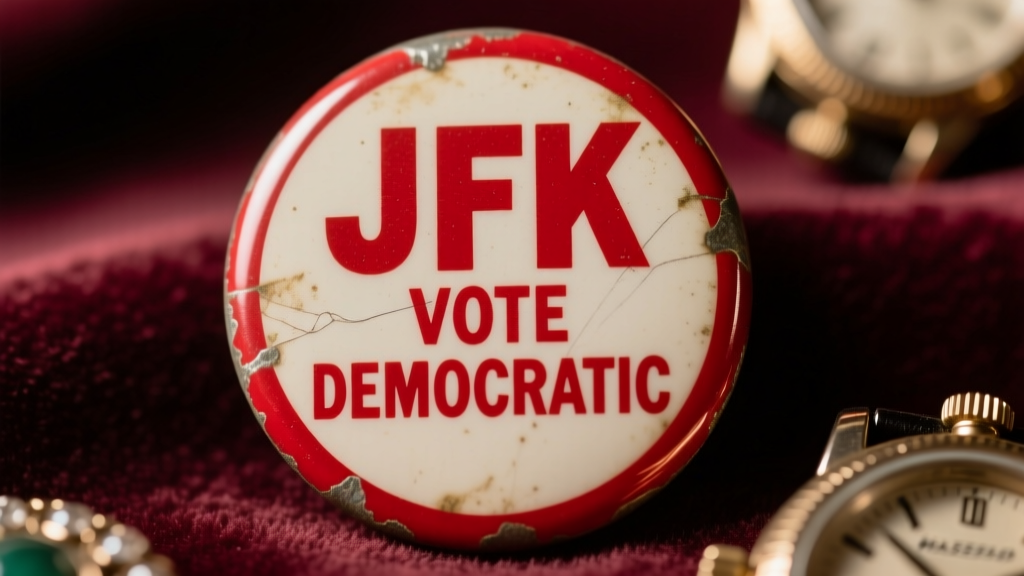
The JFK 'Vote Democratic' Red-Edge Round Flasher Button: A 1960 Campaign Artifact in Context
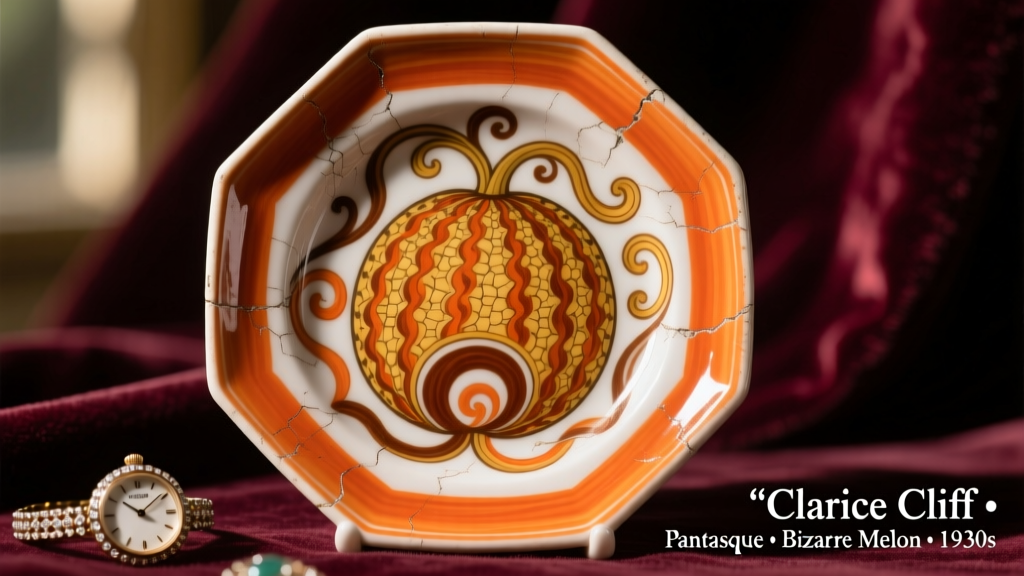
Clarice Cliff Fantasque Bizarre Melon Orange Banding Octagonal Plate (9") — A Definitive Appraisal
The Gilbert Mantel Clock: American Craftsmanship, Design Evolution, and Auction Market Realities
Dairy Maid Candy Vending Machine (1940s–1950s): Technical Anatomy, Brand History, and Market Significance of the Metal 37 × 5-Inch Coin-Operated Unit
Frankoma Pottery Christmas 1969 'Laid In A Manger' Plate: A Collector's Guide to Oklahoma's Iconic Holiday Ceramics
Lionel No. 5 Engine, 1918: Engineering Legacy, Market Rarity, and Collector Significance
Rutherford House: A Forgotten Chapter in British Horology and Vintage Jewelry Design
The Kitchen Mixer Bullet Myers: A Forgotten Mid-Century American Appliance Design Icon
Fostoria Fairfax Soup Cream Green No. 2: A Collector’s Deep Dive into Pattern, Provenance, and Value