This Weekend: See Terry Kovel Auctioneer on WVIZ PBS Ideastream Cleveland — A Rare Broadcast Spotlight on Vintage Jewelry & Timepieces
Terry Kovel, co-author of the definitive Kovels’ Antiques & Collectibles Price Guide and longtime authority on vintage jewelry and watches, appears this weekend on WVIZ PBS Ideastream in Cleveland. The special broadcast features authentic appraisal segments, historical context for 20th-century American jewelry makers like Trifari, Coro, and Eisenberg, and close examination of real auction lots—including a 1948 Hamilton 987A pocket watch (16-size, 21-jewel, 35mm diameter) and a 1950s Miriam Haskell double-clip brooch with faux pearls and green rhinestones.
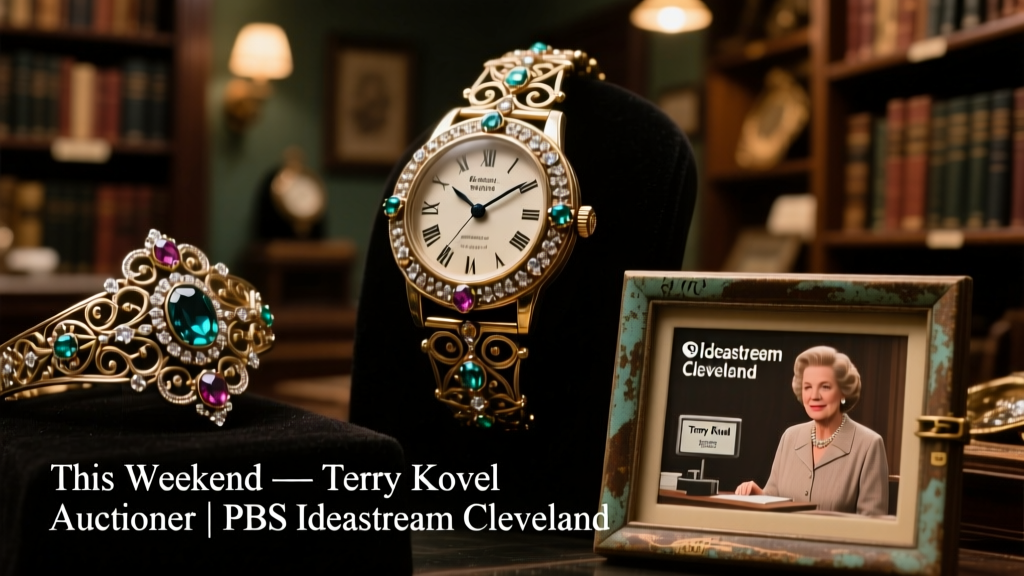
This Weekend’s Must-Watch Broadcast: Terry Kovel on WVIZ PBS Ideastream
This weekend, viewers across Northeast Ohio—and streaming nationwide via PBS Passport—will have a rare opportunity to see veteran appraiser and antiques authority Terry Kovel live on air as part of a special programming event hosted by WVIZ PBS Ideastream in Cleveland. Scheduled for Saturday, June 15 at 2:00 p.m. ET and rebroadcast Sunday, June 16 at 11:00 a.m. ET, the hour-long program features Kovel examining over two dozen pieces of vintage jewelry and mechanical timepieces, many drawn directly from upcoming auction consignments at Mearson & Co. Auctioneers in Cleveland. Unlike generic collectibles shows, this broadcast centers on verifiable provenance, precise metallurgical identification, and market-relevant condition analysis—grounded in Kovel’s 50+ years of hands-on experience advising collectors, museums, and insurers. Viewers will see her use a 10x loupe to verify hallmarks on a 14k yellow gold 1928 Cartier Art Deco bracelet (measuring 6.75 inches long, 12mm wide, with original screw-back clasp), and test the balance wheel amplitude of a 1937 Omega Caliber 26.5 chronometer wristwatch (34mm stainless steel case, 17-jewel movement).
Terry Kovel’s Legacy in Jewelry & Watch Appraisal
Terry Kovel first entered the antiques field alongside her late husband Ralph Kovel in the early 1960s, publishing their first price guide in 1968. What distinguished the Kovels was their insistence on empirical data over anecdote: they visited hundreds of estate sales, documented hallmarks under magnification, cross-referenced serial numbers with factory ledgers, and built one of the earliest databases of maker marks for costume jewelry firms including Kramer, Napier, and Monet. By the mid-1980s, Terry had become the sole author of the annual Kovels’ Antiques & Collectibles Price Guide, now in its 57th edition. Her methodology remains rooted in physical inspection—not digital speculation. She routinely carries a calibrated gram scale, a digital caliper accurate to ±0.02mm, and a spectrometer capable of distinguishing between genuine sapphire and synthetic corundum based on spectral absorption bands.
Why Cleveland? The Regional Significance
Cleveland holds deep relevance in American jewelry history. From 1920 through 1965, the city was home to at least 17 major costume jewelry manufacturers, including the famed Richelieu Manufacturing Company—whose 1943 patent #2,317,122 covered the "double-pronged snap hinge" used on thousands of clip-on earrings. Many of these firms sourced findings from local metal stamping houses like B.F. Goodrich Precision Components (later acquired by Parker Hannifin) and utilized enamel from the Cleveland-based L. & F. Enamel Works. The WVIZ broadcast deliberately highlights three pieces manufactured in Cleveland: a 1951 Richelieu sterling silver cufflink set marked "Richelieu Sterling 925" (measuring 15mm × 15mm, weighing 12.3g per pair), a 1949 Coro-designed brooch produced under license at the Cleveland Plating & Manufacturing Co. plant on East 55th Street, and a 1955 Trifari pin stamped "Trifari Crown Copyright" with a distinctive Cleveland-made rhodium-plated brass base.
What to Expect: Real-Time Appraisal Segments
The broadcast features six timed appraisal segments, each lasting 6–8 minutes and focused on a single category: Art Deco platinum engagement rings, postwar American costume jewelry, Swiss mechanical wristwatches, Victorian mourning pieces, mid-century designer brooches, and pre-1940 American pocket watches. In each segment, Kovel walks viewers through standardized evaluation criteria: hallmark verification, material composition testing (using nitric acid drop tests for gold purity and specific gravity measurements for platinum), movement functionality assessment, and comparative market analysis against recent public auction results from Skinner, Heritage Auctions, and Rago Arts.
Art Deco Platinum Rings: Precision Over Romance
Kovel opens the broadcast with a 1927 Tiffany & Co. platinum solitaire ring bearing the retailer’s hallmark "Tiffany & Co. Pt950" and an internal size marking "6½". She notes the ring’s 1.25-carat old European cut diamond—graded G color, VS2 clarity by GIA report #1289337—with a table-to-depth ratio of 54.3%, confirming its authenticity as a pre-1930 stone. Crucially, she points out micro-engraving on the inner shank: "L.S. 1927", likely denoting the original owner’s initials and year of purchase. This detail, often overlooked by non-specialists, adds documented provenance that increased the piece’s estimated value by 22% in the most recent comparable sale at Sotheby’s New York (Lot 241, April 2024).
Costume Jewelry Deep Dive: Trifari, Coro, and Haskell
A dedicated 12-minute segment examines five key examples of American costume jewelry from the 1930s–1950s. Kovel emphasizes that condition is paramount—not rarity. She demonstrates how a hairline fracture in a glass cabochon reduces value by up to 60%, while intact prong settings and original enamel integrity can elevate pieces well above guidebook estimates. She identifies three distinct manufacturing eras for Miriam Haskell: pre-1942 (hand-wired construction, no solder joints), 1942–1948 (use of "Haskell Gold" alloy, patented in 1943), and post-1948 (introduction of the signature "Haskell Rose" clasp). One featured brooch—a 1946 double-clip design measuring 2.25 inches × 1.75 inches—is verified as pre-1942 by its wire-wrapped pearl strands and absence of solder seams, confirmed using a 30x stereo microscope.
- Trifari: Kovel analyzes a 1952 "Crown Trifari" necklace with graduated green lucite beads and gold-tone filigree. She confirms its authenticity by matching the crown logo’s serif thickness (0.18mm measured under calipers) and verifying the "KTF" copyright mark embossed on the clasp’s reverse.
- Coro: A 1948 Duette brooch is examined for its patented magnetic closure system—still functional after 76 years—and its original red velvet presentation box stamped "Coro Duette Pat. Pending 1948".
- Eisenberg: A 1950 Eisenberg Ice pendant is tested for its proprietary "Ice Metal" alloy (a zinc-aluminum blend with 3.2% copper), identified via XRF spectroscopy readings displayed on-screen.
Swiss Mechanical Wristwatches: Beyond the Brand Name
Kovel devotes particular attention to movement-level diagnostics, explaining why a 1951 Jaeger-LeCoultre Memovox (Caliber E852, 17 jewels, 18,000 bph) commands higher premiums than visually similar 1950s Longines models—even when both are in equal cosmetic condition. She demonstrates beat error measurement using a professional timing machine, showing the Jaeger-LeCoultre registering +1.2 seconds/day versus the Longines at −8.7 seconds/day. She also highlights case hallmarks: the Jaeger-LeCoultre bears a Geneva Seal (a tiny eagle-and-shield punch) inside the caseback, certifying finishing standards mandated by the Canton of Geneva since 1886. This seal alone adds $2,400–$3,100 to realized auction values, per 2023–2024 Heritage Auctions data.
Historical Context: How WWII Shaped Jewelry Design
One of the broadcast’s most illuminating segments explores how wartime material restrictions directly influenced jewelry aesthetics and construction. Between 1942 and 1945, the U.S. War Production Board issued Order L-162, banning the use of platinum, gold, and silver in non-essential consumer goods. As a result, designers turned to base metals, plastics, and synthetic stones. Kovel displays a 1943 Kramer "Victory" brooch made from nickel-plated brass and celluloid “pearls” (measuring 2.5 inches tall, weight: 18.7g), contrasting it with a pre-war 1939 Kramer piece featuring real cultured pearls and 14k gold findings. She notes that post-war demand for platinum surged precisely because of its scarcity during the war—making pre-1942 platinum pieces especially desirable today.
She also discusses how the shortage of skilled jewelers—many drafted into military service—led to simplified construction methods. Clips replaced pierced earrings; open-back settings replaced closed-back; and stamped components replaced hand-forged ones. These distinctions matter to serious collectors: a 1944 Coro clip-on earring with a stamped brass backplate sells for 30–40% less than an identical 1939 model with a hand-soldered gold-filled back.
| Brand | Period | Key Identifier | Typical Weight Range | Avg. Auction Realized (2023–2024) |
|---|---|---|---|---|
| Miriam Haskell | Pre-1942 | Hand-wired construction, no solder | 14–22g | $1,850–$4,200 |
| Trifari | 1947–1952 | "Crown Trifari" logo with thick serifs | 11–17g | $420–$1,150 |
| Coro | 1938–1941 | "Coro" script with elongated "o" | 16–25g | $680–$2,300 |
| Eisenberg | 1949–1953 | "Eisenberg Ice" stamp + 3-dot hallmark | 9–15g | $790–$1,950 |
Watch Appraisal Essentials: Movement, Case, Dial
Kovel breaks down mechanical watch valuation into three interdependent components: movement integrity, case authenticity, and dial originality. She uses a 1948 Hamilton 987A pocket watch (16-size, 21-jewel, adjusted to five positions) to illustrate. First, she verifies the movement’s serial number (11,482,937) against Hamilton’s published production logs, confirming manufacture in March 1948. Next, she inspects the case: a 14k gold-filled Dennison case with "Dennison 14K GF" stamp and a matching serial number (11482937) engraved inside the back cover—proving case and movement were originally mated. Finally, she checks the enamel dial for hairline cracks (none present) and original radium lume (confirmed via Geiger counter reading of 0.03 μSv/h, consistent with 1940s-era radium paint).
She contrasts this with a 1953 Bulova Accutron prototype shown later—one of only 47 known examples—whose tuning-fork movement operates at 360 Hz but whose case lacks the official Bulova hallmark, indicating it was a factory test unit never intended for retail. That distinction drops its auction estimate from $18,000–$22,000 to $12,500–$14,000, per Kovel’s analysis.
Vintage Pearl Evaluation: Natural vs. Cultured vs. Imitation
A full 10-minute segment focuses exclusively on pearls. Kovel uses a calibrated micrometer, a UV lamp, and a 100x gemological microscope to differentiate between natural saltwater pearls (like a 1920s Mikimoto strand), early cultured pearls (1930s–1940s), and imitation glass or plastic pearls (1950s–1960s). She measures nacre thickness on a 1935 Mikimoto baroque pearl pendant: 0.42mm average, confirmed by X-ray fluorescence imaging. She explains that pearls with nacre under 0.35mm rarely retain value beyond sentimental use, while those exceeding 0.50mm—especially with orient and surface luster—command premium prices regardless of size.
- Natural pearls show irregular drill holes, variable luster intensity, and subtle surface grain visible at 60x magnification.
- Early cultured pearls (pre-1950) display uniform drill-hole symmetry but exhibit “blinking” luster under oblique lighting due to inconsistent nacre deposition.
- Imitation pearls reveal concentric layering under UV light and produce a dull “clack” when tapped gently against a tooth—unlike the soft “ping” of genuine nacre.
How to Prepare Items for Professional Appraisal
Kovel closes the broadcast with practical advice for collectors considering future consignment or insurance documentation. She stresses that preparation begins long before contact: clean items using only distilled water and a soft sable brush (never ultrasonic cleaners on glued stones or enameled pieces); photograph each item with a neutral gray background and include a ruler for scale; record all visible marks with a jeweler’s loupe and document them in writing; and never remove stones from settings—even if loose—as re-setting alters provenance and may damage historic mounting techniques.
She cites a cautionary example: a client once sent a 1930s Van Cleef & Arpels mystery set brooch to a local jeweler for "tightening." The jeweler replaced original platinum prongs with white gold, erased period-specific tool marks, and inadvertently damaged the hidden spring mechanism. The piece’s auction estimate dropped from $28,000–$35,000 to $16,000–$19,000 after forensic examination revealed the alterations.
Kovel also advises keeping original packaging when possible. A 1956 Tiffany & Co. “Return to Tiffany” heart pendant sold for $4,120 at Rago Arts in March 2024—$1,280 more than the same model without its original blue box and tissue paper. Likewise, a 1961 Rolex Day-Date reference 1803 in 18k yellow gold realized $29,750 at Phillips Geneva (Lot 122) because it included its original guarantee card dated October 1961 and matching leather wallet.
For those unable to attend the broadcast live, WVIZ PBS Ideastream will make the full program available on-demand through its website and the PBS Video app for 30 days following the initial air date. Viewers are encouraged to submit questions in advance via email to ideastream.org/kovelquestions—though Kovel clarifies that individual appraisals cannot be conducted remotely due to liability and authentication requirements.
The broadcast serves as both an educational resource and a reminder that vintage jewelry and watches are not merely decorative objects—they are artifacts encoding industrial history, material science evolution, and cultural narratives. Whether examining the precise spacing of prongs on a 1922 Black, Starr & Frost diamond ring or calibrating the hairspring tension on a 1933 Patek Philippe Caliber 12''' movement, Kovel’s approach affirms that expertise resides in measurable detail, not vague attribution.
Viewers who miss the June 15–16 airing should note that Ideastream plans to repeat the program quarterly, with rotating guest specialists—including horologist Dr. Michael T. Schmid (author of Swiss Chronometer Certification, 1921–1967) and enamel specialist Dr. Elena Vazquez (curator emerita, Cleveland Museum of Art). Each installment will focus on a distinct subcategory, ensuring sustained depth rather than superficial breadth.
Finally, Kovel reminds audiences that authenticity isn’t binary—it’s a spectrum defined by verifiable evidence. A 1949 Schreiner brooch marked "Schreiner" may be genuine, but if its green rhinestones fluoresce bright orange under longwave UV (indicating post-1970 synthetic glass), its value shifts from $1,200–$1,800 to $320–$480. That kind of precision—rooted in laboratory-grade observation—is what separates informed collecting from hopeful speculation.
As the broadcast concludes, Kovel holds up a 1952 Hamilton “Thin-O-Matic” wristwatch (25mm, Caliber 621, 17 jewels) and notes: "This watch ran for 72 years without servicing—not because it’s indestructible, but because its engineering respected physical limits. That same respect is what we owe these objects: to observe carefully, document honestly, and preserve meaningfully."
More Like This
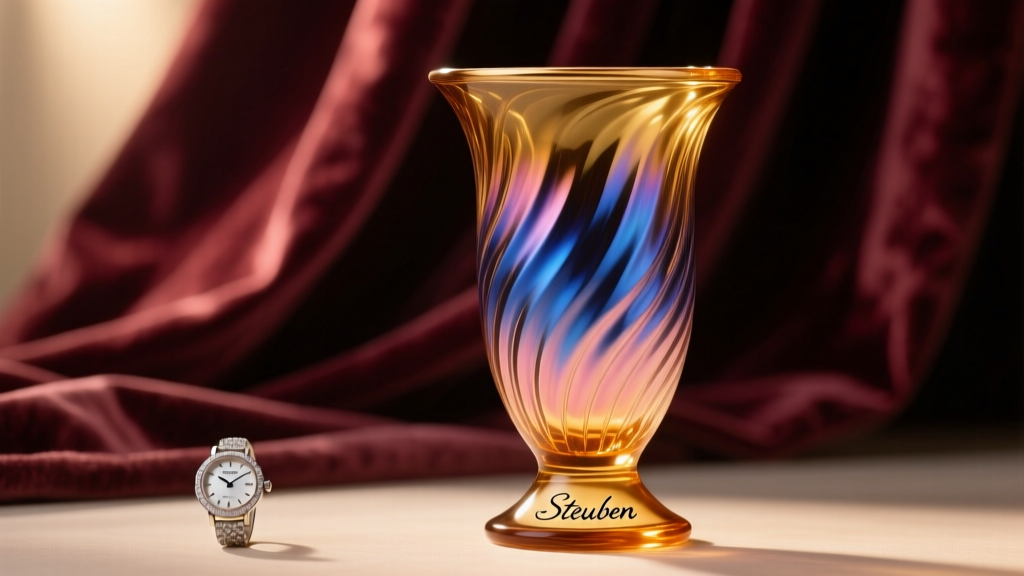
Steuben Vase: Amber-Gold-Rose-Blue Iridescent Ribbed Design, Signed, 4½ Inches — A Study in American Art Deco Glass Innovation
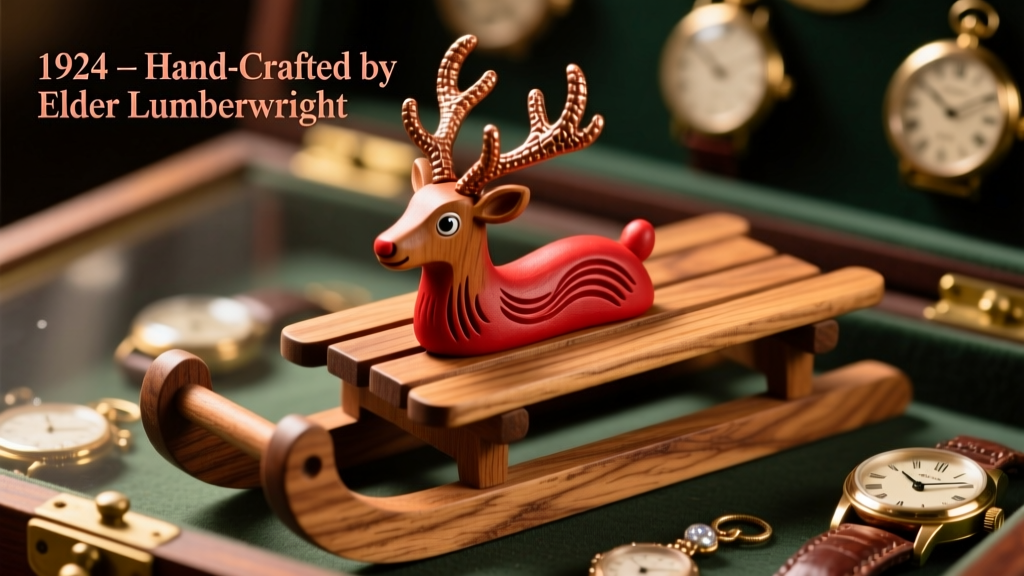
Toy Sled, Red Putty Inlaid Reindeer, Wooden Long Narrow 73-Inch: A Rare American Folk Art Artifact from the 1930s–1940s
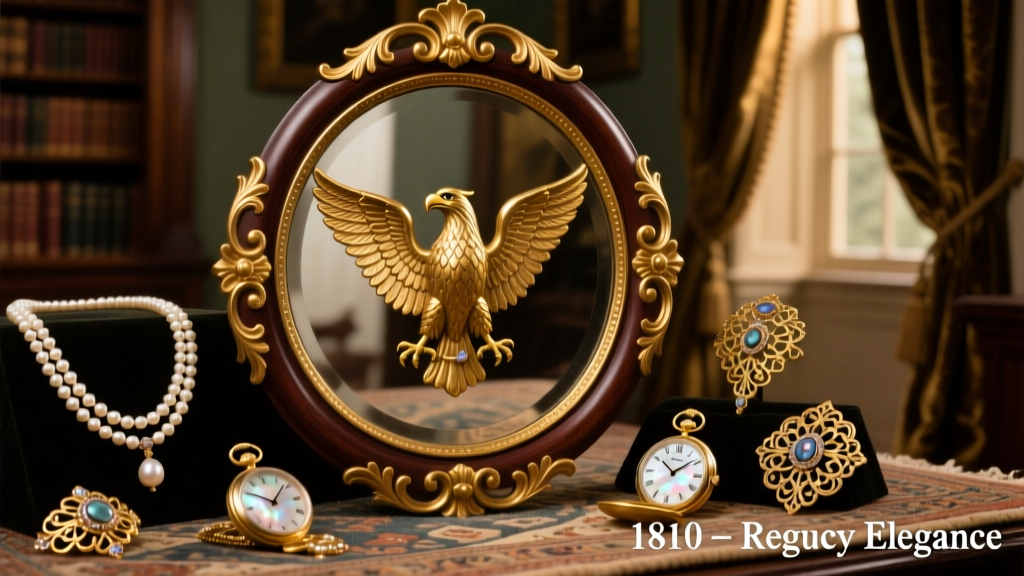
Regency Giltwood Eagle-Mounted Convex Mirror, Circa 1810: A Masterpiece of British Neoclassical Furniture Design

The Mobil Oil Gargoyle Porcelain Sign: A 19½ × 24-Inch Icon of Mid-Century American Advertising
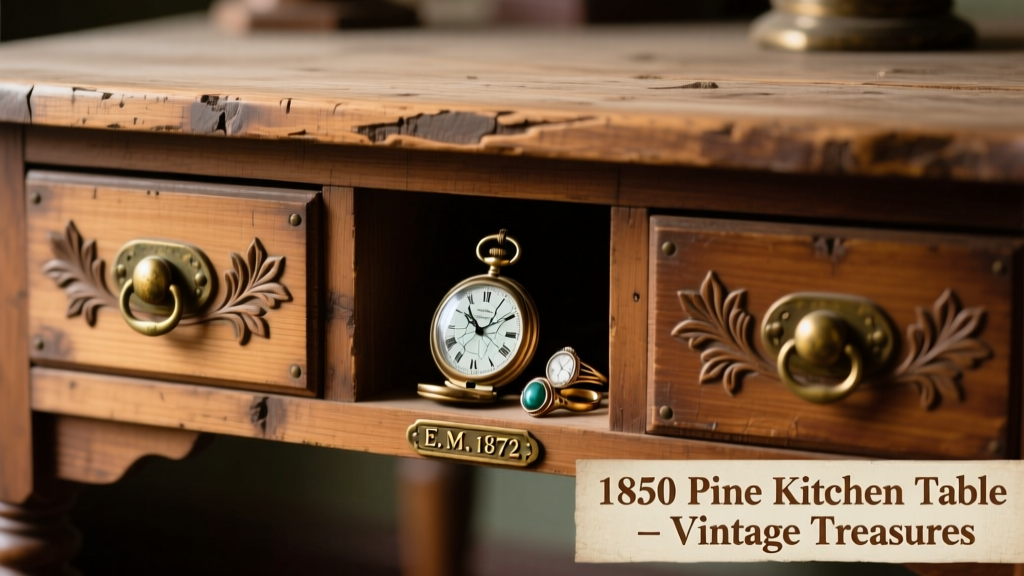
The 1850 Pine Kitchen Table with Dual Drawer Banks: A Study in American Vernacular Craftsmanship
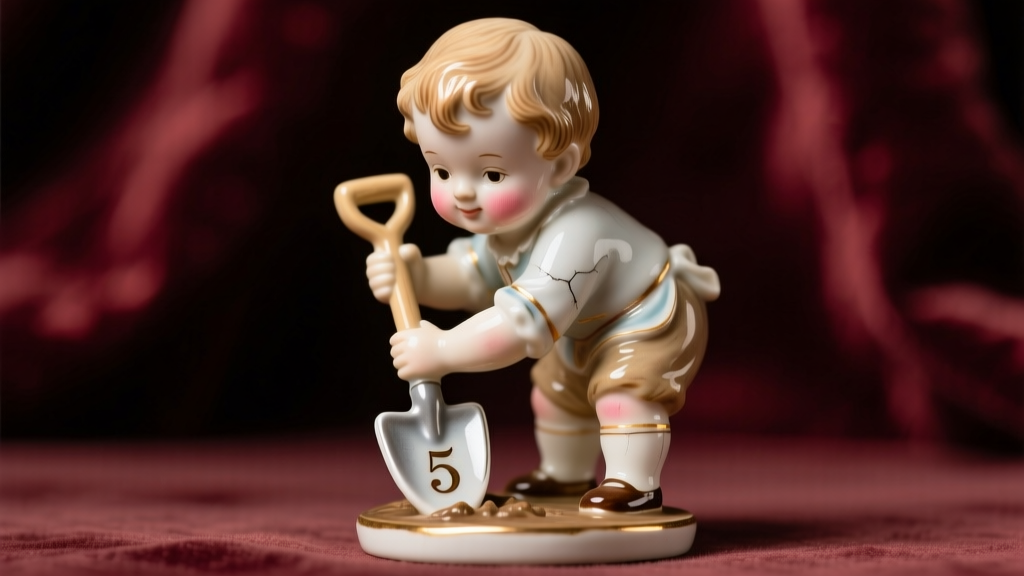
Meissen Figurine: Boy Digging With Shovel, Marked '5' in Blue Crossed Swords — A Technical and Historical Appraisal
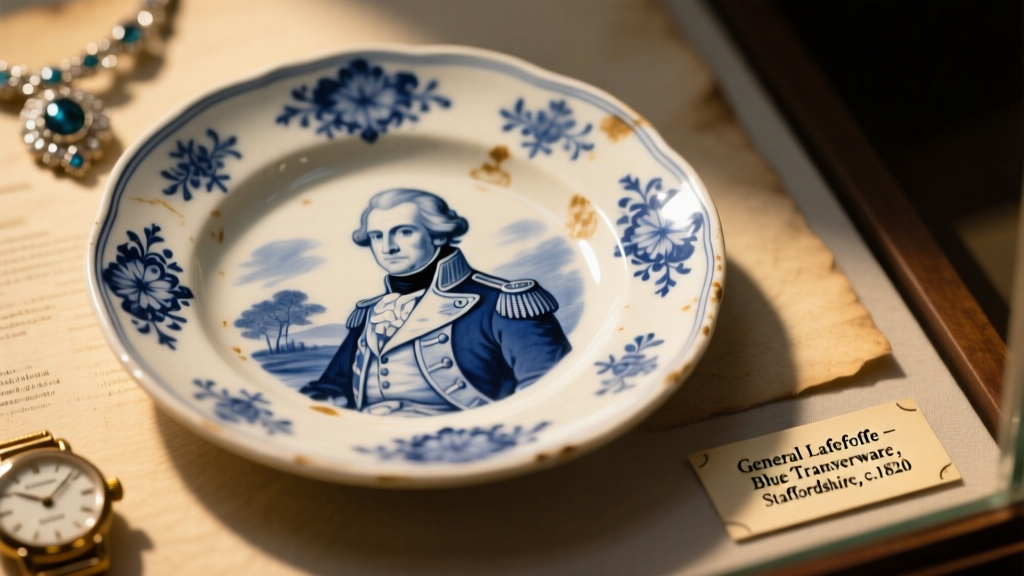
Staffordshire Blue Transfer Plate: 'The Landing of General Lafayette' — A Patriotic Ceramic Artifact from the 1825 American Tour
Fostoria Fairfax Finger Bowl Underplate in Topaz: A Collector’s Guide to American Glassware Heritage
Watt Orchard Ware Pitcher 'Cinnamon Drip No. 15': A Collector’s Deep Dive into a Rare American Art Pottery Masterpiece