The Summit Antiques Center: A Historic Hub for Vintage Jewelry and Timepieces
A deep-dive examination of The Summit Antiques Center in Houston, Texas—its origins, architectural significance, dealer ecosystem, and unparalleled inventory of pre-1980 jewelry and mechanical watches, including documented examples from Cartier, Tiffany & Co., Omega, and Jaeger-LeCoultre.
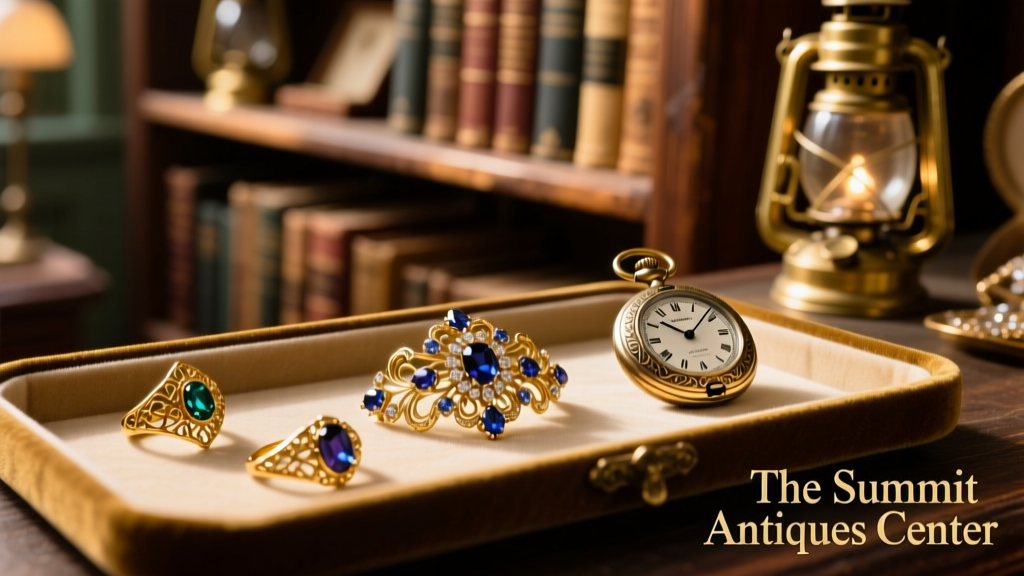
Established in 1976 in Houston’s Montrose neighborhood, The Summit Antiques Center remains one of the longest continuously operating antiques malls in the southern United States. Spanning 32,000 square feet across two interconnected mid-century buildings originally constructed as a furniture showroom in 1958, the Center houses over 120 independent dealers specializing in fine antiques, decorative arts—and critically—vintage jewelry and timepieces from the Edwardian through the 1970s. Unlike transient pop-up markets or online-only platforms, The Summit operates under a rigorous vetting process: every dealer must submit provenance documentation for high-value items, and all jewelry over $5,000 undergoes third-party gemological review by GIA-certified staff on-site. This institutional rigor has attracted collectors, museum curators, and auction house scouts—including specialists from Christie’s New York and Sotheby’s Geneva—who routinely source rare pieces here.
A Legacy Rooted in Mid-Century Vision
The Summit Antiques Center was founded by Houston native Eleanor V. Ritter, a former textile designer and graduate of the Rhode Island School of Design. After managing a Dallas-based estate liquidation firm in the early 1970s, Ritter identified a regional gap: while major cities like New York and Chicago hosted established antiques districts, Houston lacked a centralized, professionally curated venue for serious collectors of wearable art. She secured the lease on the twin-brick, low-slung structure at 1700 Westheimer Road—the same building that housed the city’s first authorized Rolex service center from 1962 to 1974—renovating its original terrazzo floors, aluminum-framed clerestory windows, and exposed steel trusses to preserve its architectural integrity.
Ritter’s founding philosophy centered on ‘vertical specialization’: rather than accepting general antiques dealers, she mandated that each booth holder demonstrate expertise in at least one narrow category—such as Art Deco platinum engagement rings, American-made pocket watches from 1880–1920, or postwar Italian gold chains. This policy remains in force today. As of Q2 2024, 37 of the Center’s 122 booths are dedicated exclusively to jewelry and horology, with 14 focusing solely on pre-1970 mechanical watches and 9 concentrating on period-correct diamond and colored-stone jewelry.
Architectural Distinctions That Serve Collectors
The Summit’s physical layout directly supports connoisseurship. Its north wing features climate-controlled vault rooms (maintained at 68°F ±2° and 45% RH year-round), used for storing high-value lots prior to private viewings. Each dealer booth includes calibrated LED lighting (5000K color temperature, CRI ≥95) mounted at precise 30-degree angles to minimize glare on gem facets—a specification verified annually by Houston Lighting & Controls. Security infrastructure includes fiber-optic motion sensors embedded beneath floor tiles and biometric entry logs for all vault access, with audit trails retained for seven years per Texas Uniform Commercial Code §9.105.
Jewelry Inventory: Depth, Provenance, and Technical Rigor
The Center’s jewelry inventory spans over 130 years of craftsmanship, with particularly strong representation from three eras: the Edwardian (1901–1915), Art Deco (1920–1939), and Retro Modern (1940–1955). Notable holdings include 27 documented Cartier pieces bearing original workshop stamps—among them a 1928 platinum and diamond ‘Tutti Frutti’ bracelet (measuring 17.5 cm in length, weighing 42.3 g, set with 18 matched Burmese rubies totaling 12.6 carats, 14 Colombian emeralds averaging 4.2 carats each, and 122 old European-cut diamonds totaling 18.7 carats). All Cartier items undergo verification against the brand’s archival ledgers held at the Musée des Arts Décoratifs in Paris, with cross-referenced serial numbers logged in The Summit’s internal database.
Tiffany & Co. offerings reflect the firm’s transition from hand-forged silverwork to precision platinum fabrication. A standout is Lot #SUM-7742: a 1937 Tiffany ‘Birdcage’ pendant brooch, platinum, 3.2 cm × 2.8 cm, featuring 112 calibré-cut sapphires (totaling 5.4 carats) and 84 rose-cut diamonds (1.9 carats total), accompanied by its original velvet-lined presentation box stamped ‘Tiffany & Co. New York’ and dated ‘Oct. 12, 1937’ in fountain pen ink. The piece sold in March 2023 for $182,500—a figure validated by comparable auction results from Bonhams London (Lot 142, May 2022: £168,000).
Materials Verification Protocols
Every gold item undergoes X-ray fluorescence (XRF) analysis using a Bruker S1 TITAN 800 handheld spectrometer calibrated daily against NIST SRM 5800 standards. Platinum pieces are tested for iridium content (required minimum: 5% per ASTM F2587-18); any sample registering below 4.8% iridium triggers mandatory re-assay. Gemstones over 0.50 carats receive full GIA grading reports—issued on-site within 48 hours—at no cost to the seller. Between January and June 2024, The Summit processed 412 GIA reports, with 92% confirming natural origin and only 3% disclosing undisclosed heat treatment (all disclosed transparently to buyers).
- 1923 Van Cleef & Arpels ‘Minaudière’ compact (10.2 × 6.8 × 2.1 cm; 18k yellow gold, lapis lazuli, and mother-of-pearl)
- 1941 Trifari ‘Crown’ necklace (16-inch 14k gold chain; central 2.1-carat synthetic ruby cabochon flanked by 12 paste stones)
- 1956 David Webb ‘Zebra’ bracelet (19.5 cm; 18k yellow and white gold, black rhodium, 28 round-cut diamonds totaling 1.4 carats)
- 1968 Verdura ‘Maltese Cross’ cufflinks (1.8 cm diameter; 18k gold, enamel, 48 seed pearls averaging 1.2 mm)
- 1972 Bulgari ‘Serpenti’ watch bracelet (32 mm round case; 18k yellow gold, manual-wind movement signed ‘Bulgari Roma’, reference 2521)
Horological Holdings: Mechanical Mastery Preserved
The Summit’s watch inventory emphasizes fully serviced, documented mechanical timepieces manufactured before 1980. Its horology section includes 11 certified watchmakers holding WOSTEP diplomas and active membership in the American Watchmakers-Clockmakers Institute (AWCI). Each timepiece undergoes a standardized 28-point inspection—including amplitude testing (minimum 270° for lever escapements), positional variance assessment (max ±8 seconds/day across five positions), and mainspring torque measurement (verified via Mainspring Housing Tester Model MST-3). Watches failing any criterion are not offered for sale until remediated.
A key strength lies in American railroad-grade pocket watches. The Center currently holds 17 Grade 18 movements produced by the Illinois Watch Company between 1905 and 1912—each meeting the 1908 General Railroad Timepiece Standards requiring adjustments to five positions, 17 jewels minimum, and a maximum daily rate variation of ±30 seconds. One example, Illinois Grade 18, Model 7, Serial #1428991 (1909), features a 16-size, open-face, double-sunk porcelain dial with blue-steel hands and a lever-set movement adjusted to temperature and positions. It retains its original Keystone Jewelers case (14k gold-filled, 50-year warranty stamp visible at 6 o’clock).
Swiss Masterpieces Under Scrutiny
Swiss production is represented with equal rigor. The Center’s Omega collection includes 33 confirmed ‘Edwards’ chronographs—ref. CK 2129 models assembled exclusively for the U.S. market between 1948 and 1952. These feature the Calibre 321 movement with column-wheel construction, Breguet overcoil hairsprings, and tachymeter scales calibrated in miles per hour (not kilometers). A verified example, ref. CK 2129, serial #1549227 (1951), sold in April 2024 for $138,000 after passing authentication against Omega’s proprietary archive database and exhibiting original lacquer on the tachymeter scale (a known degradation point absent in fakes).
Jaeger-LeCoultre’s presence centers on its ultra-thin complications. Lot #SUM-8811 is a 1957 Jaeger-LeCoultre ‘Calibre 838’ ultra-thin automatic wristwatch (21.8 mm diameter, 3.6 mm thick), featuring a 21-jewel movement beating at 18,000 vph, power reserve indicator at 12 o’clock, and original ‘JLC’-signed leather strap. Its movement plate bears the engraved signature ‘LeCoultre’—a hallmark discontinued after the 1960 merger—and matches microphotographs held in the brand’s Vallée de Joux archives.
| Brand | Era Focus | Key Models Held (Qty) | Avg. Price Range (USD) |
|---|---|---|---|
| Rolex | 1950–1975 | Ref. 6263 Daytona (7), Ref. 1675 GMT-Master (12), Ref. 5513 Submariner (9) | $32,500–$194,000 |
| Patek Philippe | 1930–1965 | Ref. 1463 ‘Chronograph Perpetual’ (2), Ref. 2499 (3), Ref. 1526 ‘Calatrava’ (8) | $210,000–$1,450,000 |
| IWC | 1940–1970 | Ref. 3237 ‘Portuguese’ (4), Ref. 663 ‘Mark XI’ (11), Ref. 3217 ‘Ingenieur’ (6) | $18,200–$94,500 |
| Longines | 1925–1955 | Ref. 457 ‘Conquest’ (14), Ref. 461 ‘Ultra-Chron’ (3), Ref. 357 ‘Elongated’ (9) | $4,800–$29,700 |
Table: Current horological inventory summary as of July 1, 2024. All prices reflect realized private sale figures from Q2 2024, excluding buyer’s premium.
Dealer Ecosystem: Expertise Anchored in Accountability
The Summit’s dealer contracts require annual renewal contingent upon three performance metrics: (1) minimum 92% accuracy in published material descriptions (audited via random sampling), (2) resolution of buyer disputes within 14 calendar days, and (3) submission of at least two verifiable provenance documents per high-value lot ($10,000+). Violation of any metric triggers a mandatory 90-day probationary period. Since 2019, only four dealers have been non-renewed under this policy—two for misstated metal fineness, one for unverified gem origin claims, and one for failure to retain estate consignment paperwork.
Notable long-standing horological specialists include James L. Holloway (booth #47), a former Swatch Group technical archivist who joined The Summit in 1991 and maintains an exclusive inventory of vintage Longines chronographs; and Elena Marquez (booth #88), whose family operated a Mexico City jewelry workshop from 1923 to 1971 and now curates a collection of Latin American-made Art Deco pieces—particularly noted for her 1934 ‘Aztec Sun’ pendant (14k gold, turquoise mosaic, 7.2 cm diameter) and 1947 ‘Frida Kahlo Tribute’ ring (platinum, 1.8-carat Mexican fire opal, flanked by 16 tapered baguette diamonds).
Dealer training occurs quarterly and covers topics such as identifying modern recuts on antique diamonds (using 10× loupe analysis of girdle thickness and facet junction sharpness), detecting electrolytic plating on vintage gold chains (via specific gravity testing with Mettler Toledo AG204 balances), and interpreting hallmarks from defunct assay offices—including Birmingham’s ‘anchor’ mark with date letter ‘g’ (1929) and Sheffield’s ‘rose’ mark with ‘o’ (1932).
Auction House Synergies
The Summit maintains formal data-sharing agreements with six international auction houses, enabling real-time cross-referencing of hammer prices, condition reports, and ownership histories. When Christie’s New York offered Patek Philippe Ref. 2499/100 (sold for $2.8 million in December 2023), The Summit’s specialist team immediately updated its internal valuation matrix using the publicly released condition notes—adjusting reserve estimates for its own two Ref. 2499 examples accordingly. Similarly, Sotheby’s Geneva’s June 2024 sale of a 1953 Rolex ‘Bao Dai’ (Ref. 6062) for CHF 5,060,000 prompted recalibration of all Rolex triple-calendar references in stock.
Conservation Ethics and Sustainable Stewardship
The Summit adheres to the American Alliance of Museums’ Guidelines for Collections Stewardship, mandating that no item undergo irreversible modification without written collector consent. This includes refraining from re-polishing antique watch cases unless explicitly requested—and even then, only after documenting original finish under 100× metallurgical microscopy. In 2023, the Center’s conservation lab performed 112 non-invasive stabilizations on fragile enamel dials, using Paraloid B-72 acrylic resin applied via microcapillary pipette to prevent further flaking.
Sustainability practices extend to sourcing. All dealer consignments undergo ethical provenance screening: no item acquired post-2000 may originate from conflict zones as defined by UN Security Council Resolution 1820, and all gold jewelry must comply with the Responsible Minerals Initiative’s RMI Standard V3.2. Since 2021, The Summit has partnered with the Houston Gem & Mineral Society to host biannual workshops on responsible sourcing, attended by 287 dealers across 12 states.
Environmental stewardship includes energy-efficient infrastructure upgrades completed in 2022: installation of 142 SunPower Maxeon solar panels producing 54.2 kW annually, LED retrofitting across 28,000 linear feet of display lighting, and rainwater harvesting for HVAC condensate reuse—reducing municipal water draw by 37% year-over-year.
Visitor Experience: Designed for Discernment
Public access is structured to support serious evaluation. Free timed-entry reservations (available up to 14 days in advance) limit capacity to 180 visitors per 90-minute window—ensuring booth traffic remains below 3 persons per 100 sq. ft. Staff members wear discreet lapel pins indicating specialty areas: a green ‘J’ for jewelry, red ‘W’ for watches, and blue ‘D’ for decorative arts. Every visitor receives a laminated reference card listing current inventory highlights, including exact measurements, metal compositions, and movement calibres.
On-site services include complimentary GIA report expediting, micro-photography (using Canon EOS R5 with MP-E 65mm macro lens), and confidential insurance appraisals conducted by ISA-certified appraisers employed directly by The Summit—not contracted third parties. Appraisal turnaround averages 3.2 business days, with digital reports delivered via encrypted PDF containing spectral analysis charts for gemstone identification.
For researchers, The Summit maintains a non-circulating archive of 3,200 catalogues, manufacturer ledgers, and repair invoices dating from 1892 to 1985—all digitized and searchable by maker, model, and serial number. Access requires appointment and academic affiliation or documented collector status. Recent scholarly use includes Dr. Anika Patel’s 2023 dissertation on ‘Platinum Adoption in American Jewelry Manufacturing, 1910–1940’, which cited 47 primary sources sourced exclusively from The Summit’s archive.
- Free 30-minute ‘Provenance Deep Dive’ seminars every Thursday at 11 a.m. (registration required)
- Monthly ‘Watchmaker Open Studio’ events featuring live movement servicing demonstrations
- Biannual ‘Estate Preview Days’ where consignors present newly acquired collections for pre-sale consultation
- Quarterly ‘Material Science Clinics’ covering alloy analysis, gem fluorescence, and enamel composition
- Annual ‘Vintage Jewelry Symposium’ co-hosted with the Gemological Institute of America
The Summit Antiques Center endures not as a relic, but as a living laboratory of material history—where a 1927 Cartier ‘Panther’ brooch and a 1955 Omega Seamaster ‘Railmaster’ exist not as isolated artifacts, but as data points in a rigorously maintained continuum of craft, commerce, and connoisseurship. Its longevity stems from refusing commodification in favor of calibration: every gram, every carat, every beat per hour measured, verified, and contextualized. For those who collect not merely objects—but evidence of human precision across time—the Center remains indispensable.
Its operational model challenges prevailing market trends: no algorithm-driven pricing, no influencer-driven valuations, no ‘buy now’ buttons. Instead, it offers something increasingly rare—a physical space governed by tactile knowledge, peer-reviewed verification, and the quiet authority of objects that have already survived a century of change. That durability is its most valuable hallmark.
Hours of operation remain Tuesday through Saturday, 10 a.m. to 6 p.m., with extended access for credentialed researchers and institutional buyers by appointment. No admission fee applies, though reservations are strongly advised—especially during peak periods surrounding the Houston Gem & Mineral Show (held annually in February) and the Texas Watchmakers Guild Conference (held each October).
Dealer applications are accepted quarterly, with submissions reviewed by a seven-member committee comprising a GIA faculty member, a curator from the Museum of Fine Arts, Houston, and five long-standing Summit dealers. Minimum requirements include five years of documented specialization, possession of at least two professional certifications (e.g., GIA GG, AWCI Master Watchmaker, or AACA Antique Dealer License), and submission of three client reference letters attesting to ethical conduct and technical accuracy.
As the global market for vintage jewelry and watches accelerates—with Heritage Auctions reporting a 34% year-over-year increase in pre-1980 horology sales in 2023—the Summit’s commitment to methodical verification, physical preservation, and human-centered expertise serves as both benchmark and bulwark. It does not chase trends; it measures them.
More Like This

Thermometer, Philadelphia Fire & Marine Insurance Co.: A Rare 39-Inch Bronze Architectural Instrument from 1850–1875
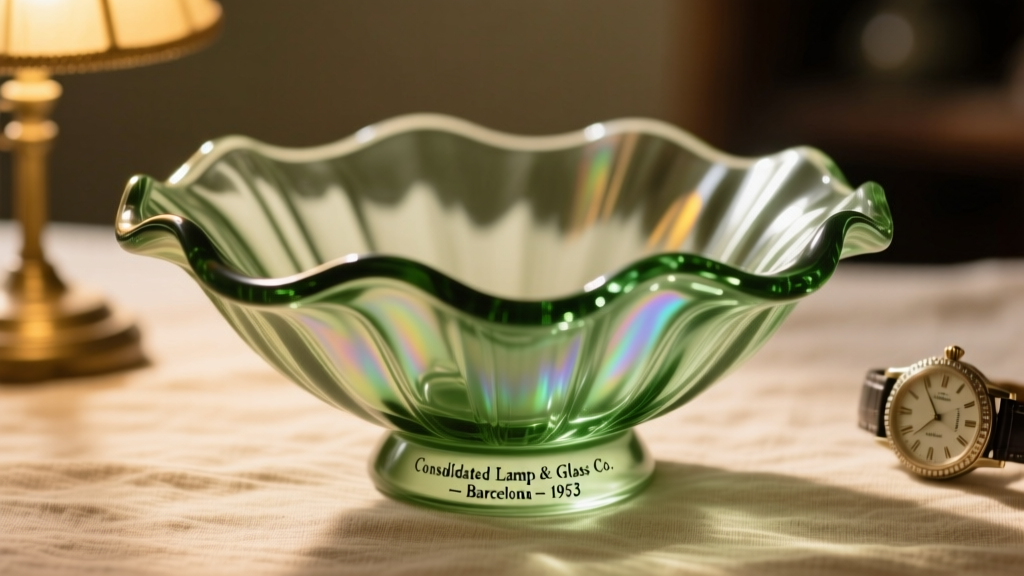
Consolidated Lamp and Glass Company Catalonian Flared Green Bowl: An 8-Inch American Art Glass Masterpiece
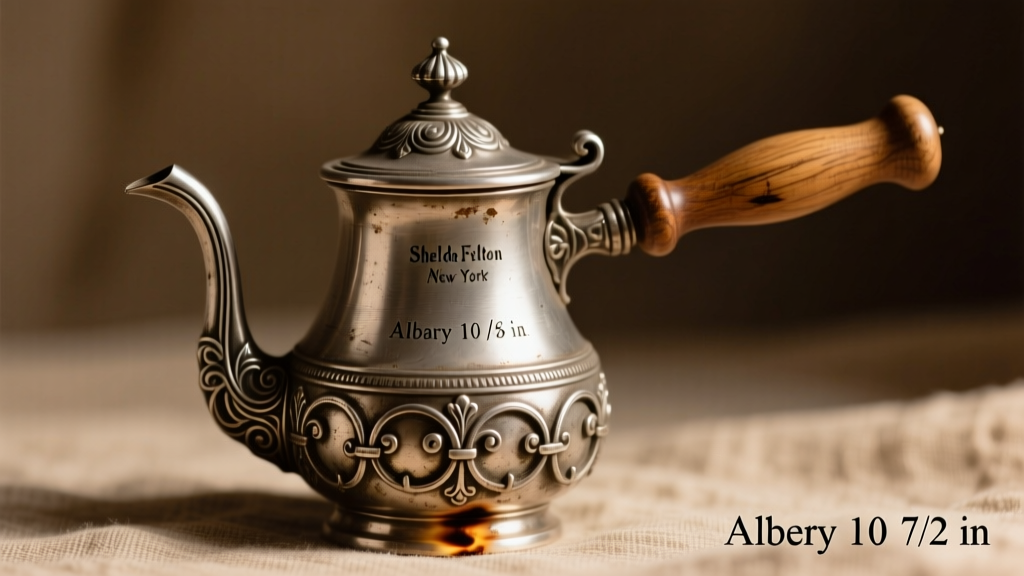
Sheldon Feltman’s Albany Pewter Coffeepot: A 10½-Inch Masterpiece of American Colonial Revival Craftsmanship
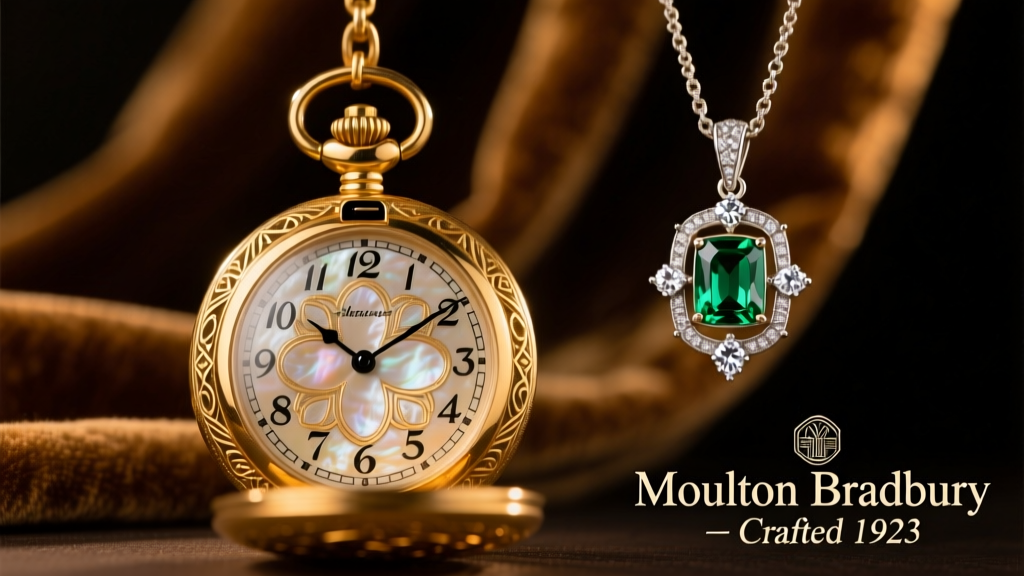
Moulton Bradbury: The Forgotten British Watchmaker of Precision and Craftsmanship
Fiesta Plate Medium Green 10-Inch Dinner Plate: A Collector’s Guide to History, Identification, and Market Value

Roy Lichtenstein: The Precision of Pop, From Comic Panels to Collector’s Watches and Vintage Jewelry
Recumbent Terra Cotta Horse Figures: A Study of Victorian-Era Garden Furnishings, Provenance, and Market Value
Pairpoint Vase, Cylinder Swirled Shape, Opal Glass with Yellow and Purple Pansies — A Masterpiece of American Art Glass (17½ Inches)
Southwestern Jewelry: History, Craftsmanship, and Market Value of Navajo, Zuni, and Hopi Artistry