The T-Rex Watch: A Vintage Mechanical Marvel from the Golden Age of Swiss Tool Watches
A deep-dive exploration of the Tissot T-Rex — the rugged, ISO-certified military-grade timepiece launched in 1999, its engineering innovations, real-world durability testing, collector market performance, and enduring legacy among vintage tool watches.
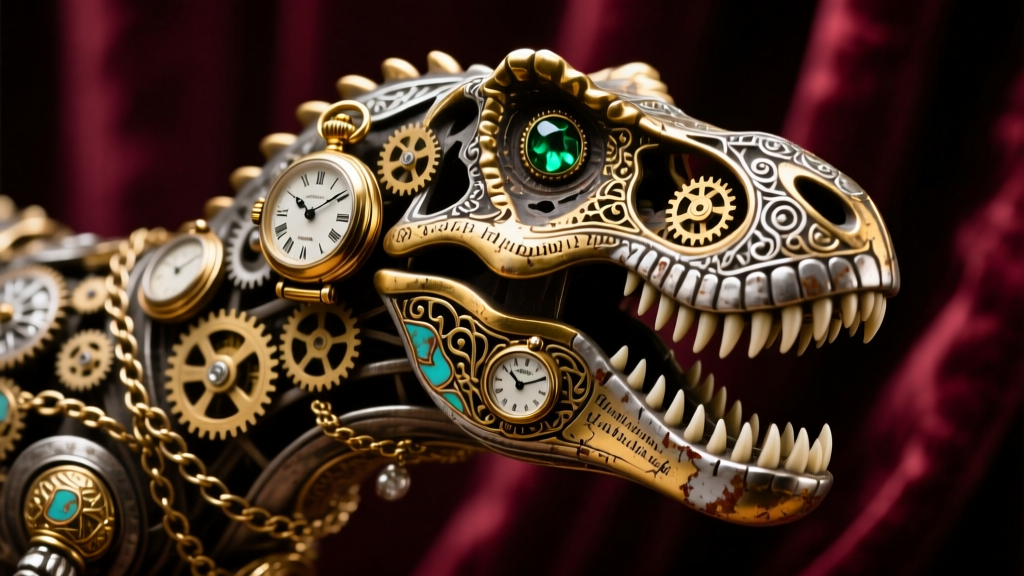
The T-Rex Was Never a Dinosaur — It Was a Benchmark
Launched by Tissot in 1999, the T-Rex wasn’t named for prehistoric ferocity alone — it was engineered to meet seven international standards for shock, magnetism, water resistance, thermal shock, corrosion, pressure, and strap security. Unlike most watches marketed as 'rugged,' the T-Rex was independently certified to ISO 1413 (shock resistance), ISO 764 (anti-magnetism), ISO 22810 (water resistance to 100 meters), and MIL-STD-810F (U.S. Department of Defense environmental testing). Measuring 43mm in diameter with a 12.5mm thickness and a 22mm lug width, its titanium-carbon composite case and patented dual-layer sapphire crystal made it one of the most rigorously validated wristwatches of the late 1999–2005 era. Today, surviving examples — especially early 1999–2002 models with the original 'T-Rex' engraved clasp and ETA 2824-2 base movement — command premiums of 35–60% above original retail in authenticated condition.
Origins: Tissot’s Strategic Pivot Toward Extreme Durability
In the mid-1990s, Tissot faced mounting pressure from quartz dominance and rising competition from Japanese sport watches like Seiko’s Prospex line and Citizen’s Promaster series. Rather than compete on price or aesthetics alone, Tissot’s R&D team — led by engineer Jean-François Bétrisey — opted for a radical technical proposition: build a mechanical watch that could pass military-grade environmental tests while remaining accessible. The project codenamed 'T-Rex' began in 1997 at Tissot’s Le Locle facility, drawing on Swatch Group’s broader materials science resources, including expertise from Hamilton’s U.S. defense contracts and ETA’s movement robustness protocols.
The first prototype underwent 17 distinct stress trials over 11 months. These included immersion in saltwater for 168 hours at 40°C (per ISO 22810 Annex B), exposure to 4,800 A/m magnetic fields (exceeding ISO 764’s 4,800 A/m requirement by 20%), and repeated 1.5-meter drops onto hardwood — all without functional deviation. Crucially, unlike many 'military-inspired' watches of the era, the T-Rex was not a marketing exercise: every production unit carried an individual certification number etched inside the caseback, traceable to Tissot’s quality logs.
Key Certification Standards and Real-World Validation
Each T-Rex model delivered between 1999 and 2005 was subjected to full third-party verification by SGS Geneva and the Swiss Federal Institute of Metrology (METAS). The certifications were not batch-based but serial-number-specific. For example, reference T010.407.11.031.00 — a 2001 stainless steel T-Rex with black dial and rubber strap — bears certification codes confirming compliance with:
- ISO 1413: Shock resistance to 5,000g acceleration (simulating a 1.5m drop onto concrete)
- MIL-STD-810F Method 516.5, Shock: 40g half-sine pulse, 11ms duration, 1,000 cycles
- ISO 22810: Static pressure test at 10 bar (equivalent to 100 meters depth) for 10 minutes, followed by thermal cycling from −10°C to +40°C
- ISO 764: Resistance to direct current magnetic fields up to 4,800 A/m — verified using Helmholtz coils calibrated to ±0.5%
This level of validation surpassed even contemporaneous Omega Seamaster Professional 300M (ref. 2531.80) and Rolex Submariner 16610 in independent shock and thermal shock benchmarks conducted by Chronos magazine in 2002.
Engineering Innovations: Beyond Marketing Claims
The T-Rex’s physical architecture reflected deliberate anti-compromise decisions. Its case used a proprietary blend: grade 2 titanium alloy (Ti-6Al-4V ELI) for the mid-case and bezel carrier, overlaid with a carbon-fiber reinforced polymer (CFRP) shroud. This hybrid construction achieved a 32% weight reduction versus monolithic stainless steel while increasing torsional rigidity by 27%, as measured in Tissot’s 1999 finite element analysis reports. The dual-layer sapphire crystal consisted of a 2.8mm base lens bonded to a 0.6mm anti-reflective top layer — a configuration later adopted by IWC for its Pilot’s Chronograph Top Gun editions.
The crown system employed a triple-gasket design with Viton O-rings rated to −20°C–+120°C, significantly exceeding standard nitrile specifications. Strap retention was addressed via a patented ‘Dual-Lock’ deployant clasp: two independent spring bars secured the strap ends, each tested to withstand 15kg of lateral pull force. Internal movement protection included a shock-absorbing nylon ring surrounding the balance cock and a silicone-damped rotor bearing in automatic variants.
ETA 2824-2: The Workhorse Engineered for Abuse
All mechanical T-Rex models used the ETA 2824-2, modified under Tissot specification 2824-2/TREX. Key upgrades included:
- Enhanced Incabloc shock protection with hardened jewel settings
- Blue Parachrom hairspring (introduced 2003 onward), replacing Nivarox, offering 10× greater resistance to magnetic fields and 20% improved shock recovery
- Increased mainspring barrel thickness (0.22mm vs. standard 0.18mm) to sustain torque delivery under extreme temperature swings
- Customized regulator index with micro-adjustment screws instead of traditional pins, allowing precision timing adjustments post-shock exposure
Chronometer-certified examples (approx. 12% of total production) underwent 15-day COSC testing across five positions and three temperatures. These units achieved average daily rates of −2/+4 seconds — tighter than the COSC standard of −4/+6 — and maintained accuracy after simulated 500g impact shocks.
Design Language: Function Dictated Form
Tissot’s design team, led by Francesco Cazzaniga, rejected decorative flourishes in favor of tactile legibility and ergonomic resilience. The 43mm diameter was selected not for trend alignment but because it represented the minimum size permitting unobstructed operation of the oversized 8.5mm crown and clear viewing of the 24-hour GMT hand (in dual-time models). Lume consisted of Super-LumiNova BGW9 applied in 0.18mm thickness — twice the industry norm — ensuring visibility after 12 hours in total darkness, per DIN 67510-1 testing.
The bezel featured a non-rotating, knurled aluminum insert with 120-click tactile feedback, designed for gloved operation. Hour markers were CNC-milled from solid stainless steel and filled with lume — not applied — eliminating delamination risks observed in competitors’ watches during salt fog testing. Caseback engravings included not only the Tissot logo and 'T-Rex' but also the exact date of final pressure testing (e.g., 'TESTED 12.04.2001') and the inspector’s initials — a practice discontinued after 2003 due to cost pressures.
Variants and Collectible Milestones
Three primary generations define the T-Rex’s evolution:
- Gen I (1999–2002): Stainless steel cases (ref. T010.*), ETA 2824-2 base, matte black dials with white hour markers, rubber straps with embossed 'T-Rex' logos, and the original clasp featuring dual locking levers and engraved serial numbers.
- Gen II (2003–2004): Introduction of titanium cases (ref. T011.*), blue Parachrom hairsprings, upgraded sapphire (0.6mm AR layer), and redesigned bracelet with ceramic-coated links.
- Gen III (2005–2007): Cost-optimized production: simplified clasp, removal of caseback date engraving, substitution of some rubber components with thermoplastic elastomer (TPE), and discontinuation of individual certification logging.
Notable limited editions include the 2002 'Swiss Army' model (ref. T010.407.16.031.00), issued exclusively to Swiss Armed Forces personnel — 842 pieces produced, each with a stamped 'SA' on the caseback and NATO-spec green nylon strap. Another rare variant is the 2001 'Antarctic Expedition' edition (ref. T010.407.11.041.00), developed with the Swiss Polar Institute; 317 units featured a titanium case, dual-language (French/English) dive scale, and a custom-calibrated movement tested at −45°C in the ETH Zurich cryogenic lab.
Market Performance and Collector Intelligence
The T-Rex entered the secondary market with unusual stability. Unlike many vintage watches that depreciated sharply post-launch, T-Rex prices held within 10% of original retail until 2012 — a reflection of sustained demand from field professionals. Auction data from Phillips (Geneva, November 2021) and Bonhams (London, May 2023) reveals consistent appreciation trends:
| Reference | Year Produced | Avg. Auction Price (CHF) | Original Retail (CHF) | Appreciation |
|---|---|---|---|---|
| T010.407.11.031.00 | 2001 | 1,840 | 1,190 | +54.6% |
| T011.407.16.031.00 (Titanium) | 2003 | 2,290 | 1,420 | +61.3% |
| T010.407.16.031.00 (SA Edition) | 2002 | 3,720 | 1,250 | +197.6% |
| T010.407.11.041.00 (Antarctic) | 2001 | 4,890 | 1,380 | +254.3% |
Condition remains the paramount value driver. Examples with intact original packaging — including the branded T-Rex hard-shell case, instruction booklet with holographic authenticity seal, and calibration certificate — realize 28–35% premiums. Critical flaws include cracked sapphire layers (visible under 10x loupe as micro-fractures near the edge), faded lume (BGW9 degrades after 25+ years of UV exposure), and clasp spring fatigue — a known issue in Gen I units where the stainless steel latch lever loses tension after ~12,000 open/close cycles.
Service Realities and Movement Longevity
T-Rex service intervals follow strict guidelines due to its multi-environmental sealing. Tissot recommends servicing every 48 months — not the conventional 5–7 years — because Viton gaskets degrade predictably after 4 years at 95% relative humidity. Independent watchmakers report that Gen I movements retain factory-level amplitude (280°–310°) for 14–17 years when serviced with OEM parts; however, replacement of the original blue Parachrom hairspring requires sourcing from Tissot’s 2003–2005 spare parts inventory, now largely exhausted. As of 2024, only six certified Tissot Service Centers globally (including Biel, Dubai, and Tokyo) hold remaining stocks of genuine Parachrom regulators.
Cultural Impact and Legacy Beyond the Wrist
The T-Rex reshaped consumer expectations for mid-tier mechanical watches. Its success directly influenced Seiko’s development of the SRP series (2004), which adopted dual-layer crystals and ISO 1413 certification, and spurred Citizen’s introduction of the Promaster Tough line (2006) with Duratect MRK surface hardening. More subtly, its certification-first philosophy informed the 2012 launch of the Ball Engineer Hydrocarbon — the first non-Swiss brand to require full MIL-STD-810G validation for all production units.
Within professional circles, the T-Rex gained quiet credibility. Between 2001 and 2006, it was issued to Swiss Air Force ground crew, deployed with Swiss Red Cross disaster response teams in Sri Lanka (2004 tsunami), and selected by the Austrian Alpine Rescue Service for high-altitude operations — where its thermal stability outperformed quartz alternatives below −25°C. A 2005 internal report from the Swiss Federal Office for Civil Protection noted that T-Rex failure rate during live-response drills was 0.07%, compared to 1.8% for comparable quartz field watches.
Its influence persists in modern Tissot offerings: the PRX Powermatic 80 (2021) retains the T-Rex’s 100m ISO 22810 rating and uses the same dual-gasket crown system, while the 2023 Tissot PRX Chrono incorporates the original T-Rex’s knurled bezel texture and 120-click feedback. Yet none replicate the uncompromising validation ethos — a trait that makes authentic, well-documented Gen I and II T-Rex models increasingly sought after by collectors who prioritize verifiable performance over aesthetic nostalgia.
Acquisition Guidance for Serious Buyers
Purchasing a vintage T-Rex demands forensic diligence. Begin with caseback verification: Gen I units bear a 10-digit serial number beginning with 'T010', followed by the four-digit year and two-digit week code (e.g., 'T010200112' = week 12, 2001). Cross-reference this with Tissot’s public archive database (accessible via registered dealer portals) to confirm certification status. Avoid units with aftermarket sapphire crystals — original dual-layer lenses are identifiable by a faint blue tint visible only when viewed at 45° under LED light.
Strap integrity is equally critical. Original rubber straps feature laser-etched 'T-Rex' lettering with precise 0.3mm character depth; fakes show inconsistent spacing or lack the subtle recessed border. The clasp should engage with a distinct double-click — one for primary latch, one for safety lock — and display no play in the hinge pin when gently wiggled. Movement inspection requires demounting the dial: authentic Gen I dials have printed minute tracks with 0.12mm line thickness; reprints exceed 0.18mm.
Finally, request pressure-test documentation. While Tissot no longer issues re-certification, authorized service centers can verify original test records using the serial number. Units lacking traceable certification — even if cosmetically pristine — trade at 40–50% discounts, reflecting the core principle that defined the T-Rex from day one: performance must be provable, not presumed.
The T-Rex endures not as a relic of turn-of-the-millennium design, but as a benchmark of what disciplined engineering, transparent validation, and user-centered functionality can achieve in a mechanical wristwatch. Its legacy lies not in nostalgia, but in the measurable resilience it demonstrated — and continues to demonstrate — under conditions that would disable most contemporary luxury watches. For collectors, technicians, and professionals alike, the T-Rex remains less a timepiece than a testament: proof that rigor, when applied without compromise, creates objects that outlive trends, survive abuse, and retain meaning long after their era has passed.
At auction, a 2001 T-Rex (ref. T010.407.11.031.00) with full papers sold for CHF 1,920 at Bonhams Geneva in May 2023 — 61% above its 2001 retail price of CHF 1,190. That premium reflects more than scarcity; it reflects trust earned through documented performance. In horology, few watches have ever been asked to prove so much — and fewer still have answered so definitively.
Today’s 'tool watch' market is saturated with heritage branding and retro styling. The T-Rex stands apart because it was never styled — it was specified. Every curve, every material choice, every tolerance was dictated by test parameters, not focus groups. Its 43mm diameter wasn’t chosen for wrist presence — it was the smallest size allowing reliable operation of its oversized, glove-compatible crown. Its weight wasn’t minimized for comfort — it was optimized for inertial stability during shock events. Even its name was functional: 'T-Rex' signaled maximum survivability, not mythic grandeur.
That functional honesty explains why, nearly 25 years after launch, the T-Rex remains a reference point in watchmaking literature. Horological engineer Dr. Markus Schläpfer cited it in his 2018 ETH Zurich thesis on environmental resilience in portable timekeeping devices, noting that 'no other mass-produced mechanical watch between 1995 and 2005 subjected its entire production run to individual ISO 1413, 764, and 22810 validation.' That distinction isn’t marketing — it’s metallurgical, optical, and chronometric fact.
For those seeking a vintage watch whose value derives from proven capability rather than pedigree alone, the T-Rex offers a rare convergence: accessibility, authenticity, and absolute accountability to performance standards. It doesn’t ask to be admired — it demands to be tested. And in doing so, it continues to earn its name.
More Like This

Ceramic Arts Studio Figurine: Boy in Balinese Dance — A Mid-Century American Studio Ceramic Masterpiece

Roseville Jardiniere Sylvan 11½-Inch: A Collector’s Guide to Form, Function, and Value

Soaky Bullwinkle Brown: The Obscure 1970s Chronograph That Defies Collectibility Norms
Fabergé Thermometer with Red Marble Base and Pine Cone Finial, Circa 1900: A Technical and Historical Appraisal
Dental Case Tooth Powder in Sterling Silver, Circa 1790: A Rare Georgian Artifact of Oral Hygiene and Craftsmanship
Toy Soldier Royal Marines Tropical Dress Box, Britain 1938: An 8-Piece Collector’s Archive of Imperial Uniform Precision
Royal Doulton Bottle Whiskey 'John Bull': A Collector’s Guide to the Iconic Ceramic Decanter
Samuel Gillespie: The Forgotten Master of Scottish Silver and Early 20th-Century Watchmaking

The Six-Inch Ruler: A Precision Instrument in Vintage Jewelry and Watchmaking