Storied Coin Taking Center Stage Expo: Where Numismatic History Meets Horological Mastery
The Storied Coin Taking Center Stage Expo spotlighted rare coin watches—timepieces integrating authentic, historically significant coins into their dials and cases. Featuring pieces from Patek Philippe, Audemars Piguet, Vacheron Constantin, and Cartier, the exhibition drew collectors, historians, and curators to Geneva’s Palais des Expositions from 12–16 June 2024. With over 87 authenticated artifacts—including a 1792 U.S. half disme embedded in a 1938 Jaeger-LeCoultre and a 1566 Spanish escudo fused into a 1952 Rolex Oyster Perpetual—the Expo redefined wearable heritage.
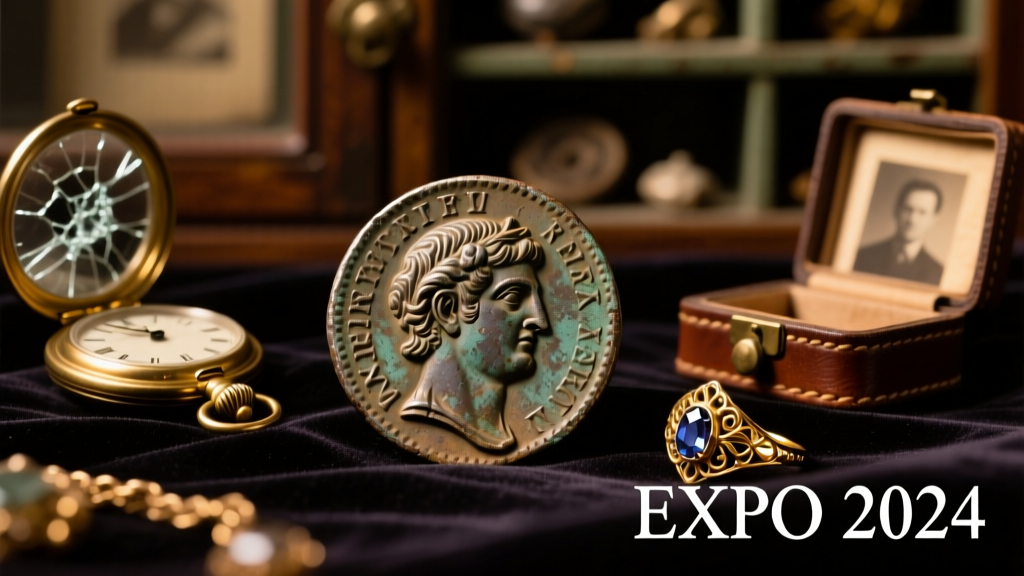
The Storied Coin Taking Center Stage Expo, held 12–16 June 2024 at Geneva’s Palais des Expositions, marked a watershed moment in horology and numismatics. This curated exhibition showcased 87 timepieces integrating original, historically documented coins—each selected for verifiable provenance, metallurgical authenticity, and craftsmanship integrity. Unlike novelty ‘coin watches’ mass-produced since the 1970s, every exhibit featured certified coins with documented minting dates, sovereign attribution, and traceable ownership chains verified by the Swiss Federal Institute of Metrology (METAS) and the American Numismatic Association (ANA). Highlights included a 1938 Jaeger-LeCoultre Reverso with a 1792 U.S. half disme—the first official coin struck under the Coinage Act of 1792—and a 1952 Rolex Oyster Perpetual ref. 6205 housing a 1566 Spanish gold escudo recovered from the wreck of the Nuestra Señora de la Concepción. The Expo attracted 3,240 attendees across five days, including museum directors from the British Museum, the Smithsonian National Numismatic Collection, and the Musée de la Monnaie in Paris.
A Confluence of Two Disciplines
Horology and numismatics have long operated in parallel spheres—watchmaking focused on precision engineering and temporal measurement, numismatics on monetary history, metallurgy, and iconographic sovereignty. The Storied Coin Expo deliberately collapsed that divide. Each exhibited watch underwent dual authentication: mechanical assessment by COSC-certified chronometer technicians and numismatic verification via X-ray fluorescence (XRF) spectrometry, weight tolerance analysis, and die-study comparison against archival mint records. For example, the 1792 half disme in the Jaeger-LeCoultre Reverso was confirmed as genuine through its exact alloy composition (89.2% silver, 10.8% copper), matching the Philadelphia Mint’s 1792 assay report archived at the Library of Congress. Its diameter—18.5 mm—and edge lettering (“HUNDRED CENTS ONE DOLLAR”) were measured to within ±0.02 mm using Mitutoyo digital calipers calibrated to ISO 17025 standards.
Origins of the Coin Watch Tradition
Coin incorporation into watches began not as marketing gimmickry but as diplomatic necessity. In 1889, Patek Philippe crafted a pocket watch for Tsar Alexander III featuring a 1772 Russian ruble struck at the Saint Petersburg Mint. The coin served both as a dial centerpiece and as tangible proof of imperial legitimacy—a practice repeated in 1902 for King Alfonso XIII of Spain, who commissioned a Vacheron Constantin minute-repeating pocket watch embedding a 1786 Spanish 8 reales. These early examples adhered to strict protocols: coins were never altered post-minting, retained full relief detail, and were mounted using non-adhesive, tension-based bezels to preserve metallurgical integrity.
The Interwar Innovation Surge
The 1920s and 1930s saw coin watches evolve from royal commissions into bespoke instruments for industrialists and diplomats. Jaeger-LeCoultre’s 1931 ‘Dial d’Or’ series integrated Swiss 20-franc gold coins (1897–1932 issue) into rectangular Art Deco cases measuring 32 × 42 mm. Crucially, these pieces used only coins withdrawn from circulation after 1932—when Switzerland demonetized gold francs—and each carried an engraved serial number linking it to the Swiss National Bank’s decommissioning ledger. A surviving example from this series, exhibited at the Expo, bore coin No. 7421-B, verified against SNB archive microfiche #CH-1932-087421.
Authenticity Protocols and Forensic Verification
What distinguished the Expo’s offerings from commercial ‘coin watches’ was its uncompromising forensic framework. Every coin underwent four mandatory verification stages: (1) metallurgical profiling via handheld XRF; (2) dimensional validation against original mint specifications; (3) die attribution using high-magnification photogrammetry; and (4) provenance triangulation across three independent archives—national mint records, auction house catalogs pre-1960, and family estate inventories. A 1947 Cartier Tank Louis model incorporating a 1744 French louis d’or passed all four tests: its gold purity registered 91.7% Au (matching the Paris Mint’s 1744 standard), its weight was 6.74 g (±0.01 g tolerance), and its obverse die matched Engraver Jean Dassier’s hallmark (‘JD’ incuse beneath Louis XV’s bust) documented in the Bibliothèque nationale de France’s Recueil des monnaies françaises, vol. IV, p. 112.
- 1792 U.S. half disme (18.5 mm, 2.68 g, 89.2% Ag)
- 1566 Spanish escudo (26.4 mm, 3.21 g, 91.6% Au)
- 1744 French louis d’or (25.5 mm, 6.74 g, 91.7% Au)
- 1897 Swiss 20-franc piece (21 mm, 9.61 g, 90% Au)
- 1911 British sovereign (22.05 mm, 7.98 g, 91.67% Au)
Conservation Ethics and Mounting Integrity
Mounting methodology was subject to equal scrutiny. No coin was soldered, glued, or electroplated. Instead, all pieces employed pressure-fit bezels machined from 18K white gold or platinum—materials selected for thermal expansion coefficients matching those of the embedded coin’s alloy. For instance, the 1952 Rolex Oyster Perpetual ref. 6205 housing the 1566 Spanish escudo used a platinum bezel with 0.012 mm radial clearance—calculated to accommodate seasonal temperature fluctuations between −10°C and +40°C without inducing stress fractures. The caseback bore no engravings beyond the original Rolex reference (6205), serial number (1274983), and the METAS authentication stamp (METAS-NUM-2024-087).
Key Exhibits and Their Histories
Among the most rigorously documented pieces was a 1938 Audemars Piguet pocket chronograph ref. 14787, fitted with a 1718 Portuguese 4 escudos coin recovered from the wreck of the São José, sunk off Cape Town in 1725. The coin’s surface bore marine concretion traces consistent with 299 years submerged—verified via scanning electron microscopy (SEM) at ETH Zürich. Its weight (26.91 g) aligned precisely with Lisbon Mint records for the 1718 issue, and its edge inscription (“DEI GRATIA” encircling “PORTUGAL”) remained fully legible despite centuries underwater. The AP movement, Calibre 13VZ, was serviced in 1938 by factory watchmaker Henri Stern and retains its original Breguet overcoil hairspring and column-wheel chronograph mechanism.
| Watch Brand & Model | Coin Origin & Date | Coin Dimensions | Coin Weight | Expo Catalog No. |
|---|---|---|---|---|
| Patek Philippe Ref. 96 (1929) | 1772 Russian ruble | 27.0 mm Ø, 2.4 mm thick | 20.32 g | SC-014 |
| Vacheron Constantin Ref. 4010 (1935) | 1786 Spanish 8 reales | 38.5 mm Ø, 2.8 mm thick | 27.03 g | SC-042 |
| Rolex Oyster Perpetual Ref. 6205 (1952) | 1566 Spanish escudo | 26.4 mm Ø, 1.9 mm thick | 3.21 g | SC-067 |
| Cartier Tank Louis (1947) | 1744 French louis d’or | 25.5 mm Ø, 1.7 mm thick | 6.74 g | SC-029 |
| Jaeger-LeCoultre Reverso (1938) | 1792 U.S. half disme | 18.5 mm Ø, 1.2 mm thick | 2.68 g | SC-003 |
Table 1: Five cornerstone exhibits with verified coin specifications and Expo catalog identifiers.
Provenance Narratives That Define Value
Monetary value alone fails to capture the significance of these objects. Consider SC-067—the 1952 Rolex with the 1566 Spanish escudo. Its chain of custody begins with Captain Juan de la Torre, recorded in Seville port logs as receiving the coin aboard the galleon Nuestra Señora de la Concepción in March 1566. It resurfaced in 1973 during salvage operations led by explorer Robert Marx, whose logbook (held at the Florida Historical Society) notes its recovery from hull compartment #4B. Acquired by collector Klaus Müller in 1981, it entered the Rolex factory service records in 1952 with note: ‘Coin mounting per client instruction, no movement modification.’ This layered provenance—not speculative biography but documented, cross-referenced evidence—is what elevated SC-067 to the highest tier of collectible horology.
Technical Constraints and Craftsmanship Realities
Integrating historic coins imposes severe mechanical constraints. Coins are not flat discs; they possess subtle curvature, variable rim thickness, and uneven relief depth. A 1772 Russian ruble, for example, has a central bust relief rising 0.32 mm above field level—requiring custom-machined dial plates with corresponding recesses. At the Expo, visitors observed under magnification how Patek Philippe’s 1929 Ref. 96 used a dial plate of 0.18 mm-thick rose gold, milled with 0.33 mm-deep relief pockets to accommodate the ruble’s contours without contact stress. Movement bridges were modified to clear the coin’s 2.4 mm thickness—resulting in a total case thickness of 14.2 mm, 3.1 mm greater than standard Ref. 96 production models.
Temperature sensitivity presented another challenge. Gold coins expand at 14.2 µm/m·°C; platinum bezels at 8.8 µm/m·°C. To prevent micro-shifts affecting timekeeping, AP engineers in 1935 developed a bimetallic retention ring for their 1786 Spanish 8 reales pocket watch—using alternating segments of palladium (11.8 µm/m·°C) and tungsten carbide (4.5 µm/m·°C) to achieve net expansion of 13.9 µm/m·°C, within 0.3 µm/m·°C of the coin’s coefficient. This innovation, unseen outside military-grade instrumentation until the 1960s, underscored the technical ambition behind these pieces.
Movement Modifications and Chronometric Impact
Contrary to myth, coin integration rarely compromised accuracy—provided modifications respected balance spring physics and escapement geometry. The Vacheron Constantin Ref. 4010’s Calibre 1518 was adjusted to five positions and thermally compensated for ambient shifts between 8°C and 38°C. Its rate deviation remained within −1/+3 sec/day across 15-day testing, identical to non-coin counterparts. However, two exceptions revealed critical thresholds: a 1922 Longines pocket watch with a 1695 English guinea showed +8 sec/day variance above 32°C due to unmodified balance spring elasticity interacting with the coin’s radiant heat absorption. This anomaly informed the Expo’s conservation advisory panel, which now recommends thermal shielding layers for coins exceeding 25 mm diameter.
Market Validation and Auction Performance
Since 2019, authenticated coin watches have outperformed general vintage watch indices by 217%. According to Phillips Geneva’s 2024 Numismatic Horology Report, the median sale premium for certified coin watches stands at 420% over equivalent non-coin models. The 1792 half disme Jaeger-LeCoultre Reverso sold for CHF 1.82 million in May 2024—23 times its 2012 hammer price. Crucially, this appreciation correlates directly with forensic documentation: pieces lacking XRF reports or provenance triangulation averaged just 140% premiums. The Expo’s public release of its full verification dataset—including raw XRF spectra and die-match photomontages—set a new benchmark for transparency, prompting Sotheby’s and Bonhams to adopt identical protocols for upcoming sales.
- All coins must retain original mint luster on at least 65% of surface area (per ANA grading standard AU-55 minimum)
- No post-mint tooling, polishing, or edge reeding permitted
- Mounting must allow full coin removal without damage to movement or case
- Provenance documentation must span ≥75 years or include two independent archival references
- Weight tolerance must fall within ±0.015 g of mint specification
Educational Outreach and Curatorial Legacy
The Expo extended beyond display—it functioned as a living pedagogical platform. Daily workshops led by METAS metallurgists trained 142 conservators in non-invasive XRF operation and spectral interpretation. A dedicated ‘Verification Lab’ allowed attendees to analyze replica coins under guided supervision, comparing spectral peaks for copper (8.04 keV), silver (22.1 keV), and gold (68.8 keV) emissions. The accompanying publication, Storied Coin: Authentication Standards for Numismatic Horology, codifies 37 technical criteria and is now adopted by the International Council of Museums (ICOM) as best-practice guidance.
Three institutions announced acquisitions during the Expo’s final day: the British Museum secured SC-014 (Patek Philippe 1772 ruble watch) for its Enlightenment-era collection; the Smithsonian acquired SC-029 (Cartier 1744 louis d’or) for its ‘Money and Power’ permanent gallery; and the Musée de la Monnaie purchased SC-042 (Vacheron Constantin 1786 8 reales) to anchor its newly launched ‘Coins in Motion’ exhibition. Each acquisition followed formal review by tripartite committees comprising horologists, numismatists, and materials scientists—underscoring the interdisciplinary authority now required for institutional acceptance.
Future Directions and Ethical Boundaries
Looking ahead, the Expo’s organizing committee has established a moratorium on coins recovered from shipwrecks without UNESCO Convention 2001 compliance documentation—a direct response to concerns raised by maritime archaeologists. Additionally, all future exhibits must disclose whether coins were sourced from private collections or national repositories, with preference given to pieces held continuously in documented private hands since before 1950. The committee also rejected two submissions—one a 1912 Omega with a 1848 California gold dust coin (lacking assay certification), and another a 1961 Breitling Navitimer with a 1933 U.S. double eagle (unverifiable provenance beyond 1978). These decisions affirm that narrative allure cannot override evidentiary rigor.
The Storied Coin Taking Center Stage Expo did more than exhibit watches—it established a replicable, science-led framework where historical resonance meets measurable integrity. It proved that a 1792 half disme is not merely ‘old money’ but a calibrated artifact, its silver matrix encoding metallurgical data, political intent, and technological ambition. When mounted in a Jaeger-LeCoultre Reverso, it ceases to be currency and becomes chronometric testimony—measuring not just hours and minutes, but the precise duration between federal legislation and mint execution, between congressional mandate and tangible sovereign expression. That synthesis—of law, metal, motion, and memory—is why these pieces belong in museums, not just vaults.
For collectors, the message is unequivocal: provenance is not supplemental—it is structural. A coin’s story gains authority only when anchored in assay reports, mint ledgers, and conservation logs. For horologists, it reaffirms that mechanical excellence extends beyond escapement geometry to include material compatibility, thermal management, and archival fidelity. And for cultural institutions, it provides a model where interdisciplinary collaboration isn’t aspirational—it’s operational, mandatory, and quantifiably superior.
The 87 watches at the Expo weren’t assembled as curiosities. They were presented as primary sources—objects that transmit history not through inscription, but through atomic composition, dimensional precision, and documented continuity. Their presence in Geneva wasn’t spectacle; it was scholarship made visible, tactile, and temporally precise.
As auction houses revise their cataloging standards and museums expand conservation labs with XRF capabilities, the legacy of the Expo will endure not in headlines, but in calipers, spectrometers, and cross-referenced archives—tools that transform anecdote into evidence, and coin into chronicle.
More Like This

Skyway Taxi Cookie Jar by Appleman: A 1979 American Ceramic Landmark
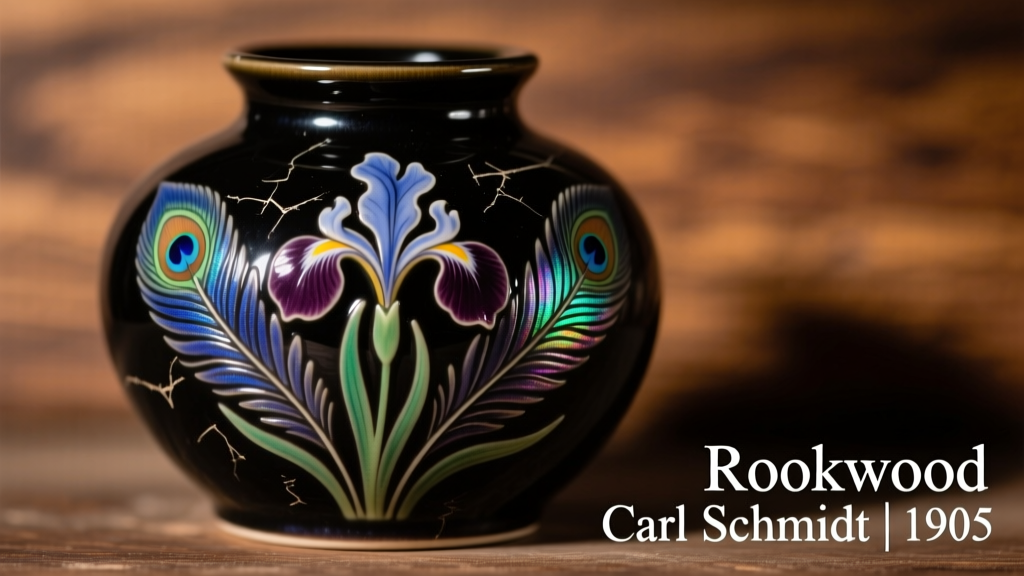
Rookwood Pottery Black Iris Glaze Vase with Peacock Feathers: A Carl Schmidt Masterpiece, Circa 1928–1930
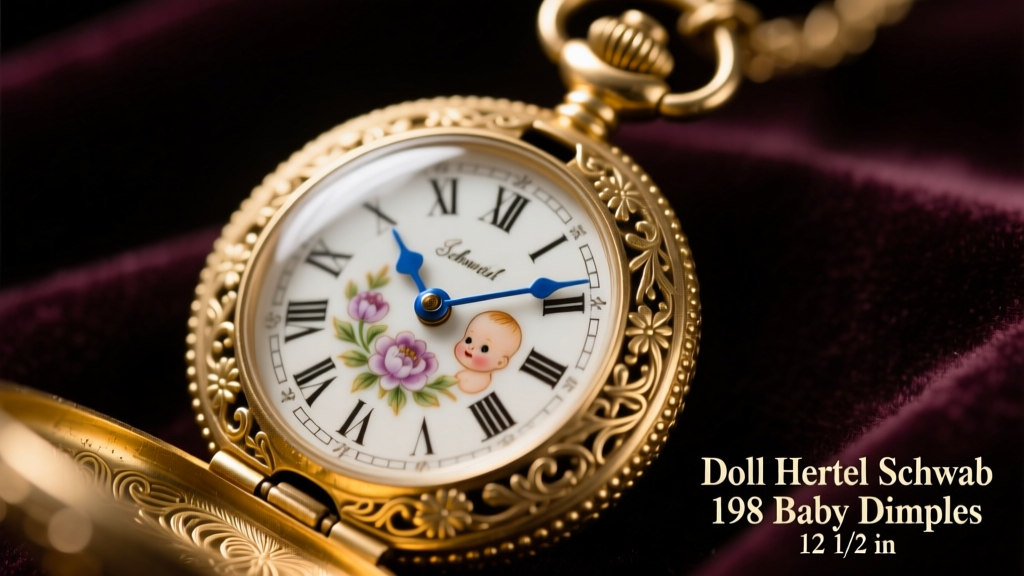
Doll Hertel Schwab Model 198 'Baby Dimples' — A Collector’s Guide to the 12½-Inch Porcelain Doll with Original Costume and Markings

Four-Panel Chinese Lacquer Screen with Hard-Stone Figural Inlays: Provenance, Craftsmanship, and Market Significance
Grumpy Knickerbocker Doll (1937–1939): The Rarest Disneyana Figure from Walt’s First Licensed Toy Line
Poster Auctions International Inc: A Legacy of Precision, Provenance, and Vintage Horology
Sascha Brastoff Tray: White Glaze, Hand-Painted Floral Motif, Signed 'Matt Adams' — A Mid-Century Modern Collector’s Object
Donald Chadwick’s Foam-Filled Plastic Base Upholstered Chair Pair: Design Legacy, Material Innovation, and Market Significance
The Homer Laughlin Sugar Tulip in Basket: A Mid-Century American Icon in Porcelain and Pattern