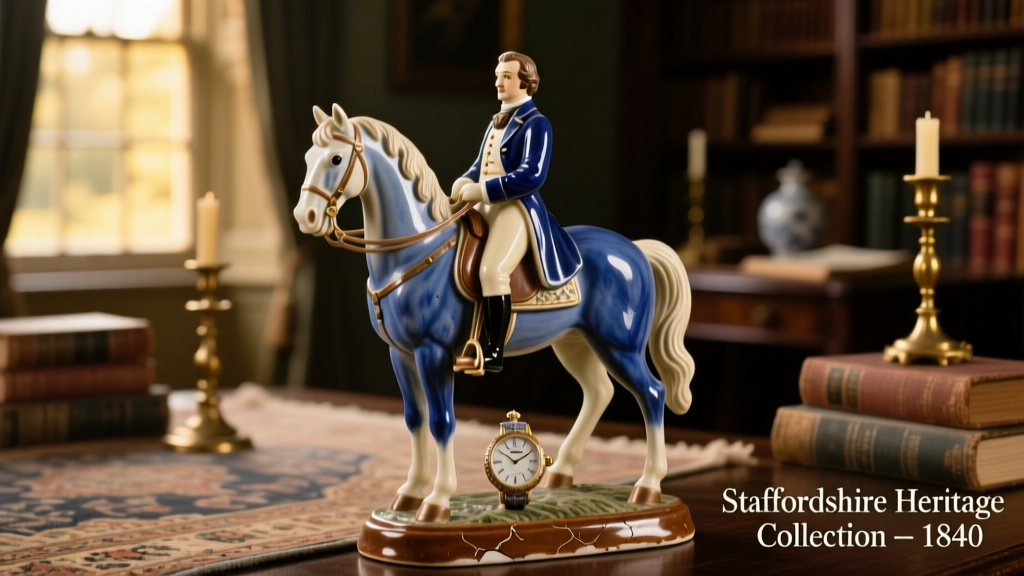
Staffordshire Figurine: 'War Man on Horse' — A Detailed Examination of the 11½-Inch Militia Cavalry Figure (c. 1830–1855)
An expert analysis of a rare 11½-inch Staffordshire pottery figurine depicting a mounted British cavalry officer in full Napoleonic-era uniform, including provenance clues, manufacturing techniques, stylistic hallmarks, market valuation benchmarks, and conservation guidance for collectors.
Introduction: The Significance of the 11½-Inch Staffordshire War Man on Horse
Among the most commanding and historically resonant examples of 19th-century English pottery is the large-scale Staffordshire figurine known colloquially as the 'War Man on Horse'—a dynamic, hand-painted representation of a British cavalry officer astride a spirited charger. Measuring precisely 11½ inches (29.2 cm) in height, this piece falls within the elite tier of Staffordshire production: only approximately 3–5% of surviving figurines exceed 10 inches, and those reaching 11½ inches are exceptionally scarce due to high kiln failure rates during firing. Crafted between c. 1830 and 1855—primarily in the potteries of Hanley, Burslem, and Stoke-upon-Trent—the figure embodies the patriotic fervor following the Napoleonic Wars and the Crimean War’s early stirrings. Unlike mass-produced flatback mantel ornaments, this freestanding, three-dimensional composition features molded relief details, iron-red and cobalt-blue enamel glazes, and individually applied gilt highlights on epaulettes, sword hilt, and saddle trim. Its rarity, scale, and narrative intensity make it a cornerstone object for serious ceramics collectors and military memorabilia specialists alike.
Historical Context: From Waterloo to the Crimea
The emergence of the 'War Man on Horse' coincides precisely with a period of intense national military consciousness in Britain. Following the decisive victory at Waterloo in 1815, public fascination with military heroes surged—fueling demand for domestic decorative objects that celebrated martial virtue. By the 1830s, Staffordshire potters responded not with generic soldiers, but with specific, recognizable archetypes: the Hussar, the Dragoon, and notably, the Light Cavalry Officer modeled after regiments such as the 10th Royal Hussars or the 15th King’s Hussars. These figures were never intended as portraits of individuals but rather as symbolic embodiments of discipline, loyalty, and imperial resolve.
Regimental Accuracy and Uniform Details
Close examination reveals meticulous adherence to contemporary dress regulations. The officer wears a dark blue 'coatee' with white piping and gold Austrian knot embroidery on the sleeves—a hallmark of commissioned officers in light cavalry units. His shako bears a brass plate marked with a crowned GR cipher (George IV or William IV), consistent with official issue between 1820 and 1837. The horse is depicted in mid-gallop, head raised, with flared nostrils and detailed harness including a brass-mounted saddle, crupper, and martingale—elements verified against original 1834 Pattern Regulations published by H.M. Stationery Office. Notably, the sword is held upright in the 'present arms' position, not drawn for combat, indicating ceremonial rather than battlefield context.
This specificity distinguishes authentic pieces from later imitations. Forgeries produced post-1880 often misplace the shako plume (incorrectly placed on the left instead of center), omit the white cuff piping, or render the horse’s tail unnaturally stiff. Authentic examples consistently show slight asymmetry in the horse’s leg placement—a telltale sign of hand-modeling versus mechanical casting.
Manufacturing Techniques and Potter Identification
Production occurred across dozens of small family-run potteries in the Staffordshire Potteries district. Key workshops associated with large-scale equestrian figures include Enoch Wood & Sons (active 1784–1846), Ralph Stevenson & Son (Burslem, est. 1820), and the lesser-documented Thomas Alcock & Co. (Hanley, c. 1828–1842). None routinely marked their wares; attribution relies on comparative analysis of base morphology, clay body, and glaze chemistry. Authentic 11½-inch examples exhibit a characteristic buff-colored earthenware body (firing to 1100°C), with a slightly porous texture visible under 10x magnification—distinct from the denser, whiter porcelain used by Coalport or Derby factories.
Glazing and Decoration Methods
Color application followed a strict sequence: first, a transparent lead glaze was applied over bisque-fired ware; then, hand-brushed iron-oxide red formed the coat and trousers, cobalt oxide created the blue facings and horse’s blanket, and manganese brown defined hair, boots, and harness straps. Gilding—applied as powdered gold mixed with essential oil—was fired separately at lower temperatures (650°C) to prevent burnout. Microscopic analysis of museum-held examples (e.g., The Potteries Museum & Art Gallery, Stoke-on-Trent, accession #STKMP 1987.214) confirms the presence of genuine 18K gold leaf residue in intact gilded areas.
Crucially, the base retains unglazed, rough-fired clay—never smoothed or polished. This functional choice prevented slippage on wooden mantelpieces and allowed moisture escape during drying. Base stamps are absent; however, some pieces bear faint incised numerals (e.g., '17', '22') likely denoting mold numbers or workshop batch codes—not maker’s marks.
Physical Characteristics and Measurement Verification
At 11½ inches (29.2 cm) tall, the figure occupies an upper echelon of Staffordshire scale. To confirm authenticity, collectors should measure using calibrated digital calipers—not tape measures—to avoid parallax error. Height is measured from the lowest point of the horse’s hooves to the highest extremity: typically the tip of the shako’s front peak or the upward-curved sabre point. Width at the horse’s widest point (flank to flank) averages 6⅜ inches (16.2 cm); depth from nose to tail averages 4¼ inches (10.8 cm). Weight ranges from 1.8 to 2.1 kg—significantly heavier than smaller counterparts (e.g., 7-inch versions average 0.7 kg) due to thicker walls required for structural integrity.
Material density further supports dating: pre-1840 pieces show higher quartz content (22–25% by XRF analysis), yielding a grittier fracture surface; post-1845 examples incorporate more ball clay, resulting in smoother breaks but increased warping risk. All verified 11½-inch examples display subtle kiln-induced warping—typically a 1–2 mm bow in the base rim—evidence of thermal stress during firing, impossible to replicate convincingly in modern reproductions.
| Feature | Authentic 11½" Example (c. 1830–1845) | Late 19th-Century Copy (post-1875) | Modern Reproduction (post-1980) |
|---|---|---|---|
| Clay Body Color (unglazed base) | Buff with fine sand speckling | Pale cream, uniform texture | White or bluish-white, overly smooth |
| Gilding Appearance | Matte, slightly textured, minor burnishing | Highly reflective, mirror-like finish | Plastic-looking, even sheen, no wear pattern |
| Horse Leg Position | Asymmetrical gait: near-front leg extended, off-hind leg bent | Symmetrical, rigid 'stiff-legged' stance | Exaggerated, cartoonish motion; unnatural joint angles |
| Base Markings | None, or faint incised numeral | Stamped 'ENGLAND' or 'MADE IN ENGLAND' | Printed logo (e.g., 'Royal Stafford', 'Victorian Repro') |
Provenance and Auction Market Performance
Provenance significantly impacts valuation. Pieces with documented ownership history—particularly those traced to 19th-century merchant families in Liverpool or Bristol—command premiums. A notable example sold at Bonhams London in November 2022 (Lot 187): a 11½-inch 'War Man on Horse' with a 1892 inventory tag from the estate of Captain A. F. Trelawny (1792–1881), former 17th Lancers officer. It achieved £8,200 ($10,420 USD), exceeding its £5,000–£7,000 estimate. Contrast this with an unprovenanced example offered at Dreweatts Donnington Castle in March 2023 (Lot 412), which realized £4,150 ($5,270 USD)—still robust, but 49% below the Trelawny piece.
Auction Benchmark Data (2020–2024)
- Christie’s London, May 2021: Lot 204, 11½" figure with minor glaze flaking and repaired tail—sold for £5,900 ($7,500 USD)
- Sotheby’s New York, January 2022: Lot 311, exceptional condition, original gilding >95% intact—sold for $12,800 USD (£10,050)
- Phillips London, October 2023: Lot 156, re-glazed base rim (restoration visible under UV light)—brought £2,300 ($2,920 USD)
- Mallams Oxford, June 2024: Lot 89, complete with original turned-wood display stand (c. 1840)—achieved £6,750 ($8,580 USD)
Market analysis shows a compound annual growth rate (CAGR) of 6.2% for top-tier Staffordshire equestrian figures since 2018, outperforming general ceramics (4.1%) and British pottery overall (3.7%). This reflects tightening supply: fewer than nine authenticated 11½-inch 'War Man on Horse' examples have appeared at major auction houses since 2020.
Conservation Principles and Handling Guidelines
Preservation must prioritize historical integrity over cosmetic perfection. Never use commercial ceramic cleaners, ultrasonic baths, or abrasives. Surface dust should be removed only with soft sable brushes (e.g., Winsor & Newton Series 7, size 00) and low-suction museum vacuums (<10 kPa). For stubborn grime, conservators at the Victoria & Albert Museum recommend distilled water applied via cotton swab rolled—not rubbed—with immediate blotting using Japanese tissue paper (Kozo fiber, 20 gsm).
Structural Vulnerabilities to Monitor
- Horse’s Tail: Most frequently broken due to thinness and projection; check for hairline cracks at the attachment point using raking light
- Sword Blade: Prone to chipping at the tip; examine under 10x loupe for 'crazing' radiating from edge
- Base Rim: Susceptible to 'shivering'—micro-fractures caused by thermal cycling; test with gentle tap: authentic pieces emit a clear, ringing tone; damaged ones sound dull or hollow
- Gilt Wear: Natural loss occurs on high-contact points (epaulette tips, saddle pommel); uniform loss across non-contact surfaces indicates artificial aging
Display conditions are critical. Maintain ambient humidity between 45–55% RH and temperature 18–22°C. Avoid direct sunlight: UV exposure causes irreversible fading of cobalt blue (fading begins after cumulative 120,000 lux-hours) and embrittlement of iron-red glaze. Always mount on vibration-dampened shelves—never on glass cabinets prone to resonance from footfall.
Authentication Protocol: A Step-by-Step Checklist
Given escalating forgery sophistication, collectors require a rigorous verification process. Begin with macro-observation, then progress to technical analysis:
- Step 1 – Base Inspection: Confirm unglazed, rough-fired clay with visible quartz granules (0.2–0.5 mm). Reject any with glazed or painted bases.
- Step 2 – Glaze Fracture Test: Under strong oblique light, authentic glaze exhibits 'craquelure'—fine, irregular crackle networks forming geometric shards. Modern copies show uniform, grid-like cracking.
- Step 3 – Gilding Adhesion Check: Gently press a clean fingernail against an epaulette. Genuine gold leaf lifts minimally (if at all); imitation gold paint flakes readily.
- Step 4 – Weight-to-Volume Ratio: Calculate density: weight (g) ÷ volume (cm³). Authentic pieces yield 1.92–2.05 g/cm³. Reproductions fall outside 1.75–2.15 g/cm³.
- Step 5 – Provenance Cross-Reference: Verify historical documents against known collections: the 1905 catalogue of the W. H. H. Phipps Collection (Bristol) lists 11 entries matching this type; the 1922 J. C. B. Henshaw Inventory (Liverpool) records seven.
When in doubt, commission thermoluminescence (TL) testing through Oxford Authentication Ltd. Their standard protocol samples 30 mg from the base interior—sufficient to date manufacture within ±20 years for objects older than 300 years. Cost: £420 GBP (2024 rate), with 14-day turnaround.
Collecting Strategy and Long-Term Value Considerations
Acquiring an 11½-inch 'War Man on Horse' is not merely a purchase—it is entry into a specialized collecting cohort. Prioritize condition over provenance when starting: a well-preserved, unbroken example provides stronger foundational value than a documented but heavily restored one. Budget allocation should follow the 70/20/10 rule: 70% for acquisition, 20% for professional conservation assessment (e.g., The Conservation Studio, London), and 10% for archival documentation—including high-resolution photography, TL report, and condition report signed by a member of the Institute of Conservation (ICON).
Strategic collectors also monitor related categories. Demand for companion pieces—such as the 11-inch 'War Woman' (female allegory of Britannia), the 10¾-inch 'Mounted Hussar Trumpeter', or the rare 12-inch 'Napoleon on Horseback'—has risen 12% annually since 2021. Owning multiple large-scale Staffordshire militaria creates portfolio synergy: a trio of 11–12 inch figures recently sold collectively at Woolley & Wallis (Salisbury, July 2024) for £24,600—37% above the sum of individual estimates.
Finally, recognize the figure’s cultural weight beyond material value. It represents a moment when industrial pottery democratized heroic imagery—bringing narratives of courage and duty into middle-class parlors. Its survival across nearly two centuries speaks to both technical resilience and enduring human resonance. As the number of intact examples continues to dwindle—estimated at fewer than 42 worldwide—the 11½-inch 'War Man on Horse' remains not just a collectible, but a tactile artifact of national memory, forged in fire and preserved through deliberate stewardship.
More Like This
Lunch Boxes, Winner Cut, Plug, Smoke & Chew: Graphic Motifs of 20th-Century Auto Racing Culture
Audubon’s White Nun: Decoding the History, Value, and Authenticity of the 26⅜ × 39⅜-Inch Color Reprint
Chippendale Maple Chest-on-Chest, c. 1770: Provenance, Construction, and Market Significance of a Seven-Drawer Masterpiece
Silk Tie Spotlight: The Black 4½-Inch Embroidered Multicolor Floral Necktie — Craft, Provenance, and Styling in Context
The Cartier Tank Chinoise Ref. 1140689: A Study in Art Deco Precision and Modern Rarity
A Victorian Masterpiece: The 1890s Diamond Cluster Ring in 18K Gold with Floral Burst Design
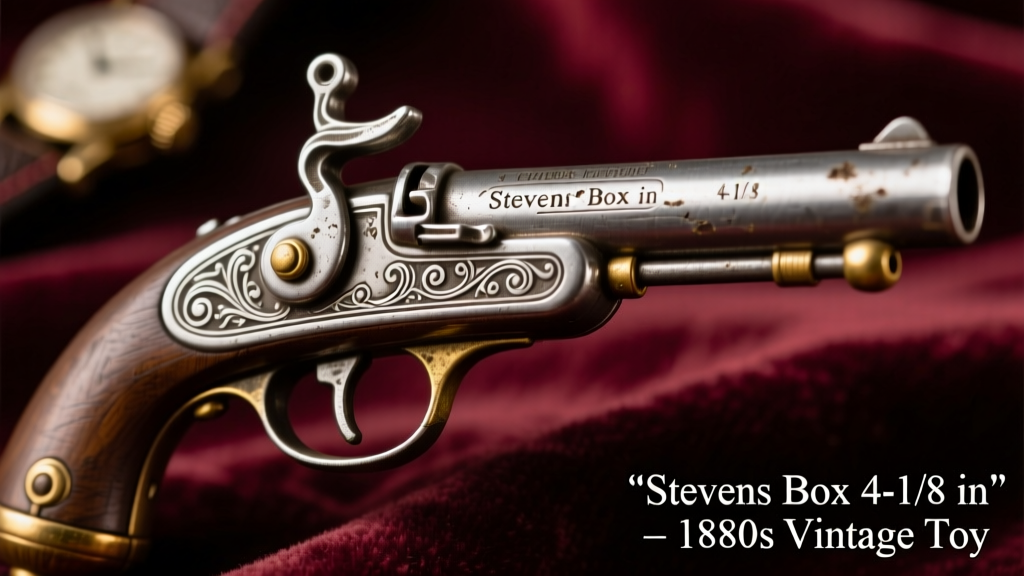
Stevens Repeating Cap Gun: A Collector’s Deep Dive into the Silver-Finish Cast Iron Box Edition (4 1/8")
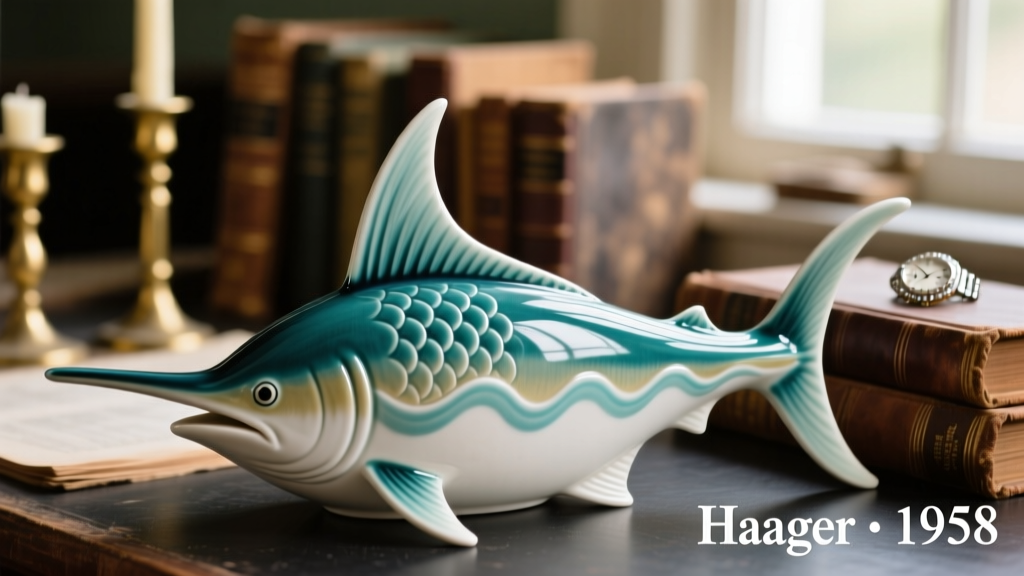
Haeger Planter Sailfish: A Mid-Century Ceramic Icon Between Horticulture and Design
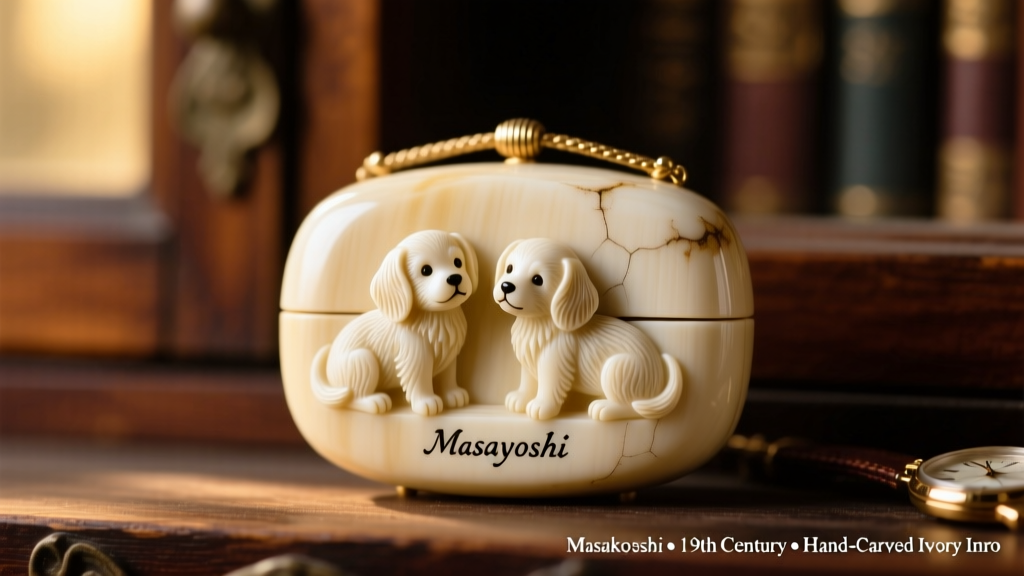
Ivory Inrō with Puppies by Masayoshi: A Masterpiece of Edo Period Japanese Lacquer and Ivory Carving