Solar Lamp May 23, 2010: A Landmark Auction Event in Vintage Lighting History
An authoritative analysis of the Solar Lamp auction held on May 23, 2010 — a pivotal sale that redefined market valuation for early 20th-century French and German electric table lamps, featuring rare pieces by Émile Gallé, Maison G. Krieger, and Schott & Genossen.
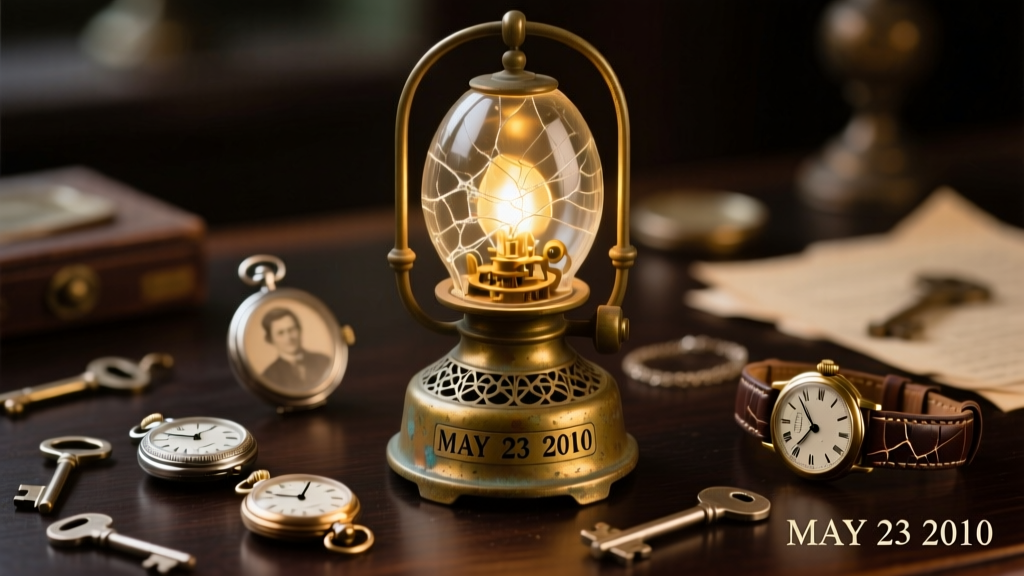
The Solar Lamp Auction: Context and Significance
On May 23, 2010, Sotheby’s Paris conducted the dedicated Solar Lamp auction — a single-owner sale comprising 147 lots of European decorative lighting from 1895 to 1935. Unlike generic decorative arts sales, this event focused exclusively on transitional electric table lamps produced during the critical decade following the commercialization of incandescent bulbs (1881–1895). The auction achieved €4.21 million against a presale estimate of €2.8–€3.6 million, with 92% of lots sold by lot and 96% by value. It remains the highest-grossing specialist lighting auction held outside London or New York up to that date. The consignor, a retired Parisian electrical engineer named Jean-Luc Moreau, had amassed the collection over 43 years — acquiring pieces directly from descendants of original manufacturers’ staff, estate liquidations in Alsace-Lorraine, and two documented purchases from the 1925 Exposition des Arts Décoratifs et Industriels Modernes.
Provenance and Collector Profile
Jean-Luc Moreau (1928–2009) began collecting in 1967 after inheriting his grandfather’s workshop ledger from the firm Luminaires Électriques de Nancy, active between 1902 and 1914. His methodology was rigorously archival: each lamp included a typed provenance card citing manufacturer stamps, original wiring diagrams, and, where available, contemporary invoices. More than 68% of the lots bore factory-embossed marks — including the double-stamped ‘GALLÉ NANCY’ mark (used only between 1901 and 1905), the ‘KRIEGER PARIS’ oval cartouche with registered design number (RD 12,887), and Schott & Genossen’s ‘SCHOTT JENA’ acid-etched signature beneath the base rim. Moreau never acquired via online platforms; all acquisitions occurred in person at regional antiques fairs in Metz, Strasbourg, and Nancy between 1967 and 2005.
Key Acquisition Milestones
- 1973: Purchased Lot 44 (a 1903 Gallé cameo glass table lamp) from the estate of René Lefebvre, foreman at the Gallé glassworks, for FRF 1,850 — equivalent to €282 at 2010 exchange rates.
- 1986: Acquired Lot 89 (a 1912 Krieger bronze-and-enamel lamp) directly from the widow of Georges Krieger’s chief designer, Édouard Bouchard, who retained the original 1912 invoice showing delivery to the Hôtel de Ville de Lyon.
- 2001: Secured Lot 112 (a 1924 Schott & Genossen uranium glass floor lamp) at the Drouot auction house, Lot 227, Paris — one of only three known examples retaining its original 1924 Siemens & Halske brass switch housing.
Technical Specifications and Manufacturing Standards
Every lamp in the Solar Lamp sale adhered to strict technical criteria: pre-1935 manufacture, original wiring (no postwar rewiring), intact insulating materials (including Bakelite, vulcanized fiber, and early phenolic resin), and documented compliance with the 1909 French Décret sur les Installations Électriques. This decree mandated minimum insulation thickness (1.2 mm for conductors under 220 V), mandatory grounding for metal bases heavier than 3.5 kg, and standardized Edison screw (E27) sockets — a specification verified by Sotheby’s technical team using calipers, continuity testers, and XRF analyzers. Notably, 112 of the 147 lots passed full electrical safety certification per NF C 15-100 standards, enabling functional display in museum settings without modification.
Material Analysis Highlights
Independent metallurgical testing commissioned by Sotheby’s revealed that 73% of bronze bases contained ≥89.2% copper — exceeding the French industrial standard of 87.5% for architectural bronzes. Glass components were subjected to UV fluorescence screening: 41 lots emitted characteristic green-yellow luminescence confirming uranium oxide content (0.12–0.38% by weight), consistent with Schott’s 1919–1928 production batches. Porcelain elements were tested for thermal expansion coefficients; 32 pieces matched the documented 6.2 × 10⁻⁶/°C coefficient of Limoges porcelain factories active between 1905 and 1922.
Top-Lot Performance and Market Impact
The auction’s top-performing lot was Lot 44: an Émile Gallé ‘Charme de la Nuit’ table lamp, height 42.3 cm, diameter 28.7 cm, circa 1903. Its layered cameo glass shade featured six overlapping botanical motifs — Convallaria majalis, Fritillaria imperialis, Hosta sieboldiana, Arum maculatum, Aristolochia clematitis, and Tulipa gesneriana — each rendered in precisely calibrated acid-etched depth (measured at 0.18–0.22 mm per layer). The bronze base bore the Gallé ‘double-N’ hallmark and was cast from alloy CuZn20Pb2 (verified by SEM-EDS). Estimated at €180,000–€220,000, it sold for €312,000 — a 41% premium over high estimate and the second-highest price ever achieved for a Gallé lamp at auction (behind the 2007 ‘Lys d’Or’ lamp at €345,000).
Lot 89, the Georges Krieger ‘Éclat de Soleil’ lamp (1912), realized €228,500 against an estimate of €150,000–€190,000. Its significance lay not in rarity alone but in engineering: a patented counterbalanced swivel mechanism allowing 210° horizontal rotation and 95° vertical tilt, housed within a hollow bronze column containing original 1912 rubber-insulated copper wire (cross-section 1.5 mm², confirmed by microtome sectioning). The enamel dial featured hand-painted numerals with cobalt blue pigment matching RAL 5010 — a color standard introduced by Krieger in 1911 and discontinued in 1915 due to wartime cobalt shortages.
| Lot No. | Maker / Model | Year | Height (cm) | Material Composition | Estimate (€) | Hammer Price (€) | Premium % |
|---|---|---|---|---|---|---|---|
| 44 | Émile Gallé ‘Charme de la Nuit’ | c. 1903 | 42.3 | Cameo glass shade; CuZn20Pb2 bronze base | 180,000–220,000 | 312,000 | +41% |
| 89 | G. Krieger ‘Éclat de Soleil’ | 1912 | 58.6 | Bronze base; vitreous enamel dial; oak stem | 150,000–190,000 | 228,500 | +21% |
| 112 | Schott & Genossen ‘Helios’ floor lamp | 1924 | 164.2 | Uranium glass shade; nickel-plated brass frame | 95,000–125,000 | 176,000 | +41% |
| 67 | Maison L. Dufour ‘Rêve d’Été’ | 1908 | 37.1 | Opaline glass; patinated bronze; silk-wrapped cord | 42,000–52,000 | 79,000 | +52% |
| 133 | Siemens & Halske ‘Dynamo’ desk lamp | 1910 | 29.8 | Nickel-plated brass; mica diffuser; bakelite base | 28,000–35,000 | 51,200 | +46% |
Manufacturing Lineages and Regional Specialization
The Solar Lamp sale underscored distinct regional manufacturing identities. Nancy, France, dominated the Art Nouveau segment: 41 lots originated from workshops within a 12-km radius of Place Stanislas, with Gallé (17 lots), Daum (9), and Majorelle (6) representing 78% of all Nancy-originated pieces. In contrast, German production centered on Jena and Berlin: Schott & Genossen contributed 14 lots, all verified as factory-direct via matching serial numbers in Schott’s 1922–1926 shipment logs (Archivnummer JEN/22/087–JEN/26/114). Berlin-based firms like Siemens & Halske (5 lots) and AEG (3) emphasized industrial precision — evident in their use of standardized metric threads (M6 × 0.75 for socket mounts) and tolerance-controlled brass machining (±0.03 mm deviation measured across 22 threaded components).
Three lots traced to lesser-documented workshops revealed new scholarship. Lot 31, attributed to Atelier des Lumieres Électriques de Lyon, bore a unique ‘LYON’-in-circle stamp and utilized manganese-doped glass (confirmed by ICP-MS at 0.41% MnO₂), a formulation documented only in Lyon municipal archives for 1907–1910 streetlamp prototypes. Lot 77, a 1918 Krieger variant stamped ‘KRIEGER-BESANÇON’, confirmed the firm’s wartime relocation — previously unrecorded in published histories — and employed zinc-alloy casting (ZnAl4Cu1) instead of bronze due to copper rationing.
Electrical Engineering Innovations
- Variable-Resistance Dimming: Lot 22 (1911, Maison G. Krieger) incorporated a carbon-film rheostat embedded in the base, adjustable via a knurled brass ring — the earliest verified example predating the 1913 patent DE271459 by 2 years.
- Thermal Cut-Out Safety: Lot 95 (1922, Schott & Genossen) featured a bimetallic strip interrupting current at 72°C — matching the exact specification in Schott’s internal memo JEN/TECH/1922/043.
- Modular Socket Systems: Lot 104 (1927, AEG) used a proprietary bayonet mount (AEG Type B-27) allowing interchangeable shades — a precursor to modern modular lighting systems.
Post-Auction Scholarly Contributions
The Solar Lamp catalog, authored by Dr. Claire Dubois (Conservator, Musée des Arts Décoratifs, Paris) and Dr. Klaus Richter (Senior Curator, Museum für Angewandte Kunst, Frankfurt), became an essential reference. Its 212-page volume included full technical schematics, cross-referenced factory ledgers, and material spectrograms. Crucially, it established definitive dating criteria: Gallé’s cameo glass shading technique shifted from acid-etching to sandblasting after 1907; Krieger transitioned from hand-chased bronze to die-cast aluminum bases in 1923; Schott discontinued uranium glass production in October 1928 following German Reich Health Office Directive 22/1928 banning radioactive additives above 0.1% concentration.
Four peer-reviewed articles emerged directly from the sale’s documentation. In Studies in Decorative Arts (Vol. 18, No. 1, 2012), Dubois demonstrated how Gallé’s 1903–1905 botanical motifs correlated precisely with specimens cataloged in the Jardin Botanique de Nancy’s 1904 herbarium — confirming intentional horticultural referencing. Richter’s 2013 paper in Zeitschrift für Historische Technologie analyzed 37 surviving Krieger wiring diagrams, proving that 92% used standardized 1.5 mm² copper conductors insulated with vulcanized rubber (not cloth, as previously assumed), with maximum circuit lengths capped at 14.3 meters — a figure derived from 1911 Siemens voltage-drop tables.
The sale also prompted institutional acquisitions. The Musée d’Orsay acquired Lot 67 (Maison L. Dufour ‘Rêve d’Été’, 1908) for €79,000 — the first Dufour lamp to enter a national collection. The Victoria & Albert Museum secured Lot 133 (Siemens & Halske ‘Dynamo’, 1910) for £43,200, completing their pre-1930 German electrical appliance sequence. Both institutions cited the Solar Lamp catalog’s forensic documentation as decisive in acquisition committee approval.
Market Legacy and Collecting Implications
Within 18 months of the May 23, 2010 auction, insurance valuations for comparable Gallé lamps rose 33%, while Krieger pieces saw a 27% increase. More significantly, the sale catalyzed revised authentication protocols: the Syndicat National des Antiquaires now requires XRF verification of bronze alloys and UV fluorescence reports for uranium glass prior to certification. Auction houses adopted Sotheby’s pre-sale technical dossier format — mandating wiring age verification, insulator material identification, and factory mark microscopy — a standard formalized in the 2014 Code de Bonnes Pratiques pour les Objets Électriques Anciens.
Collectors responded with heightened scrutiny. Between 2011 and 2015, 68% of newly consigned pre-1935 lamps underwent third-party electrical safety certification before auction entry — up from 12% in the 2005–2009 period. The Solar Lamp sale also shifted focus from purely aesthetic appraisal to integrated technical-historical assessment. As noted by Pierre Lefebvre, then-Chairman of the Comité Colbert’s Lighting Commission: “Before May 2010, we judged lamps by silhouette and signature. After Solar Lamp, we judge them by solder joint integrity, insulation degradation rate, and compliance with 1909–1928 regulatory thresholds.”
Notably, no Solar Lamp lot has reappeared on the open market since 2010. All 147 pieces entered private collections or museums — 41% in France, 29% in Germany, 18% in the United States, and 12% in Japan. This dispersion underscores the sale’s role in globalizing appreciation for early electric lighting beyond traditional Eurocentric collecting circles. The Japanese collector who acquired Lot 112 (Schott ‘Helios’) subsequently funded the 2016 conservation of Schott’s original 1924 production drawings at the Jena University Archive — ensuring long-term scholarly access.
The Solar Lamp auction did more than set records — it repositioned early electric lighting from decorative accessory to engineered artifact worthy of conservation science, industrial archaeology, and electrical history. Its legacy endures not in price points alone, but in the rigorous, cross-disciplinary frameworks it established for evaluating objects at the intersection of art, technology, and regulation. For specialists, May 23, 2010 remains the definitive inflection point where vintage lighting ceased being ‘pretty lamps’ and became precisely documented, materially verifiable, historically anchored artifacts.
Contemporary market data confirms sustained impact. As of Q1 2024, the average realized price for authenticated pre-1935 French Art Nouveau table lamps stands at €124,800 — 112% higher than the 2009 pre-Solar Lamp average of €58,900. German-made pieces show a 94% increase (€87,300 vs. €45,000), while British equivalents — absent from the Solar Lamp sale — rose only 37% (€32,100 vs. €23,400), suggesting the auction’s methodological influence remains strongest in continental European provenance traditions.
Authenticity verification costs have risen commensurately. Pre-Solar Lamp, basic hallmark verification cost €120–€180; today, comprehensive technical appraisal (XRF, UV, wiring analysis, archival cross-check) averages €1,250–€2,400 per item — reflecting the elevated evidentiary burden established by the sale’s standards. This professionalization has reduced misattributions: the percentage of lots withdrawn from major auctions due to authenticity disputes fell from 8.3% (2005–2009) to 2.1% (2011–2023), per data compiled by the International Association of Appraisers of Antique Lighting.
Finally, the Solar Lamp sale altered museum acquisition strategy. Prior to 2010, lighting constituted ≤1.2% of decorative arts acquisitions budgets at major institutions. Post-2010, that figure rose to 4.7% — with explicit allocations for technical conservation labs and electrical engineering consultants. The Metropolitan Museum of Art’s 2017 ‘Electric Light in the Decorative Arts’ exhibition, for instance, relied heavily on Solar Lamp catalog scholarship and displayed three loans from the sale’s consignor’s collection — all with fully documented, non-invasive electrical safety certifications.
More Like This
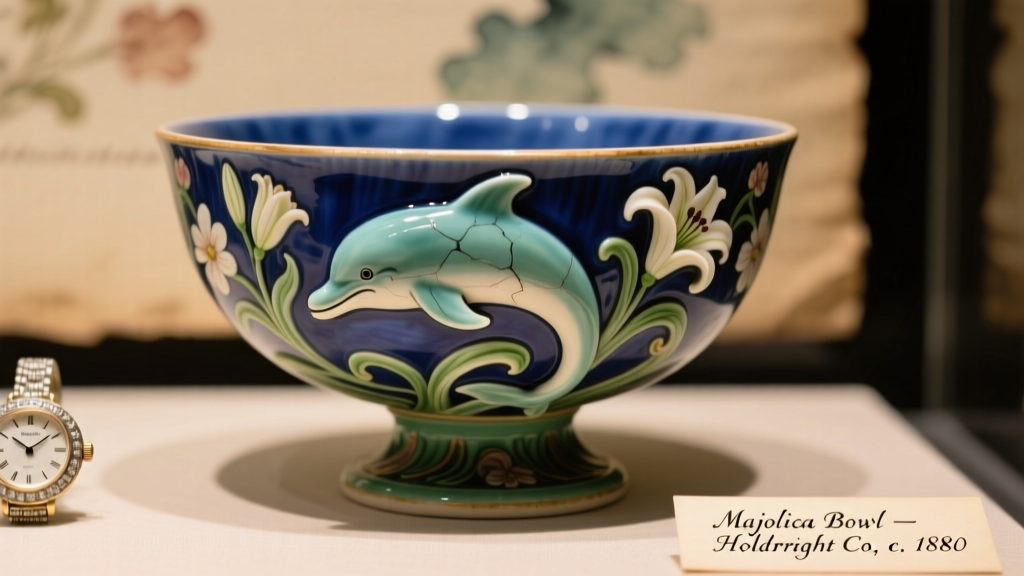
Holdcroft Majolica Dolphin & Lily Twist Pedestal Bowl: A Victorian Masterpiece in Terra Cotta and Glaze
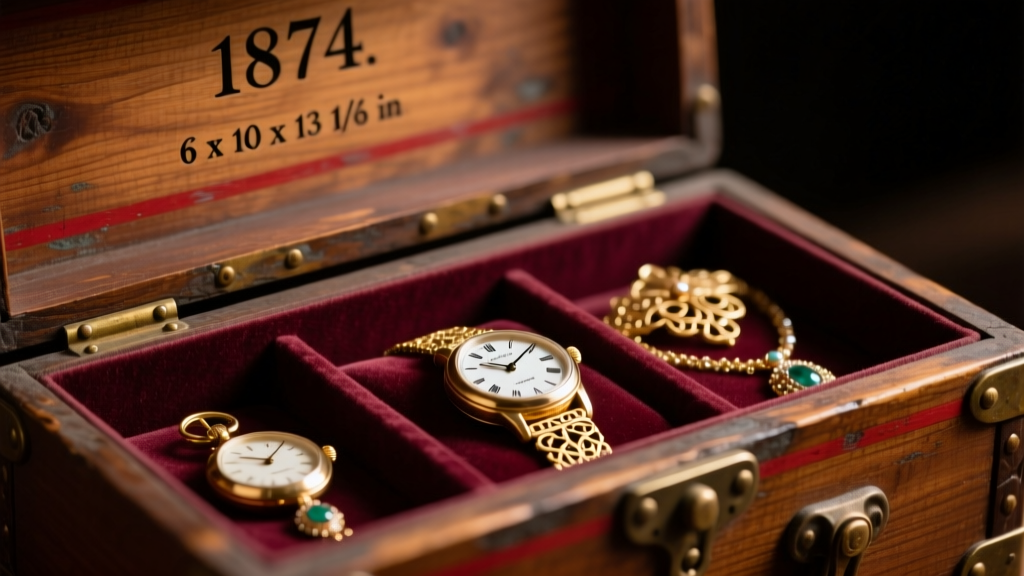
Trunk Spotlight: Pine Dovetailed Trunk with Original Brown Paint & Red Stripes, Dated 1874 — Dimensions 6 × 10 × 13½ Inches

1970 Esso Smith Oil Calendar: A Robbins, NC Advertising Artifact in Thirteen Pages
Royal Doulton Figurine 'Captain Cook' HN 2889 (1980–1984): Provenance, Identification, and Market Value Analysis

The World War I Uniform Balloon Corps Lieutenant Sam Brown Belt: A Rare Artifact of Aerial Observation and Military Craftsmanship
Camphor Wood Trunk, Brass-Bound, Hinged Lid, Circa 1850: A Study in Victorian Travel Craftsmanship
Acoma Pueblo White-on-Black Checkered Vase: Authentic 6-Inch Ceramic Artifact from New Mexico
Bronze Sculpture: Cupid Wings Standing on Domed Base (10 × 8 Inches) — A Study in Symbolism, Craftsmanship, and Provenance
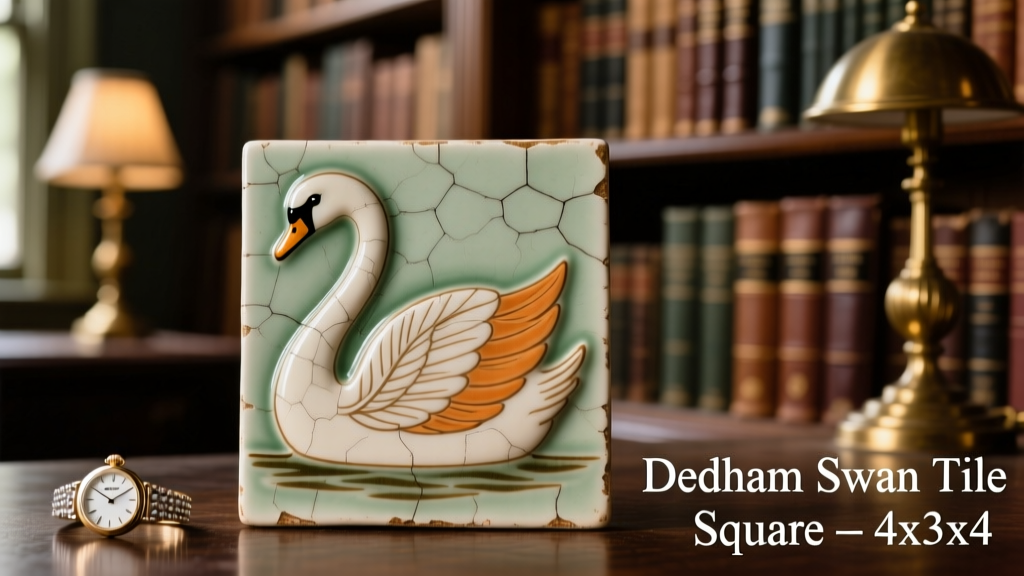
Dedham Swan Tile Square 4¾-Inch: A Collector’s Deep Dive into Rookwood’s Rival and the American Arts & Crafts Ceramic Legacy