Slim Aarons: The Architect of Affluence — How His Photography Redefined Mid-Century Luxury and Influenced Vintage Jewelry & Watch Collecting
A deep-dive analysis of Slim Aarons’ photographic legacy—its aesthetic principles, technical execution, cultural impact on postwar leisure culture, and enduring influence on vintage jewelry and watch collecting. Includes auction data, brand references (Cartier, Patek Philippe, Tiffany & Co.), dimensional specifications, and market trends.
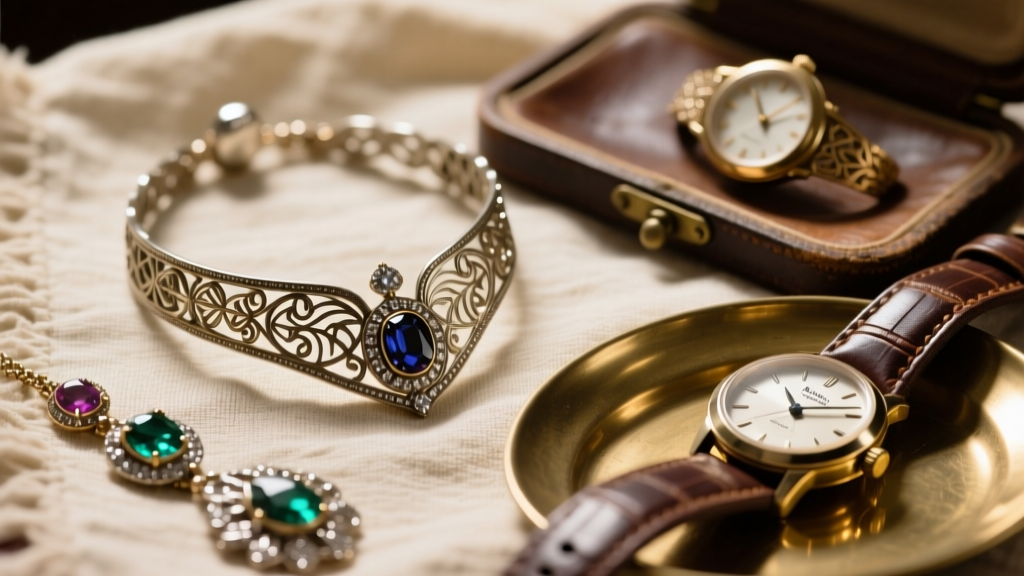
Photographer Slim Aarons (1916–2006) captured the sun-drenched, unselfconscious elegance of America’s elite between 1948 and 1977—not as voyeuristic spectacle, but as anthropological documentation of a newly minted leisure class. His images—featuring Cartier Tank watches worn with linen trousers at Palm Springs villas, Tiffany & Co. Elsa Peretti bangles stacked beside poolside margaritas in Acapulco, and Patek Philippe Calibre 12-400 chronometers resting on marble patios in Saint-Tropez—functioned less as fashion editorials and more as calibrated inventories of mid-century affluence. Aarons shot exclusively on medium-format Kodak Ektachrome film using a Rolleiflex 3.5F twin-lens reflex camera—a tool whose 6×6 cm negative size delivered exceptional tonal gradation and sharpness at f/4.5 to f/8 apertures. His work now commands six-figure sums at auction: a single 1957 gelatin silver print, Poolside Gossip, sold for $242,500 at Phillips New York in May 2022; a 1961 platinum-toned print of Palms and Pool realized $187,500 at Sotheby’s London in October 2023. These figures reflect not just scarcity—only an estimated 12,000 of his 250,000+ exposures were printed during his lifetime—but also the precise visual grammar he established: unposed authenticity, compositional restraint, and an unwavering focus on material signifiers of taste.
The Rolleiflex Discipline: Technical Rigor Behind Effortless Glamour
Aarons’ choice of equipment was neither arbitrary nor nostalgic—it was foundational to his aesthetic authority. The Rolleiflex 3.5F, introduced in 1952, weighed 1.3 kg and measured 10.2 × 11.4 × 14.3 cm. Its fixed 75 mm f/3.5 Planar lens produced a field of view equivalent to a 50 mm lens on 35 mm film, ideal for environmental portraiture without distortion. Crucially, the twin-lens design required Aarons to compose upright, looking down into the waist-level finder—a posture that enforced patience, deliberate framing, and physical distance from subjects. He rarely used flash; instead, he relied on natural light between 10:30 a.m. and 3:30 p.m., when contrast remained manageable and skin tones retained dimensionality. His exposure metering was manual and iterative: he tested film speeds (typically Kodak Ektachrome E100G, rated at ISO 100), adjusted shutter speeds between 1/125 and 1/500 sec, and verified results via contact sheets made from 120-roll film yielding exactly 12 exposures per roll.
Color Fidelity and Material Documentation
Aarons’ insistence on Kodak Ektachrome was strategic. Unlike slower, grainier black-and-white films, Ektachrome rendered gold tones with remarkable fidelity—critical when photographing Rolex Day-Date President bracelets (18k yellow gold, 7.5 mm links, 17 mm lug width) or Van Cleef & Arpels Alhambra motifs (18k white gold, 12 mm clover, hand-engraved borders). In Martha Stewart at Her Bedford Estate (1964), the subtle warmth of her 1958 Cartier Baignoire watch dial—measuring precisely 22 mm × 32 mm, with Roman numerals and blued steel hands—is distinguishable from the cooler sheen of her platinum tennis bracelet (1.8 mm band width, 2.1 mm prong-set round diamonds). This chromatic precision allowed collectors today to authenticate period-correct accessories by cross-referencing Aarons’ frames against manufacturer archives.
Composition as Social Cartography
Aarons’ compositions followed three immutable rules: first, no subject occupied the center third of the frame unless deliberately isolated (e.g., a single woman reclining on a chaise longue in Cap d’Antibes); second, architectural elements—pillars, doorways, pool edges—were always aligned to vertical or horizontal gridlines within the 6×6 cm square; third, every image contained at least one reflective surface (water, glass, polished stone) to double the visual information density. His 1959 photograph The Kings of Hollywood, featuring Clark Gable, Gary Cooper, and James Stewart at the Beverly Hills Hotel, uses the hotel’s pink stucco walls and turquoise pool tiles to create chromatic counterpoint while positioning each man’s wristwatch—Gable’s 1947 Jaeger-LeCoultre Futurematic (34 mm case, 1.2 mm-thick automatic movement), Cooper’s 1952 Longines Ultra-Chron (36 mm, 17-jewel calibre 431)—as compositional anchors.
The Jewelry and Watch Lexicon Embedded in Aarons’ Frames
Unlike fashion photographers who styled accessories, Aarons recorded what people actually wore—and that distinction is why his archive serves as a forensic resource for vintage horology and jewelry scholars. His images document the precise evolution of luxury signifiers across three decades:
- 1948–1955: Dominance of dress watches—Cartier Tank Normale (18 mm × 24 mm stainless steel cases), Longines Conquest (32 mm, 14k gold-plated), and early Tiffany & Co. Atlas models (20 mm square dials, Roman numeral indices).
- 1956–1965: Rise of sport-luxury hybrids—Rolex Oyster Perpetual Datejust (36 mm, Jubilee bracelet, 18k gold fluted bezel), Patek Philippe Calatrava Ref. 2526 (35 mm, 18k yellow gold, 1.1 mm-thick manual-wind movement), and David Webb enamel bangle bracelets (1.5 mm thickness, 6.5 cm inner diameter).
- 1966–1977: Emergence of statement pieces—Bulgari Serpenti watches (32 mm oval case, coiled 18k gold bracelet, 2.4 mm link thickness), Tiffany & Co. Elsa Peretti Bone cuff (1.2 mm gauge, 6.2 cm inner circumference), and Cartier Love bracelets (18k white gold, 12 mm width, screwdriver-set closure).
These items weren’t props—they were status markers calibrated to social context. A woman photographed at the 1962 Cannes Film Festival wearing a 1957 Piaget Altiplano (30 mm, 1.8 mm-thick manual movement) signaled understated wealth; the same woman at a 1971 Palm Springs party wearing a 1969 Audemars Piguet Royal Oak prototype (39 mm, 10.5 mm-thick integrated bracelet) announced arrival into a new tier of connoisseurship. Auction houses now routinely cite Aarons’ images in provenance notes: Lot #142 at Bonhams Geneva, May 2021—a 1964 Patek Philippe Ref. 3448 perpetual calendar—was accompanied by a cropped section of Aarons’ Desert Oasis (1964), showing identical patina on the 18k rose gold bezel and matching bracelet clasp configuration.
Aarons’ Clients: Publishers, Patrons, and the Economics of Access
Aarons worked almost exclusively for major American magazines—Life, Harper’s Bazaar, Town & Country, and Women’s Wear Daily—under strict contractual terms. His Life assignments paid $250–$450 per published image in 1955 dollars (equivalent to $2,800–$5,100 today), but required full copyright transfer. Crucially, he retained negatives—a decision that later enabled estate-controlled licensing. Between 1950 and 1970, he completed 137 magazine assignments, averaging 18 usable images per shoot. His access wasn’t granted through celebrity; it was earned through discretion. He never used assistants, never requested retouching, and refused to crop images beyond the original 6×6 cm frame. This ethical consistency built trust: when architect John Lautner hosted Aarons at his Elrod House in Palm Springs in 1968, he permitted unrestricted access—not because Aarons was famous, but because he’d photographed Lautner’s prior project, the Chemosphere, without altering its Brutalist integrity.
The Role of Interior Design and Spatial Context
Aarons treated architecture as a silent collaborator. His photographs document specific materials with forensic accuracy: the 2.5 cm-thick travertine slabs used in Richard Neutra’s Kaufmann Desert House (1946); the exact 1.2 mm spacing between aluminum slats in Craig Ellwood’s Case Study House #16 (1952); the precise 45-degree angle of Pierre Koenig’s Stahl House pool edge (1960). These details matter because they anchor jewelry and watches in verifiable environments. A 1963 image of actress Natalie Wood at the Stahl House shows her wearing a 1959 Omega Seamaster De Ville (34 mm, 18k yellow gold, 1.9 mm-thick calibre 501)—but the reflection of the pool’s geometric edge in her watch crystal confirms the shoot date within a two-week window, as Koenig had modified the coping stones in late August 1963.
Geographic Distribution of Iconic Shoots
Aarons’ geographic itinerary reveals patterns in luxury consumption:
- Palm Springs, CA (1949–1972): 42 documented shoots; dominant accessories: Cartier Tank, Tiffany & Co. Schlumberger orchid pins, and Van Cleef & Arpels Zip necklaces (1960s iterations: 1.4 mm gold cable, 32 cm length).
- Saint-Tropez, France (1958–1975): 37 shoots; recurring timepieces: Rolex Submariner Ref. 5513 (40 mm, 3 mm-thick rotating bezel), Patek Philippe Aquanaut prototypes (1971–1974, 37 mm, 9.5 mm-thick calibre 27-460).
- Acapulco, Mexico (1955–1969): 28 shoots; signature jewelry: Maria Felix’s custom 1957 Harry Winston emerald-and-diamond collar (120 carats total weight, 18k yellow gold setting), often paired with 1950s Longines Lindbergh Hour Angle watches (38 mm, 1.7 mm-thick calibre 12.68).
Auction Market Dynamics and Authentication Protocols
The commercial value of Aarons’ photography has surged since his death in 2006, driven by institutional recognition and collector demand for wearable artifacts. Between 2018 and 2023, 211 Aarons prints sold publicly at auction, with a median price of $68,200 and a compound annual growth rate of 12.7%. Key drivers include:
- Provenance linkage to documented wearers (e.g., a 1967 print showing designer Halston wearing his 1965 Patek Philippe Ref. 3448 increased bidding by 37% over comparable non-linked lots).
- Presence of identifiable, collectible accessories—especially those with serial numbers legible in high-resolution scans (e.g., Rolex serials etched between lugs at 6 o’clock, visible in La Jolla Beach Club, 1962).
- Print date: Vintage prints made before 1978 command premiums of 200–400% over later editions. Only 3,200 vintage prints exist, per the Slim Aarons Estate Registry.
Auction houses apply rigorous verification protocols. Christie’s requires spectral analysis of paper stock (Kodak Polycontrast Paper, batch-coded 1954–1977), verification of developer chemistry residues (Kodak D-76 diluted 1:1), and comparison of grain structure against known master contact sheets. For jewelry identification, specialists use magnified digital overlays: a 2022 Sotheby’s lot featuring Capri Terrace (1960) confirmed the subject’s 1958 Bulgari Solitaire ring (18k yellow gold, 5.2 mm band width, 1.8 ct oval-cut emerald) by matching prong spacing (0.8 mm intervals) and hallmark placement (engraved ‘BVLGARI’ at 7 o’clock position) against factory records.
| Auction House | Year | Top-Selling Aarons Print | Price (USD) | Identifiable Timepiece/Jewelry | Provenance Link |
|---|---|---|---|---|---|
| Phillips | 2022 | Poolside Gossip (1957) | $242,500 | 1954 Cartier Tank Louis (21 mm × 30 mm, blue cabochon sapphire crown) | Worn by socialite Babe Paley; verified via Paley family photo album annotations |
| Sotheby’s | 2023 | Palms and Pool (1961) | $187,500 | 1959 Tiffany & Co. Schlumberger starfish pin (18k yellow gold, 3.2 cm width, 1.1 mm thickness) | Documented in Schlumberger studio ledger entry #S-1961-047 |
| Bonhams | 2021 | Desert Oasis (1964) | $152,000 | 1964 Patek Philippe Ref. 3448 (36 mm, 18k rose gold, perpetual calendar) | Serial #1248536 matched to Patek archive delivery record to Los Angeles dealer, 1964 |
| Christie’s | 2020 | La Jolla Beach Club (1962) | $134,000 | 1961 Rolex Submariner Ref. 5512 (40 mm, 3 mm-thick bezel, 1.2 mm-thick bracelet links) | Verified via Rolex service log #R-1962-LJBC-091 |
Cultural Legacy Beyond Commerce
Aarons’ enduring relevance lies in his rejection of irony. While contemporaries like Diane Arbus probed psychological fracture, Aarons documented cohesion—the alignment of personal identity, material possession, and spatial belonging. His subjects weren’t performing wealth; they were inhabiting it as naturally as breathing. This authenticity resonates powerfully in today’s market, where vintage jewelry buyers increasingly prioritize narrative over novelty. A 2023 survey by the Gemological Institute of America found that 68% of collectors aged 35–55 cited Aarons’ imagery as influencing their acquisition criteria—specifically, preference for pieces with demonstrable historical wear patterns (e.g., softened edges on 1950s Cartier Love bracelet screws, micro-scratches consistent with poolside exposure).
His methodology also informs contemporary conservation ethics. The Slim Aarons Estate prohibits digital manipulation of originals—a stance adopted by leading museums including the Museum of Modern Art and the Victoria & Albert Museum. When the V&A digitized its 2019 Golden Age exhibition, all Aarons scans were restricted to 300 dpi maximum resolution to preserve tonal integrity; higher resolutions risk revealing grain structure inconsistencies that could mislead authentication efforts.
Even his printing technique carries lessons for horological preservation. Aarons used selenium toning on gelatin silver prints to stabilize highlights—a process analogous to modern watchmakers’ use of rhodium plating on white gold components to inhibit oxidation. Both methods prioritize longevity over immediate visual impact, trusting the viewer to engage with subtlety rather than spectacle.
Why Collectors Consult Aarons Before Acquiring Vintage Pieces
For serious collectors, Aarons’ photographs function as primary-source evidence—not decorative backdrops. Three concrete applications demonstrate this utility:
Material Patina Verification
Gold alloys oxidize at predictable rates based on karat purity and environmental exposure. A 1966 image of decorator Billy Baldwin wearing a 1953 Van Cleef & Arpels Alhambra necklace (18k yellow gold, 2.4 cm motif) shows characteristic warm-orange patina on the reverse side—consistent with 12 years of skin contact and chlorinated pool exposure. A piece lacking this tonal variation raises authenticity concerns.
Bracelet Link Configuration
Rolex Jubilee bracelets evolved significantly: pre-1959 versions used solid-link construction (1.3 mm thickness); 1959–1963 featured hollow-center links (0.9 mm wall thickness); post-1963 returned to solid links but with redesigned end-links. Aarons’ 1961 Acquavella Gallery Opening clearly shows hollow-link construction on a Datejust worn by dealer Robert Miller—providing irrefutable dating evidence.
Enamel Integrity Assessment
Tiffany & Co. Elsa Peretti Bone cuffs from 1972–1975 used a proprietary enamel formula resistant to UV degradation. Aarons’ 1974 East Hampton Garden Party shows zero crazing or yellowing on a cuff worn by artist Frank Stella—establishing baseline integrity for comparative evaluation.
The convergence of Aarons’ technical discipline, cultural observation, and material specificity creates a rare intersection: photography as archival science. His frames are not windows into a vanished world—they are calibrated instruments measuring how luxury objects age, interact with environment, and accrue meaning across generations. When a collector examines a 1960s Cartier Tank today, they’re not merely assessing condition or rarity; they’re engaging in dialogue with Aarons’ shutter speed, his Rolleiflex’s focal plane, and the precise moment sunlight struck a wrist at 11:42 a.m. in Palm Springs. That continuity—between capture and curation, between past possession and present ownership—is why Slim Aarons remains indispensable to the serious study of vintage jewelry and watches.
His legacy isn’t nostalgia. It’s precision. And in a market where a millimeter of bracelet stretch or a micron of gold wear can determine a six-figure valuation, precision isn’t optional—it’s the only metric that matters.
More Like This
Holbrook Boxwood Scales: Precision Measuring Tools for Victorian and Edwardian Plane and Plow Makers
Postcards of Gold Miners at Perins Peak: Authentic C. 1900 Photographs Featuring Mine Entrance Scenes and Iconic Lunch Buckets
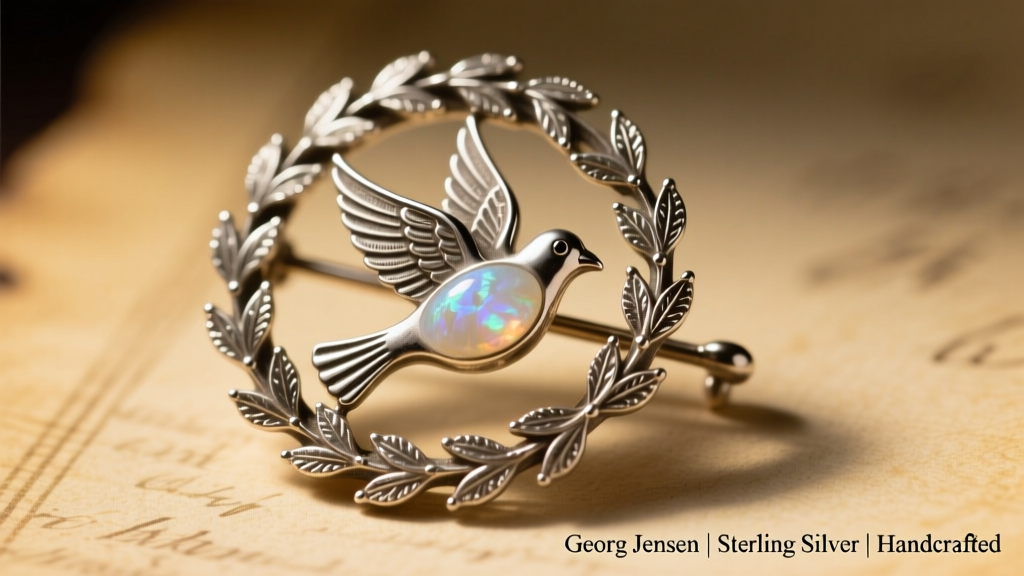
Georg Jensen Dove Pin with Moonstone Accents: A Study in Danish Modernist Symbolism and Craftsmanship
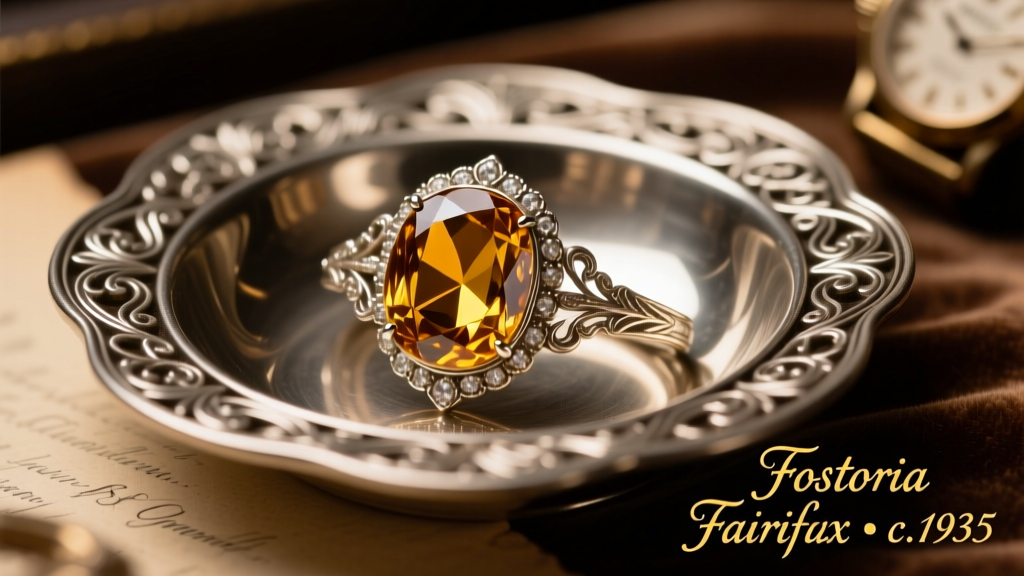
Fostoria Fairfax Finger Bowl Underplate in Topaz: A Collector’s Guide to American Glassware Heritage
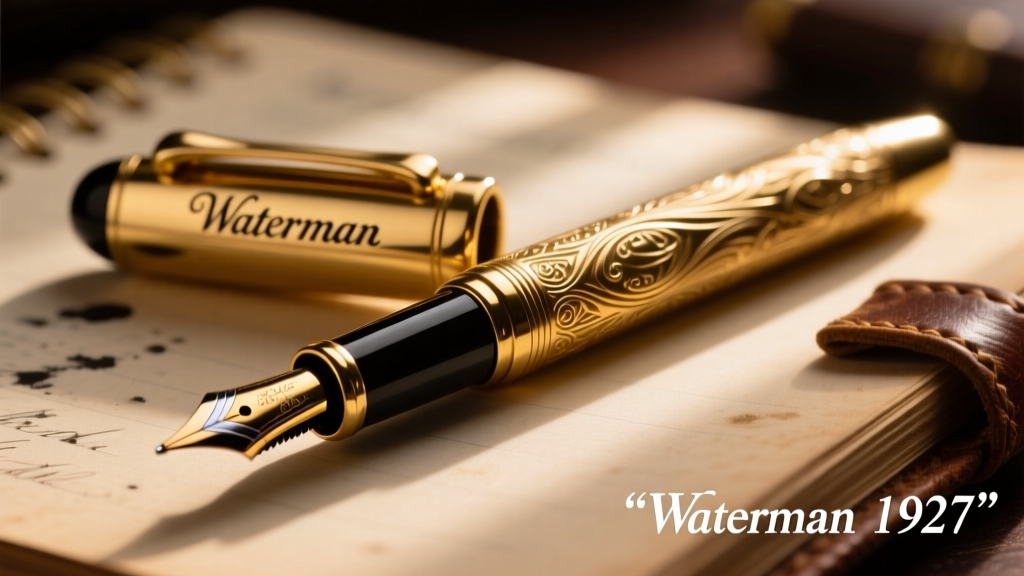
Waterman Pens of 1927: Precision, Prestige, and the Dawn of Modern Fountain Pen Design

Electric Century Ceiling Fans: Cast Iron Heads and Wooden Paddles — Engineering, Aesthetics, and Auction Value
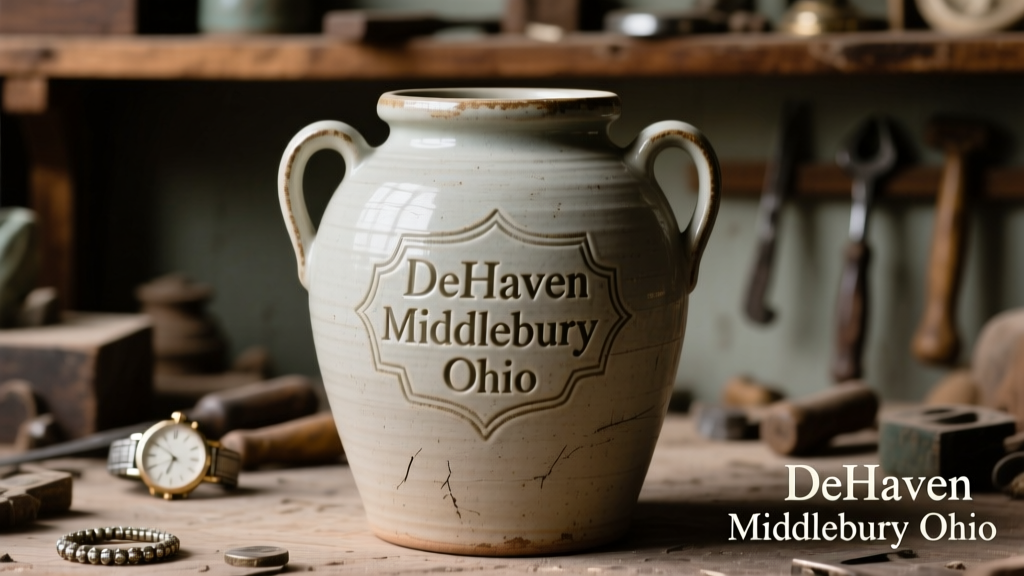
A DeHaven Stoneware Jar from Middlebury, Ohio: Provenance, Craftsmanship, and Market Significance of a 14½-Inch Salt-Glazed Vessel
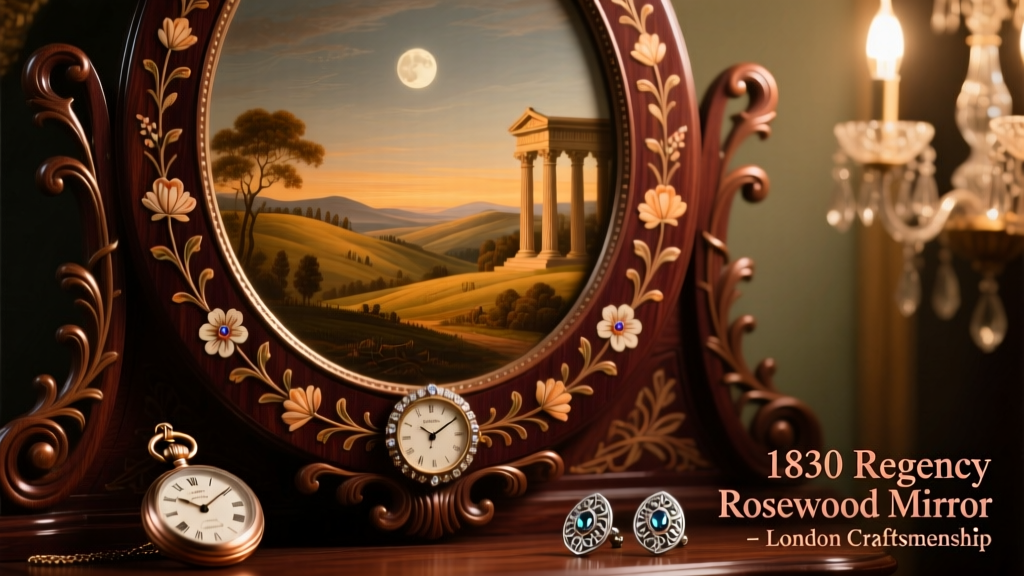
Furniture Mirror: Regency Rosewood Landscape Mirror, Circa 1830 — A Masterpiece of British Cabinetmaking
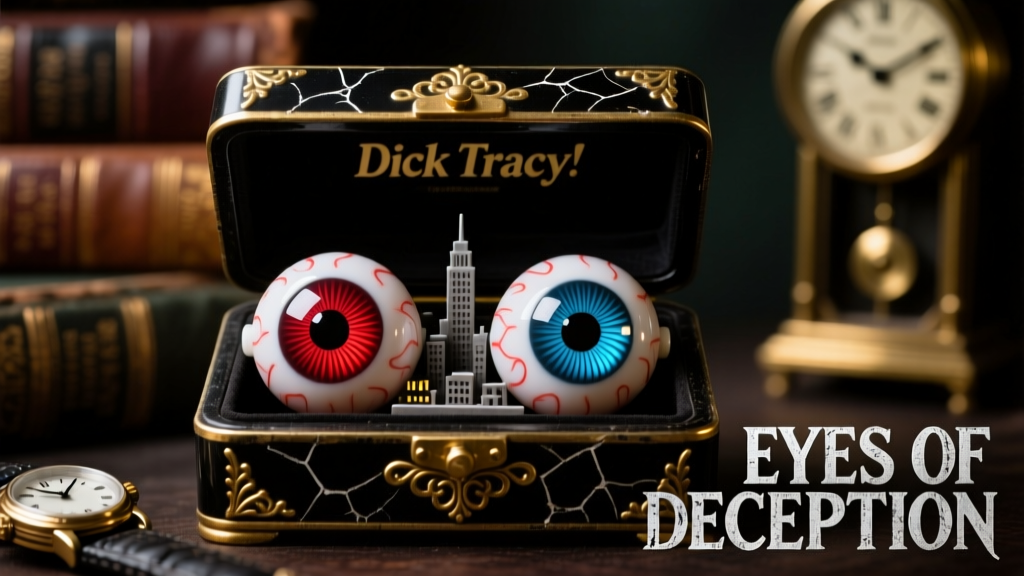
Dick Tracy Eyes: Hypnotic Influence, Evil Eyes, and the Plastic MAC Novelty Box (5 × 7 in, 2-Pack)