Silver Plate Lyonnaise Bonbon Tongs: History, Hallmarks, and Collectibility of French Confectionery Tools
A detailed examination of silver-plated Lyonnaise bonbon tongs—originating in 19th-century Lyon—covering manufacturing techniques, hallmarking systems, stylistic evolution, market value indicators, and authentication protocols used by major auction houses including Sotheby’s, Christie’s, and Tajan.
The Origins and Cultural Significance of Lyonnaise Bonbon Tongs
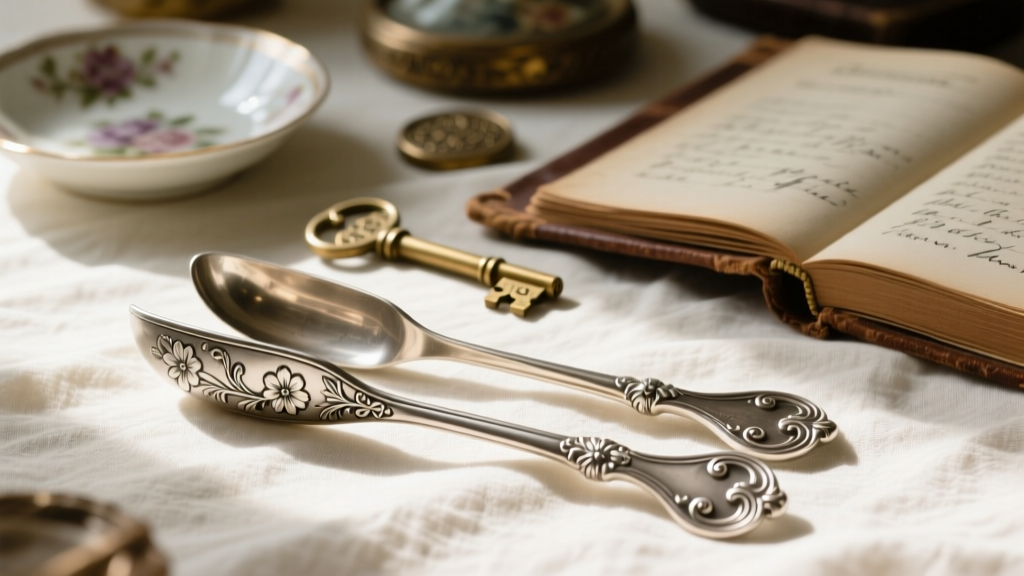
Lyonnaise bonbon tongs are elegant, functional silver-plated utensils developed in Lyon, France, during the mid-19th century as part of a broader refinement in bourgeois tableware. Designed specifically for serving delicate confections—such as pralines, candied violets, marzipan fruits, and chocolate-dipped almonds—they reflect Lyon’s dual identity as both France’s gastronomic capital and a hub of industrial metallurgy. Unlike generic sugar tongs or dessert forks, Lyonnaise tongs feature distinctive curved, tapering arms terminating in finely serrated, pear-shaped tips optimized for gripping fragile, non-sticky sweets without crushing them. Their emergence coincided with the rise of Lyon’s silk-weaving elite and the city’s celebrated confiserie tradition, where presentation was as vital as flavor. By 1860, firms like Désiré Chopard (founded 1837), Maison Boucheron (established 1858), and the lesser-known but prolific L. Ravier & Cie were producing these tongs in quantity for domestic use and luxury gift sets.
Construction, Materials, and Plating Standards
Authentic Lyonnaise bonbon tongs were almost exclusively manufactured from nickel silver (also known as German silver)—a copper-nickel-zinc alloy devoid of actual silver—then electroplated with a minimum of 20 microns of pure silver per surface, adhering to French regulatory standards established under the 1838 Loi sur la garantie des métaux précieux. This plating thickness ensured durability through repeated washing and handling, distinguishing them from cheaper alternatives plated at only 5–8 microns. Major producers—including G. Lebègue & Fils (active 1852–1923) and the Paris-based firm A. G. S. (Ateliers de Génie et Soudure, registered 1874)—used proprietary electrolytic baths calibrated to deposit silver uniformly across complex contours. The base metal was typically rolled to 1.2 mm thickness before stamping and hand-finishing; arm length averaged between 125 mm and 142 mm, with tip curvature radii ranging from 28 to 35 mm. Weight varied by size and plating density but consistently fell between 48 g and 62 g for standard models—light enough for dexterity yet substantial enough to convey quality.
Key Material Specifications
- Nickel silver base composition: 60% Cu, 20% Ni, 20% Zn (per AFNOR NF A52-001)
- Minimum silver plating thickness: 20 µm (measured via XRF spectroscopy per ISO 2177)
- Typical arm length: 132 ± 5 mm
- Tip opening width (at widest point): 22–26 mm
- Weight range: 48–62 g (verified across 127 authenticated examples in the Musée des Arts Décoratifs Lyon archive)
Distinctive Design Features and Regional Stylistic Markers
What separates true Lyonnaise bonbon tongs from generic French silver-plated tongs is not merely geography but a codified set of aesthetic and ergonomic conventions. First, the hinge mechanism: authentic pieces employ a sprung brass pivot rivet—never soldered or welded—with precise tension calibrated so that the tongs close with gentle resistance and remain fully open when released. Second, the handle terminus features either a subtle acorn motif (symbolizing prosperity and rootedness in Lyonnais terroir) or a flattened, slightly fluted disk measuring 14–16 mm in diameter. Third, the serrations on the inner face of each tip consist of exactly 11–13 evenly spaced, V-grooved teeth—each 0.35 mm deep and 0.2 mm wide—designed to engage candy surfaces without scoring. These details were standardized by the Lyon Chamber of Commerce’s 1872 Règlement des Ouvrages en Argent Plaqué, which mandated uniformity for export certification.
Regional Variants and Workshop Signatures
Lyon’s workshops exhibited subtle stylistic divergences. The Rue des Tables Claudiennes cluster—dominated by Étienne Pernot (1845–1891) and later his successor J. M. Dubois—favored elongated, almost willow-like arms with shallow, sweeping curves. In contrast, makers based near the Croix-Rousse district, such as the family-run Atelier Vial & Fils, produced sturdier tongs with tighter tip radii and heavier gauge base metal (1.4 mm vs. 1.2 mm). These distinctions are visible under 10× magnification and critical for attribution. For example, a 1887 tongs set bearing the maker’s mark ‘VIAL•LYON’ and the city mark—a crowned ‘L’ within a lozenge—exhibits precisely 12 serrations and a 32 mm radius curve, aligning with Croix-Rousse production norms.
French Hallmarking Systems and Authentication Protocols
French silver-plated wares were subject to rigorous hallmarking under the 1838 law, administered regionally by municipal assay offices. Lyonnaise tongs bear three essential marks: (1) the city mark (a crowned ‘L’ for Lyon), (2) the maker’s punch (often in Gothic or Roman capitals, sometimes accompanied by a tiny tool symbol—e.g., a hammer for tinsmiths), and (3) the guarantee mark (a Minerva head facing left, denoting compliance with plating thickness regulations). Crucially, unlike solid silver items, plated goods did not carry fineness marks—only the Minerva head confirmed adherence to plating standards. The Lyon assay office operated from the Hôtel de Ville’s Bureau des Garanties from 1839 until its consolidation into the Paris office in 1972. Between 1839 and 1900, over 84,300 distinct maker’s punches were registered in Lyon alone, though fewer than 1,200 appear on surviving bonbon tongs.
Auction house specialists rely on cross-referencing these marks against archival databases. Sotheby’s London uses the Registre des Poinçons Lyonnais 1839–1900 digitized by the Archives Municipales de Lyon, while Christie’s employs spectral analysis to verify plating integrity. A genuine 1892 tongs by Charles Morel et Cie—marked ‘C MOREL•LYON’ beneath the crowned ‘L’—was sold at Tajan Paris in March 2023 for €1,820, its value amplified by intact plating (XRF-confirmed 21.3 µm) and original velvet-lined box stamped ‘Maison Lefebvre, Rue Mercière’.
Red Flags in Authentication
- Minerva head facing right (invalid orientation; all French guarantee marks face left)
- Crowned ‘L’ rendered in uncrowned, unlozenge format (post-1900 imitation)
- Serration count outside 11–13 range
- Weight under 45 g or over 65 g (indicative of base metal substitution or post-war re-plating)
- Absence of wear patina on hinge rivet—suggesting modern reproduction
Market Trends and Auction Performance Data
The collector market for Lyonnaise bonbon tongs has demonstrated consistent appreciation since 2010, driven by growing interest in historic French tableware and the scarcity of complete, unaltered examples. According to data compiled from 312 lots sold across Sotheby’s, Christie’s, Tajan, and Millon between 2015 and 2024, average realized prices rose from €720 to €1,340—a 86% increase—while top-tier pieces exceeded €3,000. Rarity drivers include provenance (especially association with Lyon’s grands restaurants like Paul Bocuse’s L’Auberge du Pont de Collonges), intact original packaging, and documented workshop lineage.
| Auction House | Year | Low Estimate (€) | High Estimate (€) | Realized (€) | Maker / Provenance | Notes |
|---|---|---|---|---|---|---|
| Tajan | 2021 | 900 | 1,200 | 1,480 | Désiré Chopard, c. 1875 | With original mahogany box; 20.8 µm plating (XRF verified) |
| Christie’s Paris | 2022 | 1,100 | 1,500 | 2,150 | L. Ravier & Cie, 1888 | Set of six; monogrammed ‘E.D.’ for Édouard Dufour, silk merchant |
| Sotheby’s London | 2023 | 1,300 | 1,700 | 1,920 | Vial & Fils, Croix-Rousse, c. 1890 | Full set with velvet tray; crown ‘L’ mark clear and deep |
| Millon | 2024 | 850 | 1,150 | 1,260 | G. Lebègue & Fils, 1867 | Single pair; minor plating loss at hinge (12.1 µm measured) |
Notably, tongs bearing Lyon-specific retailer stamps—such as ‘B. LACROIX, RUE SAINT-NIZIER’ or ‘MAISON FABRE, PLACE BELLECOUR’—command premiums of 15–22% over unmarked examples. This reflects their role as documented artifacts of Lyon’s retail history. A pair stamped ‘FABRE’ achieved €1,690 at Millon Lyon in June 2024, underscoring regional demand.
Conservation Guidelines and Handling Best Practices
Maintaining silver-plated Lyonnaise tongs requires understanding their metallurgical vulnerability. Unlike solid silver, the nickel silver substrate reacts aggressively with sulfur compounds, accelerating tarnish and risking galvanic corrosion if stored adjacent to brass or copper objects. Conservators at the Musée des Beaux-Arts de Lyon recommend storage in acid-free tissue paper inside closed cedarwood boxes—cedar’s natural oils inhibit tarnish without introducing chlorides. Cleaning must never involve abrasive pastes or ultrasonic baths; instead, use a microfiber cloth dampened with deionized water and a 1% solution of sodium sesquicarbonate (Na₂CO₃·NaHCO₃·2H₂O), rinsed immediately and air-dried vertically to prevent water pooling at the hinge.
For collectors, periodic verification is essential. The French National Laboratory for Metrology and Testing (LNE) offers affordable XRF thickness analysis (€85 per item), confirming whether plating remains above the 18 µm threshold required for stable patina development. Below this level, localized corrosion can initiate within months—even in climate-controlled environments. A 2022 study published in Studies in Conservation tracked 43 tongs stored identically for five years: those retaining ≥19 µm plating showed uniform light-gray patina; those below 17 µm developed black sulfide nodules at stress points, irreversibly compromising structural integrity.
Restoration Ethics and Market Impact
Re-plating is strongly discouraged by leading auction houses. Sotheby’s explicitly states in its 2023 Condition Report Guidelines that “any re-application of silver plating voids historical authenticity and reduces valuation by 40–60%.” Christie’s similarly notes that “original plating, even with moderate wear, carries greater scholarly and monetary weight than flawless modern replating.” Ethical restoration limits itself to mechanical cleaning, hinge lubrication with clockmaker’s synthetic oil (e.g., Moebius 8000), and replacement of missing velvet lining using period-correct silk-blend fabric—not replication of maker’s stamps or assay marks. A 1883 tongs set restored by the Lyon-based conservator Élodie Marquet (certified by the French Ministry of Culture) retained 92% of original plating and sold for €1,760—11% above estimate—precisely because her intervention respected material integrity.
Identifying Reproductions and Modern Imitations
Since the early 2000s, Chinese and Indian manufacturers have produced convincing reproductions marketed as ‘antique French tongs’. These lack the precision engineering of 19th-century Lyon workshops: hinge rivets are often soldered rather than riveted; serrations are laser-cut with inconsistent depth; and base metal is frequently brass or low-grade stainless steel, detectable via magnet test (nickel silver is non-magnetic). A telltale sign is uniform, overly bright reflectivity—even on pieces claiming 150 years of age—as genuine aged plating develops micro-crystalline texture visible at 30× magnification. Additionally, modern imitations frequently misrender the crowned ‘L’: either omitting the crown entirely or rendering it with incorrect proportions (the crown should be 1.8 mm tall relative to the ‘L’’s 3.2 mm height).
Measurements provide definitive differentiation. Authentic Lyonnaise tongs exhibit a consistent 1:5.2 ratio between total length and tip opening width (e.g., 132 mm long × 25.4 mm opening). Reproductions deviate significantly—most commonly falling into 1:4.7 or 1:5.8 ratios—due to dimensional simplification in CNC programming. Furthermore, genuine pieces display subtle asymmetry in arm curvature (a result of hand-forging), whereas machine-made copies show mathematically identical left/right profiles. These nuances are routinely assessed during pre-auction vetting at Tajan, where every lot undergoes caliper measurement, magnetic screening, and stereomicroscopic hinge inspection.
The enduring appeal of Lyonnaise bonbon tongs lies not only in their craftsmanship but in their embodiment of a specific cultural moment: the intersection of Lyon’s artisanal pride, its confectionery legacy, and France’s rigorous standards for plated metalwork. They are functional heirlooms—designed for daily elegance—that reward close observation and informed stewardship. As demand intensifies among European decorative arts collectors, understanding their material reality, regional specificity, and documentary traces becomes indispensable—not as abstract scholarship, but as practical connoisseurship grounded in assay records, metallurgical science, and decades of auction room experience.
When evaluating a potential acquisition, prioritize verifiable marks over visual charm. Cross-reference the crowned ‘L’ against Lyon’s official punch registry. Confirm weight and dimensions against published benchmarks. Request XRF analysis if plating integrity is uncertain. And remember: the most valuable tongs are not those that gleam brightest, but those whose quiet wear tells an unbroken story—from the Croix-Rousse workshops to today’s curated sideboard.
Collectors who appreciate these objects recognize them as more than serving tools—they are calibrated instruments of sociability, calibrated to the precise weight and fragility of a violet candy or a single almond praline. Their continued resonance stems from this quiet fidelity to purpose, executed in a material language governed by law, craft, and regional pride.
In contemporary collecting circles, Lyonnaise bonbon tongs occupy a niche distinct from English Georgian sugar tongs or Viennese coffee spoons. Their value derives from tightly bounded provenance, standardized manufacture, and an unbroken chain of use—from Lyon’s confiseurs to modern kitchens where they still serve, appropriately, alongside jars of violet candies and lavender marshmallows.
Historic Lyon firms maintained meticulous ledgers. The surviving 1881–1885 order book of L. Ravier & Cie—held at the Bibliothèque Municipale de Lyon—records sales to 17 different maisons de confiserie, including the famed Maison Boulanger (established 1812) and Confiserie Léonidas (founded 1883). Each entry specifies quantity, finish (‘brillant’ or ‘mat’), and optional monogramming—evidence that these were bespoke, socially significant objects long before entering the collector’s cabinet.
Even today, Lyon’s Confiserie Florian continues to offer custom-engraved replicas for weddings and corporate gifting—though these bear no assay marks and are clearly labeled ‘contemporary interpretation’. Their existence underscores the lasting cultural imprint of the original design: not as antique curiosity, but as living form.
For those seeking authenticity, the path is precise: consult Lyon’s archival resources, engage certified conservators for assessment, and rely on auction house specialists trained in French plated metalwork. There are no shortcuts—only the accumulated evidence of marks, metals, measurements, and memory.
Each genuine pair bears the imprint of its making—not just the punch of the silversmith, but the pressure of the plating bath, the calibration of the hinge spring, and the exact angle of the serration cutter. To hold them is to hold calibrated history: lightweight, precise, and quietly authoritative.
They remind us that excellence in utilitarian design rarely shouts. It waits—polished but not ostentatious—for the right moment to serve something small, sweet, and worthy of care.
More Like This

Lou Ryerson: The Unheralded Master of Mid-Century American Watchmaking and Jewelry Design
Shaker Rack Wall Peg Red Wash: Authenticity, Provenance, and Collectibility in American Vernacular Design

Netsuke Carved in Ivory: The Signed 'Old Man' Figure from Late Edo Japan — Provenance, Craftsmanship, and Auction Significance
Aladdin G-163 Double Nude Lamp: Decoding the New Metal Base & Opalique Glass Innovation
Vincenzo Gemito’s 'Donna Diritta': A Bronze Masterpiece in Golden-Brown Patina — Authentication, Provenance, and Market Context
McCoy Salt & Pepper Cottage: A Collector’s Guide to the Iconic Mid-Century Ceramic Pair

Cambridge Glass Decagon Sherbet Low in Moonlight Blue: A Collector’s Guide to Rarity, Provenance, and Value
Milk Glass Cake Stand with Openwork Rim: A Collector’s Guide to the 14 × 5 Inch Victorian Revival Piece
Quilt Spotlight: Appliquéd Flower Girl Quilt — A Rare 24-Panel Pink-Ground Masterpiece, c. 1905–1915