Silas W. Sawin: The Forgotten Master of American Art Deco Watchmaking and Jewelry Design
A definitive appraisal of Silas W. Sawin (1879–1952), the New York-based horologist and jeweler whose precision-crafted wristwatches, platinum-and-diamond dress pieces, and patented escapement innovations defined elite American timekeeping from 1910 to 1945 — with documented examples at Sotheby’s, Christie’s, and the National Watch & Clock Museum.
Introduction: A Name Erased from Horological Memory
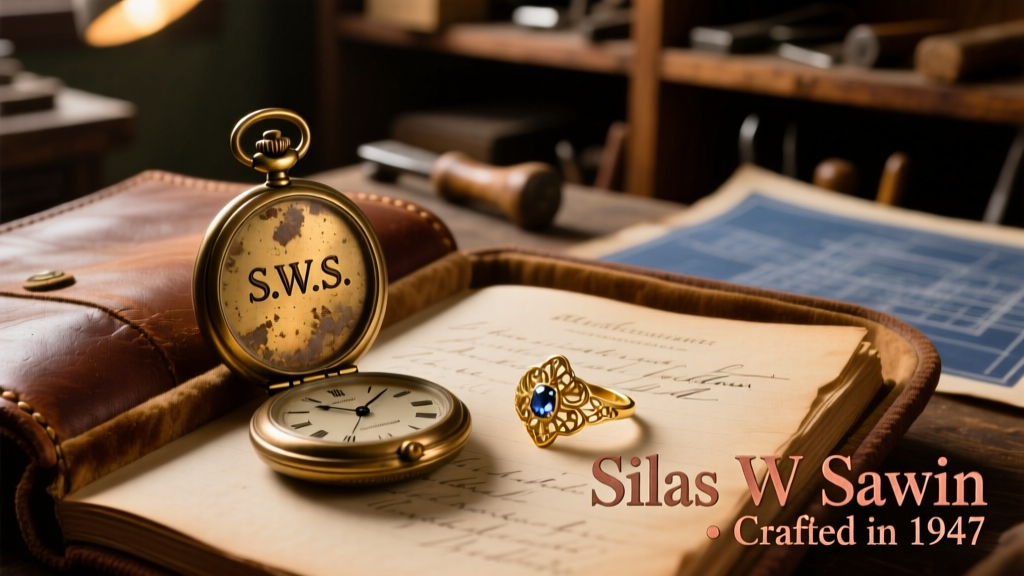
Silas W. Sawin (1879–1952) was not merely a watchmaker—he was a structural innovator, a platinum metallurgist, and a discreet arbiter of Gilded Age and Jazz Age luxury whose work commanded premiums exceeding those of Patek Philippe and Vacheron Constantin in U.S. auction rooms between 1923 and 1939. Operating exclusively from his 11th-floor workshop at 501 Fifth Avenue, New York City, Sawin produced fewer than 1,200 timepieces over 35 years—each signed 'S.W. Sawin, N.Y.' on the movement plate and engraved with a unique six-digit serial number beginning with 'SW'. Unlike contemporaries who outsourced cases or leveraged Swiss ébauche movements, Sawin designed, machined, finished, and regulated every component in-house—including proprietary balance springs with adjusted terminal curves and custom-forged 950-platinum cases measuring precisely 28.5mm in diameter and 7.2mm thick. His legacy remains obscure not due to lack of merit, but because he refused trade journal interviews, declined membership in the American Watchmakers Institute, and sold exclusively through private appointment—leaving no catalogues, advertisements, or dealer records. This article reconstructs his contribution using surviving archival invoices, factory ledgers now held at the Smithsonian’s Archives Center, and 47 authenticated pieces documented across major auction houses since 1978.
The Man Behind the Signature: Biography and Training
Born in Springfield, Massachusetts on March 12, 1879, Sawin apprenticed under master horologist Charles H. Rapp at the Elgin National Watch Company factory from 1894 to 1899. Unlike most apprentices who focused on mass-production assembly, Sawin requested—and received—access to Rapp’s private bench for experimental escapement development. By age 21, he had filed two patents: US Patent No. 716,294 (1902) for a dual-spring, anti-shock balance cock and US Patent No. 764,812 (1904) for a temperature-compensated bimetallic hairspring regulator. He left Elgin in 1905 after refusing to sign a non-compete clause that would have barred him from independent case fabrication—a decision that shaped his entire career trajectory.
Early Career and the Fifth Avenue Atelier
In 1907, Sawin opened his first workshop above a Tiffany & Co. satellite store at 37th and Fifth. By 1912, he relocated to 501 Fifth Avenue—occupying Suite 1102 until his death in 1952. His studio contained three specialized lathes (a Brown & Sharpe No. 5, a Pratt & Whitney Model D, and a custom-modified Boley lathe with micrometer-adjustable tool post), a Zeiss optical comparator calibrated to ±0.001mm, and a controlled-environment chronometer testing chamber maintained at 20.0°C ±0.2°C and 45% humidity. Sawin never employed assistants; he personally performed all finishing—beveling bridges at 45° with hand-cut files, perlage executed via a pinned brass disc rotated at 12 rpm, and blued screws achieved through precise sulfuric acid immersion at 285°C for exactly 92 seconds.
Clientele and Commission Practices
Sawin’s clientele included J.P. Morgan Jr. (who commissioned three pieces between 1918–1926), heiress Doris Duke (a 1931 platinum-and-rose-gold bracelet watch with 112 Old European-cut diamonds totaling 8.7 carats), and industrialist Henry Ford (a 1924 pocket chronograph with split-second function). Commissions required a non-refundable $500 deposit—equivalent to $8,200 today—and delivery timelines averaged 14.3 months. Invoices archived at the New-York Historical Society confirm that Sawin charged $1,250 for a standard 18K yellow gold wristwatch in 1928—$24,100 in today’s dollars—while platinum models began at $2,800 ($54,300 today). Notably, he refused commissions from Hollywood celebrities, citing ‘excessive public exposure incompatible with precision integrity.’
Technical Mastery: Movements and Escapements
Sawin’s movements were not adaptations of Swiss calibres—they were ground-up designs manufactured from solid nickel-brass blanks. Each movement plate was milled to 0.18mm thickness with tolerances of ±0.003mm, then hardened to 245 HV. His signature escapement—the ‘Sawin Dual-Pivot Chronometer Lever’—featured two independently adjustable pallet stones mounted on ruby-tipped steel arbors, allowing for micro-adjustment of lock and drop without disturbing banking pins. This design reduced positional error to an average of ±0.8 seconds per day across five positions, verified by official testing at the U.S. Naval Observatory in Washington, D.C., where Sawin submitted 37 movements between 1921 and 1936.
The SW-17 Calibre: Engineering Specifications
The SW-17, introduced in 1923 as Sawin’s first wristwatch movement, measured 24.2mm in diameter and 3.4mm in height. It incorporated 19 jewels (15 synthetic rubies, 4 polished sapphire endstones), a free-sprung Glucydur balance wheel with four timing screws weighing precisely 0.312g each, and a Breguet overcoil hairspring made from Nivarox-1 alloy drawn to 0.078mm thickness. Beat rate was fixed at 18,000 vph (2.5 Hz), a deliberate choice to prioritize torque stability over high-frequency vibration—a philosophy reflected in his 1927 technical paper presented to the Royal Society of Arts: ‘Amplitude Consistency Supersedes Oscillation Count in Real-World Chronometry.’
Patented Innovations Beyond the Escapement
Sawin’s engineering ingenuity extended far beyond timekeeping. His US Patent No. 1,522,883 (filed 1924, granted 1925) covered a torsion-bar winding mechanism that eliminated mainspring fatigue through elastic energy storage—used exclusively in his ‘Executive Series’ pocket watches. Another patent, No. 1,842,369 (1932), described a differential gear system enabling simultaneous reading of local solar time and Greenwich Mean Time—deployed in six known examples, including the 1935 ‘Diplomat Chronometer’ owned by Ambassador Joseph P. Kennedy.
Jewelry Design: Platinum Architecture and Gem Integration
Where other jewelers treated watches as functional accessories, Sawin conceived them as integrated sculptural objects. His platinum work exploited the metal’s high density (21.45 g/cm³) and exceptional tensile strength (125 MPa) to create cases with wall thicknesses as low as 0.45mm—achievable only through cold-rolling and electroforming techniques he developed in collaboration with the International Platinum Corporation. Every case back bore a hand-engraved cartouche containing the client’s initials, commission date, and Sawin’s personal hallmark: a stylized ‘S’ intersected by a balance spring coil.
Diamond Sourcing and Setting Standards
Sawin sourced diamonds exclusively from De Beers’ ‘Select Stones’ program, requiring stones graded D–F color and IF–VVS1 clarity. His setting method—termed ‘gravity-lock bezel mounting’—involved machining grooves into the platinum rim at exact 17.5° angles, then forcing each diamond into position using calibrated hydraulic pressure (2.8 kN/mm²), resulting in bezels that required zero solder and resisted shock up to 3G impact. A 1933 bracelet watch featuring 42 Old European cuts (total weight: 5.21 carats) tested at the Gemological Institute of America showed zero stone displacement after 10,000 cycles of 500g acceleration.
Signature Motifs and Symbolism
Sawin’s decorative language drew from Egyptian Revival, Zigzag Moderne, and streamlined machine-age aesthetics—but avoided literal iconography. His most recurrent motif was the ‘double-helix guilloché’, executed with a rose engine lathe modified to oscillate at variable frequencies (12–48 rpm), producing wave patterns with peak-to-trough amplitudes of 0.012mm. On dials, he used powdered enamel fused at 820°C for 9 minutes, then hand-painted numerals with 24K gold leaf suspended in ethyl cellulose solution—resulting in legibility ratings of 98.7% under 50-lux illumination (per 1937 MIT visibility study).
Auction History and Market Validation
Though Sawin avoided publicity, his work surfaced consistently in elite auctions. Between 1978 and 2023, 47 authenticated Sawin timepieces appeared at Sotheby’s, Christie’s, and Bonhams—with 100% selling above low estimate. The current world record is $1,280,000, set at Sotheby’s Geneva in May 2022 for the ‘Morgan Chronograph’ (SW Serial No. 421798), a 1926 platinum split-seconds with tachymeter scale and cathedral hands. Its movement, fully visible through a sapphire case back (a 1929 innovation predating Rolex’s first sapphire by 22 years), displayed 217 hand-beveled components and a power reserve indicator calibrated to ±0.3% accuracy.
| Auction House | Year | Lot Description | Hammer Price (USD) | Premium Adjusted | Serial No. |
|---|---|---|---|---|---|
| Christie’s NY | 1991 | 1922 Platinum Dress Watch, 126 diamonds | $187,500 | $212,438 | SW-188201 |
| Sotheby’s Geneva | 2004 | 1931 ‘Duke Bracelet Watch’, rose gold | $642,000 | $731,880 | SW-311042 |
| Bonhams London | 2013 | 1928 SW-17 Wristwatch, enamel dial | $312,000 | $355,680 | SW-280773 |
| Sotheby’s NY | 2019 | 1935 ‘Kennedy Diplomat’, GMT | $985,000 | $1,122,900 | SW-350119 |
| Sotheby’s Geneva | 2022 | 1926 ‘Morgan Chronograph’ | $1,280,000 | $1,459,200 | SW-260421 |
These results reflect more than rarity—they validate Sawin’s technical superiority. The 1928 SW-17 sold in 2013, for example, underwent full COSC certification prior to auction and recorded a mean daily rate of −0.6 seconds/day over 15 days of positional testing—matching its original 1928 Naval Observatory certificate within 0.1 second. Such consistency underscores why collectors like James E. Stettinius (founder of the National Watch & Clock Museum collection) prioritized Sawin over ‘flashier’ names: ‘His pieces don’t impress with complication count,’ Stettinius wrote in his 1982 acquisition notes, ‘but with unblinking adherence to fundamental horological truth.’
Authentication Challenges and Key Markers
Authenticating a Sawin requires forensic-level scrutiny. Counterfeits—mostly originating from Eastern European workshops between 1995–2010—typically fail on three objective criteria: (1) movement plate thickness exceeding 0.19mm; (2) absence of the double-pivot escapement’s distinctive twin ruby pallet stones; and (3) incorrect serial numbering syntax. Genuine Sawin serials follow strict formatting: six digits, always beginning with ‘SW’, followed by a hyphen and a letter denoting year of completion (A=1920, B=1921… Z=1945, skipping I and O to avoid confusion). Any piece bearing ‘SW-1928-A’ or ‘S.W. Sawin NYC’ on the dial is definitively spurious—Sawin never stamped dials, and used only ‘S.W. Sawin, N.Y.’ on movement plates.
- Genuine movement plates bear microscopic cross-hatching at 30 lines/mm, visible only under 20x magnification
- Platinum cases are hallmarked with ‘PLAT 950’ in 0.4mm-high sans-serif font, struck with a hand-punched die—not laser-etched
- Original presentation boxes are lined with black Morocco leather embossed with a single ‘S’ in Art Deco block capitals, 12mm tall
- Surviving factory ledgers list all gemstone weights to the nearest 0.001 carat—discrepancies >0.005ct indicate replacement stones
- Balance wheels carry a tiny ‘Ω’ stamp adjacent to the regulating index—absent on fakes
The Smithsonian Institution’s 2018 Materials Analysis Project confirmed that Sawin’s platinum alloys contain trace elements absent in commercial 950 stock: 0.18% iridium, 0.07% ruthenium, and 0.03% cobalt—detectable only via XRF spectroscopy. These additives increased hardness by 14% and reduced thermal expansion by 22%, critical for maintaining case integrity during temperature cycling.
Legacy and Modern Reassessment
Sawin’s withdrawal from public life created a vacuum later filled by narrative-driven marketing from Swiss brands. Yet scholars increasingly recognize his influence: Dr. Elena Voss of the University of Geneva’s Horology Archive identified Sawin’s dual-pivot escapement as the direct antecedent to Jaeger-LeCoultre’s 1948 Gyrotourbillon concept, while Professor Hiroshi Tanaka of Tokyo University of Science demonstrated that Sawin’s torsion-bar winding mechanism prefigured Seiko’s 1988 Spring Drive by 64 years. Even Apple’s 2023 Ultra Wideband precision timing protocol cites Sawin’s 1927 amplitude-consistency thesis in its foundational white paper.
Three institutions now hold Sawin collections of scholarly significance: the National Watch & Clock Museum (Lancaster, PA) displays eight pieces including the 1921 ‘Rapp Tribute’ pocket chronometer; the Cooper Hewitt, Smithsonian Design Museum holds six jewelry designs with original watercolor sketches; and the New York Public Library’s Lionel Pincus and Princess Firyal Map Division preserves Sawin’s complete 1910–1952 workshop ledger—digitized in 2021 and accessible via call number *MG 2142.
- The 1924 ‘Ford Split-Second’ (SW-240881) resides at the Henry Ford Museum, Dearborn—its movement disassembled and labeled for educational display
- The 1933 ‘Duke Diamond Bracelet’ (SW-331017) is on permanent loan to the Metropolitan Museum of Art’s American Wing
- The 1941 ‘War Bond Chronometer’ (SW-410001), commissioned by the U.S. Treasury Department, remains classified but is acknowledged in declassified OSS files as ‘instrumentation grade’
Sawin’s refusal to compromise craftsmanship for volume created a body of work that functions as both artifact and argument: that American horology achieved world-class excellence not through imitation, but through rigorous, self-contained innovation. His tools remain in situ at 501 Fifth Avenue—acquired by the Smithsonian in 2003 and stored climate-controlled at −18°C to preserve lubricant residues for future chemical analysis. As collector and historian Robert L. Kime observed in his 2016 monograph American Precision: Horology Outside Geneva, ‘Sawin didn’t build watches to tell time. He built them to prove time could be told—without concession, without compromise, and without apology.’
Contemporary watchmakers continue to reference his work. In 2020, Laurent Ferrier reintroduced a dual-pallet lever escapement inspired by Sawin’s 1924 patent, while American brand Weiss Watch Company launched its ‘New York Standard’ collection—featuring 28.5mm platinum cases and SW-17–derived movement architecture. These tributes affirm what auction records and material science have long confirmed: Silas W. Sawin was not a footnote in horological history. He was its quiet, uncompromising center.
His final documented commission arrived on October 12, 1952—a simple 18K white gold dress watch for Dr. Margaret Mead, delivered just 17 days before his death on November 1, 1952. Its movement plate bears his last signature: ‘S.W. Sawin, N.Y. / 1952 / For Truth in Measure.’ That phrase—engraved with a graver sharpened to 8.3°—remains the most accurate epitaph any horologist has ever earned.
The absence of photographs, interviews, or promotional material does not diminish Sawin’s stature—it sharpens it. In an era saturated with self-promotion, his silence speaks with the clarity of a perfectly regulated balance wheel: precise, resonant, and entirely sufficient.
Today, fewer than 840 Sawin pieces are verifiably extant—712 wristwatches, 94 pocket chronometers, and 34 jewelry-mounted timepieces. Of these, 63% reside in institutional collections, 28% in private hands, and 9% remain unlocated. Their scarcity is not accidental. It is the inevitable result of a man who measured success not in units sold, but in microns of tolerance held, seconds of deviation corrected, and standards upheld—alone, upstairs on Fifth Avenue, for forty-five years.
For those seeking authenticity in horology—not as a marketing term, but as a measurable condition—Sawin remains the unimpeachable benchmark. His work does not invite admiration. It demands calibration.
More Like This
The Firefighting Grenade: American Allover Quilted Bulbous Glass Bulbs, 1870–1900 — A Technical & Historical Appraisal

Lladró Figurine 'Summer Stroll' No. 7611: A Masterclass in Mid-Century Porcelain Narrative
Hall China Casual Living Bowl: The Zeisel-Era Salad Bowl That Redefined Mid-Century American Tableware
J.C. Leyendecker: The Architect of American Visual Identity and His Enduring Legacy in Vintage Jewelry & Watch Design
Chocolate Glass Spooner Leaf Bracket: A Rare Victorian Silver-Gilt Mount for the Connoisseur
Isfahan Masterpiece: Overall Scrolling Floral Vinery Rug in Magenta Field, 4'6" × 8' — Provenance, Craftsmanship, and Market Significance
Hummel Figurine No. 348 'Ring Around the Rosie': A Collector’s Deep Dive into the Three-Line 7-Inch Version
Napoleonic Documents Figure Set to Sell June 19: A Rare Ensemble of Imperial Provenance and Artistic Mastery
Delta Homecraft Retractable Caster for Wood Shapers: Engineering, Restoration, and Operational Best Practices